The clearest "no" cards in a yes/no tarot reading are The Tower, Ten of Swords, Three of Swords, Five of Pentacles, Five of Swords and Seven of Swords. A second group of cards usually means "not yet" or "not clear enough to say", which is a different answer from a firm no. Even the strongest no card speaks about the situation as it stands today: tarot cannot confirm another person's thoughts, fix a date or promise an outcome, so read a no as honest feedback on your current path rather than a final verdict.
At a glance, these are the cards that lean toward no:
- The Tower: no, not on this foundation; something has to change first.
- Ten of Swords: no, this version of the plan is over.
- Three of Swords: no, and the truth behind it may hurt.
- Five of Pentacles: no, not with the resources or support you have now.
- Five of Swords: no, winning this would cost too much.
- Seven of Swords: no, something is hidden or the plan cuts corners.
These cards usually mean "not yet" or "unclear" rather than a firm no:
- The Moon: not until you can see the whole picture.
- Eight of Swords: the no is coming from your own fear, not the situation.
- Four of Cups: not while you are overlooking what is already offered.
- The Hanged Man: not now; pause and look from another angle.
- Seven of Pentacles: not yet; the results need more time.
Two cards depend heavily on the question: the Queen of Swords (a clear-eyed answer that often leans no in love) and the Nine of Swords (worry that may be louder than the facts).
Clear no or not yet: how to tell the difference
A clear no card describes something that cannot continue in its present form. Its themes are endings, loss, painful truth, conflict that damages everyone, or a plan resting on something hidden. The useful response is to stop pushing in the same direction and ask what needs to change, end or be grieved.
A "not yet" card describes a situation that is still forming. Its themes are waiting, confusion, a limited view, low energy or slow growth. It does not say the door is closed, only that acting now, with what you know and feel now, is unlikely to work. Wait, gather facts or change your own stance, then ask again after something real has shifted.
The difference matters most when the question is emotional. Treat a "not yet" card as a final no and you may abandon something that only needed patience; treat a clear no as "maybe later" and you may keep pouring energy into a plan that has run its course.
The clearest no cards, one by one
Most readers count these six cards as a no in a single-card reading. Each says no for a different reason, and the reason is the most useful part of the answer.
The Tower: no, not on this foundation
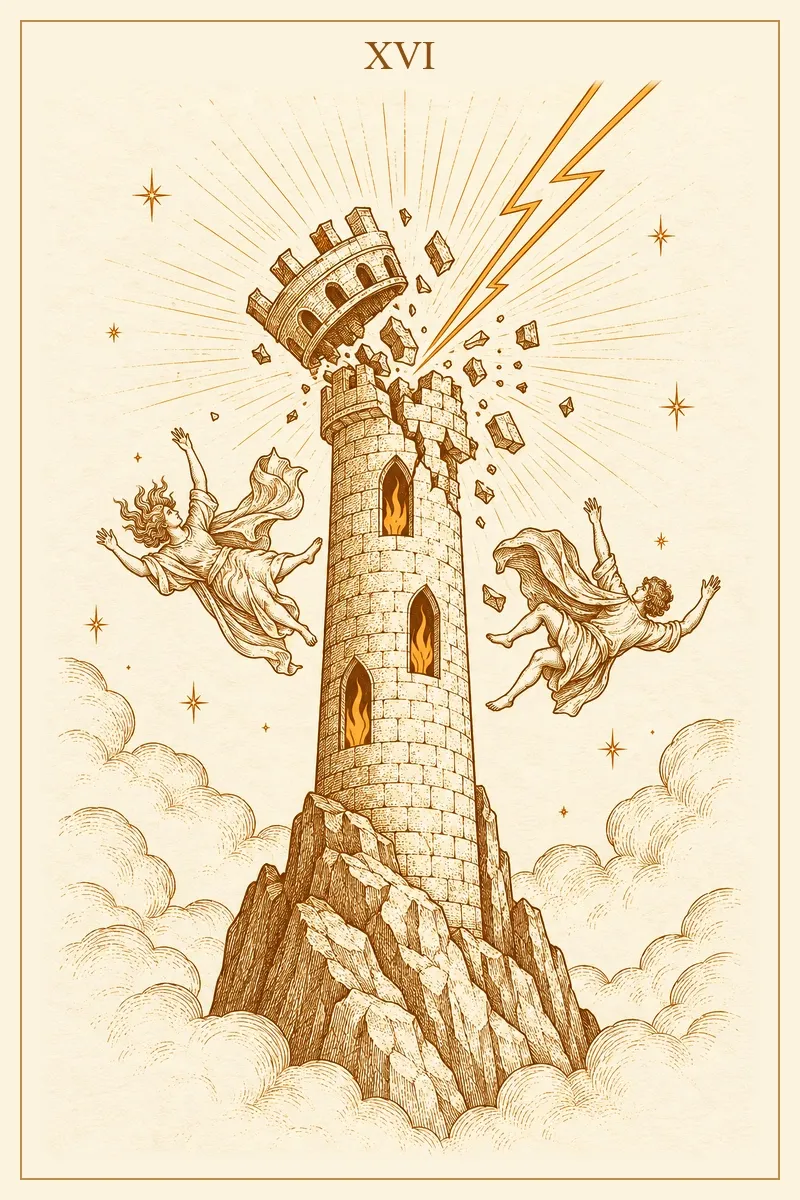
Upright, The Tower is sudden upheaval: a structure that looked solid gives way, often because it was built on an assumption that was never true. In a yes/no reading it is a strong no to the plan as it is currently built. It is rarely saying "this can never happen"; it is saying "this cannot stand on the ground you are building it on". The full Tower tarot meaning covers the card beyond yes/no questions.
In love, it can answer "Will this relationship stay as it is?" with a clear no: something is likely to come to light or to shift. In career and money questions it warns against committing to a role, a deal or a purchase while a key fact is still unknown, so look for the weak point in your plan first.
Reversed, The Tower often describes upheaval that is being resisted, delayed or happening quietly inside you. In yes/no terms it still leans no, but softer: "not until you stop holding up the wall that wants to fall".
Ten of Swords: no, this version is over
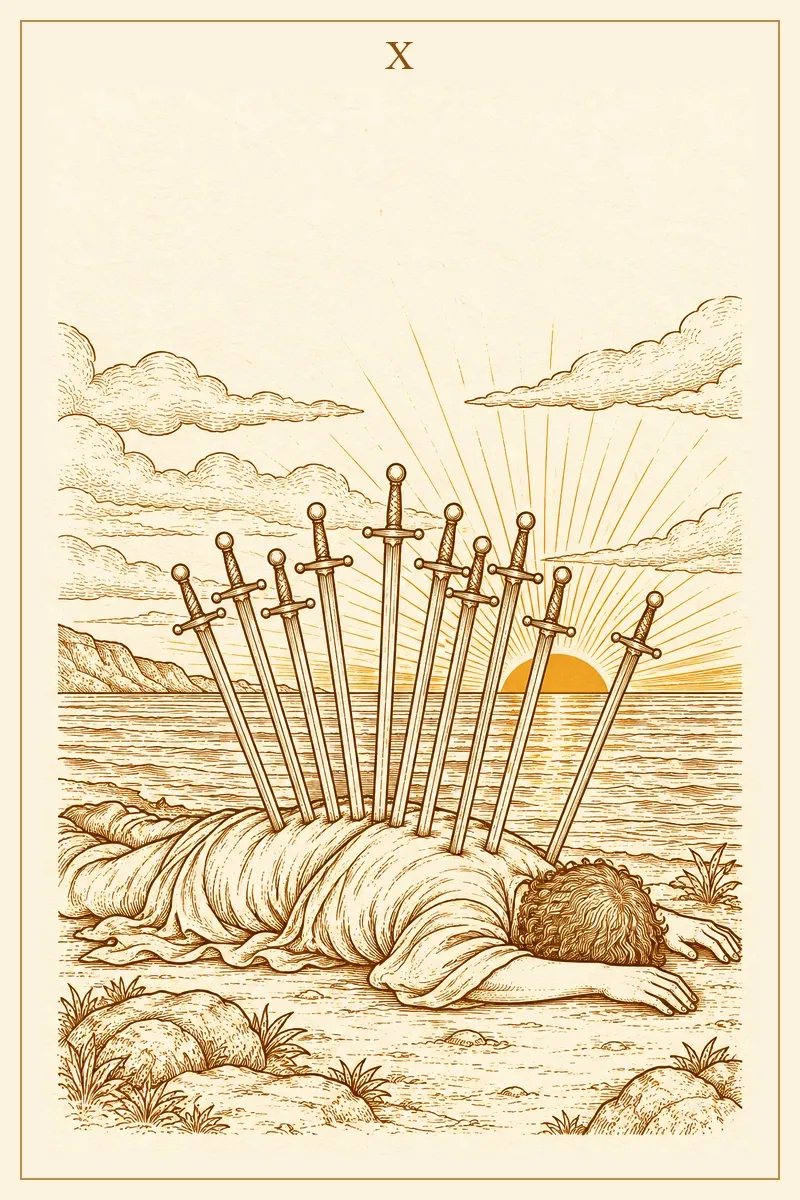
Upright, the Ten of Swords is the most final no in the deck. It describes a painful ending, a point where a situation has run out of road and asking again will not change the answer. Yet ten is the last number of the suit: the card closes one chapter so that the next can start. The Ten of Swords tarot card meaning explores that ending-and-dawn pairing in more depth.
In love, it is a no to reviving a relationship that has already ended. In career, it can mark the end of a role or project that cannot be rescued in its current form, and with money it asks you to stop putting more into something that has already failed.
Reversed, the Ten of Swords usually describes recovery: the worst has passed and you are getting back on your feet. As an answer, that turns into "not this, but you will be ready for something new".
Three of Swords: no, and it will hurt
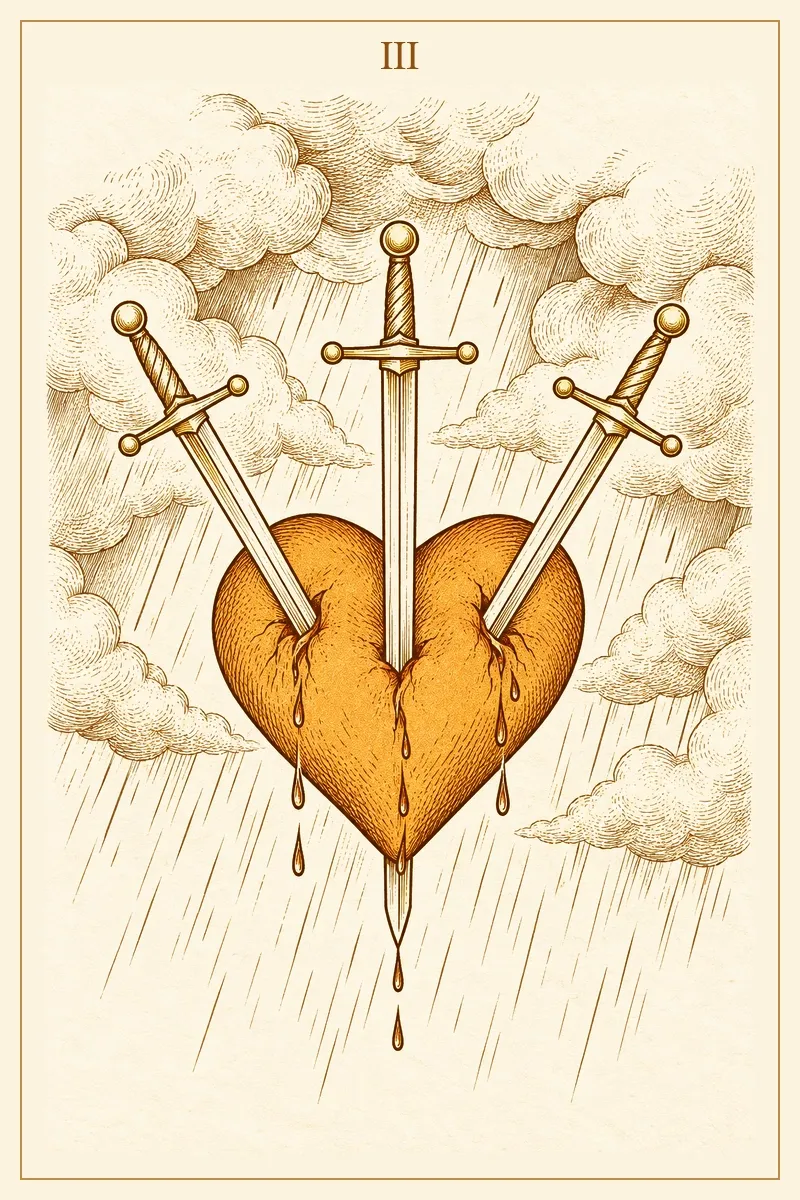
Upright, the Three of Swords is heartbreak, grief and a painful truth. It does not soften its answer. If you asked about a relationship, a hope or a plan you love, it says no, and it suggests that the reason will sting. Pain here is not punishment. The Three of Swords tarot card meaning describes its grief and healing in full.
In love questions such as "Will they come back?" or "Is this the right person?", the Three of Swords leans firmly toward no. In career, it can point to a disappointment, a rejected proposal or hurtful feedback.
Reversed, the Three of Swords often describes healing: the grief is starting to lift, or you are ready to let go of an old wound. In yes/no terms it is still closer to no than yes, but it shifts the focus from the loss to your recovery.
Five of Pentacles: no, not with what you have now
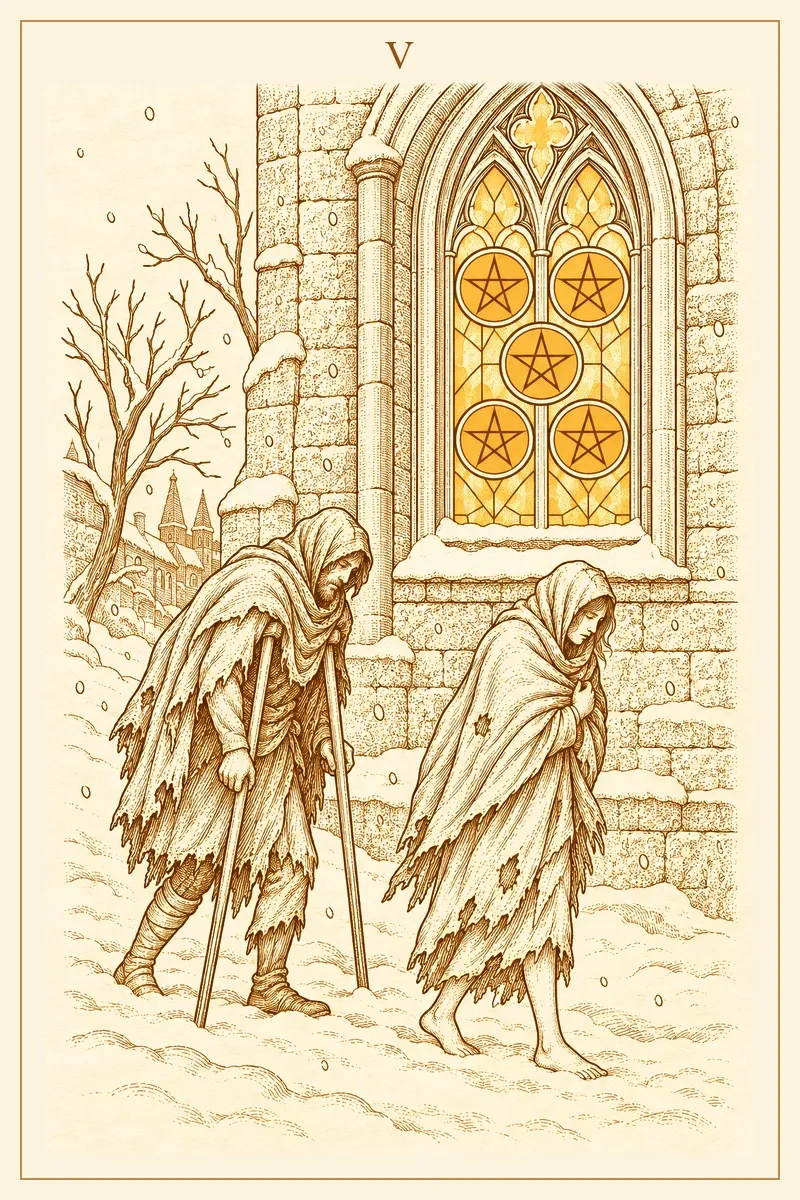
Upright, the Five of Pentacles is hardship, financial strain and feeling left out in the cold. In a yes/no reading it says no because the resources, health, money or support needed to make the plan work are not in place yet. Help usually exists even when you feel alone, as the Five of Pentacles tarot card meaning explains.
For money and career questions, such as "Should I quit before I have savings?" or "Can I afford this now?", the card is a clear no to doing it right away. In love, it can point to feeling unsupported. The practical step is to ask for help and build a safety net before you act.
Reversed, the Five of Pentacles often describes recovery and accepting help. As an answer it moves toward "not yet, but conditions are improving".
Five of Swords: no, the win would cost too much
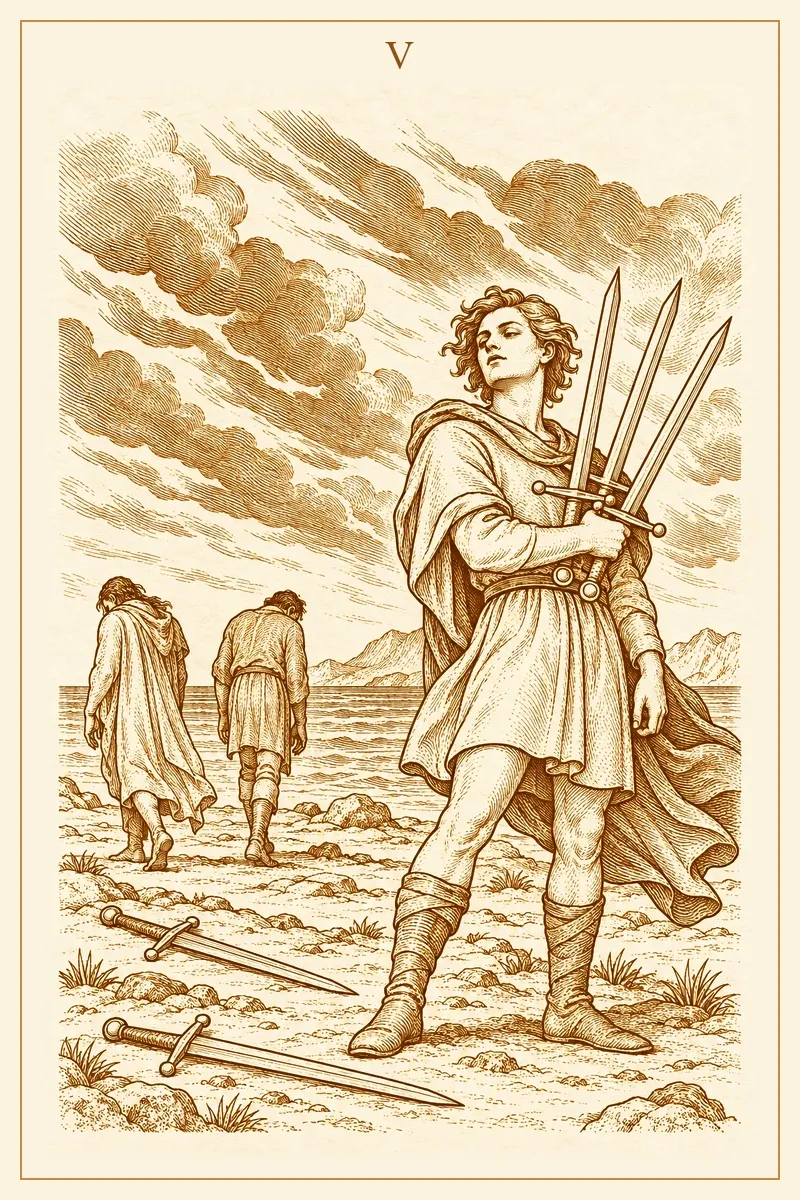
Upright, the Five of Swords describes conflict, winning at someone else's expense and a hollow victory. In a yes/no reading it says no, not because you cannot get what you want, but because forcing it would damage something you care about: a relationship, your integrity or the goal itself. The Five of Swords tarot card meaning looks at the card's tension between winning and losing.
In love, it is a no to winning an argument or pressuring a partner into a decision. In career, it can warn against a competitive move that would cost you trust at work.
Reversed, the Five of Swords often shows a wish to end a fight, make peace or admit a mistake. The answer becomes "no to the fight, but a repaired version may be possible".
Seven of Swords: no, something is hidden
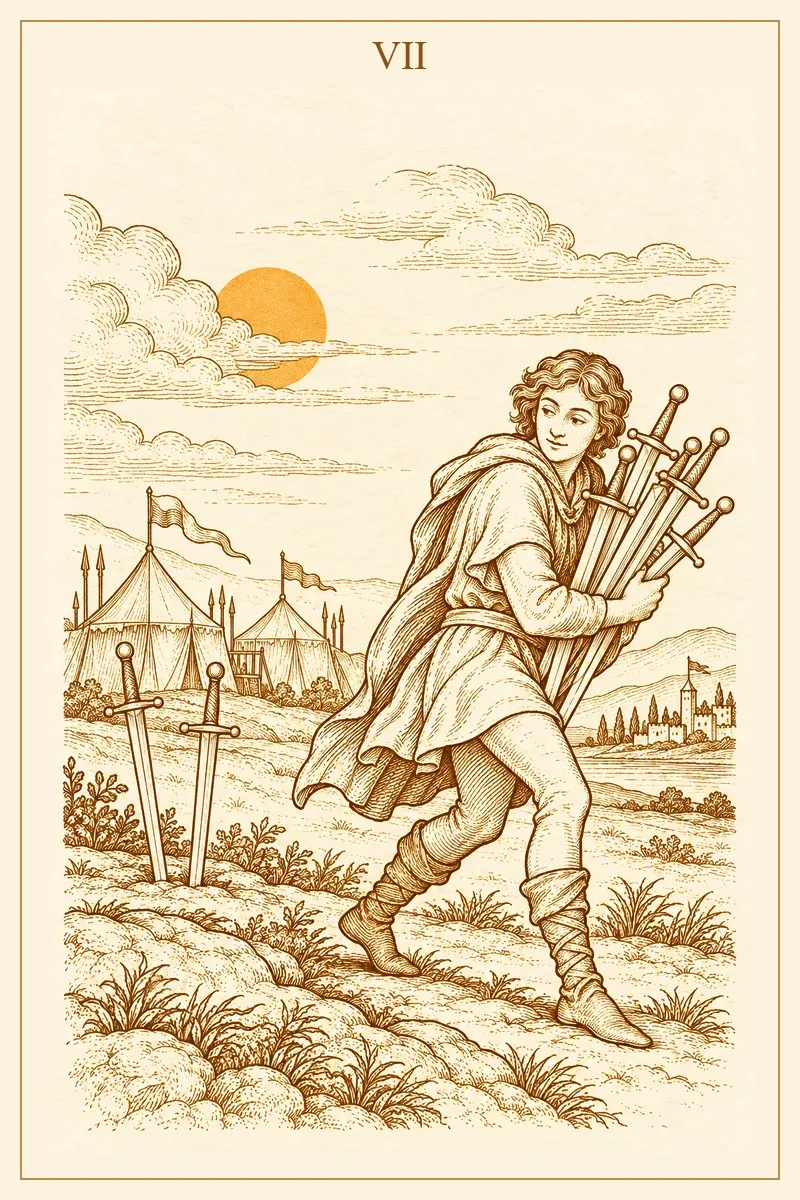
Upright, the Seven of Swords describes deception, strategy and getting away with something. As an answer, it says no for one of two reasons: someone is not being fully open with you, or your own plan depends on cutting a corner you would rather not look at. The Seven of Swords tarot card meaning covers both sides of that secrecy.
In love, it suggests holding off until you have honest information rather than assumptions; it does not prove that anyone is lying, and it is never a reason to accuse someone. In career and money, it advises checking the terms, reading the small print and asking direct questions before agreeing to anything.
Reversed, the Seven of Swords often shows the truth coming out, a confession or a plan being dropped. It still leans no for now, but the reason changes: "no until everything is on the table".
Cards that mean "not yet" or "unclear"
These five cards often appear on no lists, but they rarely close a door. Each points to timing, perception or your own stance.
The Moon. Upright, The Moon is confusion, uncertainty and things not being as they seem. Its answer is "not until you can see clearly"; you are missing a piece of information, or fear is coloring what you see. Reversed, the confusion starts to lift, so the answer may change soon; the Moon tarot meaning follows that shift toward clarity.
Eight of Swords. Upright, the Eight of Swords shows feeling trapped by limits that are partly self-imposed. Its no comes from you: you believe there is no way forward, yet the restrictions are looser than they feel. Reversed, it describes release and a new sense of choice, which leans toward yes. The Eight of Swords tarot card meaning looks at how to loosen those limits.
Four of Cups. Upright, the Four of Cups is apathy, withdrawal or being so focused on past disappointments that you miss what is offered now. Its no is about your receptivity rather than your circumstances: "not while you are looking the other way". Reversed, it shows renewed interest and a willingness to accept an offer, so the answer leans toward a cautious yes. The Four of Cups tarot card meaning has more on noticing the offered cup.
The Hanged Man. Upright, The Hanged Man is a pause, surrender and a change of perspective. Its answer is "not now": the situation is suspended, and forcing a decision will not help. Reversed, it can describe stalling or a delay that has gone on too long, which asks you to make a choice rather than wait indefinitely. See the Hanged Man tarot meaning for its fuller story.
Seven of Pentacles. Upright, the Seven of Pentacles is patience, assessment and long-term growth. Its answer is "not yet": what you have planted is growing, but the harvest is not ready. Reversed, it can point to impatience or a return that is smaller than hoped, asking you to review whether the effort is worth continuing. The Seven of Pentacles tarot card meaning describes how to read that kind of slow progress.
Cards that depend on the question: Queen of Swords and Nine of Swords
Is the Queen of Swords a yes or a no? Most readers treat her as neutral to no-leaning. She stands for clarity, independence, honest boundaries and direct speech, so her answer depends on what you asked. In love questions about getting back together or waiting for someone to change, she usually leans no: she sees the situation without wishful thinking. In decision questions where you need to speak plainly, set a boundary or trust your own judgment, she can be a yes to the clear-headed choice. Reversed, she can show coldness, harsh words or bitterness, and the answer leans no. The Queen of Swords tarot card meaning covers her other roles in a reading.
The Nine of Swords is anxiety, sleepless worry and fear running ahead of the facts. In a yes/no reading it leans no, but often in the sense of "not while you are this worried": the card describes your state of mind more than the outcome. Reversed, it can show worry beginning to ease, or anxiety turning inward and staying hidden. If it appears, check which fears are based on things you know and which are based on things you imagine. The Nine of Swords tarot card meaning has gentle ways to work with that worry.
How reversals work in a yes/no reading
Reversals can make a yes/no answer harder to read, so choose your rule before you shuffle and keep it for the whole reading. There are three common approaches.
- Read upright only. Turn every card upright and use its upright meaning; the simplest way to start.
- Reversed softens or flips the answer. An upright no card that appears reversed becomes "not yet" or "no, but recovering"; an upright yes card reversed becomes "yes, with delay or conditions".
- Reversed means blocked or delayed. Some readers count every reversed card as a no or a "not yet", whatever its upright meaning. It is strict but consistent.
Whatever rule you pick, read the reversal against the card's own meaning rather than flipping it mechanically: a reversed Ten of Swords is closer to recovery than to yes, while a reversed Eight of Swords is encouraging because the restriction is lifting. For more ways to read upside-down cards, the guide to tarot reversals compares the main methods.
A short method: asking well, one card or three
A yes/no reading works best with a question that can be answered and acted on. Write it down before you shuffle and check it against these points:
- Ask about one thing. "Should I take the job and move?" is two questions; split it.
- Ask about your own choice or situation. "Is it wise for me to reach out this week?" works better than "Does he still love me?", which asks the cards to read another person's mind.
- Give it a time frame you can work with. "In the next three months" is easier to reflect on than "ever".
- Ask once. Decide in advance that the first answer counts, and do not draw again on the same question the same day.
The guide on how to ask effective tarot questions goes further into wording.
One card. Draw a single card and sort it: yes-leaning, a clear no, or "not yet / unclear". If it is unclear, do not force it into yes or no; treat it as "not settled yet" and note what the card asks you to do first.
Three cards. A three-card draw gives the answer some context. Use these positions:
- The answer as it stands: the main yes, no or not yet.
- What shapes the answer: the reason, condition or hidden factor.
- What you can do: the most useful next step, whatever the answer.
If the first card is a clear no, the answer is no for now and the other two explain why and what to do; if it is unclear, let the other two lean it one way or the other. The full guide to doing a yes or no tarot reading covers other layouts, and the companion list of tarot cards that mean yes helps you sort the cards on the other side.
Worked example: a lease that is not ready to sign
Question: "Is it a good idea for me to sign the lease on the apartment I viewed this weekend?"
Cards drawn (three-card method, upright only): Seven of Swords in "the answer as it stands", The Moon in "what shapes the answer", Queen of Swords in "what you can do".
Reading: The Seven of Swords in the first position is a no for now, and its reason is something hidden or not fully stated. It does not say the landlord is dishonest; it says the agreement is not yet transparent enough to sign. The Moon in the second position supports that: there is information you do not have, and excitement about the apartment may be filling the gaps. Perhaps the costs or the contract terms have not been explained clearly.
The Queen of Swords in the third position is the advice: ask direct questions, ask for the answers in writing and judge the reply with a clear head rather than with hope. Put together, the answer is "no, not today, and not until the details are clear". If every question gets a straight answer, the situation has changed, and a fresh reading or simply your own judgment can take it from there.
When "no" means "not yet" or "not this way"
Most no cards speak in a language more precise than yes or no. When a no appears, ask which of these it is closest to:
- "No, not yet": The Hanged Man, Seven of Pentacles. The timing is not right; what you want is possible, but conditions need to develop.
- "No, not this way": The Tower, Five of Swords, Five of Pentacles. The approach or foundation has a problem. Change the method rather than the goal.
- "No, because the question is not the real one": The Moon, Eight of Swords, Four of Cups. The thing you are asking about is not the actual issue; look deeper or look at yourself.
- "No, until the truth is known": Seven of Swords, Nine of Swords. Something unspoken or feared is shaping the situation.
- "No, and grieve it": Ten of Swords, Three of Swords. This particular version of what you wanted is genuinely over, and that ending makes room for what comes next.
How to sit with a no you did not want
Your reaction in the first minutes after a no card often tells you as much as the card does.
- Notice your body first. Before you look up the meaning, notice where you felt the card: stomach, chest or throat. That sensation often points to what the question is really about, such as security, love or something you have not said aloud.
- Ask whether you wanted an answer or permission. If you already knew the answer and hoped the cards would overrule it, the no may simply confirm what you felt.
- Do not draw again. The urge to re-draw is usually the urge to control the answer. Let the discomfort settle; it is part of the reading working.
- Choose one small action. Gather the missing fact, make the call you have been avoiding, or simply rest. A no is easier to carry when it leads somewhere.
Journal prompt: Finish this sentence without stopping to think: "If the answer really is no, then I would have to..." Whatever comes after "have to" is often the thing you have been avoiding, and avoiding it may be why the question keeps returning.
Frequently asked questions
What is the strongest no card in tarot?
The Ten of Swords is the most final: it marks a clear ending. The Tower feels more dramatic, but its no is about a weak foundation rather than a permanent closing.
Does a no card mean I should give up?
Rarely. Most no cards say that your approach, timing or understanding needs to shift. Only a few, mainly the Ten of Swords and Three of Swords, suggest that a particular version of what you wanted has ended, and even then it is that version, not your chance of finding what you need.
What if I keep getting no cards every time I ask?
Repeated no cards usually mean either that the answer is not going to change soon, or that you are asking from anxiety rather than openness. Try changing the question from "Will this happen?" to "What do I need to understand about this situation?" and give real life time to move before asking again.
Can a no become a yes later?
Yes. A reading reflects the situation at the time you asked. If you address what the card pointed to, such as building the resources the Five of Pentacles said were missing or finding the facts The Moon said were hidden, a later reading on a new question may look different.
Can tarot tell me for certain that something will not happen?
No. Tarot cannot confirm what another person thinks, predict a date or guarantee an outcome. It can help you notice what you already sense, name what is missing and choose your next step. For legal, medical or financial decisions, ask a qualified person.
When you are ready, a calm question and a single card are enough to begin: try a free tarot reading and let the answer, whatever it is, point you toward your next honest step.