Boredom in the middle of plenty is the heart of the Four of Cups. Upright, it describes a stretch where what you already have no longer moves you, while something new is held out just beyond your line of sight. Reversed, the spell breaks: usually you look up and reach for what is being offered, though sometimes you fold even further into yourself. As a yes or no, the upright card leans toward "no, not yet," and the reversed card leans toward "yes" once you are ready to engage again.
This is not a harsh card. It describes a mood rather than a failure: the flat, slightly sulky quiet that settles in after a disappointment, a long push at work or too many days that feel the same. Tarot can help you name that mood and look at it honestly. It cannot tell you what another person is thinking, promise how a choice will turn out or put a date on when you will feel like yourself again, so treat the card as a mirror rather than a verdict.
The card at a glance:
- Upright keywords: apathy, contemplation, discontent, emotional withdrawal, an overlooked offer, reevaluation.
- Reversed keywords: renewed interest, accepting what is offered, motivation returning; less often, a deeper or deliberate retreat.
- Yes or no: upright, no or not yet; reversed, a cautious yes for questions about re-engaging.
- Element and astrology: Water; the Moon in Cancer, the third decan of Cancer (roughly July 12 to 22).
- Number: four, the number of structure and stability, which in the suit of feelings can harden into stillness.
- Advice: rest if you need to, then look again at what is actually in front of you.
A youth under a tree and a cup he does not see
Three cups in the grass, a fourth held out from a cloud
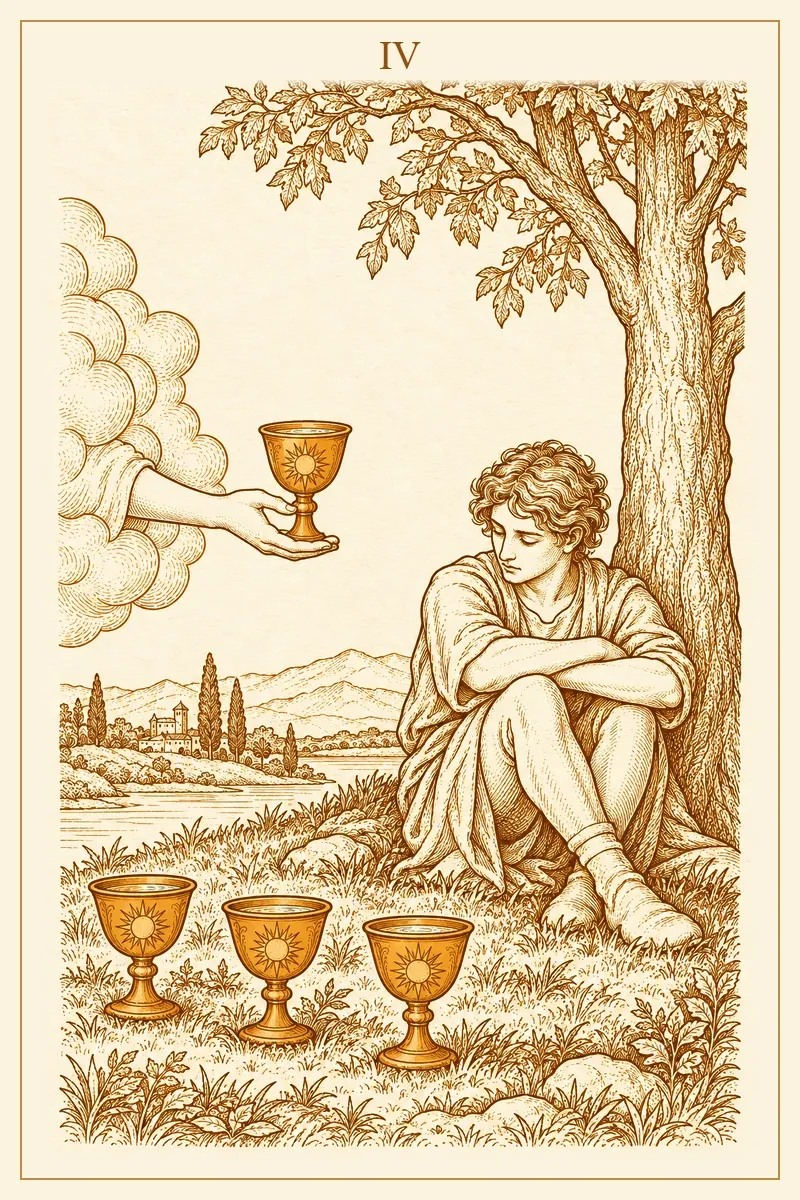
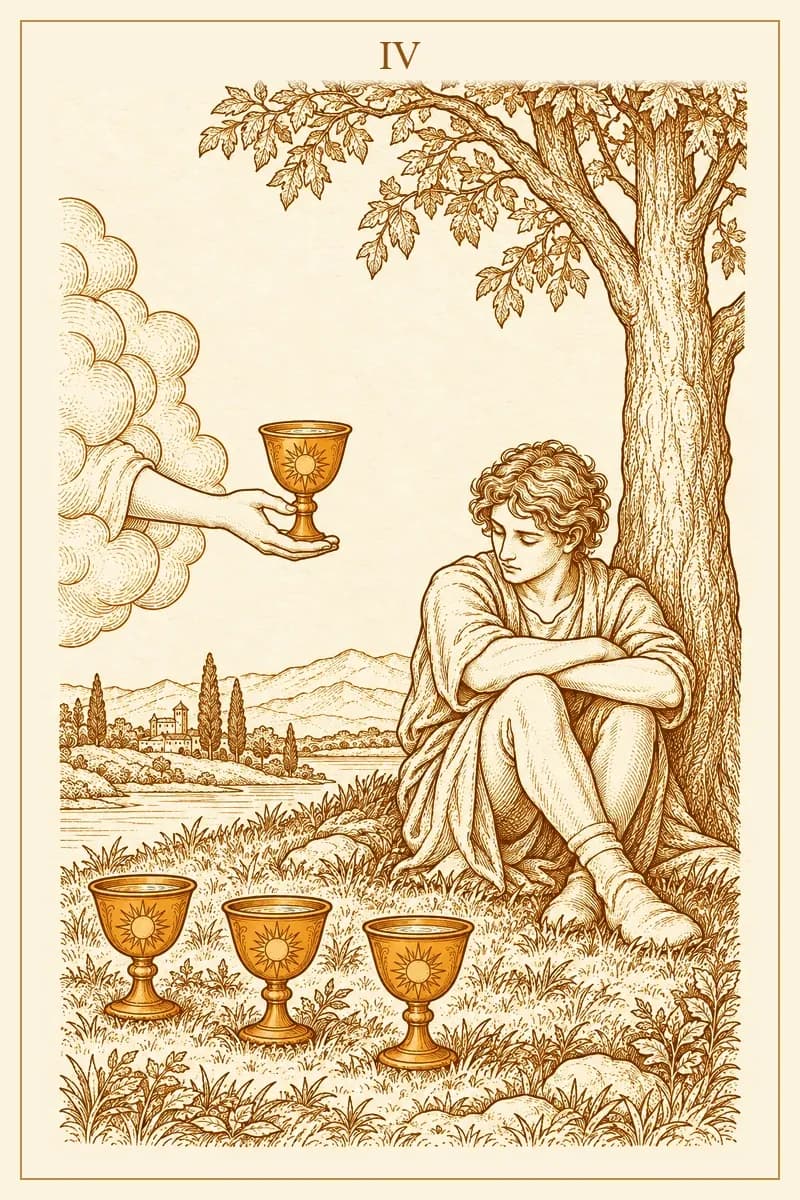
The card is engraved in gold line on cream, with the numeral IV at the top. A young man with curly hair sits on the grass, his back against the trunk of a broad, leafy tree. In the foreground, three gold goblets stand in a row among the weeds, each marked with a small sun. On the left, a hand in a loose sleeve reaches out of a bank of soft clouds and holds a fourth goblet, the same shape and the same sun, balanced on its open palm. Behind him a calm river, tall cypresses and a small town with towers sit beneath low mountains: life carrying on at a gentle distance.
The three cups on the ground stand for what is already within reach: the relationships, work, comforts and routines that make up your life now. Nothing is wrong with them; they stand upright and catch the light. The fourth cup is something new, an invitation or a kind of care, arriving from a direction you were not watching. The whole card is built around the gap between the two.
Folded arms and lowered eyes
The young man's knees are drawn up and his arms are folded across them, a closed and self-protective shape. His head tilts forward and his eyes are lowered toward the grass. The offered cup hangs at about the height of his head, but off to one side, so his gaze never meets it. He is not refusing it; he is simply not looking, his attention turned inward and down.
The tree gives him shade and something solid to lean on, which is the kinder side of the card. Sometimes a tired heart needs exactly that. The question the image asks is whether he is resting there or hiding there.
Moon in Cancer and the Lord of Blended Pleasure
In the astrological scheme many readers use, the Four of Cups belongs to the Moon in Cancer, the last ten days of the Cancer season. Cancer is a sign of home and memory, and its ruling Moon pulls feelings inward toward comfort. The card's traditional title, the Lord of Blended Pleasure, fits the scene: pleasure is present, but it is mixed with dullness, doubt or a faint sense that it ought to feel like more.
Its place in the suit sharpens the picture. It comes straight after the Three of Cups, and our Three of Cups meaning guide shows how bright that celebration is. The Four is the morning after, when the glow has faded. Next comes the Five of Cups, where real loss enters. The Five of Cups guide explains how that card mourns what has spilled, whereas the Four is still surrounded by full cups and cannot enjoy them.
Upright Four of Cups: full cups, flat feelings
Upright, the Four of Cups describes emotional flatness without an obvious cause. On paper, things are fine: people who care about you, work to do, a roof and a routine. Yet very little of it reaches you. You may catch yourself scrolling past invitations or turning down something you would have jumped at a year ago.
Apathy that grows out of having enough
This is what separates the Four from the harder cards of its suit. The problem is not lack but saturation, comparison or fatigue. Perhaps you chased a goal for so long that reaching it felt like an anticlimax. Perhaps you keep measuring your life against an ideal version that does not exist. The cups are full, and your capacity to taste what is in them has dulled.
The card often follows a letdown, too: a plan that fell through or a person who disappointed you. Rather than grieve openly, you pull in and quietly decide that nothing out there is worth the risk of feeling that again. The folded arms are a shield.
A pause that heals, or a pause that hides
Not every withdrawal is a problem. The upright Four can mark a necessary time-out in which you reassess what you want and refuse to grab the next shiny thing just to fill a silence. That is discernment, not apathy. A healing pause slowly gives you clearer wants; a hiding pause repeats the same flat day while the offered cup hangs unnoticed.
One test helps: would you say yes to something genuinely good if it arrived tomorrow? If the honest answer is "probably not," the card is pointing at avoidance, and the gentle work is to start looking up in small ways.
Four of Cups reversed: the head lifts, or the arms fold tighter
The reversed Four of Cups can swing two ways. Most often it means the withdrawal is ending; less often it shows the withdrawal hardening or turning into a conscious choice. Our guide to reading reversed tarot cards covers the general methods; here is how they apply to this card.
Looking up and reaching for the cup
In its main reading, the reversed card is the moment the young man finally raises his head. Interest returns. You notice an offer you had brushed aside, call back the friend you kept putting off or feel curious about your work again, often with a sense of relief, as if a low hum of boredom has switched off. What you already had starts to taste like something again.
This reversal also asks for movement. Seeing the cup is the first step; taking it is the second. If you have been waiting until everything feels perfect before saying yes, the reversed Four suggests you have waited long enough.
Turning further inward
In a smaller share of readings, especially beside heavy cards, the reversal intensifies the upright meaning. Withdrawal deepens into isolation, and help or opportunity is refused on purpose rather than by oversight. Some readers also see a chosen retreat here: saying no to what is not right for you. That version is a boundary, not a problem.
How to tell which reversal you are holding
Look at the cards around it. Lighter, active cards nearby, such as an Ace or a bright Major Arcana card, point toward re-engagement; closed, heavy cards point toward a deeper retreat. Then imagine saying yes to the next good thing and notice whether you feel a small lift or a wall. A lift means the cup is in view. A wall means you need more rest or support before you reach for anything new.
Is the 4 of Cups a yes or no?
Upright, the 4 of Cups leans toward no, or more precisely "not as things stand." The energy behind the question is low, and the card suggests you may not want the thing as much as you think, or are not yet in a state to receive it. If you asked "Should I accept this?", it asks you to check first whether your hesitation comes from good judgment or from fatigue.
Reversed, the answer leans toward yes, especially for questions about re-engaging: going back to a project, giving someone another chance or accepting an offer you nearly dismissed. If the reversal reads as a deeper retreat in your spread, treat it as "not now" instead.
For the clearest answer, ask one specific question and read the card's mood. Our yes or no tarot reading guide shows how to phrase it and how to handle cards that answer with a condition attached.
The Four of Cups in love: when the spark goes quiet
In a relationship
In an established relationship, the upright Four often points to complacency. Nothing is exactly wrong, yet one or both of you feel bored, distant or taken for granted, and affection has turned into habit. The card does not say the relationship is over; it says attention has drifted. Small, real gestures help most: a walk without phones, a question you have never asked, a word of thanks.
If you are single
For singles, the Four often describes turning down people or invitations without much thought, sometimes because a past relationship still fills the frame. You might be comparing every new person to someone you lost, or to a partner who exists only in your head. The card suggests looking again at who is already around you before deciding that nobody interests you.
What it says about how someone feels
In a position about the other person's feelings, the card usually describes distraction or emotional fatigue rather than active dislike. They may be preoccupied, low or unsure what they want. That is not the same as not caring, but the warmth you hope for may not be available right now. A calm, direct conversation will tell you more than drawing card after card on the same question.
Reversed in love
Reversed in a love reading, walls come down. You may see a partner in a fresh light, feel ready to date again or realize that someone has been offering steady care all along. If the reversal reads as a retreat instead, one person may be stepping back on purpose, and it is worth asking kindly what they need.
Career and money: autopilot at work, indifference to the balance
At work
At work, the upright Four of Cups is the card of tasks done on autopilot. The job that once engaged you feels monotonous, and new projects, courses or sideways moves fail to interest you. Ask honestly whether the work is wrong for you or burnout has dulled everything, including your view of the options. Rest, a talk about scope or one small new responsibility answers that more clearly than a sudden exit. Reversed, a dismissed opportunity starts to look promising, or a familiar role finds new meaning, and you are ready to raise your hand again.
With money
With money, the upright card can show indifference: bills left unopened, savings ignored or a feeling that no amount would satisfy you anyway. The practical step is modest: look at the numbers once, calmly, and notice what is actually there. Reversed, you begin to see options you overlooked and to appreciate the stability you have built. Any real financial decision still deserves its own research and, where needed, professional advice.
Low energy and a dry inner life
In questions about well-being, the upright Four can mirror low motivation for self-care: meals rushed, exercise dropped, sleep used to escape rather than restore. The flatness is emotional more than physical. If a low mood lasts for weeks or starts to affect daily life, that is a reason to talk with a doctor or counselor; a card can point at the feeling, but care for it comes from people.
Spiritually, the Four is a dry season in which meditation feels pointless, a normal stage of inner life rather than a failure. Keep a small practice going without demanding anything from it; reversed, interest returns, often deeper than before.
Five cards that change the offered cup
Ace of Cups: the fourth cup arrives
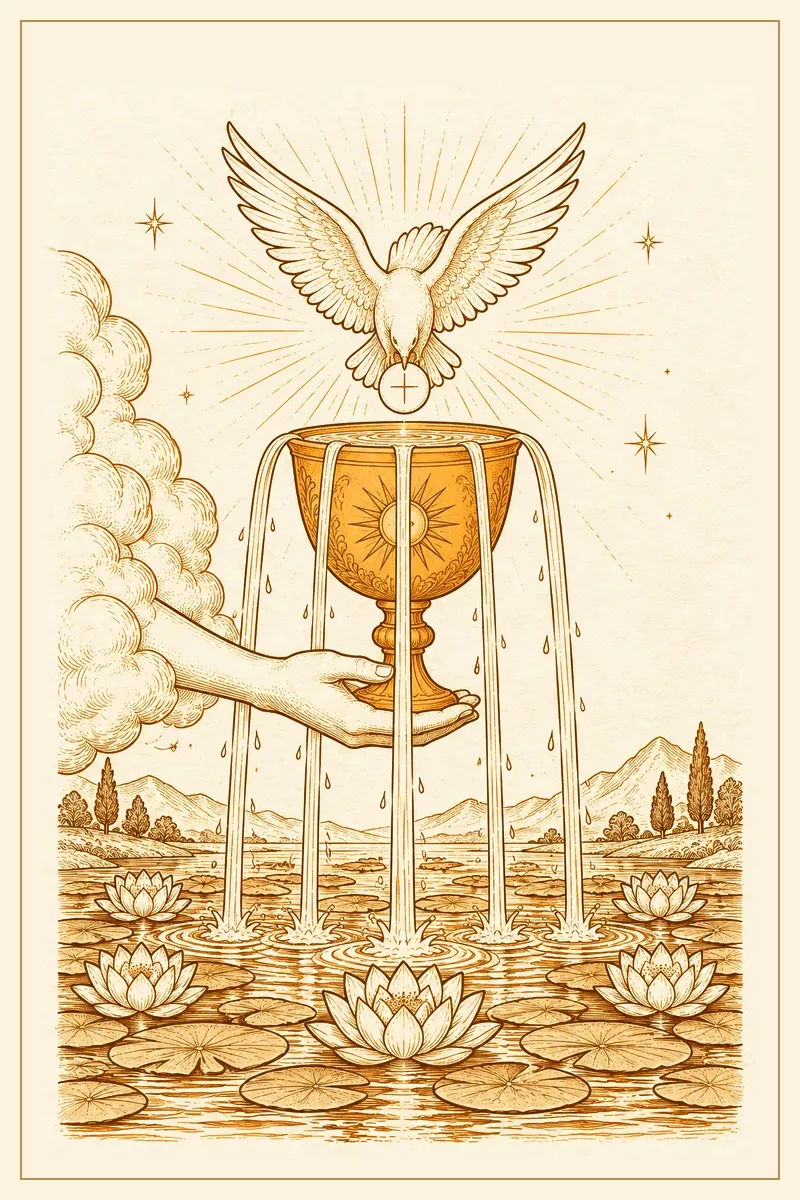
The Ace of Cups beside the Four almost works as a caption for the picture: the cup from the cloud is right there. Something new, whether a friendship, a romance or a creative spark, is on offer during a low period. As our Ace of Cups tarot meaning describes, the Ace is emotion at its freshest. Paired with the Four, the advice is to hold out your hand.
The Hermit: a retreat with a purpose
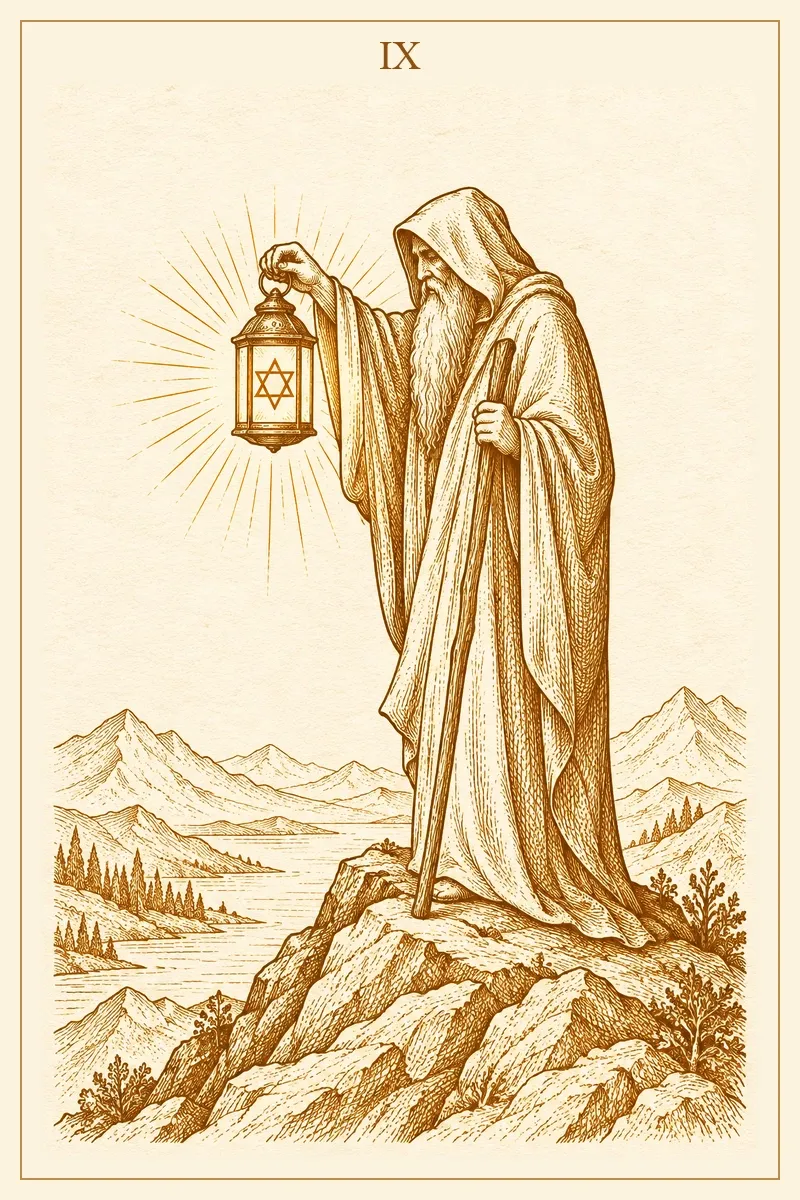
With The Hermit, the withdrawal has meaning. You are stepping back to do real inner work, and the quiet is more than apathy. Our Hermit card guide explores that kind of chosen solitude. Together they ask you to make the retreat deliberate, with a time frame and notes to bring back.
The Sun: joy you cannot feel yet
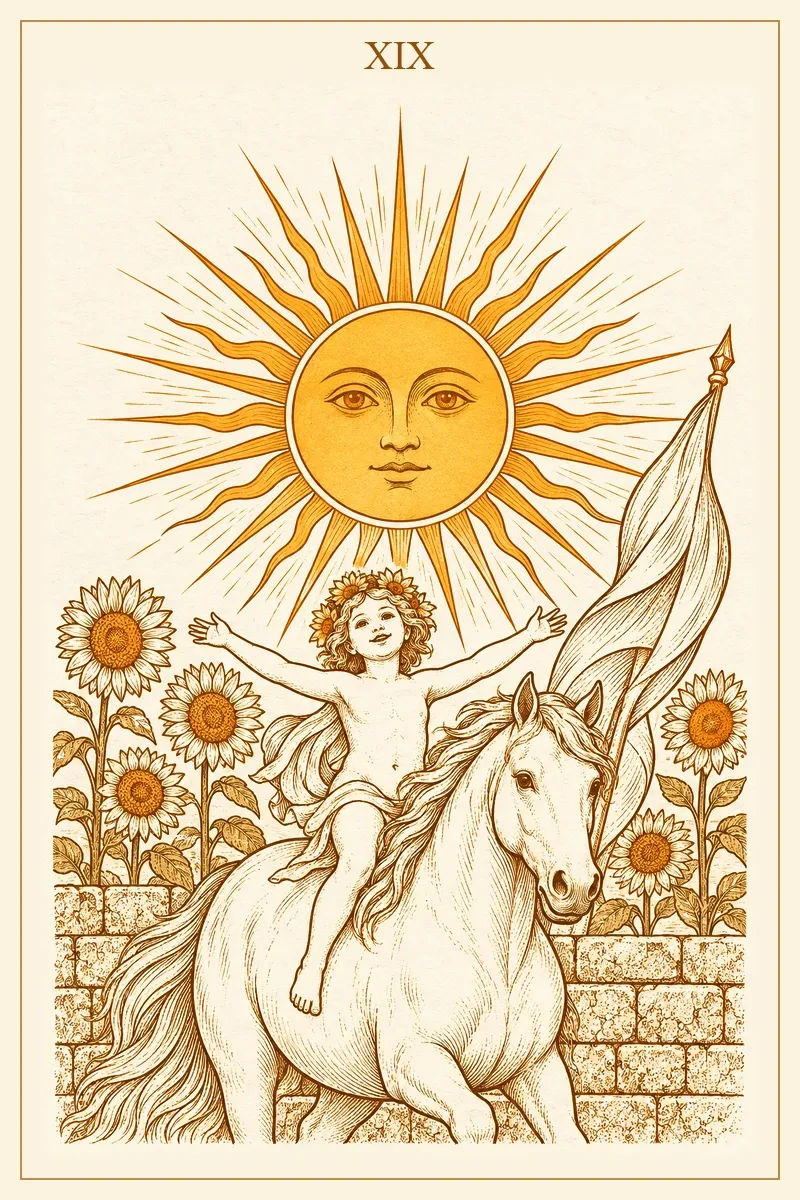
Next to The Sun, the Four suggests that warmth and good things are present, but you are not letting them in. The Sun tarot card meaning covers its full range; in this pairing it is a reminder that the light is already on, even while you sit in the shade.
The Tower: a jolt out of stillness
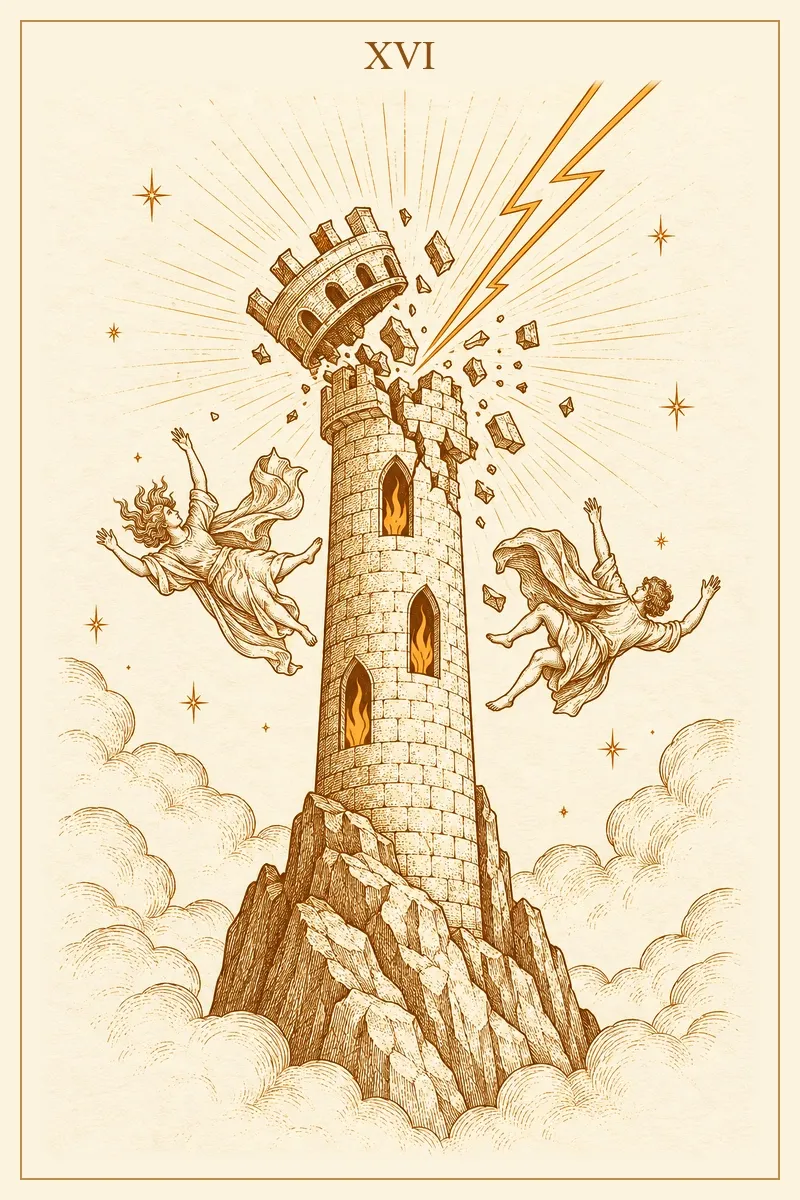
With The Tower, something unexpected shakes the young man out from under his tree. Sudden news or a realization ends the stalemate, ready or not. Our Tower meaning guide explains why that kind of shock often clears space; next to the Four, it can be the push you would not have given yourself.
Eight of Cups: from sitting still to walking away
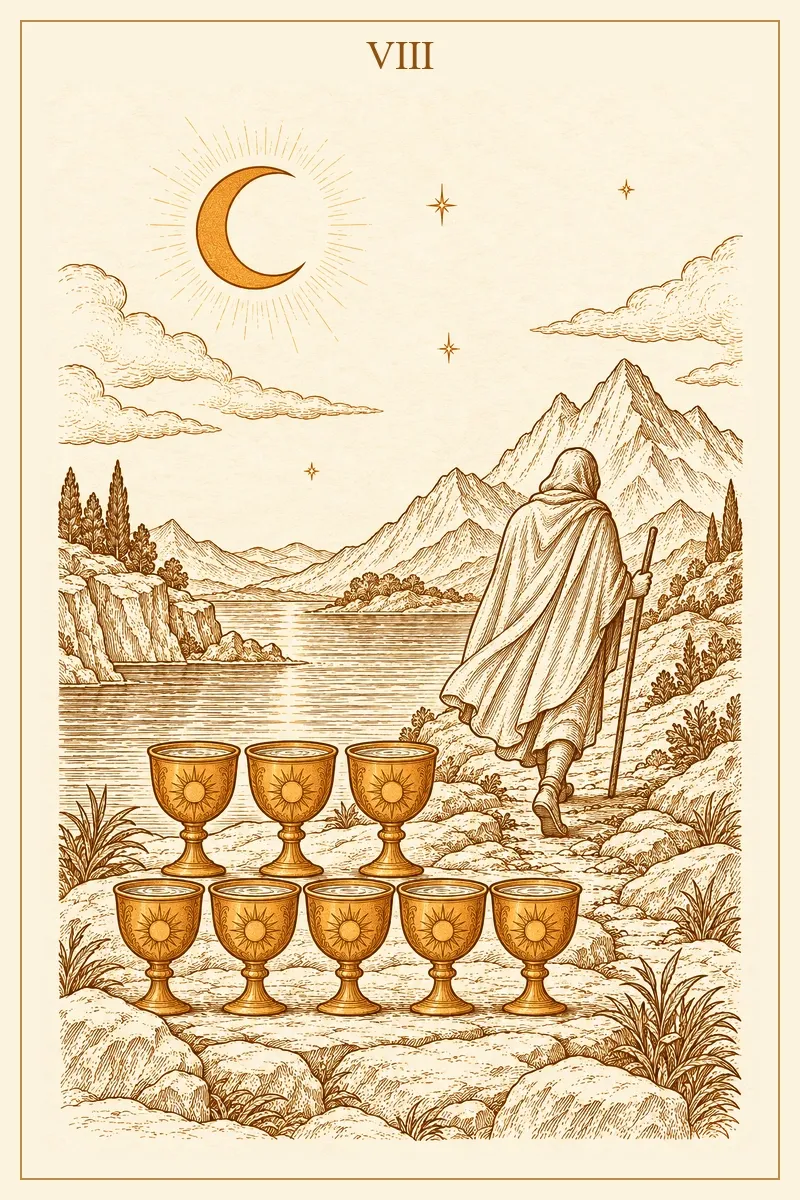
The Eight of Cups shows where long contemplation can lead: a decision to leave something that no longer fulfills you and go looking for something deeper. The Eight of Cups meaning frames that departure as emotional courage. Together, they say the reflection is finished and the next step is movement.
The offered-cup spread: four positions
When the Four of Cups keeps turning up, or when you feel flat and cannot say why, this four-card spread follows the shape of the card itself. Shuffle with the question "What am I not seeing?" and lay the cards in a row.
- The cups in the grass: what you already have and have stopped noticing.
- The folded arms: what keeps you closed, whether tiredness, an old hurt or comparison.
- The cup from the cloud: what is being offered to you now.
- The lifted head: one small way to look up and receive it.
Read the first two positions slowly. The spread works best when you credit what is already full and name what is holding you back before turning to the gift.
A reading in practice: the promotion that felt like nothing
Imagine someone who finally won a promotion after two years of work and felt nothing but tired. Their question: "Why can't I enjoy this, and what am I missing?"
The cups in the grass: Six of Cups. A card of memory, old friendships and simple pleasures. What this person has stopped noticing is the warmth of long-standing friends and the playful parts of life outside work, which the push for the promotion crowded out.
The folded arms: the Four of Cups itself. The card turning up in the position of what keeps them closed is telling. The block is the flatness, a mix of exhaustion and the sense that the goal should have felt bigger. The promotion is fine; the capacity to enjoy it has run low.
The cup from the cloud: Page of Pentacles. A student's card. What is on offer is learning: a skill the new role makes possible, and a beginner's curiosity they have not felt in years.
The lifted head: Temperance. Balance and blending. The way forward is not another push but a better mix: fewer late nights, more time with the people from the first card and a slower pace for growing into the new job.
Taken together, the reading says the promotion is not the problem; two years of single-minded effort drained the pleasure out of everything, the win included. The next steps: book time with old friends, pick one part of the new role to learn properly and take the overdue rest.
Small ways to look up again
- Name the three cups. Write down three good things in your life right now, however ordinary.
- Rule out tiredness first. Give yourself a week of decent sleep and fewer obligations, and see what shifts.
- Say yes to one small offer. A coffee, a call, a class. Practice receiving without needing it to be perfect.
- Notice the comparison. If you keep measuring your life against an imagined better version, write it down and ask whether it truly exists.
- Put an end date on the retreat. Choose a day to check in with yourself again, so the pause does not drift on for months.
A few questions to journal on afterward: What am I overlooking right now? Is my withdrawal rest or avoidance? What would make me feel curious again, even a little?
Frequently asked questions
Is the Four of Cups reversed a positive card?
Usually, yes. Most readers take it as interest and motivation returning, and as noticing an opportunity you nearly missed. In a heavy spread it can instead show a deeper retreat, so read it alongside the cards next to it.
Does the Four of Cups mean someone has lost interest in me?
Not necessarily. In a relationship reading it more often shows distraction, low energy or emotional fatigue than a decision to stop caring. Keep in mind that a tarot card cannot see into another person's mind, confirm their intentions or predict what they will do. Use it to understand the mood between you, then speak with them directly.
How long does a Four of Cups phase last?
The card describes a phase, not a fixed length of time. How long it lasts depends mostly on whether you treat the pause as rest with an end or let it drift, and small acts of re-engagement tend to shorten it. Some readers use its astrological season, mid to late July, as a loose timing hint.
What is the difference between the Four of Cups and the Four of Swords?
The Four of Swords is deliberate rest and recovery, usually after strain; the mind goes quiet on purpose. The Four of Cups is emotional disengagement: you are awake but not interested. If your pause leaves you restored, it is closer to the Swords. If it leaves you numb, it is closer to the Cups.
What advice does the Four of Cups give?
Pause if you need to, but do not let the pause close your eyes. Appreciate what you already hold, notice what is being offered and say yes to one small good thing.
Lift your head when you are ready
The young man under the tree is not lost; he is only looking down. Whenever you want to see what might be held out to you, a Veil Soul reading lets you lay out your own situation card by card, at your own pace.