Loading your view
The page is gathering the latest information.
The page is gathering the latest information.
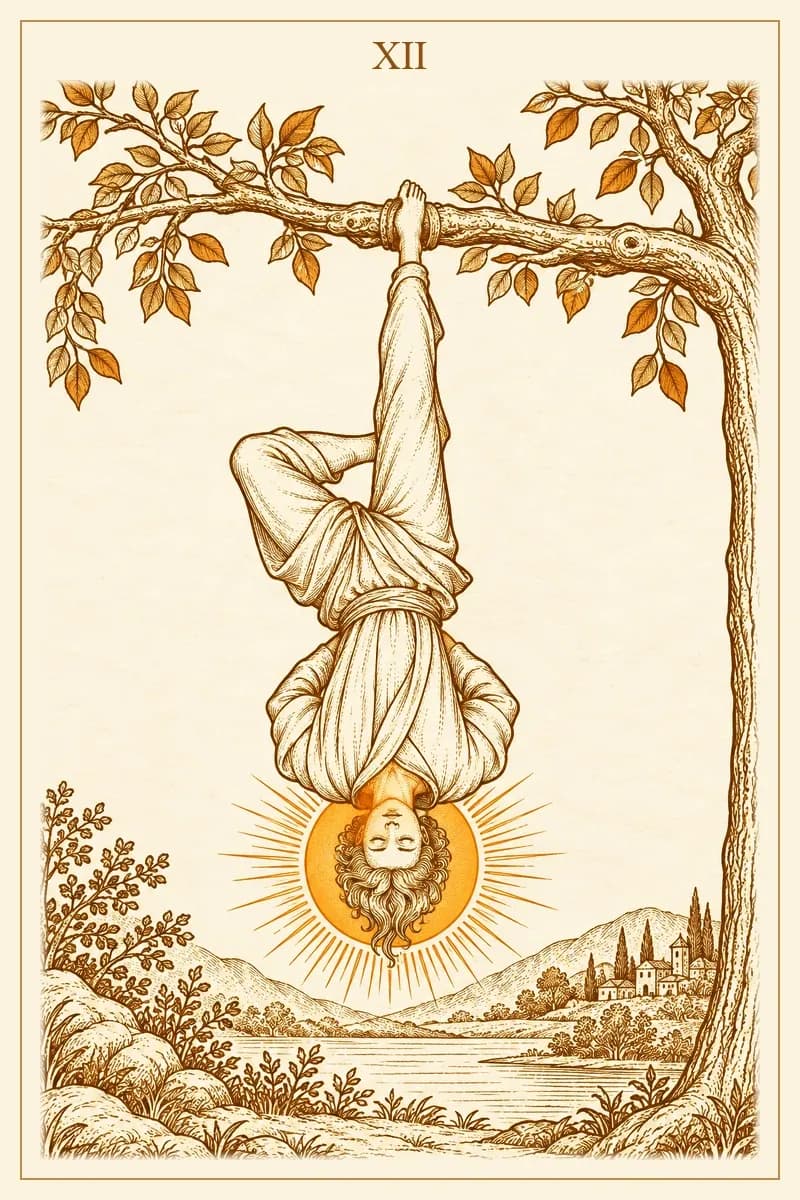
The card shown is VeilSoul's own engraved drawing of the 1909 Waite–Smith card. The scene and symbols described on this page follow the 1909 card, so a few details are drawn differently in our deck.
The Hanged Man hangs upside down from a living tree, one leg crossed behind the other, arms behind his back — and on his face, not agony, but a serene halo of golden light. He has chosen this position. He is not a victim; he is an initiate.
When The Hanged Man appears upright, your situation requires something that feels deeply counterintuitive: stop trying. Stop pushing, stop fixing, stop forcing. The answer you seek will not come through action but through a radical shift in perspective. Sometimes you need to turn your entire worldview upside down to see what has been invisible from your usual vantage point.
This card represents voluntary sacrifice — giving up something of value (time, control, certainty, ego) in exchange for something of greater value (wisdom, clarity, spiritual growth). It is the pause before the breakthrough. The creative block that precedes the eureka moment. The professional plateau that forces you to question everything you thought you knew.
The Hanged Man's deepest teaching is that surrender is not the same as defeat. When you release your grip on how things should be, you create space for how things need to be. In that space, insight arrives — not forced, not earned, but received.
Suspension is not stagnation — it is the only position from which certain things become visible. What looks like giving up is actually giving over to a perspective force cannot reach.
You romanticize suffering, wearing sacrifice as identity rather than transformation (excess), or refuse all surrender, fighting the pause because stillness feels like death (deficiency).
Detailed Interpretations
The Hanged Man in love asks you to release your attachment to how a relationship should look and allow it to be what it actually is. You may be trying to force a connection into a shape it does not naturally fit — pushing for commitment when patience is needed, or clinging to independence when vulnerability is being asked of you.
For singles, this card suggests that your usual approach to finding love is not working — and that is the point. Try the opposite. If you always pursue, try receiving. If you always guard your heart, try opening it. The perspective shift, not the effort, is what will change your romantic life.
In existing relationships, The Hanged Man often appears when a couple is stuck and neither person's usual strategy is solving the problem. Stop arguing for your position and genuinely try to see the situation through your partner's eyes.
In love reversed, The Hanged Man indicates that you have been sacrificing too much in a relationship without receiving anything meaningful in return. The one-sidedness has become a pattern, and the person you are waiting for may never change. Alternatively, you may be stalling a necessary relationship decision by hiding behind "I need more time to think." The reversed Hanged Man in love asks a direct question: is this stillness serving the relationship's growth, or is it protecting you from a truth you already know but are not yet willing to act on? Honest self-examination will reveal which it is.
Professionally, The Hanged Man signals that progress requires patience, not pressure. A project may be delayed. A decision may be on hold. A career transition may be taking longer than expected. Instead of fighting the delay, use it. This pause contains information that rushing would miss.
This card also appears when a fundamental reassessment of your career direction is needed. You may have been climbing a ladder that is leaning against the wrong wall. The Hanged Man invites you to step back and ask whether the success you have been pursuing is the success you actually want.
For creatives, The Hanged Man is especially relevant. Creative breakthroughs rarely come from grinding harder — they come from stepping away, looking at the problem from an unexpected angle, and allowing the solution to emerge on its own timeline. If the conventional approach to advancing your career has stopped working, this card says the answer is not more effort in the same direction — it is a willingness to see the entire situation from an entirely different vantage point.
Career-wise, the reversed Hanged Man suggests that patience has become procrastination. You may have valid reasons for waiting — but if those reasons have not changed in months, the wait is no longer strategic; it is avoidance. Alternatively, you may be enduring an intolerable work situation because you have confused suffering with wisdom. There is a critical difference between strategic patience — waiting because the timing is not yet right — and martyrdom disguised as perspective. If the suspension has gone on long enough that it has become your identity rather than a temporary posture, the reversal says it is time to come down from the tree and walk forward.
The Hanged Man in health readings speaks to the healing that happens when you stop fighting your body and start listening to it. If you have been pushing through illness, ignoring chronic pain, or treating symptoms without addressing causes, this card says: pause. Rest. Surrender to the process of healing rather than trying to manage it.
This card is particularly relevant for conditions that require waiting — diagnostic uncertainty, recovery periods, treatments that work slowly. The Hanged Man teaches that healing has its own timeline, and your impatience will not speed it up.
Mentally, this card supports mindfulness and the practice of non-resistance. The more you fight anxiety, the stronger it becomes. The more you resist sadness, the longer it stays. The Hanged Man says: let it be there without becoming it. Observe without reacting. In that stillness, healing begins.
Use this as a reflective prompt, not medical advice or a diagnosis. For health concerns, seek guidance from a qualified healthcare professional.
The Hanged Man reversed signals resistance to the very surrender this card demands. You may be clinging to control, refusing to let go of a situation that has already ended, or stubbornly insisting on action when stillness is what is needed.
Alternatively, this reversal can indicate a sacrifice that has gone on too long. You have been waiting, enduring, and putting others first — but the waiting has become martyrdom rather than wisdom. If your sacrifice is not producing insight or growth, it may be time to cut yourself down from the tree.
The reversed Hanged Man can also represent stalling — using the appearance of spiritual patience as an excuse to avoid making difficult decisions. True surrender is active and conscious; procrastination dressed as patience is just avoidance.
The reversed Hanged Man teaches that there is a difference between patience and paralysis, between sacrifice and self-neglect. Surrender becomes stagnation when it is used to avoid the discomfort of decisive action. The deepest wisdom here is that genuine spiritual surrender is an active, courageous choice — not a passive retreat from responsibility. When you find yourself suspended indefinitely, the lesson is to ask honestly: am I still learning from this stillness, or am I hiding in it? The answer requires the same honesty the upright Hanged Man cultivates — but applied now to the harder question of when the waiting must end and the walking must begin.
If something is not working despite your best efforts, try the opposite approach today. Pause where you would normally push. Listen where you would normally speak. Surrender control where you would normally tighten your grip. The Hanged Man teaches that sometimes the breakthrough lives on the other side of letting go — and that the perspective you need is available only when you stop trying to force the view you already have.
“I release my need to control the outcome. In surrender, I discover wisdom that effort alone could never reach.”
The card shown is VeilSoul's own engraved drawing of the 1909 Waite–Smith card. The scene and symbols described on this page follow the 1909 card, so a few details are drawn differently in our deck.
The Hanged Man suspends from a T-shaped living tree — a Tau cross, representing the intersection of earthly suffering and divine wisdom. The tree is alive and green, indicating that this sacrifice is not death but transformation.
His inverted position reverses the normal relationship between heaven and earth: his head (intellect) is below while his heart approaches the sky. This physical inversion represents the mental inversion the card demands — seeing the world from a completely different angle.
The halo of golden light around his head tells us that this suspension has produced illumination, not suffering. His crossed leg forms the number four (stability within instability), while his arms behind his back form a downward-pointing triangle — the alchemical symbol for water, representing the flow of consciousness into deeper, subconscious realms.
The Hanged Man's number, twelve, connects him to the twelve zodiac signs, the twelve months, and the complete cycle of earthly experience that must be surrendered before spiritual insight can be gained.
Twelve represents the complete cycle of experience — twelve months, twelve zodiac signs, twelve hours of light and dark. It signals that a full rotation must be completed and surrendered before the next phase of growth can begin.
Keep or share this card reference
How The Hanged Man reads beside other cards.
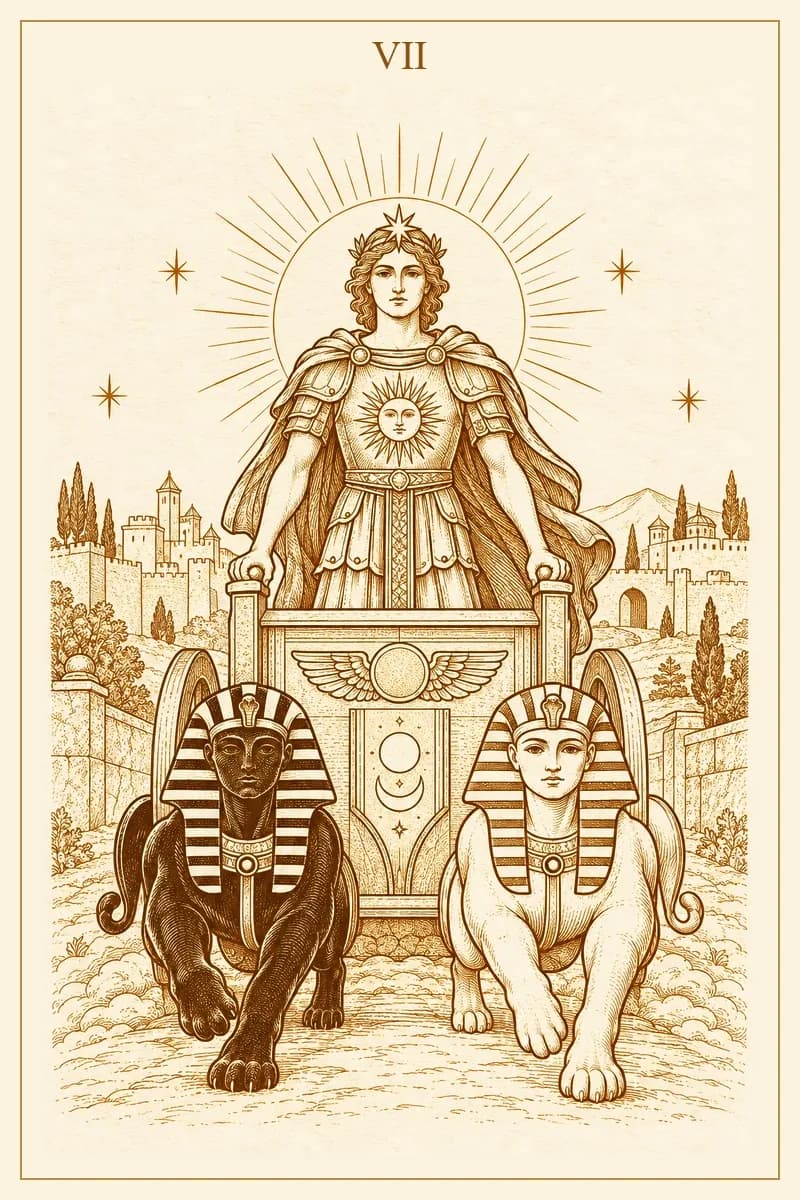
momentum versus surrender
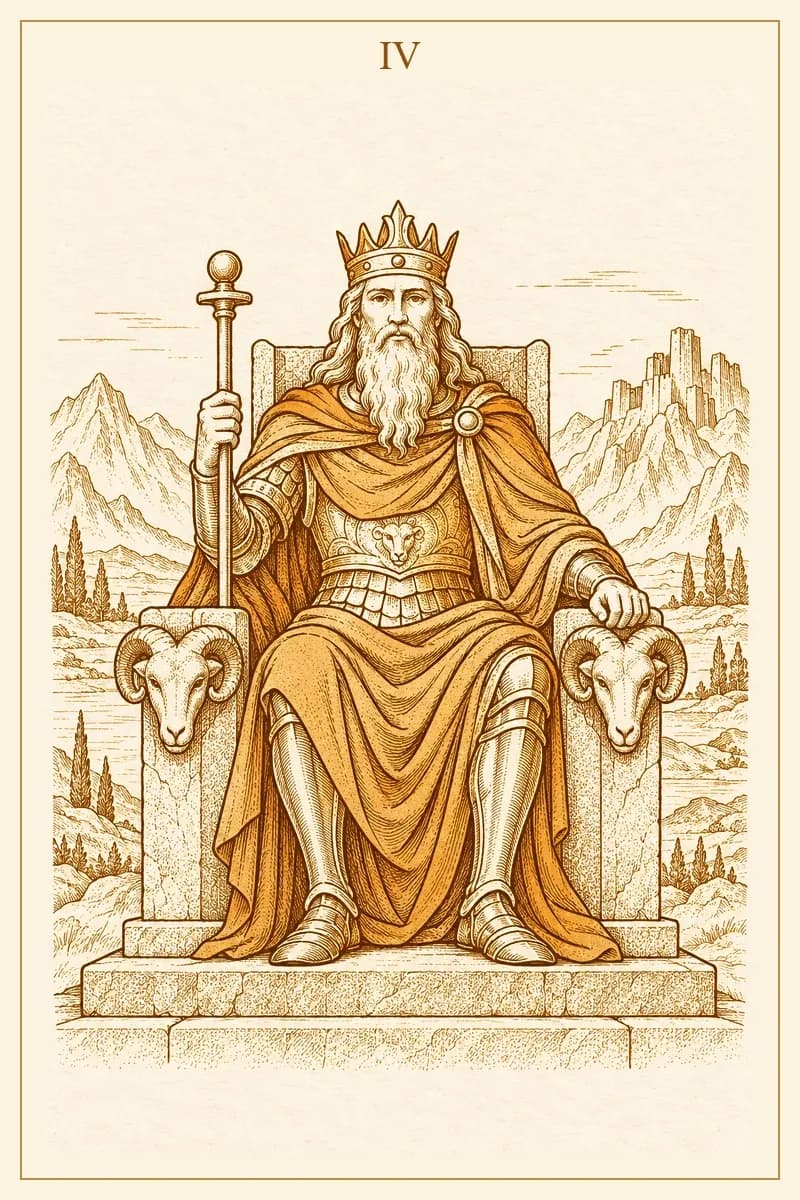
control vs release
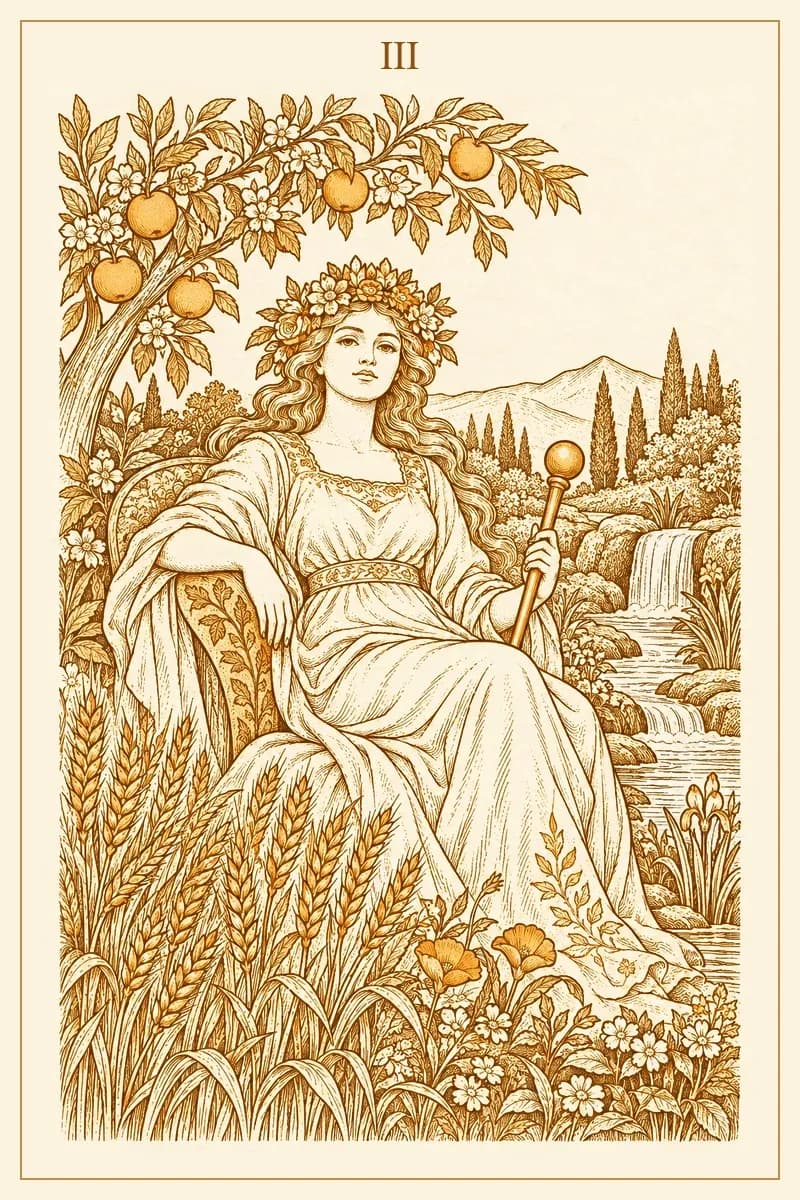
fertile suspension
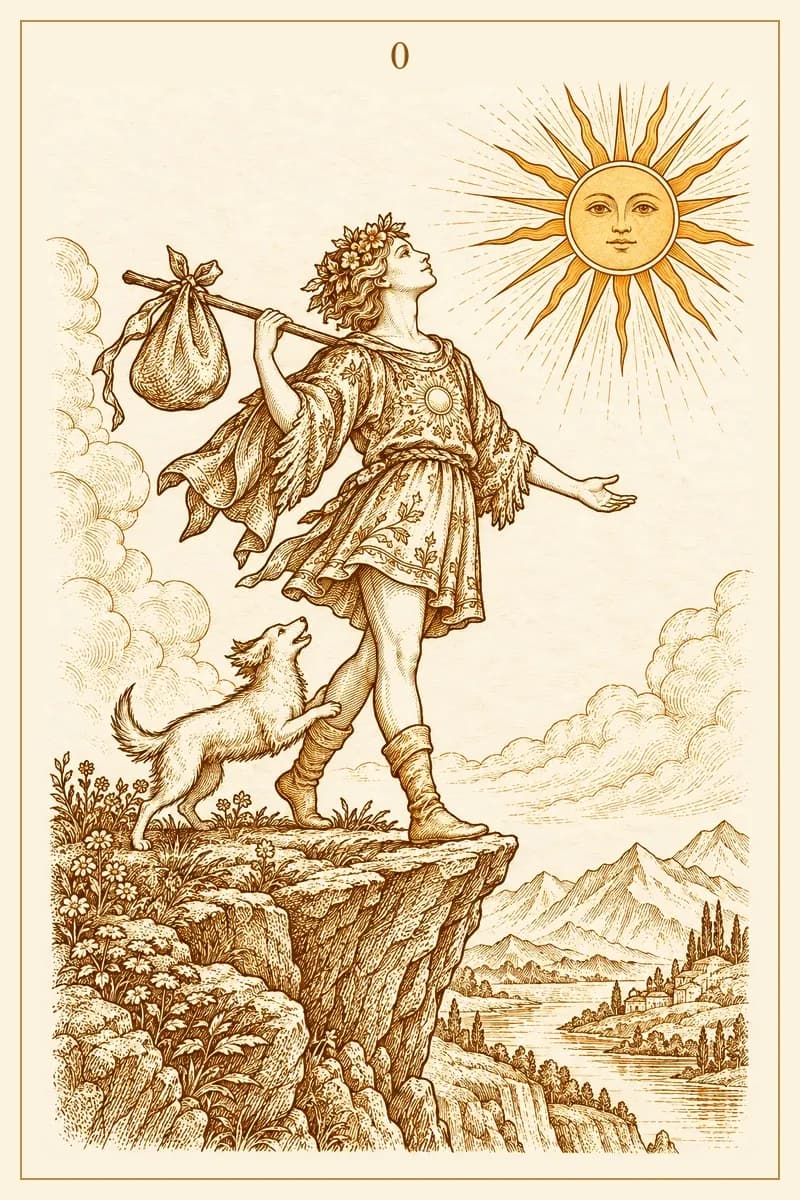
Stillness Ambushes Motion
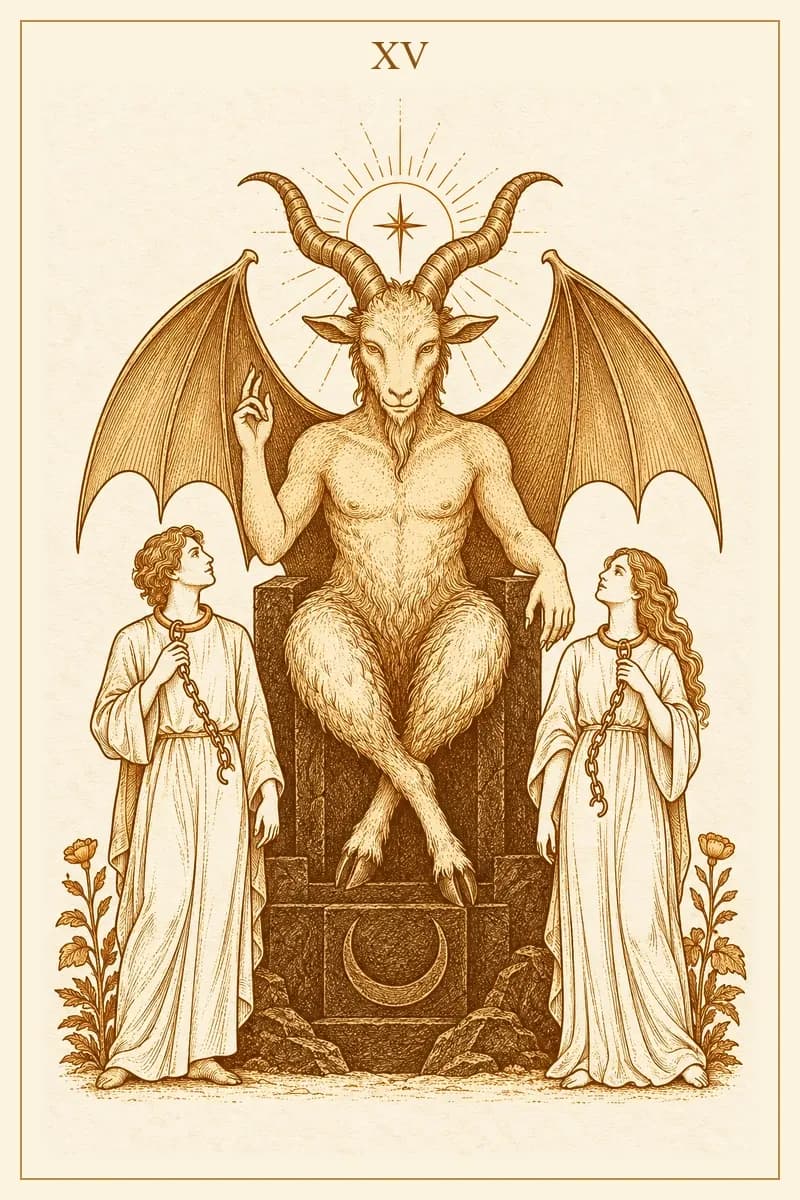
willing captivity
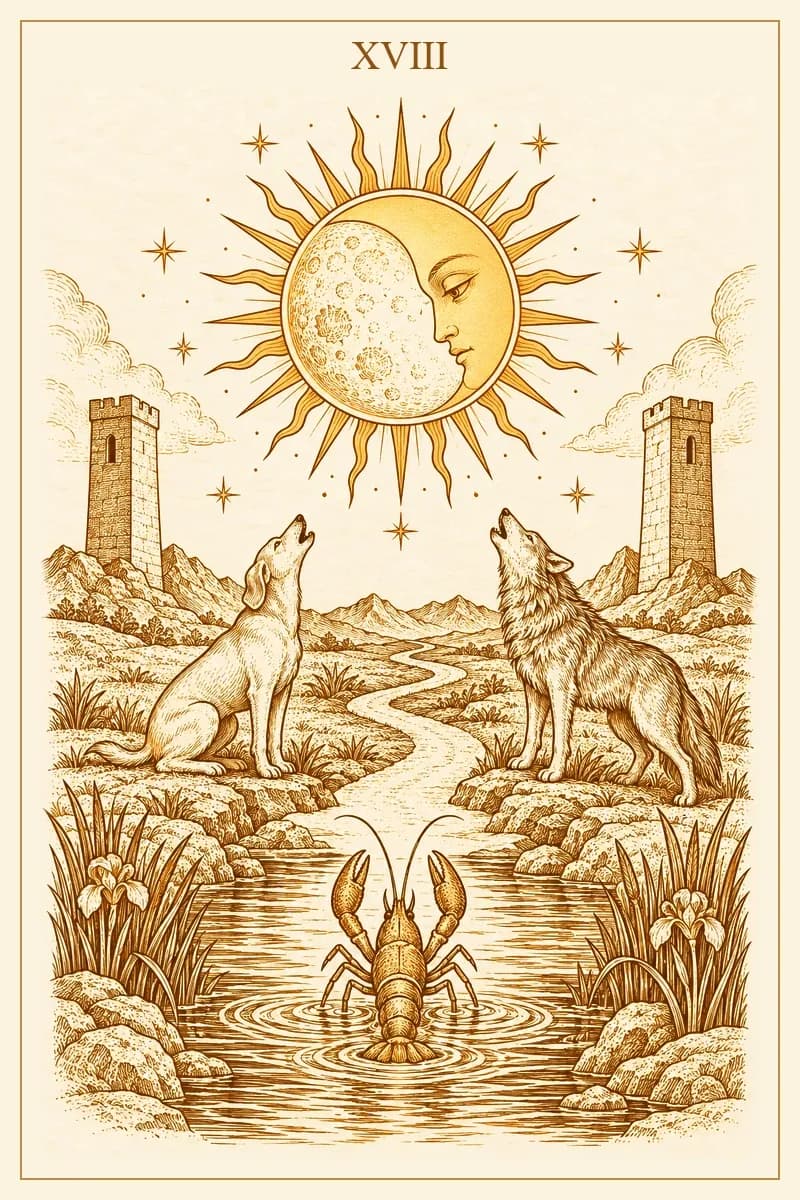
Voluntary Suspension
✦ From meaning to reflection ✦
Bring what this card stirred into a reading shaped around what you are facing now.
Read with this insight