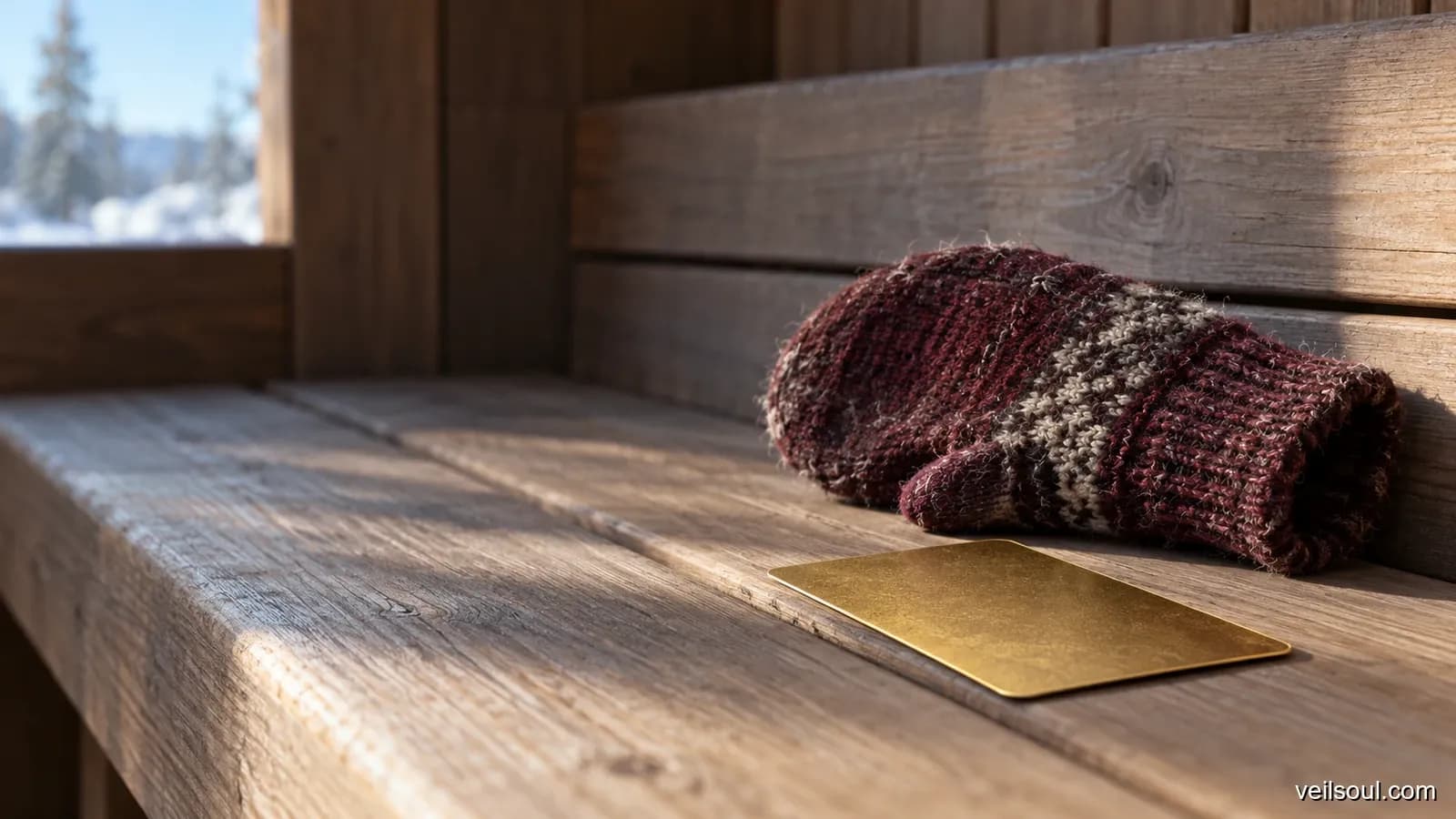
The Five of Pentacles is the tarot card of hard times: money running short, a body that worries you, a job or a circle that has closed you out. Upright, its meaning is hardship and the feeling of being left out in the cold, with help nearer than it looks from where you stand. Reversed, it usually means the worst is easing and you are starting to accept support, though it can also mean the hardship has ended on paper while the fear of it stays.
Tarot cannot tell you whether a debt will be cleared, a test result will be good or an employer will call back, and it cannot read what another person privately feels. What this card can do is show the shape of a difficult season: where you feel shut out, what you are carrying alone, and which kinds of help you may be walking past.
- Upright: material trouble, money or health worry, exclusion, help close by but unseen.
- Reversed: recovery beginning, accepting help, finding company again; or a scarcity mindset that outlasts the hard time.
- Love: a relationship strained by outside pressure, or the ache of feeling that love is for other people.
- Feelings: someone who is struggling and feels they have little to offer; reversed, someone starting to let you in.
- Career and money: job loss, being passed over, a shortfall; reversed, steadier ground.
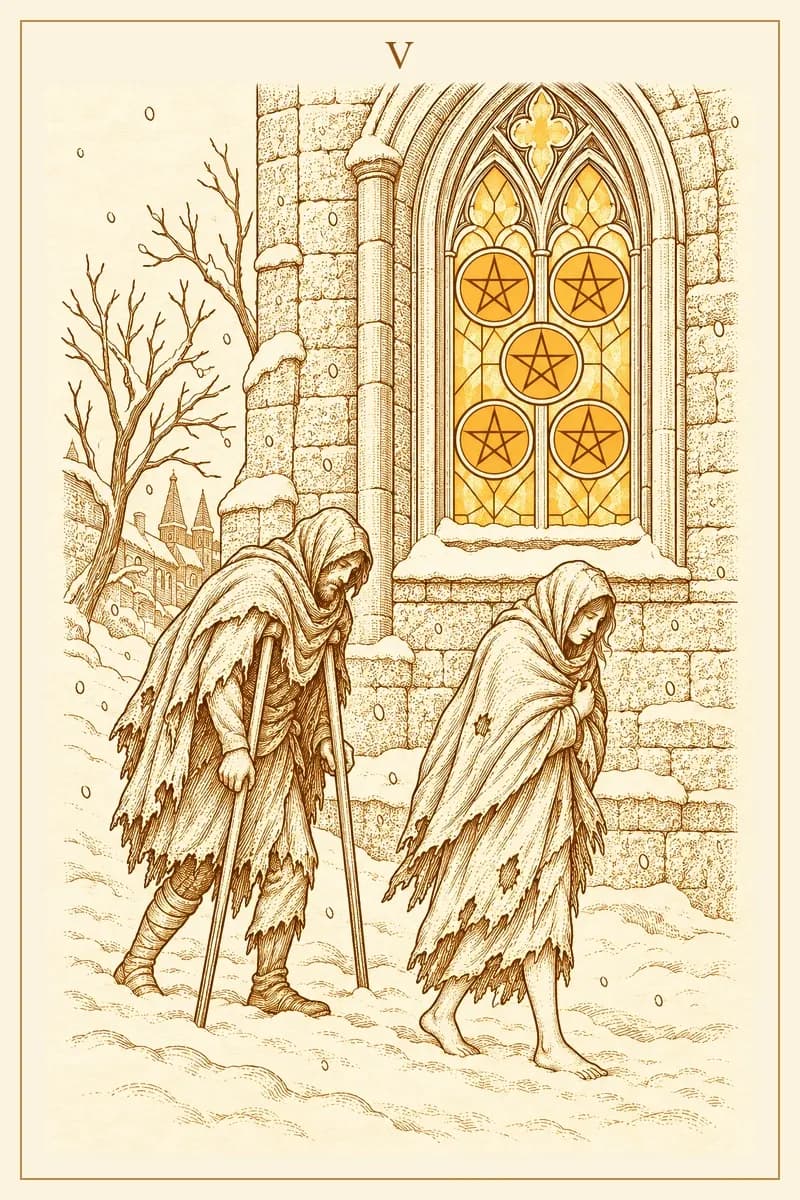
A man on crutches, a barefoot woman: the Five of Pentacles picture
Two figures passing a church wall
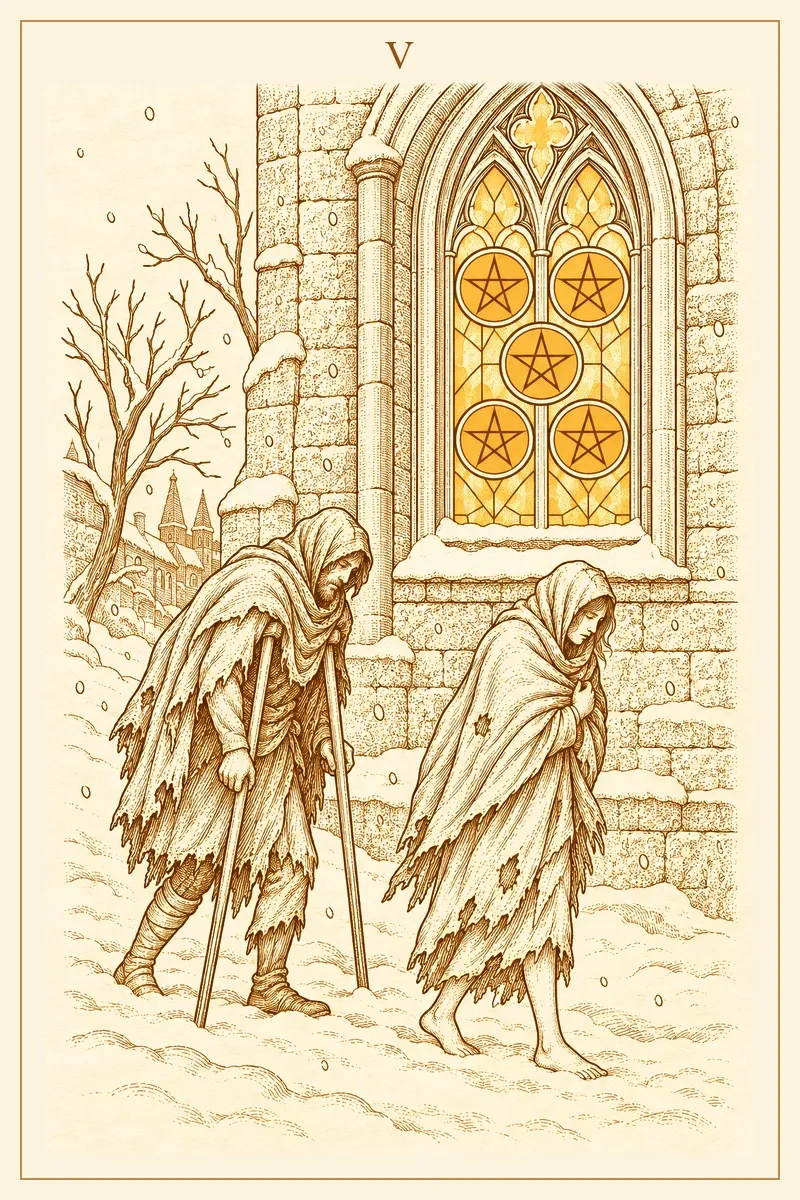
Snow is falling, and two people are making their way through it along the foot of a stone church wall. On the left, a bearded man in a ragged hooded cloak leans on two wooden crutches, one shin wrapped in strips of cloth, his head hanging forward. Beside him walks a barefoot woman in a torn hooded shawl, holding it closed at her chest, her head bowed too. Small star-shaped holes show in the cloth she clutches. Behind them on the left stand a bare tree and the pointed spires of a town. No one comes out to meet them, and no hand reaches down: only the weather, the wall, and the two of them, walking.
Five pentacles in stained glass
Above them is a tall Gothic window, lit from inside so the glass glows gold. A quatrefoil crowns its tracery, and in the panes below sit five gold pentacles, two over one over two. It is the warmest thing in the card, placed just over the heads of two people whose eyes are on the snow.
That placement is where a reading of this card can begin. The card does not say whether they could go in or whether anyone inside would help. It only shows how close warmth can be to someone too cold, tired or ashamed to look up.
Lord of Material Trouble: Mercury in Taurus
In the Golden Dawn system, the late nineteenth-century order whose ideas shaped most modern tarot, this card is the Lord of Material Trouble, given to Mercury in the first decan of Taurus. Taurus is the earth sign of comfort, food, money and the body; Mercury is the quick, restless planet of thought and exchange. Put a calculating mind into the sign that most wants to feel safe and you get the worry this card knows well: counting and recounting, lying awake over numbers. The tarot cards linked to Taurus are gathered in one place if you want to follow the astrology further.
A. E. Waite, who devised the deck most modern cards follow, wrote that the card foretells material trouble above all, whether as poverty or in another form. He also noted that some card readers of his day took it as a card of lovers and companions, and admitted the two readings could not be reconciled. Look at the picture again and both are there: hardship, and two people who have not left each other in it.
Five of Pentacles upright meaning: left out in the cold
Upright, the Five of Pentacles describes a real shortfall, not an imagined one. Something material has given way: income, savings, housing, health, a job, a place in a group. If you are worried about rent, a bill, a test result or your place at work, the card is acknowledging that the worry has a real basis before it says anything else.
The second layer is isolation. The two figures are together, yet neither seems to be speaking. Hardship often does this. Money trouble makes people turn down invitations; illness makes them cancel plans; losing a job makes them avoid the people who still have one. Walking past a lit building because going in would mean admitting you need to is one of tarot's clearest pictures of shame. If the loneliness is the heaviest part right now, reading tarot through a lonely season offers gentler spreads for it.
The third layer is the window. Help is close, the card says, but you may not be seeing it, or you may not believe it is meant for you: a person who has already offered, a service you qualify for, a conversation you keep postponing, or rest you have not allowed yourself.
Five of Pentacles reversed meaning: out of the snow, or winter kept inside
Reversed, the card tells two quite different stories, and the cards beside it usually settle which one is yours.
Coming in from the cold. The more common reading is recovery. Work comes back, a debt shrinks, health steadies, or you finally accept the help you had been refusing. The turn often starts with a small act: telling one person the truth, filling in one form, taking one offer. It can also mean finding your people again, a group where you no longer feel like a stranger outside the glass.
Winter kept inside. The other reading is that the outer situation has improved while the inner one has not. The account is in the black, but you check it five times a day; you have a new job, but you expect to lose it any week. Here the reversed Five meets the card before it. The Four of Pentacles shows a crowned man on a stone block hugging one coin to his chest, another balanced on his crown and two pinned under his feet; after a hard winter, that grip can feel like safety. If you recognize yourself in it, the Four of Pentacles and its fear of letting go is worth reading beside this reversal.
To tell the two apart, ask whether your days have become lighter, or only your circumstances. If both have, read recovery. If only the circumstances have, the card is asking you to let body and mind catch up with the facts. When the reversed Five sits beside heavy cards such as the Ten of Swords or The Tower, read a hardship that has not yet reached its turning point; Waite's own reversed words were disorder and ruin.
Help within reach: the card that asks you to ask
If the Five of Pentacles has one practical message, it is that you do not have to cross the snow alone, and the help you need may only appear once you name it. In a hard season that is one of the hardest things to do, because asking can feel like proof that you have failed. A few ways to make it smaller:
- Name the actual need. "I'm struggling" is hard to answer. "Could you look over my budget with me?" or "Could you drive me to an appointment on Thursday?" gives people something they can say yes to.
- Start with one person. Choose the one who has already offered, or who has been through something similar.
- Use help that exists for exactly this. Free debt and benefits advice, employment support, community food projects, a doctor, a counselor: these are the lit windows of ordinary life, built for people in your position, not the handout shame says they are.
- Accept partial help. One bill covered, one meal, one afternoon of childcare. The card does not ask you to be rescued all at once, only to come in from the cold a little at a time.
If you are unsure what to ask the cards themselves, the tarot question library has questions for hard seasons that keep the focus on what you can do next.
Five of Pentacles in love
In love, the Five of Pentacles rarely means the feelings are gone. More often it shows two people under weather they did not choose: money stress, illness, a family crisis, overwork. Waite's old note about lovers fits here best. The question is whether the pair in your reading walk side by side, or in the same direction alone. For the card in relationships only, the Five of Pentacles in a love reading goes into couple spreads and sharing the weight.
In a relationship, or on your own
In a relationship, the upright card often points to a strain that comes from outside but is now felt between you. One partner may be hiding a debt; one may be unwell and pulling away; both may be too tired from getting through each week for affection. It can also describe feeling left out within the relationship: plans made without you, a partner warm with everyone except you. Reversed, the pressure is lifting. You can talk about money without a fight, one of you accepts help from the other, or you notice you made it through something hard together.
If you are single, the upright card can reflect a belief that love happens to other people, like watching couples through glass. Money worry can also keep people from dating at all, because a coffee feels like a cost or because they feel they have nothing to offer. The card does not say love is out of reach; it says this winter is coloring how you see yourself. Reversed, that belief is easing, and being seen as you are feels possible again.
Five of Pentacles as feelings (upright and reversed)
Upright in a feelings position, the card usually describes a person who is struggling. They may care about you but feel they have little to give right now: no money for plans, no energy for depth, or too much pride to let you see how hard things are. Sometimes they feel left out by you and believe they no longer have a place in your life. Distance in this card is more often embarrassment or exhaustion than coldness.
Reversed, the feelings are thawing. The person is starting to let you in, to admit what they have been through, or to believe they can be with you without first fixing everything. It can also show gratitude toward someone who stayed close through a hard time. A reading can show this as a possibility, not confirm it; a kind, direct conversation remains the surest way to know.
Getting back together under the Five of Pentacles (upright and reversed)
For a reconciliation question, the upright Five asks what is pulling you back. If it is mostly loneliness, a return may repeat the old pattern in worse weather. If the breakup happened during a crisis, the card may be saying that the hardship, not the love, broke the bond, and that those conditions have not changed yet. Reversed, the thaw is real enough to talk about: contact feels less frightening, old resentments are softer, and both of you are steadier. It is still an opening, not a promise. Comparing your spread with the cards that suggest reconciliation gives you more to go on.
Work, money and health worries under the Five of Pentacles
Work: losing a job, being passed over, a business in trouble
At work, the upright card can reflect a job loss or the fear of one, being left off a project or promotion list, a contract that ended, or a small business in a lean stretch. It also names the quieter exclusion of feeling invisible to the people who decide things. The practical message is to stop handling it alone: tell people in your field you are looking, use employment support, and ask former colleagues what they are seeing. Reversed, work is steadying: an interview comes through, freelance work picks up, or you find a place where you are not outside every meeting.
Money: facing the shortfall
With money, the upright card reflects a shortfall and the fear that comes with it: a growing debt, an expense you did not see coming, income that no longer covers the month. It points to two habits that make this season worse: avoiding the numbers and avoiding people. Write the figures down in one place and take them to someone qualified, such as a free debt advice service or a licensed adviser. Reversed, the pressure is easing: a payment plan, new income, help from family or a program. The cards that suggest money coming in show what that turn can look like in a spread.
Health: worry about the body, and what a card cannot tell
The man on crutches makes it tempting to read this card as a health warning. A tarot card cannot diagnose anything or tell you how an illness will go, and it should never be a reason to delay seeing a doctor or to stop treatment. What it can reflect is the experience around health: tiredness and pain, feeling left out of ordinary life, money worry wearing the body down, not telling anyone how unwell you feel. Upright, it asks you to let professionals and the people close to you share the load. Reversed, it often matches recovery, or finally getting the support you needed.
Cards that change the Five of Pentacles
Six of Pentacles: the hand held out
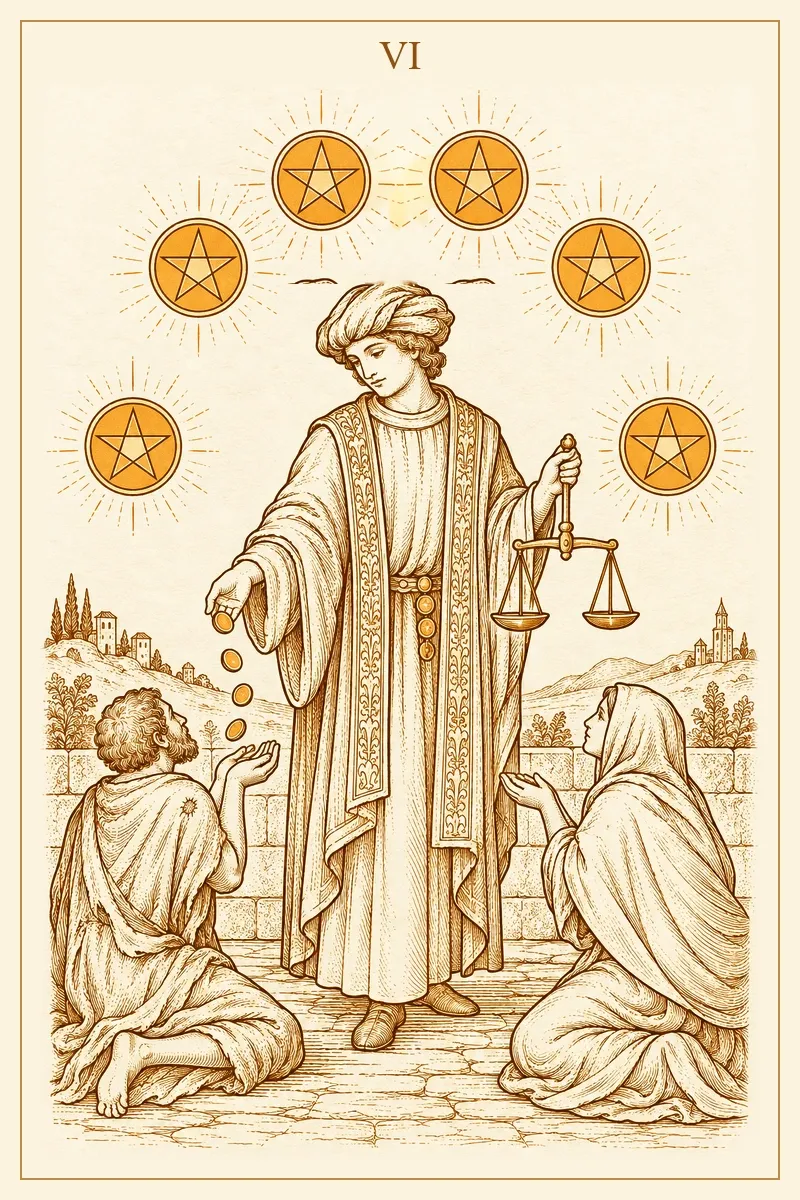
In the Six of Pentacles, a man in a turban and embroidered robe holds a balance scale in one hand and lets coins fall from the other into the open hands of a kneeling man, while a hooded woman kneels on his other side. The kneeling man has a small star-shaped mark on his shoulder, much like the holes in the woman's shawl on the Five. Together the two cards read as hardship met by generosity: help is offered, and the task is to take it without shame. The Six of Pentacles meaning of giving and receiving also covers the times when you are the one able to help.
The Hierophant: help that has a name and an address
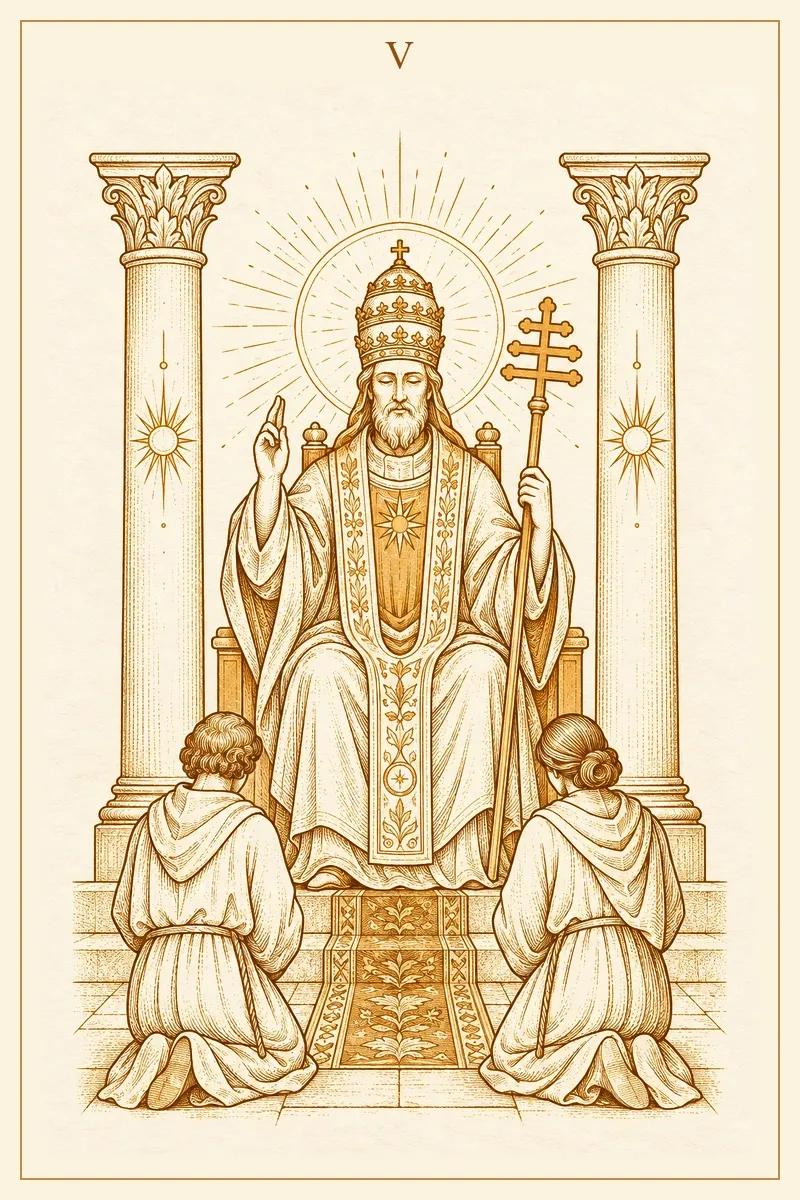
The Hierophant sits crowned on a throne between two pillars, one hand raised in blessing, the other holding a tall staff with three crossbars, while two figures kneel at the foot of the steps. Next to the Five, it points to established help: a charity, a faith or community group, a union, a public service, a family elder. It asks whether pride or old bad experiences are keeping you from places built for this moment. The card's own meaning is in The Hierophant as tradition and shared support.
The Star: hope after the long night
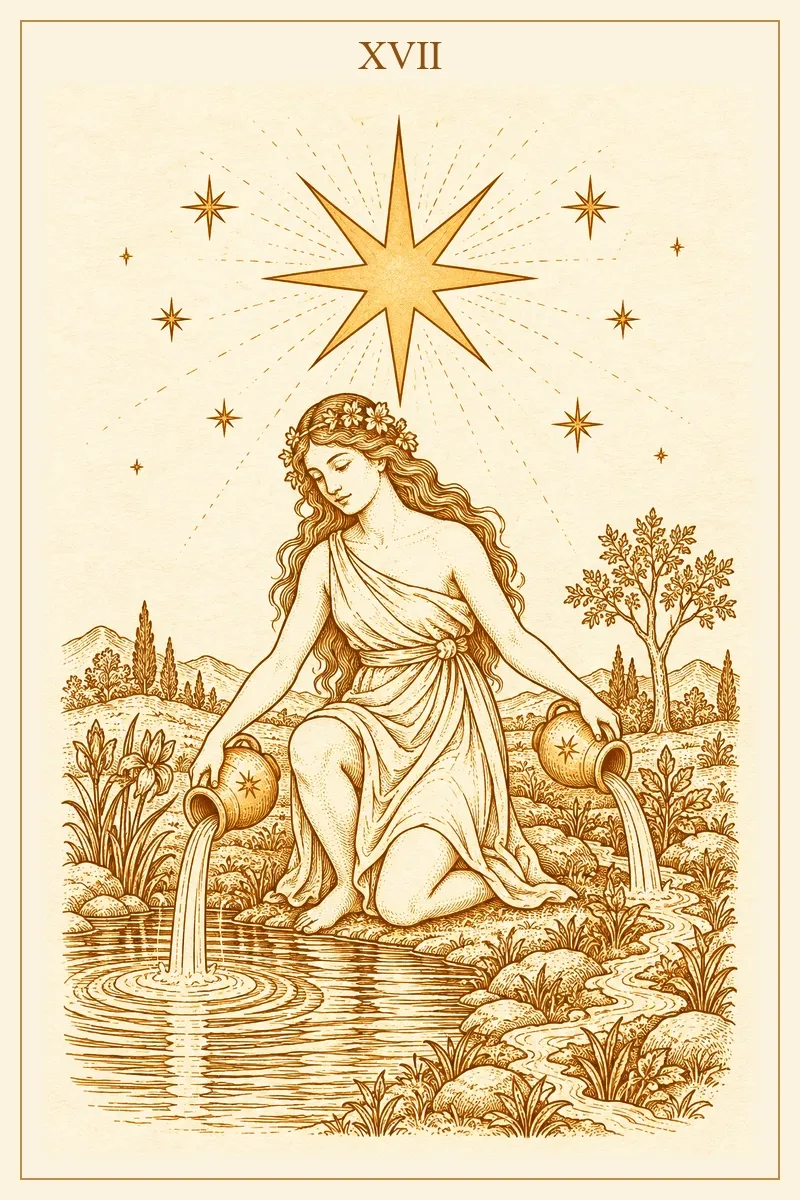
In The Star, a woman with a crown of flowers kneels at a pool under one large star and several small ones, pouring water from two jugs, one into the pool and one onto the land. After the Five, it is the card of first relief: rest, healing, the sense that you may be all right. It does not erase what happened; it shows you being restored after it. The Star as a card of hope and renewal is a good next read when this pair appears.
Wheel of Fortune and The Sun
With the Wheel of Fortune, the Five becomes a low point in a turning cycle rather than a permanent state. With The Sun, the reading leans toward warmth returning: company, health, ease, the plain pleasure of being out of the cold.
The two-crutch spread, with an invented example
The man in the card leans on two crutches. It is easy to miss: even at his lowest, something holds him up. This five-card spread is built on that detail.
The five positions
- The weight: what this hard season actually is, said plainly.
- The first crutch: support you already lean on, even if you take it for granted.
- The second crutch: a support you could add.
- The lit window: help in plain sight that you have not looked up at.
- The next step: one small, concrete move through the snow this week.
An invented example: an illustrator who lost her biggest client
This example is made up to show how the positions work. A freelance illustrator has lost her largest client. Rent is due in three weeks, and she has told no one, not even her sister. She asks: "How do I get through the next two months?"
- The weight: Five of Pentacles upright. A real gap in income, and the isolation she has added by keeping it secret.
- The first crutch: Eight of Pentacles. Her skill and working habits. One client leaving does not make the portfolio worthless; the craft is still hers.
- The second crutch: Three of Pentacles. Collaboration: former colleagues, other illustrators, a studio or two. Work that comes through people rather than cold applications.
- The lit window: Six of Cups. Someone from her past, most obviously the sister who has offered help before.
- The next step: Page of Pentacles. One message to an old colleague, one updated portfolio page, one call to her landlord about the payment date.
Read together, the spread does not promise that money will arrive. It shows a path from hiding to asking: keep the skill, reach toward people, let family in, take one concrete step this week.
Frequently asked questions
Is the Five of Pentacles a yes or a no?
Upright, it leans no, or "not yet, and not like this": conditions are hard and pushing ahead alone is unlikely to feel good. Reversed, it becomes a slow, conditional yes, especially for questions about recovery or accepting help. For questions about someone else's choice, it reflects your situation rather than their decision.
Is the Five of Pentacles a bad card?
It is a hard card, not a cursed one. It names difficulty honestly and also holds the most practical comfort in the suit: help is near, and you are allowed to reach for it.
What is the difference between the Five of Pentacles and the Five of Cups?
The Five of Cups is mainly grief and regret, an emotional loss you keep staring at. The Five of Pentacles is material and physical hardship, being outside and unsupported. One mourns what spilled; the other is cold and short of what it needs. The Five of Cups meaning of grief and what remains covers the emotional side.
What does it mean in a past, present or future position?
In the past, it often shows a hard stretch that still shapes your caution about money or trust. In the present, it describes the season you are in and asks what help you are not using. In a future position, read it as the likely direction if nothing changes, especially if you keep carrying everything alone, not as a fixed fate.
How long does a Five of Pentacles season last?
Tarot cannot give a reliable date. The card suggests the length of a hard season often depends on support: the sooner the figures stop walking past the window, the sooner things can move. Its decan, the first ten degrees of Taurus, falls around late April, but that is a symbolic link, not a timetable. For how cycles turn in a reading, see the Wheel of Fortune and its turning points.
Does this card mean I will lose my job or become ill?
No card can say that. Tarot reflects the pattern of a situation and the feelings around it; it cannot see test results, company decisions or another person's mind. If the card stirs up a real worry about health, work or money, take it to a doctor, an employer or a qualified adviser, and use the card to notice how much you have been carrying alone.
Walking on, and asking along the way
The Five of Pentacles does not ask you to pretend things are fine. It shows two people in a hard winter passing a light they have not yet looked up at, and it asks only for the next small step toward warmth. To look at your own season this way, a reading on your own question can help you sort the weight from the window, and the full card library is there when other cards join it.