Deciding whether to move gets clearer with a tarot spread that puts staying and going side by side: one card for what you would leave, one for what you hope to find, one blind spot on each side, and one for the need underneath the whole question. Cards such as the Six of Swords, Eight of Cups, Death and The World lean toward closing a chapter and going. The Ten of Pentacles and Four of Wands describe what a home has to hold, while the Seven of Pentacles and The Hanged Man suggest waiting or looking again at the life you already have.
What the cards cannot do is choose a city for you, promise that a move will turn out well, or stand in for the practical checks: what the move costs, how you will earn a living there, and who will be around you. Use the reading to understand why you want to go, then let the numbers, the job and the people do their share of the deciding.
At a glance, here is how the most common cards in a moving reading tend to lean:
- Six of Swords: go, quietly; leaving strain behind for calmer ground.
- Eight of Cups: go; walking away from something that no longer fills you.
- Death: a chapter is ending; the move is part of a larger change.
- The World: a cycle completed; ready for a wider horizon, sometimes abroad.
- Three of Wands: go; your plans already reach past where you live.
- The Fool: go, as a leap into a life you have not lived yet.
- Ten of Pentacles: roots, family and long-term security; weigh what you would carry or leave.
- Four of Wands: a home worth celebrating, here or in the new place.
- Seven of Pentacles: wait; something you planted here has not ripened.
- The Hanged Man: pause; the change you need may be in perspective, not address.
- Four of Pentacles: staying out of fear, or saving before you leap.
- The Moon: not yet clear; find out what you do not know about the new place.
Growth or escape: what a moving question is really asking
Most relocation questions sit between two pulls. One is growth: you have outgrown a place, a door has opened elsewhere, or you want to live closer to work, family or a landscape that suits you. The other is escape: the move promises relief from a problem not yet named, such as burnout or a conversation you keep avoiding. Many moves contain some of each, and a reading helps you see the proportion.
Try a simple test before you shuffle. Picture yourself six months after the move, writing a short note to the person you are today. If it says "I found what I was looking for," the move is reaching toward something. If it says "I finally got away," ask what you got away from, and whether that thing travels. Problems rooted in your workload, boundaries or relationships tend to arrive at the new address along with the boxes. Problems that belong to the place itself, such as a thin job market, a climate that wears on you or distance from the people you love, can genuinely be solved by moving.
The stay-or-go spread in five positions
Lay out five cards in a row, or in a small cross with the fifth card at the center. Before you draw, write the question in one sentence that names both options, for example: "What do I need to see about staying in my current city or moving for the new job?" Naming both options keeps the spread from turning into a vote for the place you already prefer.
- What you would really be leaving. Not the apartment or the street, but the pattern, role or comfort zone behind them. The Eight of Cups here suggests leaving something that once filled you and now feels empty. If the Four of Pentacles lands here instead, the reading may turn around: the thing to leave is not this town but a tight grip on security that keeps every option smaller than it needs to be.
- What you are really looking for. The feeling you expect the new place to give you. The Ace of Wands points to fresh energy and a start that excites you. The Six of Cups points to the past: sometimes a sound move back to a hometown or old friends, sometimes a hope that a place will return a time of life that is gone. Ask which one fits.
- What you are missing about staying. The blind spot in your current life. The Star here says renewal is available where you are, perhaps through a new routine, a community you have not joined, or rest you have not allowed yourself. You do not need a new address to begin feeling better.
- What you are missing about going. Every destination looks tidy from far away. The Moon here means part of the picture is still hidden: true living costs, how long friendships take to build, what the job is like day to day. It is not a no; it asks you to go with your eyes open, or to find out more first.
- The need underneath the question. What you need regardless of geography. The World says a cycle is complete and a new setting may help you grow into the next one. The Hermit says the need is quiet and inner work, which you can begin anywhere; a move can help with that, or become a way to stay busy instead of looking inward.
Read positions three and four as a pair. Most people asking this question can already list the problems of staying and the attractions of going; the blind spots show what is good about here and what is hard about there. If one of them is heavy, give that side more attention before you commit. Let the fifth card set the tone: The World or Death in that seat adds weight to going, while The Hermit or The Hanged Man asks whether the urge is mostly inward. Our guide to tarot for decision making covers more ways to frame a choice before you draw.
Six cards that carry the most weight when you are thinking of moving
These six turn up often in relocation readings, and each one shifts the question in a specific direction. Read upright and reversed as two shades of the same theme rather than as yes and no.
Six of Swords: leaving strain for calmer ground
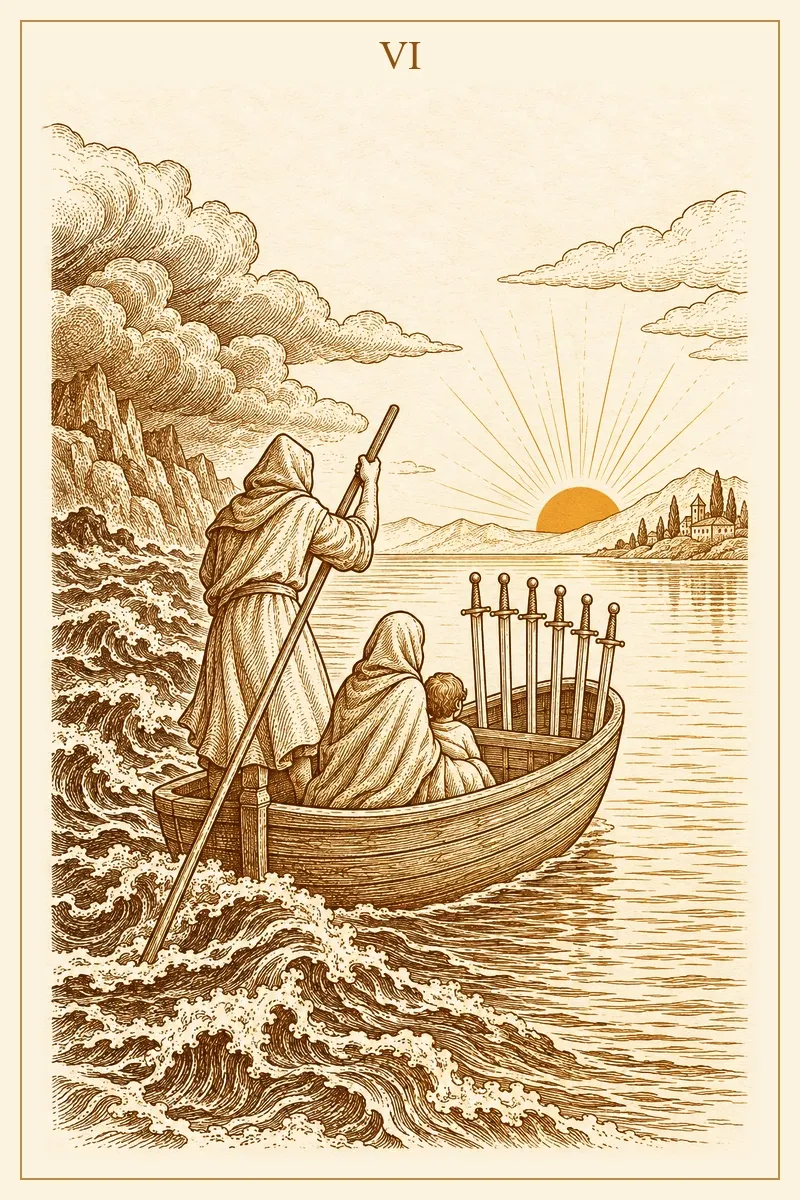
Upright, the Six of Swords is the classic card of a transition away from difficulty, traditionally shown as a crossing from rough water toward a quieter shore. In a moving question it often describes a move made for relief rather than excitement: leaving a city that wore you down or a home tied to a painful period. Some sadness may travel with you, and that is part of the crossing, not a sign you chose wrong. In love it can mean moving on together after a hard stretch; in work, relocating to steadier conditions.
Reversed, the crossing stalls. A lease, money or responsibilities may keep you from leaving yet, or you may be setting off with the same weight still in the boat. Ask what needs settling before the move can lighten things. The full Six of Swords meaning explores its wider sense of transition.
Eight of Cups: walking away from what no longer fills you

Upright, the Eight of Cups describes choosing to leave something that mattered once and has stopped nourishing you; you have simply outgrown it. In a relocation reading it supports going when the restlessness has lasted a long time and is about meaning rather than one bad week, as when the move is part of a search for work that matters, a community that fits or a gentler pace of life.
Reversed, it can show staying out of fear of the unknown, or drifting from place to place without knowing what you are looking for. If you have moved several times hoping each place would finally fit, name the search before the next move. Its emotional side is covered in the Eight of Cups tarot card meaning.
Death: a chapter ending, not just an address changing
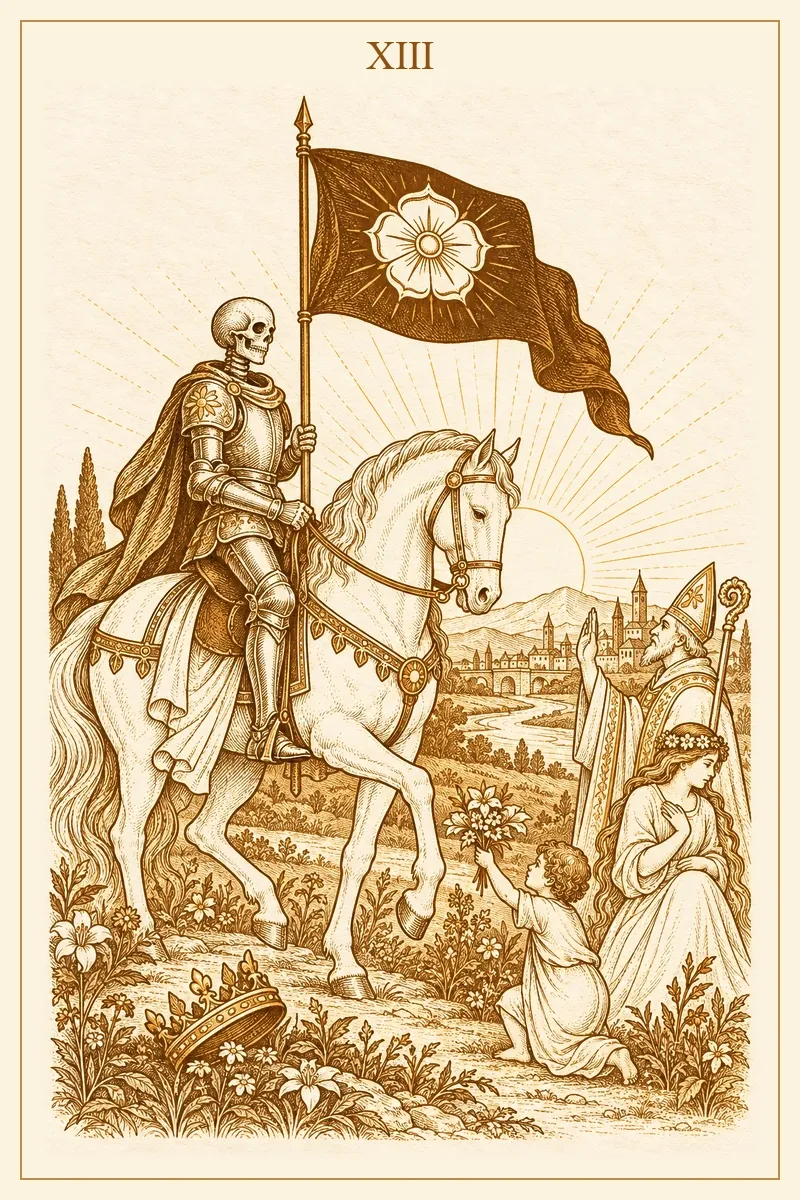
Death almost never means a physical death in a reading. Upright, it marks an ending that makes room for something new, and in a moving question it suggests the move belongs to a larger transformation: the end of a relationship, a career phase or an identity tied to the old place. The real question then becomes "how do I let this chapter close well?" Say proper goodbyes, finish what matters, and expect an in-between period before the new life feels like yours.
Reversed, Death points to resistance: an ending already underway while you hold the door shut, or a needed change you are avoiding whether or not you move. It can also caution against a move that only changes the scenery. See the full Death tarot card meaning for its many shades.
The World: a completed cycle and a wider horizon
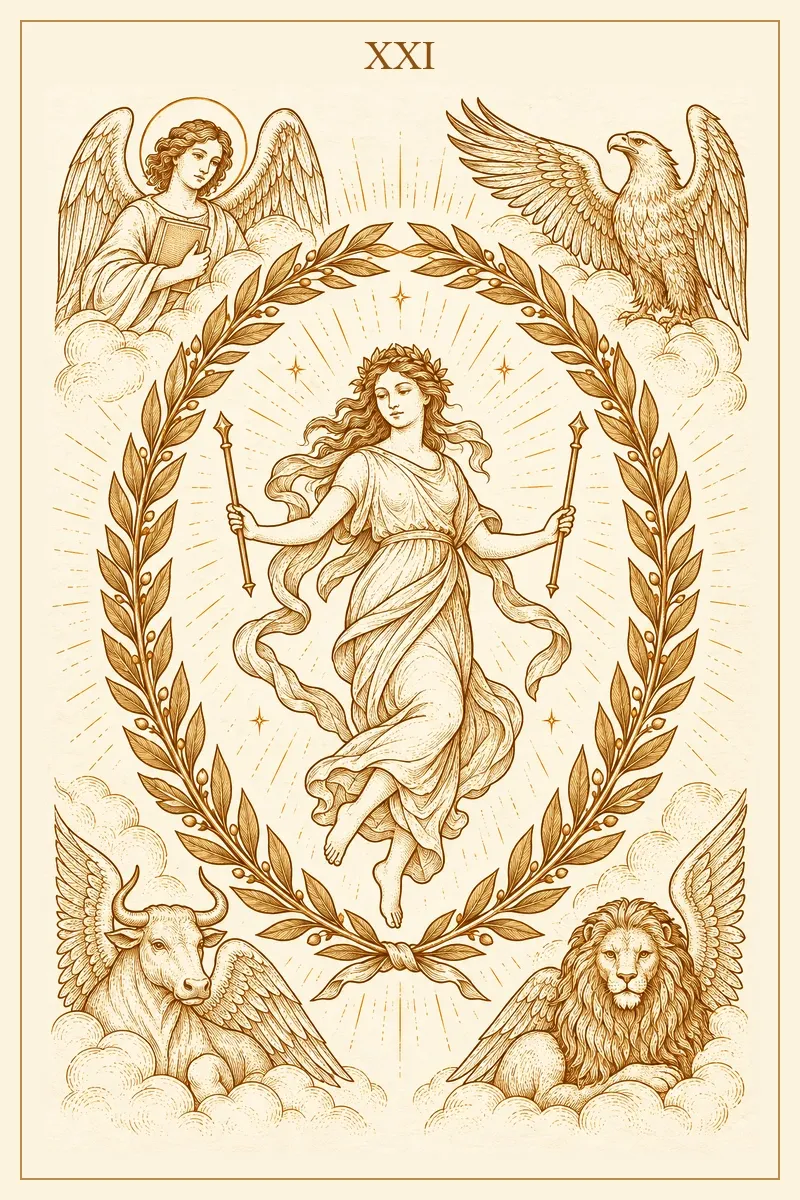
Upright, The World is completion: you have learned what this place had to teach you and are ready to carry it somewhere larger. It is also one of the cards most often linked with international moves and life abroad. In career readings it can describe an opportunity that requires relocating; in love, a shared next chapter in a new setting. When the other positions agree, it is a strong card for going.
Reversed, the cycle is not quite finished. Loose ends, a missing document or an unresolved relationship may need attention first, or the move may be delayed rather than canceled. The World tarot meaning goes deeper into completion and integration.
Ten of Pentacles: roots, family and long-term security
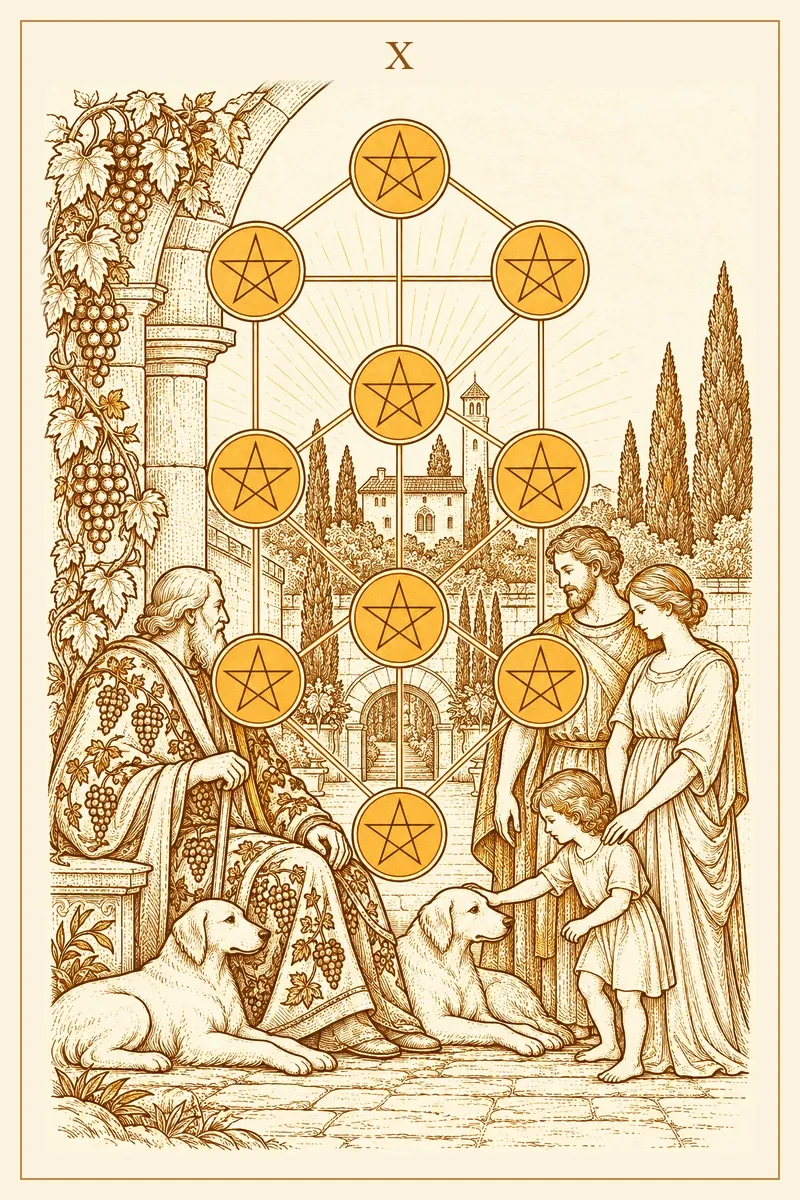
Upright, the Ten of Pentacles is about what lasts: family, home ownership, a stable base and the ties between generations. In a moving question it can point either way, which is why it matters. It may support staying near relatives or a community built over years, or describe a move made to put down roots, buy a home or live closer to aging parents. Ask where your long-term foundation really is, and whether this move strengthens it.
Reversed, it can show friction around family or money: pressure to stay because others expect it, disagreement over a shared property, or finances less settled than they look. Have the money conversation plainly and, where property or inheritance is involved, get qualified advice. Read more in the full Ten of Pentacles meaning.
Four of Wands: a home worth celebrating
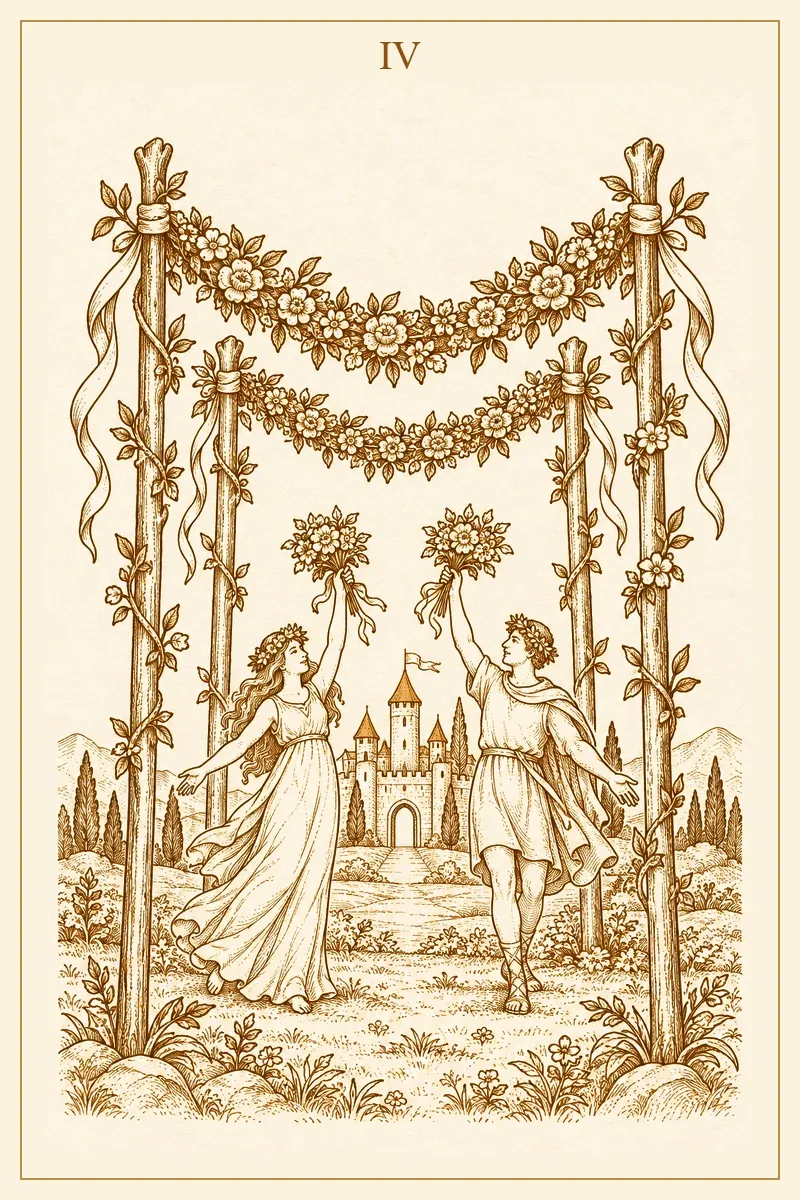
Upright, the Four of Wands is the card of homecoming, welcome and a household that feels like shelter. Many readers link it to a happy move or a housewarming. In a stay-or-go reading, ask which home it describes: a new place where you can picture friends at your table, or the home you have now, appreciated again. Either way, it favors the choice that leaves you more at ease where you live.
Reversed, the sense of home is unsettled: tension in the household, a stretch between two places, or a move that feels more like an obligation than a fresh start. The full Four of Wands tarot meaning covers its love and family readings.
More cards that favor going
These cards appear often when a move would stretch you in a healthy way.
- Three of Wands: your plans already reach beyond where you live, and an opportunity farther away is taking shape. Reversed, preparation is lagging. For trips and long-distance moves in general, our guide to tarot cards for travel and relocation goes card by card.
- The Fool: a fresh start that asks you to become someone new, often where nobody knows your history. Reversed, it warns against leaping without a landing plan, or shows a leap you keep postponing.
- Eight of Wands: offers, viewings and paperwork arriving close together. Prepare now so speed does not push you into a rushed contract. Reversed, delays or crossed signals.
- Ace of Wands: a spark of enthusiasm for the place or the project. Reversed, the excitement may be fading, or it may belong to the idea of moving more than to the destination.
Cards that say stay, wait, or look again
None of these is a permanent no. They tend to mean "not yet," "not for this reason," or "settle something here first."
- Four of Pentacles: holding tightly to what is familiar. If it is your reason to stay, ask whether staying is wise or only feels safe. It can also be practical: build savings before you leap.
- Seven of Pentacles: something you planted here, such as a promotion track, a small business or a circle of friends, is still growing, and leaving now could mean leaving before the harvest. Reversed, the effort may not be paying off, and a change of field is worth considering.
- The Hanged Man: a pause and a change of view; the shift may be internal, or the moment has not arrived. Reversed, you may be stalling a decision already made.
- Nine of Wands: tired and guarded near the end of a hard stretch. Moving can look like the only way out, yet you may be nearer the finish than you feel, so rest before you decide. Reversed, ask for help or lighten the load first.
When the urge to move is about something else
Many people who ask whether to move are really asking how to change. A new address can feel easier than a hard talk, a boundary or admitting that a plan is not working, and the cards often point at that substitution. The Tower can be literal, a move forced by a lease ending, a job loss or a sudden change at home, where the task is to land safely rather than choose perfectly. It can also mean your reason for going rests on an assumption about to crack. The Seven of Swords suggests slipping away quietly instead of being honest about why you want to leave; ask who has not heard the real reason, yourself included.
The Ten of Wands often shows that what you want to leave is the load, not the city, and the Nine of Pentacles shows a wish for self-sufficiency and a home that feels comfortably your own. Together they suggest a move might help, but so might dropping a commitment or renegotiating your hours. And sometimes the move really is the change: the person you are becoming may emerge more easily where no one expects who you used to be.
Worked example: a job offer three hours away
Imagine someone who has lived in the same city for eight years and has an offer for a similar role in a city three hours' drive away, with somewhat higher pay. They ask, "What do I need to see about staying here or taking the job and moving?" and draw the five-card spread.
- What they would leave: Ten of Wands. Not the city so much as an overloaded schedule, with extra projects that keep landing on their desk.
- What they are looking for: Nine of Pentacles. A calmer, self-sufficient life in which their pay and their time feel like their own.
- Missing about staying: Seven of Pentacles. Something here is still growing; perhaps a review or a long project is close to paying off.
- Missing about going: The Moon. The details of the new job, the real rent and the social side of starting over are still vague.
- The need underneath: Six of Swords. A move toward calmer conditions is genuinely needed.
Read together, the core need is relief from overload, and the spread does not yet say whether moving is the only way to get it. The first two cards point to workload and independence rather than geography. The Seven of Pentacles asks what is about to ripen at the current job, and The Moon asks for facts about the new one.
So the next steps are concrete. Ask the new employer for the full terms in writing, including relocation support, and an honest picture of the team's workload, since a new city with the same load would only relocate the Ten of Wands. Ask the current manager about the review timeline. Visit for a weekend, look at real listings and draft a budget for the first three months. If the new role is lighter and the numbers hold, the Six of Swords supports going; if the current job can change, staying may bring the same calm. When a move is really about career direction, the layouts in our career tarot spreads guide can sit alongside this one.
Timing: tie the decision to real dates
Cards describe pace rather than a date: the Eight of Wands suggests momentum, the Seven of Pentacles patience, The Hanged Man a pause. Our guide to reading timing in tarot cards covers the methods readers use. In practice, anchor the decision to dates that already exist, such as the end of a lease, a notice period, a school year or the start date on an offer. Set your decision day a little before the earliest of them, and draw again only if something real has changed.
Practical checks to set beside the cards
- Cost: moving expenses, deposits, any overlap in rent, and a cushion for the first three months.
- Work and income: a written offer, remote-work terms, or a realistic job search plan.
- People: who you would see each week in each place, and how you would make friends in a new city.
- A trial run: a visit, a short-term rental or a few weeks of remote work from there.
- Paperwork: leases, visas and contracts checked with a landlord, an employer, an immigration office or an adviser.
- A journal entry: the spread, your first reaction and the facts you still need, reread after a week.
Frequently asked questions
Can tarot tell me where I should move?
Not by name. Tarot will not point to a city or a country. What it can show is what you need from a place, such as calm, community, opportunity or closeness to family, and what you might be overlooking. Use that as a set of criteria, then research which locations meet it.
What if the cards say stay but I really want to go?
That tension is useful information. "Stay" cards usually mean "not yet" or "not for this reason." Work on what they flagged, such as savings, an unfinished situation or an unclear motive, and if the wish to move is still strong after two or three months, read again. The answer may shift as your situation does.
Should I do a tarot reading before signing a lease?
A short reading before a big commitment can help you check your motives and blind spots, as long as it supplements the research rather than replacing it. Read the lease carefully, confirm the costs, and see the place in person or through someone you trust.
What does the Six of Swords mean for moving?
It is one of the clearest moving cards, with a particular tone: a necessary, healing move away from difficulty rather than an adventure, sometimes with some sadness attached. Reversed, something still needs resolving before the move can bring relief.
Which card is the strongest sign to move?
Readers often name the Three of Wands, The World and the Six of Swords, adding the Eight of Cups when the move is about outgrowing something. Still, a card's position and its neighbors matter more than the card alone.
Can tarot predict whether the move will work out?
No. Tarot cannot confirm an outcome, a date or how other people will respond to your decision. It reflects your motives and the conditions you can see now. How a move turns out depends on the choices you keep making after you arrive.
Home as a choice you keep making
The spread will not pick your next address. It can show whether the home you are looking for sits on a map or in a change you have been postponing, such as a boundary, a conversation or a new way of spending your days. Often it is a little of both.
When you are ready to look at your own question, start a reading with the five positions above and keep your notes next to the budget.