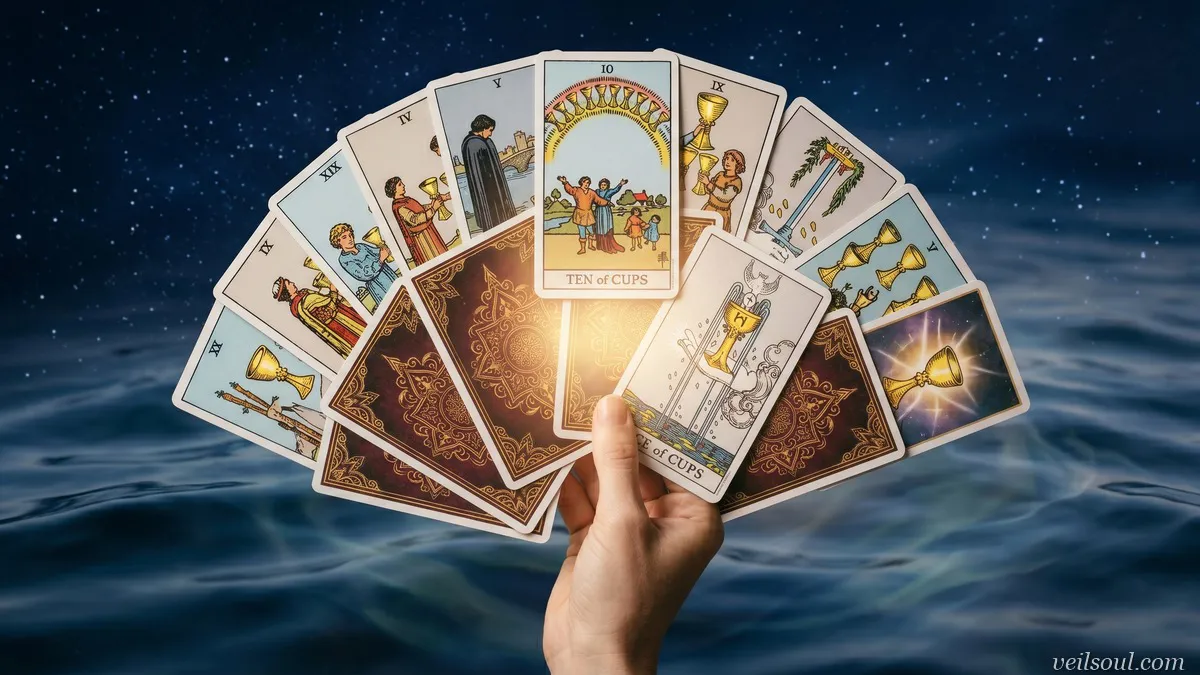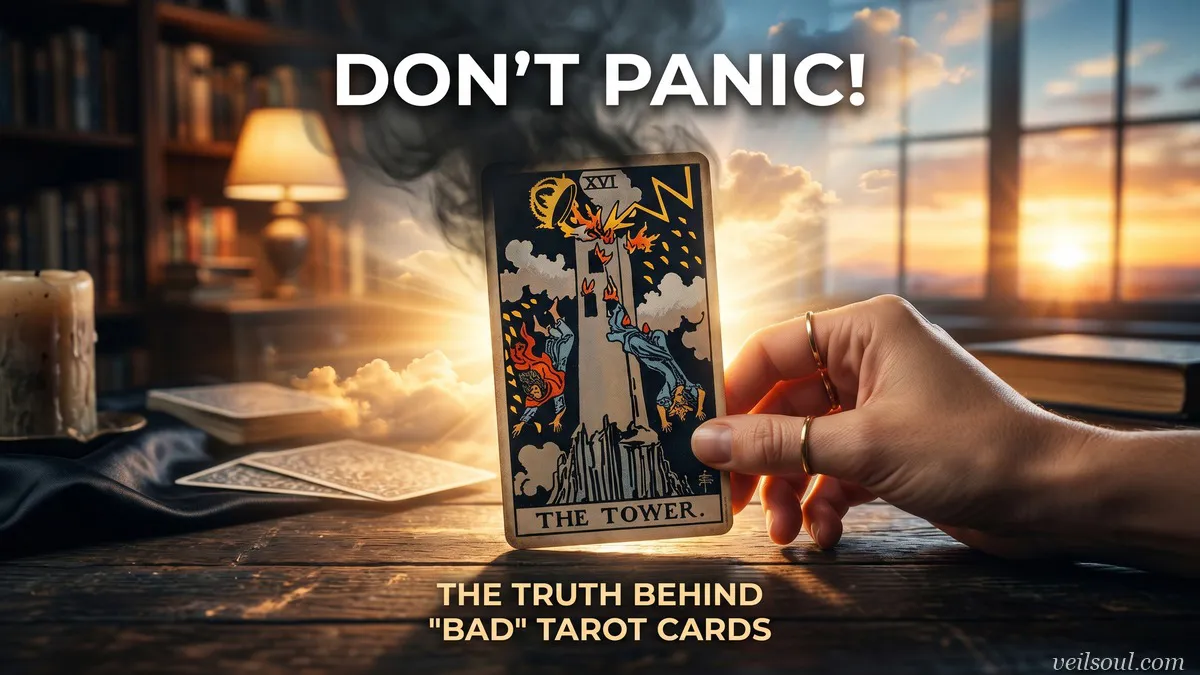
Scary tarot cards are not threats, and no card in the deck hands down a verdict. The ones people dread, including Death, The Tower, The Devil, the Ten of Swords, the Three of Swords, the Nine of Swords and the Five of Pentacles, describe endings, pressure, worry and strain, which are ordinary parts of any life. Reading one calmly comes down to separating what the picture shows, what the card is actually saying, and what it is not saying at all.
It helps to know the edge of the practice before a hard card lands. Tarot cannot confirm what another person is thinking, fix a date, or tell you how a situation will end; it hands your question back in a shape you can think about, as the piece on what tarot can and cannot predict sets out. A frightening card is a prompt, never a sentence.
Here are the seven cards that make people flinch most, each with the meaning it is usually mistaken for:
- Death: a chapter that has already closed; not a forecast that anyone will die.
- The Tower: something built on a shaky assumption giving way; not a punishment.
- The Devil: a pull you keep agreeing to; not evil, and not possession.
- Ten of Swords: the low point of a story already ending; not the start of ruin.
- Three of Swords: honest pain, finally named; not proof that someone betrayed you.
- Nine of Swords: fear at three in the morning; not a forecast of disaster.
- Five of Pentacles: a cold stretch when help feels out of reach; not a sentence of poverty.
Why a frightening picture is not a frightening prediction
Tarot images were drawn to be remembered, not to be comfortable. Seventy-eight cards have to cover the whole human range, so some were always going to carry loss, conflict, fear and the end of things. A deck that showed only fair weather would be useless on the days you most want to think clearly.
The picture and the meaning sit on different layers. A skeleton, a lightning strike or a figure lying under blades is shorthand, chosen long ago to make an abstract idea stick. Readers who have worked with a deck for years see the theme first, then check where it landed.
Part of the fear is about the deck rather than the card, and if that is where yours sits, the article on whether tarot cards are dangerous takes that worry on its own terms. Everything below assumes the deck is paper and gets straight to the reading.
Seven feared cards, and what each one is actually saying
Every card below gets the same treatment: what it says upright, what shifts when it is reversed, and the reading it is routinely mistaken for. Give that last part real attention, because most of the panic in a reading comes from a meaning the card never carried.
Death: the ending you have already started
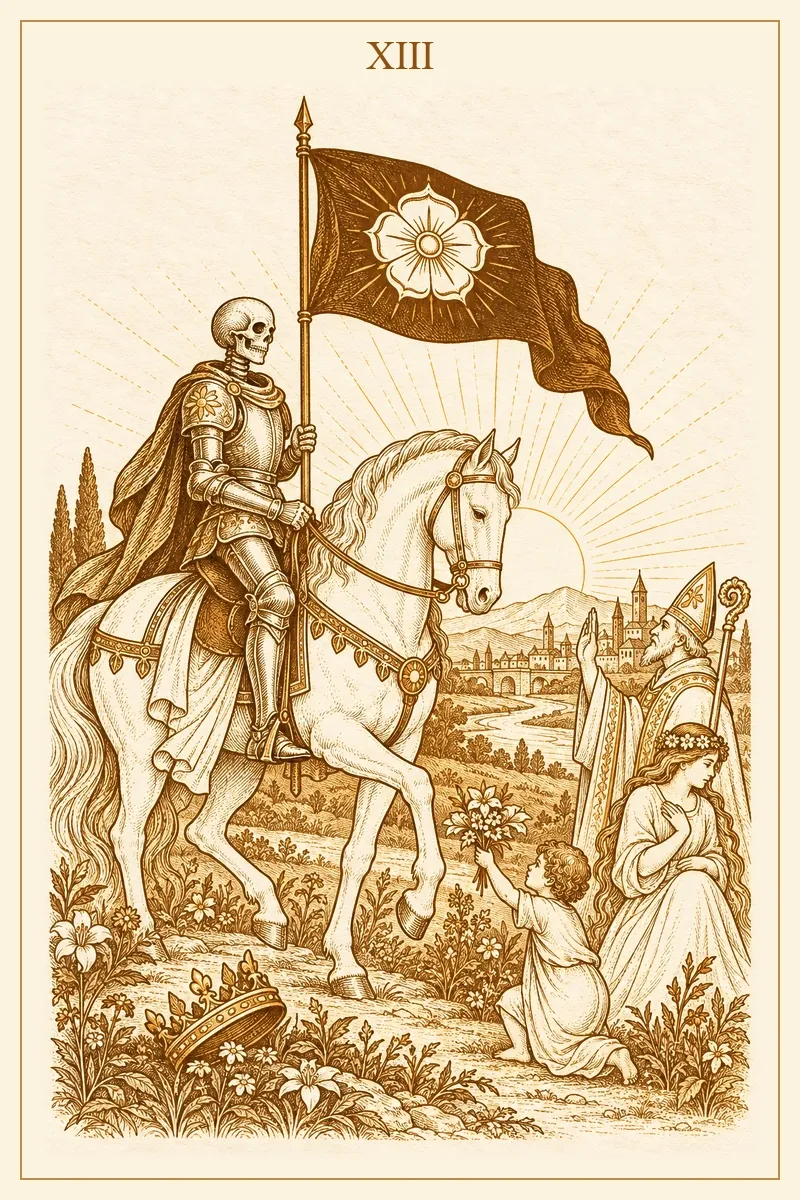
Death frightens people for its name as much as its picture, and it is still one of the most workable cards in the deck. Upright it marks a chapter that has finished: a role you outgrew, a routine that stopped fitting, a version of a friendship both people quietly left behind. The useful question is not what will end, but what already has.
Reversed, it shows the distance between an ending that happened and an ending you agreed to, with a door held open long after the room behind it is empty. The Death tarot card meaning follows the card position by position.
What it is not saying: that you or anyone close to you is about to die. Readers do not use it as a health forecast, and it does not insist the ending be fast or harsh. A chapter can close across a year, kindly, with everyone still on speaking terms.
The Tower: the shake that arrives on time
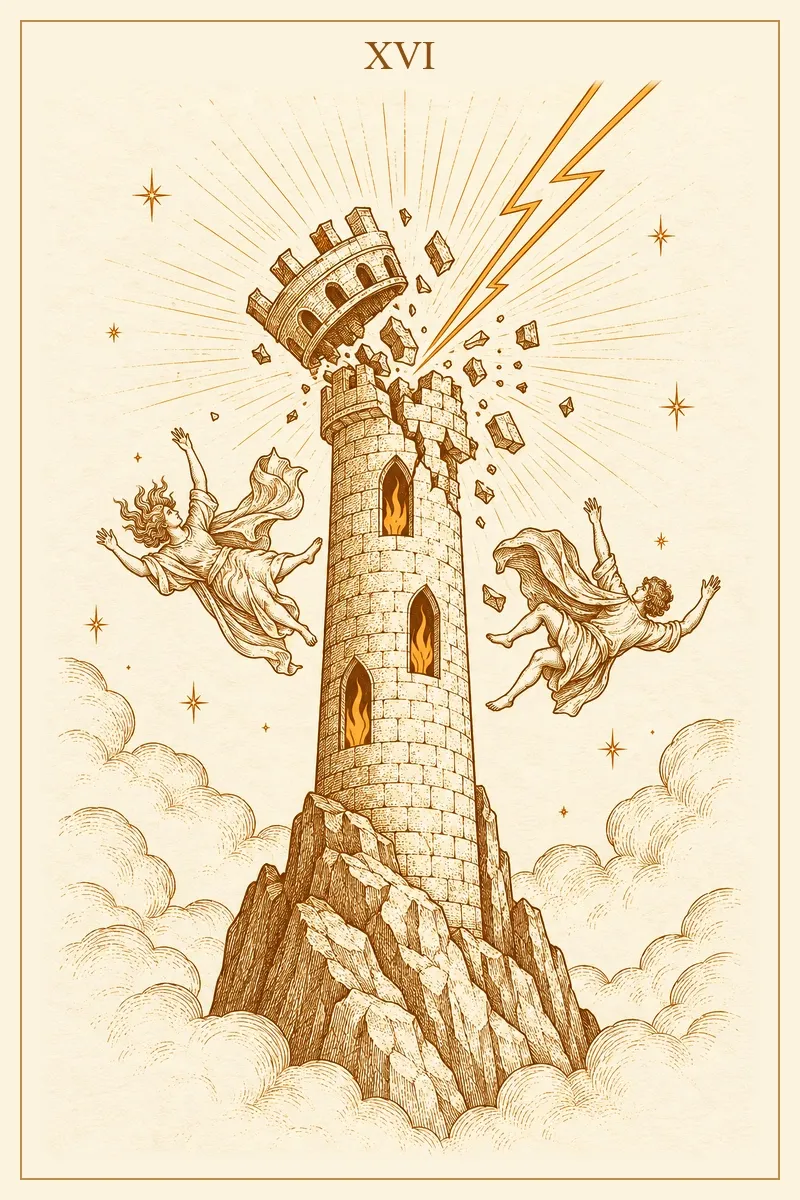
The Tower is the card readers hear about most in a worried voice. Upright it describes a sudden shift in something you treated as settled: a belief, an arrangement, a story you told about your own situation. What gives way was usually resting on an untested assumption, and the card arrives when weight finally lands on it.
Reversed, the same energy is quieter: a collapse you see coming and keep postponing, a change that happens inside your head rather than in the world, or the aftermath where you are still picking things up. The Tower tarot card meaning follows both versions further.
What it is not saying: that disaster is being sent to you, or that drawing the card causes anything. It does not name what falls either, so assuming it means your relationship can hide a shaky work plan or an idea about yourself.
The Devil: the pull you keep agreeing to
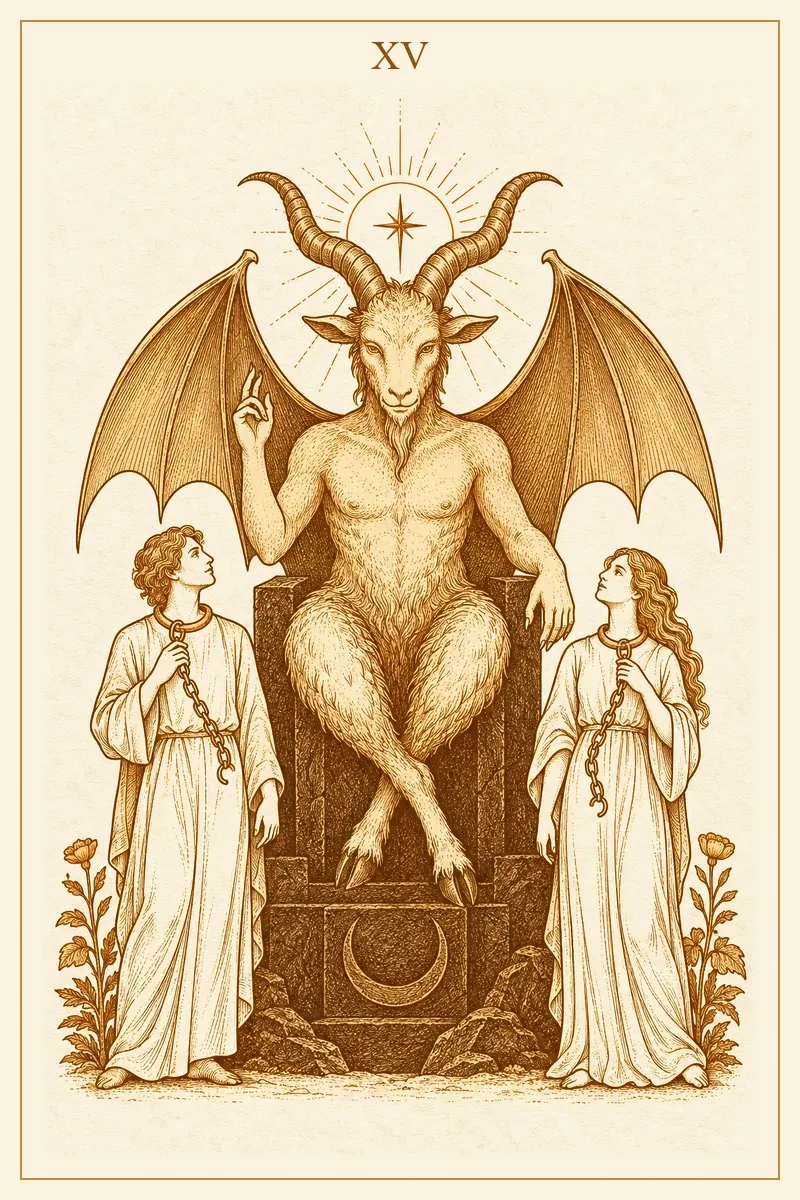
The Devil alarms newcomers because the figure looks like something out of a sermon, and the meaning is far more domestic. Upright it describes a tie with more hold on you than you would admit: a spending pattern, a job you stay in for the identity, a person whose attention you keep auditioning for.
Its signature feeling is knowing better and doing it anyway. Reversed, it marks movement, because you notice the pattern, name it and loosen one grip, which can feel worse before it feels better. The Devil tarot card meaning covers both directions.
What it is not saying: that you are cursed, watched or spiritually in trouble. It passes no verdict on your character and does not demand that you quit anything today. Its honest message is that the hold is partly chosen, which is why it can change.
Ten of Swords: the end of the hard part
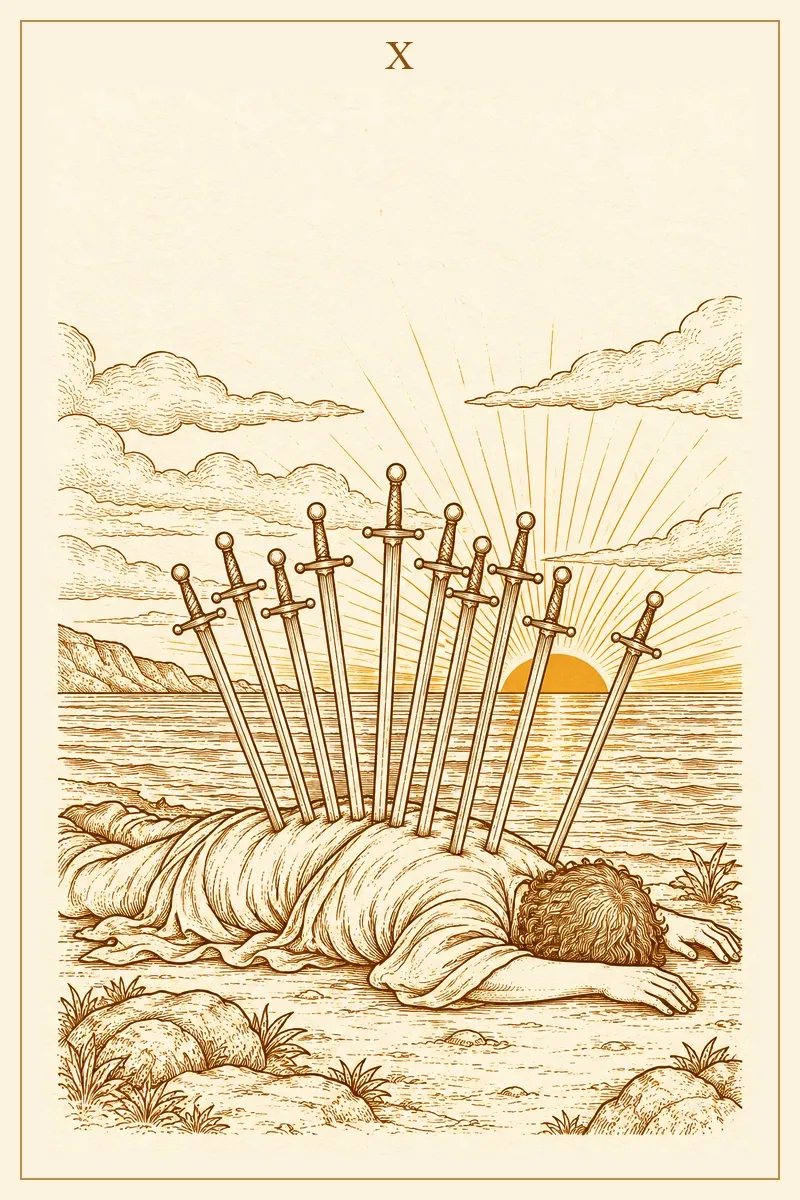
No card in the deck is harder to look at, and few are kinder once you read them. Upright it describes a low point already reached: a conflict that played itself out, a plan you have stopped defending, exhaustion that a weekend will not touch. Ten closes a suit, so the card sits at the end of a story rather than its opening.
Reversed, it points to the slow part afterward, where energy returns unevenly and one morning you notice you have not thought about it. The Ten of Swords tarot card meaning spends more time on that recovery.
What it is not saying: that the worst is ahead. This is the most common misreading in the deck, and it turns a whole reading around. It does not accuse a specific person either, because the blades belong to the situation.
Three of Swords: pain told honestly
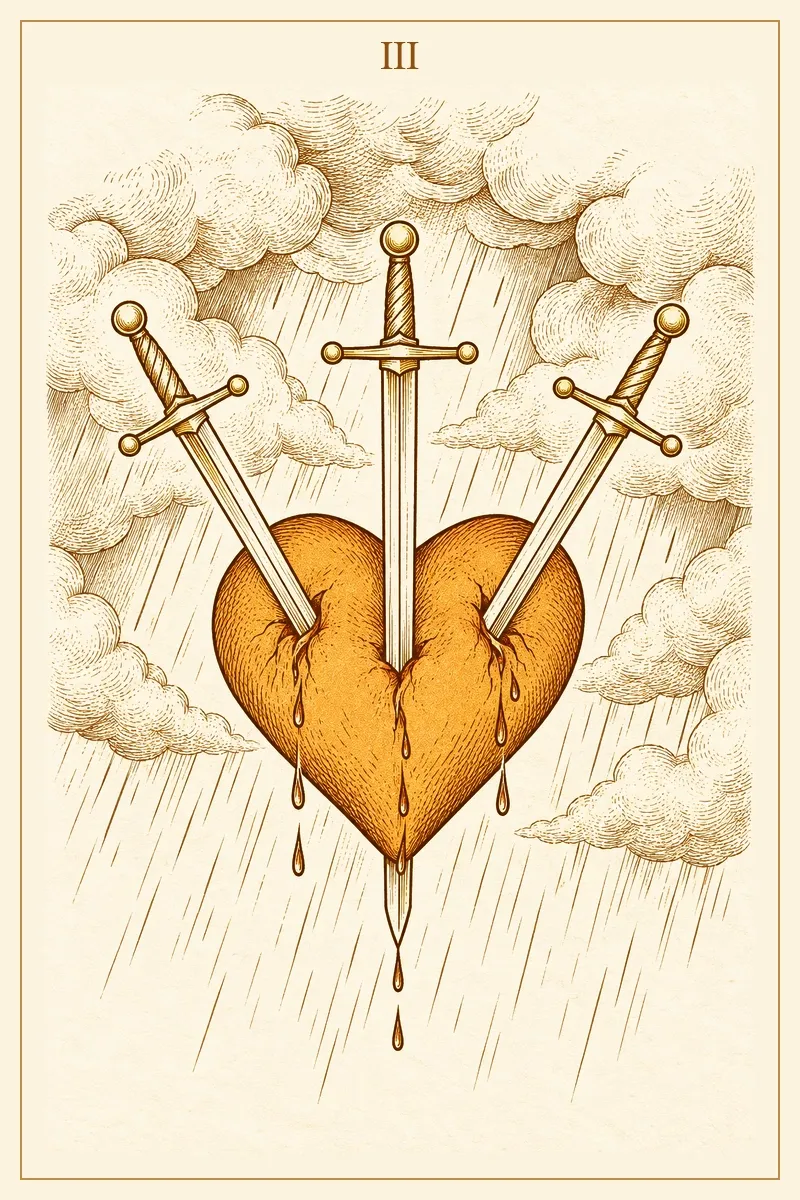
The Three of Swords upsets people because it is so direct. Upright it names heartbreak, grief and the kind of truth that hurts on the way in: a disappointment nobody has said out loud, feedback that stings because part of it is accurate, a loss that has not been given room.
It softens nothing, and that bluntness is the whole of its usefulness. Reversed, it shows either hurt being processed in the right direction or hurt pressed down and leaking out as irritation. The Three of Swords tarot card meaning separates healing from avoidance.
What it is not saying: that someone cheated, lied or left. It describes pain, not its cause, and supplying a culprit turns a reflective reading into an accusation. Nor does it predict heartbreak ahead when the hurt it names is one you already carry.
Nine of Swords: the fear that grows at night
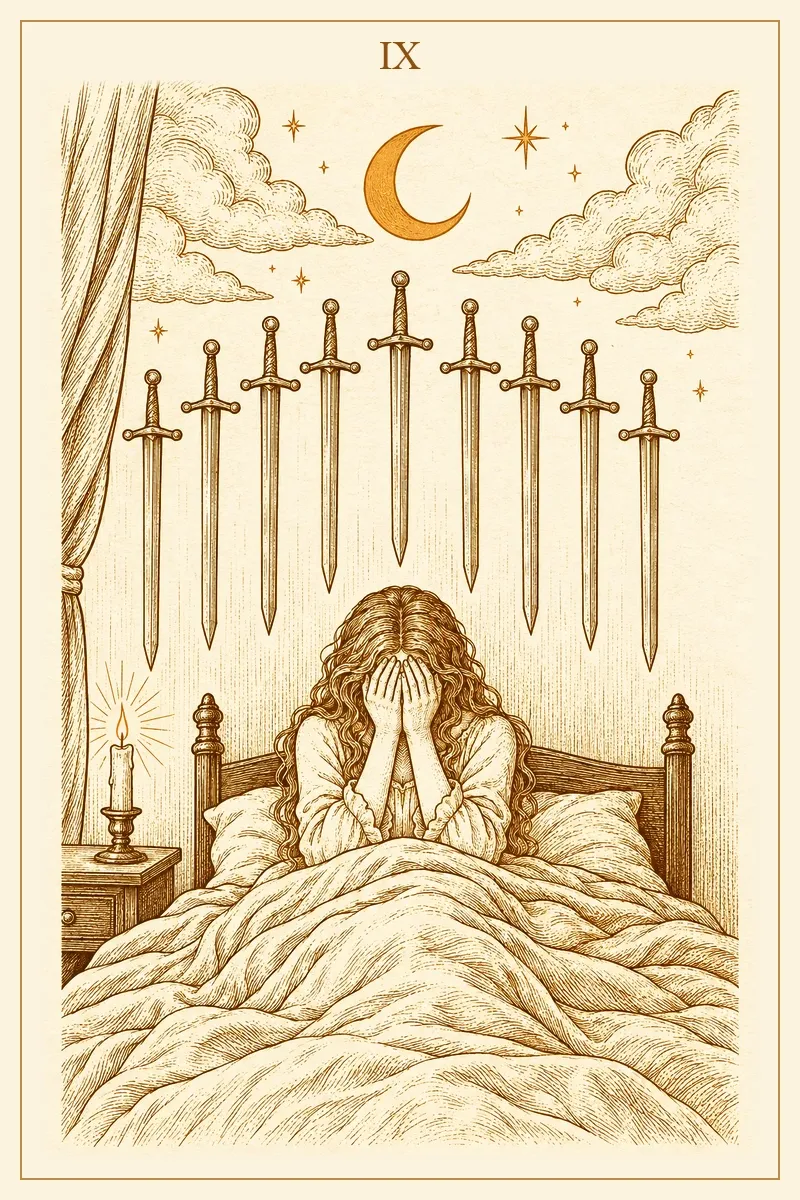
This is the card of the small hours, and it frightens people partly because they recognize it. Upright it describes worry running well ahead of the facts: the imagined conversation, the worst-case version of an email, the loop that is loudest when you can check nothing.
The distress is real, and what it measures is often a possibility rather than an event. Reversed, the pressure is changing state, easing as information arrives or carried privately while everything looks fine. The Nine of Swords tarot card meaning has more ways to work with it, and weeks of sleepless worry deserve a doctor or counselor rather than a spread.
What it is not saying: that the fear is correct. The card confirms the weight of a worry, not its accuracy. Feeling anxious while you shuffle is no sign that you are reading badly, and gentler approaches are set out in the guide to tarot for anxiety.
Five of Pentacles: cold outside, light inside
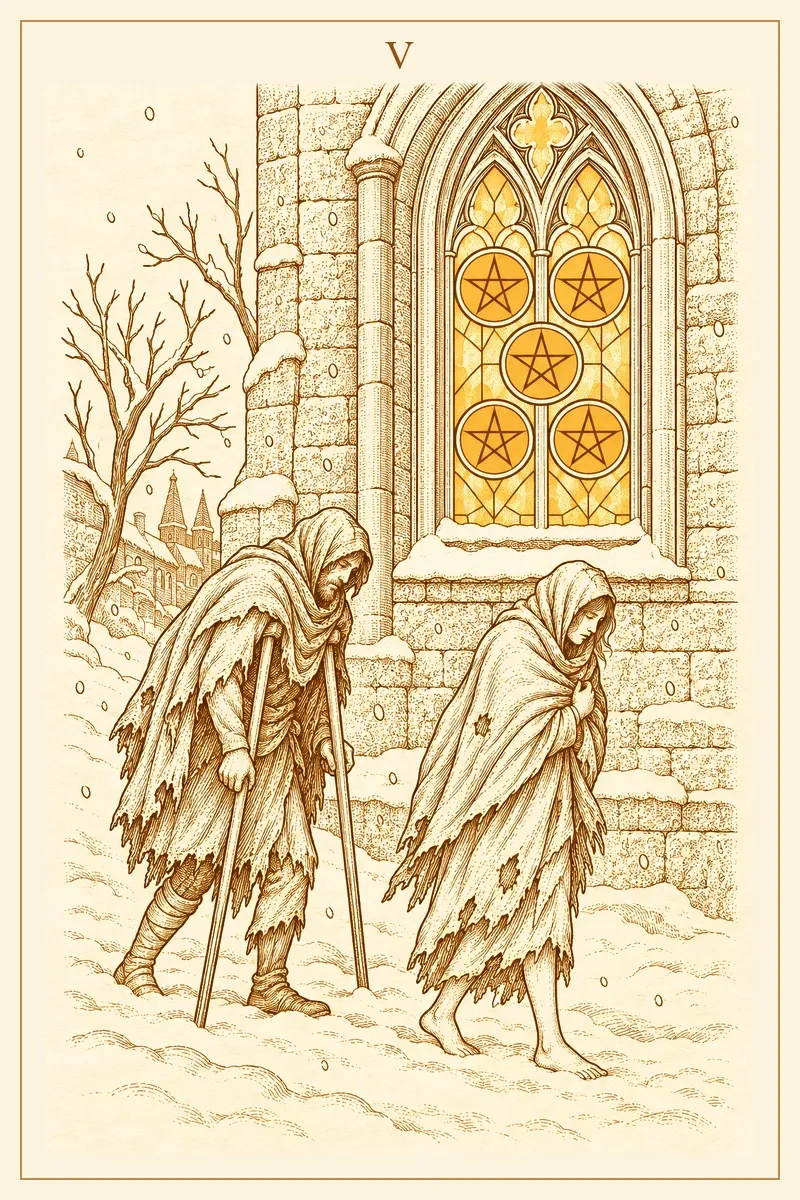
The Five of Pentacles is the quietest of the frightening cards and often the most practical. Upright it describes a lean stretch and, just as importantly, the feeling of being outside something warm: money that will not stretch, a health worry carried alone, a group that now meets without you.
Hardship and isolation are two different problems, and this card usually names both. Reversed, it shows the turn, with help accepted and the cold stretch read as a season rather than a verdict. The Five of Pentacles tarot card meaning works through both halves.
What it is not saying: that you will be poor, ill or alone permanently, or that you should suffer quietly. Its most useful reading is almost always one specific request made to one specific person, a far smaller step than the card's mood suggests.
Other cards that frighten people more than they should
These six land on the same lists, usually because of one uncomfortable detail in the picture. Each deserves a line so it does not ambush you mid-reading.
- The Moon: not deception aimed at you, but missing information and a decision better made next week.
- Eight of Swords: not a trap with no exit, but a limit partly built out of your own thinking.
- Five of Swords: not an enemy, but a win that costs more than it returns.
- Five of Cups: not everything lost, but attention fixed on what spilled while something still stands behind you.
- Ten of Wands: not failure, but a load you agreed to one item at a time and never set down.
- Two of Swords: not paralysis forever, but a choice postponed by declining to look at what you know.
The flinch is part of the reading
Something physical happens when a dreaded card turns over. The breath goes shallow, the shoulders rise, the eyes skip to the worst detail. That reaction arrives before any interpretation, and if you read from inside it you will read the card as the thing you were already afraid of.
The flinch is still worth keeping, because it is information about you rather than about the card. Notice which card causes it. Someone who tenses at Death and shrugs at The Tower is carrying something about endings; someone calm about Death who goes quiet at the Five of Pentacles is usually carrying something about money, or about asking for help.
A simple practice helps. When the reaction comes, put a name on it before you interpret anything: this is dread, this is grief, this is relief I did not expect. Naming the feeling separates it from the card and lets you read the card on its own terms. Working with the material those reactions point to is the heart of shadow work with tarot, and it is quieter than the name suggests.
If you read for other people, the same reaction has a practical cost: your face moves before you speak, and a sitter who sees you wince has already had the reading. That is why experienced readers keep a neutral first beat, a short pause over the whole spread.
Position decides most of the message
The same card in two positions is two different statements, and position is the fastest way out of a panic. Read the label before you read the picture. It costs five seconds and it decides what the card is allowed to claim.
Take Death across common positions. In a past position a transformation has already happened and you are standing on the far side of it. In a present position the ending is underway. In a future position it points at a chapter that will close, with time to prepare. In an advice position it is not a prediction at all but a suggestion to stop maintaining something, and in a challenge position it often describes your own resistance rather than the ending.
The Tower behaves the same way. As an obstacle it is the instability you are working around; as an outcome it describes an arrangement that does not hold in its current form. In a position named something like what to release, it is the gentlest version of the card there is, because it offers you the choice of dismantling something deliberately.
The cards on either side change the volume
A single hard card in an otherwise mild spread is a note about one area of life. Three or more in a five-card spread describe a season, and a season asks for pacing rather than an emergency response. Count before you conclude.
Neighbors redirect the meaning too. The Tower beside a steady, practical card reads as a change you can handle with logistics. The same card beside the Nine of Swords reads as a change you are mostly experiencing as dread, which needs a different answer. A frightening card next to a recovery card is often describing the end of something rather than its arrival.
Weight differs by arcana as well. A difficult Major Arcana card describes the shape of a whole period, while a difficult minor describes one situation of a knowable size, so a spread full of difficult minors is often less serious than it feels.
Reversals need counting too. One reversed card is a nuance, but a spread in which most cards are reversed usually says something about your state while shuffling, and the guide to readings where most cards are reversed covers that.
A four-card spread for a reading that frightened you
Use this after a draw has unsettled you, with the original cards still on the table. It does not replace that reading; it gives the frightening card somewhere to go. Shuffle and lay four cards left to right.
- What the card is pointing at. The area of life the first reading was actually about, which is often not the one you asked about.
- What I am afraid it means. The fear in its own position, out of the way, so it stops coloring everything else.
- What is already mine to decide. The part of the situation that belongs to you rather than to circumstances or other people.
- The smallest honest next step. Not the solution, just a move you could make this week without pretending.
Read position two aloud, then set it aside deliberately; most of the time it is a bigger, older fear wearing the current situation as a costume. Positions three and four are the working part of the spread and the ones worth writing down.
Worked example: a dreaded card that turned out useful
Suppose someone enrolled in a part-time course eighteen months ago and has been dreading going back after the break. Her question was open: what do I need to see about this course? She drew four cards into the positions above.
What the card is pointing at: Death. Her first reaction was that she would have to quit and that quitting meant eighteen months wasted. Read as an ending that has already happened, the card said something narrower. She had signed up to become a particular kind of professional, and in the second year that ambition had quietly changed. The course had not failed; the reason she started it had.
What I am afraid it means: Nine of Swords. Named in its own position, the fear turned out not to be about the course. It was the three in the morning version: if I stop this, I am someone who does not finish things. That is a claim about her character, and it had been doing most of the dreading.
What is already mine to decide: Eight of Pentacles. The card of patient craft landed on the part she controls. She could keep the skill without keeping the enrollment, since nothing about the learning required the certificate.
The smallest honest next step: Six of Swords. A move to calmer water rather than a dramatic exit. The step she wrote down was to ask the course office what deferring for one term involved.
A reasonable outcome here would be to defer for a term, keep studying the part she still wants and come back to the question in six months from a quieter place. The card she dreaded gives her the most room, because it is the only one telling her she is allowed to have changed.
The ten minutes after a frightening card
What you do immediately after a hard draw matters more than any interpretation you reach later. These steps are deliberately small.
- Let your body settle first. Ten slow seconds, feet on the floor. A reading filtered through a startle response is a reading about the startle.
- Say the card's theme in one plain sentence. An ending. A sudden change. A worry. Plain language keeps the drama out.
- Read the whole image, not the sharpest detail. Many difficult cards hold a counterweight somewhere, such as the sunrise behind the Ten of Swords or the lit window beside the Five of Pentacles, and a frightened eye skips it.
- Check the position label. Decide what the card is allowed to talk about before deciding what it says.
- Ask what it offers rather than takes. Not what will I lose, but what does this make room for.
- Write one sentence and one step. A note you can reread in a month, plus the smallest action available this week.
- Do not redraw the same question. Pulling again until a gentler card appears teaches you to distrust the first answer.
If one card keeps unsettling you across many readings, work on it outside a spread. Sit with it alone, write what you see, and come back a week later to see whether your reading of it has moved. That slow familiarity is most of what people mean by confidence, and the guide to building tarot intuition uses it well.
Frequently asked questions
Can a tarot card predict a death?
No, and no careful reader treats it that way. Death is read as transformation and the close of a chapter, and tarot is not used for medical forecasting. If a reader tells you a card predicts death, illness or injury, end the session; that is pressure rather than practice.
Why do I keep getting scary cards in every reading?
Two explanations cover most cases. You may genuinely be in a period of change, so the cards describe a season rather than announcing fresh crises. Or you are drawing from an anxious state, asking variations of one frightened question, and the deck reflects what you brought. Leave the question alone for a week and see whether the cards change when you do.
Should I take the frightening cards out of my deck?
It is your deck, so you can, but it costs more than it saves. A deck without its difficult cards cannot show difficulty, so it can only tell you things are fine, which makes every reading worthless when you most need one. If one card is genuinely distressing, keeping the deck whole and pausing your readings is the kinder option.
Are the scary cards worse reversed than upright?
Usually not, and often the opposite. A reversed Tower frequently describes upheaval that stays internal, a reversed Death points to resistance rather than a harsher ending, and a reversed Ten of Swords commonly means the worst has already passed. Reversals change the direction and intensity of a card far more often than its tone.
How do I tell someone else that a frightening card came up?
Describe the theme before you name the card, keep your voice at its ordinary volume, and let them look at it with you. Saying that this card is about an ending, then asking what in their life feels finished, gives them room to answer. Avoid predictions about health, money or another person's intentions, and if someone is distressed, stop reading and simply talk.
Can tarot tell me when the hard part will be over?
No. Tarot cannot supply dates, confirm another person's decisions or guarantee an outcome, and a card that looks like a timeline is still only a theme. A reading can show what the difficult period is asking of you and which part of it is within reach this week. Treat anything more specific as the reader's guess.
Reading the hard cards without bracing
The frightening cards earn their place by naming what the rest of the deck only hints at. Once you can meet them without flinching, they stop being the part of a reading you dread and become the part that finally says something specific. If you would like to try that with one honest question, you can start a reading on Veil Soul at whatever pace suits you.