Used for anxiety, tarot is a way to slow down and look at what the worry is made of, rather than a way to find out whether the thing you dread will happen. Five cards carry most of that work: The Star, Temperance, The Empress, Strength and The Hermit. Drawn with a calm, answerable question, they help you name the feeling, find the need underneath it, and choose one small thing you can do before the day ends.
What tarot cannot do matters just as much. No card confirms that you are safe, promises an outcome, supplies a date, or reports what someone else is thinking; it is a tool for reflection, not for diagnosis or treatment. If worry is shaping your sleep, your appetite or an ordinary week, a doctor or a licensed counselor can help in ways a deck cannot, and the cards sit well alongside that.
At a glance, these are the cards readers reach for when the mind will not quiet:
- The Star: hope that does not need evidence yet, and rest that counts as progress.
- Temperance: one measured step; nothing has to be solved tonight.
- The Empress: care you are allowed to receive, including from yourself.
- Strength: staying with a feeling without wrestling it.
- The Hermit: turning the outside noise down so your own sense of things is audible.
What a reading can hold when your thoughts will not settle
Anxiety is the mind rehearsing danger so that it feels prepared, and the rehearsal is tiring because it has no end: every answer produces another question, and the questions get louder at night. A reading interrupts the loop in an ordinary, physical way. You stop, you shuffle, you describe one picture out loud, and your attention has somewhere definite to be.
That is why the question you ask matters more than the cards you draw. “Will the thing I dread happen?” has no answer, and asking it keeps the loop running. A reading can genuinely hold questions like these: what am I feeling, what is this worry trying to protect, and what would the next hour look like if I were kind to myself. Write yours down before you shuffle, so you can tell afterward whether you answered it.
Keep the reading small: three to five cards, ten minutes, one page of notes. A long spread invites you to build a story, and an anxious mind builds frightening stories very well. The short layouts in 5 simple tarot spreads for beginners are brief enough to finish while you are still calm.
Five cards that steady an anxious reading
These five are worth knowing well when the subject is worry, and each does something different: one restores hope, one slows the pace, one restores care, one changes your stance toward fear, one quiets the voices around you. Read them as descriptions of what you need, not reports on what is coming.
The Star: hope you do not have to earn
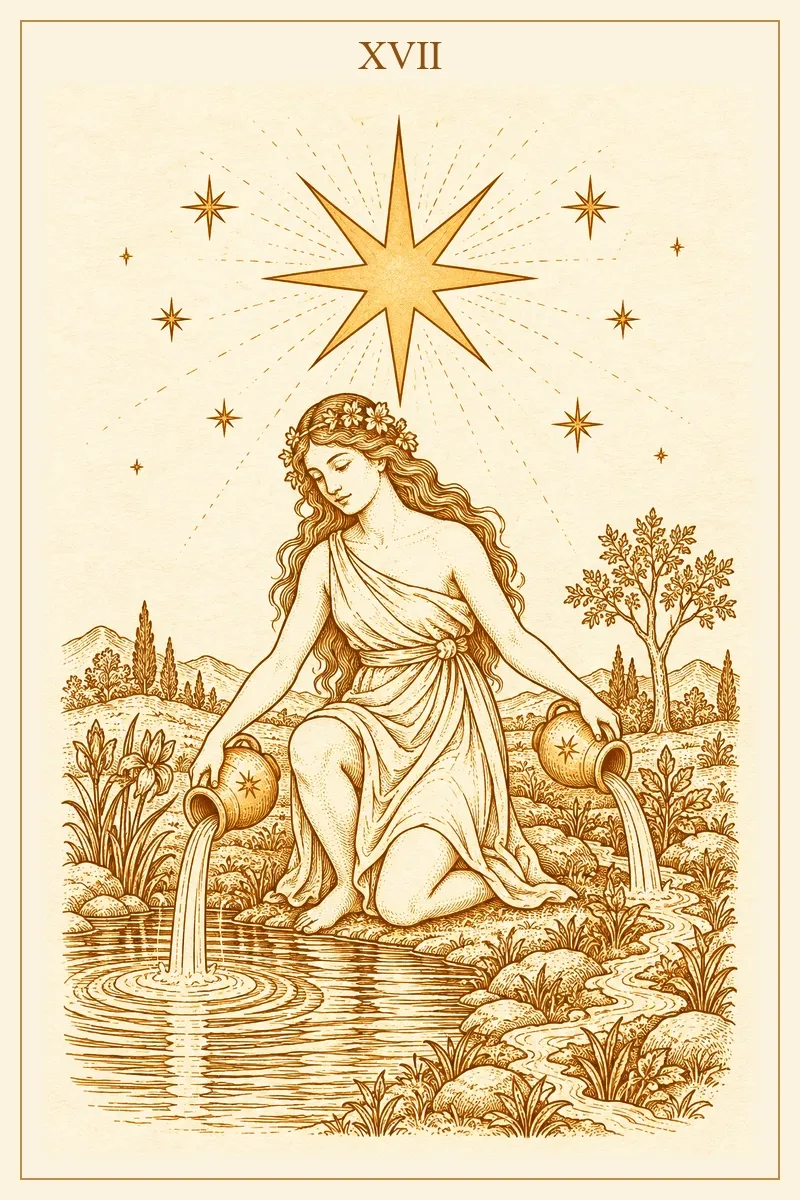
Upright, The Star arrives after disruption and pours water back into the pool and onto dry ground. In an anxious reading it describes the slow, unremarkable return of ordinary feeling: sleeping a little better, laughing at something, wanting food again. It does not claim the difficulty is finished, only that the sharpest part is passing and that recovery is something you allow rather than force.
Reversed, hope feels out of reach, or someone has told you to stay positive and you resent it. It can also show a person pouring care outward with nothing flowing back in. Read it as a request for replenishment, not as a forecast that healing fails: ask what has drained you this month, then name one restorative act small enough to happen today. The full Star tarot meaning covers the card beyond anxiety questions.
Temperance: one measured step at a time
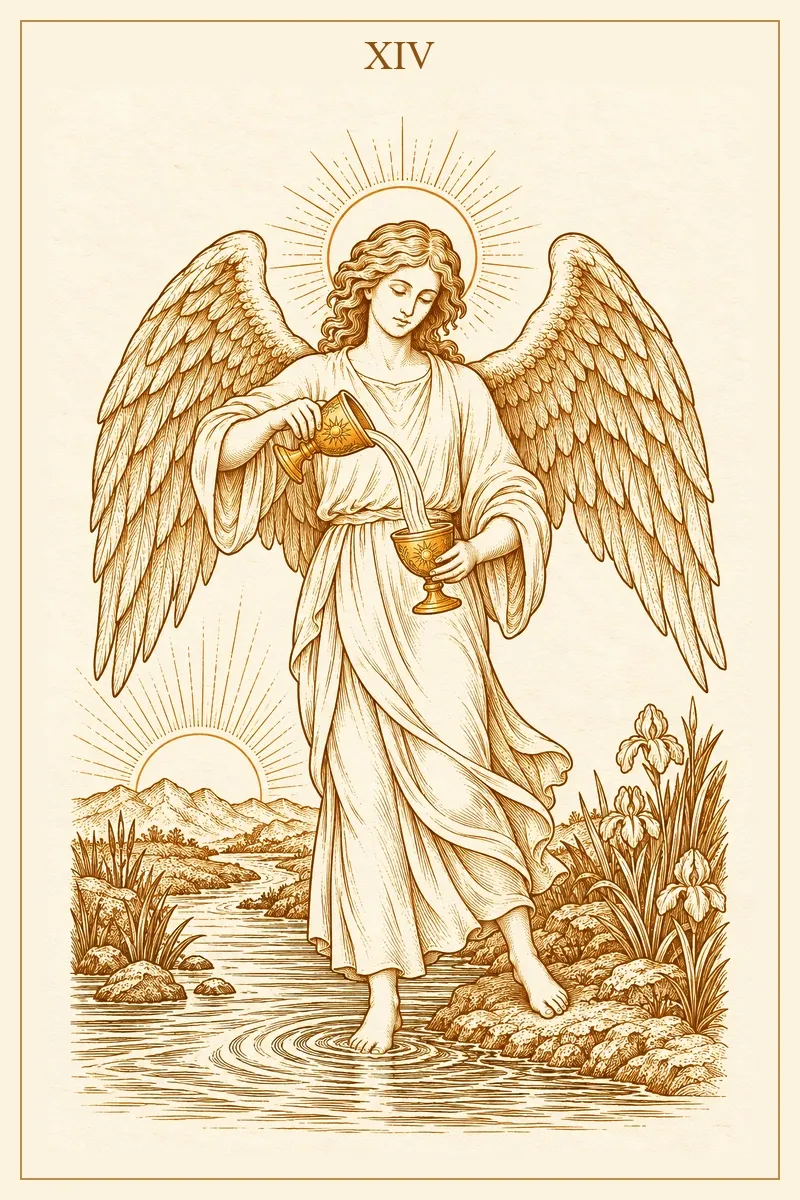
Upright, Temperance mixes carefully and never hurries. For a mind that has already sprinted to the worst version of next year, the message is sequence: this hour, this one task, this amount. The card also speaks about dose. How much news, coffee, scrolling and late-night searching is going in, and what would less of it feel like by Friday?
Reversed, the balance has tipped into all or nothing: overcommitting and then collapsing, or managing a feeling by controlling everything around it. It can also show someone rushing their own recovery and scoring a hard week as a failure. Ask which part of your week has no limit on it, set one limit you can keep, and measure your next action in minutes rather than outcomes. The full Temperance tarot meaning covers its other readings.
The Empress: care you are allowed to receive
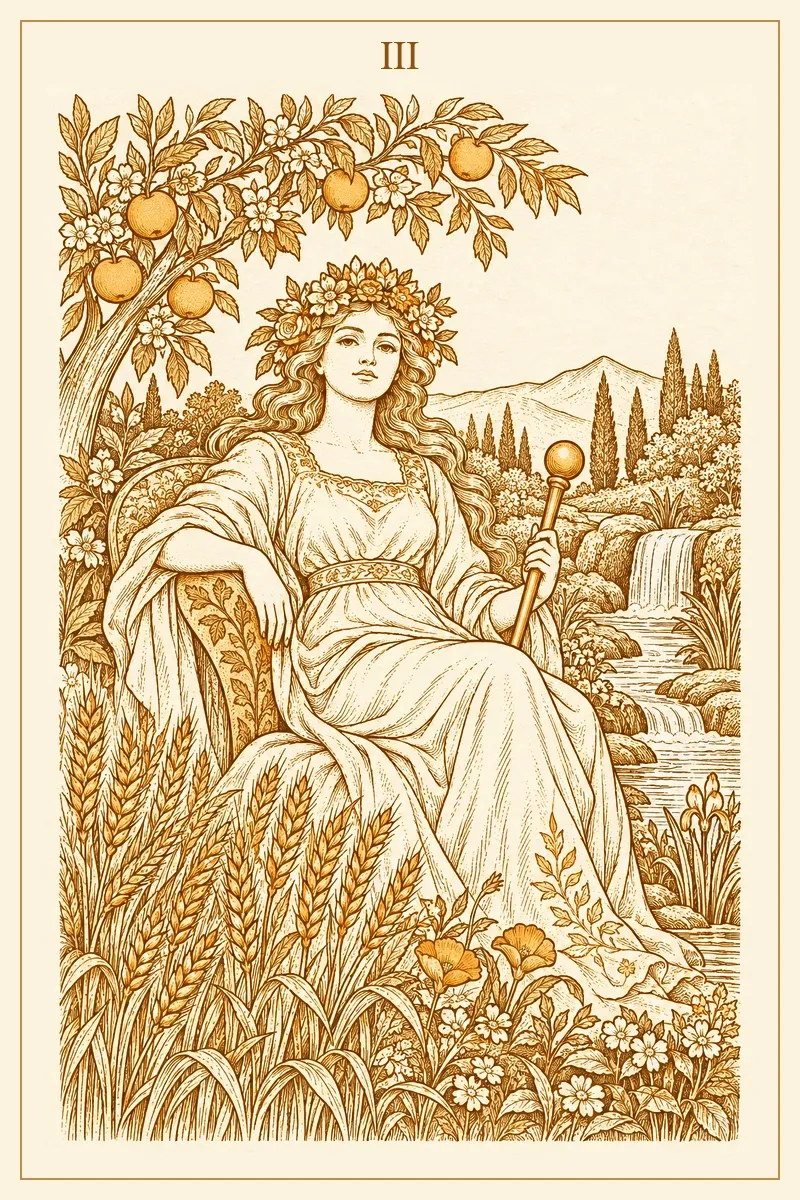
Upright, The Empress is comfort with a body attached: warmth, food, touch, green things, a slower pace. She speaks most directly to the moment when worry has been treated as a thinking problem while the basics have gone unmet. Her questions are simple and slightly annoying. Have you eaten? Have you slept? Has anyone been kind to you today, and did you let them?
Reversed, care is flowing in one direction only. You may be the person everyone leans on, or you may feel guilty resting while anything remains undone. Nothing in that says you are failing; it says the supply line needs attention before the worry will quiet down. Answer it with one act of care within the hour, chosen because it is easy rather than impressive. The full Empress tarot meaning explains her wider range.
Strength: staying with fear instead of wrestling it
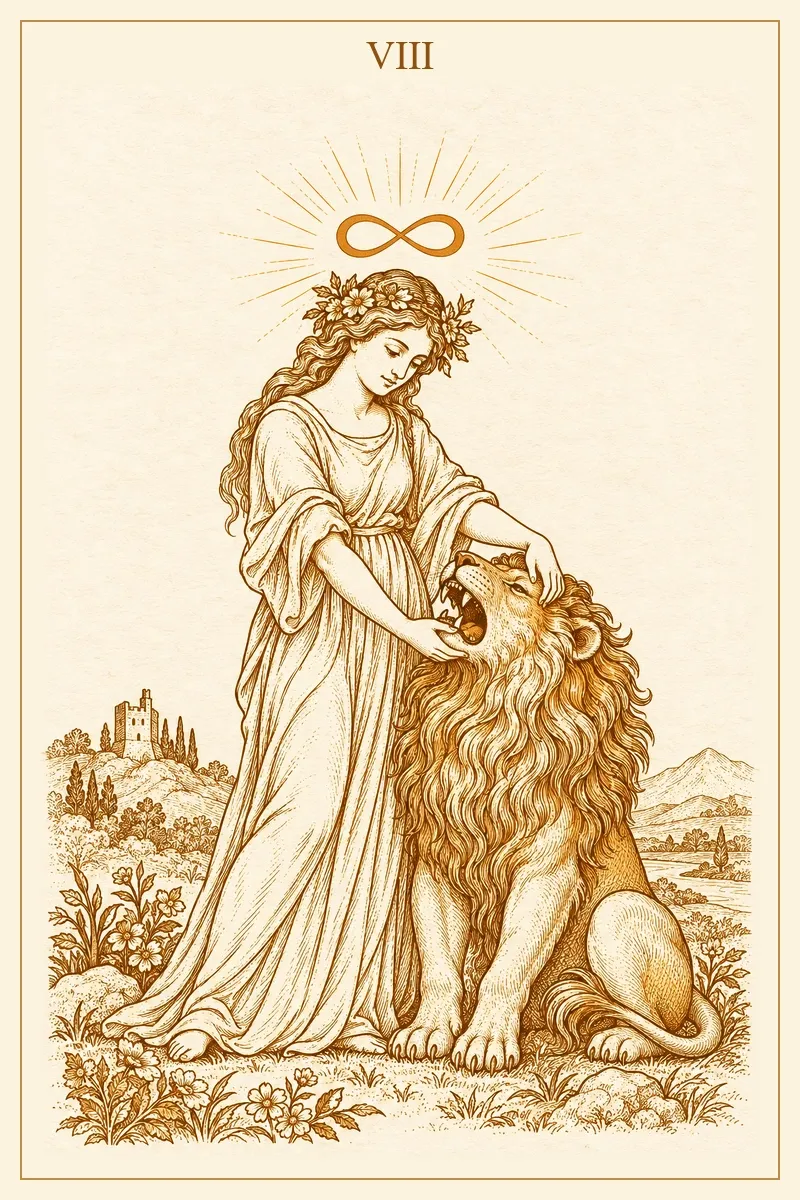
Upright, Strength shows a calm hand on a lion. Nothing is being overpowered. The card describes the kind of courage that is mostly patience: letting fear move through you without acting on every instruction it gives. Anxiety insists that you cannot cope, and Strength answers that coping has looked like this all along, quietly and without an audience.
Reversed, force has turned inward: pushing through exhaustion, criticizing yourself for being anxious at all, going quiet because silence seems safer than asking. It can also show the opposite, a fear that has been given the run of the house. Ask what you are bracing against and whether anyone could share the weight, then write one sentence you can say to yourself when the feeling spikes. There is more in the full Strength tarot meaning.
The Hermit: turning the outside noise down
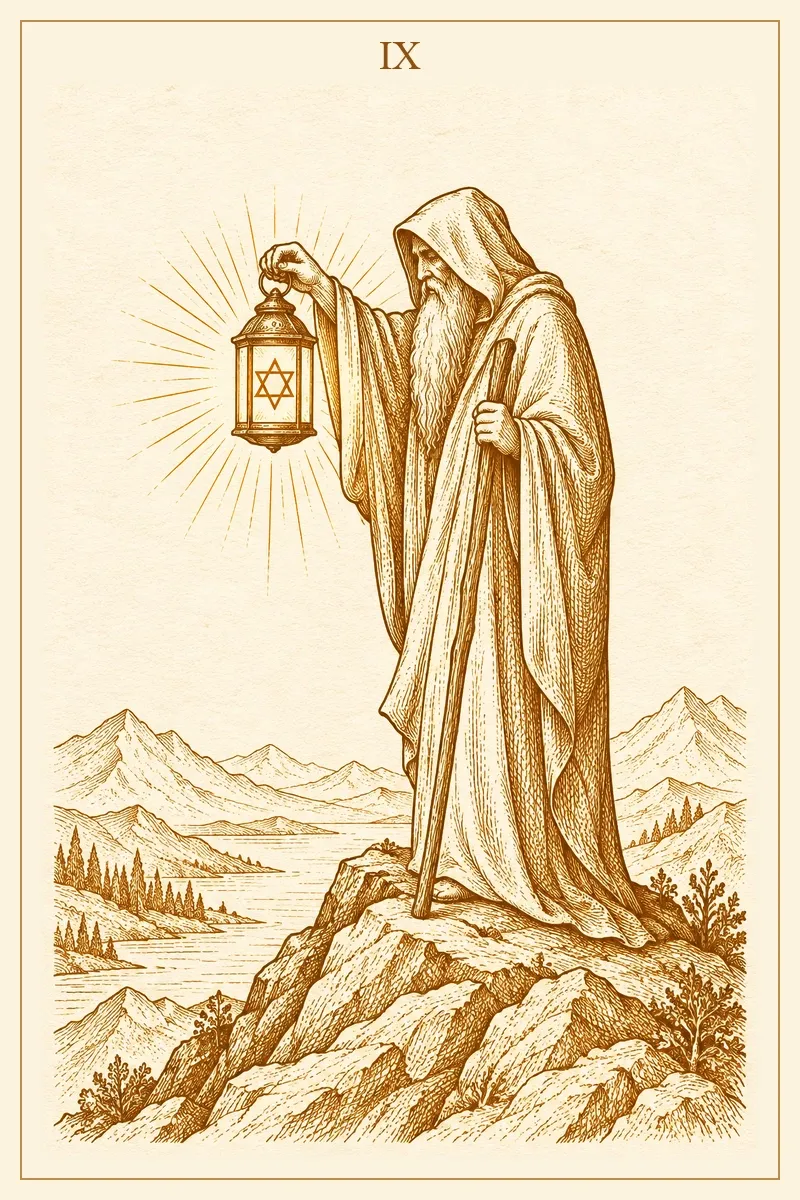
Upright, The Hermit steps away from the crowd with a single lamp. For anxiety he is the answer to reassurance-seeking: the search bar at midnight, the fourth friend asked the same question, the rechecking that calms you for ten minutes and then wears off. What you want is not another opinion. It is quiet enough to hear what you already think.
Reversed, solitude has stopped helping. Withdrawal turns into rumination, and the card can also show someone refusing help that is genuinely offered. The distinction worth making is between being alone to rest and being alone to hide, and if the second is closer, one message to one person is enough for today. The full Hermit tarot meaning describes his other sides, and once the sharpest worry has eased, tarot for self-discovery is the slower look worth coming back to.
Cards that name the worry instead of soothing it
Comfort cards are not the only ones that belong here. Three others describe the experience itself, and readers are often relieved to see them, because being named is easier to bear than being reassured.
The Nine of Swords is the three-in-the-morning card: sitting up in the dark with one thought on repeat. It is not a prediction of disaster. It reports that the fear has grown larger than the facts available to you, which tells you to check the facts instead of arguing with the feeling. Write the worry out, then mark the lines you actually know to be true. The full Nine of Swords meaning goes further into its reversals.
The Four of Swords asks for rest and means it literally: a pause, a quiet room, an evening with nothing in it. Anxious readers skip past it because resting feels irresponsible while a problem is unsolved. Treat it as an instruction and give it a shape you can keep, such as one hour with the notifications off. The Four of Swords meaning covers how it reads in longer spreads.
The Moon shows uncertainty with imagination filling in the gaps, which is what anxiety does with missing information. You do not know enough yet, and your mind has been writing the rest. Decide what single piece of information would settle the question, and where you could get it this week.
None of the three is a bad omen. Between them they tell you which kind of help the moment needs: facts, rest, or patience.
The Quiet Ground spread: five positions for an anxious evening
This layout stays short on purpose: when you are already overwhelmed, a complicated spread becomes one more thing to manage, and the reading turns into work.
Before you begin. Sit where you can put both feet flat on the floor and breathe out slowly three times, making each exhale longer than the inhale. Put a hand where you feel the anxiety most and say what it is, even if the only honest sentence is that it simply feels bad. Then shuffle slowly.
- What I am feeling. This card names the state without arguing about whether it is reasonable. Describe the image first, then say which part of it matches the feeling in your chest.
- What sits underneath it. The need or fear the worry is protecting. Anxious thoughts are usually messengers for something plainer: rest, money, safety, being allowed to say no.
- What I can set down tonight. Almost nothing urgent is yours at this hour. This card gives you permission for one specific thing you can leave until morning.
- What steadies me. A support that already exists: a person, a place, a routine, a fact you can check when the story runs away.
- The smallest next step. One action small enough to finish today. If the card suggests something large, shrink it until it fits inside ten minutes.
Before you interpret the cards one by one, read the five as a single sentence. If it sounds like a plan, the reading is done. If it sounds like a prophecy, start again with a smaller question.
If a position stays blank, write “nothing yet” beside it and move on; a card that says nothing today often says a great deal in a week, and keeping a tarot journal makes those slower patterns visible.
A full reading: the night before a difficult conversation
Say the question is this: what do I need to see before I talk to my manager tomorrow about a project that has slipped? It is answerable, because it asks about your preparation rather than their reaction.
What I am feeling: Nine of Swords. You are awake, running the conversation in advance, and each rehearsal ends worse than the last. The dread is not evidence about tomorrow; it is evidence that you care and have not slept properly in a while.
What sits underneath it: The Empress reversed. Beneath the rehearsal is something simpler than a work problem: you have been carrying a heavy stretch with nobody carrying any of yours. The fear is partly about the meeting and largely about depletion.
What I can set down tonight: The Moon. Everything you have imagined your manager thinking goes down, because you have been filling that gap with the worst available version. Keep the part you can check: the deadline, the reason for the delay, the options you could offer.
What steadies me: Strength. Not force, but the calm hand. You have had hard conversations before and got through them by staying steady rather than by winning. Bring the facts, and let the pace be yours.
The smallest next step: Temperance. Write three sentences before bed: where the project stands, the realistic new date, and the one thing you need in order to hit it. Then stop, because a longer script would only be rehearsal wearing a different hat.
Nothing in that reading predicts the meeting. It changes what you do in the twelve hours before it, which is the part you can control.
Where the worry tends to land
Anxiety borrows whatever subject is nearest. The underlying feeling is similar, but the question worth asking changes with the setting.
Love and the need to know where you stand
In relationships, worry shows up as needing certainty now: a reply read six times, a tone picked over for hours, a conversation rehearsed in the shower. A reading cannot report what your partner is thinking, but it can show the shape of your own fear. The Hermit reversed usually points at reassurance-seeking rather than at the relationship, and Strength suggests the steadier move: say the thing once, plainly, and let the silence after it be uncomfortable.
Work, performance and being found out
At work, worry attaches itself to competence. Temperance reversed describes the week with no limit anywhere in it, and The Empress upright describes the unglamorous repair: lunch away from the desk, a walk between meetings, an end to the day that you actually observe. A reading before a review is most useful when it asks what to prepare rather than what will be decided.
Money and the shape of the future
Money worry is sticky because part of it is real, and the move that helps is separating the part that needs a spreadsheet from the part that needs steadiness. Tarot is good company for the second and no use at all for the first. The Star helps when you cannot picture a version of next year that works, and Temperance turns a fog into a sequence: one bill, one phone call, one number you look at properly.
Health worry and the checking loop
Checking is the hardest loop to leave, because it feels responsible. Symptoms, pulse, searches, a short calm, then the whole circuit again. The Hermit upright suggests stepping back from the search rather than further into it, and the Four of Swords suggests the body is asking for rest rather than research. Let the medical questions go to people qualified to answer them.
Keeping the practice calming rather than compulsive
Tarot can soothe a worried mind, and it can also quietly join the checking. The difference lies in the rules you keep around it.
- One question a day. Write it down before you shuffle, and read it back when you are finished.
- No redraw for a better card. If you dislike what came out, that reaction is part of the reading.
- Ten minutes, then the deck goes away. A timer sounds clinical and works anyway.
- One line of notes. What you drew, what you decided, and the date.
- Close a frightening reading physically. Stand up and leave the room rather than sitting there turning the cards over.
- Short spreads while the worry is loud. Save the long layouts for calmer days.
On a steadier day, the longer layouts in self-care tarot spreads give you room to look at what you keep postponing. If the worst hours are the ones before sleep, tarot for better sleep sets out an evening routine for that window.
Grounding practices between readings
The cards work better next to a few plain techniques that bring you back into the present. None is a cure, and all are easier to use if you have tried them first.
- A longer exhale. In for four counts, out for six or eight, for about a minute. The slow exhale does the work.
- Five senses. Name five things you can see, four you can touch, three you can hear, two you can smell and one you can taste.
- Movement. A short walk or one flight of stairs; the body lets go of anxiety faster than thinking does.
- Temperature and water. Cool water on the wrists, or a warm shower. A sharp, harmless sensation interrupts a spiral.
- One sentence to one person. Not the whole story, just a sentence, so that you are not alone with it.
- A worry window. Fifteen minutes with a pen, everything onto paper, then the notebook closes until tomorrow.
Writing does something similar with no cards involved, and these prompts stand on their own when shuffling feels like too much:
- Right now I feel this, because of this, and it is allowed to be true.
- This worry is trying to protect me from something. What does it need to hear from me?
- What do I actually know, and what have I been filling in?
- If my calmest self sat down across the table, what would they say first?
- One small, finishable thing I can do to care for myself today.
If the worry has been steady for weeks, or it is shaping your sleep, eating, work or relationships, talk to a doctor or a licensed counselor. There is no threshold you have to clear before you are allowed to ask, and plenty of people keep a quiet card practice and professional support together.
Frequently asked questions
Which tarot card means anxiety?
The Nine of Swords is the closest single card: worry out of proportion to the facts, usually at night. The Moon covers the uncertainty that feeds it, and the Eight of Swords describes feeling trapped by it. No card is a diagnosis, and what any of them means depends on the question you asked.
Can tarot tell me whether the thing I fear will happen?
No. A reading cannot supply an outcome, a date, or what another person is thinking, and a frightening picture is not a verdict about your life. What it can do is show you what the fear is made of, which part of it rests on facts, and what is available to you in the next hour.
Is it a bad idea to read tarot while I am anxious?
It depends on the question. Drawing to understand what you are feeling tends to settle people; drawing to be reassured does the opposite, because reassurance wears off and the next draw has to be bigger. If you notice yourself reaching for the deck to make a feeling stop, put it down and do something physical instead.
How often should I draw when I am anxious?
Once a day is plenty, and one card is often better than five. A morning draw with a line of notes gives you a record and a rhythm without feeding the loop. On a hard day, draw once, write the line, and let the rest of the day be lived rather than interpreted.
What if I keep pulling the same difficult card?
Usually it means the question has not changed, not that a warning is escalating. The deck holds a limited number of images, and your attention keeps landing on the same subject. Read it as a note about where you are, and ask whether you have taken the step it already suggested.
Can tarot replace therapy or medication?
No. Tarot is reflection: it does not diagnose anything, it does not treat anything, and nothing a card shows is a reason to change or stop care that a professional has recommended. Use it as a quiet place to think, and keep the medical decisions with your doctor or your counselor.
A quieter ten minutes
Anxiety is persuasive. It speaks with certainty about things it cannot know, and while it is happening it rarely sounds like fear; it sounds like being sensible. Cards will not argue it down, but they give the feeling a shape you can look at and a step small enough to take tonight.
When you are ready to sit with a few cards and a question you can actually answer, start a reading and keep it to ten quiet minutes.