Tarot cards are not dangerous in themselves. A deck is printed card stock and ink: owning one, shuffling it or keeping it in a drawer cannot curse you, bring bad luck or invite anything into your home, and the same is true of oracle cards. The risks worth taking seriously come from how readings are used, such as reading so often that the cards start making your choices, leaning on them for medical, legal or money decisions, paying readers who sell fear, or reaching for a deck in a crisis when what you need is a person.
It also helps to be clear about what a reading can and cannot do. Tarot can help you slow down, name what you feel and think about a next step. It cannot confirm what another person is thinking, give you a date or tell you how a situation will end, and it does not replace a doctor, a lawyer, a financial advisor or a counselor. If your faith or conscience tells you not to read, that is a complete answer too; nobody needs tarot.
At a glance:
- The deck itself: paper and ink; buying, gifting, inheriting or storing one carries no risk.
- Reading too often: the most common problem, when repeated draws replace your own judgment.
- High-stakes decisions: health, legal and financial questions belong with qualified professionals.
- Fear-selling readers: anyone who diagnoses a curse and charges to lift it is selling, not reading.
- Reading in a crisis: when you feel unsafe, call a person or a crisis line before you shuffle.
- Frightening cards: the cards with the darkest pictures describe change, habits and uncertainty, not harm coming your way.
What a tarot deck actually is
A tarot deck is 78 printed cards, 22 major arcana and 56 minor arcana, usually made on the same coated card stock as playing cards. Nothing in the paper, the ink or the box gives a deck any power over the person who holds it.
What the cards do carry is meaning that people bring to them. A photograph is pigment on paper, yet it can move you to tears because of what it reminds you of. Tarot images work in a similar way. A picture of a figure walking away, a cup knocked over or a tower in a storm gives you a shape for a feeling you already had, and the reading happens in your thinking, not in the cardboard.
This is also why the usual worries about owning a deck do not hold up. You may have heard that a deck must be a gift, that nobody else should touch it or that a secondhand deck carries its old owner's luck. These are customs some readers enjoy as a way to make a deck feel like their own, not safety rules, and if a small ritual helps you feel settled, you are free to keep it as a personal habit.
Where the real risks are
If the cards cannot hurt you, what can? The same human habits that make any tool unhelpful: using it too much, using it for the wrong job, trusting the wrong person with it, or using it when what you need is somebody's help.
Reading so often that the cards decide for you
The most common problem is not dramatic at all. It starts with a useful reading, then a second one the same evening because the first answer was unclear, then a card before replying to a message or deciding whether to see a friend. Over a few weeks the deck stops being a place to reflect and becomes a gatekeeper you have to ask before you act.
A few signs that the balance has tipped:
- You shuffle again because you did not like the first answer, though nothing has changed.
- Small everyday choices feel impossible until you have drawn a card.
- You feel more tense after reading than before.
- You trust the cards over your own clear knowledge of a situation.
None of this means you should never read again. It means the practice needs edges, such as one reading per question and a pause before you return to it. If several of those signs sound familiar, the guide to doing too many tarot readings has a short reset plan you can follow for a week.
Asking the cards to settle health, legal or money questions
Tarot is good at helping you notice feelings and priorities. It is not a diagnostic tool, a legal opinion or an investment strategy, and treating it as one is where real harm can start. A card cannot tell you whether a symptom is serious, whether to sign a contract or whether a loan is safe to take. Putting off a medical appointment because a reading looked reassuring, or making a large purchase because a card looked lucky, puts weight on the deck that it was never built to hold.
A reading can still sit beside these decisions, for example to notice what you are afraid to ask your doctor or to list questions for a lawyer. The decision itself stays with the facts and with the people qualified to give them.
Readers who sell fear or curse removal
The part of the tarot world that does deserve caution is a small number of readers who profit from fear. The pattern is familiar and has nothing to do with the cards: you are told you carry a curse, dark energy or a blocked path, and then you are offered a paid ritual, candle work or a series of cleansing sessions to fix it. The price tends to grow, and so does the urgency.
Warning signs worth taking seriously:
- A reader says you are cursed or hexed and offers to remove it for money.
- Predictions are absolute: an illness, a death or a partner's betrayal stated as fact.
- You are told not to discuss the reading with family, friends or professionals.
- Pressure builds with deadlines, such as "act this week or it gets worse."
- Payments keep rising after each session.
A reader you can trust leaves the decisions with you, encourages outside support and is happy for you to take a break. If someone makes you afraid and then sells you the cure, you can walk away; there was no curse to begin with.
Reaching for the deck in a crisis
There are moments when a reading is the wrong tool entirely. If you are thinking about hurting yourself, feel unsafe at home or are facing a medical emergency, put the cards down and contact a person: your local emergency number, a crisis line in your country, a doctor or someone you trust. In the US you can call or text 988 to reach the Suicide & Crisis Lifeline. A deck cannot check on you tomorrow, and you deserve someone who can.
Grief that does not lift and anxiety that disrupts sleep or work are also worth bringing to a counselor or doctor. Tarot can sit beside that support, but it should never be the only place you take something heavy.
When a reading leaves you more anxious
For some people, especially those who already live with anxiety, readings feed worry instead of easing it, and one unsettling card in the morning turns into a week of imagining the worst. The card is not the cause; the reading has become one more place for an anxious mind to look for threats. Take a few weeks off, ask only light, practical questions, or swap the deck for a notebook until you can look at the cards with curiosity again.
Faith, conscience and the choice not to read
Many people first hear that tarot is dangerous from a religious teacher, a parent or their own tradition. Those concerns deserve respect, not argument. Religious traditions hold different views on divination: some ask believers to avoid it completely, some leave the question to personal conscience, and some people of faith use cards only as prompts for reflection or prayer.
This guide does not try to settle any of those questions, because they belong to you and your community. If your faith asks you not to use tarot, you can simply choose not to. You do not need a reason that satisfies anyone else, and declining a reading is never rude.
If you do read, the same respect runs the other way: ask before reading for a friend, accept a no without persuading, and avoid drawing cards about someone who has not agreed to it.
What the frightening cards really mean
Much of the fear around tarot comes from a handful of cards with dark pictures. Seen out of context they look like warnings; read in context they usually describe change, habit or uncertainty. A wider guide to reading scary tarot cards without panic covers more of them, and the five below are the ones people ask about most when they wonder whether tarot is safe.
Death: an ending that makes room
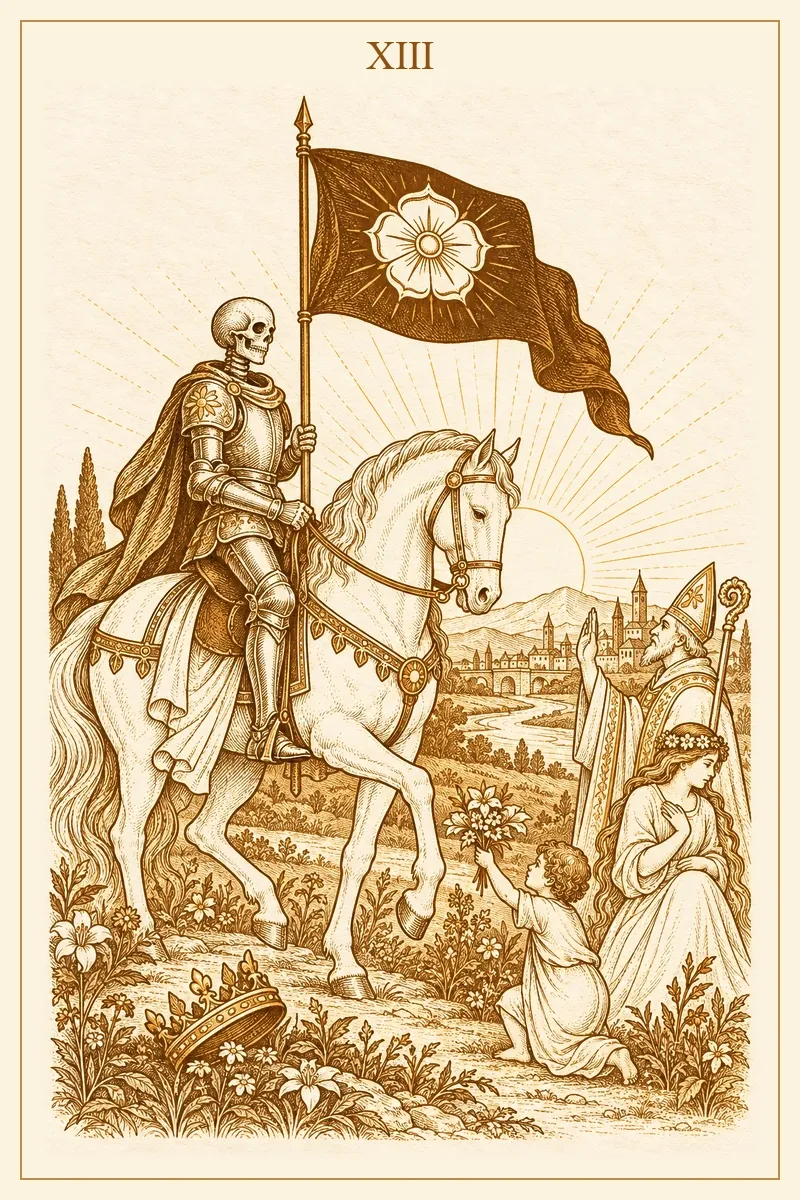
The picture on Death is stark: a skeleton in armor rides a white horse and carries a dark banner marked with a white rose. A crown lies in the grass, a bishop with one hand raised faces the rider, a kneeling woman lowers her eyes and a child holds out a small bunch of flowers, while the sun sits low on the horizon beyond a distant town. Nearly every reader treats this card as an ending and a change of season, not as a forecast of anyone dying.
Upright, Death says something has run its course: a role, a routine, a way of relating to someone. In love it can describe a relationship changing shape or a clear ending that frees both people. In work it often points to a project closing or a job changing. Reversed, it tends to show resistance to an ending that is already underway, holding on because letting go feels frightening. The full Death tarot card meaning walks through each position in detail.
The Devil: a habit that holds on
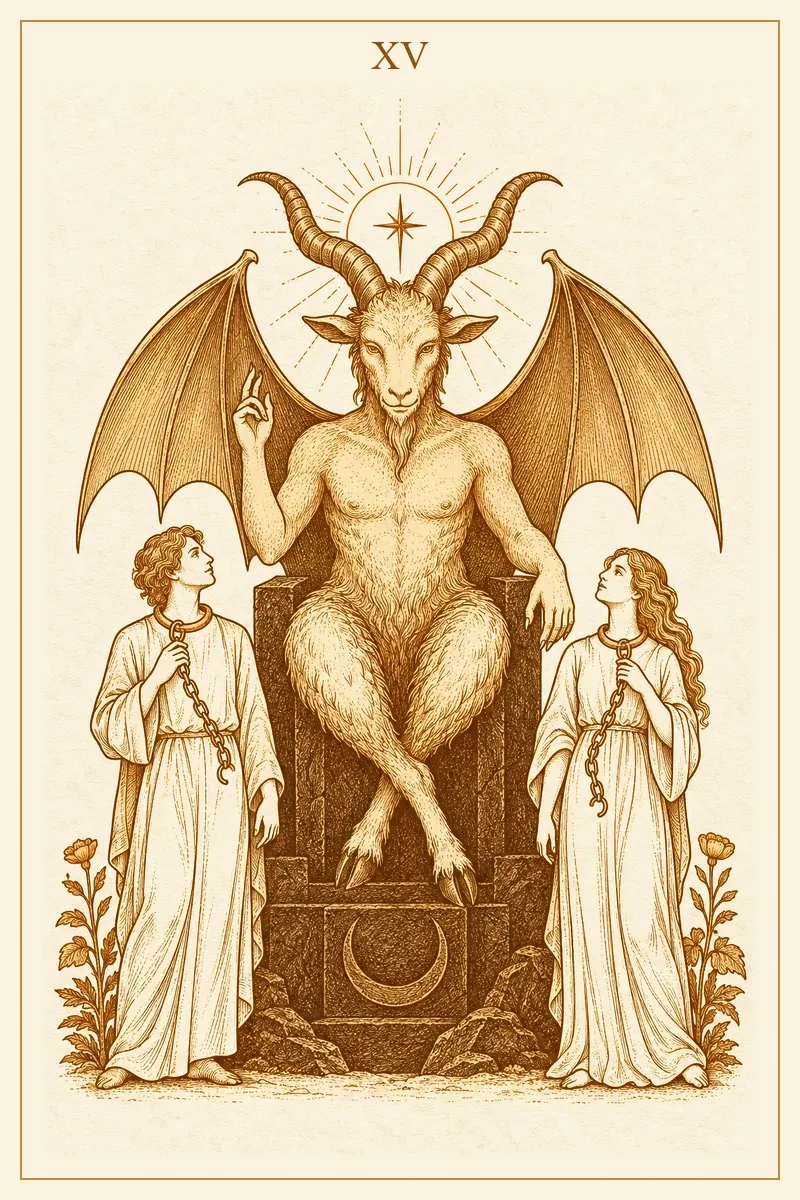
The Devil shows a horned, goat-headed figure with bat wings seated on a dark stone block, one hand raised. Two robed people stand on either side, each holding a length of chain loosely in one hand, and nothing in the picture stops them from letting it drop. That detail is the point of the card: the bond it describes can be released.
Upright, the card names attachments that feel stronger than they are: a spending pattern, a phone you cannot put down or a relationship dynamic you keep returning to. In a love reading it can point to intense attraction mixed with control or jealousy. Reversed, it often shows the first step out, noticing the chain and starting to loosen it. The card does not summon anything; it describes what a person is already struggling with. More on its positions appears in The Devil tarot meaning.
The Tower: a structure that cannot stand
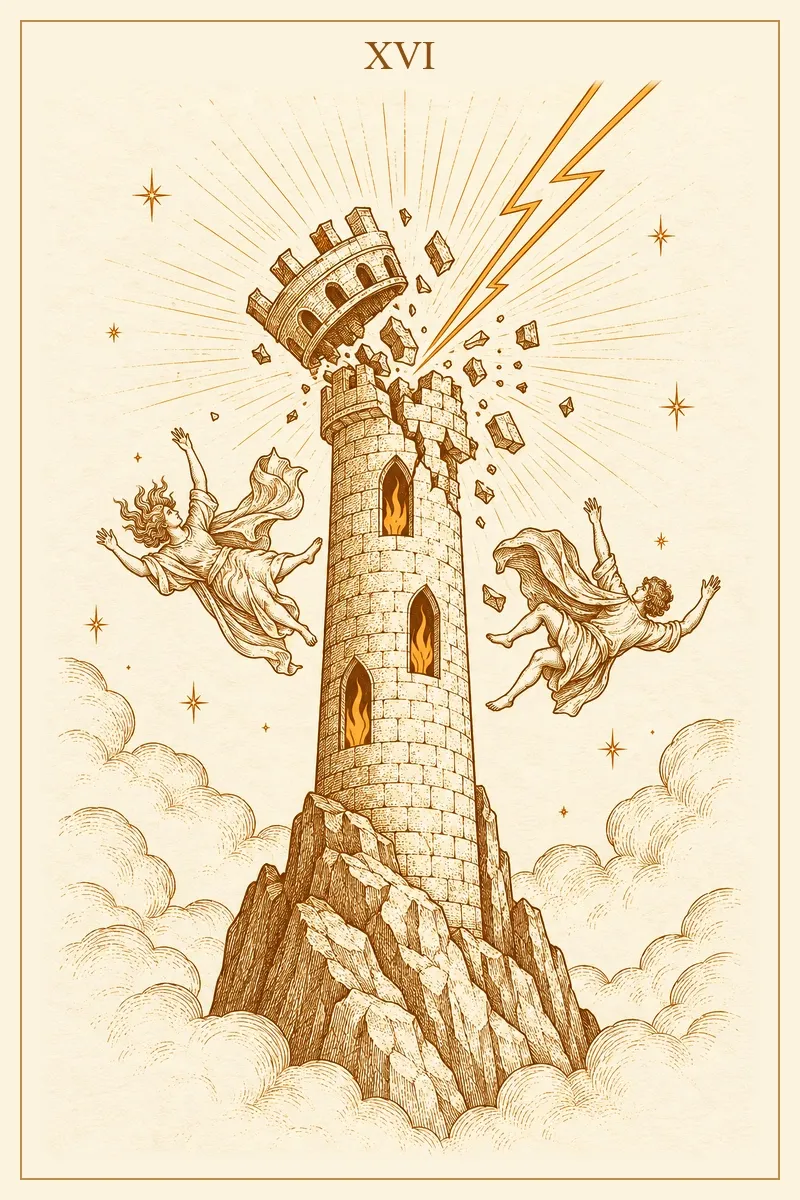
On The Tower, a tall stone tower on a rocky peak above the clouds is struck by lightning; its crowned top breaks away, flames show in the windows and two figures fall through the air. Many people fear it more than any other card.
Upright, The Tower describes a sudden shift: a truth that comes out, a plan that falls apart or a belief that no longer holds. The shock is real, but what falls was usually already unstable. In a career reading it can mean an abrupt restructuring; in love, an honest conversation that changes everything. Reversed, it may show a change you see coming and keep delaying, or one that arrives gradually rather than all at once. The full Tower tarot meaning goes further.
Ten of Swords: the lowest point, and the light after
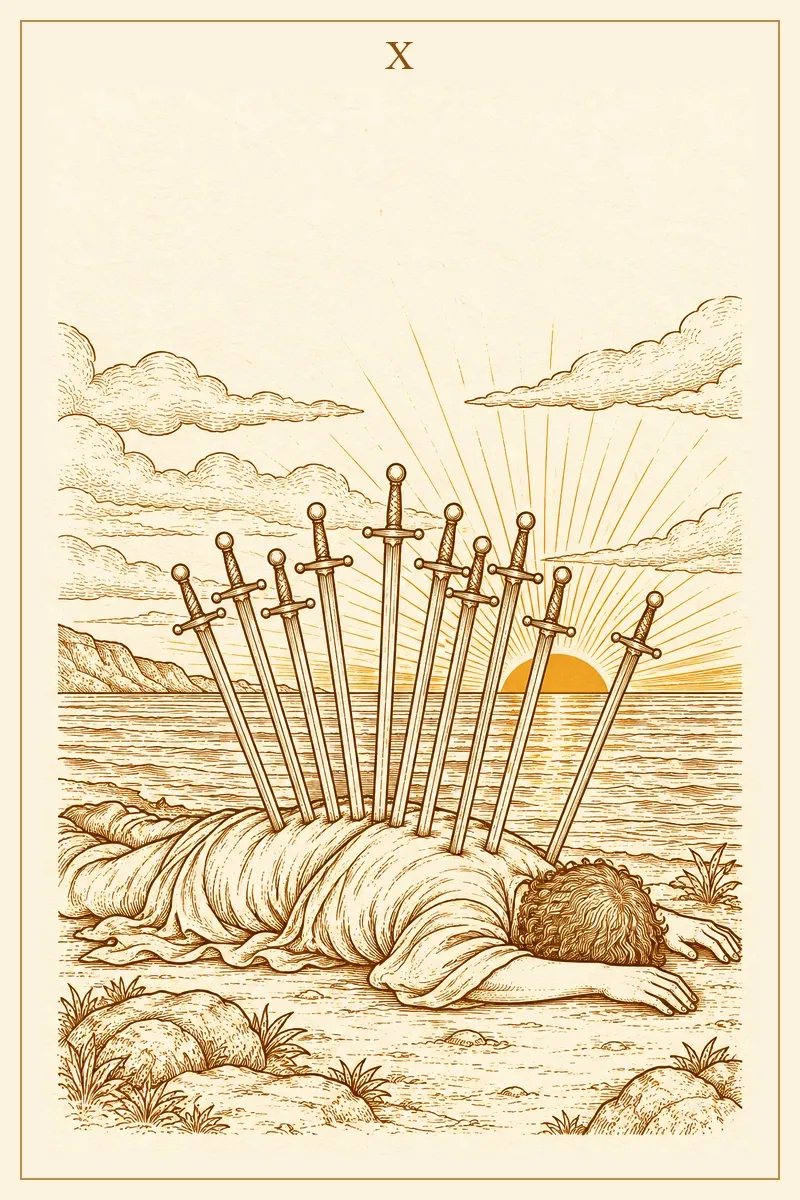
On the Ten of Swords, a figure lies face-down on a quiet shore, partly covered by a cloth, with ten swords standing in their back. Behind them the water is calm and the sun sits bright on the horizon, its rays fanning across the sky. That light is the part many readers point to first.
Upright, the card describes feeling finished with something painful, such as a conflict that has played out or a plan you admit has failed. It often marks the bottom of a cycle, after which things can begin to lift. In love it can describe the clear end of a relationship that had been fading; in work, burnout that makes a change unavoidable. Reversed, it suggests slow recovery and getting up again, or sometimes replaying a hurt longer than it needs. The Ten of Swords meaning covers its other angles.
The Moon: when the path is unclear
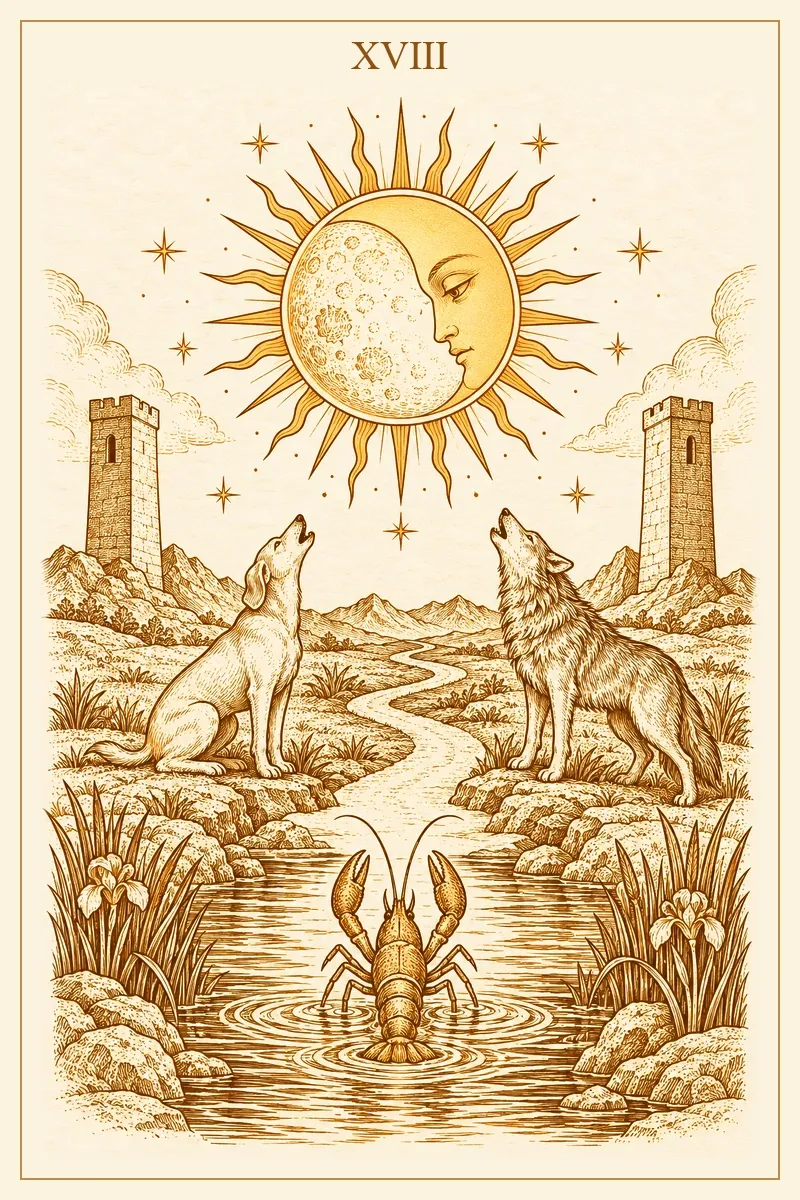
The Moon shows a large sun-and-moon disk with a calm face in its crescent, above a dog and a wolf howling on either side of a winding path. A crayfish climbs out of a pool in the foreground, and two towers stand at the far edges of the landscape as the path disappears toward the hills.
Upright, the card is about uncertainty: incomplete information, fears that grow in the dark, intuition that is hard to separate from worry. It fits a moment when you should not decide too fast. Reversed, it often shows confusion clearing and a fact coming to light. Its full range is in The Moon tarot meaning.
A four-card check-in for a worried reading
When you come to the cards anxious, asking only "what will happen?" tends to make the worry louder. This four-card layout ties the reading to what you know and what you can do. Lay the cards in a row, left to right.
- What I am hoping the cards will settle: the worry under the question, named honestly.
- What I already know: facts, past experience or a quiet sense you have been setting aside.
- Help outside the cards: a person, a resource or an appointment that can carry part of this.
- One step in my hands: a small action for the coming week that does not depend on another reading.
Read the first card gently, since it often shows the feeling more than the facts. The third keeps the deck from becoming your only support, and the fourth turns reflection into action. Write the step down and set a date to look again rather than reshuffling the same evening.
Worked example: one worried question, read once
Suppose Mia has heard rumors of layoffs at work. Over three days she has drawn a card every morning and night about whether she will lose her job, and The Tower on the second night kept her awake. She decides to stop and do one careful reading with the check-in spread, asking: "What do I need to see about my work situation this month?"
She draws these four cards:
- What I am hoping the cards will settle: Nine of Swords
- What I already know: Page of Pentacles
- Help outside the cards: Three of Pentacles
- One step in my hands: Temperance
The Nine of Swords in the first position names what is really going on: sleepless worry. Mia wants the cards to promise she is safe, and no card can do that, but seeing the worry named plainly helps her separate it from the facts.
The Page of Pentacles reminds her of something she knows but has not been counting: she has been learning new skills steadily and has recent work she is proud of. The Three of Pentacles points outside the deck, toward the people she works with. Instead of guessing, she can ask her manager directly about the team's plans.
Temperance asks for a steady pace, one practical step at a time rather than swinging between panic and denial. Mia's step for the week is to request a short meeting with her manager and spend one evening updating her resume. She also writes a rule at the bottom of the page: no more cards about the job until that meeting has happened.
The reading did not tell Mia whether she will be laid off. It could not. It turned three anxious days of repeated draws into one page of facts, people and a plan, which is a far safer use of the cards.
Habits that keep tarot reflective
These habits keep tarot useful without letting it take over.
- Read with a purpose. Write the question first and ask it once. If you feel the urge to reshuffle, write down what you hoped the second draw would say instead.
- Find a pace that suits you. For many people that means a single card in the morning or a fuller reading once a week or once a month, and the guide on how often to read tarot sets out a healthy rhythm for each.
- Keep a journal. Noting the date, question, cards and what actually happened afterward shows you how often your fears came true, which is usually far less often than they felt likely to.
- Take breaks without guilt. A week or a month away from the deck costs nothing, and stepping back when readings feel heavy is a sign of a healthy practice.
Frequently asked questions
Can tarot cards attract evil spirits or negative energy?
No. A deck is paper, ink and a coating, and it has no more ability to draw in spirits or bad energy than a book or a pack of playing cards. If you hold beliefs about the spiritual world, those beliefs are yours to keep, and you can simply choose not to read if the practice does not fit them.
Is it dangerous to own a tarot deck?
No. Buying a deck, receiving one as a gift, inheriting one or keeping an old deck in a drawer carries no risk, and a secondhand deck is as harmless as a new one. If owning a deck makes you uneasy for personal or religious reasons, you can give it away or recycle it.
Are oracle cards safe?
Yes, in the same way tarot is. Oracle decks are printed cards with images and short phrases, often without tarot's fixed 78-card structure, and they cannot harm you. The same limits apply: use them for reflection rather than for health, legal or money decisions, and notice if you start drawing them compulsively.
Can drawing a card like The Tower make bad things happen?
No. A card gives you a theme to think about; it does not set events in motion. If something difficult happens after a hard card appears, it was already forming or would have happened anyway. Plenty of people draw The Tower or Death in quiet, ordinary weeks with nothing dramatic following at all.
Is it safe to read tarot for yourself?
Yes. Most people read for themselves. The main pitfall is seeing only what you hope or fear, which a journal helps with because you can revisit a reading later with clearer eyes. A step-by-step guide to reading tarot for yourself covers shuffling, questions and simple spreads.
Should children or teenagers use tarot cards?
That depends on the young person and on your family's values. Older teenagers can use tarot as a reflection tool, especially with an adult nearby to talk readings through. Younger children may find images such as The Devil or Death upsetting without context, so a deck with gentler art, or simply waiting, can be the better choice.
What can tarot not tell me?
Tarot cannot tell you what someone else is thinking, when something will happen or how a situation will end, and it cannot replace professional advice. It reflects your question and your circumstances back to you so you can think them through. If you are curious how this fits with prediction, the article on whether tarot can predict the future explains what the cards actually do.
Trying a reading at your own pace
If you would like to try tarot calmly, with one question and no pressure, you can start a reading on Veil Soul and come back whenever it feels useful.