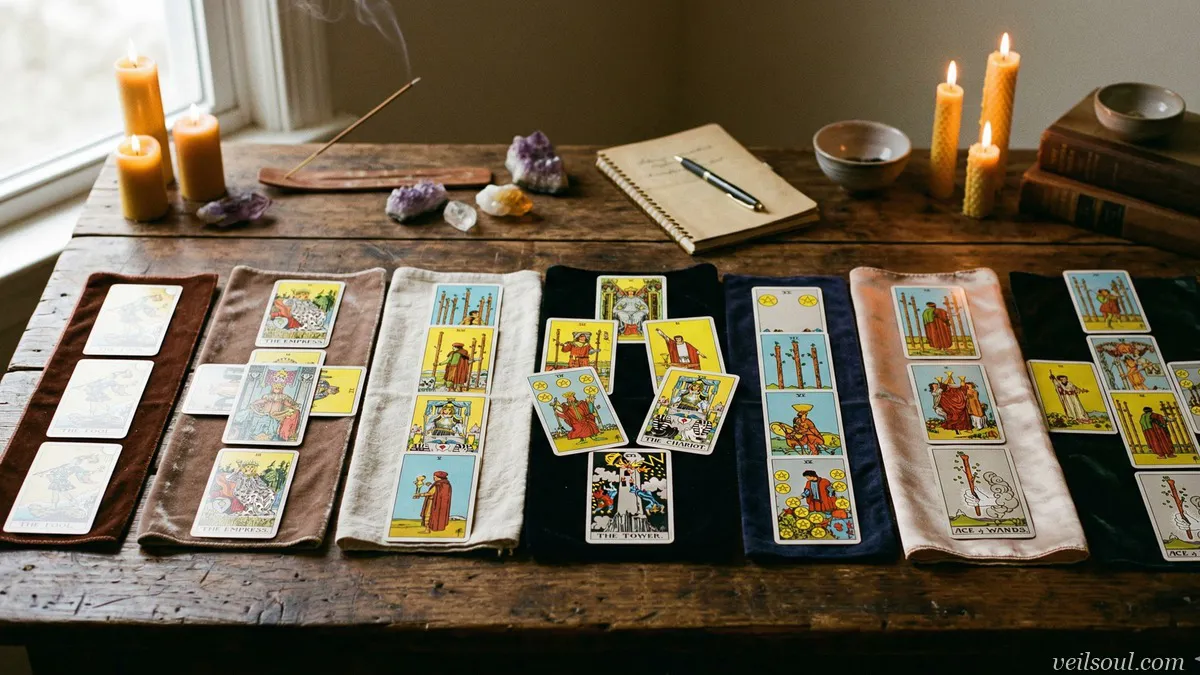
Should you quit your job? Tarot cannot make that call for you, but a careful reading can show whether this job has run its course or still has something to teach you. Cards such as the Eight of Cups, the Ten of Wands and Death tend to say a chapter is closing. Strength, the Seven of Pentacles and the Three of Pentacles tend to say there is still growth to harvest where you are. Most readings hold a mix of both, and the mix is where the useful answer lives.
No card can read your manager's plans, promise that a better role is waiting, or name the right month to resign. What a reading can do is slow the question down: separate exhaustion from a genuine ending, name the fear that keeps you in place, and show what you would need in hand before leaving felt sensible rather than reckless. Check what the cards raise against your savings, your contract and a few honest conversations.
Here are the cards covered below, with the direction each one usually leans:
- Eight of Cups: leave; walking away from work that no longer feeds you.
- Ten of Wands: leave or lighten the load; a burden that is wearing you down.
- Death: leave; a chapter that has already ended inside you.
- Eight of Swords: look again; the trap may be more belief than fact.
- The Tower: leave on your own terms; a structure that is not holding.
- The Fool: leave; a leap toward something unfamiliar.
- Five of Pentacles: leave; support and fair reward are missing here.
- Seven of Pentacles: stay for now; your effort has not been harvested yet.
- Strength: stay and grow; this challenge is building a skill you will need.
- Three of Pentacles: stay; your skill is needed and seen.
- The Emperor: stay and build; there is still authority to claim.
- Wheel of Fortune: wait; the cycle is turning.
- Six of Wands: stay a little longer; recognition may be close.
What you are really asking when you ask about quitting
"Should I quit?" usually bundles three questions. One is about energy: am I tired because of a hard season, or because this work drains me no matter what? One is about fit: has the job stopped matching what I value? The third is practical: can I afford to leave, and what would I be leaving for? A reading speaks most clearly to the first two; the third needs a calculator and some conversations, which come near the end.
Phrase the question so the cards can work with it. "Will I be happier somewhere else?" asks for a forecast nobody can give. "What is this job still giving me, and what has it stopped giving me?" invites a reflection you can use. A yes or no tarot reading can offer a quick lean, though a decision this size deserves more than one card. And if you have already decided to move and want to think about when, the guide to tarot for a career change picks up from there.
Cards that say this chapter is closing
These cards come up when the energy of a role is spent. None of them says "resign this week." Read them as signs that staying unchanged has a cost, then let the cards around them tell you whether the message is "go now," "prepare to go," or "change something first."
Eight of Cups: walking away from what no longer fills you
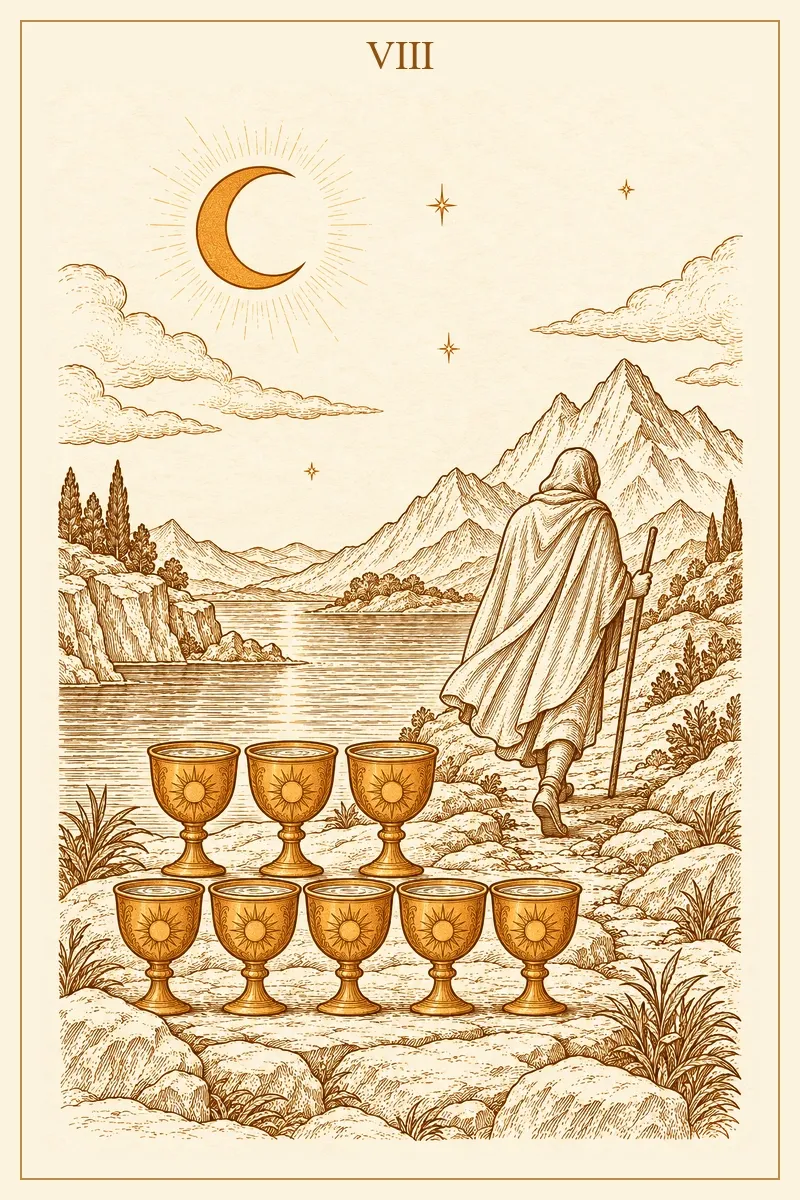
A cloaked figure with a staff turns away from eight golden cups and walks toward the mountains under a crescent moon. The cups are not broken; they simply no longer hold what the traveler needs. That makes this the quietest leaving card: no crisis, only the slow admission that the work has stopped meaning what it once did, even if it still looks fine on paper.
Upright, it often reflects a decision you have half made already. Reversed, it can show hesitation, or wanting out from restlessness rather than clarity. Ask what you are walking toward. The full Eight of Cups tarot meaning covers its love and personal readings as well.
Ten of Wands: a load that is wearing you down
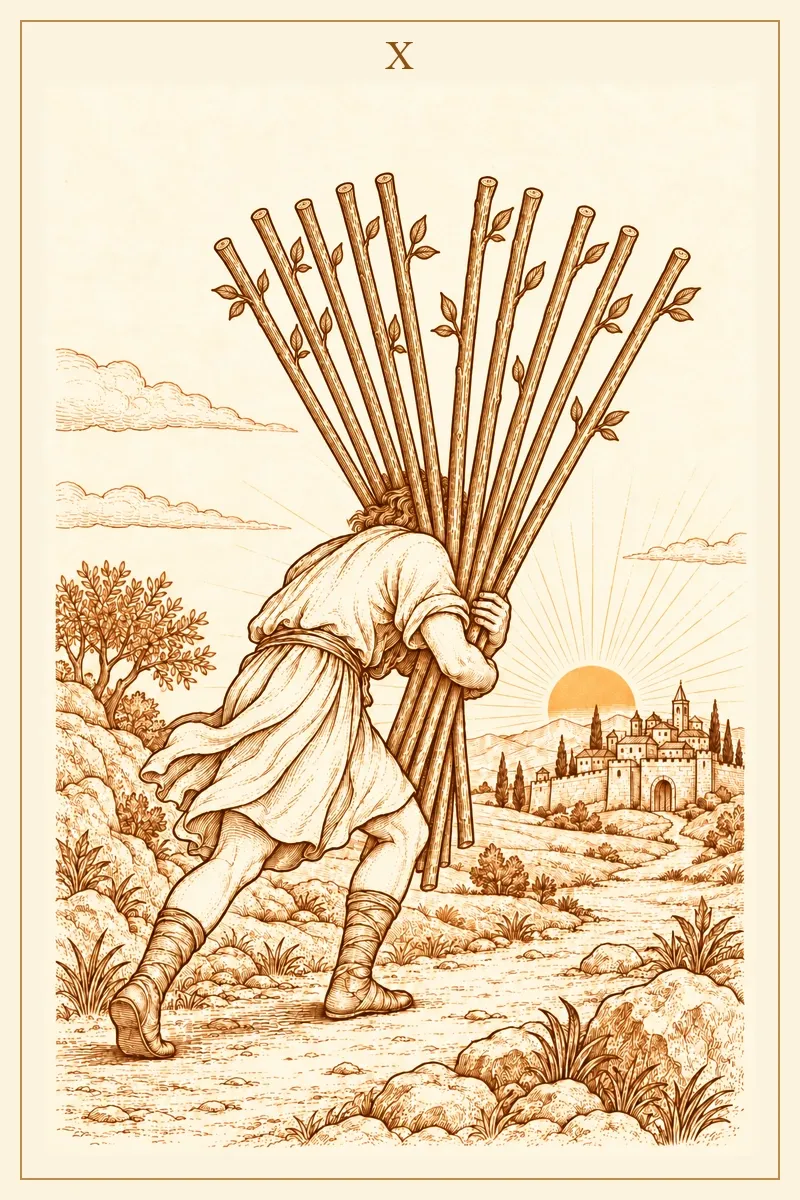
A figure bends forward under ten wands, carrying them toward a town on a hill, the bundle hugged so close that it blocks the view ahead. At work, this is the person who took on one more project, then another, until the job became mostly about not dropping anything. Upright, it says the weight is real and it is costing you.
It does not always mean leave. Sometimes it means putting some wands down by delegating or saying no to the next request. If the load is the problem and the work still matters to you, the card may point to a conversation before a resignation. Reversed, it can show you have started setting things down, or that you are close to burning out. The Ten of Wands tarot meaning goes deeper.
Death: an ending that has already happened inside
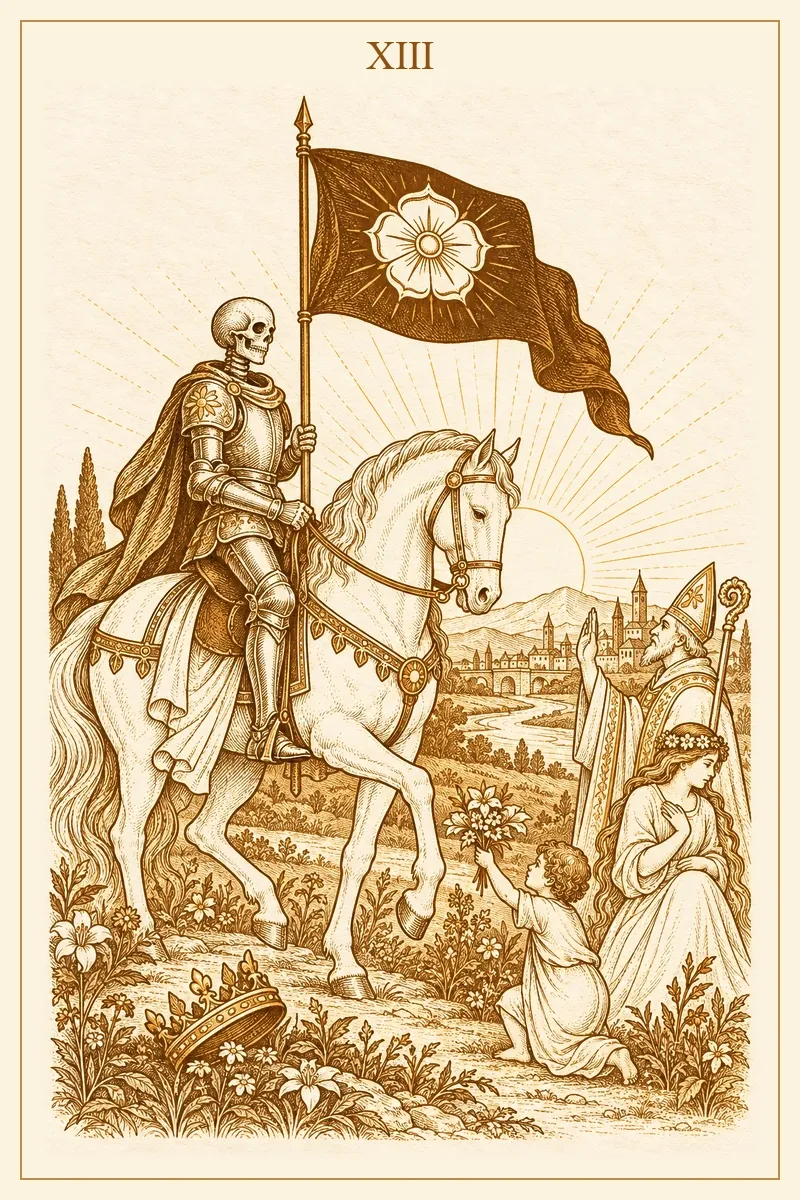
A skeleton in armor rides a white horse under a banner marked with a rose, past a fallen crown, while a child holds out flowers and a bishop and a kneeling woman look on. The card speaks of change that no rank escapes, an old form ending so another can begin, and in a career reading it rarely points to anything literal.
Upright, it often names something you already feel: the role has finished its purpose for you, and resisting that is more tiring than accepting it. It does not say how or when to leave. Reversed, it suggests clinging, staying because change is frightening rather than because the job still fits. There is more in the Death tarot meaning.
Eight of Swords: feeling trapped is not the same as being trapped
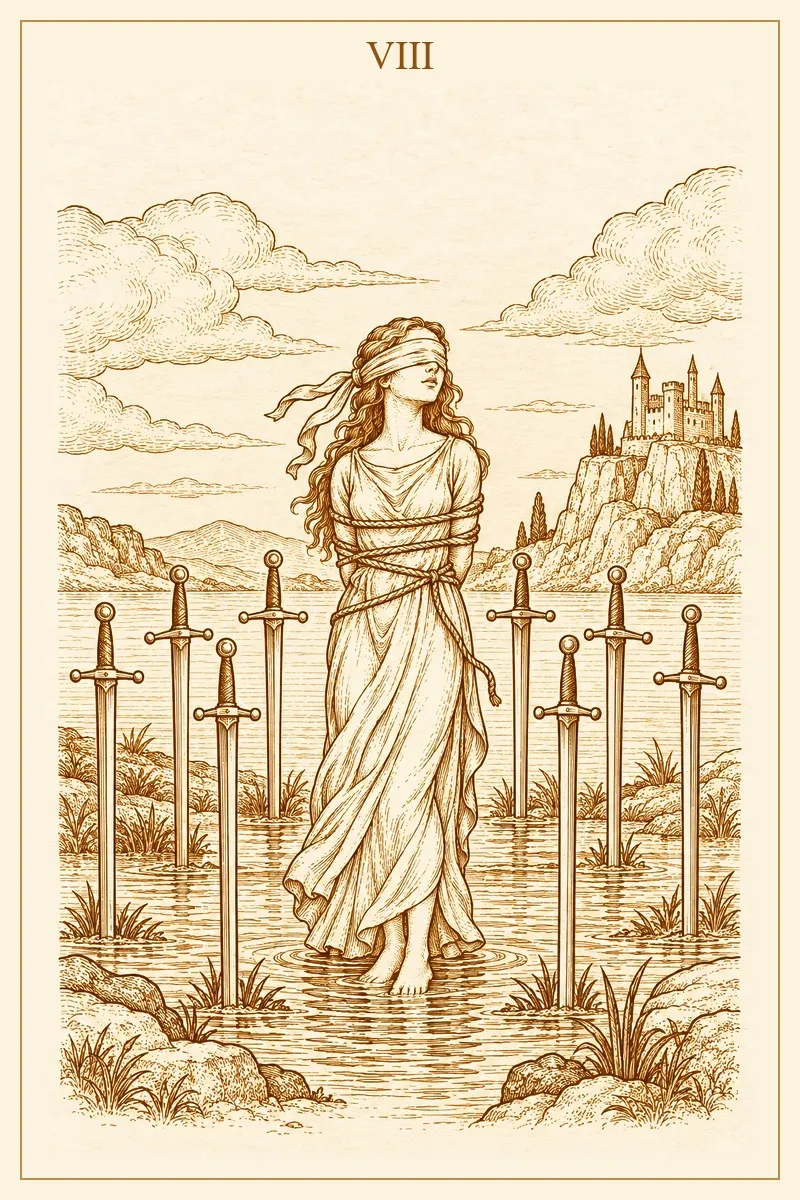
A blindfolded woman stands in shallow water with her arms tied by a rope, eight swords planted around her, yet the ground in front of her is open. That gap is the point. This card often appears when "I can't leave" feels like a fact but is partly a belief: you have never priced out the move, asked about other roles inside the company, or tested whether your skills travel.
Upright, it asks you to take off the blindfold before deciding. List the reasons you think you cannot leave and mark which you have verified and which you have assumed. Reversed, it often shows that loosening already under way. The Eight of Swords tarot meaning explores the card's mental side.
The Tower, The Fool and the Five of Pentacles
The Tower, with lightning knocking the top off a stone tower, speaks to workplaces built on something that is not holding: broken promises, a restructure that keeps shifting, values you can no longer square with your own. Because the structure may give way whether or not you stay, it often reads as a nudge to plan an exit on your own terms. Reversed, it can mean a slow crumble you keep patching. The Tower tarot meaning explains why it is less about disaster than about truth arriving.
The Fool, a young traveler stepping toward a cliff edge with a small dog jumping alongside, is the leap card. Here it says the next chapter asks you to leave familiar ground without knowing every step. Reversed, it cautions against leaping without looking.
The Five of Pentacles shows two ragged figures in the snow passing a lit stained-glass window. At work it describes being left out in the cold: overlooked, underpaid or unsupported. The lit window says help exists, just not where you have been looking. Reversed, the hardest stretch may be easing.
Stay-and-grow cards: when the job still has more to give
Not every hard season is a sign to leave. These cards suggest the role still holds a skill you have not finished learning, recognition that has not arrived, or a turn in circumstances that could change how staying feels.
Seven of Pentacles: the harvest is not in yet
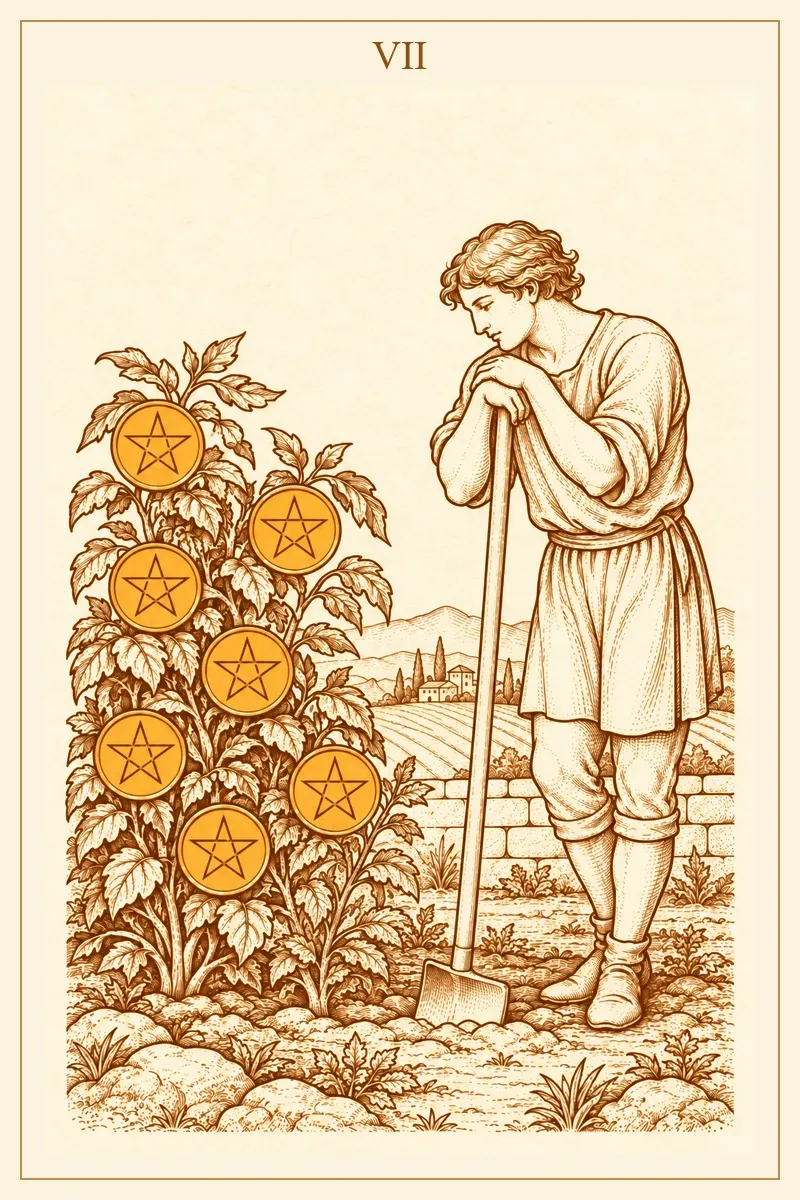
A young man leans on his hoe and studies a plant heavy with seven pentacles, weighing whether the crop is worth the effort. In a stay-or-go reading, this card asks for patience and an honest audit. What have you invested here that has not matured yet: a project close to completion, a skill nearly mastered, a relationship with a mentor?
Upright, it often says "stay long enough to collect what you planted," especially if leaving now would hand the results to someone else. Reversed, it can mean you keep waiting for a harvest that never comes and the review is overdue. The Seven of Pentacles tarot meaning looks at it across money and long projects.
Strength: the challenge that is building you
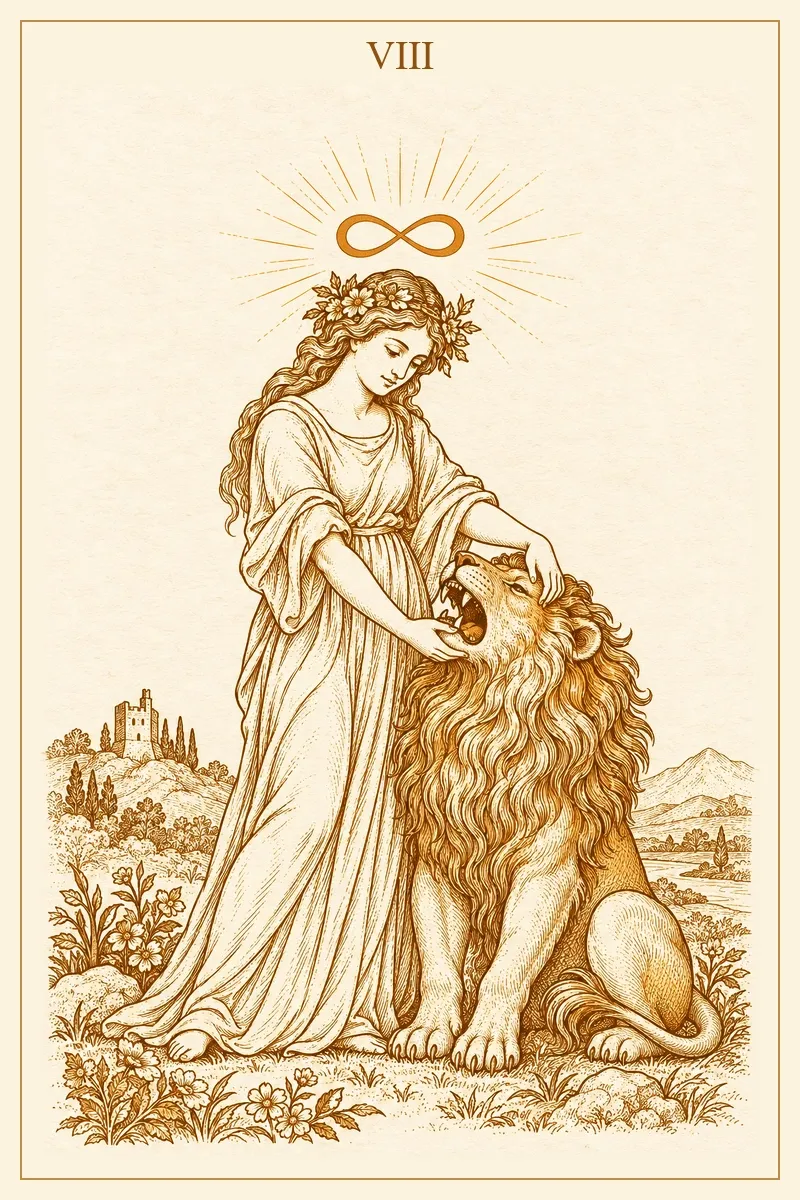
A woman with a crown of flowers and an infinity sign above her head rests her hands on a lion's open jaws, calm rather than forceful. It describes handling pressure, a difficult colleague or a demanding role with patience, and it hints that this challenge may be teaching you something you will carry into any future job.
Upright, it can be a reason to stay a little longer and finish that lesson. Reversed, it may show you are running on willpower alone, which tilts the reading toward rest or change. The Strength tarot meaning covers the card in full.
Three of Pentacles and The Emperor: room to build where you are
The Three of Pentacles is craft and collaboration, skill that others need and respect. On the staying side it often says your expertise is valued here and a project, team or mentor may not have fully come together yet; reversed, it shows work that goes unseen.
The Emperor speaks to authority built inside an existing structure. It asks whether you have really used the room you have: asked for the title, the budget, the decision rights. Reversed, it can describe a rigid boss who leaves no space for you. Both cards also appear as promotion signals, and the guide to tarot cards for a new job or promotion reads them from that angle; here the only question is whether growth inside this job is still possible.
Wheel of Fortune and Six of Wands: a turn that may be close
The Wheel of Fortune says cycles are turning: a manager moves on, a project ends, the market shifts. In a stay-or-go reading it suggests that timing matters more than the verdict, and that today's dissatisfaction may belong to a phase rather than the whole job. Reversed, it can describe a pattern that repeats until you change something. Read the Wheel of Fortune tarot meaning for more.
The Six of Wands is recognition others can see. On the staying side it can mean quiet effort is close to being noticed, as praise, a raise or a visible win. Ask what you would need to see, and by when, for staying to feel worth it. Reversed, credit may be going elsewhere.
Reading a spread that mixes leave and stay cards
Mixed readings are the norm. Rather than counting votes, look at what each card describes.
- A leave card plus a money warning: Death or the Eight of Cups beside the Four of Pentacles or the Five of Pentacles often reads as "prepare to go" rather than "go now." The ending is real; the runway is not built yet.
- A burden plus patience: the Ten of Wands with Strength or the Seven of Pentacles can mean the job may still be worth it if the load changes.
- A trap plus a leap: the Eight of Swords with The Fool suggests the main obstacle is a belief about yourself; test it in small, low-risk ways first.
- Suit balance: several Major Arcana on the leaving side tend to point to a deeper life shift; mostly Swords may point to conflict you want to escape; mostly Pentacles on the staying side suggests the reason to stay is financial. That is a valid reason; name it honestly instead of calling it loyalty.
Reversals do not flip a card into its opposite. Treat a reversed card as the same theme blocked, delayed or turned inward.
A five-card spread for the stay-or-go decision
Shuffle with a clear question, such as "What do I need to see about staying in or leaving this job?" Lay five cards in a row:
- What this job is to me now: how you actually feel, not the version on your résumé. The Nine of Cups here suggests you are more satisfied than you admit; the Five of Swords suggests the conflict runs deeper than you have said out loud.
- What fear is telling me: the worry holding you in place. Pentacles often point to money, Cups to belonging, Swords to conflict or self-doubt, Major Arcana to identity.
- What my intuition is telling me: the quieter voice under the fear, often the most honest card in the spread.
- The path of staying: where things are heading over the next several months if nothing changes. A direction, not a fixed outcome.
- The path of leaving: where things tend to go once you start moving toward the door.
Read positions four and five side by side and notice your body as much as the images; relief at one and dread at the other tells you something. For a wider view of what comes afterward, the six positions of the career crossroads tarot spread can follow this one, and other work questions have their own layouts among these tarot spreads for career guidance.
Worked example: steady pay, no spark
As an illustration, imagine someone in a well-paid, stable role who no longer feels anything about the work, asking the question above.
- What this job is to me now: Four of Cups. A young man sits under a tree with his arms crossed, ignoring three cups while a hand from a cloud offers a fourth. The job is not bad; this person has stopped seeing anything in it, possibly including openings they are overlooking.
- What fear is telling me: Four of Pentacles. Holding on tightly. The fear is about the salary and the safety net.
- What my intuition is telling me: The Star. Hope and renewal, a calm sense that something better is possible.
- The path of staying: Ten of Wands. More load, less reward. Staying unchanged gets heavier, not lighter.
- The path of leaving: Two of Wands. A figure at a stone wall holds a small globe and looks out over the sea. Leaving starts with planning.
Read together, this does not say "resign tomorrow." The Four of Pentacles names a real concern, and the Two of Wands is a planning card, not a jumping card. A grounded reading: the person has outgrown the role, staying unchanged will cost more over time, and the honest next step is a transition plan, with savings built, skills priced elsewhere and a review date set. The Four of Cups also asks one fair question first: is there an offer inside this job they have not looked at yet?
Fear or intuition: how to tell which one is talking
Both fear and intuition can say "leave," and both can say "stay." Fear is loud and urgent; it wants an answer tonight, argues in worst cases and often sounds like someone else's voice. Intuition is quieter and steadier. It may still be scary, but it does not panic, and it returns in the same shape over weeks.
- Does it survive a week? Write down the reading and your first reaction, then look again seven days later. The cards that still feel true count for more than the ones that stung.
- Toward or away? "I can't face one more Monday" is escape. "I want my days to look like this" is direction. Only one tells you where to go.
- Whose voice is it? If "stay" sounds like a parent and "leave" sounds like a friend who just quit, neither is yours yet.
Fear is not always wrong. "I need more savings first" is fear doing its job; "What will people think?" is usually fear protecting an image. The guide to tarot for decision making offers more ways to let a reading inform a choice without making it.
Before you hand in your notice
A reading starts the decision; it does not finish it. None of the steps below is financial or legal advice. They are the questions worth answering before you act.
Work out your runway
Add up your monthly essentials: housing, food, transport, insurance, debt payments. Divide your accessible savings by that number to see roughly how many months you could cover with no income. People feel ready at very different numbers, but knowing yours turns a vague fear into something you can plan around. If you have dependents, a mortgage or health coverage through work, include what changes when the paycheck stops.
Have these conversations first
- Your manager: if the problem is workload, scope or one project, ask whether it can change.
- HR and your contract: check your notice period, unused vacation, benefits and any bonus or equity terms. If anything is unclear, ask someone qualified before you sign or resign.
- Your household: a resignation changes their budget too. Decide together how long a gap you can carry.
- People already doing what you want next: a few honest talks show whether the grass is greener or just a different color.
Test the next step before you take it
Update your résumé, apply for a few roles, take a short course or try the new work on the side. If the cards leaned toward staying, pick one thing to change in the current role and set a review date three months out. If the drain comes from people asking too much of you, a tarot reading for setting boundaries can help you see where to draw the line.
Frequently asked questions
Can tarot tell me the right time to quit my job?
Tarot can describe readiness, not a date. Some cards are traditionally linked with timing, such as the Wheel of Fortune for a turning cycle or the Eight of Wands for things moving quickly, but no card can see another person's decisions or guarantee an outcome. Sense your readiness with the cards, then set the date from your savings, your notice period and your next step.
What if my reading says quit but I'm scared?
That is normal, and it often means the reading touched something real. The cards are not telling you to resign tomorrow. Separate the fear that protects you (I need a plan, I need savings) from the fear that only protects your image, and answer the first kind by preparing.
What if the cards say stay but I really want to leave?
Look at what the staying cards point to: timing, money, an unfinished lesson, recognition that is close. Often "stay" means "not yet," not "never," and your wish and the reading are simply on different timelines.
Should I do several readings on the same question?
One thorough reading is usually more useful than five quick ones, which tend to feed anxiety. Sit with it for a week or two, and read again when something real changes, such as a new offer or a talk with your manager.
How do I know whether I am burned out or truly done with this job?
Burnout often eases with rest or a lighter load; being done does not. If a real break would leave you wanting to come back, the Ten of Wands or Strength may be closer to your situation. If a rested you would still feel the distance of the Eight of Cups, the job itself may be the issue. If exhaustion is affecting your health, talk with a doctor or counselor too.
Your decision, at your own pace
No spread decides this for you, and that is a good thing. Whether the cards point toward staying with clearer purpose or leaving with a real plan, a reading is most useful when it helps you hear your own reasons. When you feel ready to lay out your own stay-or-go cards, you can start a reading on Veil Soul and take your time with what comes up.