Upright, the Eight of Cups means walking away from something that still works on paper but no longer feeds you: a job, a relationship, a routine or a version of yourself you have outgrown. Reversed, it usually points to a departure that has stalled, held back by fear of the unknown, guilt about what you built, or a habit of going back for one more look; it can also describe leaving in a rush without knowing what you are looking for. In love it tends to mean emotional distance or a quiet decision to go, and as a yes-or-no card it leans toward no, meaning no to staying as things are.
The card does not judge what is left behind. Its cups stand upright and full. What it asks is whether full is the same as enough. Tarot can help you look at that question honestly; it cannot tell you what another person will decide, give you a date for a move, or make the choice for you.
The essentials, before the detail:
- Suit and element: Cups, water: feelings, relationships, the inner life.
- Astrology: Saturn in Pisces, the first decan of Pisces.
- Traditional title: Lord of Abandoned Success.
- Upright: walking away, outgrowing, disillusionment that turns into direction, a search for meaning, emotional honesty.
- Reversed: fear of leaving, going back, drifting, avoiding the hard conversation, leaving with no direction.
- Love: distance, a gentle ending, or a need for more depth.
- Yes or no: no to staying as you are; "not yet" when reversed.
Eight full cups and a turned back: what the card shows
The traveler leaving the shelf of cups
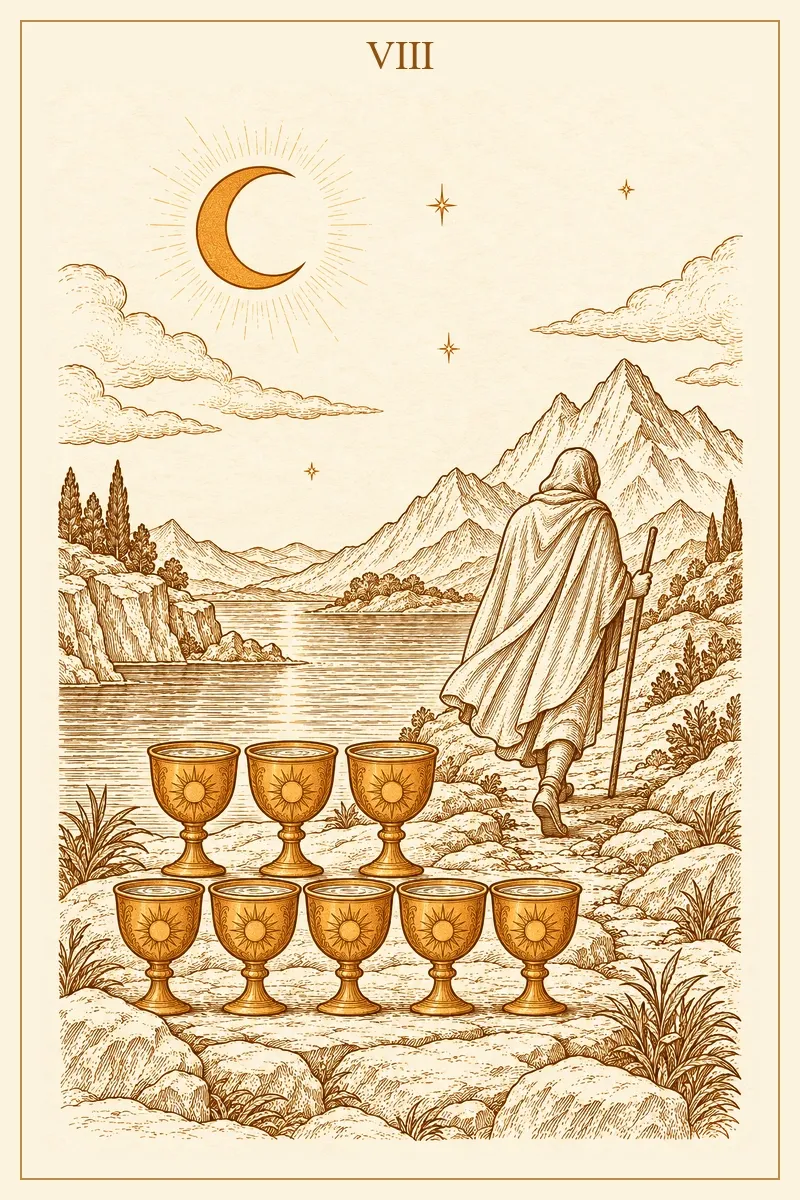
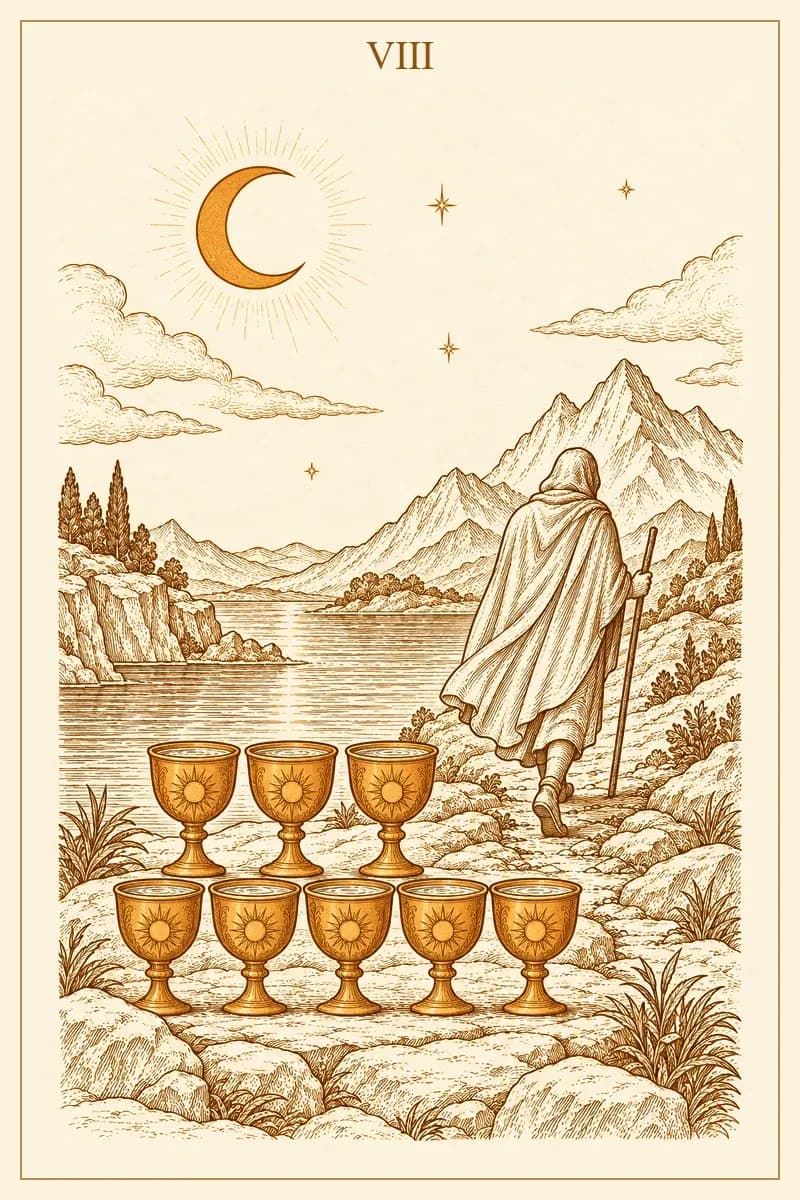
The Eight of Cups is engraved in warm gold line on cream, with the numeral VIII at the top. In the lower left, eight golden goblets stand on a flat shelf of rock beside a lake: five in a front row, three behind them. Each cup carries a small sun emblem on its bowl, and each is still full; you can see the surface of the water at every rim. Nothing has been spilled or knocked over.
To the right, a figure in a long hooded cloak walks away up a stony path, seen only from behind, a tall staff in one hand. The cloak falls in heavy folds to below the knees and one foot is lifted mid-stride. The path climbs between rocks and tufts of grass toward a range of peaks that fills the right half of the sky. Whoever this is has already started. The card catches the second step, not the moment of deciding.
Why the cups are still full
Most people expect a card about leaving to show something broken. This one shows the opposite. The cups are polished, ordered and full, and they sit on solid stone. That detail carries the meaning: you are not escaping a disaster. You are leaving something that functions, that other people might envy, and that you may have built yourself with care. It is why the Eight of Cups can arrive with guilt attached. It is hard to explain to anyone, yourself included, why you would turn away from full cups.
Look at the arrangement too. The back row of three sits over the left side of the front five, leaving an empty space on the right, the side nearest the path. That gap is where something would go if the set were complete, and it opens toward the road the traveler has taken. Read it as the thing the cups never held. Whatever is missing will not be found by adding one more cup to the shelf.
Moon, stars and still water
Above the left side of the scene hangs a large crescent moon, drawn with fine rays around it as though it gave off its own light, and four small four-pointed stars are scattered across the sky. Banks of cloud sit low on both sides. The moon here is not a threat; it is the light the traveler walks by. This is a nighttime departure, guided by something felt rather than proven.
Below it, a long lake runs back between cliffs on the left and a small wooded island, perfectly calm, with dark conifers along the shore. Water in the Cups suit is feeling, and here it lies still behind the traveler: the emotional life that was lived at the shelf, left in peace rather than in turmoil.
Abandoned success: the title, the decan and the number eight
In the Golden Dawn system the Eight of Cups is the Lord of Abandoned Success and belongs to Saturn in Pisces, the first ten degrees of the sign. Saturn stands for time, limits and the slow work of maturity; Pisces is the most boundless of the water signs, given to longing and to dissolving whatever has lost its shape. Together they describe a feeling that has been patiently tested over years and has finally, quietly, run out. Nothing dramatic happened. The fit simply ended. If you want to follow that sign's pull through a whole spread, the guide to Pisces and tarot traces how its themes of intuition and surrender appear across the deck.
The title deserves a careful reading. "Abandoned" does not mean failed. The success was real; it is the person who has moved on from it. In the numbered cards, eight is movement after stability: each suit settles at four, is shaken at five, recovers at six, is tested at seven, and at eight acts on what the test revealed. In Cups, acting on it means turning your back on the shelf.
Eight of Cups upright: outgrowing something that still works
Upright, this card describes the moment an inner shift becomes visible in your choices. You may have known for months that something no longer fits; the Eight marks the point where knowing turns into walking. The change can be large, such as leaving a marriage, a city or a career, or modest: stepping back from a friendship that has become one-sided, giving up a role in a group you used to lead, letting a hobby go once it starts to feel like an obligation.
Three ideas sit at the center of the upright card:
- Disillusionment that clarifies. The shine has worn off and what remains is honest. This is not bitterness; it is seeing the situation at its true size.
- Leaving without a map. Ahead lie mountains, not a destination. You may not know yet what you are walking toward, only that it is not here.
- Emotional maturity. Letting go of something adequate in favor of something true takes more courage than escaping something terrible.
The upright card also has a gentler, inward meaning. Sometimes the departure happens only inside: you stay where you are but stop pouring yourself into a pattern, a hope or an expectation. A person who stops waiting for a parent's approval, or stops measuring a job by the praise it brings, is walking the same path without changing address.
Reversed Eight of Cups: three ways a departure stalls
Reversed, the urge to leave is still present but blocked, bent or rushed. The surrounding cards and your own honest answer tell you which of these fits.
Standing at the shelf
Start with this reading. You know you are unhappy and you know why, but fear of the unknown, money, other people's expectations or the sheer amount you have invested keep you in place. The cups are counted and recounted. That is not weakness; it is often a sign that you need more information, a plan or support before you go.
Going back for one more look
The reversal can describe a return: going back to an ex, rejoining a workplace you left, picking up a habit you had set down. Sometimes a second look is wise and confirms you were right to leave; sometimes it is a way of postponing grief. Ask what you hope to find in the cups that was not there before.
Leaving everything, or leaving too soon
A third reading sees restless drifting: walking away from every situation as soon as it asks for commitment, or bolting before you know what you are leaving for. If you have left five things in two years and each departure felt urgent, the reversed Eight may be asking you to stay long enough to learn what you actually need.
Whichever version applies, a reversal does not cancel the card. The path is still there. What changes is the timing and the honesty of the step.
Love readings: when the heart has already packed
In relationship questions the Eight of Cups rarely means a dramatic breakup. It usually describes emotional withdrawal that comes before any spoken decision, or a relationship that is pleasant, safe and missing depth. One partner may feel it first and may not have found the words yet.
If you are single
Upright, it can show you walking away from a dating pattern rather than a person: the same type, the same apps, the same first-date script. It invites you to step back for a while and ask what you genuinely want before looking again. Reversed, it can point to holding on to a half-defined connection or an ex because the familiar feels safer than an empty evening.
If you are in a relationship
Upright, it asks whether something is missing that the two of you could still name together. Sometimes walking away means ending the relationship; sometimes it means leaving an old way of relating behind: the silent evenings, the roles you fell into, the topics you both avoid. Reversed, it can describe staying out of habit or guilt, or one person being present in the room and absent in feeling.
When you fear a partner is leaving
If you drew the card about a partner, it may mirror a distance you have already sensed. The card shows the distance; what it means is something you learn in conversation. The most useful step is a calm talk about what each of you feels is missing, offered as a question rather than an accusation.
Work and money: the stable job you have already left in spirit
Changing jobs, fields or the way you work
At work, the upright Eight fits the moment when the salary, the title and the team are fine and the work itself has gone quiet inside you. It supports a career change led by meaning rather than status, but it does not insist on a dramatic resignation. Asking for a different role, cutting back hours to study, or moving from a large company to a small one are all ways of taking the path. Reversed, it describes staying in a role you have outgrown while the dissatisfaction shows up as tiredness, cynicism or a growing folder of saved job listings you never quite apply to.
Counting the cost before you go
With money, the card is about values more than numbers. It can mark a choice to earn less for work that suits you, to simplify spending so that leaving becomes possible, or to step away from an income source that sits uneasily with you. None of this is financial advice, and Saturn's part in the card is useful here: plan a departure with a budget, a timeline and a cushion. Reversed, money may be the reason you are staying. That can be a sensible reason for now, and naming it as a reason rather than a verdict makes it easier to plan around.
When the journey turns inward: rest, health and spiritual seeking
In well-being questions the Eight of Cups can suggest that a change of surroundings would help you recover: stepping away from a draining environment, a schedule with no room in it, or relationships that leave you depleted. It is a reflective card, not a medical one, and any concern about your health belongs with a qualified professional. Reversed, it may be asking whether you are staying somewhere your body keeps telling you to leave.
Spiritually this is the pilgrim's card. It can mark the start of a retreat, a new practice, time alone outdoors, or simply a season of asking bigger questions than your daily routine allows. Reversed, it can describe hearing that call and putting it off, or keeping a practice that once nourished you long after it stopped doing so.
Stay or go? Reading the card as a yes or no
Upright, the Eight of Cups is a no: no to investing more of yourself in the situation as it is, no to waiting for it to become what it has not been. That no is not a punishment; it points you toward something that fits better. Reversed, the answer is closer to "not yet": you are not ready, or the way out is not clear, and a rushed yes would not help. For a "should I stay?" question, the upright card answers plainly. For "will they come back?", it tends to describe someone who has already moved on in feeling.
Between the Seven and the Nine: the card's place in the Cups story
Read the Eight beside its neighbors and its meaning sharpens. In the Seven of Cups, a figure stares at cups full of visions and cannot choose, and the article on the Seven of Cups meaning explores that fog of options in depth. The Eight is what happens once the fog clears: you see that none of the visions, and nothing you already hold, is the real answer, and you go.
The Nine of Cups follows with contentment and a wish granted, and the post on the Nine of Cups meaning explains why that satisfaction is so often called the wish card. The order matters. The ease of the Nine is far easier to recognize once you have let go of what was only nearly right.
Cards that walk beside the Eight of Cups
A neighboring card often tells you what kind of leaving this is.
The Hermit: a retreat chosen on purpose
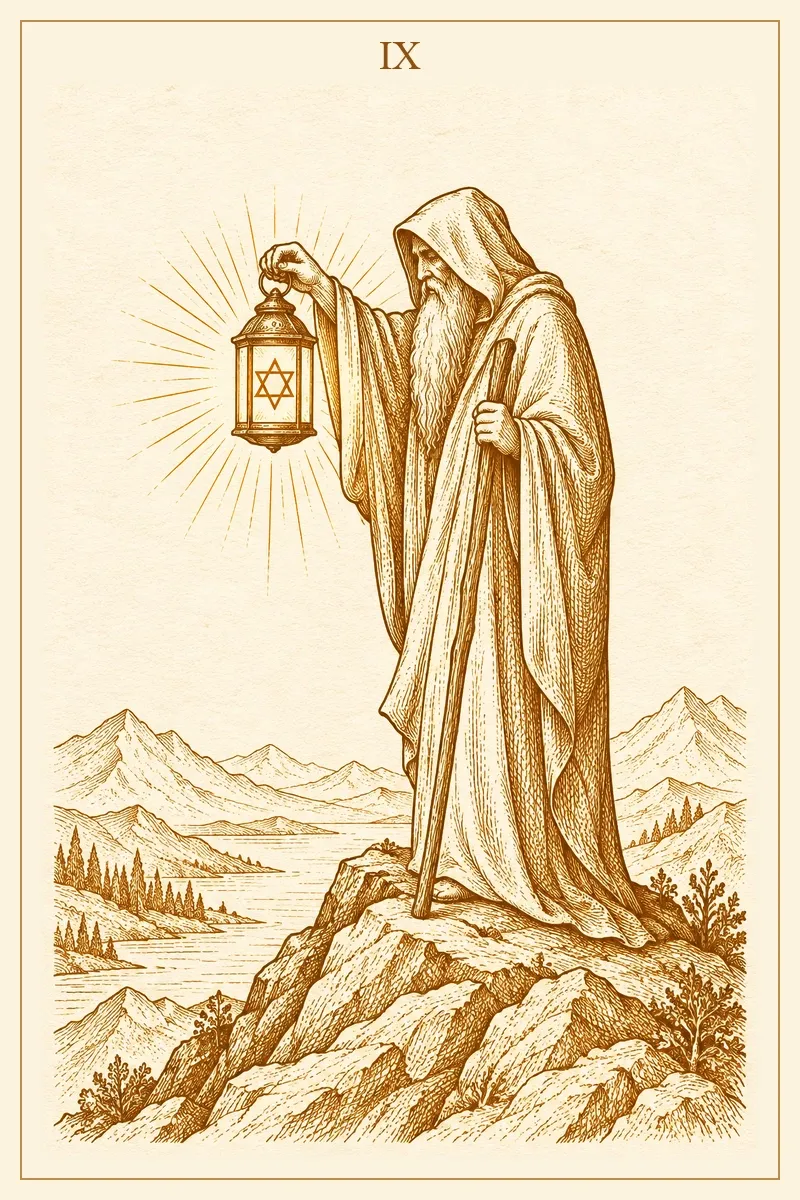
With The Hermit, the departure becomes a deliberate withdrawal: time alone, study, a pause from social life to hear yourself think. Both figures are hooded, carry a staff and are guided by a light, the Eight's moon and the Hermit's lantern, so together they describe a solitary search rather than an escape. The full portrait of that lantern-bearer is in the guide to The Hermit's meaning; beside the Eight it simply confirms that the solitude is chosen.
The Star: hope on the far side of the mountains
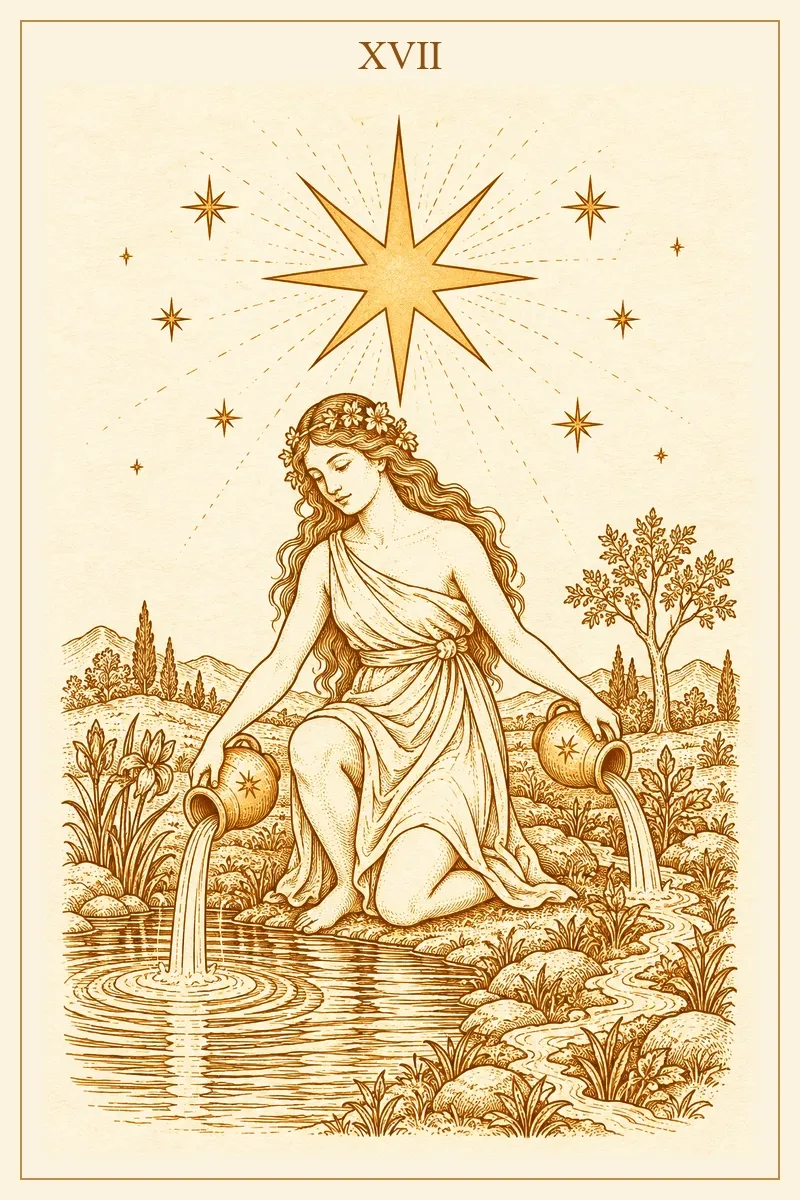
With The Star, the road ahead is real and worth walking, even if you cannot see where it leads yet. The Star is the card of renewal after strain, and next to the Eight it suggests that leaving is part of healing rather than loss. Its themes of quiet hope are covered in the article on The Star tarot meaning.
Death: no road back
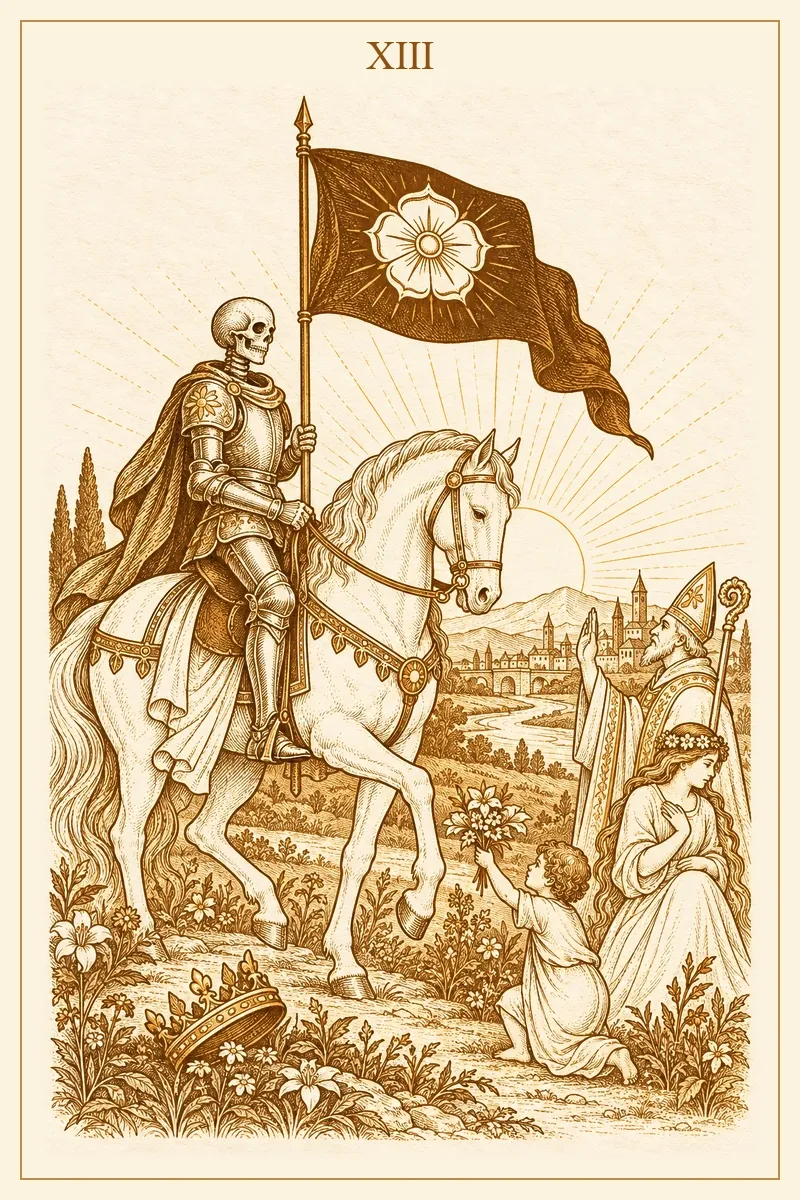
With Death, the ending is complete. There is no shelf to return to, and what follows is a real transformation. The pairing is less frightening than it sounds: as the post on the Death card meaning explains, Death describes endings that clear space, not literal loss.
Ace of Cups: a new cup further along the road
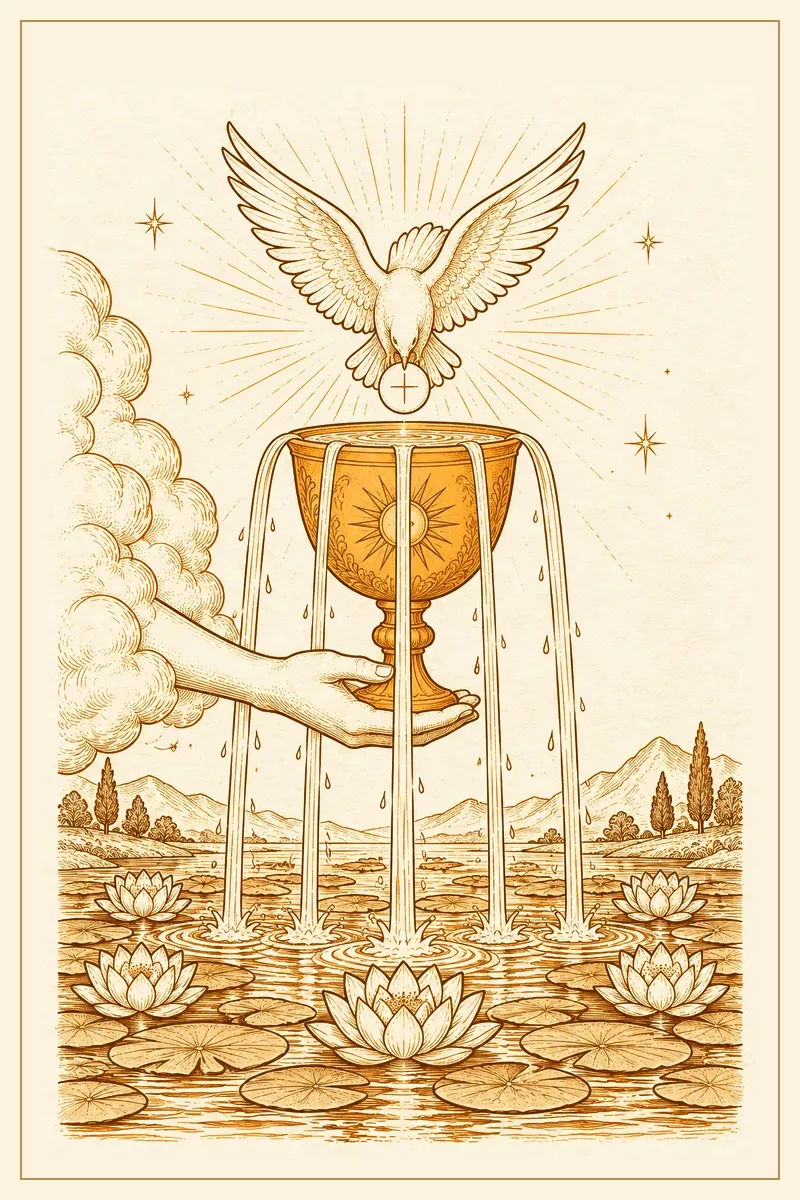
With the Ace of Cups, leaving the old emotional landscape makes room for a fresh beginning in love, creativity or self-understanding. The feeling you are looking for does exist; it simply was not on that shelf. The Ace of Cups meaning shows how that overflowing cup reads in love and in creative questions.
Ten of Pentacles: security on the other side of the scale
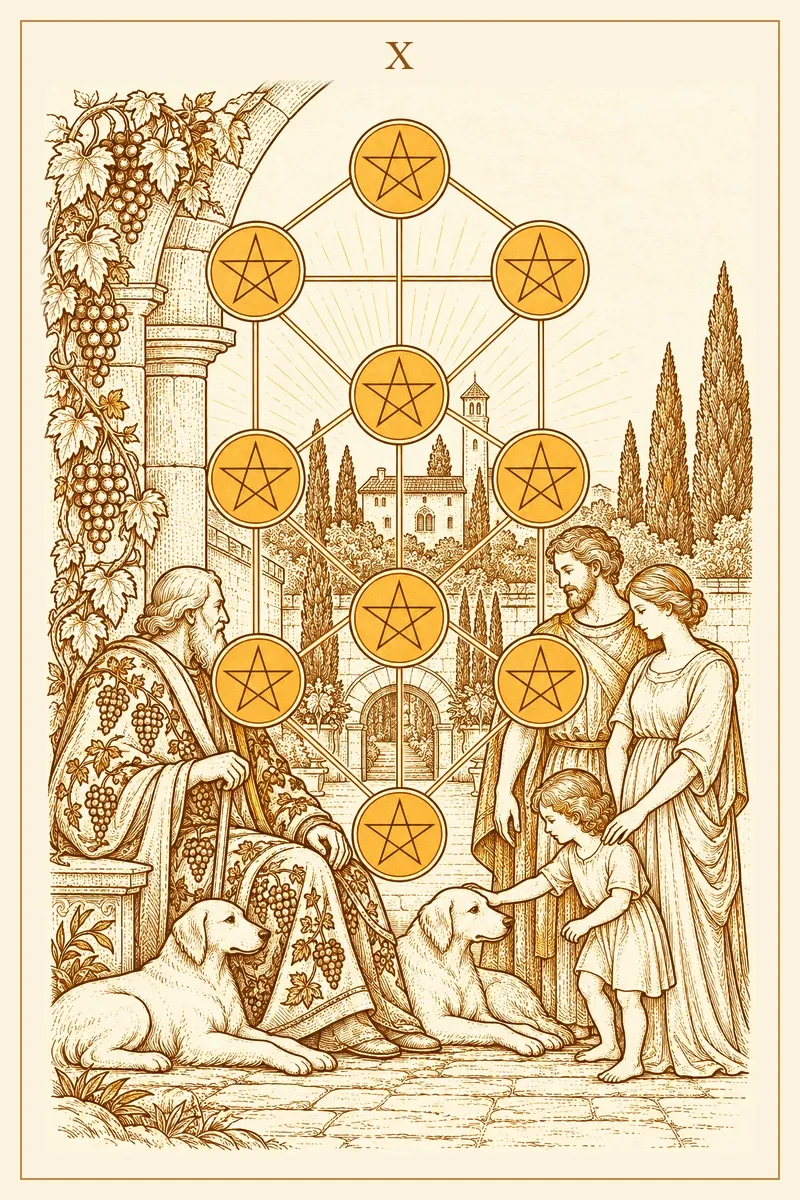
With the Ten of Pentacles, the tension runs between a secure, established life (family expectations, an inheritance, a settled home) and the need for something that security cannot give. The pairing asks what you would keep and what you would trade. For the Ten's own themes of legacy and long-term wealth, the Ten of Pentacles meaning goes into detail.
The crossroads spread: five positions for a question about leaving
Use this when the Eight of Cups has appeared, or when you are already weighing a departure. Shuffle with a specific question, such as "What do I need to understand about leaving this?", and lay five cards in a row.
- What the cups hold: what the situation genuinely gives you.
- The gap: what it has never given you.
- The path: what leaving would ask of you.
- What travels with me: the strengths and lessons you take along.
- The first honest step: one action within reach this month.
Read positions one and two side by side before anything else. If the first card is warm and the second is heavy, the situation is good but incomplete, which is the Eight's own story. If the first card is heavy as well, the question may be less about outgrowing and more about leaving something that is actively harming you, and that deserves practical support beyond a reading.
Worked example: a teacher who is good at a job she no longer wants
Consider a reader who has taught at the same school for eight years. She is respected, the pay is steady, and the thought of leaving makes her feel ungrateful. Her question: What do I need to understand about leaving teaching? The five positions gave the Three of Pentacles, the Page of Cups, the Knight of Pentacles, the Queen of Cups and the Eight of Cups upright.
The Three of Pentacles in "what the cups hold" names what is real: skill, colleagues who rely on her, work that others notice. Nothing in the reading dismisses that. The Page of Cups in "the gap" points to what has gone missing: curiosity, play, the feeling of making something new. She recognized it at once; for months she had been drawing again in the evenings.
The Knight of Pentacles on "the path" slows the story down. This is not a card for resigning on Monday. It describes steady, methodical steps: a part-time course, a portfolio built over a year, savings set aside first. The Queen of Cups in "what travels with me" says that her patience and emotional skill with students are not left behind; they come with her into whatever she does next.
The Eight of Cups as "the first honest step" closes the reading. Its message here is not "quit" but "start walking": sign up for one evening class this term, and tell one trusted person about the plan out loud. Leaving can unfold over a year, and the Knight beside it suggests that it should.
Questions to sit with before you pack
- What in my life looks good from the outside and feels empty from the inside?
- If I added one more cup to the shelf (a promotion, a vacation, a new purchase), would the feeling change?
- What am I afraid of losing, and what am I afraid of finding out?
- Is my hesitation about genuine satisfaction, or about fear of the unknown?
- Who could I talk this through with before deciding anything?
Frequently asked questions
Is the Eight of Cups a breakup card?
It can be, but more often it describes emotional distance or the sense that a relationship lacks depth. It shows a turning point. Whether that becomes a breakup, a change in how you relate, or a renewed effort depends on the choices of the people involved.
What does the Eight of Cups reversed mean in love?
Usually it means staying in a relationship that feels unfinished or unfulfilling because leaving seems too painful, or returning to someone after trying to move on. It can also mean a decision to leave is being reconsidered. The card asks you to be honest about which of these is happening.
Does the Eight of Cups mean someone will come back?
Not by itself. The upright card describes someone moving on; the reversed card can hint at a return or at feelings that were never sorted out. Tarot cannot know another person's intentions, predict a date or guarantee an outcome. Use the card to understand where you stand, and what you would want if they did come back.
How is the Eight of Cups different from the Five of Cups and the Six of Swords?
The Five of Cups is grief over what spilled; its figure looks down at the loss. The Eight leaves full cups behind, by choice. The Six of Swords is a passage away from trouble, often with someone else's help, while the Eight walks alone, away from comfort rather than danger.
What does the Eight of Cups mean as feelings?
As someone's feelings, it suggests they are pulling back emotionally, searching for something they have not named, or sensing that the connection no longer meets them. Read it as a reason to talk, not as a final answer about their heart.
How long does an Eight of Cups period last?
There is no fixed length. Saturn's influence points to a slow, deliberate change rather than a sudden one, and the decision often ripens over weeks or months before anyone acts on it.
Leave the cups standing
The Eight of Cups does not ask you to smash what you built. It asks you to leave it standing, take what you learned, and walk toward something that fits who you are now. When you would like to look at your own question through the cards, you can begin a calm, private tarot reading whenever you are ready.