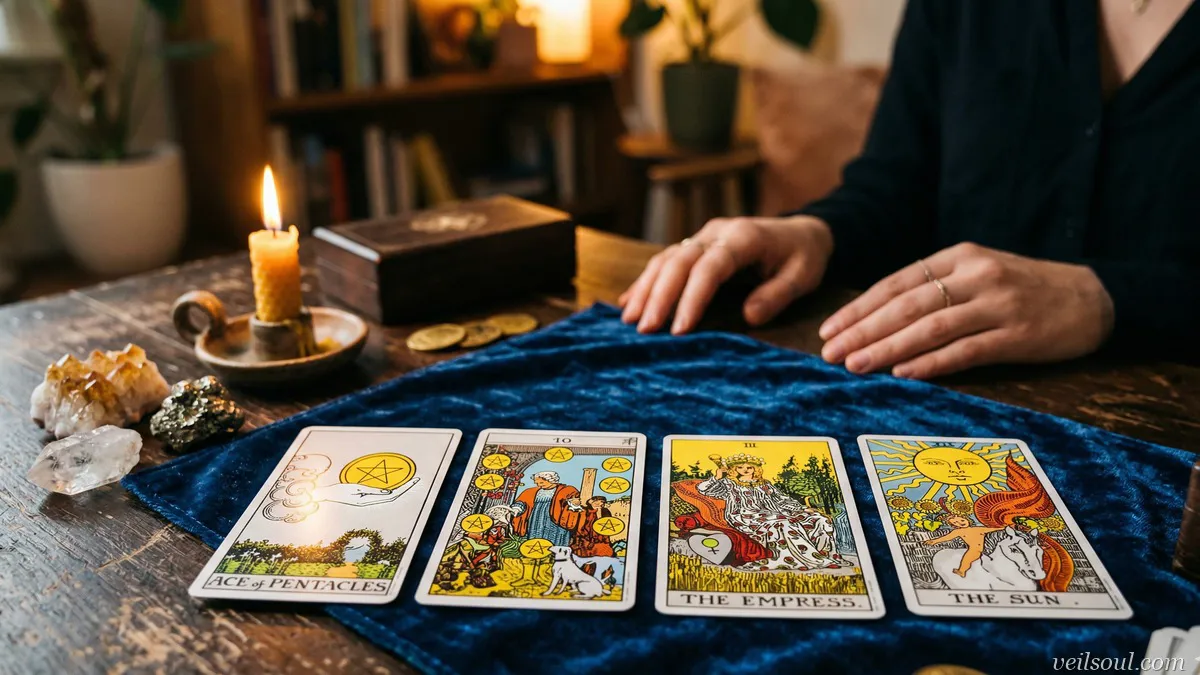
Money arriving shows up in tarot as a small, consistent group of cards: the Ace of Pentacles above all, then the Six of Pentacles, the Nine of Pentacles, the Ace of Wands, The Sun and the Wheel of Fortune. Each points at a different kind of incoming money: a fresh opportunity, a payment from another person, a return on work you have already finished, or a cycle turning your way. The Empress and the Ten of Pentacles belong in the same conversation, though they describe money settling rather than money landing.
What no card can do is name an amount, a date or a certainty. Tarot has no access to a bank balance, a payroll run or another person's decision about paying you. It shows the shape of a situation and where your attention is needed. Read a money card as a description of conditions and it earns its place; read it as a promise of a deposit by Friday and it will only make the waiting harder.
At a glance, here is what each card suggests when the question is whether money is on the way:
- Ace of Pentacles: a concrete new opportunity, with an offer or a sum attached to it.
- Six of Pentacles: money arriving through another person: payment, repayment, support, a fair settlement.
- Nine of Pentacles: a return on effort you have already put in, paid out by your own work.
- Ace of Wands: income from something you start: a project, a side venture, an idea someone wants to back.
- The Sun: money that arrives cleanly and feels deserved, often alongside visible recognition.
- Wheel of Fortune: timing turning in your favor, sometimes sooner than you had planned for.
- The Empress: steady increase and overflow rather than one payment.
- Ten of Pentacles: security consolidating across years, the slowest money in the deck.
What a money card is actually describing
A card that suggests money is coming describes a condition, not a transaction. It points to something that has begun to move: an opportunity that exists now where it did not before, work that has reached the stage where it pays, or a relationship in which money is about to change hands. The card marks the opening; whether anything passes through it still depends on choices that belong to you.
Be precise about which money you mean, too. A one-time payment, a raise, a first client, a repaid loan and a slow rise in savings are five different questions. Before you shuffle, write one sentence that names the money: "What is happening with the payment I am owed for this project?" gives the cards something specific to describe, and "Will I be okay?" does not. If the answer comes back mostly in Swords, the obstacle is usually a decision or a conversation.
Six cards that say money is on its way
These six carry the clearest incoming signal. Upright, each describes how money tends to arrive; reversed, what is holding it up. Read the position before you read the card: the same Ace means one thing in a position called "what is arriving" and something else in "what is blocking me".
Ace of Pentacles: a new opportunity with money attached
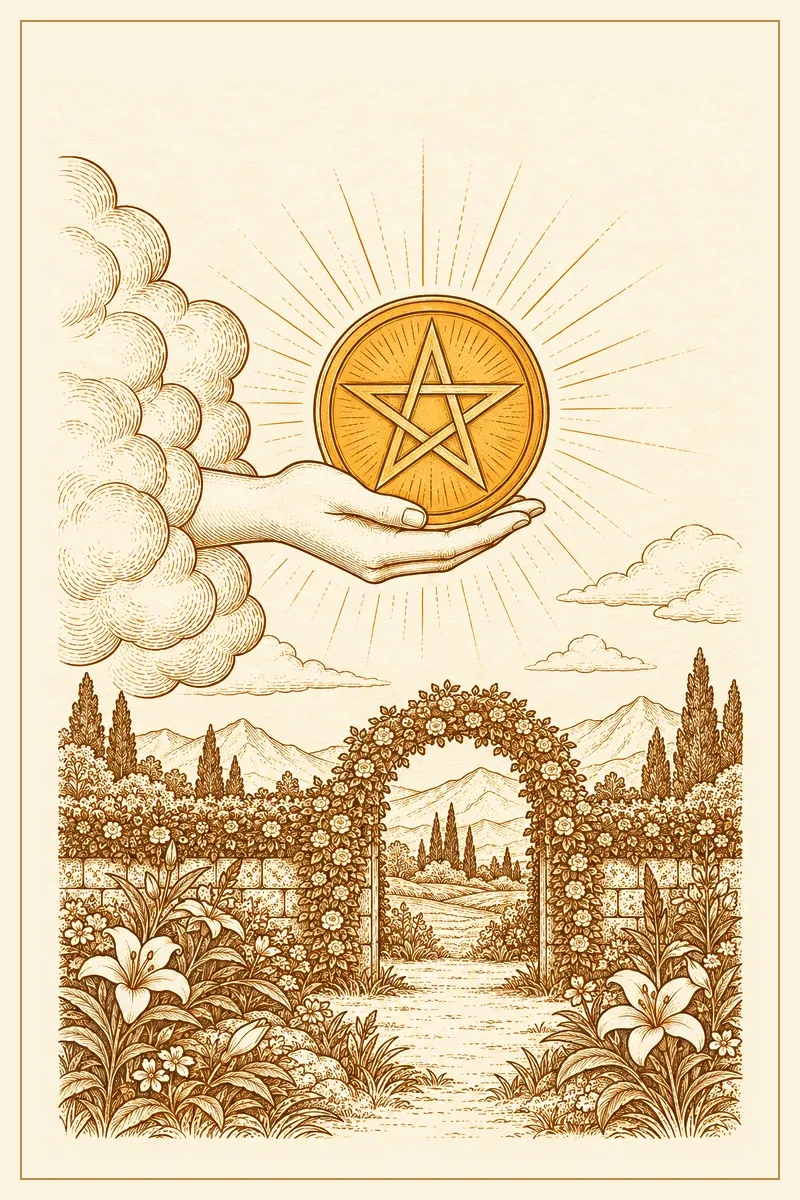
Upright, this is the most direct new-money card in the deck. It describes a tangible opportunity appearing: an offer, a contract, a client, a role, a resource you can put to work. It is new, so rarely the thing you have waited on for months, and material: something you could put in a calendar, not a pleasant feeling about abundance. Its wider range is set out in the Ace of Pentacles meaning.
Reversed, the Ace seldom says no money. More often it describes an opportunity that has not become solid: a warm conversation with no terms attached, an offer that would cost more than it pays, or a chance that drifted past because it arrived in a small package. Ask the dull questions about rate, scope and whether the work is funded.
Six of Pentacles: money that comes through someone else
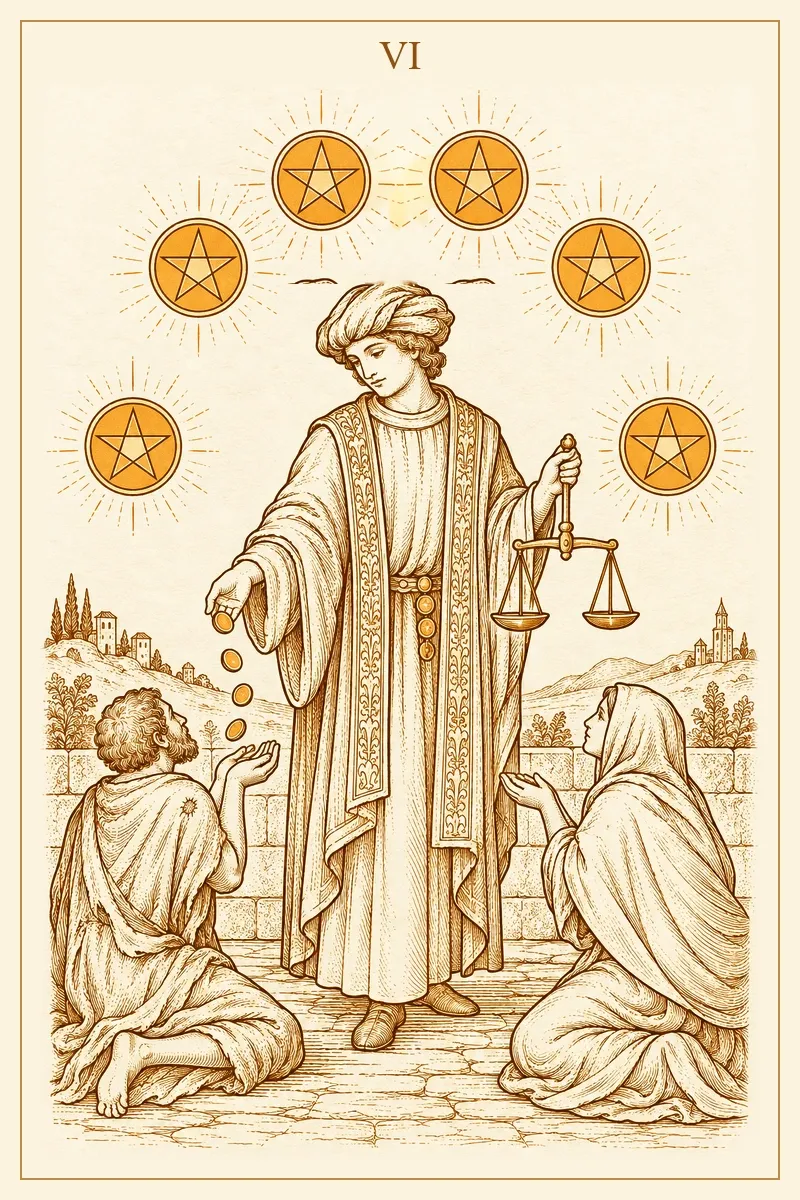
Upright, this is the card of money changing hands between people. A client settles an invoice, a relative helps, a refund clears, a debt is repaid. The central figure holds a pair of scales, and the balance is the point: it describes fair exchange rather than a sudden gift. When it appears, ask who the other person in the picture is, because the answer is usually someone you could contact this week. The Six of Pentacles meaning covers both sides of that exchange.
Reversed, the balance tilts. Money may come with conditions you have not examined, help may carry an expectation of control, or you may be giving far more than you receive. At work it often means being paid late or less than agreed, a solvable problem rather than a verdict. Name the amount, name the date it was due, and ask once, plainly.
Nine of Pentacles: a return on what you already built
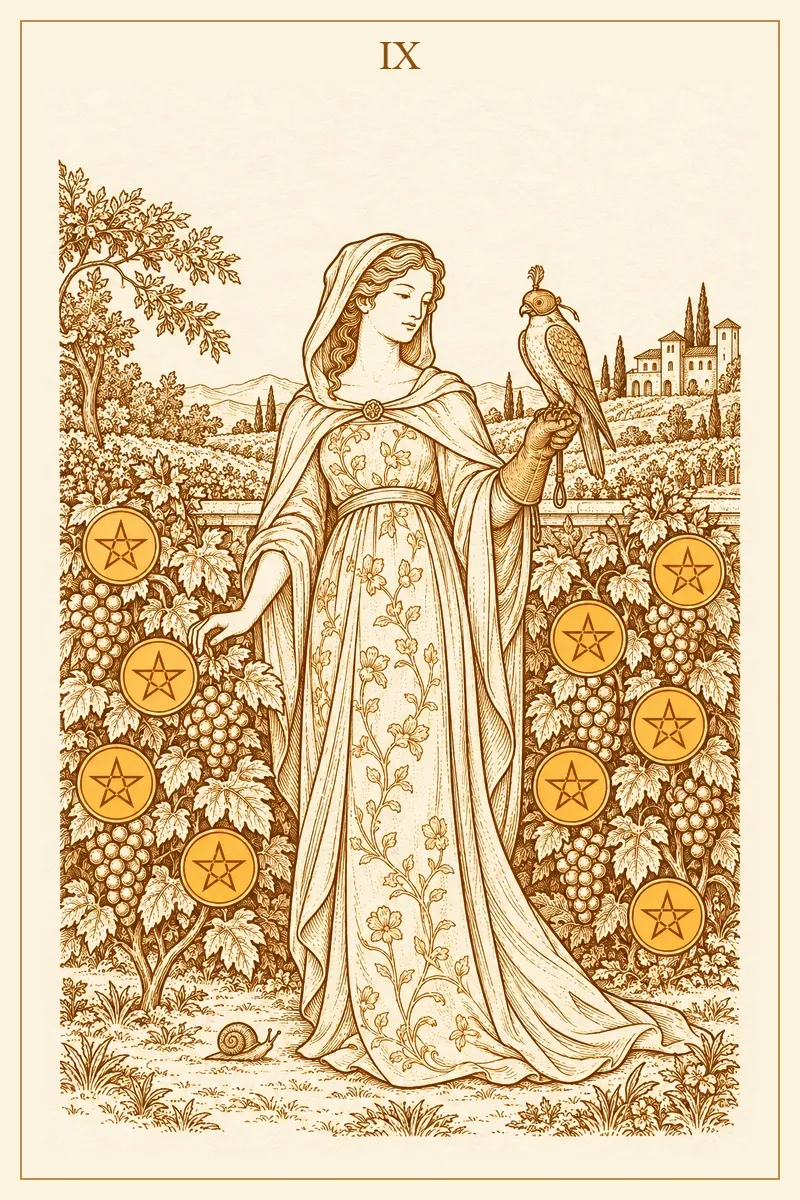
Upright, the Nine of Pentacles describes money that arrives because of something you made. A practice that finally supports you, a product that keeps selling, a reputation that brings work without pitching. It is the quietest arrival card and often the most reliable, because the source is already in your hands. The full Nine of Pentacles meaning explores that independence further.
Reversed, the comfort gets expensive. The income may be real but bought with hours you cannot keep giving, or it may depend on one client, one platform, one person. The question to carry away is simple: what would make this money steadier without costing more of you?
Ace of Wands: income from something you start
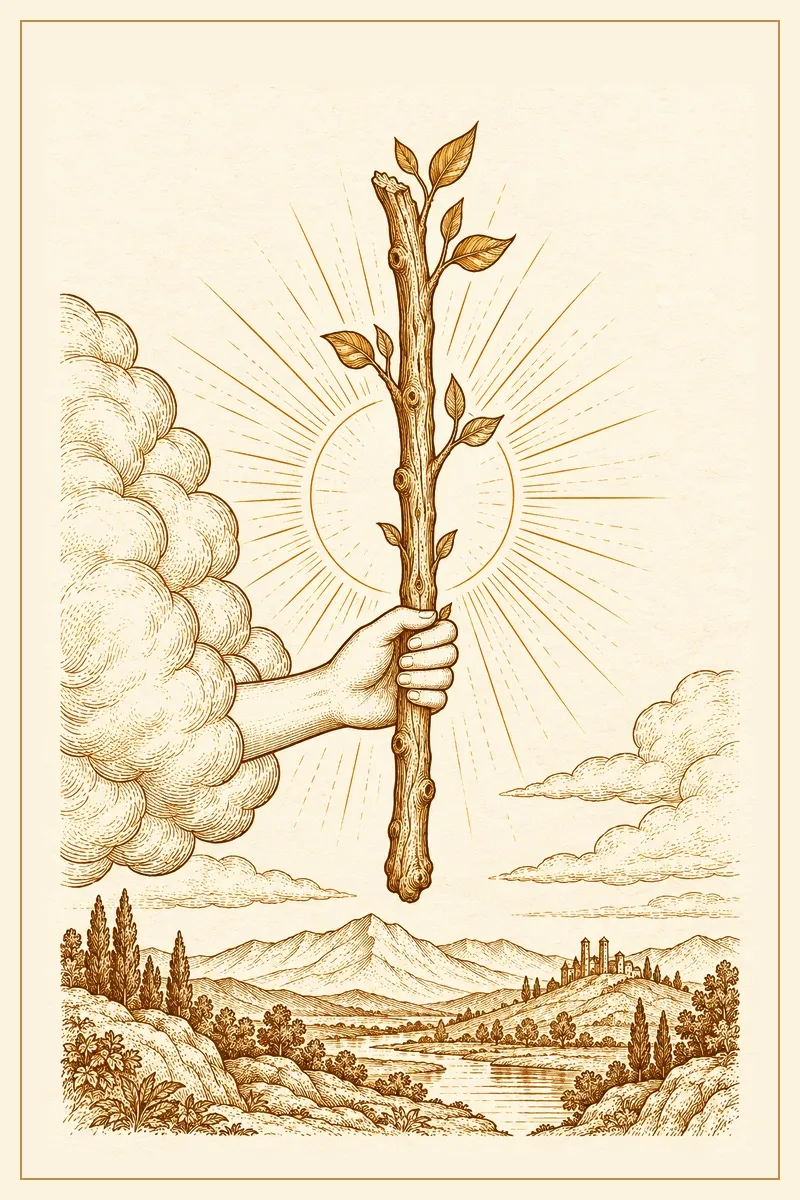
Upright, the Ace of Wands is money with a spark behind it, the first move of something you want to do: a project that finds a buyer, a side venture that catches, an idea someone offers to fund. In a money reading it usually arrives earlier than the Pentacles cards and in a smaller first amount, which people dismiss too quickly. Treat that payment as the beginning of a stream. The Ace of Wands meaning describes the same spark outside money questions.
Reversed, the energy is there and the structure is not. A plan exists but nothing has been sent, priced or scheduled, and enthusiasm has outrun the practical step that would let it earn. Choose the smallest version of the idea that someone could pay for, and finish that.
The Sun: money that arrives without complications
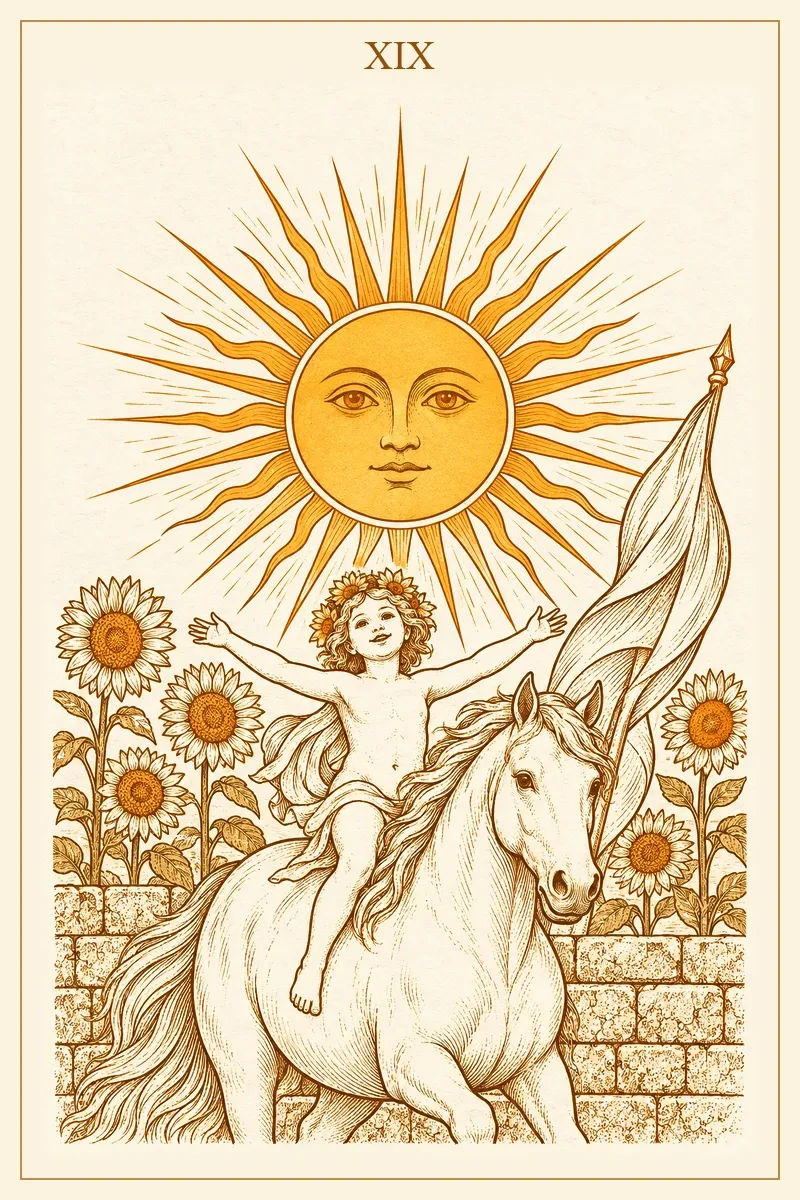
Upright, The Sun is the easiest card to receive in a money reading. It describes income that comes with clarity: the terms are plain, the source is honest, and you do not have to argue for it. It often appears alongside public recognition, around promotions and work that starts being recommended. If you have felt guilty about wanting more, this card asks you to notice the guilt and set it down. The card's wider meaning sits in the Sun tarot meaning.
Reversed, the warmth is delayed rather than canceled. Something good is happening but is not visible yet, or you are discounting a real gain because it is smaller than the one you imagined. Check the actual numbers before you spend against an expectation, and let the good news be the size it is.
Wheel of Fortune: the timing turning
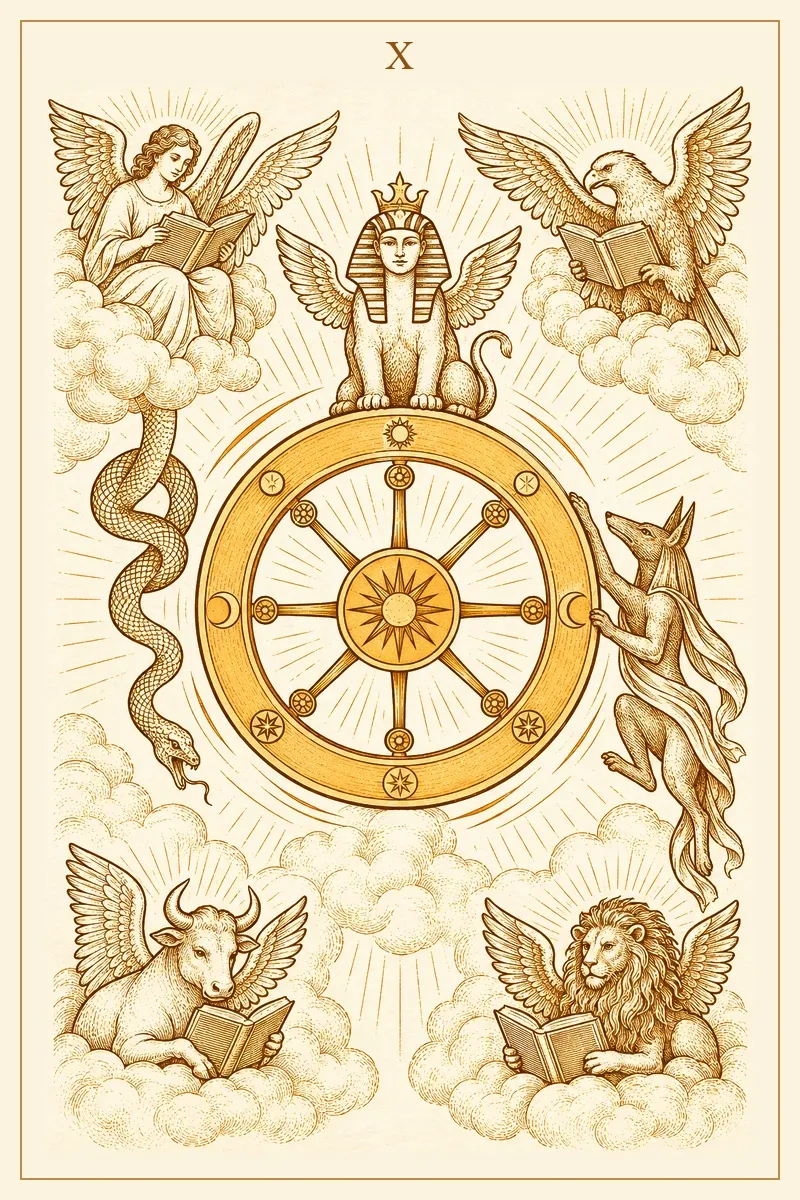
Upright, the Wheel of Fortune says the cycle is moving and the direction has changed. In money questions it tends to describe the unplanned arrival: the client who returns after a year, the opening that appears the week you gave up on it. It is the closest the deck comes to luck, with a condition: the Wheel favors whoever is ready when it turns, which in practice means a portfolio that exists and a reply you can send within the hour. The Wheel of Fortune meaning goes further into its cycles.
Reversed, the turn is slow or working against you for now. A payment slips a month, a contract stalls, the season for your work is not this one. Use the quiet stretch to finish what is nearly finished and keep relationships warm, so you are in the room when the cycle comes back around.
Where the Empress and the Ten of Pentacles fit
Both are often listed as money cards, and both are, but neither describes money landing in a particular week. The Empress is increase: things grow, resources multiply, work brings more work, and the mood shifts from scarcity to enough. She rewards tending rather than chasing. Her fuller symbolism is in the Empress tarot meaning.
The Ten of Pentacles is slower still. It describes security that compounds: property, a business that sustains itself, family money, stability measured in years rather than paydays. Asked about this month's payment, it usually redirects you toward the structure underneath. That longer arc belongs to the guide to the cards associated with financial success; this page stays with money on its way to you now.
Reading where the money is likely to come from
Once money is indicated, the more useful question is the source. The cards are better at this than at amounts, because a source is a relationship or an activity, and that is exactly what the images describe.
- From work you are paid for: the Three of Pentacles points to being commissioned or recognized for a skill, often through a colleague or a referral.
- From a new position: the Ace of Pentacles beside the Six of Wands suggests a role or a raise with recognition attached.
- From news rather than cash: the Page of Pentacles is the message, the offer letter, the quote accepted. Money follows it, but the card itself is the word arriving.
- From something still growing: the Seven of Pentacles says the harvest is real and not ready. Decide whether to keep tending it or move the effort elsewhere.
Paired with an arrival card, a source card makes the reading concrete: the Ace of Pentacles with the Page of Pentacles reads as an offer you will hear about soon, and the Ace of Wands with The Sun as a new venture that starts earning in plain view.
Timing: what the cards can honestly say about when
Tarot does not give dates, and any system that assigns a month to a card is a convention rather than a measurement. What the cards can describe is pace. Wands move quickly and unevenly, Swords at the speed of a decision, Cups as feelings settle, and Pentacles slowly, though they tend to keep going once they start.
Applied to the arrival cards, that gives rhythm rather than forecast: an Ace is an opening present now that will not stay open indefinitely, the Wheel a change you did not schedule, the Seven of Pentacles a wait with a real end to it. If you want to work with timing more carefully, our guide to reading timing in tarot sets out what the common systems do and do not support.
One habit helps more than any timing method: give the question a review date instead of an answer date. Decide to look again in three weeks, write down what you expect to be different by then, and leave the deck alone until that day. If nothing has arrived, you have three weeks of evidence to read instead of three weeks of guessing.
When a money card arrives with a warning
A challenging card next to an arrival card does not cancel the money. It names the thing standing between you and it. These four pairings come up often.
- Ace of Pentacles with the Seven of Swords: the opportunity is real but someone has not told you everything. Read the terms, ask the awkward question about payment schedule and ownership, and get the agreement in writing before you start.
- Nine of Pentacles with the Four of Pentacles: you are earning and holding on so tightly that nothing new can move. This often shows up as refusing to invest in the help, tool or rest that would raise the income you already have.
- Wheel of Fortune with the Five of Pentacles: the cycle has turned but you are still reading the situation from your worst month. Look at what is already available: an unused benefit, a person who offered help, a resource you stopped counting.
- The Sun with the Ten of Wands: the money is coming and the load is too heavy to enjoy it. Treat the pairing as a prompt to decide what you will put down once the payment lands, rather than what you will add.
When both kinds of card appear, write two lines before closing the reading. Under the arrival card: this is what is possible. Under the warning card: this is what I handle first. That pair is usually the whole reading in a form you can act on.
Windfall or earned income: telling them apart
"Is money coming?" often hides one of two quite different hopes. One is money you did not directly work for: a refund, a gift, an inheritance, a bonus nobody announced. The other is money you earned and are waiting on: wages, a client payment, a commission. Each hope has its own cards.
Unexpected money tends to travel with the Wheel of Fortune, with the Six of Pentacles when someone else is choosing to give, and with The Sun when the surprise is a happy one. Earned money shows up where the picture is a person at work: the Nine and Three of Pentacles, the Eight of Pentacles, and the Ace of Wands. Ask about a windfall and get a spread full of working cards, and the reading is pointing you back to the income you can influence. A windfall is the part you have least say over, so a plan built on one deserves a second plan beside it.
Four misreadings turn a money card into a lottery ticket when it behaves far more like a weather report:
- An Ace is not money falling into your lap. It is a door that opens, and doors are walked through.
- The Ten of Pentacles is not wealth. It is stability building, which may mean comfortable rather than rich.
- The Empress is not permission to spend. She describes what is flowing in, not what is safe to send out.
- The Wheel of Fortune is not luck you are owed. It is a cycle turning, and nothing about it is personal.
If every card in a money spread looks like sunshine, ask honestly whether you are reading the cards or your own wish. A good money reading usually leaves you both reassured and responsible.
A four-card spread for money on the way
Use this for one specific money question when you want something to do afterward. Write the question down first in the one-sentence form described above.
- What is actually arriving? The nature of the money, not the amount. An arrival card here is encouraging; a court card suggests a person is central to it.
- Where is it coming from? The source. If the Eight of Pentacles lands here, the money follows skill you are still sharpening, so keep refining and raise what you charge.
- What is slowing it down? The obstacle. The Eight of Swords in this position points at a belief rather than a circumstance, usually the conviction that you cannot ask.
- What is my one step this week? A single concrete action with a deadline inside seven days. Not a plan, not a strategy, one step.
Keep the fourth step small enough to finish: send the reminder, publish the rate, answer the message you have been avoiding. For more layouts for work and income questions, the career tarot spreads guide collects seven of them with their positions explained.
Worked example: an invoice that has not landed
The question, written before shuffling: "What is happening with the payment I am owed for the project I delivered last month, and what can I do about it?" Four cards, in the positions above.
- What is actually arriving: Six of Pentacles. The money is real and it comes through a person rather than a process. Somebody has to authorize this payment.
- Where is it coming from: Three of Pentacles. The work was skilled and was valued; the delay is not a judgment on what you delivered.
- What is slowing it down: Seven of Swords. Something has not been said openly, whether that is avoidance on the other side or an internal approval nobody mentioned to you.
- What is my one step this week: Page of Pentacles. Send a short, factual note that names the invoice number, the amount and the due date.
The reading does not say the client will pay on Tuesday. It says the money exists, the work was respected, the silence is the problem, and the step within reach is a plain message. If that note goes unanswered, the next question is not whether the money is coming but what you will do about a client who does not reply.
Frequently asked questions
Which tarot card most strongly means money is coming?
The Ace of Pentacles, because it describes a specific material opportunity rather than a mood. The Sun is the most positive card overall. The strongest signal is a combination: an arrival card beside the Wheel of Fortune suggests the opportunity and the timing are moving at once.
Can tarot tell me how much money I will get, or exactly when?
No. A reading cannot produce a figure, a date or a guarantee, and it cannot tell you what another person has already decided about paying you. What it can show is whether the situation is opening, maturing or stuck, and which part is still within your control.
What if I keep drawing Pentacles but nothing arrives?
Pentacles are the slowest suit, so repetition does not mean the reading is failing. Look at what surrounds them. Swords nearby often mean a conversation you have not had; reversed Pentacles often mean a practical step left undone. Asking less often helps too, because drawing daily on one subject produces noise rather than news.
Does the Wheel of Fortune mean I will win the lottery?
Almost certainly not. The Wheel describes cycles changing direction, which in a money reading usually looks like an unexpected opportunity or a shift in timing. If a windfall is what you are hoping for, read the cards around it to see what else is being asked of you.
Do reversed money cards mean the money is not coming?
Rarely. A reversal more often describes a delay, a complication or an internal block than a cancellation. A reversed Ace of Pentacles may mean an unanswered offer; a reversed Six of Pentacles may mean an unfair arrangement. Ask what specifically is stuck, because the reversal usually points at something you can unstick.
Which cards suggest money arriving from another person?
The Six of Pentacles is the clearest, and the Page of Pentacles often carries the message that precedes it. Court cards can describe the payer, and the Three of Pentacles suggests money that comes through professional recognition. If the person in question matters, read for the relationship rather than for the sum.
The part of this you can act on
The deck is not bringing money toward you; it shows where money is already trying to reach you and what sits in the way. More often than not the obstacle is ordinary: an unsent invoice, an unasked question, a rate you have never raised.
So take the one step the fourth position asked for, and give the question a review date rather than another spread. If you would like a quiet space to look at where your money question actually sits, try a reading on Veil Soul and begin with the single sentence you wrote before you shuffled.