After heartbreak, tarot helps most as a mirror for what you feel, not as a forecast of whether the other person returns. Six cards speak to a broken heart directly: the Three of Swords names the wound, the Four of Swords asks for rest, the Eight of Cups shows the walk away, The Empress turns care back toward you, The Star marks healing that begins before you can feel it, and the Ace of Cups reminds you that the love you gave came from you. No card can tell you what your ex feels now, the week the pain will lift, or who you will love next. What a reading can do is help you say where you are in the hurt and pick one kind thing to do about it.
If you want the short version before the long one, here is what each of those cards brings to a heartbreak reading:
- Three of Swords: the hurt itself, named without softening.
- Four of Swords: rest and recovery before any big decisions.
- Eight of Cups: leaving what no longer holds you, even when it once mattered.
- The Empress: the care you gave someone else, given to yourself.
- The Star: quiet healing and the return of hope.
- Ace of Cups: an open heart that was never theirs to take away.
Six rooms of heartbreak and the cards found in each
Grief after a relationship ends does not move in a straight line. It is closer to a house with several rooms: you may wake up in one, spend the afternoon in another and find yourself back in the first by evening. Knowing which room a card belongs to can make a hard draw feel less like a verdict and more like a description of the moment.
- Shock: The Tower and a reversed Eight of Cups. The story you were telling yourself about the future breaks apart, sometimes in a single conversation. Here the cards confirm that something real has collapsed and that being stunned is a fair response; the Tower tarot meaning explains why that collapse can also clear the ground.
- Drowning: the Three of Swords, the Five of Cups and the Nine of Swords. Raw pain that makes ordinary tasks feel heavy. The Five of Cups looks at what spilled; the Nine of Swords keeps you awake replaying it.
- Anger: the Five of Wands, a reversed Emperor and the Seven of Swords. Fury at being hurt, dismissed or deceived. These cards ask where the anger points and whether it is protecting a boundary.
- Bargaining: the Seven of Cups, a reversed Lovers and the Two of Swords. The "what if I had said something else" loop, the daydreams of a reunion, the decision you keep circling.
- Turning: the Eight of Cups, the Six of Swords and Temperance. The first moment you choose yourself even though it still hurts.
- Rebuilding: The Star, the Ace of Cups and The Empress. Love comes back, first toward yourself and later, at a pace you set, toward other people.
A reading that mixes cards from several rooms is not contradicting itself. Heartbreak feels like that: angry before lunch, tender by dinner. Name the room the strongest card belongs to and start there.
The cards that sit with heartbreak
Read the section for the card you drew, or read all six in order: together they trace a rough path from the first blow to the slow return of warmth.
Three of Swords: the wound, seen plainly
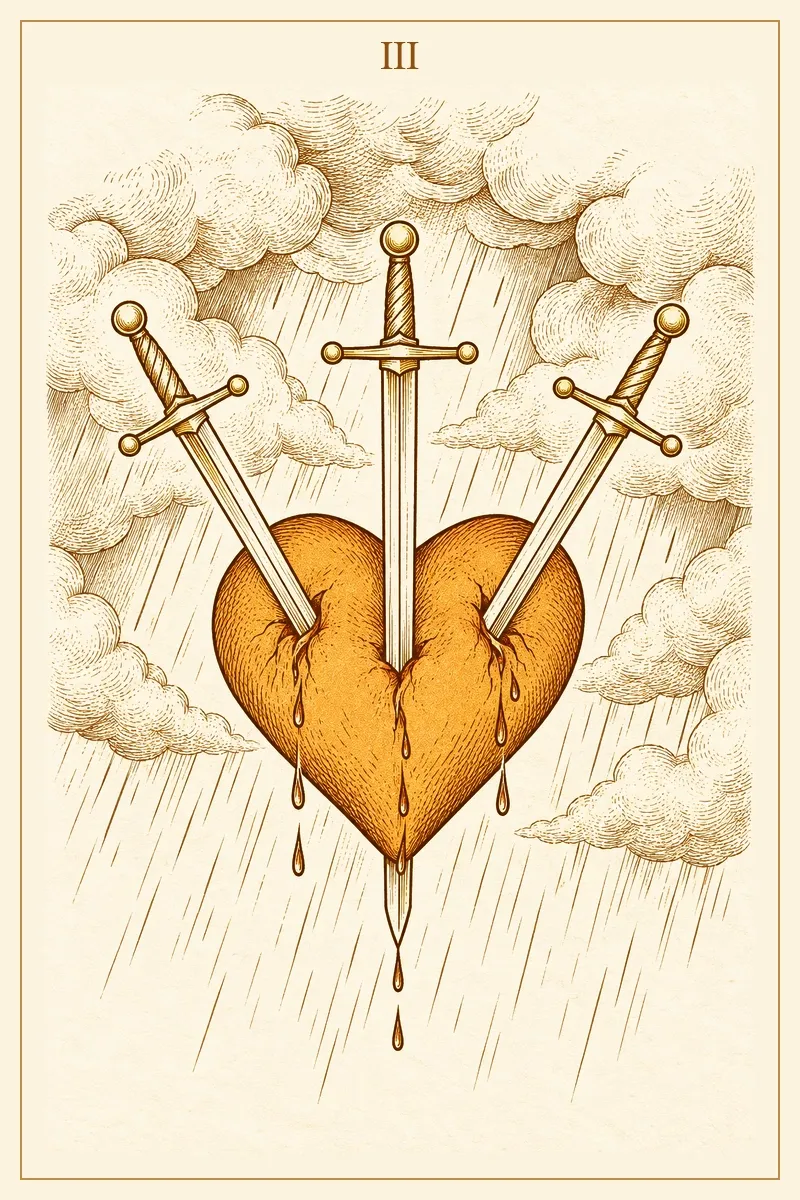
Three swords drive into a golden heart while rain slants down from heavy clouds. Drops fall from each cut, and the middle blade passes all the way through. Nothing in the picture tries to make the moment prettier, and that is its comfort: it agrees that this hurts exactly as much as you feel it does.
Upright, the Three of Swords names grief, painful truth and the shock of being let down by someone you trusted. It also cuts through illusion, bringing up things you half knew: a pattern in how you were treated, a need you kept quiet. The card lets those truths come forward without asking you to act on them today. Our Three of Swords tarot guide covers its wider meaning.
Reversed, the card describes a wound that is starting to close or one that has been pushed down. If you have been crying less and sleeping better, the reversal may reflect real recovery. If you have stayed so busy that you never feel anything, it may point to grief that is waiting for room. Neither is a failure.
Four of Swords: rest before any answers
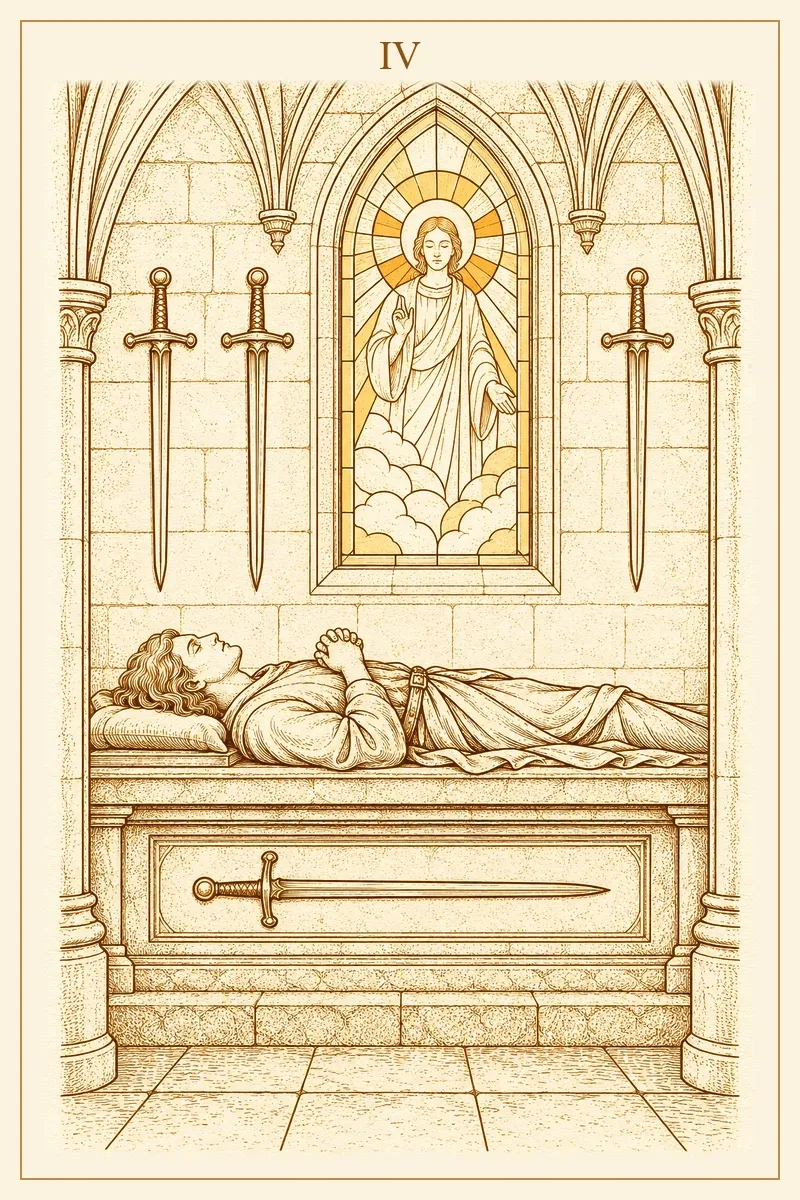
A figure lies on a stone bench in a quiet chapel, hands folded, eyes closed. Three swords hang on the wall above, a fourth is carved along the side of the bench, and a stained-glass window glows behind. The swords are still there, but nobody is holding them: the painful thoughts can wait on the wall while you recover.
Upright in a heartbreak reading, the Four of Swords asks for a pause. It is not the moment to decide whether you will ever trust again. It is the moment to sleep, eat something warm and let your nervous system settle. Rest after a loss is part of healing, not a delay in it. The full Four of Swords meaning covers its other contexts.
Reversed, the card may mean restlessness: you cannot switch off, or you fill every quiet minute so the feelings cannot catch up. It can also show that the rest period is ending and you are ready to rejoin your life a little at a time. Exhaustion points to the first reading; a returning appetite for plans points to the second.
Eight of Cups: the walk away from a full table
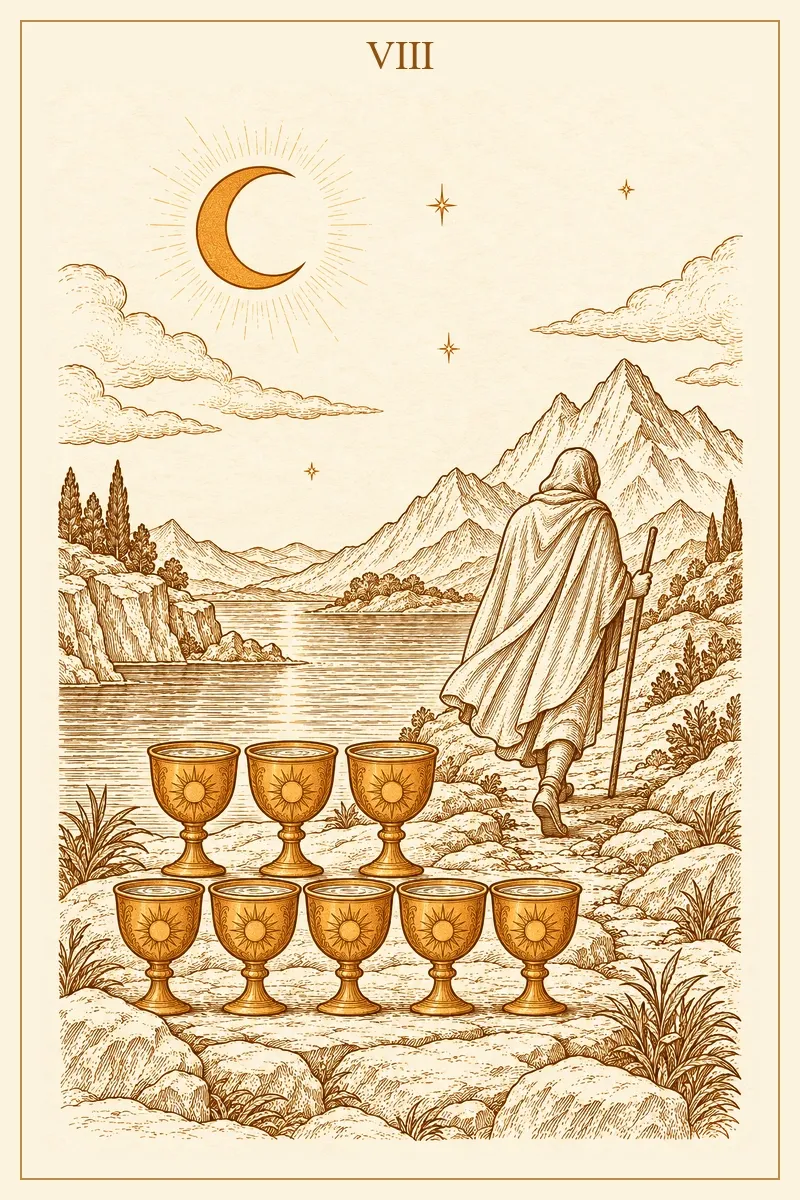
A hooded traveler with a walking staff heads toward the mountains along a lake, under a crescent moon. Behind them stand eight golden cups in two neat rows, and they are not empty. The card is not about leaving something worthless; it is about walking away from something that still holds feeling because it no longer gives you what you need.
Upright, the Eight of Cups describes choosing to go, or accepting that you have to, even while part of you looks back. Not every breakup was your decision, but every heartbreak eventually asks for one: to stay among the ruins rereading old messages, or to start walking toward a life that fits who you are becoming. Our Eight of Cups tarot meaning explores the card's emotional courage.
Reversed, it can show hesitation at the edge of the path, or a return to something you already left. Sometimes that return is wise; sometimes it is fear of the empty road. Ask what you would be going back for: the person as they are now, or the cups as they were at the start.
The Empress: tending yourself the way you tended them
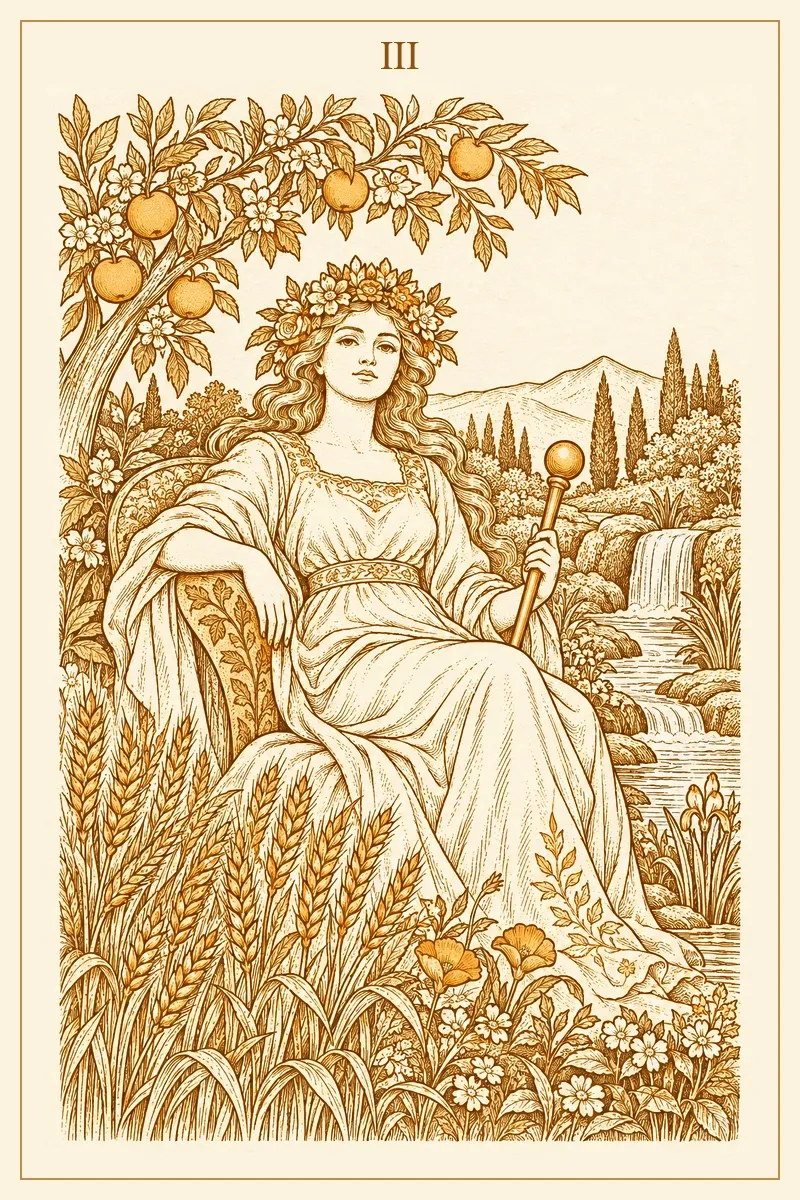
The Empress sits at ease in a garden, wearing a crown of flowers and holding a golden scepter. Apples ripen above her, wheat grows at her feet, and a small waterfall runs into a stream beside her. After a breakup, she turns one question toward you: can you give yourself the care you were giving to someone else?
Upright, she stands for nurture that is practical rather than decorative: warm meals, clean sheets, time outside, a friend who lets you talk. These are not luxuries in the weeks after a loss; they keep you steady enough to feel everything else. Gardens grow back, but not overnight; the Empress tarot meaning follows her through other kinds of readings.
Reversed, The Empress may show neglect of your own needs, or care that still flows only outward, toward the ex or anyone except you. It can also show harshness toward yourself: blaming your body or your worth for an ending that had many causes. Treat the reversal as an invitation to swap one critical thought a day for one kind action.
The Star: healing you cannot feel yet
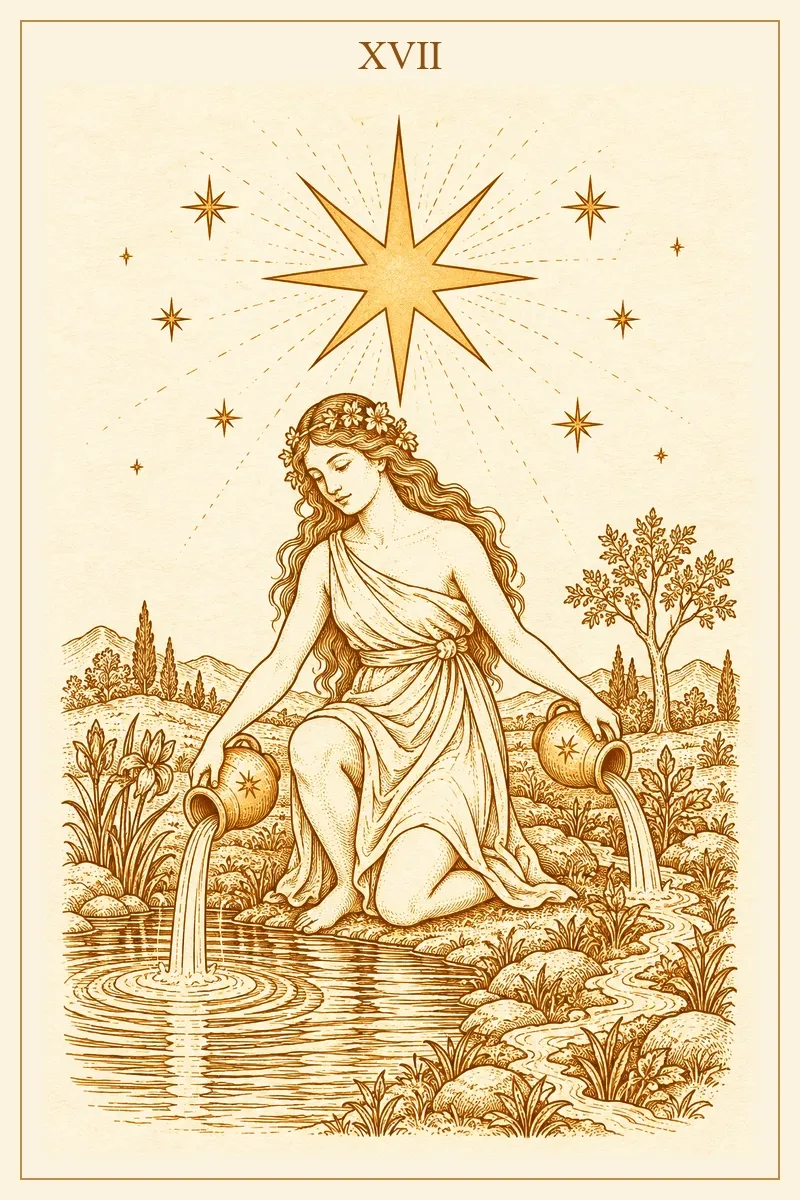
A woman kneels by a pool beneath one great eight-pointed star and a scatter of smaller ones. She pours water from two jugs, one into the still pool and one onto the ground, where it runs off as a little stream. After a storm card like the Tower or the Three of Swords, The Star shows what comes next: the slow return of hope.
Upright, The Star after heartbreak suggests that healing is underway, even if you cannot feel it from the inside yet. It speaks of the willingness to stay soft rather than harden. It does not promise that the same person will return or that someone new is on the way. It promises something you can use: your capacity to love is intact. See our Star tarot meaning for its wider sense of renewal.
Reversed, The Star may show discouragement, a sense that hope is foolish, or a heart that has closed to protect itself. That reaction makes sense after a loss. The reversal asks only for a small opening: one plan for next month, one evening you look forward to.
Ace of Cups: the love that was always yours
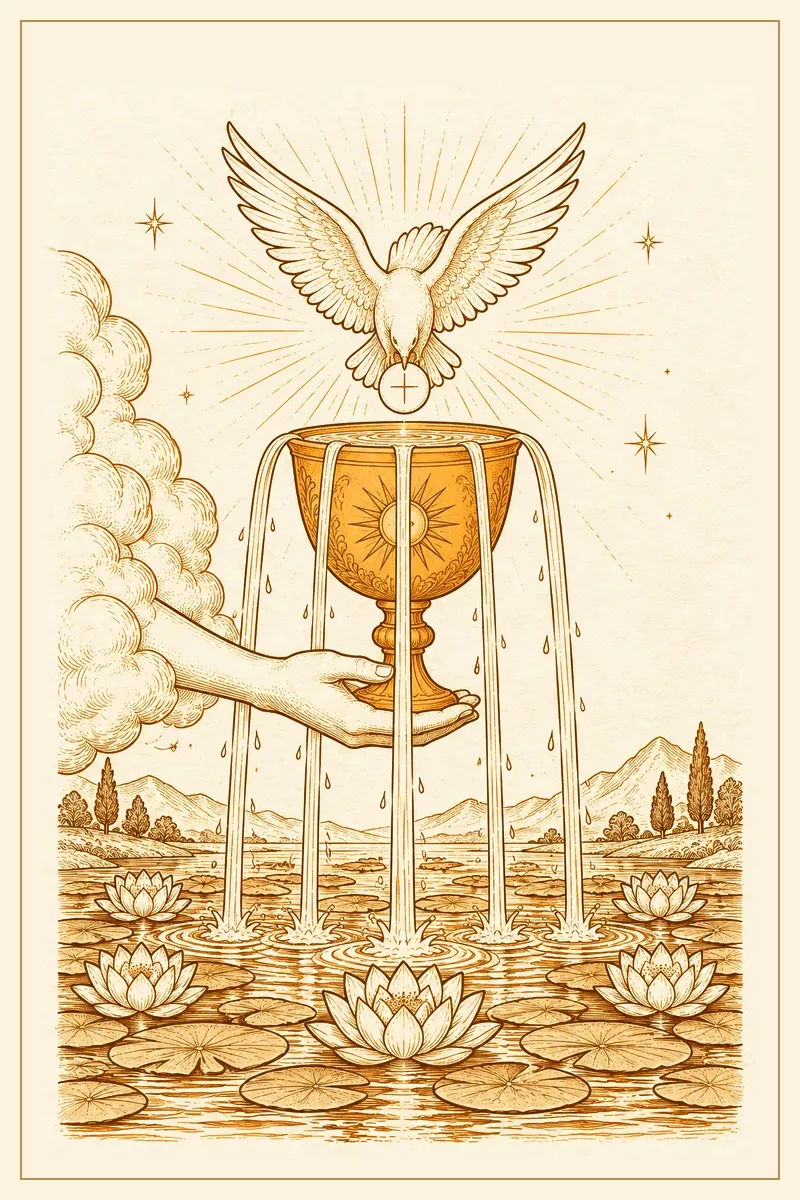
A hand reaches out of a cloud holding a golden cup. Streams of water pour over its rim into a pond of lotus flowers, and a dove hovers above it with a small round disc. In a heartbreak reading, that carries a quiet message: the love you are mourning did not come from the other person. It came from you, and you still have it.
Upright, the Ace of Cups points to emotional renewal: tenderness returning, joy becoming possible again, compassion for yourself. It can show new closeness in friendships, creative work or family before any new romance, and when romance does come, an open heart rather than a desperate one. Read more in the full Ace of Cups meaning.
Reversed, the card may suggest feelings held back, or love poured somewhere it is not received. It can also mean you are not ready to open up yet, which is fine. Let it show you where your feelings want to go before you pour them out again.
Better questions to bring to the cards
The questions that feel most urgent after a breakup are the ones a reading answers least well. "Do they miss me?" "Will they come back?" Each one keeps your attention on a person you cannot read and turns every card into a clue about them, so you end up drawing again, looking for the answer that hurts less.
A small change in wording turns the reading back toward your own life:
- Instead of "Do they still love me?", ask "What do I need to feel steady this week?"
- Instead of "Will they come back?", ask "What would help me decide what I want, whether or not they return?"
- Instead of "Why wasn't I enough?", ask "What did this relationship ask of me that I don't want to give again?"
- Instead of "Who will I meet next?", ask "What would an open heart look like for me right now?"
If the question of reunion keeps pulling at you, our guide on will they come back shows how to frame that reading without feeding the hope or the dread. If you need to understand why it ended, a breakup tarot reading looks back at the relationship itself. Here the focus stays on the heart that is left.
The Mending Heart spread: five positions
This spread works in the raw first days and in the slower months that follow. Lay the cards in a gentle arc from left to right.
Before you shuffle: put your phone in another room so you are not tempted to check their profile mid-reading. Wrap yourself in something soft, take three breaths slower than your heartbeat and rest a hand on your chest for a moment. Shuffle when you feel settled.
- What my heart is feeling: the emotional truth under the replaying and the "I'm fine."
- What this relationship taught me: a lesson worth keeping, even from an ending that hurt. This position is about you, not a judgment of them.
- What I need to release: the hope, story or version of yourself that keeps you tied to the pain.
- What I'm rediscovering about myself: the part of you that comes back into view once the relationship no longer shapes your days.
- Where my heart is heading: the emotional direction ahead. Not a prediction about the next relationship, but a sense of what you are growing toward.
Read the first card on its own before turning the others. A hard card in position 1 is the reading being honest about the present, not a forecast of the whole spread. Positions 4 and 5 are where hope has room to appear, so give them as much time as the painful ones.
A sample reading: three weeks after moving out
Picture someone three weeks out of a four-year relationship, in a new studio with the boxes still half unpacked. Their question: "What does my heart need while I learn to live on my own again?"
1. What my heart is feeling: Nine of Swords. A woman sits up in bed with her hands over her face while nine swords hang in the night sky above her beside a crescent moon, and a single candle burns on the nightstand. The card names what has been happening: lying awake at 2 a.m., running the last conversation on a loop. The worry is larger in the dark than it will be in the morning.
2. What this relationship taught me: Two of Swords, reversed. Upright, a blindfolded woman sits on a stone bench by the sea with two swords crossed over her chest. Reversed, the stalemate breaks. The person recognizes that for the last year they avoided one conversation about where the relationship was going. The lesson is not blame; it is that a decision postponed for too long can end up making itself.
3. What I need to release: Six of Cups. One child hands another a cup full of lilies in a sunny courtyard. This is nostalgia for the early years of the relationship. What needs releasing is not the memory but the hope of getting that version back. The good years can stay good memories without becoming a plan.
4. What I'm rediscovering about myself: Page of Wands. A young traveler holds up a staff sprouting fresh leaves toward a rising sun. The person remembers they used to hike every weekend before the relationship and quietly stopped.
5. Where my heart is heading: Temperance. A winged figure pours water from one golden cup into another, one foot in a stream. The direction is balance: not a rebound or a dramatic reinvention, but a gradual mixing of old and new until life feels like their own again.
Put together: the nights are hard because the mind is still processing, the lesson is speaking up sooner, and the way forward is one small, curious step at a time. A practical next move: leave the phone outside the bedroom at night and plan a short hike for Saturday morning.
Writing it out: prompts for a hurting heart
Writing through heartbreak can feel like pressing on a bruise. These prompts help you sort what you feel without pushing you toward forgiveness or closure before you are ready. Pick one per sitting.
- The thing I miss most is not the person but ______ (a feeling, a routine, the future I pictured).
- If I am completely honest, I first sensed something was wrong when ______.
- The me who lived inside that relationship was ______. The me showing up now is ______.
- I am angry about ______, and I am allowed to be.
- One thing I want to carry forward from this love is ______. One thing I want to leave behind is ______.
- A letter I will never send begins: ______.
If a prompt opens up questions about who you are without this person, the exercises in tarot for self-discovery give that curiosity somewhere to go.
Caring for your heart away from the deck
Heartbreak is physical as well as emotional. Your body is grieving too, and the cards are only one part of looking after it.
- Movement: walk, stretch, swim, dance in the kitchen. You do not need to be fit; you need to not be frozen.
- Sleep and food: keep a simple routine even when you do not feel like it.
- Boundaries: it is fine to mute, unfollow or block, to avoid places that sting, and to tell friends "I can't talk about it today." Protecting your recovery is not weakness.
- Connection: heartbreak makes isolation tempting. Resist it gently. One trusted friend and one honest conversation can do more than a week of solitary readings.
- Time: the least satisfying truth, and the most reliable. Not answers, not closure, not a rebound. Give yourself permission to need a lot of it.
If you cannot eat, sleep or get through the day for weeks at a stretch, or you are leaning on alcohol or other substances to numb the pain, please reach out to a doctor, counselor or mental health professional. No heartbreak is too small to deserve support.
Frequently asked questions
Which tarot card represents heartbreak?
The Three of Swords is the card most closely tied to heartbreak, with its three blades through a heart under the rain. The Five of Cups and the Nine of Swords describe the grief and the sleepless replaying, while The Star and the Ace of Cups speak to recovery.
How soon after a breakup can I read tarot for myself?
Whenever it feels calming rather than frantic. In the first days, a single card each morning can be gentler than a full spread. If you catch yourself shuffling again and again for a different answer, put the deck away for a day and talk to someone instead.
Can tarot tell me whether my ex is hurting too?
No. The cards cannot confirm another person's private feelings, predict when your pain will ease, or tell you whether you will get back together. A reading works with your own experience: what you feel, what you need and what you can choose.
Does drawing the Three of Swords mean things will get worse?
No. It reflects pain that is already there, which you knew before you shuffled, and seeing it named can be a relief. Look at the cards around it: a Four of Swords beside it asks for rest, while The Star beside it suggests the hurt is beginning to ease.
What if I was the one who ended the relationship?
Ending a relationship can still break your heart; grief, guilt and relief can arrive all at once. The same cards and spread apply, and position 2 of the Mending Heart spread can show what the relationship taught you without turning the reading into a trial of who was right.
Can tarot help me trust someone new later on?
It can help you notice whether you are ready. The Ace of Cups and The Star point to openness, while a reversed Empress or the Seven of Cups may suggest you are still healing or idealizing. Let readiness show in daily life, not in a single draw.
Your heart will remember how
Right now it may feel as if the part of you that knew how to love has been broken past repair. It has not. Hearts are tougher than they feel in the worst weeks, and they can mend into something steadier than they were before.
Every stage of love is already in the deck: falling, holding, losing and finding your way again. Your story is not over; it is in a chapter you did not plan. When you are ready to set down resentment, tarot for forgiveness can help with that next step, and if this ending has shaken your confidence, tarot for self-doubt offers a steadier place to stand.
When you want a quiet moment with the cards, you can begin a reading with one gentle question about what your heart needs today.