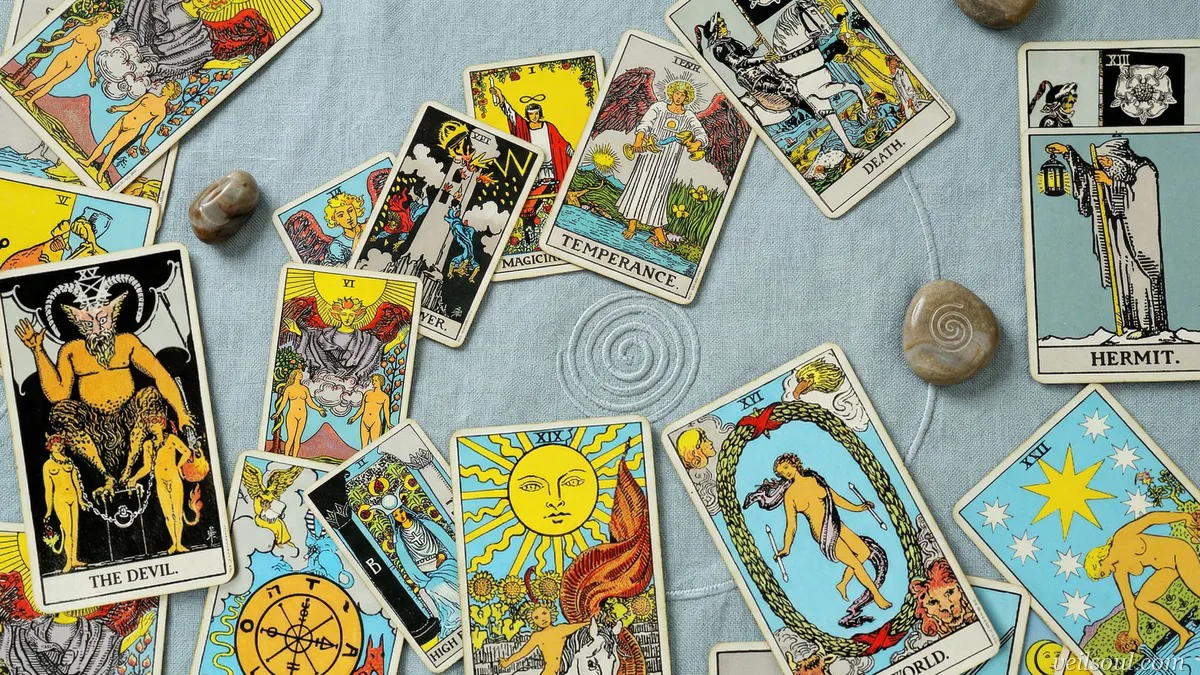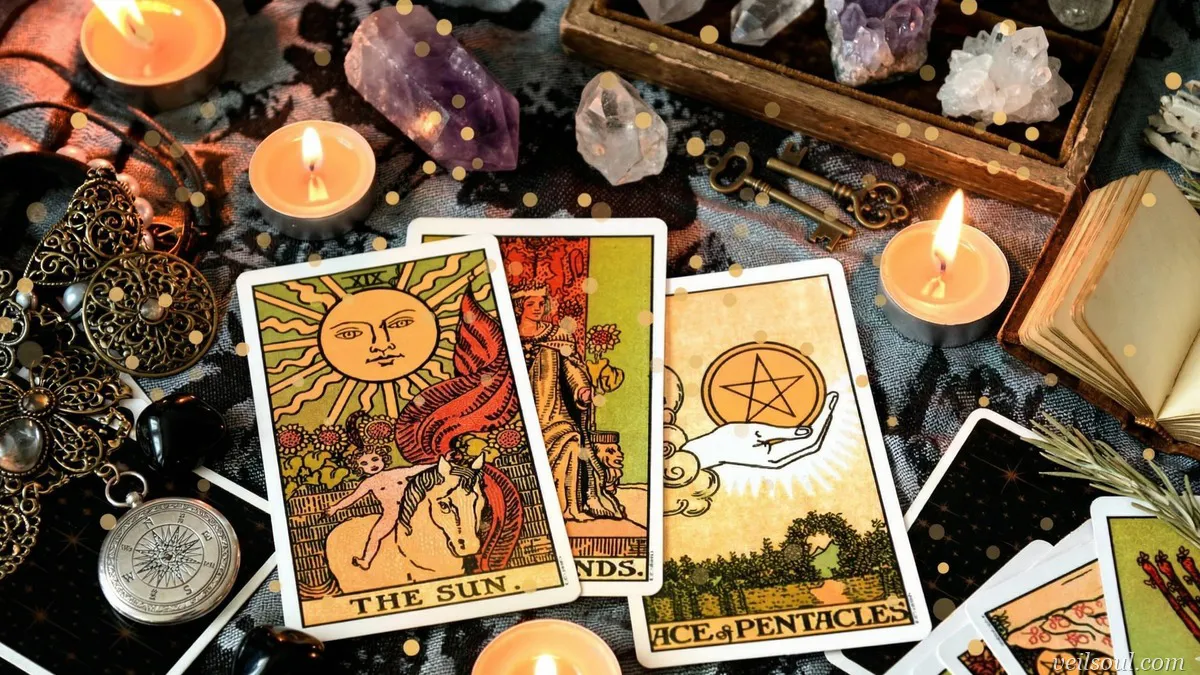
A daily tarot draw is one card pulled at the same point each day, read as a theme to watch for rather than an event to expect, and checked again before you sleep. To do a daily tarot reading, shuffle while you hold one open question in mind, turn over a single card, study the picture for a minute before you look up any meaning, and write the card and one sentence in a notebook. That is the whole practice; the rest of this page is about making it useful and keeping it going for months.
A single card cannot tell you what will happen at three o'clock, what another person thinks of you, or how a decision will turn out. What it can do is hand your attention one image and one idea, so that an ordinary day has something to notice in it. Read that way, a daily card is a short conversation with yourself that leaves a written trace.
Daily tarot at a glance:
- When: one fixed moment you can keep, morning, midday or evening.
- Question: one open question about you and the day ahead.
- Cards: one; two or three on days with more room.
- Reading: the picture first, the book meaning second.
- Record: the date, the card and one sentence.
- Review: a quick look back at night, a longer one at the end of the week.
What one card a day is good for
A long spread tends to come out when something already feels urgent. A card a day works differently: because nothing big rides on it, you can look at the image calmly, and those small stakes are what let you learn.
- A built-in pause. The draw makes room to notice how you actually feel before the day carries you off. The prompts in tarot for self-discovery pair well with it.
- Cards learned through real days. A card you watched play out over a whole Tuesday stays with you far longer than a keyword, because it is tied to a meeting, a phone call or a quiet evening.
- A record you can read back. When you keep a tarot journal, the entries add up: a suit that keeps turning up, a card that returns in stressful weeks, a mood that repeats on Mondays.
- Trust in your first impression. Describing the picture before checking its meaning trains you to notice your own reactions, the skill at the heart of building intuition for tarot reading.
- A calmer relationship with the deck. Inside an ordinary routine, a hard card stops feeling like a verdict and becomes one day's prompt among many.
How to do a daily tarot reading, step by step
The method takes about five minutes, and on a rushed day any step can shrink without losing the practice.
Pick a moment and a spot
Choose a time you can repeat without negotiation: after you make coffee, when you sit down at your desk, or once the house goes quiet at night. Keep the deck and a pen where that moment happens, so nothing has to be fetched from another room.
Settle and shuffle
Take three slow breaths and shuffle until your hands feel ready to stop; the count does not matter. Overhand, riffle or a messy spread on the table all work, and how to shuffle tarot cards walks through several methods if you are still finding one. While you shuffle, let your mind settle on one question.
Phrase the question about yourself
A good daily question is open, short and about your part in the day. "What do I need to know today?" is a fine default. "Will my boss like the report?" asks the card to read someone else and predict a result, so turn it around: "How can I present this report with confidence?"
Turn over one card
Cut once and take the top card, or fan the deck and pick the one your hand goes to. Doing it the same way each time matters more than the method. For reading a single card in layers, the one-card daily draw covers the technique in detail; this page stays with the habit around it.
Look before you look it up
Give the image a full minute. What catches your eye first? Is the figure moving or still, alone or with others? What mood do the colors give you? Note two or three observations, then read the traditional meaning and see where it agrees with your first impression and where it adds something you missed.
Write one sentence
Record the date, the card, upright or reversed if you read reversals, and one sentence in your own words. "Two of Pentacles: keep the plates spinning, but set one down on purpose" will help you more at nine tonight than a page of keywords copied from a book.
Daily questions for work, love, money and rest
Keeping one question for a week makes entries easier to compare. When you want a change, pick from the area of life on your mind.
- General: What deserves my attention today? What would help me most today?
- Work and study: How can I approach my main task with a clear head? Where am I spending effort that could go elsewhere?
- Love and friendship: How can I show care to the people close to me today? What do I need to say instead of hint at?
- Money: What attitude toward spending would serve me today? Where can I be practical without being anxious?
- Rest: Where can I make room to recover today? What small thing would help my body feel looked after?
- A hard day: What strength can I lean on today? What can I set down?
Skip yes-or-no questions. One card cannot weigh a yes against a no, and the answer you hoped for will tint how you read it. Questions that start with "how," "what" or "where" leave the card room to show you something.
Morning, midday or evening: three ways to time the draw
No hour is best. What changes with the clock is the card's job: in the morning it points ahead, at midday it checks in, and at night it looks back.
A morning draw to set a focus
Draw before the phone and the inbox claim you, write your sentence, and choose one small action that fits the card. On mornings with more time, add a second card for "What should I be mindful of today?" so you hold a pair, guidance and caution, and take one word from each as a reminder to carry. For a full routine built around the start of the day, see the guide to a morning tarot routine.
A midday check-in
If mornings are crowded, draw at lunch and ask, "How am I doing so far today?" This card reads the half-day you have already lived, so the evidence is right in front of you, and there is still an afternoon left to adjust.
An evening reflection draw
At night, look at your morning card again and ask where its theme showed up. Then draw an evening card for "What did today teach me?" or "What can I let go of before sleep?" and write a line connecting the two. Over weeks, these pairs become the richest part of your journal, because they show the distance between what you expected and what happened.
The gratitude draw
A gentle evening variation: draw one card and ask, "What went well today that I might have overlooked?" Let it point you to one small good thing, and write it down. On difficult days this question can help more than asking what went wrong.
Five cards and how they read as a daily card
Any of the 78 cards can turn up as your daily draw, and each one works best when you shrink its meaning to the size of a single day. Here are five, each with an upright and a reversed reading and a question to carry until evening.
Two of Pentacles: balance in motion
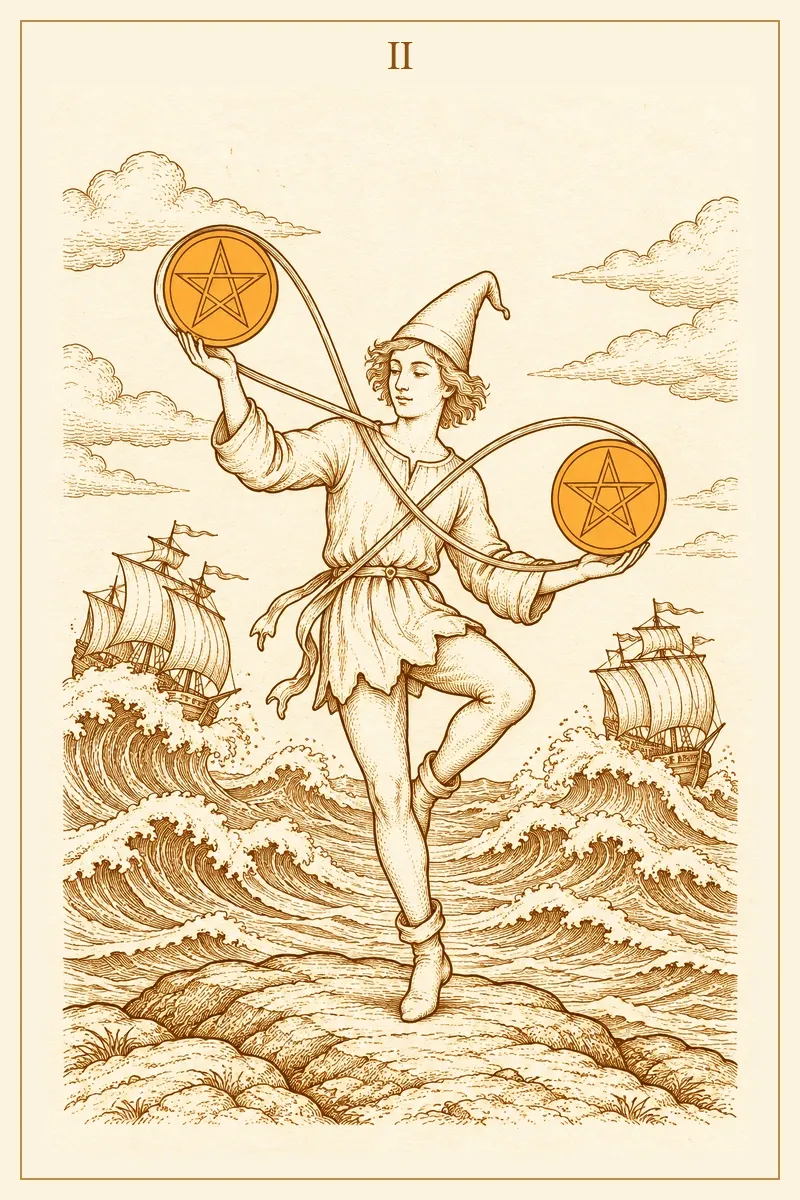
The Two of Pentacles is about juggling: two demands, limited hands, and the skill of keeping both moving. Upright, it suggests a day of many small priorities where flexibility matters more than a perfect plan. It does not ask you to do everything, only to keep an eye on what is in the air.
Reversed, too much may be in motion and something is about to slip. Take that as permission to put one thing down on purpose, such as moving a call or declining an extra task, rather than as a warning that you will fail. The Two of Pentacles tarot card meaning covers its work and money readings.
Question to carry: "Which two things truly need me today, and which can wait?"
The Emperor: structure for the day
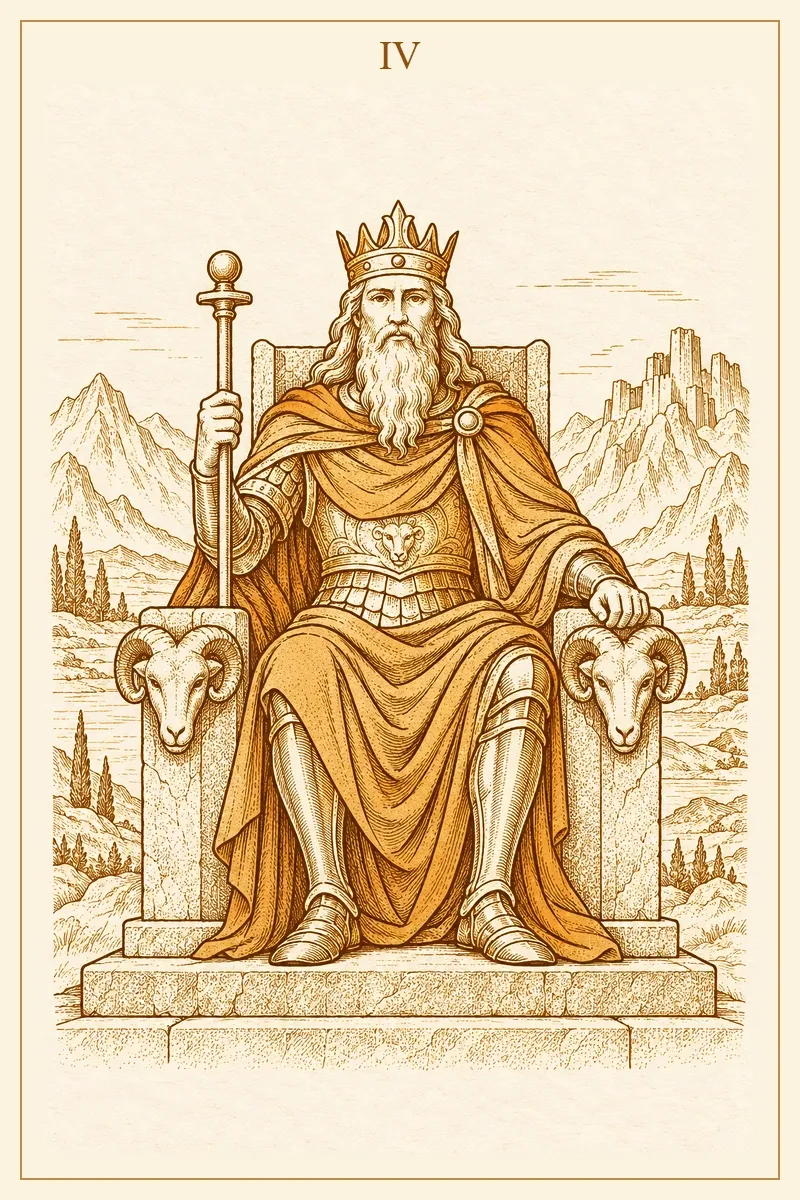
The Emperor stands for order, clear boundaries and steady decisions. Upright on a scattered morning, it suggests a simple structure will help: a short list, a fixed start time, a limit on how long a task may take. With other people, it can mean stating a boundary calmly instead of hoping someone guesses it.
Reversed, structure may be hardening into rigidity, or the day may have no plan at all. If you are gripping too tightly, loosen one rule; if you are drifting, set one. The Emperor tarot card meaning explores its authority and leadership themes.
Question to carry: "What one decision would bring order to today?"
Queen of Cups: care that includes you
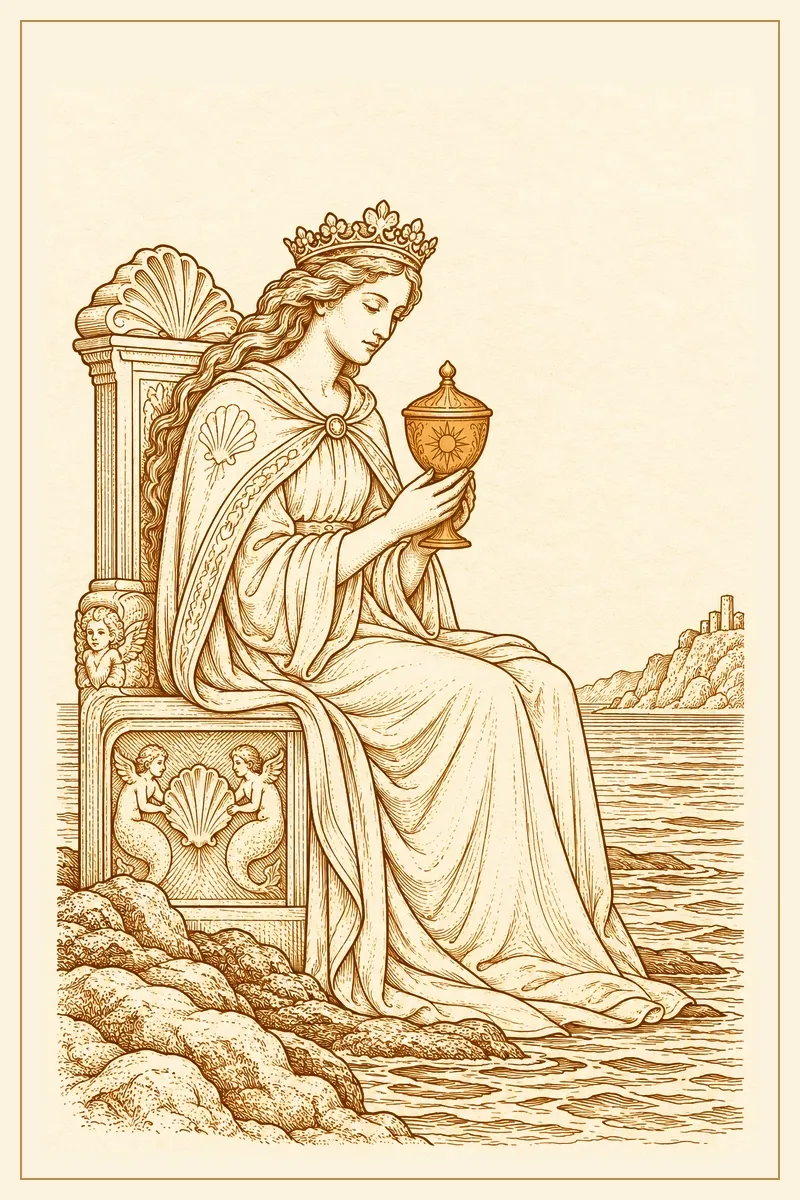
The Queen of Cups is emotional attunement: listening closely, responding with compassion, trusting what you sense beneath the surface. Upright, she often points to one person who needs your patience today, or to a feeling of your own that deserves a kind hearing.
Reversed, she can describe giving so much care that your own needs go quiet, or feelings running high enough to cloud judgment. Check in with yourself before you look after anyone else. The Queen of Cups tarot card meaning covers her love and career readings.
Question to carry: "Who needs my gentleness today, and am I on that list?"
Five of Cups: what still stands
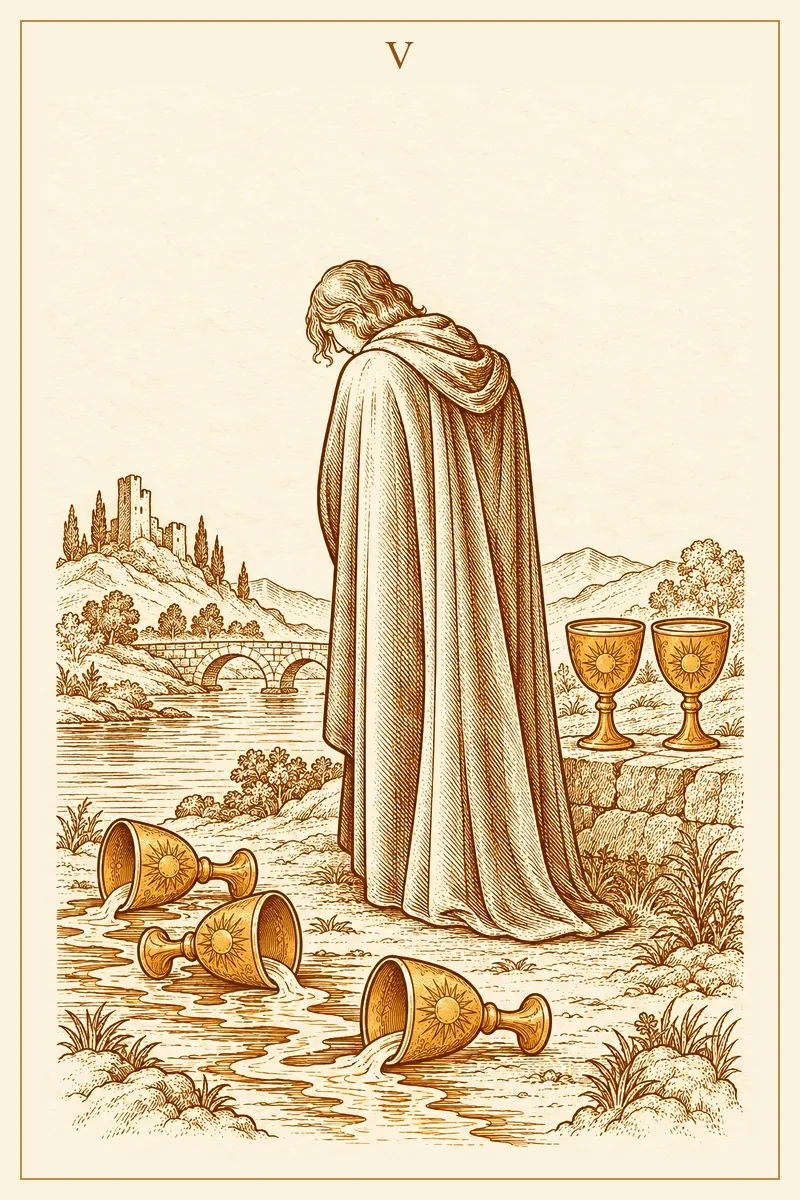
The Five of Cups shows attention fixed on what has spilled while two cups remain standing behind the figure. As a daily card it names a disappointment you are still carrying, large or small. It does not ask you to pretend the loss did not matter; it asks whether you can also see what is still there.
Reversed, it often marks the start of a turn: accepting what happened, picking up what remains, letting someone help. On a day it appears, write what you still have next to what you lost. The Five of Cups tarot card meaning goes further into grief and recovery.
Question to carry: "What is still standing that I have not looked at yet?"
The Star: hope you can act on
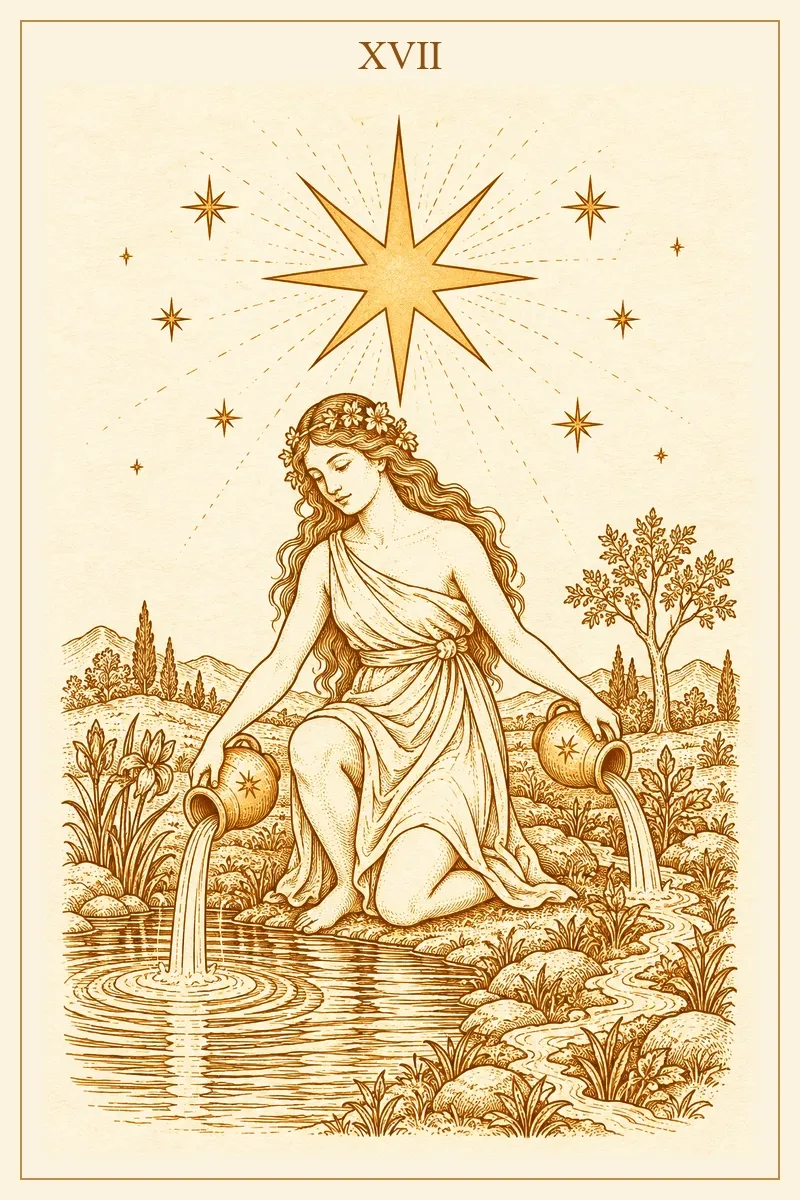
The Star is renewal after a hard stretch: calm, openness and a quiet faith that things can improve. Upright, it invites you to do one thing that restores you and to treat your hope as worth protecting rather than naive.
Reversed, it can reflect discouragement, a stretch where whatever normally lifts your spirits feels far away. Read that as a note about your reserves, not a forecast of a bad day, and start small: a walk, a call to someone steady, an early night. The full Star tarot card meaning covers its themes in love and work.
Question to carry: "What refills me, and when can I give it ten minutes today?"
A worked example: one question, two cards, one Tuesday
This reading is invented to show the method. Imagine a crowded Tuesday: a project update due at noon, a dentist appointment, and a friend who has been hard to reach. Before breakfast, the reader shuffles with "What deserves my attention today?" and, with ten minutes to spare, draws two cards.
- Card one, guidance: Two of Pentacles, upright.
- Card two, what to be mindful of: Five of Cups, upright.
First look. Before checking any meaning, they write: "Juggling, a lot in the air, but light on their feet. Then someone staring at spilled cups and missing the two behind them."
Interpretation. The Two of Pentacles fits the shape of the day: several commitments, none huge, all needing a little attention. The Five of Cups suggests the risk is a mood, not the workload. They realize they have been stewing over the silent friend and reading the silence as rejection.
Sentence and action. "Keep things moving; don't let one quiet friend take over the day." The action: send the update first, then a short, warm message to the friend with no pressure to reply.
Midday. The update went out on time. Glancing at the note, they catch themselves drafting a second, more anxious message and decide not to send it.
Evening. They look at both cards again and draw for "What did today teach me?" Out comes Temperance, a card of moderation and blending. The closing line: "Paced the day better than expected. Friend replied at dinner; the silence was a busy week, not a verdict." The cards did not need to be right. The morning sentence caught a worry early and kept it from steering the day.
Repeats, blank days and hard cards
A daily practice brings a few situations that one-off readings rarely do. None of them means you are reading badly.
- The same card keeps returning. Give it more weight, not less. Note what was happening each time it appeared and look for what those days share.
- The card makes no sense. Resist the urge to put it back. Jot the first association, however thin, and test it against the evening; a daily card can click only in hindsight. If a whole run feels blank, sharpen a question that has gone fuzzy.
- A heavy card shows up. The Tower or the Three of Swords in a daily draw does not announce a disaster. Ask where the day could use extra gentleness or honesty, and plan one kind thing for that spot. If you already feel low, you may turn it face down and return to it when you have more room.
- You want to draw again. Stay with what you turned over. A replacement pulled because the first felt uncomfortable mostly measures your preference, and the uncomfortable card is often the one with something to say.
Your week of daily cards, read as a whole
Daily cards gain weight when you read seven together. At the end of each week, take ten minutes with your journal and ask a few questions of the list.
- Which suit appeared most? Cups point to feelings and relationships, Pentacles to work, money and the body, Swords to thoughts and conflict, Wands to drive and creative energy.
- How many Major Arcana cards came up? A week heavy with them may carry bigger inner themes than the calendar showed.
- Did any card repeat, and on which days?
- How did morning sentences compare with evening notes? This is where reading skill grows, because you see how a card's theme looked in a lived day.
You can also frame the coming week with three cards at its start: theme of the week, the overall tone; likely challenge, what may test you; and gift, what the week may offer if you notice it. Read each daily card against that frame. For one card per day of the week, the weekly tarot spread sets out seven named positions.
Short versions for crowded days
Not every day allows five quiet minutes. These smaller forms keep the thread anyway.
- The doorway card. Draw as you leave the house, photograph it, and think about it on the way to work or school.
- The ten-second draw. Turn a card, name one word it suggests, and put it back. No journal, no lookup, and the habit stays unbroken.
- The chosen card. Go through the deck face up and pick the card you need. Scattered? Leave The Emperor on your desk. Need compassion? Set the Queen of Cups where you will see it. Here you choose the theme instead of receiving it.
- The shuffle only. On the busiest days, shuffle for half a minute without drawing, which keeps the deck in your hands until a calmer day.
Keeping a daily practice past the first month
Starting is easy; the third or fourth week, when the novelty wears off, is the real test.
- Tie it to a habit you already have. Same moment, same spot, and the cue does the remembering.
- Keep it small. One card is enough. Piling spreads and long entries onto every day is one of the common tarot beginner mistakes, and each extra step makes the habit easier to drop.
- Skip without guilt. Missed a day, or a week? Start again the next morning. The deck keeps no score.
- Change the angle when it goes stale. Move the draw to the evening, switch your weekly question, or try the two-card pair for a while.
- Mark the milestones. After thirty entries, read the month back in one sitting and see how your sentences have changed.
A daily card is a reflection habit, not a treatment. If you are living with anxiety, persistent self-doubt or low moods that do not lift, let the practice sit alongside support from a therapist, counselor or doctor rather than in place of it.
Frequently asked questions
How many cards should I pull for a daily tarot reading?
One is enough for most days. Two suit a morning when you want guidance and a caution, and three suit a day off or the start of a week; beyond that you are doing a full spread, better saved for a specific question.
Does the daily card tell me what will happen today?
No. A card cannot fix a date, guarantee a result, or reveal the private thoughts and plans of another person. It gives you a theme to notice and a stance to try on, while the day itself is shaped by circumstances, other people and your own decisions.
Is it better to draw in the morning or at night?
Neither; they do different jobs. A morning card sets a focus and an evening card reviews the day you just had. Choose the time you can keep.
Should I read reversed cards in my daily draw?
That is your choice. Reversals add nuance, often the inner, blocked or excessive side of a card's theme, while reading everything upright keeps the practice simple. Stay with one approach for a few weeks so your entries can be compared.
Can I do a daily draw without a physical deck?
Yes. A digital draw serves the same habit as long as you still pause on the image, write your sentence and look back at night. The attention and the record make the practice, not the cardstock.
Tomorrow's card
Tonight, put your deck and a pen where your chosen moment happens. Tomorrow, breathe, shuffle with one question, turn one card, look before you look it up, and write one sentence; read it again before bed. When you want a longer, guided look at something on your mind, you can start a reading on Veil Soul in any quiet moment.