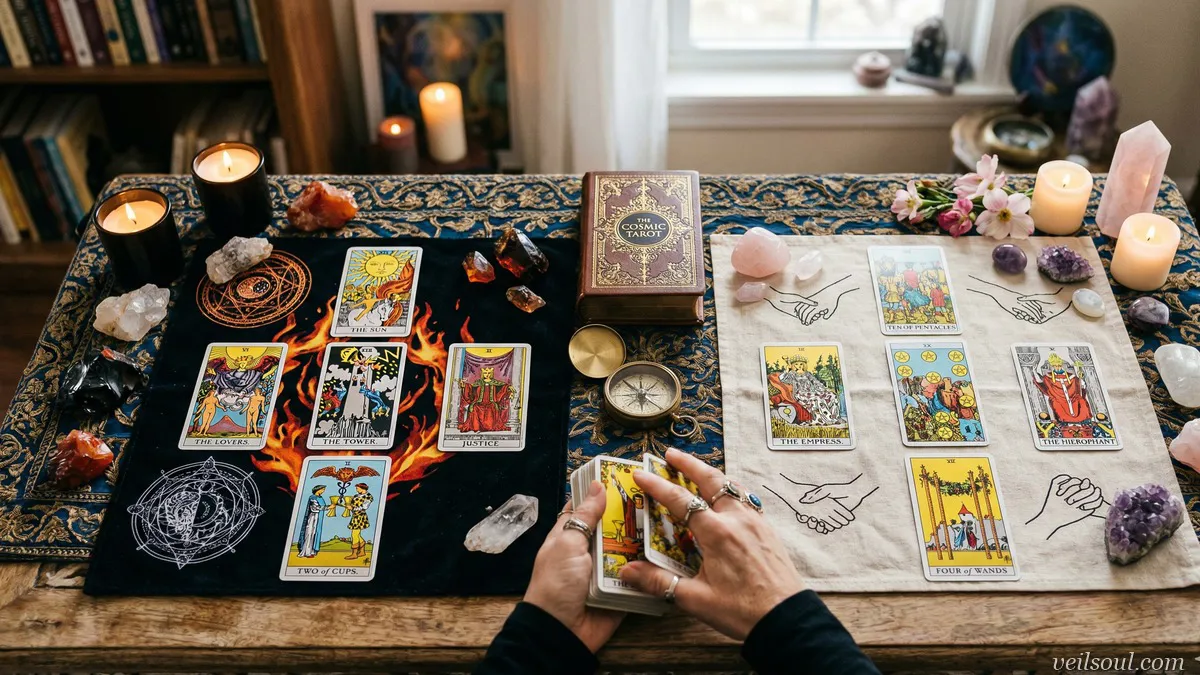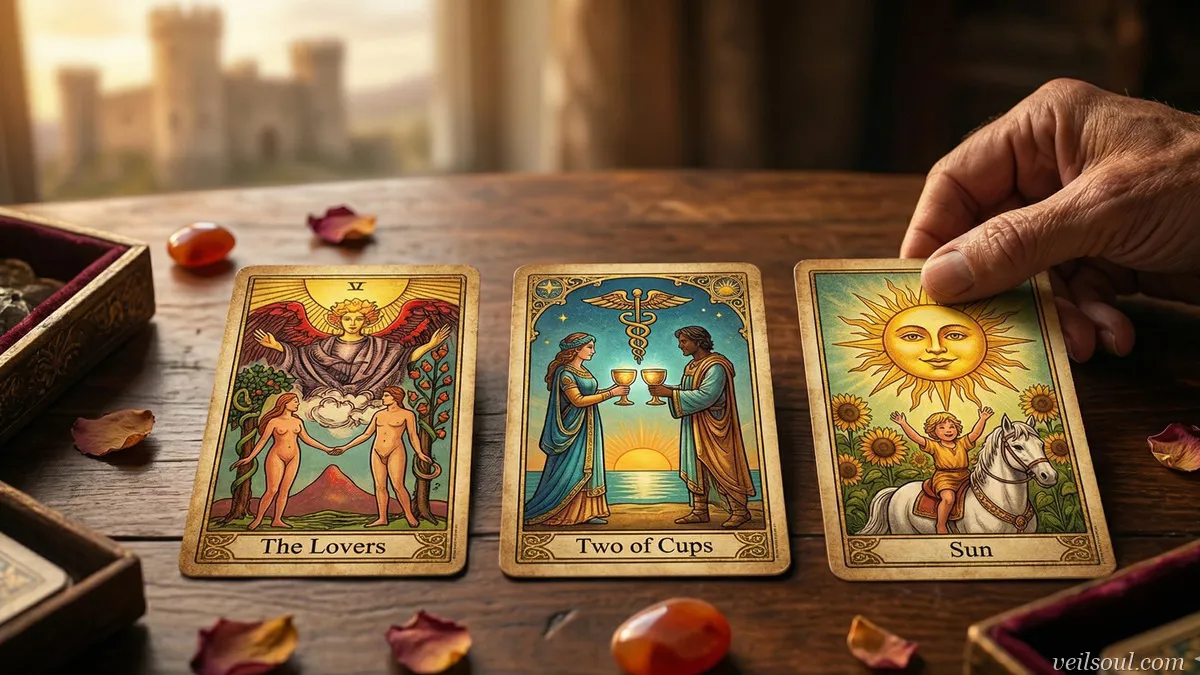
When people ask tarot whether someone will come back, the cards most often read as a yes-leaning answer are the Six of Cups, the Page of Cups, The Star, Judgement and the Two of Cups: old memories stirring, a small first message, hope after healing, a second call and warmth that still runs both ways. Death, the Ten of Swords and The Tower lean the other way, and Temperance and The Moon usually say "not yet" or "not clear." Read any of them as a picture of where things stand today, not as a promise.
Whether an ex, or anyone else who has stepped out of your life, returns is their decision. No card can read their mind, confirm what they feel or put a date on a message. What a reading can do is show you the pattern you are standing in: what you are hoping for, what keeps you waiting, and what would need to be true for a return to be good for you.
Cards that lean toward contact or a return:
- Six of Cups: memories drawing someone back toward what you once shared.
- Page of Cups: a tentative message, light and a little unsure.
- The Star: a return that only makes sense once both of you have healed.
- Judgement: a call to look at the relationship again, honestly.
- The Lovers: a return that is chosen rather than drifted into.
- Two of Cups: feeling that still travels in both directions.
- Ace of Cups: starting over fresh instead of replaying the old story.
Cards that ask you to wait:
- Temperance: slow progress, where time is part of the answer.
- The Moon: missing information and a view clouded by worry.
- Seven of Cups: a reunion that lives more in daydreams than in plans.
- Four of Swords: rest and distance; nobody is ready to talk.
Cards that point away from a return:
- Death: that form of the relationship is over.
- Ten of Swords: a painful ending that is better left closed.
- The Tower: the ground it stood on gave way.
- The World: the relationship has finished what it came to give.
- Eight of Cups: one of you has already turned and walked on.
- Three of Swords: going back would reopen a wound that is trying to close.
The smaller questions inside "will they come back?"
The question usually carries several others. Do they still think about me? Do they regret leaving? Is the door still open? Am I foolish for hoping? Each has its own answer, and the answers do not always agree. Someone can miss you deeply and still decide not to return; someone else can come back without anything having changed. That is why a return reading rarely lands as a clean yes or no.
Decide which of those questions matters most before you shuffle. If you mainly want to understand why things ended, a breakup tarot reading gives that question a spread of its own. This guide stays with the waiting: signs that contact may come, signs that it may not, and how to look after yourself in between.
Position changes the message too. A return card in a "past" position can describe a moment when the door was open and someone chose not to walk through it. In a "present" or "next step" position, the same card describes something still in motion.
Cards that point toward contact or a return
None of these cards guarantees a message. Each describes a particular kind of return, and the kind matters as much as the yes: a nostalgic text is not a considered decision to try again.
Six of Cups: the past comes knocking
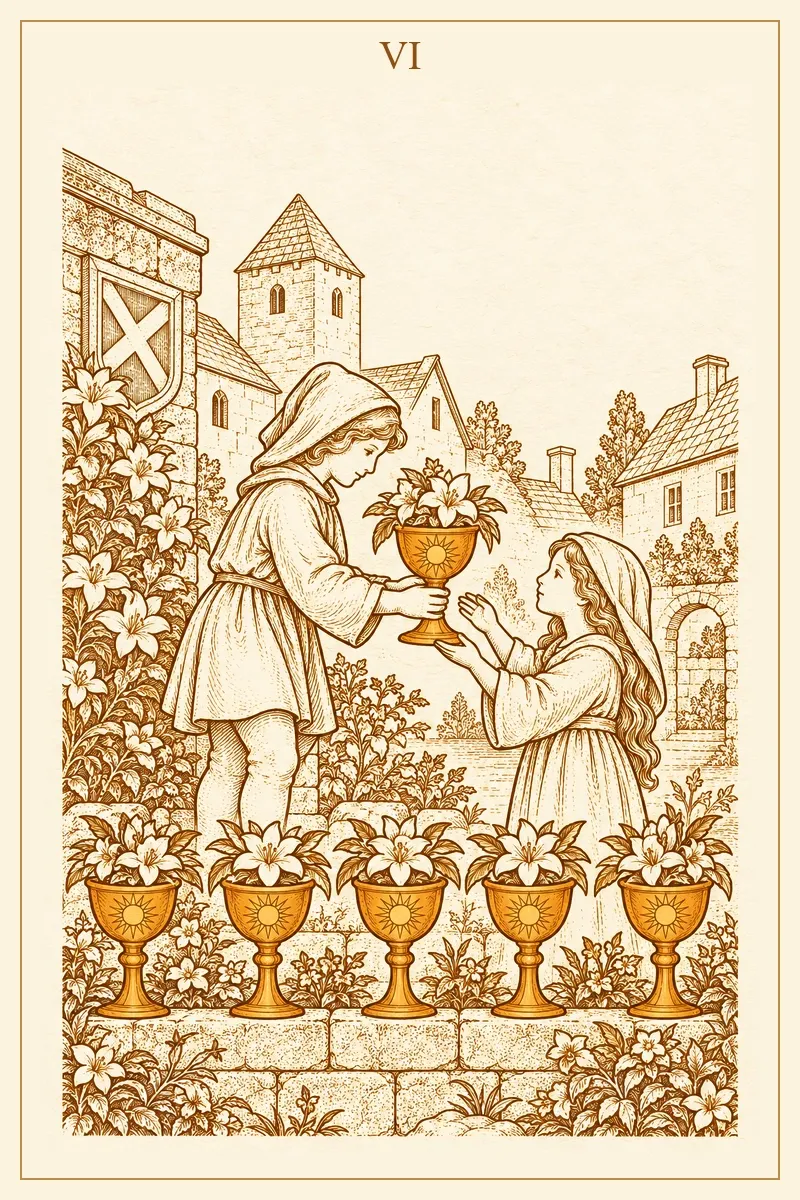
A hooded boy hands a cup full of lilies to a girl who reaches up for it with both hands, while five more lily-filled cups stand in a row on the low stone wall in front of them and a village tower rises behind.
Upright, the Six of Cups is one of the clearest signs that your shared past is active in someone's mind. It often matches the out-of-the-blue message: a song they heard, a photo that came up, "this made me think of you." Nostalgia, though, is longing for how something felt; it does not show whether the person is ready to deal with how it ended. The Six of Cups tarot meaning follows the card through memory and old friendships in more depth.
Reversed, the card can turn the question back toward you. You may be the one living in the old days, replaying the best months and editing out the rest. If it keeps appearing reversed, ask whether the person you are waiting for still exists, or only the one you remember.
Page of Cups: a small, unsure first message
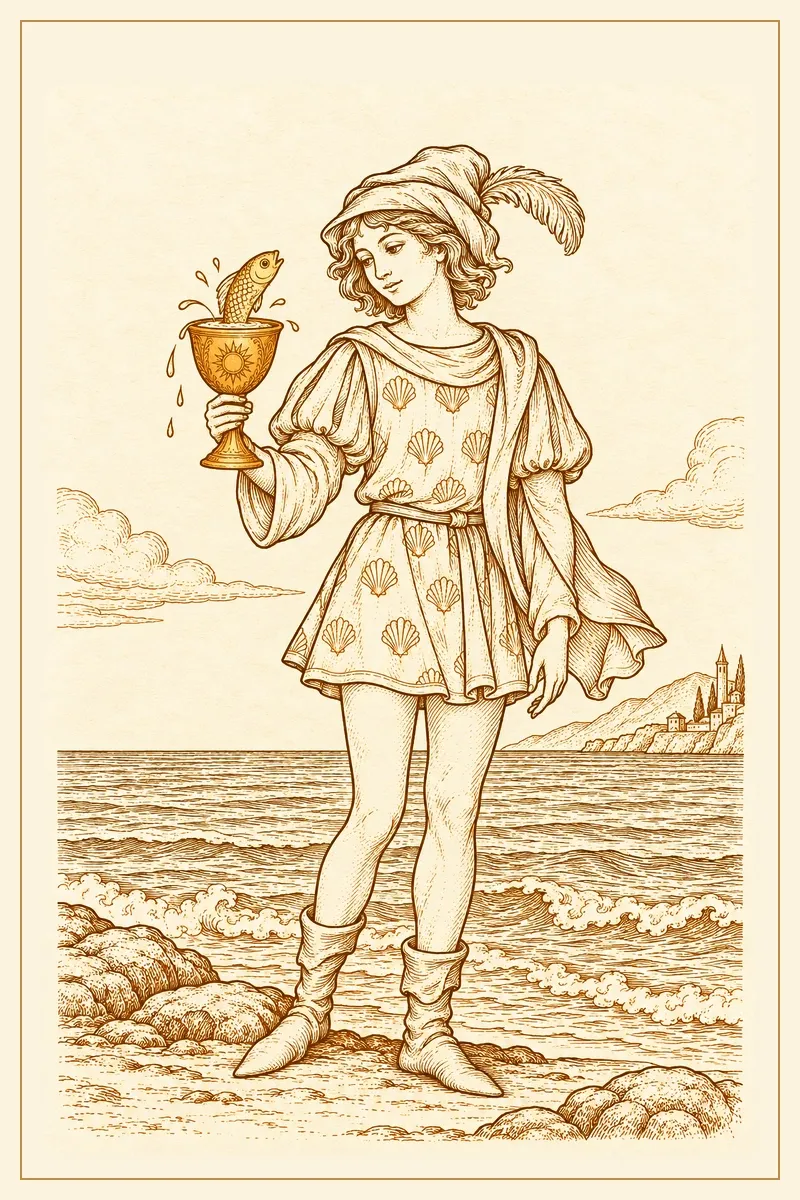
A young man in a feathered cap and a tunic patterned with shells stands on a rocky shore, gazing at the cup he holds up, from which a small fish is leaping.
Upright, the Page of Cups is contact rather than return: a like on an old photo, a short text, a birthday wish, an invitation that could be read either way. Pages are messengers and beginnings, so the card speaks of a first step, not a decision. You can answer such a message in the same light spirit, or not at all; what the card does not support is building a plan on one small gesture. The Page of Cups meaning explores its playful, intuitive side beyond love questions.
Reversed, it describes mixed signals: warmth one week and silence the next, contact that tests the water without committing to anything. It can also show your own hesitation to reply. Either way, ask what you want from the exchange before you answer.
The Star: a return that waits on healing
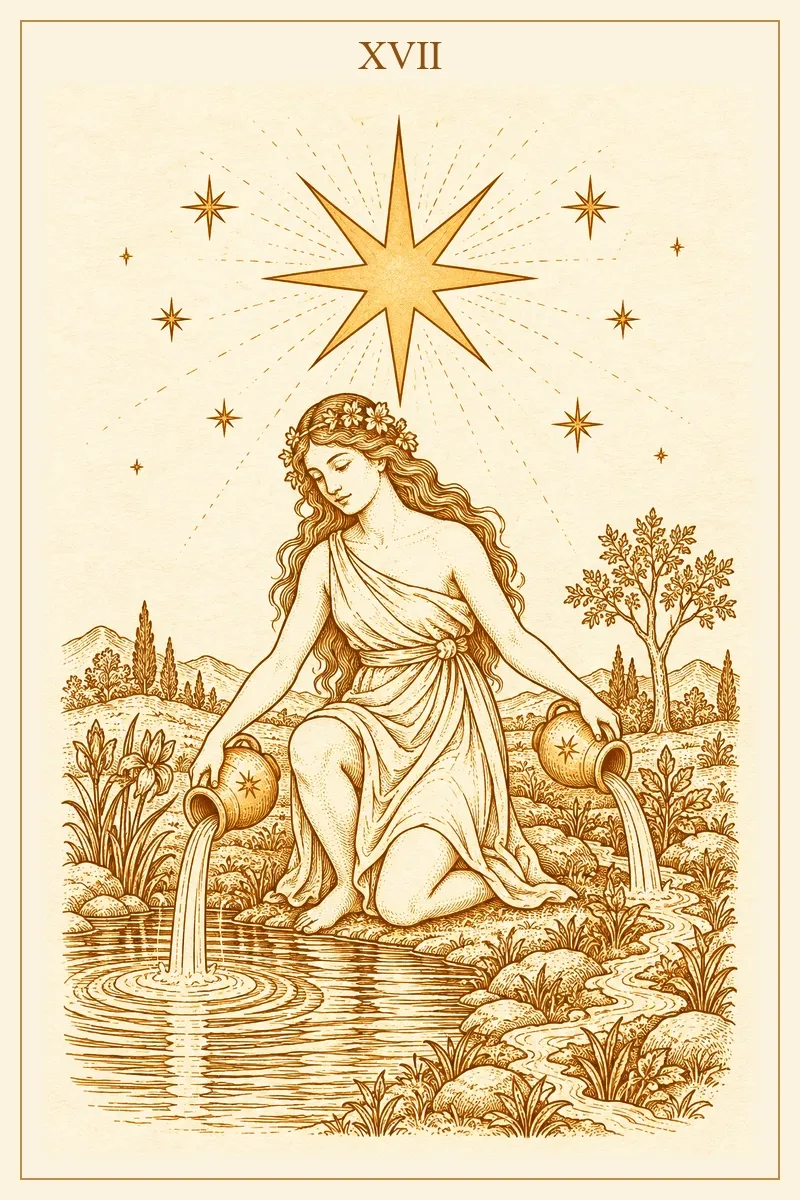
A woman crowned with flowers kneels at the edge of a pool, pouring water from two jugs, one into the pool and one onto the bank, beneath a large eight-pointed star and a scatter of smaller ones.
Upright, The Star is hope returning after a hard season. In a return reading it suggests that any reunion belongs to a later chapter, after the sharpest hurt has eased on both sides. Its first message is about your own recovery, though: sleep coming back, days no longer organized around their silence. That makes it good news whether or not they return. For its wider themes of renewal, see The Star tarot meaning.
Reversed, it can show hope worn thin, or hope pinned entirely on one person. Look for small sources of hope elsewhere first, so your well-being is not waiting on a single message.
Judgement and The Lovers: a return someone chooses
Judgement is often called the strongest return card because it is about answering a call. Upright, it suggests the relationship is being looked at again with clearer eyes, and that a return would mean facing what happened rather than skipping past it. Reversed, the reckoning keeps being postponed and the same arguments replay.
The Lovers adds choice. Upright, it describes a return made on purpose, in line with what each person values, not out of loneliness or habit. Reversed, the decision keeps getting put off, or values pull you apart even while the feeling remains.
Two of Cups and Ace of Cups: warmth that still flows
Two of Cups upright says the bond has not dissolved; care and respect remain on both sides. Test it against reality: if every message starts with you, the card may describe your hope more than the exchange. Reversed, pride or a misunderstanding makes the first move hard for both people.
Ace of Cups upright is a new emotional start. Beside other return cards, it says anything that resumes would have to begin fresh, on new terms. Reversed, feelings may be held back, or you may need to refill your own cup before offering it to anyone.
Cards that ask you to wait
These cards do not close the door. They describe a moment that is not ready, or a view so fogged that any answer drawn from it would be a guess.
The Moon: you cannot see the whole picture
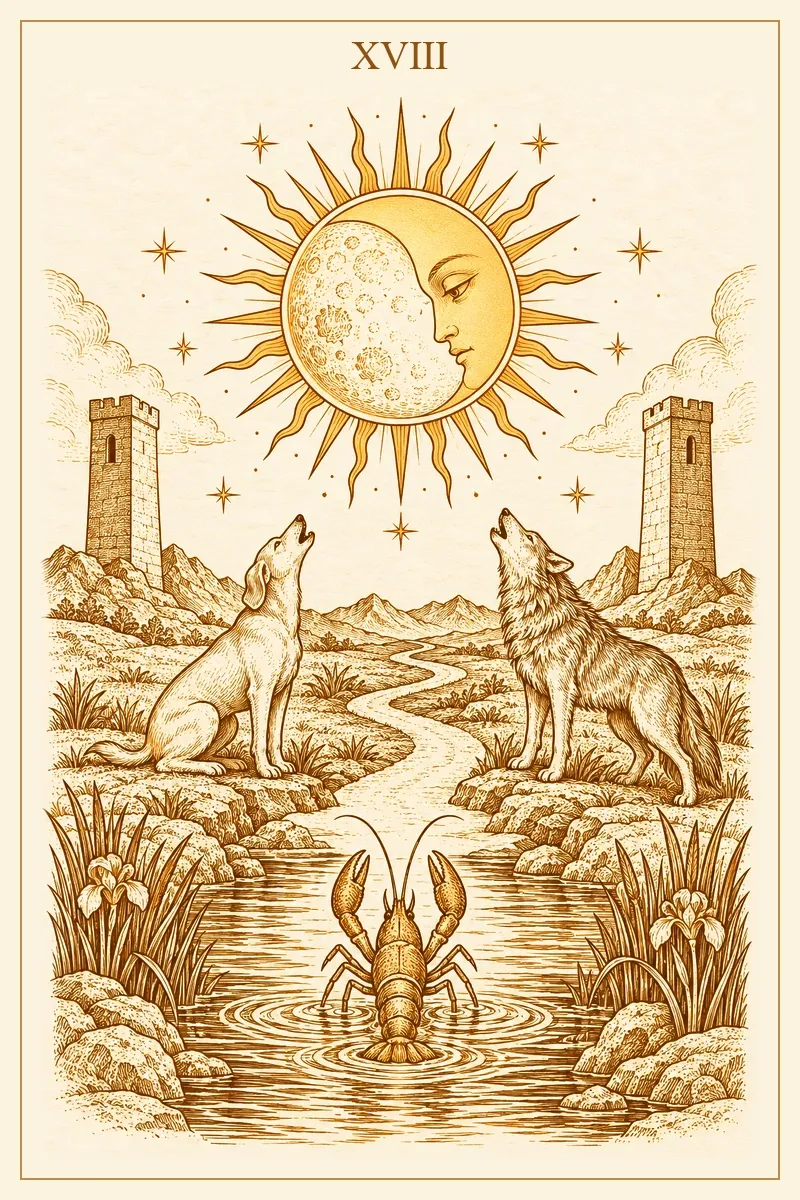
A crescent moon with a face in profile sits inside a rayed disc above a winding path. A dog and a wolf howl up at it from either side, two stone towers stand in the distance, and a crayfish climbs out of the pool in front.
Upright, The Moon means important information is missing, and worry is filling the gaps: reading meaning into when they were last online or a song they posted. It says neither yes nor no; it says that waiting for clearer facts is wiser than drawing card after card. The Moon tarot meaning explains how the card handles illusion and intuition more broadly.
Reversed, The Moon lets in a little more light. Something hidden may surface, or you may start to see your own projections for what they are, which can be a relief even when the answer is not the one you wanted.
Temperance, the Seven of Cups and the Four of Swords
Temperance is "maybe, but slowly." Upright, time is part of the answer, and any reunion would be built step by step. Reversed, it shows swings between extremes, such as pushing for an answer one week and blocking their number the next.
Seven of Cups warns that the reunion you picture may be more daydream than plan. Upright, ask what the first day back together would really look like, old problems included. Reversed, the daydream fades and real choices come into view.
Four of Swords is rest and withdrawal. Upright, someone, perhaps both of you, needs quiet before any conversation is possible: not a no, but not an opening either. Reversed, energy returns and a silent person may slowly re-engage.
Cards that lean away from a return
None of these means the love was not real. They suggest that what you are waiting for is not what lies ahead, and the kindest thing a reading can do here is be clear.
Death: that version of the two of you has ended
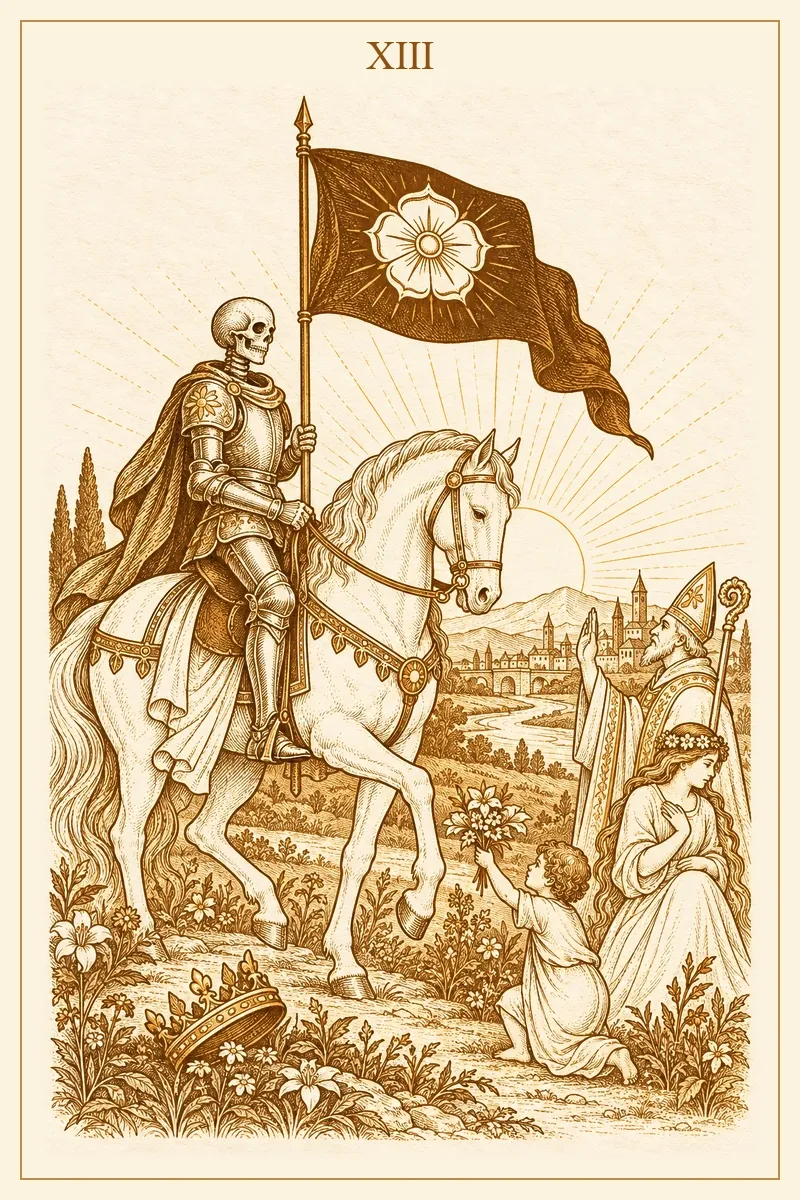
A skeleton in armor rides a white horse beneath a dark banner marked with a white rose. A crown lies fallen in the grass, a child holds out flowers and a bishop raises his hand, while the sun sits low behind a distant town.
Upright, Death in this question is rarely literal. It means the relationship as it was has finished its cycle. Even if contact came later, it would be a changed person in a changed situation, not the past walking back through the gate. The Death tarot meaning covers why the card speaks of transformation far more often than loss.
Reversed, it usually shows resistance to an ending that has already happened: rereading old messages, or postponing grief so that hope can stay. Letting the ending be real is often what makes room for something new.
Ten of Swords: a hard ending not to reopen
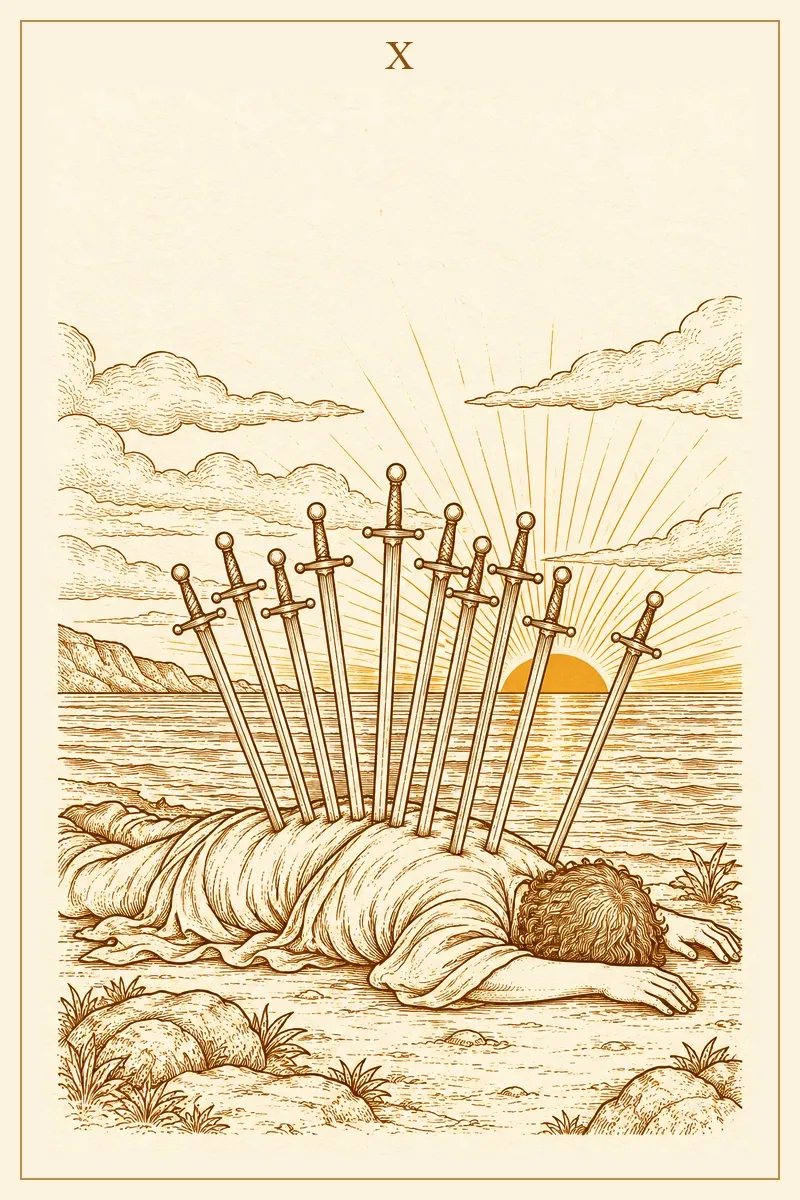
A figure lies face down on the shore with ten swords standing in their back, while the sun rests on the line of the sea and its rays fan across the sky.
Upright, the Ten of Swords describes a painful finish, sometimes involving betrayal or a final, crushing argument. Hoping for a reunion here would mean hoping to go back to what hurt you. The sun on the horizon matters too: the worst has already happened, and recovery can begin. The Ten of Swords meaning looks at rock bottom and the turn that follows it.
Reversed, you are getting back on your feet, slowly. It can also show the wound reopened again and again in memory, which is a cue to seek support rather than another reading.
The Tower, The World, the Eight of Cups and the Three of Swords
The Tower says the structure fell because something underneath could not carry it; going back without changing that invites the same fall. The World marks completion: the relationship gave what it had to give, and reversed it may ask for a small ritual of closure. Eight of Cups shows someone who has already turned away; if it describes them, do not build your plans around their return, and reversed it can show drifting back out of fear rather than choice. Three of Swords warns that going back now would reopen a wound, and the grief deserves time of its own.
Reading timing without inventing a date
The next question is usually "when?" Some readers link suits to units of time, others link cards to seasons or zodiac signs, and the systems disagree, so one card can mean days in one book and months in another. Treat them as frames for reflection rather than schedules; the guide to tarot card timing sets the main systems side by side.
It is more useful to read conditions. Temperance and The Star describe returns that come after healing, so the honest timing is "after both people have changed." The Moon says timing cannot be judged until more is known. Asking "what would need to happen first?" gives you something to watch for in real life.
If you want a time frame, set it yourself: a check-in date four to six weeks away, and a decision about what you will do then, whatever has happened. That gives the waiting a shape and stops the daily redraw.
Keeping hope from bending the cards
Ask a question that includes you. "Will they come back?" leaves you only one role: waiting. "What do I need to understand while I wait to hear from them?" gives the cards room to say something you can act on.
Notice when you start bending meanings. If the Five of Cups becomes "they are sad without me" and The Tower becomes "their new relationship will collapse," you are reading your hope, not the cards. Step away for a day, or ask a friend to look at the spread with fresh eyes.
Give the "away" cards a fair hearing. If Death or the Ten of Swords appears, sit with it before shuffling again. Drawing until a kinder card turns up teaches you only that you can keep drawing.
The open gate spread: five cards for the waiting time
Use this spread when you are waiting to hear from someone and want a clearer view of yourself as well as the situation. Write the question first, for example: "What do I need to see about waiting for them, and what can I do for myself meanwhile?" Lay the cards in a row.
- Where things stand now: the situation today, not as it was or as you wish it to be.
- What I am hoping would come back: the thing beneath the wish, which might be the person, a shared routine or a version of yourself you liked.
- What keeps me at the gate: the hook, such as habit, fear, an unfinished conversation or an imagined scene.
- What a return would need to be good for me: the conditions, read as information rather than a forecast.
- What I can tend while I wait: one thing in your own life that deserves attention now.
Position 5 is the one to act on. If The Sun, The Empress or the Ace of Cups lands there, joy, care and feeling are already within reach, whatever the other person decides. Position 4 is the one to reread if they do get in touch.
Worked example: seven weeks of silence
The reading below is invented to show the method; it is not anyone's real session. Someone's partner ended things seven weeks ago. Apart from one "happy birthday" text, answered with a short thank-you, there has been no contact. They ask the question above and draw:
- Where things stand now: The Moon.
- What I am hoping would come back: Six of Cups.
- What keeps me at the gate: Seven of Cups.
- What a return would need to be good for me: Judgement, reversed.
- What I can tend while I wait: Four of Swords.
The Moon says there is very little real information; one birthday message has been turned over so often that it now carries more weight than it can hold. The Six of Cups shows what the hope is really for: the easy, affectionate early months. Naming that matters, because a person returning now would bring the present relationship with them, not those months.
The Seven of Cups shows that the waiting is held in place by a reunion imagined at night more than by anything the other person has done. Judgement reversed shows what a good return would need and why it is not here yet: an honest talk about why things ended, which neither has started.
The Four of Swords is the practical answer: rest from checking their profile, sleep, and give the question a few quiet weeks. The reading does not say they will never return, and it says nothing about what they feel; it says the conditions for a good return are not visible yet. A sensible next step would be to mute their profile for a month and set a check-in date.
What to do while you wait
- Write your own answer first. Before any message arrives, decide what you would need to hear and see before letting someone back in, so relief does not decide for you.
- Mute instead of monitor. Checking their profile feeds The Moon's fog; muting simply gives your attention back to you.
- Feed the parts of life that do not depend on them. Friends, sleep, movement and work you care about are where The Star's hope gets rebuilt.
- If they do come back, go slowly. Contact begins a conversation; it does not settle the question. The guide to reconciliation tarot cards looks at telling a healthy second chance from the same pattern returning.
- If the cards keep pointing away, listen. When Death, the Ten of Swords or the Eight of Cups keep appearing, the work may be closure, and tarot for letting go offers gentle practices for releasing someone at your own pace.
If the waiting is affecting your sleep, work or sense of safety, talk to someone you trust or a counselor.
Frequently Asked Questions
Can tarot tell me if my ex will come back, or when?
No. A card cannot know what someone else is thinking, feeling or planning, and no spread can name the day they get in touch. What a reading shows is the shape of your situation and how you are holding it. Whether they return, and when, is answered only by what they actually say and do.
Which card most strongly suggests someone is coming back?
The Six of Cups is most often linked to someone from the past getting in touch, and Judgement to a considered second chance. Neither works alone: a return card beside The Moon or the Four of Swords reads very differently from one beside the Two of Cups.
What does it mean if I keep pulling the same card about them?
A repeating card usually points to the theme you most need to face. The Six of Cups may mean memory is the real subject; Death or the Eight of Cups may be asking you to accept an ending. Notice, too, whether you are repeating the question in hope of a different card.
Should I reach out first if I draw return cards?
That is your decision; the cards are neither permission nor a prohibition. If you do, keep it simple and free of pressure, and be ready for any response, including none. If you hope a message will make them come back, waiting may be kinder to yourself.
How often can I ask about the same person?
Leave a few weeks between readings on the same question. Daily draws mostly mirror that day's mood and can keep the wound open. If you cannot stop asking, that urge is worth talking through with a friend or counselor.
Does this work for a friend or family member, not just an ex?
Yes. The same cards and spread apply when a friend has drifted away or a relative has gone quiet. Adjust the questions so they fit the relationship you actually had.
Whatever comes up the path
Asking whether someone will come back is also asking what to do with your love while you do not know. The cards can help you see what is real and what is hope, and choose how to spend the waiting.
Someone may walk back up the path one day, or the gate may simply stay open while you go on with your life; either way, you are allowed to stop standing at it. When you would like to look at your own situation, try a quiet reading with Veil Soul.