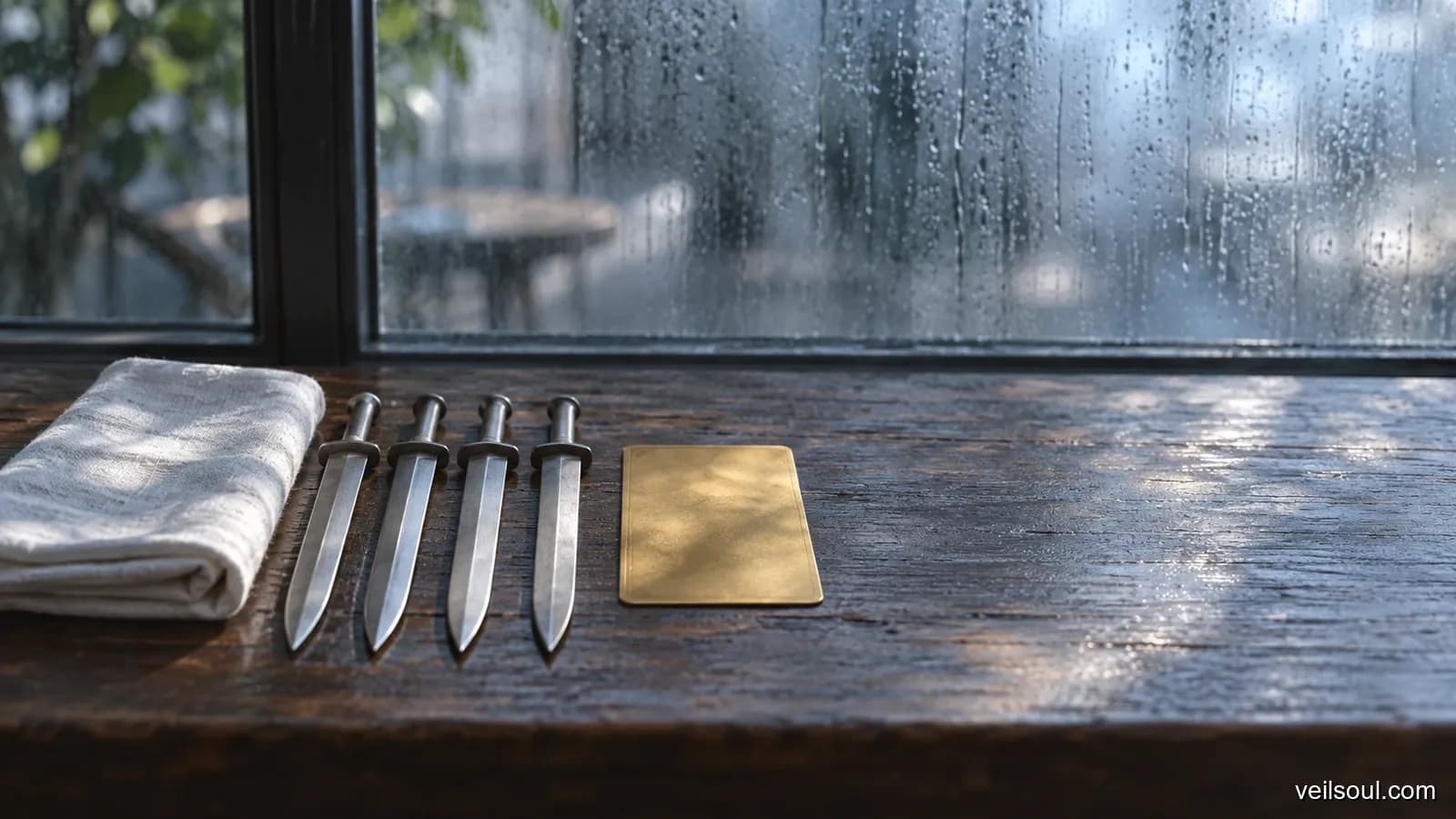
Stillness chosen on purpose is the heart of the Four of Swords. Upright, it reflects a stretch of rest, recovery or quiet thinking that you need after strain: a pause that lets the mind stop fighting long enough to heal. Reversed, it points to rest that is being refused or interrupted, a pause that has slid into avoidance, or the moment you are finally ready to get up again.
As a yes or no card it usually says "not yet": wait, recover, then ask again. Tarot works here as a mirror for your own situation rather than a forecast. It cannot tell you how long a recovery will take, what another person is privately thinking or how a decision will turn out. It can help you see whether this is a moment to act or a moment to lie down for a while.
- Upright keywords: rest, recovery, retreat, contemplation, a truce, a deliberate pause.
- Reversed keywords: restlessness, burnout, rest that is refused, hiding behind "needing space," or a recovery that is complete.
- Yes or no: upright, not yet; reversed, a careful yes once you are truly rested.
- In love: space, a cooling-off period, a heart that is still healing.
- At work: leave, a lighter load, a project on hold.
- Element and astrology: Air; Jupiter in Libra; traditional title "Lord of Rest from Strife."
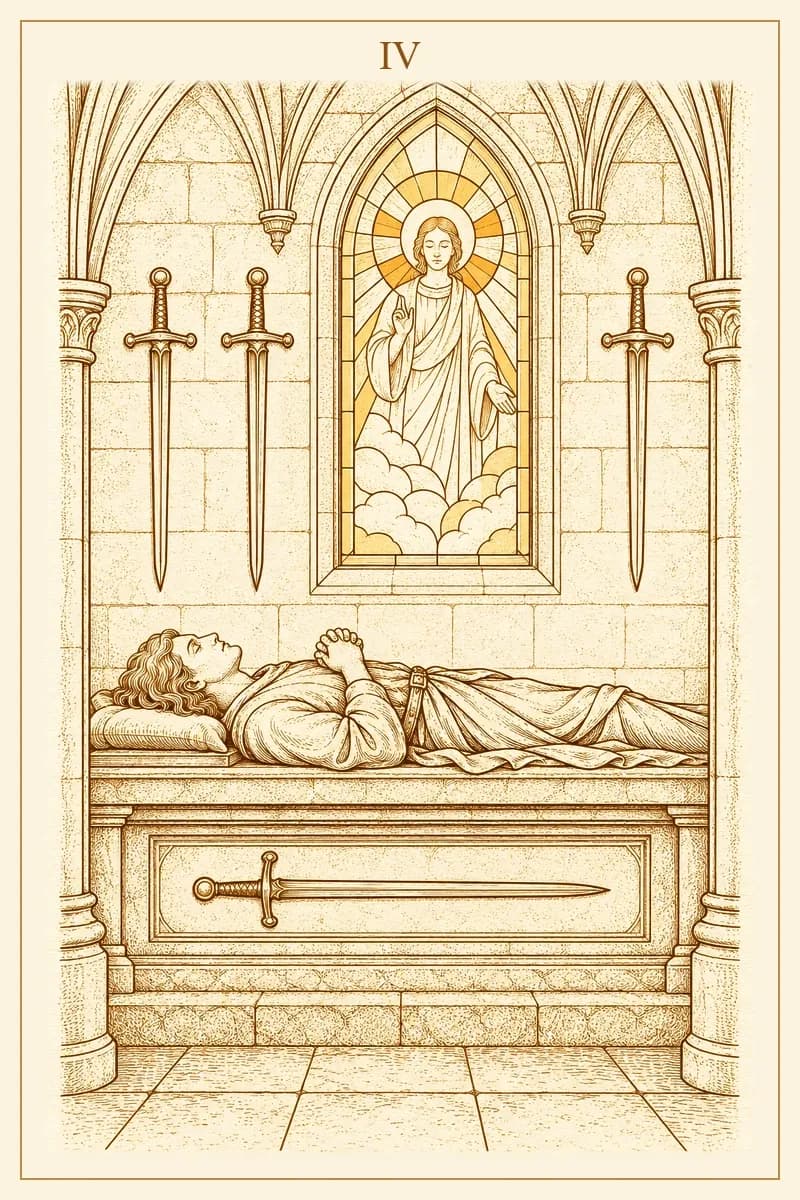
Three swords on the wall, one beneath the sleeper
A sleeper with folded hands
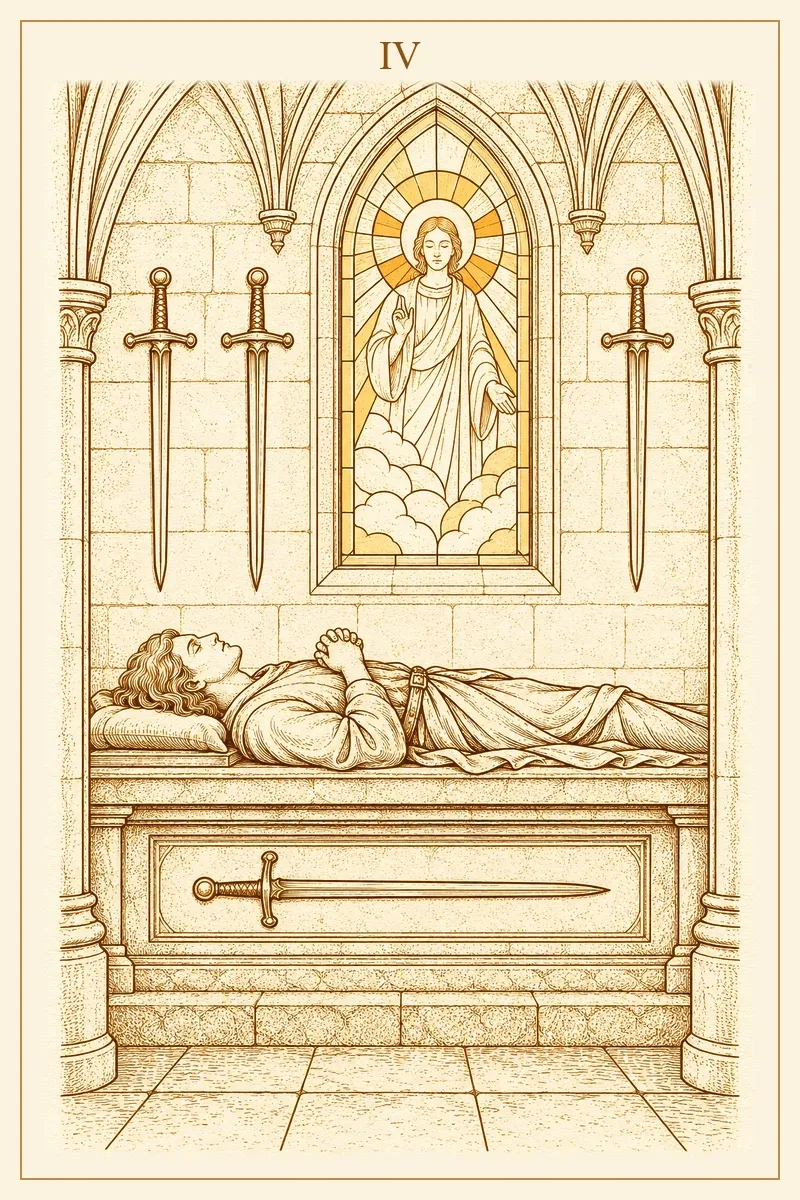
The card is set inside a stone chapel with pointed vaults and slim columns. A single figure lies stretched out on a raised stone slab, head on a soft pillow, long wavy hair spread around it. The eyes are closed and the hands are clasped on the chest as if in prayer. The figure wears a plain belted robe, with no armor and nothing in hand. The slab looks like a tomb, yet the pillow alone tells you this is sleep, not death: someone expects this person to wake up. Rest can feel like being taken out of the game, and the card answers that fear quietly. The body is still, but it is not finished.
Three blades hung up, one kept close
Three swords hang point-down on the wall, two to the left of the window and one to the right. They are not lost or broken, only hung up, the way a coat goes on a hook when you come home. In a suit about thought, words and conflict, they stand for the arguments, worries and decisions you have deliberately set aside for now.
The fourth sword lies flat, set into the carved front panel of the slab, directly under the sleeper. It is the one concern that comes along into the rest: close enough to keep in mind, laid down so it no longer cuts. It can be read as the issue you will return to first when you get up.
The window of gold glass
Above the sleeper, an arched stained-glass window glows gold. Inside it a haloed figure in long robes stands on clouds in a burst of light, one hand raised as if in blessing and the other held open. The window turns a place of sleep into a sanctuary: this rest is protected and, in a sense, approved.
The Four of Swords upright: rest you choose before it chooses you
Upright, the Four of Swords asks for a pause before the body or the calendar forces one. It speaks to the time after a hard stretch, such as the grief of the Three of Swords or a long run of pressure, when the mind keeps replaying events that are already over. The card does not say quit. It says stop long enough to recover, so that whatever comes next is met with a clear head.
Recovery after a long strain
The plainest reading is recovery. A busy season has ended, a family crisis has passed or an illness is behind you, and your system has not caught up yet. The Four says recovery is part of the work, not a break from it: sleep, quiet mornings, fewer plans and fewer screens. If a guilty voice says you have not earned the rest, the card is a calm reply. The sleeper is not being lazy, only putting the swords where they cannot do more damage.
Thinking time, a truce or a planned retreat
Swords are the suit of the mind, so this rest is often mental. You may need to stop discussing a problem, stop researching it and simply let it settle; decisions made from exhaustion tend to repeat the old fight. The card can also describe a deliberate withdrawal, such as a retreat weekend, a few days offline or a truce in a disagreement. It is strategic, not defeated: a person who steps away from a quarrel to cool down is still in the relationship.
Four of Swords reversed: restless, hiding or ready to rise
The reversed Four of Swords is read in three main ways. The cards around it, together with your own honesty, decide which one applies.
Running on empty
The first reversal is rest refused. You know you are depleted, yet you keep going: one more late night, one more favor, one more week before the break. Sleep is thin, the mind will not switch off, and small things feel huge. It is a firm signal that the pause you keep postponing is getting more costly, not less.
When rest turns into hiding
The second reversal is a retreat that has lasted too long. What began as healthy recovery has become a way to avoid a conversation, a decision or a return to the world. "I just need space" can be true for a month and an evasion after six. If the issue the fourth sword represents has been waiting beneath the sleeper all this time, it is time to pick it up.
Getting up when recovery is real
The third reversal is the hopeful one: the rest has done its work. Energy is coming back, ideas arrive on their own, and you think about the next step with curiosity rather than dread. The sleeper is waking naturally, ready to take the swords down and use them with care.
Which reversal is yours?
Ask yourself one question: if you had a free week starting tomorrow, would you feel relief, escape or eagerness? Relief points to rest that is still needed and still refused. Escape points to a retreat that has become a hiding place. Eagerness points to a real return. A heavy neighbor such as the Nine of Swords, with its sleepless nights, usually confirms exhaustion, while a lively one such as the Ace of Wands often means you are ready to move.
Four of Swords yes or no, and when the pause ends
Upright, the Four of Swords leans toward "not yet." If you ask "Should I accept this offer, send this message, sign this lease?" the card suggests holding off until you are rested enough to decide well. If your question is about rest itself, such as "Should I take the leave?", the upright card is one of the clearest yeses in the deck.
Reversed, the answer follows the reversal you have. If the recovery is real, it is a careful yes: get up, but start slowly. If you are pushing through exhaustion, it is a no to whatever adds more weight. If the retreat has turned into hiding, it is a yes to the conversation you have been avoiding.
On timing, the card measures in recovery rather than dates, and things usually move again sooner than worry predicts and later than impatience wants. Readers who use astrological timing link it to the last ten days of Libra, roughly mid to late October. For single-card questions like these, the guide to setting up a clear yes or no tarot reading walks through phrasing and when to draw more than one card.
Four of Swords in love: space, silence and a slower heart
In love readings the Four of Swords is about space. Sometimes it is healthy and chosen, sometimes one person needs it more than the other, and sometimes it covers something that needs to be said. The card does not judge the distance. It asks what the distance is for.
Inside a relationship that needs air
Upright, for a couple, it often reflects a quiet period after conflict or stress: fewer big talks, more ordinary evenings, perhaps a few days apart. It can also describe a partner worn down by work, family or health who has less to give for a while. That pulling back is about energy, not love. Reversed, the quiet spell is ending: either the couple is ready to talk again, or one person is using "I'm tired" to dodge a conversation that keeps coming back.
Four of Swords as feelings: what the other person may be going through
When you ask how someone feels about you, the upright Four of Swords usually describes someone who is tired, overwhelmed or quietly processing. Their silence is more likely about needing to recover than about losing interest. They may care and still have no capacity to show it right now, and pressure tends to push them deeper into the chapel. Reversed, the feeling starts to move: they may be restless and conflicted, wanting contact but not ready for it, or coming back to themselves and starting to reach out again. In either case the most useful response is patience with a limit. Give space, and decide for yourself how long you are willing to wait without clear contact.
Hoping to reconcile: upright and reversed
For a question about getting back together, the upright card describes a cooling-off period. Both people are, at best, recovering, and nothing is decided. That is not a no, but reaching out during this pause often goes nowhere. Reversed, the time apart may be ending, and a calm, low-pressure conversation becomes possible. If you are weighing a reunion, the cards that tend to signal reconciliation show what to look for beside the Four.
Single, or healing from the last relationship
For single readers, the upright Four suggests the heart is still in recovery. If you have feelings for someone, this is a season for steadying yourself before confessing them. Reversed, readiness is returning, and curiosity about meeting someone is a good sign; swiping out of loneliness while still exhausted, though, reads as rest refused.
Work and money under the Four of Swords
Leave, lighter loads and projects on hold
Upright at work, the card points to time off, a reduced workload, a sabbatical or a project paused from above. If you are burning out, it is a clear nudge to use your vacation days or stop answering messages at midnight. It can also mean waiting on a decision; use that time to recover, not to refresh your inbox. Reversed, you are either coming back refreshed with clearer priorities, or refusing a break you badly need while your work quietly suffers.
Money: hold still, then decide
Financially, the upright Four favors a pause on big moves: no major purchases, investments or loans decided while you are exhausted or rattled. Gather information and decide when your head is clear. Tarot is not financial advice, but the instinct is sensible. Reversed, money worries may be keeping you awake; looking at the actual figures, with a qualified adviser if needed, usually quiets the mind more than another night of imagining them.
Sleep, the body and a mind that will not switch off
In health and wellbeing questions the Four of Swords is one of the strongest rest cards in the deck. Upright, it can reflect convalescence after illness or surgery, a need for better sleep, or the value of quiet habits such as meditation, gentle walks or lying down without a screen. Reversed, rest is disrupted: insomnia, a racing mind, brushing off a doctor's advice to slow down. The card cannot diagnose anything. If exhaustion or sleeplessness lasts, talk to a doctor; the card's job ends at reminding you to take those signals seriously. If silence itself feels impossible, try five quiet minutes instead of an hour you never begin.
Lord of Rest from Strife: Jupiter in Libra and the Swords sequence
In the Golden Dawn system that shaped much of modern tarot, the Four of Swords is titled the Lord of Rest from Strife and assigned to Jupiter in Libra, the last ten degrees of the sign. Libra seeks balance and fairness; Jupiter widens and eases. Together they describe the relief of a truce, weighing things up calmly after the scales have swung too hard.
Its place in the suit matters too. Before it comes the heartbreak of the Three, and the Three of Swords and the painful truths it names explain why rest is needed at all. After it comes the Five of Swords, a card of conflict and hollow victory; the Five of Swords and its quarrels show what can happen when someone takes the swords back down too soon, still angry and not yet healed. To see where this card sits among all seventy-eight, browse the full Veil Soul card library.
Cards that lie down beside the Four of Swords
With The Hermit: solitude that teaches
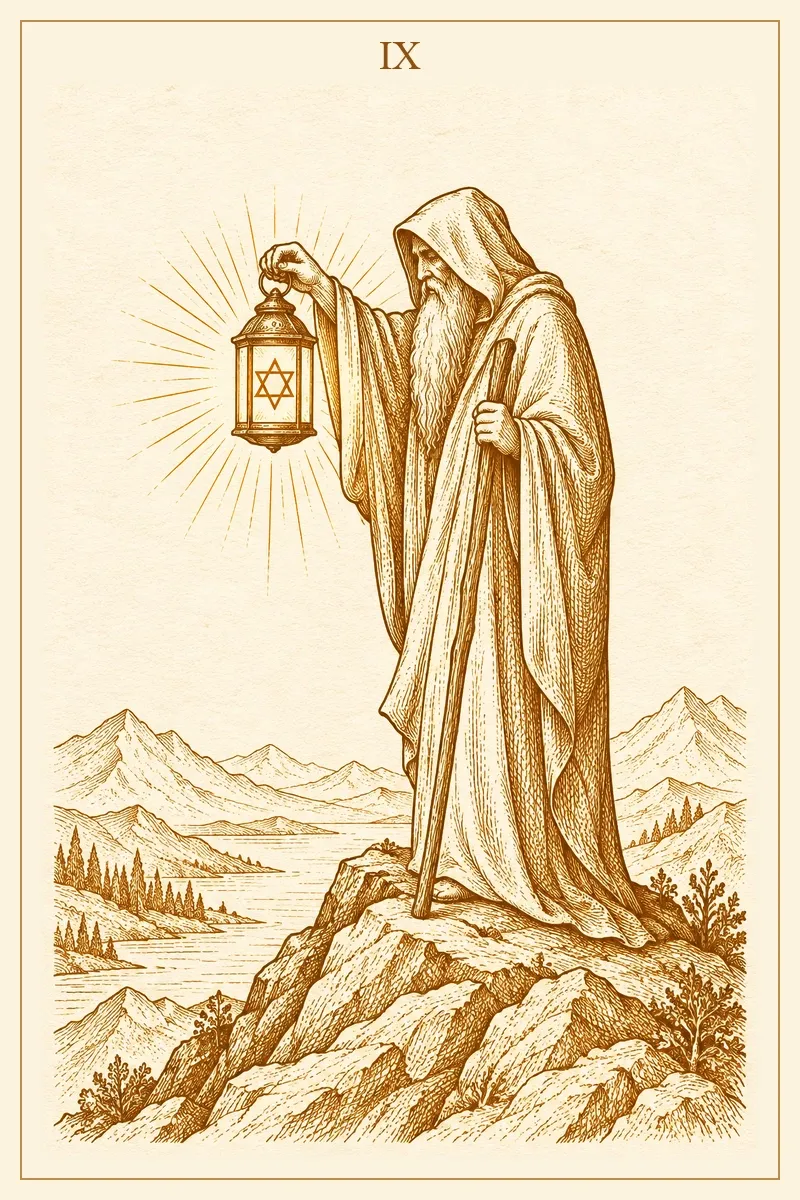
The Hermit stands alone on a rocky peak above a lake, lantern raised, a six-pointed star shining inside it. Paired with the Four, it describes a longer withdrawal chosen for wisdom as much as for rest, so do not rush back. The Hermit's meaning of solitude and inner light covers how that teaching tends to arrive.
With The Chariot: rest before the push
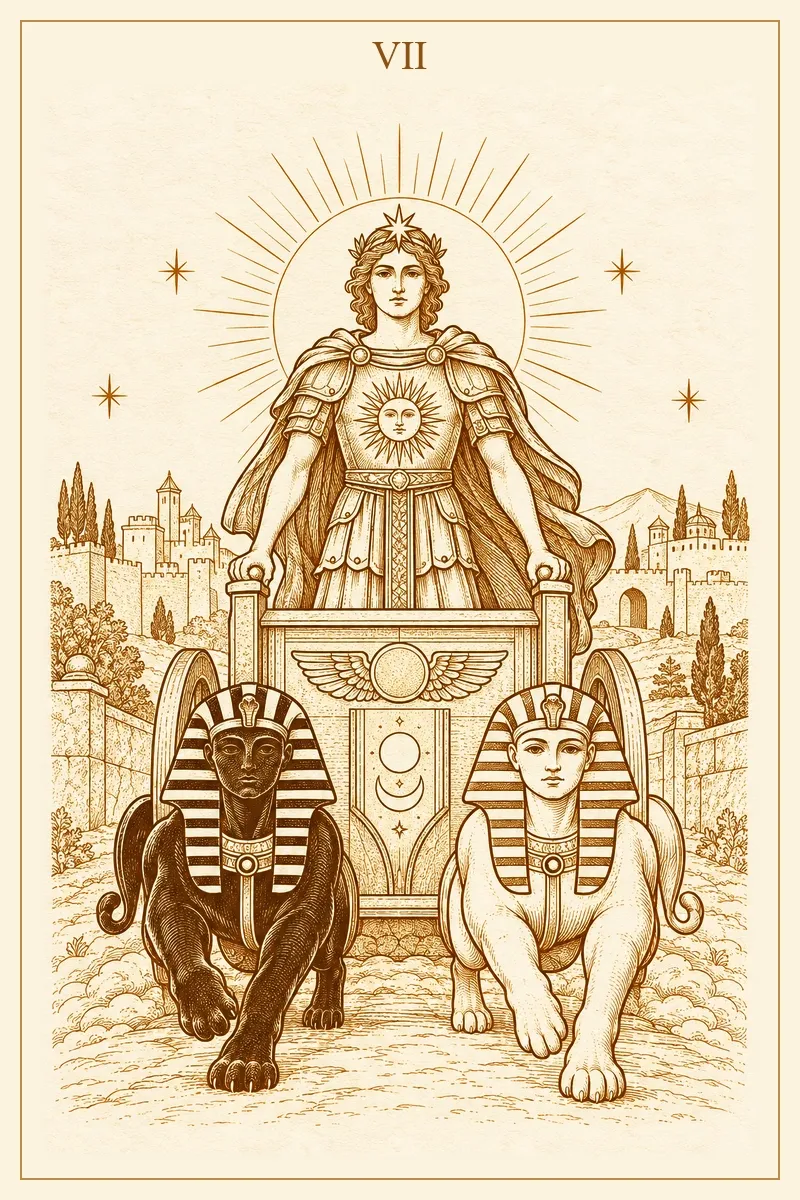
The Chariot shows a driver crowned with a star, a sun on the breastplate, standing in a car drawn by two sphinxes, one dark and one light. Beside the Four, it says rest now so you can move at full strength later. The Chariot's lesson in willpower pairs naturally with this card's lesson in pausing.
With Strength: the courage to stop
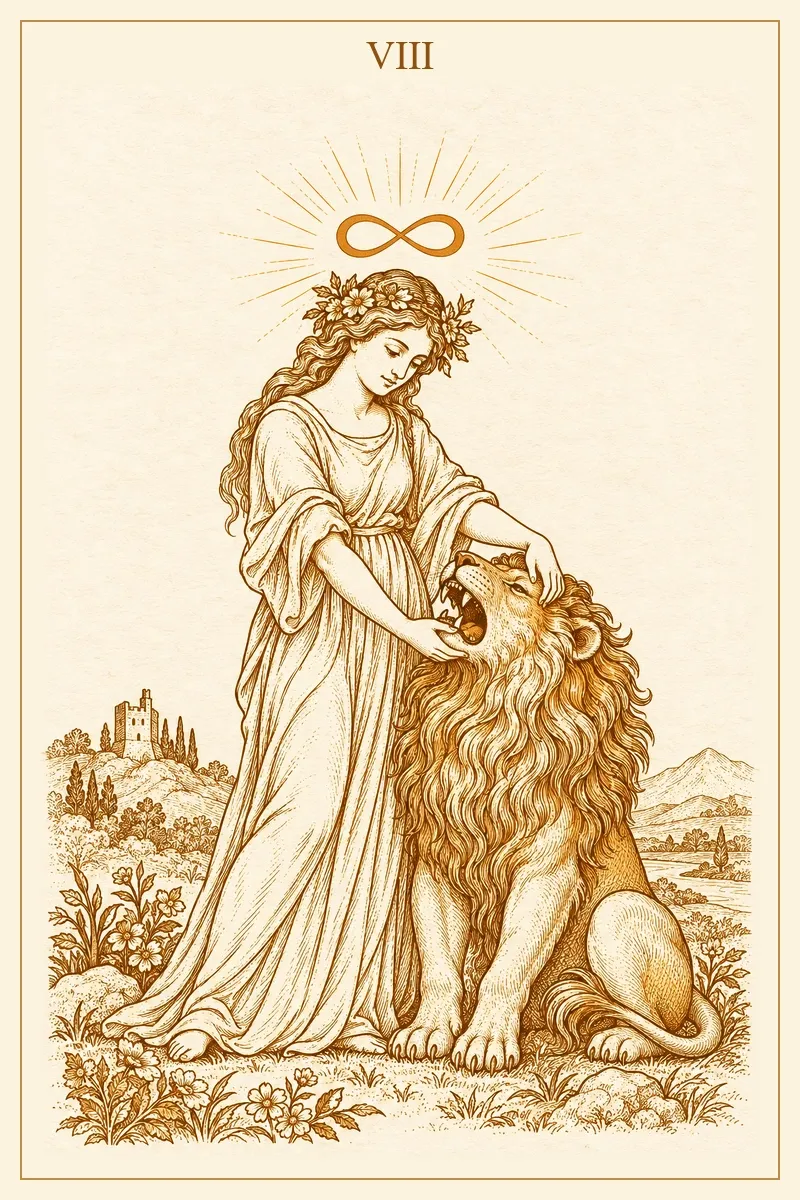
On Strength, a woman crowned with flowers, an infinity sign above her head, calmly holds a lion's jaws in her hands. With the Four, it says that stopping is a form of courage: the strongest move may be to stop fighting and let healing happen. Reading Strength as patience and quiet power shows why gentleness, not force, settles the lion.
With The Sun: recovery that opens into joy
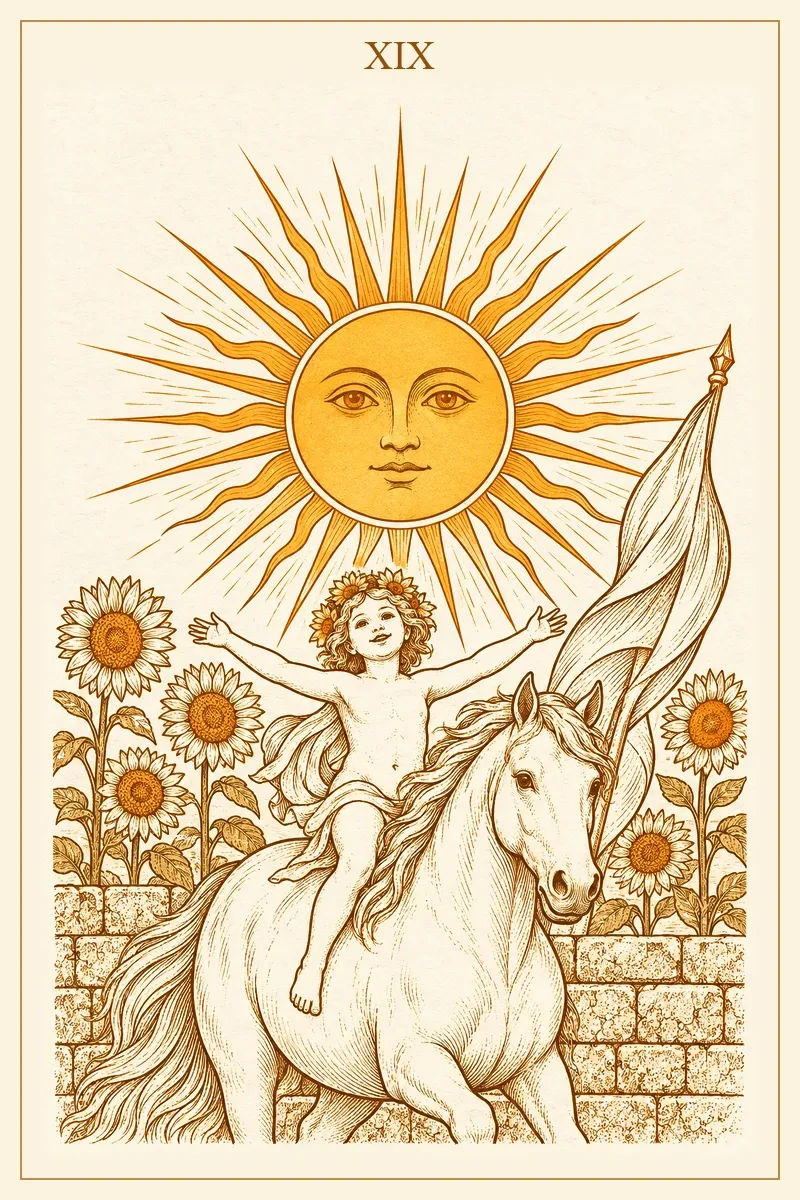
The Sun blazes over a child crowned with flowers, arms wide on a white horse, sunflowers rising behind a brick wall. With the Four, the rest is temporary and leads somewhere bright. The Sun's meaning of joy and vitality describes what that return can look like.
With the Ten of Wands: put the load down
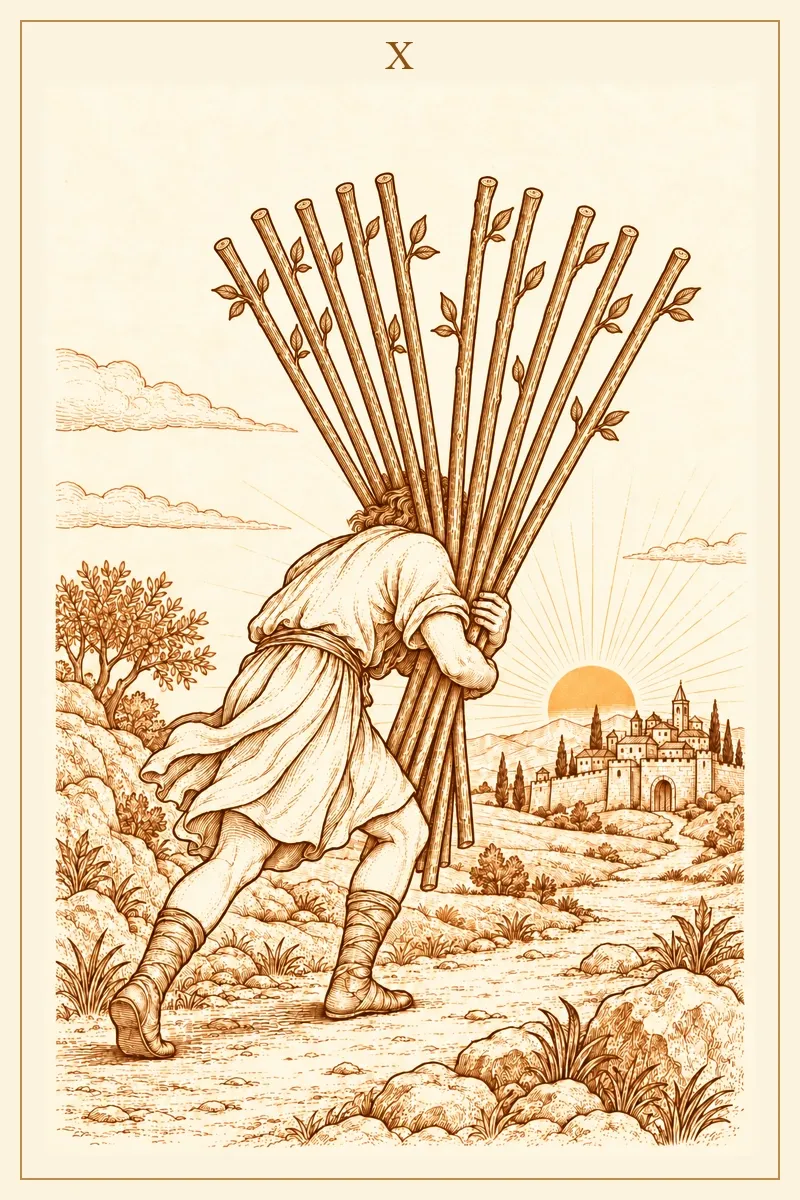
On the Ten of Wands, a figure bends forward under ten leafy staves, face hidden behind the bundle, walking toward a walled town. Beside the Four, it is burnout calling for rest: set some of the load down before your body makes the choice for you. The Ten of Wands and the weight of overcommitment helps sort out which staves are truly yours to carry.
The chapel spread: four cards for deciding whether to pause
This spread takes its positions from the card's own picture. Shuffle while thinking of the pause you are considering, then lay four cards in a row.
- The sword beneath the sleeper: the one concern that will come with you into the rest.
- The swords on the wall: what you can hang up for now without harm.
- The window: what restores you during the pause.
- The waking: the sign that the rest has done its work and it is time to get up.
A sample reading: two weeks of leave before a launch
One example: a graphic designer has been offered two weeks of leave before a big spring project begins, and she asks, "Should I take the leave now, or push through until after the launch?"
Beneath the sleeper she draws the Eight of Pentacles, the card of careful, repeated craft: her real concern is her reputation for quality, and she fears that stepping away will make her look less committed. On the wall comes the Knight of Swords, charging ahead at full speed; what she can hang up is the urge to fix everything before she leaves. In the window is The Star, a kneeling figure pouring water into a pool under a sky of stars, so she is restored by simple, slow things such as water, walks and unscheduled hours, not by a packed trip. In the waking position is the Ace of Wands, a single new spark.
Reading the four together
Read as one story, the spread favors taking the leave now. The worry about her craft is real, so she keeps it close, perhaps by writing a one-page handover so the project does not depend on her memory. She will know she is ready to return when ideas for the project start arriving on their own, the spark of the Ace, rather than when the calendar says so. The cards do not promise how the launch will go; they help her see that a rested designer is the better bet.
Before you get up: small ways to work with the Four of Swords
- Name the three swords. Write down the worries, tasks or arguments you can set aside for a set period, and put the list away.
- Name the fourth. Pick the one concern you will keep in mind and give it one short check-in a day instead of constant attention.
- Schedule the pause. An afternoon or a weekend on the calendar is far more likely to happen than "when things calm down."
- Lower the input. Fewer screens, opinions and decisions for a while.
- Set a check-in date. Decide when you will look again at the question you paused, so the rest does not quietly turn into avoidance.
A few questions to sit with: When did you last rest without guilt? Which battle could you hang on the wall for a week? What is your body asking for that you keep postponing? For more prompts like these, the Veil Soul question library gathers ready-made questions about rest, timing and difficult decisions that you can take straight into a reading.
Frequently asked questions
Is the Four of Swords a good card or a bad one?
It is a gentle card. It rarely brings bad news on its own; it reflects a need for recovery, which can feel frustrating when you want to move fast. It can also be read as protective, a pause that prevents a bigger mistake.
What does the Four of Swords reversed mean, in short?
One of three things: rest you are refusing while exhausted, a retreat that has turned into avoidance, or a recovery that is complete and a return to action. Your energy level and the surrounding cards tell you which.
Does the Four of Swords mean illness or a hospital stay?
Traditionally it is linked with convalescence, so it can turn up while someone is recovering. It does not predict or diagnose illness. If you are worried about your health, a doctor is the right person to ask.
How is it different from the Two of Swords and The Hermit?
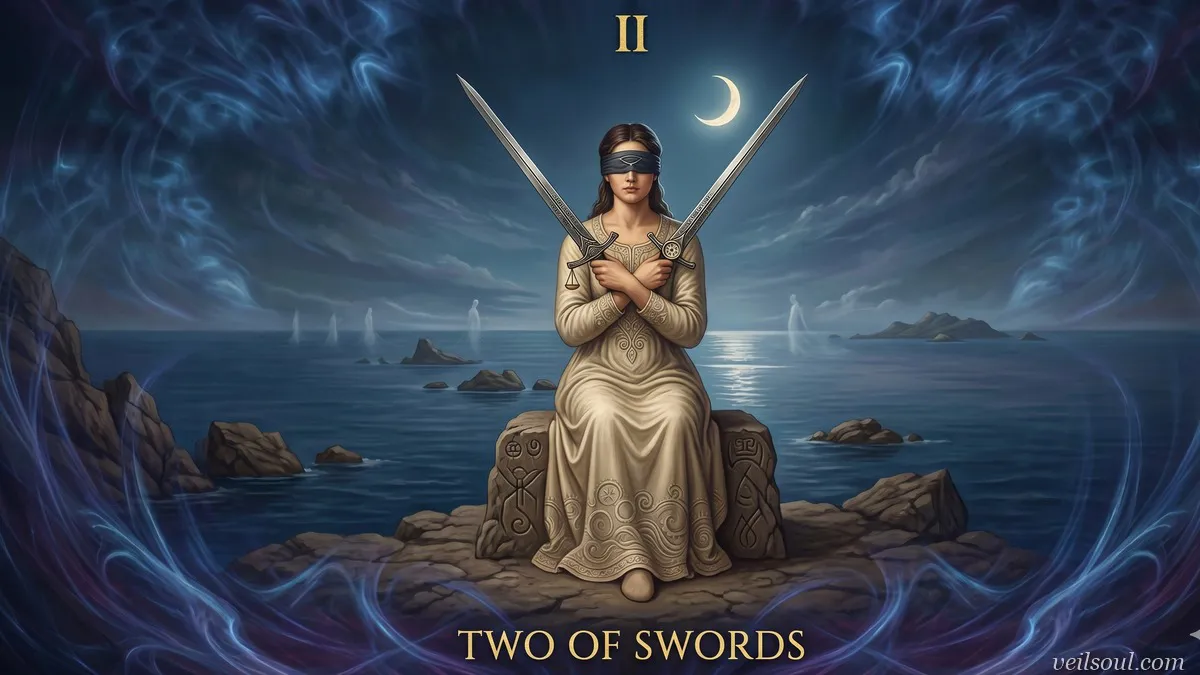
On the Two of Swords, a blindfolded woman sits by the sea with two crossed blades held against her chest: a stalemate, avoiding a choice by refusing to look. The Four closes its eyes for recovery, and the rest is chosen. The Hermit is a longer, seeking solitude; the Four is a shorter, healing one.
Can the Four of Swords tell me what someone thinks during no contact?
No card can confirm another person's private thoughts or say whether they will reach out. The Four can describe the mood around the silence, more often tiredness or processing than indifference, and help you decide how much space to give and how long you are willing to wait.
Hanging up the swords for tonight
The Four of Swords is permission, not a verdict. The swords will still be there tomorrow, and you will handle them better rested. When you would like to look at your own pause more closely, you can lay out a reading on your own question whenever you are ready.