Tarot can help in a long-distance relationship by showing you how you really feel about the distance, what keeps the connection alive, what is worth talking about next, and how to think through timing questions such as the next visit or a move. It cannot prove what your partner feels, whether they are faithful, or whether they will come back; only their words and actions over time can show that. Used this way, a reading becomes preparation for an honest call rather than a verdict on someone you cannot see.
Below you will find the cards that come up most often, upright and reversed, signs of moving closer and of “not yet”, good questions, a six-card spread, an example reading and practical next steps.
At a glance, these are the cards that most often appear in long-distance love readings:
- Two of Cups: a mutual bond you both keep choosing.
- The Star: hope through a long wait.
- Ace of Cups: feelings opening or deepening.
- Knight of Cups: a heartfelt message or visit on its way.
- Six of Cups: shared memories that keep warmth alive.
- The Lovers: a conscious choice based on shared values.
- Eight of Cups: tiredness with the current arrangement.
- The Moon: doubt growing in the gaps between messages.
- Three of Swords: the ache of missing someone.
- Four of Cups: withdrawal, or not noticing care being offered.
- Four of Wands: homecoming and a welcome.
- Eight of Wands: messages and travel picking up speed.
- Six of Swords: a journey toward calmer ground.
- The World: a chapter completing; long journeys.
- The Sun: the joy of being together.
- Ten of Cups: a shared picture of home and belonging.
- Six of Wands: a milestone, such as a plan that works out.
- Four of Swords: rest before the next decision.
- The Hanged Man: waiting and a new perspective.
- Seven of Swords: something unspoken; trust worth discussing.
- The Devil: anxious attachment and checking.
- Five of Cups: grief outweighing what is still there.
How tarot fits a long-distance relationship
Distance changes the questions people bring to the cards. A reading is well suited to the inner side of it: noticing that you feel lonely rather than suspicious, that you miss ordinary routines more than grand gestures, or that you have been avoiding a talk about who might move. It helps with the shared side too, as long as each card becomes a topic to raise with your partner rather than a fact about them.
Choose one focus per reading, because a check-in on your feelings, planning a visit and a worry about trust need different questions. Mixed together, every card starts to look like an answer to the most frightening one.
Cards of connection across the distance
These cards describe the bond itself. Read them as a picture of what is working, so you can protect it, rather than as a promise that nothing will change.
Two of Cups: a bond you both keep choosing
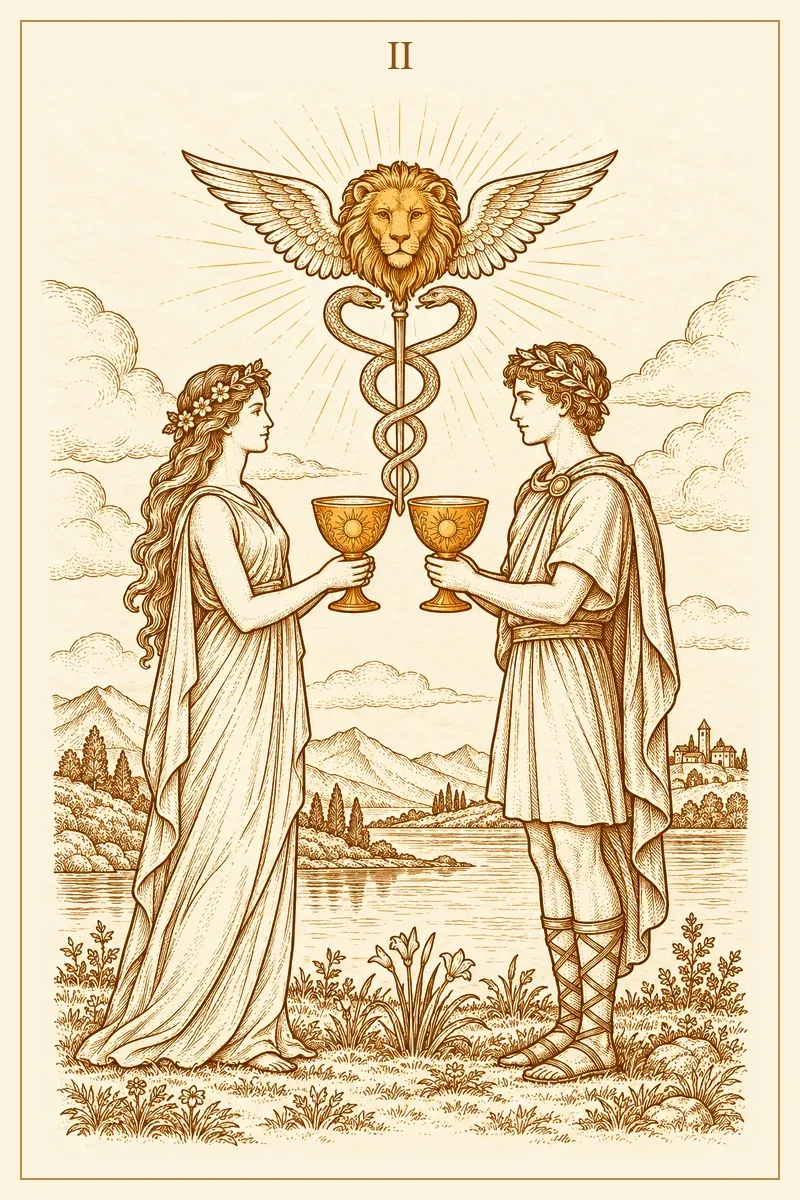
Upright, the Two of Cups shows two people offering each other a cup on equal terms. In a long-distance reading it points to reciprocity: both of you reach out and listen, and the effort is not carried by one side. Mutual care across a distance is made of small exchanges, such as an answered message, a call kept on a tiring day, or a visit both people plan. The full Two of Cups tarot meaning covers the card beyond love questions.
Reversed, the Two of Cups can point to imbalance or a missed connection. Perhaps one of you always adjusts to the other's time zone, or calls have shrunk to logistics. It does not mean the feeling has gone. Name the gap plainly, for example “I miss talking about us, not just about our week”; often the repair is a change in rhythm rather than a dramatic decision.
The Star: hope through a long wait
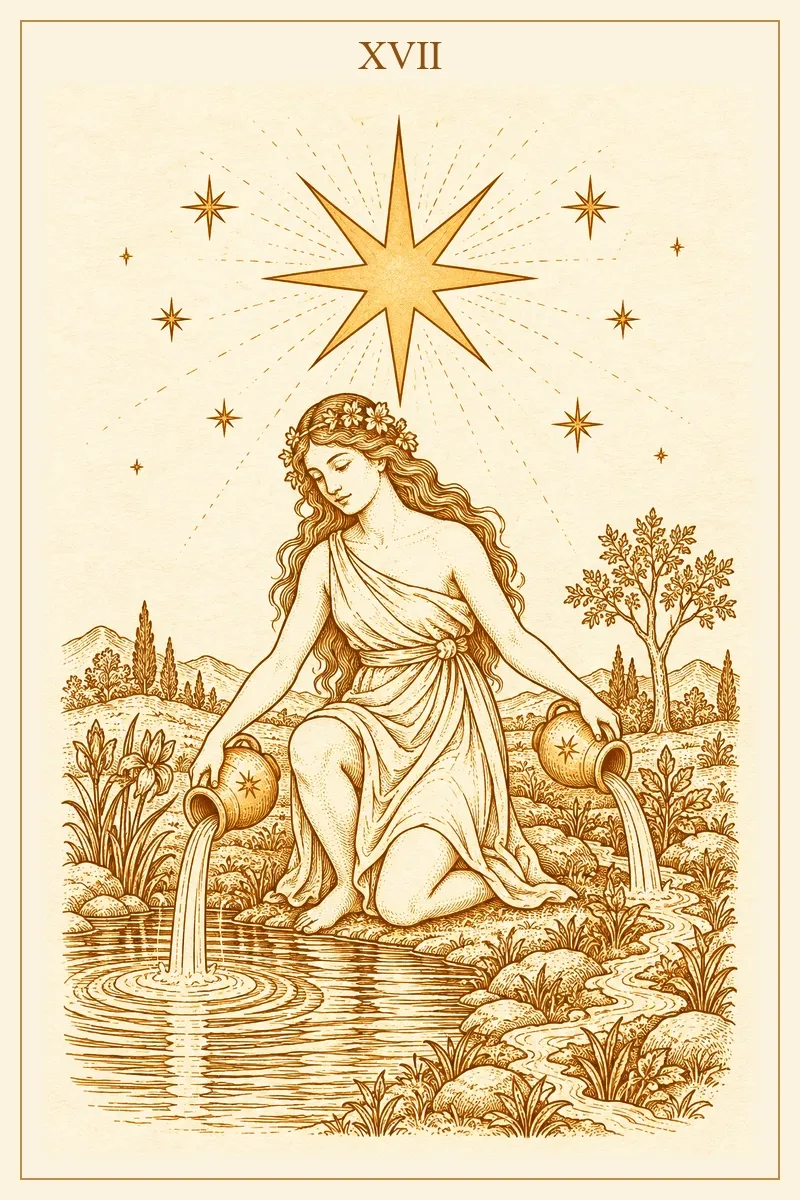
The Star follows the upheaval of The Tower in the Major Arcana and carries the feeling of quiet renewal after strain. For couples who live apart, it describes the hope that keeps the relationship going between visits. Upright, it can affirm that this hope is grounded, especially when it rests on concrete plans. You can read the full Star tarot meaning for its other contexts.
Reversed, The Star can show hope wearing thin: waiting without an end in sight, or no longer telling your partner how discouraged you are. It is not a sign that the relationship should end. It suggests hope needs something to rest on, such as a date for the next visit or a frank talk about whether the plan to close the distance is still real for both of you.
Ace of Cups. Upright, an emotional opening: new tenderness or a fresh start, perhaps after a long call or an honest letter. Reversed, feelings are being held back, or you are protecting yourself by not saying how much you care.
Knight of Cups. Upright, the knight brings an offer from the heart: a romantic message, an invitation, a proposed visit. He rides toward someone, so readers link him with a partner who makes care visible through effort. Reversed, sweet words lack follow-through; look at what is actually planned, not only what is promised.
Six of Cups. Upright, shared memories and simple kindness keep warmth alive between visits. Reversed, the relationship may live mostly in the past, in how the first trip felt, while the present goes unattended.
The Lovers. Upright, a choice aligned with your values: are you both choosing this relationship knowingly, costs included? Reversed, values may be pulling apart, for example one of you building a life with no room for the other. Name the choice openly rather than letting drift make it.
Cards of missing, doubt and communication
Distance brings its own kinds of pain. These cards describe them honestly, without assuming that something is wrong with your partner.
Eight of Cups: when the arrangement stops nourishing you
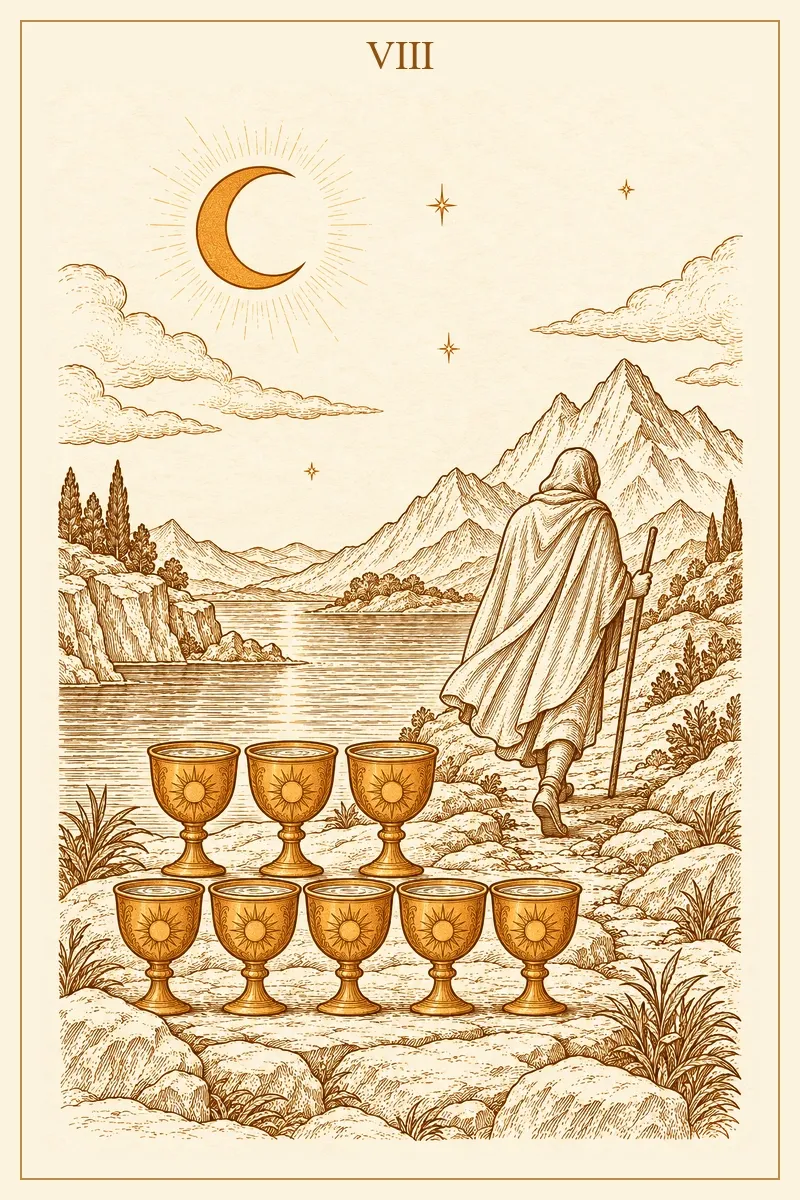
The Eight of Cups shows a figure walking away from a row of cups toward something uncertain. Its traditional meaning is leaving behind what no longer feeds you emotionally. In a long-distance reading that does not automatically mean leaving the person. Often it points to the arrangement: endless video calls, visits that always end in another goodbye, a plan with no end date that one of you is quietly tired of. The full Eight of Cups meaning explains the card in other areas of life.
Reversed, it can describe hesitation to leave a situation you already sense is not working, or a feeling that you are not ready to give up yet. Either way it asks what would have to change for the relationship to feel nourishing again, a question for your partner rather than a decision to make alone.
The Moon: doubt in the gaps between messages
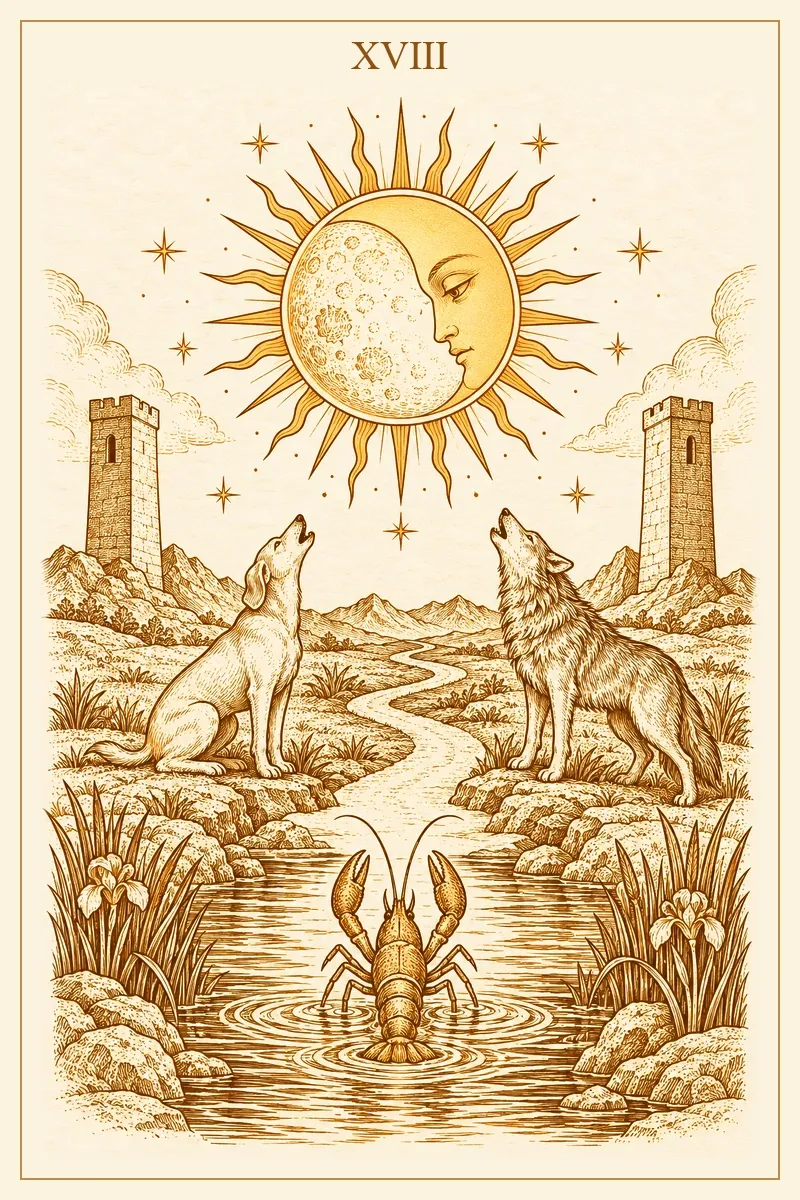
The Moon describes uncertainty, imagination and fears that grow in low light. Distance creates many such gaps: a reply that comes hours late, a night out you only hear about afterward, a time difference that means you sleep while their day happens. Upright, The Moon asks you to write two lists: what has actually happened, and what your mind has filled in. The full Moon tarot meaning goes further into its symbolism.
Reversed, The Moon often suggests confusion starting to clear or a fear ready to be spoken. Share it calmly and specifically: “When I don't hear from you for a whole day, I start imagining things. Could we agree on a quick goodnight message?” Asking for reassurance in a concrete form helps far more than asking the cards whether the fear is true.
Three of Swords. Upright, it is heartache: painful words, disappointment or grief. Here it may simply describe how much it hurts to miss someone, or a hard conversation that has already happened; on its own it does not mean betrayal. Reversed, it points to recovering from a hurt or releasing pain you have been holding in silence.
Four of Cups. Upright, it shows withdrawal: someone so absorbed in what is missing that they do not notice the cup being offered. Some partners go numb to cope with distance, or are too tired to take in the care that is arriving. Reversed, it suggests re-engaging and letting yourself want the relationship again.
Cards that hint at reunion or moving closer
These cards often appear when a visit, a move or a shared decision is in the air. Treat them as encouragement to plan, not as confirmation that the distance is about to end.
Four of Wands: homecoming and a welcome
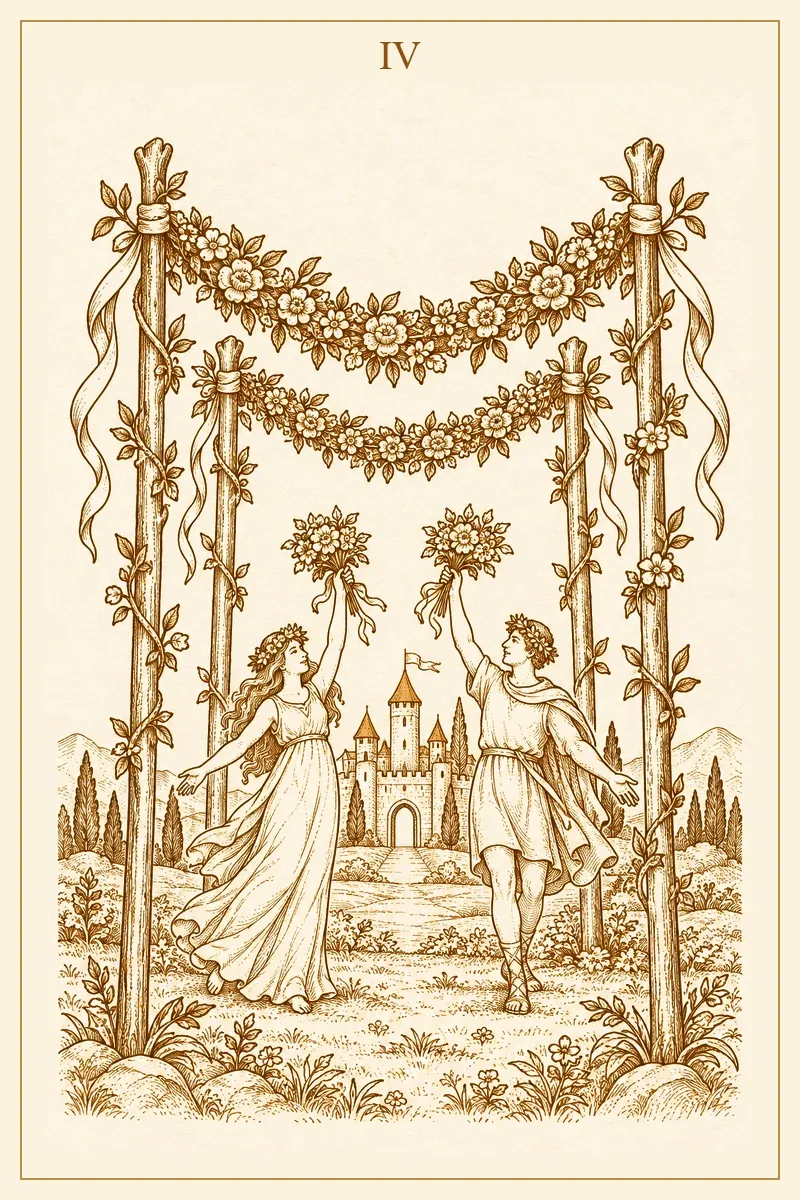
The Four of Wands shows a garland raised between four wands with people celebrating beneath it, which is why many readers see it as the clearest homecoming card in the deck. Upright, it can describe a visit that feels like coming home, a celebration you share, or the stability of one day having the same address. It invites you to picture home together in practice: which city, which routines. The full Four of Wands meaning covers its other readings.
Reversed, it can suggest a reunion that is delayed, a visit that feels tense, or uncertainty about where home will be. It is not a cancellation. Ask what makes the welcome difficult: practical obstacles such as money or paperwork, or emotional ones such as feeling like a guest in your partner's life.
Eight of Wands. Upright, messages, plans and travel come together quickly: calls become more frequent, tickets get booked, an offer arrives. Reversed, it points to delays or crossed messages, so confirm the details.
Six of Swords. Upright, a quiet passage across water toward calmer ground: an actual move or a transition out of a hard stretch of separation. Reversed, the move is postponed, or unresolved feelings are being carried into the next stage.
The World. Upright, completion and integration, traditionally also linked with long journeys. It may mark the end of the distance chapter. Reversed, something is unfinished, such as a contract, a course or a decision that needs closure first.
The Sun. Upright, a reunion that feels easy and bright, or clarity after a confusing time. Reversed, the joy is still there but clouded, perhaps by exhaustion or by pressure on a short visit to be perfect.
Ten of Cups. Upright, emotional fulfillment and a shared sense of home; it asks you both to describe the life you want once you are in one place. Reversed, your pictures of that life may differ, or the ideal has turned into pressure.
Six of Wands. Upright, a milestone and recognition: a visa approved, a transfer accepted, a plan that finally works. Reversed, recognition is delayed or a step feels less certain, so check the facts before celebrating or despairing.
“Not yet” and pause cards
Some cards suggest that the next step needs more time, information or rest. Read them as timing the two of you can plan around, not as the end of the story.
- Four of Swords: rest. Pause big decisions while one of you is exhausted or in a demanding season. Reversed, rest is overdue.
- The Hanged Man: suspension and a new perspective. A plan is on hold, perhaps because neither of you has decided who would move. Reversed, waiting may have turned into stalling.
- Reversed movement cards: the Eight of Wands or Four of Wands reversed point to delay, not to an ending.
If one appears, look for the conversation that needs to come first: “What has to be true before one of us moves?”
Cards that ask for an honest talk about trust
Distance can hide problems that daily life would bring into the open. These cards point to patterns worth discussing, and each can describe your own behavior as easily as your partner's.
Seven of Swords: something left unsaid
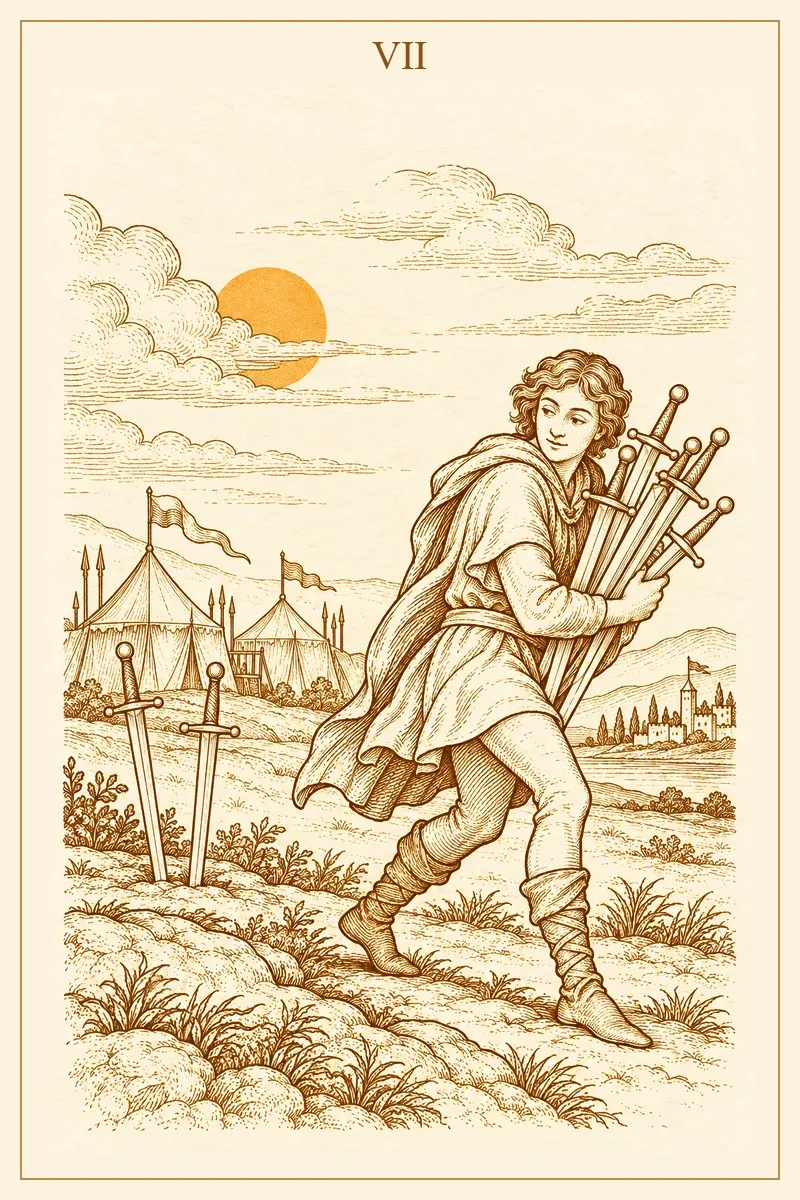
The Seven of Swords shows a figure carrying swords away from a camp and glancing back. It is about secrecy, strategy and acting alone. In a long-distance reading it can point to deception, but it can just as easily describe something left out of conversation: a worry not shared, plans made without asking, or your own habit of hiding how much you struggle. The full Seven of Swords meaning explains it in more depth.
Reversed, it often points to something coming to light, a confession, or a decision to stop keeping score in secret. If trust is the issue, have a direct, calm conversation about what each of you needs to feel secure, such as how you share plans or talk about new friendships. A real breach, if you learn of one, is information no card needs to confirm.
The Devil. Upright, attachment has turned into compulsion: checking their online activity or being unable to settle until you hear from them. The card asks you to notice the chain, which is often looser than it feels. Reversed, the habit is breaking. If you ever feel controlled or afraid, reach out to someone you trust.
Five of Cups. Upright, grief over three spilled cups while two still stand behind the figure: sadness about the distance has taken over, and what you still share goes unnoticed. Reversed, you begin turning back toward what remains.
Good questions to ask, and ones to avoid
Questions about your own feelings and your next step give you something to work with. Questions that ask the cards to spy, predict or decide on your partner's behalf tend to feed anxiety.
Questions that usually help:
- What do I need to feel secure in this relationship right now?
- What is keeping our connection alive, and how can I protect it?
- What conversation about the future are we avoiding?
- What would make our next visit feel good for both of us?
Questions that usually backfire:
- Is my partner cheating on me? A frightening image can damage trust that has done nothing wrong.
- Exactly when will we live together? That depends on decisions outside the deck.
- What is my partner doing right now, and will they come back to me? Both ask the cards to watch or decide for another person.
If your real question is whether your partner thinks about you, our guide to tarot cards that mean someone is thinking of you shows how to read that theme gently, moving from “what are they doing?” to “what do I want to ask them?”
A six-card long-distance relationship spread
Lay out six cards in two rows of three. Write your question before you shuffle and keep each position's meaning fixed, so a card cannot become a new answer every time your mood shifts.
- Our connection now: the current state of the emotional bond as you experience it.
- What sustains us: the habit, memory or quality that keeps this relationship meaningful.
- What the distance is teaching us: the lesson of this period, such as patience, trust, independence or clearer communication.
- The biggest challenge right now: the issue the distance creates that needs conscious attention.
- How to bridge the gap: something practical or emotional you can actively do.
- The path toward closing the distance: what moving closer asks of you both, and what still needs to be decided.
Read the top row as the state of the relationship and the bottom row as work you can do. A difficult last card describes the road, not the destination. For other layouts built around a partner, see our guide to love tarot spreads.
Example: a reading eight months apart
Imagine someone who has been apart from their partner for eight months, in different countries with a seven-hour time difference. They ask: “What do we need to understand about the next six months apart?” and draw:
- Our connection now: Two of Cups.
- What sustains us: Six of Cups.
- What the distance is teaching us: The Star, reversed.
- The biggest challenge right now: The Moon.
- How to bridge the gap: Eight of Wands.
- The path toward closing the distance: The Hanged Man.
The top row opens warmly. The Two of Cups says the bond feels mutual, and the Six of Cups shows it is carried by memories of their time together, hinting that the present may need more attention than the past. The Star reversed names what lies underneath: hope has been doing all the work, and waiting without a date has worn them down.
The bottom row makes this concrete. The Moon points to the anxiety that fills the hours when replies come late; they realize they have been reading the time difference as emotional distance. The Eight of Wands asks for speed and clarity: a quick message routine that fits both time zones, and booking the next visit now rather than “sometime in spring.” The Hanged Man shows the plan to close the distance is suspended because neither has said who would move. It is not a no; it invites a new angle.
So they bring three things to the next call: a goodnight-message routine, a proposal to book the next visit this month, and an open question: “What would need to happen for one of us to move, and how do you honestly feel about it?” The reading has not said whether the partner will move. It has helped them find the words to ask.
Practical next steps for the relationship
Agree on a communication rhythm. Perhaps a short daily check-in and one longer call a week that is not about logistics. Make it a shared agreement rather than a test, and say in advance when a busy week will change it, so silence does not turn into a story.
Keep a plan to close the distance. Even a rough plan helps: who could move, which job, study, visa or money steps are involved, and when you will revisit it. If you cannot agree on a plan yet, agree on a date to talk about it again.
Build trust through consistency. Trust grows when words and actions match over time. Say what helps you feel secure, and keep the small promises.
Share rituals lightly. Some couples pull a card each on the same evening and talk about it on their next call. If you want to read together over a video call, our guide to distance tarot reading explains how to set that up.
Keep a life of your own. Friends, work, rest and interests make the time apart lighter and give you more to share. If the distance leaves you constantly anxious or re-reading every message, step back from readings for a while and talk to someone you trust.
Frequently asked questions
Can tarot tell me if my long-distance partner is faithful?
No. Tarot cannot confirm another person's thoughts, actions or faithfulness, and it cannot give a date or guarantee an outcome. A card such as the Seven of Swords can point to secrecy as a theme, including your own, but it is not evidence. If you are worried, name the specific concern, talk to your partner, and notice whether their actions match their words over time.
Which tarot cards suggest reunion in a long-distance relationship?
The Four of Wands is the classic homecoming card. The Eight of Wands and Six of Swords point to movement and travel, The World to a completed chapter or a long journey, and The Sun and Ten of Cups to the joy and shared home that can follow. They are themes to plan around, not a confirmed reunion.
What is the best tarot card for a long-distance relationship?
The Two of Cups is the most reassuring, because it describes a bond both people are actively choosing. The Star is a close second, since it speaks to the hope that sustains a long wait.
Does the Eight of Cups mean my partner wants to leave?
Not necessarily. The card is about leaving behind what no longer feels nourishing, and in a long-distance reading that is often the arrangement itself: the endless waiting or the repeated goodbyes. It can reflect your own tiredness as much as your partner's. Beside withdrawal cards such as the Four of Cups, take it as a prompt to ask how you are both really doing.
How often should I read about my long-distance relationship?
A fuller reading every two to four weeks, with an occasional single card in between, is usually enough; daily multi-card readings tend to raise anxiety rather than clarity. Our guide to reading tarot for your relationship includes a check-in rhythm you can adapt.
Can tarot tell us when the distance will end?
It can help you reflect on what needs to happen first and how ready each of you feels, but the timing depends on real decisions and circumstances. Set a date to review your plan together and use readings to prepare for that talk.
Love across the miles
A long-distance relationship asks for trust without daily proof and plans without a fixed date. The cards can give that experience a vocabulary and help you notice what needs attention before it grows.
When you are ready to look at your own situation, try a calm love reading on Veil Soul and take what you find into your next conversation with your partner.