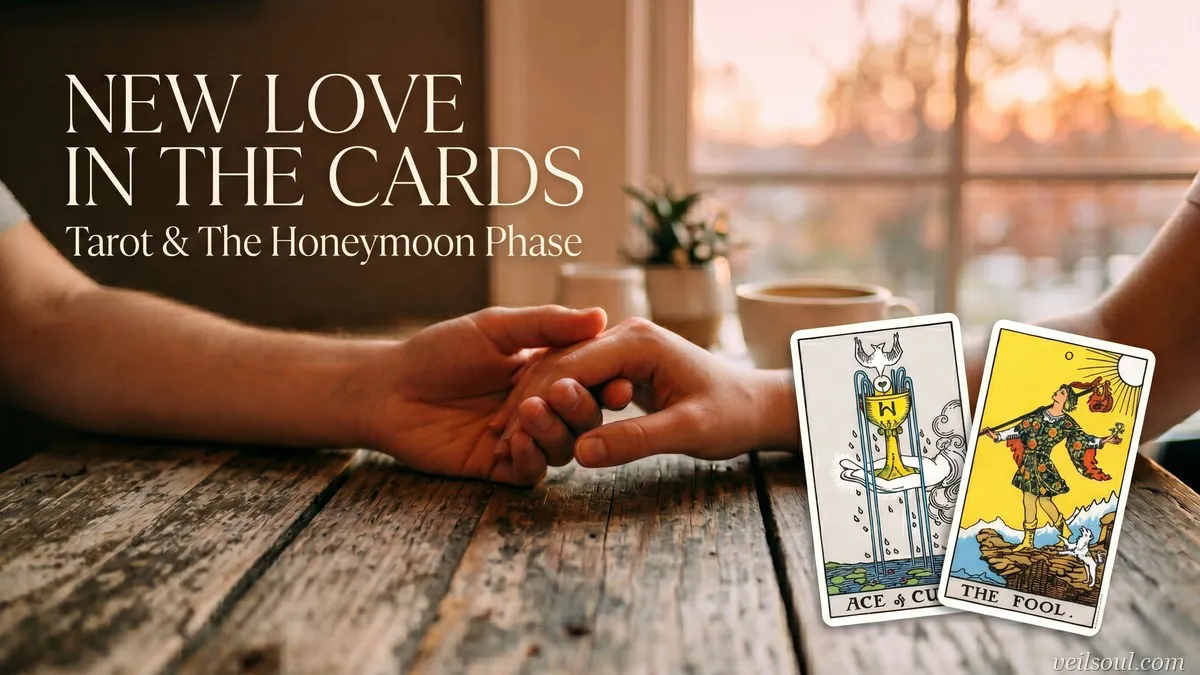


Tarot cannot confirm that someone is thinking about you at this moment. Cards such as the Two of Cups or Six of Cups can help you reflect on mutual connection or shared memories, but their meaning depends on the question, position and real-life context. If you need to know what a person feels, a respectful conversation offers evidence that a reading cannot.
It is natural to wonder whether you cross someone else's mind, especially after a meaningful conversation, a breakup or a stretch of silence. A tarot reading can give that uncertainty a shape. It can help you separate what you hope for from what you have actually seen, notice a pattern in the relationship and choose your next step without pretending to know another person's private thoughts.
At a glance, these are the eight cards readers most often explore for this question:
- Two of Cups: mutual attention and effort.
- Ace of Cups: emotional openness at a beginning.
- The Lovers: a meaningful choice about connection.
- Knight of Cups: an invitation or feeling put into motion.
- Six of Cups: memory and familiar affection.
- Page of Cups: tentative curiosity or a small message.
- The Star: hope, healing and a wider view.
- The Moon: uncertainty and the need to check assumptions.
What a tarot reading can tell you about this question
Begin by changing the question slightly. Instead of asking, “Are they thinking of me right now?” try “What am I noticing about this connection, and what would help me respond well?” The first question can pull you into guesses that cannot be checked. The second brings your attention to a relationship you are part of. That distinction matters when a warm card appears. The image may evoke closeness, but it does not verify that a message is on its way or that affection is returned.
Read each card through its position. A card in “my hopes” may say more about your wishes than about the other person. The same card in “our shared history” can point to what you know you experienced together. A card in “a useful next step” is advice about your conduct. Before interpreting any symbol, write down the exact question and the job assigned to that position. Otherwise it is easy to turn every pleasant image into a yes.
Notice the information that exists outside the spread. Has this person made time for you, replied openly, or said they want contact? Have they asked for space, been inconsistent, or ended the relationship? Those actions deserve more weight than an appealing card. If the evidence is mixed, the most honest reading may be mixed too. Tarot can help you stay with uncertainty without filling the gap with a story about telepathy or a secret promise.
There is also a difference between remembering someone and wanting a relationship with them. Two people may think fondly of the same afternoon and still want different futures. When you read, look for the kind of attention a card evokes: affectionate exchange, nostalgia, curiosity, uncertainty or a choice that needs to be made. Do not treat any one of these as proof of romance.
Cards that can evoke connection and affection
The Two of Cups is a natural place to start. Its theme is meeting one another, offering and receiving, and recognizing a relationship as something shared. In a position about your bond, it can invite the question: where have we actually met each other halfway? If both people have been initiating conversations and listening with care, the card may describe that reciprocity. If the exchange has been one-sided, it may instead show what you long for or what a balanced connection would require.
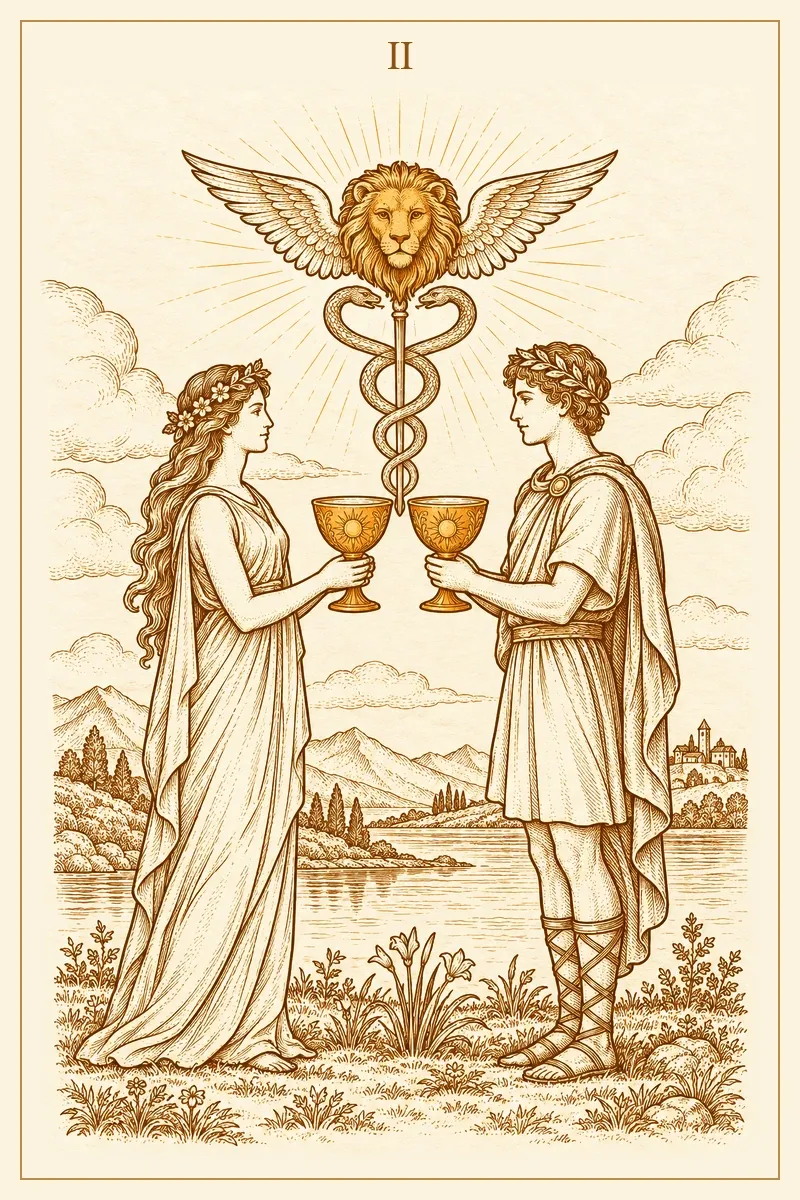
Upright, the Two of Cups is often read as an opening for dialogue, repair or mutual regard. Reversed, it can draw attention to a mismatch in expectations, a missed conversation or a need to restore balance. Compare the orientation with a concrete exchange: did both people follow up after a difficult conversation, or did one person keep carrying it? That pattern gives the card something specific to illuminate.
The Ace of Cups speaks of emotional openness and the possibility of a fresh feeling. When you ask about an existing connection, the ace may highlight your own readiness to feel more or to speak sincerely. It may also describe a tender atmosphere between you if there is observable warmth. As a beginning, the ace favors a modest, sincere gesture: thank them for an honest conversation, or notice whether you have room to receive affection without rushing its shape.
The Knight of Cups gives feeling a direction. Upright, this court card can suggest the courage to make a considerate invitation: not merely saying “we should meet sometime,” but offering a day and accepting that the other person may decline. In a reading about your own position, it may ask how you want to express care. In a shared-connection position, compare its movement with what has actually happened between you. A specific plan that both people help shape is more informative than a beautiful but vague compliment.
Reversed, the Knight of Cups can show that an appealing sentiment is moving faster than practical follow-through. Someone may speak warmly yet avoid choosing a time, or you may imagine a romantic conversation without deciding what you need to say. The useful question is not whether romance is secretly guaranteed; it is what steady action would make the expression trustworthy. Notice the pace, the consistency and whether an invitation leaves room for a genuine no.
When the Lovers appears, consider the value and choice at the center of the relationship. Attraction can be part of its meaning, but the card also asks whether a choice reflects what each person truly wants. For someone you know well, that might mean an honest discussion about whether to deepen the connection. For someone unavailable or unclear, it may mean choosing a course that respects both their boundary and your own needs. Put the choice into words you could actually discuss, such as whether you both want to make time for another meeting.
The Star speaks to hope after uncertainty. Upright, it can describe a gentle willingness to reconnect with what matters, whether that means a kind conversation or caring for yourself while a relationship remains unresolved. It is especially useful if you have been measuring your worth by another person's reply: the card widens the view beyond that one outcome. Reversed, hope may feel strained or become an ideal image of someone you rarely hear from. Ask what restores your own steadiness and which parts of the bond exist in the present. For more on the different ways readers frame a meaningful bond, see our soulmate tarot cards guide.
These cards are most useful when you name a concrete sign beside them. “We both proposed plans last week” gives the Two of Cups something to illuminate. “They have not responded to three messages” is equally important context. If the action and the symbol disagree, do not erase the action. You can hold the card as an invitation to explore your feelings while accepting the relationship as it is currently behaving.
Cards that speak to memory, curiosity and uncertainty
The Six of Cups often brings old affection or familiar places to mind. In a reading after a long silence, it may suggest that the history between you deserves attention. You might remember a moment of ease, a shared ritual or the person you each used to be. A gentle way to use this card is to ask what you miss and whether it belongs to the present or to the past. If you miss a shared ritual, for example, name which part of it brought you comfort and whether that need has a place in your life now.
The Page of Cups can point to a small emotional opening: curiosity, a tentative message, an apology being considered, or a feeling that has not yet found clear words. As a description of your own state, it may encourage you to be honest without making a grand declaration. As a description of the relationship, it asks you to notice modest gestures rather than invent a dramatic confession. A reversed Page can suggest awkwardness or fear of vulnerability. Consider whether a simple question, a pause, or a private journal entry would be the kinder response to that awkwardness.
The Moon calls for particular care in this question. Its themes include uncertainty, projection, dreams and feelings that are difficult to name. A vivid dream about someone can feel persuasive, especially when you miss them. The Moon encourages you to acknowledge that feeling and check what you actually know. You can record the dream and the emotion it stirred, then return to the next conversation or choice that is available in daylight.

Upright, the Moon may ask you to slow down while the situation is unclear. Reversed, it may mark a gradual clarification or reveal how a fear has shaped your interpretation. Neither orientation guarantees that a hidden truth will arrive on a deadline. You can make a small, kind choice in imperfect light: wait, ask one clear question, or decide that continued ambiguity is too costly for you.
These three cards are especially easy to overread after a breakup. A warm memory, a curious possibility and an uncertain night can all be present at once. If you pull them together, resist converting the combination into “they miss me and will return.” The more grounded reading is that memories remain meaningful, curiosity may be possible, and key facts are still missing. This leaves room for the other person's agency and for your own.
How upright, reversed and position change the reading
A card has a range of meanings; orientation is one clue within that range. Upright cards often express a theme more openly, while reversed cards may point to delay, imbalance, an inward experience or a blocked expression. The reversed Two of Cups could describe unequal effort rather than a permanent separation. A reversed Six of Cups might ask whether nostalgia is keeping you attached to an earlier version of the connection. The question and position decide which possibility is useful.
Try giving each card two sentences. First, state a symbolic reading without claiming private knowledge: “This card raises the theme of reciprocity.” Second, connect it to something observable or actionable: “I can compare how we each initiate contact.” This simple practice keeps a reading from sliding into “They thought about me at 9 p.m.” It also makes the result usable whether the relationship grows or ends.
Be wary of turning reversals into punishments. If the Moon is reversed in a position about your next step, the useful message may be to seek clarity rather than to fear betrayal. If the Ace of Cups is reversed, you might be guarding your own heart or trying to pour care into a connection that has little room for it. Neither image is a verdict on your worth. A reading should widen your options, not make you feel trapped by one interpretation.
If you do not use reversals, you can still ask the same questions. What is expressed? What is delayed? Which part is mine to act on? Consistency matters more than a particular technique. Decide how you will read before turning over the cards, and avoid changing the rule because the first answer is uncomfortable.
Combinations, timing and the temptation to seek a yes
Two cards can refine a theme. Two of Cups with Six of Cups can suggest that a shared past shapes how you approach each other: perhaps an old friendship makes a new invitation feel easier, or perhaps it makes an honest discussion more complicated. Page of Cups with the Moon can suggest a small, uncertain opening; it may be your hesitation, their ambiguity, or a situation in which neither of you has spoken plainly. The spread position and ordinary evidence help you decide what is most plausible.
The Lovers beside the Two of Cups can emphasize choice within a meaningful relationship. Ask what mutual choice would look like in practice: a conversation, an agreed plan, or clarity about whether you are both available. If only one person is doing the work, the cards might point to a conversation you need rather than a secret decision they have already made. Resist escalating “possible connection” into “destined partnership.”
Tarot timing is especially uncertain. A Page may evoke the wish to send a message, while the Moon may make an unanswered evening feel especially long. Neither changes the pace at which another person chooses to reply. If you are waiting, choose a real-world boundary you can live with: “I will send one invitation and then give them room,” or “I will reassess after two weeks without another reading.” That boundary protects your attention better than repeatedly drawing for a precise date.
Repeated pulls can also reinforce the answer you want. When a card disappoints you, reshuffling until a kinder one appears may soothe you briefly while making the situation harder to see. Write the first draw down, stop for the day and revisit it after new information appears. If you want to ask again later, use a new question about your own decision rather than demanding a fresh verdict on their thoughts.
A four-card spread for a clearer next step
This spread keeps the focus on what you can reflect on and choose. Before shuffling, name the relationship in one sentence and note one fact you know: “We enjoyed a close conversation, and neither of us has suggested another meeting.” If you are anxious, take a pause. You are allowed to put the deck away. A calm reading is more useful than an urgent one.
For other layouts focused on relationships and self-reflection, explore our love tarot spreads.
- What I know: What part of our connection rests on words or actions I can verify?
- What I may be projecting: Which hope, fear or memory could be coloring the situation?
- What deserves care: What does this connection need from me now, including respect for space?
- My next step: What choice can I make without requiring certainty about the other person's mind?
Suppose you draw Six of Cups for what you know, the Moon for projection, Two of Cups for care and Page of Cups for the next step. You might note a real shared history, admit that silence is inviting stories, value an exchange that works for both people, and send one simple invitation if contact is welcome. You would not conclude that the person is secretly planning to return. The spread has helped you act with warmth and proportion while leaving their answer open.
Another reader might draw the same sequence after being asked for no contact. Then “care” may mean honoring that boundary, and “next step” may be expressing a feeling privately in a journal rather than sending anything. A card's meaning is shaped by the ethical situation. No spread should be used to argue around a clear refusal.
After the reading, write one sentence in three columns in a notebook: card theme, known fact and chosen action. For example: “Moon: uncertainty; fact: no reply since Monday; action: wait until the agreed time before following up.” The record helps you see whether readings support thoughtful decisions or simply restart a loop of checking.
When to reach out and when to leave space
If the connection is open and you would welcome a conversation, a short message is usually clearer than another reading. You can say, “I enjoyed talking with you. Would you like to catch up next week?” It gives the other person a real choice. If you want to reconnect after a difficult period, acknowledge the history without demanding reassurance: “I've been thinking about our last conversation. If you would like to talk, I am open to it.”
Send a message because it fits your values, not because a card has promised a reply. Decide in advance what you will do if the answer is delayed, vague or no. A lack of response can be painful, but repeated attempts to decode it through tarot rarely make it more certain. Respecting the other person's pace and tending to your own life can happen together.
If the person has asked you not to contact them, honor that request. If you are unsure whether contact would be welcome, consider the history and the channels they have left open. A clear boundary is the information to act on here. You may need to grieve the unanswered question or seek support from a trusted friend rather than pursue another sign.
You can also choose not to reach out even when contact is possible. Sometimes the useful insight is that your longing deserves attention without requiring this person to respond. A reading can help you name the kind of relationship you want: consistent, reciprocal, kind. Then you can ask whether the current connection offers those qualities and what else in your life nourishes them.
Questions readers often ask
Which card means someone is thinking of me?
No single tarot card can establish that fact. The Two of Cups may evoke reciprocal attention, the Six of Cups memory, and the Page of Cups tentative feeling. Read them as themes to examine alongside the relationship's actual words and actions. If you need an answer from the person, ask them when it is appropriate to do so. If your deeper question is about the quality of care in the relationship, read our does he love me tarot guide alongside the actions you can observe.
How can I tell whether it is romantic or platonic?
The cards alone rarely settle that. Cups cards and The Lovers lean toward feeling and choice, while a card like the Six of Cups fits an old friendship just as well as a former partner. Read the card in its position, then look at the relationship itself: how the person speaks to you, what kind of time they suggest and whether either of you has named what you want. If the difference matters to you, it is a question worth asking them, directly and kindly.
Does the Moon mean we have a psychic bond?
The Moon can describe a powerful feeling of uncertainty or intuition. Dreams and coincidences may matter to you personally; use them to explore what the relationship awakens in you. Use the card to slow down and distinguish a feeling from a shared fact.
Do reversed cards mean they have stopped caring?
No. A reversal can suggest hesitation, imbalance or an inward process in the reading, depending on the position. Look for a pattern of communication and care over time. A reversed card may ask where you want clearer words or more balanced effort.
Should I keep reading until I get a clear answer?
If you keep asking the same question, more cards may amplify anxiety instead of resolving it. Record one reading and choose a pause before drawing again. During that pause, notice what actually changes: a conversation, an invitation, a boundary or your own willingness to live with uncertainty. If the same card keeps coming back, our guide to pulling the same card twice explains how to read the repeat.
A grounded way to leave the reading
A reading can help you notice what you value, where the relationship feels reciprocal and where you are carrying it alone. Keep the answer open until words and actions give it a shape. Let the reading lead to one honest, respectful action or to a deliberate pause.
Close the deck, name one fact and one feeling, then decide whether a simple conversation is welcome. You do not have to solve another person's thoughts to care for your own heart. The connection becomes clearer through what both people choose to say and do over time.
If you would like a moment to work through your own question with a spread, try a free reading on Veil Soul. Bring what you know, what you feel and the next step you can choose.