
Judgement, the Two of Cups, Temperance and Strength are the tarot cards most often read as signs that reconciliation is possible: an honest second call, warmth that still runs both ways, a slow rebuild, and the patience to try again without pressure. Death, the Eight of Cups and the Four of Cups lean the other way, toward closure or at least toward "not now." Even a hopeful spread describes conditions, not a verdict.
No card can confirm what your former partner thinks, feels or will decide, and no spread can set a date for a reunion. What a reading can do is help you look at what you already know: why the relationship broke, what has changed since, and whether going back would be good for you as well as possible.
This guide stays with the signs and conditions of reconciliation and with the harder question of whether it would be healthy. If the question on your mind is simply whether someone will return, the guide to reading "Will they come back?" works through that one on its own terms.
Leaning toward reconciliation, each card in one line:
- Judgement: a second call that asks both people to be honest about the past.
- Two of Cups: respect and feeling that still flow in both directions.
- Temperance: a gradual rebuild on new terms instead of a dramatic reunion.
- Strength: the steadiness to talk, wait or choose without forcing anything.
- The Star: hope returning after the hurt has eased.
- Six of Cups: shared history and tender memories pulling you back.
- Ace of Cups: a fresh emotional start rather than a rerun.
- Four of Wands: a return that feels like coming home to stable ground.
Counseling closure or a pause:
- Four of Cups: withdrawal, low energy, an offer not yet received.
- Eight of Cups: someone has already left inwardly.
- Death: the old form of the relationship has ended for good.
- The Tower: a foundation that could not hold.
- The World: a chapter that is complete.
- Ten of Swords: a painful low point that should not be reopened.
What a reconciliation reading actually weighs
Getting back together and reconciling are not the same thing. Two people can reunite because the silence hurts or because it is convenient, and nothing has to change for that to happen. Reconciliation means something was repaired. The hurt was named, someone took responsibility for their part, and both people agreed to do at least one thing differently.
That is why a useful reconciliation reading looks at conditions rather than at signs alone. Four conditions matter most. The first is mutual willingness: a reunion needs two freely given yeses, and one person's longing cannot supply both. The second is change you can point to, in behavior and not only in intention. The third is repair of the original wound. The fourth is your own well-being: would going back leave you steadier, or smaller?
The cards below speak to those conditions: Judgement and Strength to the inner work, the Two of Cups to mutuality, Temperance to the pace, and the closure cards to a condition that is missing. Read every card in the position where it falls: the same card says one thing about the past and another about the present.
Cards that point toward a healthy reunion
None of these cards promises that a former partner will reach out. Each describes a quality that makes a second attempt more likely to work.
Judgement: a second call that asks for honesty
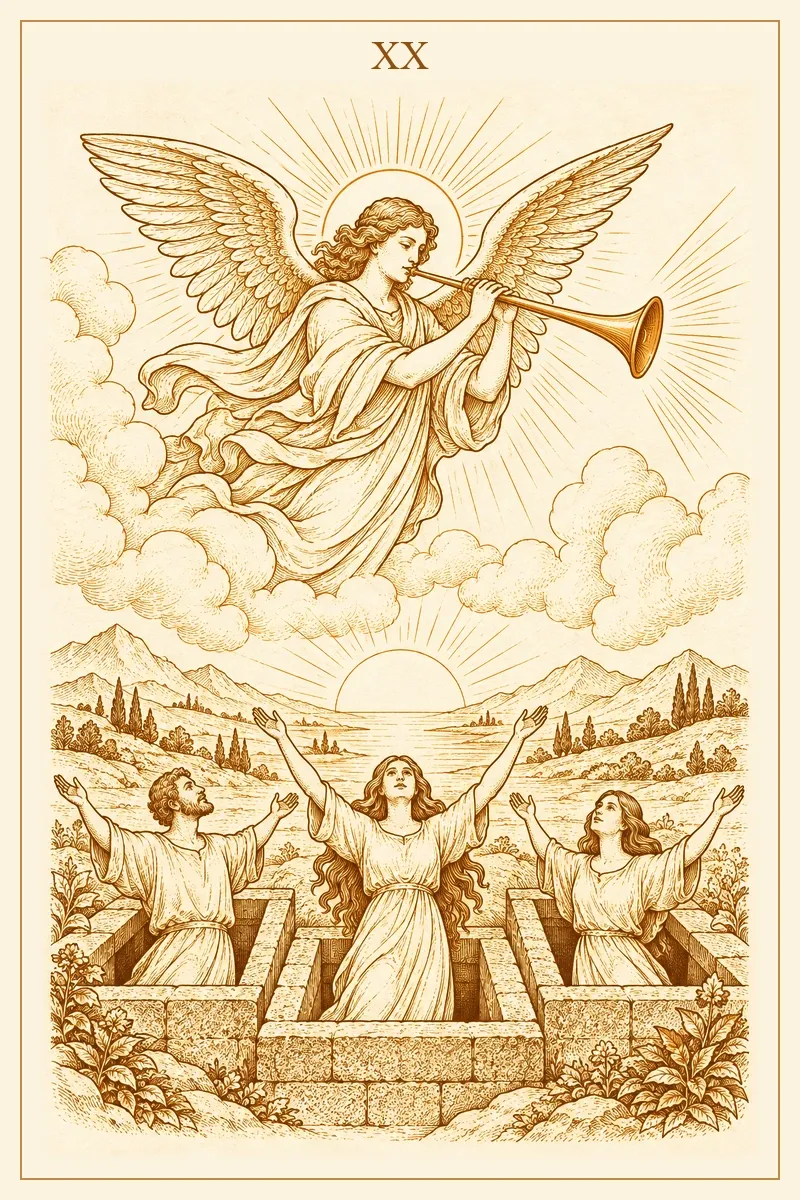
On this card a winged angel sounds a long trumpet from the clouds, and below, three figures rise from open stone tombs with their arms raised toward the call while a sun sits low on the horizon. It is a card of reckoning: hearing a call you cannot ignore and answering it.
Upright in a reconciliation question, Judgement suggests that the past is being looked at clearly rather than rewritten. A second chance built on this card is one where the hard parts are said aloud and each person owns their share. Sometimes the call is internal: an honest decision about this relationship, whichever way it goes. The Judgement tarot meaning explores the card's themes of renewal beyond love readings.
Reversed, Judgement can show a reckoning that keeps being postponed. You may be replaying old arguments instead of evaluating them, or blaming in a way that leaves no room for repair. The reversal does not close the door, but it suggests that a reunion now would carry the unfinished conversation inside it.
Two of Cups: feeling that still runs both ways
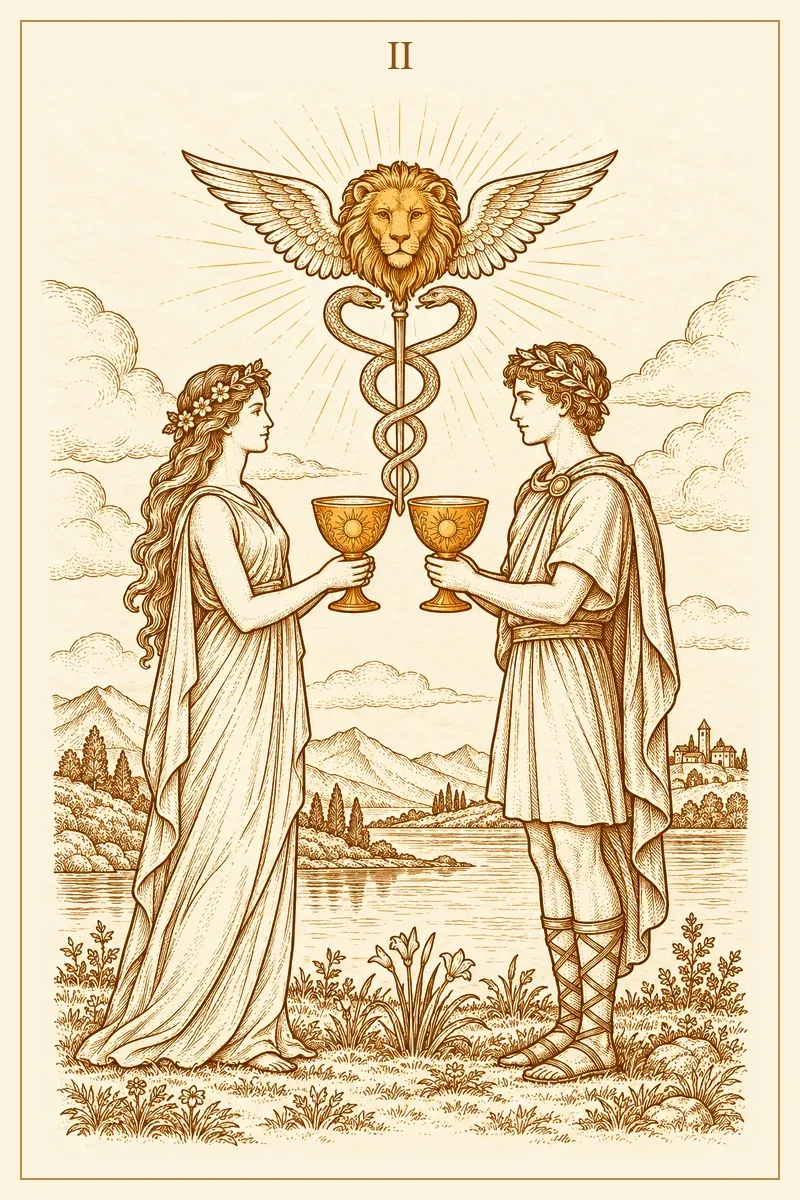
Here a woman crowned with flowers and a man crowned with laurel face each other and raise their cups as equals, beneath a winged lion's head above a staff wound with two serpents.
Upright, the Two of Cups is one of the clearest signs that the bond itself has survived the breakup. Warmth and the ability to talk as equals are still there. Because the card describes reciprocity, ask whether the contact you actually have is two-way. If you are the only one writing, the card may describe what you want rather than what is happening. For a fuller picture of the card in love and friendship, see the Two of Cups meaning.
Reversed, the card points to imbalance: one person giving more, pride blocking an apology, or messages that keep missing each other. It suggests the next step is repairing communication, not planning a reunion.
Temperance: rebuilding at a slower pace
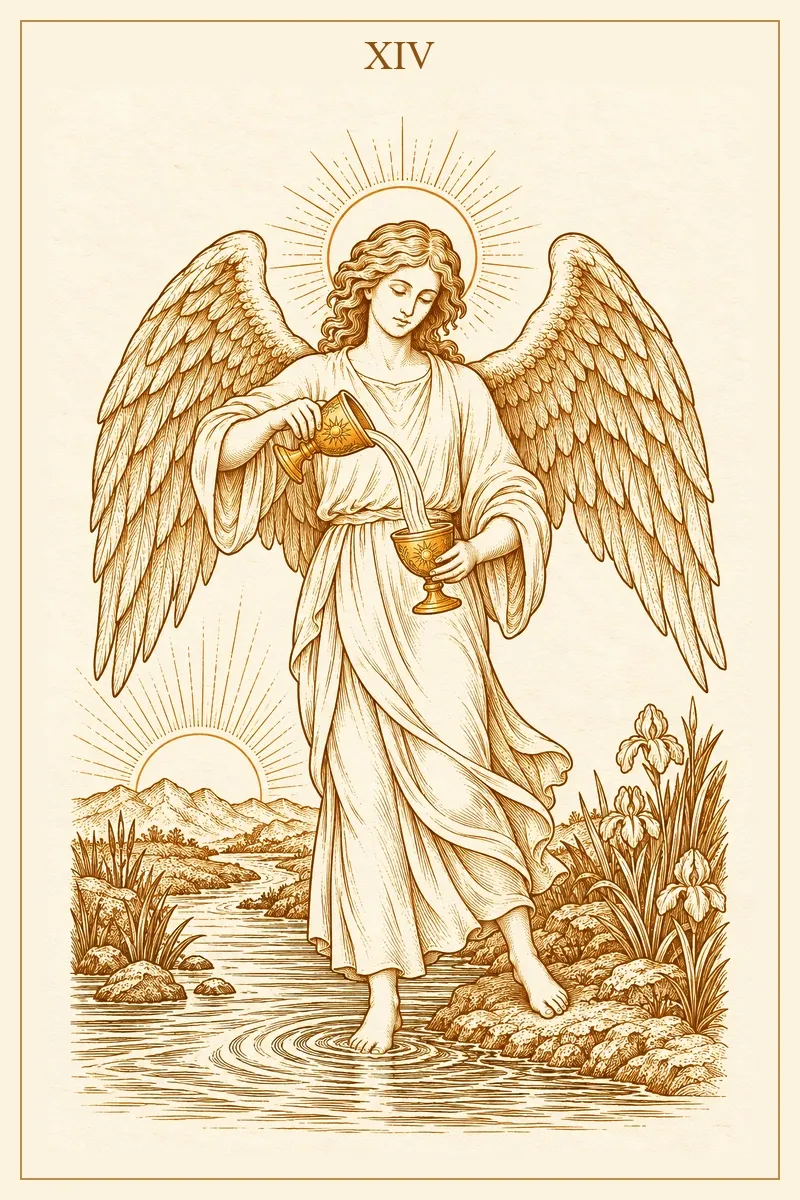
An angel stands with one foot in a stream and one on the bank, pouring water from a golden jug into a golden cup, with irises at the water's edge and a sun rising over the hills.
Upright in a reconciliation reading, Temperance favors a gradual return over a dramatic one. That might mean friendship before romance, short conversations before long ones, or agreeing on new terms before moving back in together. It can also say the hurt is slowly losing its sharp edges, and that trust is being rebuilt at a speed both people can sustain. The Temperance card meaning covers its role in health and work questions too.
Reversed, Temperance warns about extremes: rushing back in, cutting all contact, then rushing back again. If the relationship has already been on and off several times, this reversal names the cycle itself as the problem.
Strength: patience without pressure
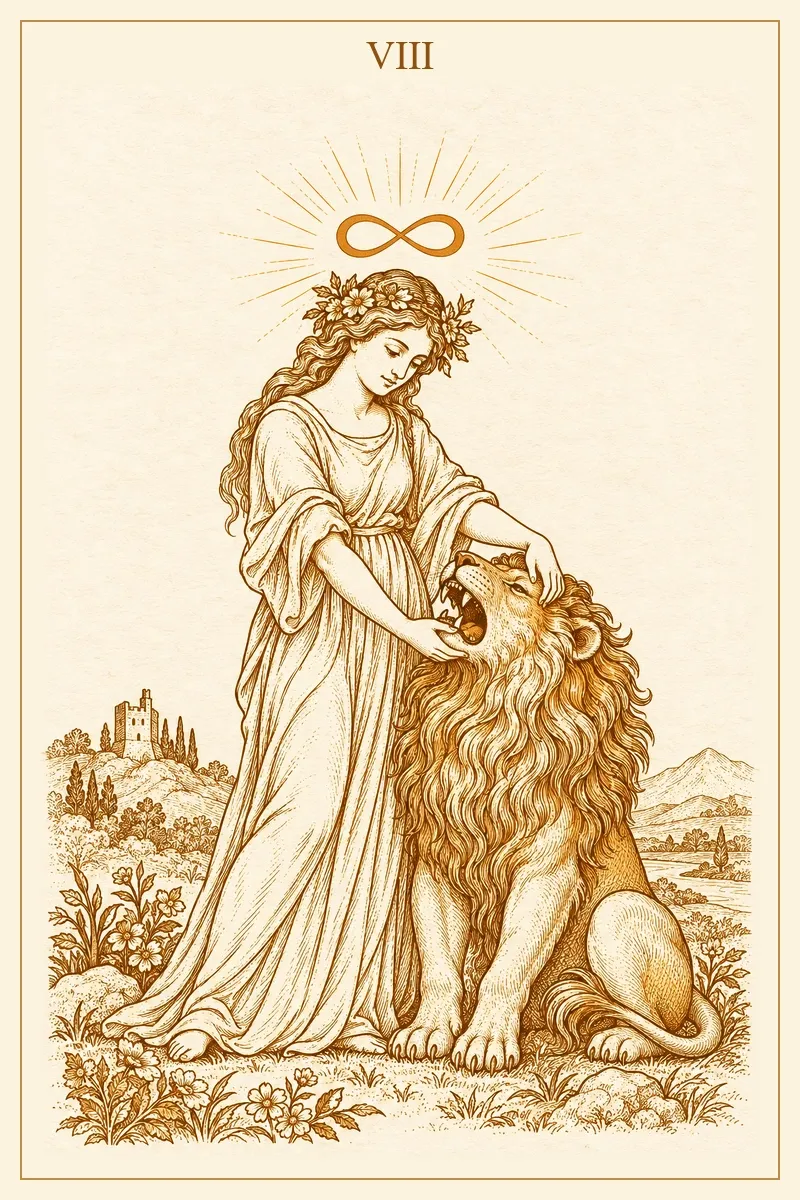
A woman crowned with flowers, an infinity sign above her head, rests her hands calmly on the open jaws of a lion while a small castle stands on a hill behind her.
Strength belongs among reconciliation cards for an honest reason: it describes how you hold your own feelings, not whether your former partner wants to return. Upright, it points to the inner steadiness that makes a second attempt possible: a hard conversation without pleading or punishing, waiting without chasing, and self-respect whatever the answer. In the "what has changed" position, Strength is one of the most encouraging cards you can draw, because it suggests real inner growth rather than a wish for change. Read more in the Strength card meaning.
Reversed, Strength can show impatience, anger that flares too easily, or the opposite: making yourself smaller to keep the peace. A reunion that depends on you swallowing every need is not a reconciliation, and this reversal asks you to rebuild your footing first.
The Star, Six of Cups, Ace of Cups and Four of Wands
The Star is hope after the storm. Upright, it suggests the sharpest pain has eased and healing is happening whether or not you reunite.
Six of Cups carries shared history and affection that still lingers. Be careful with it, because memory keeps the sweet parts and drops the reasons you parted. Reversed, it can say you are living in the past.
Ace of Cups is a new emotional beginning. In a reconciliation question it hopes for a relationship that starts fresh rather than one that resumes where it stopped. Reversed, feelings may be held back.
Four of Wands is homecoming and stable ground. Upright, it can describe a settled reunion welcomed by the people around you; reversed, disagreement about what home would look like the second time.
Cards that counsel closure or a pause
These cards do not mean the love was not real. Some describe an ending; others describe a moment that is not ready, and telling the two apart is most of the work.
Four of Cups: withdrawal and an offer not yet received
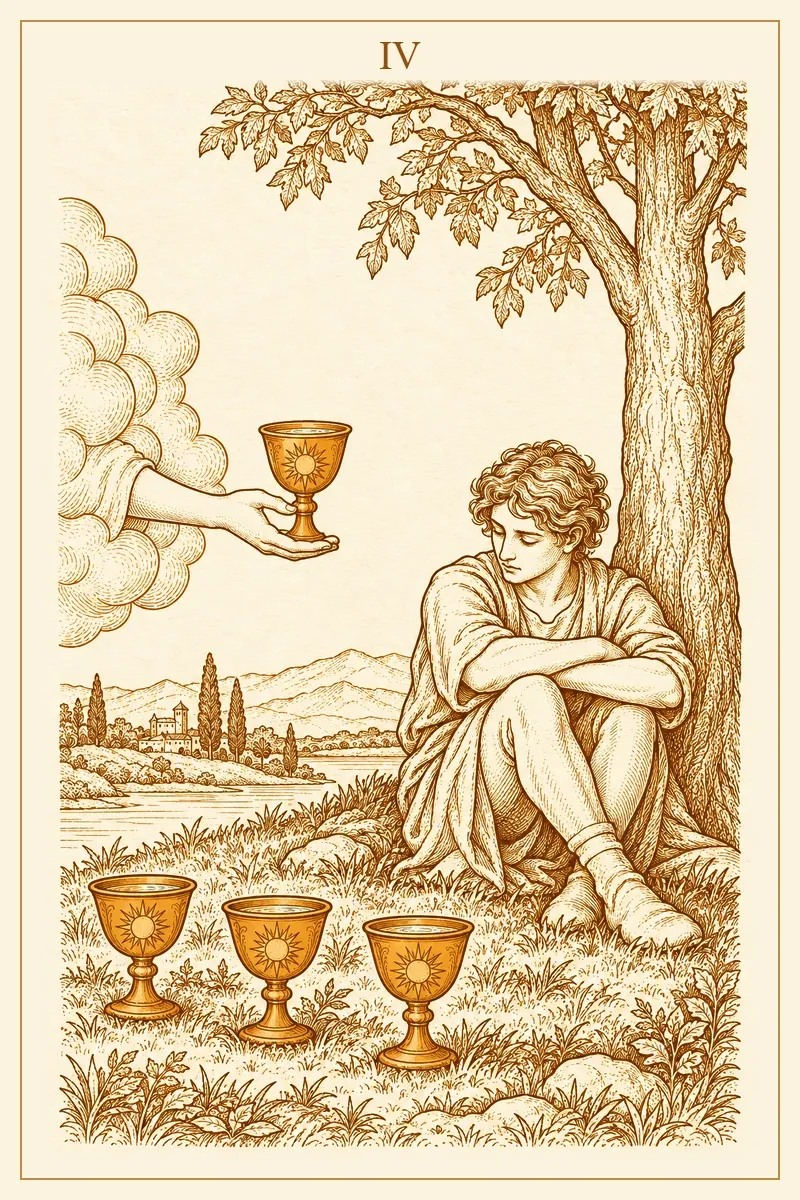
A young man sits under a tree with his arms folded over his knees, looking down at three cups in the grass, while a hand reaching out of a cloud holds out a fourth cup he has not noticed.
Taken honestly, the Four of Cups is neither a yes nor a no in a reconciliation reading. Upright, it says someone is not emotionally available right now. About your former partner, it can fit flat replies or a person not ready to look at the relationship again. About you, it may say you are so focused on the cups that were lost that you are missing what is offered elsewhere: rest, friendship, a life quietly starting again. The Four of Cups tarot meaning looks at its theme of missed opportunities in more depth.
Reversed, the Four of Cups shows energy returning. Interest wakes up, or someone who has been silent decides to answer. It can also describe the opposite clarity: finally saying a calm no instead of staying half-present.
Eight of Cups: someone has already walked on

A cloaked figure with a walking staff heads toward the mountains under a crescent moon, leaving eight cups standing in two rows on the rocks behind. The cups are not broken; they were simply no longer enough.
Upright in a reconciliation question, the Eight of Cups suggests that one person has already left inwardly, with sadness but also with resolve. About your former partner, it is a gentle but clear sign not to build your plans around their return; about you, it may confirm a decision you made before you could admit it. The card's wider theme of walking away from what no longer fulfills you is covered in the Eight of Cups tarot meaning.
Reversed, the card can show hesitation: wanting to leave but drifting back out of fear, or returning to check whether something is still there. That is not the same as reconciliation. Ask what would be different this time.
Death, The Tower, The World and the Ten of Swords
Death describes a cycle that has ended. The old form of the relationship cannot return, though two changed people might one day build something entirely new. Reversed, it often shows resistance to an ending that has already happened.
The Tower says the structure fell because the foundation could not hold. Rebuilding on the same ground invites the same collapse.
The World marks a completed chapter. The relationship has given what it had to give, and you carry its lessons forward.
Ten of Swords is the painful low point. Upright, it advises against reopening a wound that has only just begun to close. Reversed, it shows slow recovery. If closure cards dominate your spread, tarot practices for letting go can help you move through the release at your own pace.
Reconciliation or the same pattern again?
The most important question in this kind of reading is whether going back would mean growth or a return to the same dynamic. In a repeated pattern, the reunion feels wonderful for a few weeks and then the old arguments return, because the reasons for the breakup were never addressed. Reconciliation looks different. Both people can describe what went wrong, what they each contributed, and what they will do instead.
Some cards point toward attachment rather than repair. The Devil can describe a pull you feel even when the relationship hurts you. The Moon describes confusion and projection: you may be reading meaning into silence or filling gaps with fear. The Seven of Cups shows a fantasy of how the relationship could be, separate from how it was. When these cards appear without any growth card beside them, the reading is suggesting that the pull is real but the conditions are not.
Growth cards change that picture. Strength, Temperance and Judgement next to The Devil suggest the attachment is being worked with honestly. The Sun in an outcome position is a different kind of encouragement: it speaks of warmth and clarity ahead, which may or may not include this person.
Forgiveness can also happen without a reunion. You can let go of resentment and still decide not to go back, and the guide to tarot for forgiveness treats that as a path of its own. If the relationship involved fear, control or any kind of harm, no card should be read as a reason to return. The guide to cards that warn about toxic relationships can help you name what you saw, and a local support service can help you stay safe.
Card pairs that sharpen the picture
Single cards set the theme; pairs often make it precise.
- Judgement and Temperance: an honest reckoning followed by a slow rebuild. This is the most supportive pairing for a healthy second attempt, provided both people take part.
- Two of Cups and Four of Cups: warmth exists, but one person is withdrawn. Give it time and avoid pushing for an answer.
- Strength and The Devil: are you being patient, or are you staying hooked? Look at whether waiting is costing you your own life.
- Six of Cups and Seven of Cups: memory mixed with fantasy. Write down what actually happened before trusting the glow.
- Judgement and Eight of Cups: a reckoning that leads to leaving rather than returning. Clarity may be the gift here.
The five-card reconciliation clarity spread
Use this spread only when you are open to either answer: a way back to this person or a way forward without them. Write the question first. "What would a healthy reconciliation require, and is it the wise path for me?" works better than "Will we get back together?" because it asks about conditions you can see.
- What the relationship was at its healthiest: the true core of what you shared, which grounds the reading in reality rather than nostalgia.
- Why it really ended: the deeper dynamic beneath the final argument. If this position opens a lot, a full breakup tarot reading can give it a spread of its own.
- What has changed since: growth, or the lack of it, during the time apart.
- The energy between you now: what currently sits in the space between you, warm, cool or uncertain.
- The wisest path forward for you: reconciliation, closure or a pause, read as advice rather than a forecast.
Position 3 carries the most weight. Strength, Temperance or Judgement there suggests real change; the Seven of Cups or The Devil suggests the wish for change without the work. Read positions 1 to 3 before you look at 4 and 5, so the story of the past is in place before hope colors the present.
Worked example: eight months after a breakup
This example is illustrative, not a real person's reading. Imagine someone who parted from a partner eight months ago after a long stretch of growing distance; they have since exchanged a few friendly messages. The question is: "What would a healthy reconciliation with my former partner require, and is it the wise path for me now?"
- What the relationship was at its healthiest: Six of Cups.
- Why it really ended: Four of Cups.
- What has changed since: Strength.
- The energy between you now: Two of Cups, reversed.
- The wisest path forward for you: Temperance.
The Six of Cups says the relationship at its best was tender and easy, built on shared history and kindness. The Four of Cups in the "why it ended" position describes withdrawal: one or both people stopped reaching for what the other offered, and the distance grew quietly rather than through one dramatic event.
Strength in position 3 is encouraging. The person has become steadier, able to say what they need without pleading. The reversed Two of Cups tempers the hope: the friendly messages are real, but the exchange is not yet balanced. Perhaps one person is writing more.
Temperance as the wisest path does not say "go back" or "let go." It says slowly. A sensible next step might be one honest, low-pressure conversation about the withdrawal that ended things, with no request to get back together attached. If the response is open and two-way, trust can be rebuilt in small steps. The reading says nothing about what the former partner privately feels; it describes the conditions that would need to be in place.
What to do after the cards are down
- Write down what has changed, with evidence. List actions, not hopes: a new habit, an apology given, a boundary kept.
- Name what you would need. One or two non-negotiables for a second attempt, written before any contact.
- Keep any first contact light. A single honest message that does not demand an answer leaves room for a free response.
- Keep your own life moving. Friends, work, rest and plans are not a betrayal of hope; they are what Strength looks like day to day.
- Set a date before you read again. A few weeks gives events time to move, so the next spread reflects something new.
Frequently Asked Questions
Can tarot tell me whether my ex wants to get back together?
No. Tarot cannot confirm another person's thoughts, intentions or future decisions. A reconciliation reading reflects the themes in your situation and your own understanding of it; only your former partner's words and actions can tell you what they want.
Is Strength a reconciliation card?
It can be, in a specific sense. Strength describes inner steadiness, patience and self-respect, the qualities that make a second attempt workable. It does not mean the other person is returning. It is most encouraging in the "what has changed" or "advice" positions.
What does the Four of Cups mean for reconciliation?
Upright, it usually means "not now": someone is withdrawn, tired or not ready to look at the relationship again. Reversed, it shows energy returning, either as renewed interest or as the clarity to close the door calmly.
What if reconciliation cards appear but they have not contacted me?
Cards like the Two of Cups or Judgement describe conditions and themes, not a schedule of events. If weeks pass without contact, treat that silence as real information and let your plans rest on what is happening rather than on a card.
Can I read about reconciliation if they are seeing someone new?
You can, but reframe the question around yourself. Ask what you need to heal, or what you would want to understand about the breakup, rather than trying to read the new relationship. A spread built around your own next step gives you something you can act on.
How often should I do a reconciliation reading?
Wait until the first raw weeks after the breakup have passed, so the reading is not only reflecting grief. After that, leave a few weeks between spreads on the same question. If you find yourself drawing cards about your former partner every day, that urge is itself worth attention; a trusted friend or a counselor may help more than another spread.
Whichever way the cards lean
A reconciliation reading is at its most useful when it helps you stop waiting in the question. If the cards show a path back, walk it slowly and with your eyes open. If they show a path forward on your own, you can take the love and the lessons with you. When you are ready to look at your own situation, begin a calm reading with Veil Soul.