Four of Wands, The Hierophant, Ten of Cups, and Two of Cups are four of the most useful cards for exploring marriage: celebration, an agreed form of commitment, a shared vision of home, and mutual care. None confirms that a partner will propose, reveals their private intentions, or supplies a date. Read them as questions to bring into an honest conversation.
A wedding, a legal marriage, living together, and a long-term partnership can overlap, but they are not identical. Before drawing, write down which one you mean and why it matters to you. If you want a ceremony and your partner wants a quieter arrangement, that difference is information worth discussing.
This guide looks closely at four core cards and the decisions around them, then at the other cards that often appear in marriage readings and the ones that suggest it is not time yet. It also shows how upright and reversed readings differ, how two cards can sharpen a question, and how a five-card spread can help you separate your hopes from what you actually know.
At a glance, these are the cards readers most often connect with marriage and commitment:
- Four of Wands: celebration, a milestone, a home you share.
- The Hierophant: a formal promise, tradition, a ceremony.
- Ten of Cups: emotional belonging and family life.
- Two of Cups: a mutual choice and partnership.
- The Lovers: a committed choice aligned with your values.
- Ten of Pentacles: long-term security, family and legacy.
- The Empress: nurture and a home that grows.
- Three of Cups: celebration with friends and community.
What a marriage card can and cannot say
A card is relevant to marriage when its theme connects to the promise you are considering. Celebration, tradition, belonging, and reciprocity are useful themes, yet the same card can describe a friendship milestone, a family gathering, or a private commitment. The question you asked and the card's position in the spread decide what deserves attention. The image alone does not define the event.
Try stating the position before you interpret it. In a position called “what I want,” a celebratory card may describe your longing. In “what we have agreed,” it asks you to recall an actual conversation. In “a possible next step,” it can suggest an action you could propose. Even a card placed in an outcome position describes a possibility shaped by future choices, not a binding forecast.
Marriage is also a social and practical arrangement. Ask what each of you wants to call the relationship, whether either person wants a public ceremony, how you would share work at home, and what support you expect from family or chosen family. Some couples prefer a legal marriage; others choose a different durable promise. Neither choice is made more valid by drawing a particular card.
Notice how you feel while reading. If a hopeful image makes you ignore a concern you have already raised, return to that concern. If an unsettling reversal makes you assume the relationship is doomed, slow down and name a specific question instead. Your partner's words, choices, and willingness to listen are better evidence of readiness than the deck.
Four cards to read in a marriage question
These four cards cover different parts of a shared future. Read each one in its own position; do not treat a cluster as a score that guarantees a wedding. The examples below use familiar meanings while leaving room for context, culture, and the two people's actual preferences.
Four of Wands: celebrating a milestone
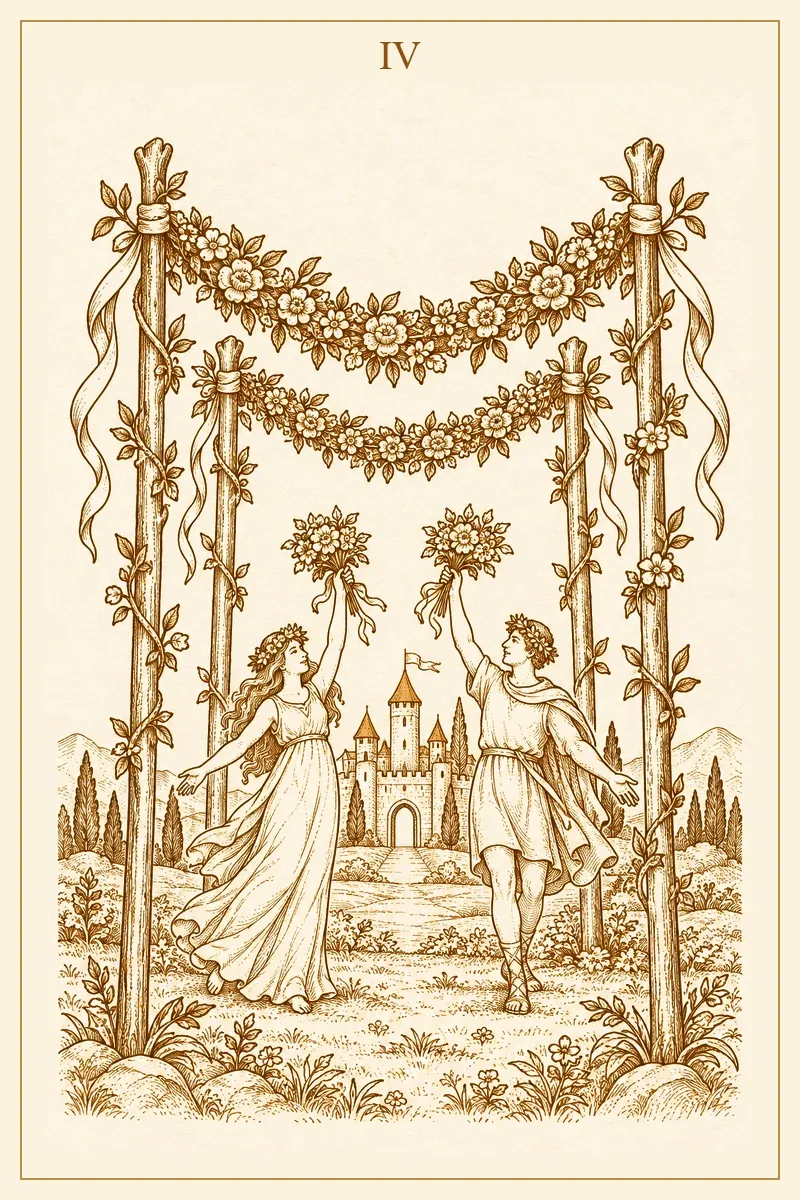
Upright, Four of Wands often evokes welcome, a shared threshold, and joy that can be witnessed by others. In a marriage question it can invite you to imagine how you would mark a promise. Would you want a gathering, an intimate meal, a visit to relatives, or no public event at all? The useful detail is not the decoration on a hypothetical wedding day; it is whether both people would feel at home in the way the moment is marked. For the card's other meanings, see the full Four of Wands tarot meaning.
Reversed, the same card may raise a tension around celebration. One person may want public recognition while the other feels exposed. Family expectations may complicate a plan, or you may simply need privacy. The reversal does not mean a wedding is cancelled. Ask which part of the celebration feels difficult, who is affected, and what arrangement would respect both people. If you have never spoken about a ceremony, start there.
For example, a couple may agree that they want to live together but disagree about involving extended family. Four of Wands can frame a practical conversation: what would we celebrate now, and what would we postpone? That question is answerable. “Will there be a wedding?” is not answerable by this card alone.
The Hierophant: naming the form of a promise
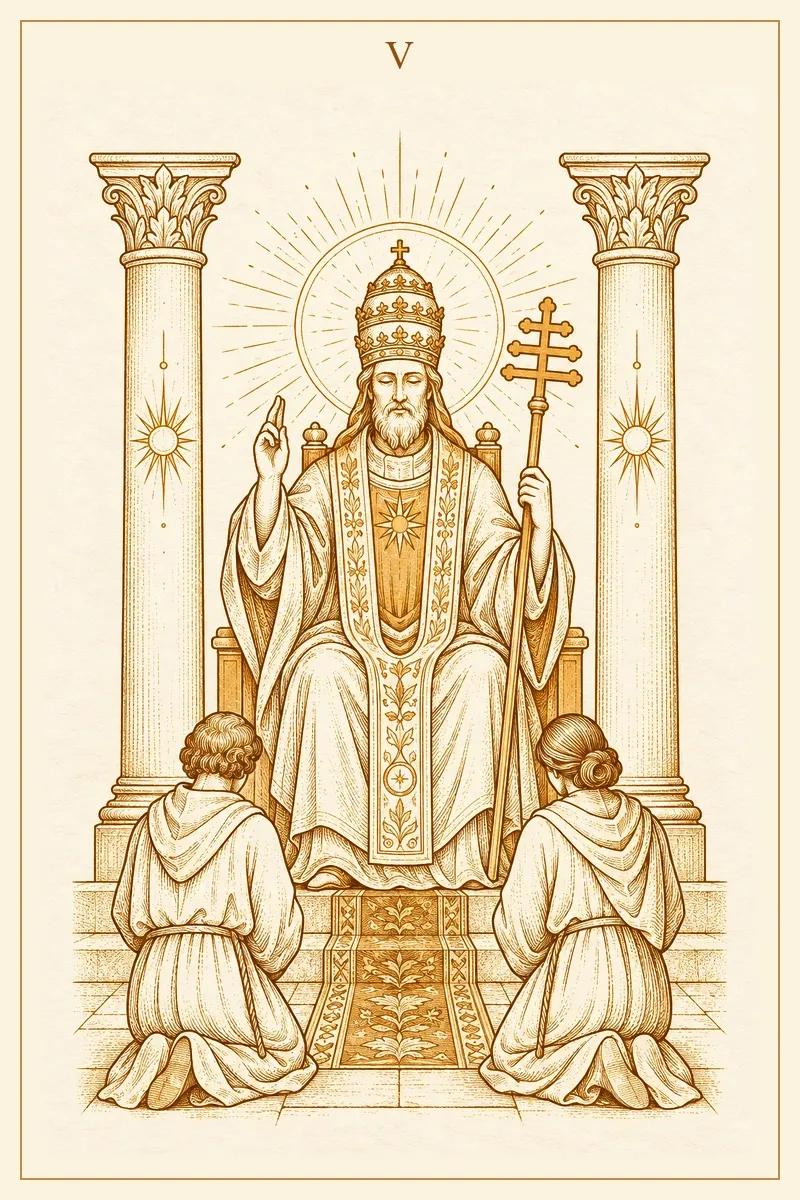
Upright, The Hierophant draws attention to custom, shared values, institutions, and promises made before a community. That can include a religious ceremony or legal marriage, but it may simply ask how inherited expectations influence you. Write down the traditions that feel meaningful and the ones you would choose differently. Then ask your partner the same questions without presuming a single correct answer. The full Hierophant tarot meaning explains the card beyond marriage questions.
Reversed, The Hierophant can put pressure on a rule that has gone unexamined. Perhaps your families imagine different ceremonies. Perhaps one of you values the protections of legal marriage while resisting the social script around a wedding. The card does not say formal commitment is impossible. It asks whose values have been treated as the default and whether a new agreement would be more honest.
Keep the legal and emotional questions distinct. If you are considering rights, property, immigration, or other consequences of marriage, verify those matters with the appropriate qualified source. Tarot can help you notice the questions you need to ask; it cannot determine a legal outcome or replace careful planning.
Ten of Cups: picturing everyday belonging
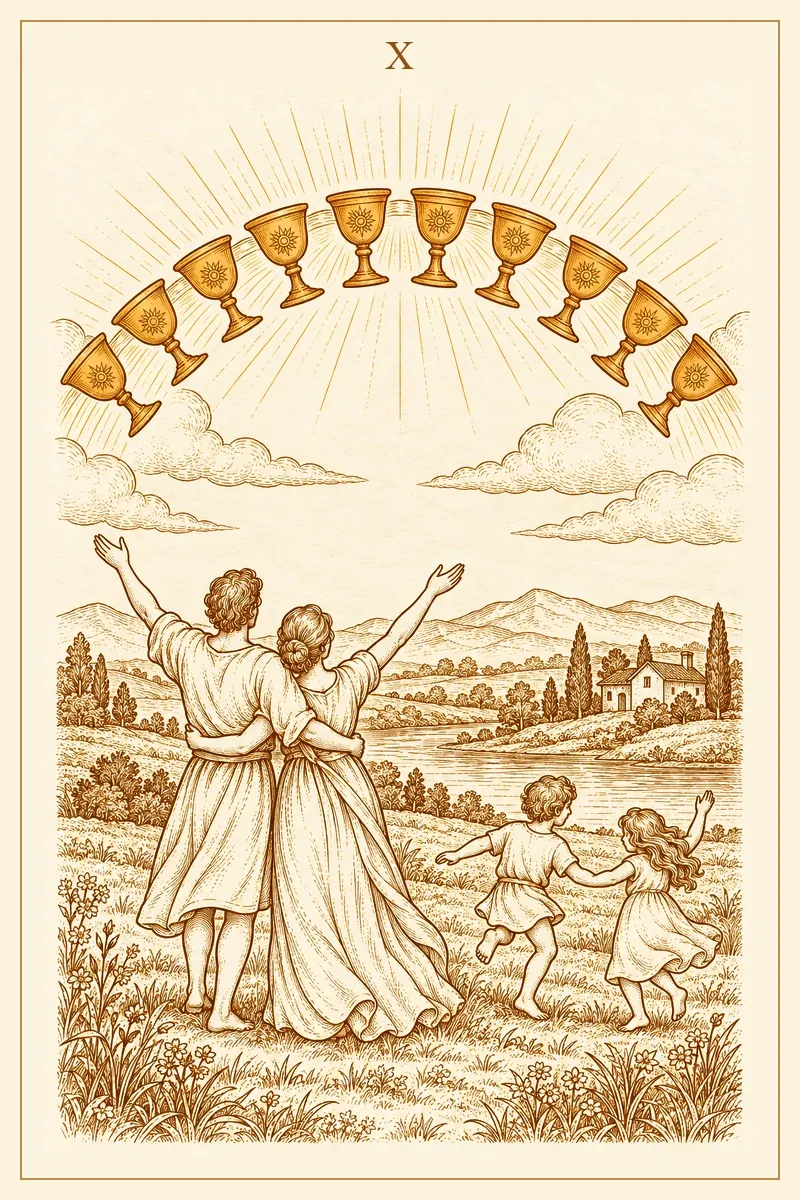
Upright, Ten of Cups can represent a felt sense of belonging and a hopeful picture of life together. The important word is “picture.” Two people can look at the same scene and imagine different homes: one wants children, another imagines a household of two; one wants frequent family visits, another needs more privacy. Use the card to describe ordinary days, not to assume that the familiar family image is everyone's goal. You can read more about the card in the full Ten of Cups meaning.
Reversed, the card may invite you to compare an ideal with the life you currently have. Are you trying to fit a relationship into a family story that does not suit either of you? Are you carrying more care work than you can sustain? This is not a forecast of unhappiness. It is a chance to redraw the picture together, including chosen family, boundaries, rest, and the kind of support each person needs.
Try asking, “What would make home feel safe and welcoming to you?” Follow the answer with specifics: a weekday routine, ways to handle disagreement, time alone, and how to share responsibilities. If your visions differ, name the differences before treating the card as confirmation of a future neither of you has agreed to.
Two of Cups: checking mutual choice
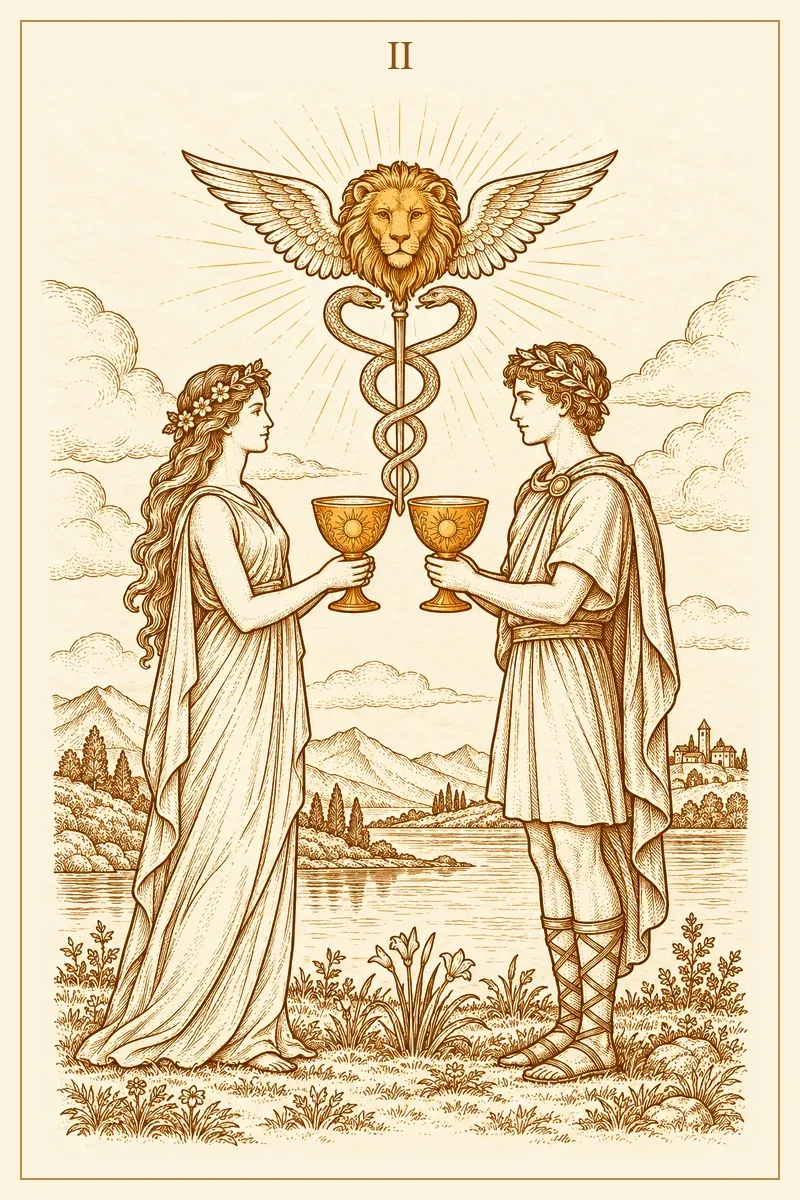
Upright, Two of Cups highlights exchange: offering care and receiving it, listening and being heard. In a marriage reading it is a useful reminder that commitment requires two freely given choices. Affection alone does not tell you whether both people want the same legal or social form. Ask what each of you values in the relationship and whether you can speak openly about a longer horizon. The full Two of Cups meaning covers its upright and reversed readings in more depth.
Reversed, this card can bring attention to a missed conversation, mismatched assumptions, or a repair that is still needed. It is not proof of betrayal or a secret refusal. Describe the observable difference: perhaps one person keeps initiating talks about the future while the other changes the subject. The response is to ask plainly, listen, and decide what you need if the answer remains unclear.
Consider a couple who care deeply for each other but disagree about where to live. Two of Cups can help them approach the problem as collaborators. Each person can state a need, a flexible preference, and a boundary. If one person cannot safely say no, the card's pleasant image cannot make the decision mutual.
How to read the four cards together
Pairs can make the question more precise. Four of Wands beside The Hierophant brings celebration next to custom. You might ask whether a ceremony would honor your own values or mainly satisfy other people's expectations. If one card is reversed, look at the point of friction: publicity, tradition, or the feeling that the form has been chosen for you.
Ten of Cups beside Two of Cups places a vision of home next to the daily practice of reciprocity. A beautiful future image is worth examining, but the second card asks how two people share effort now. Are apologies possible? Is care returned? Do both people have space for their own friendships and goals? These questions keep the reading connected to the relationship in front of you.
Four of Wands beside Two of Cups can suggest moving from a private understanding toward a shared milestone. Ask what you have both explicitly named. If you have talked about moving in but not about marriage, do not collapse those steps into one. Ten of Cups beside The Hierophant can bring family ideals into contact with a formal decision. Ask what belonging means to each of you and which traditions, if any, you want to carry forward.
There is no rule that two, three, or four of these cards make a proposal inevitable. More cards can make the theme feel prominent, but they do not create consent or reveal a date. After noting a pattern, write two columns: “what we have actually discussed” and “what I am inferring.” The second column shows where a conversation would give you better information than another draw.
Other cards that often appear in marriage readings
Four cards rarely tell the whole story. These four also come up often when people ask about marriage, and each adds a different angle to the question.
The Lovers: a committed choice
The Lovers is often named first in marriage readings because it is about choosing a partner with your values, not only with your attraction. Upright, it can describe a decision you are both ready to make out loud. Reversed, it may point to a choice that keeps being postponed or to values pulling in different directions. In a marriage question, ask: are we each choosing this freely, and do we agree on what we are choosing? The full Lovers tarot meaning covers its other contexts.
Ten of Pentacles: long-term security and family
Where the Ten of Cups speaks of emotional belonging, the Ten of Pentacles speaks of the structure that carries a shared life over decades: home, money, extended family and what you build together. It is one of the cards most associated with a lasting marriage. Upright, it invites practical conversations about finances, property, caring for parents and what security means to each of you. Reversed, it can point to pressure from family expectations or a disagreement about money that deserves attention before a promise. See the full Ten of Pentacles meaning.
The Empress: a home that grows
The Empress brings nurture, comfort and growth. In a marriage reading she may describe the warmth you want at home, or open a conversation about whether and when you want children. Upright, she can affirm care that flows both ways; reversed, she may ask whether one person is doing most of the nurturing, or whether care for yourself is being lost. Her full meaning is in our Empress tarot guide.
Three of Cups: celebration with your people
The Three of Cups brings friends and community into the picture. It often appears around engagements and parties, and it asks who you want beside you when you mark a commitment. Reversed, it can point to tension with friends or family about the relationship, or a celebration that feels more like an obligation than a joy. Read more in the full Three of Cups meaning.
Cards that suggest it is not time yet
Some cards often appear when a commitment question needs more time, information or honesty first. They describe conditions you can work with, not a final answer.
- Seven of Cups: many options or an idealized picture. Ask what you actually want, beyond the fantasy of a wedding day.
- Two of Swords: a decision being avoided. The next step may be naming the question you have both stepped around.
- The Tower: an assumption that no longer holds. Something may need to be rebuilt before a promise can rest on it.
If one of these appears, use it to find the conversation that needs to come first. Our guide to reading tarot for your relationship includes a six-card check-in you can use before a bigger talk.
Reversals, hesitation, and real-world concerns
A reversal can turn your attention toward a blocked, private, or unfinished version of a theme. Four of Wands reversed might raise a conflict about a ceremony. The Hierophant reversed may question a family rule. Ten of Cups reversed may highlight a gap between an ideal home and real needs. Two of Cups reversed can point to a conversation that did not land. None is shorthand for “never.” Ask which interpretation connects to a known event before making it personal.
Not every hesitation is a problem to push through. A partner may want more time; you may discover that you do too. Practical pressures such as housing, caregiving, or financial obligations can also shape what is possible. Name the issue without turning it into a moral failure. Decide which parts you can plan together, which require advice from an appropriate professional, and which remain outside your control.
Safety matters more than an encouraging spread. If someone pressures you to commit, isolates you from support, or ignores a clear no, focus on your boundaries and trusted human help. Do not use a card to explain away behavior that leaves you afraid. A mutual promise requires room to choose, delay, or decline without retaliation.
When a reading feels upsetting, pause before drawing more. Write down the exact question, the card position, and one observation from the relationship that you know to be true. This simple separation can stop a vivid image from becoming an unsupported story about your partner. Return to the conversation when you are ready to listen as well as speak.
A five-card spread for commitment clarity
Use this spread to organize a conversation, not to test your partner without their knowledge. Before drawing, write, “What do I need to understand and discuss about commitment?” Keep the positions stable so a card does not become a new answer each time your anxiety shifts.
- 1. What is working now? Name a behavior both people could recognize, such as following through on plans or making space for disagreement.
- 2. What do I want? Describe the form of commitment you hope for and why. Keep a hope separate from an expectation you have never voiced.
- 3. What do I actually know about my partner's view? Use only what they have said or done. If you have not asked, write “unknown.”
- 4. What needs attention? Choose one question about values, practical arrangements, or repair that could be discussed.
- 5. What is my next honest step? Identify an action within your control, such as requesting a calm conversation or clarifying your own boundary.
Imagine Two of Cups in the first position and The Hierophant in the second. You might note that care is present and that a formal promise matters to you. If the third position feels ambiguous, do not translate that ambiguity into a hidden yes. Write “I have not asked about marriage.” In the fourth position, a difficult card may simply help you name a topic you have avoided. The fifth card becomes a prompt for how to approach it, not a verdict on how your partner will respond.
After the spread, choose one open question: “What does a long-term partnership mean to you?” or “How do you feel about making our commitment public?” Give the other person time to answer. If your goals differ, you can discuss whether compromise is possible. It is also valid to recognize an incompatibility; a promising card does not require you to abandon an important need.
For additional ways to frame a relationship question, see our guide to love tarot spreads. Choose a spread whose positions you can explain in plain language, and stop when you have a useful next question to take into real life.
Timing: choose a check-in, not a prediction
Tarot cannot tell you when a proposal will happen. A card in a future position can suggest a theme to explore; it does not start a clock. Seasonal systems differ across reading traditions, and assigning a month after the fact makes a prediction feel more precise than it is. If a date matters, ask your partner about a realistic window and what would need to happen before then.
For example, you might agree to revisit the subject after a move, a period of living together, or a family conversation. Put the check-in on a calendar because you both chose it, not because a card appeared. At that meeting, compare what has changed: have your values become clearer, are practical plans more workable, and do both people still want the same next step?
If you find yourself asking “When?” over and over, try asking “What information do I need?” instead. Repeated draws can soothe uncertainty for a moment while leaving the real question untouched. A pause, a note about your own hopes, and a direct conversation will usually offer a clearer basis for a decision.
Frequently asked questions
Which tarot card means marriage most strongly?
Four of Wands is often associated with celebration and The Hierophant with formal tradition, but neither means marriage in every spread. The Lovers and the Ten of Pentacles are also common answers: one for the choice itself, the other for the long-term life you build. Consider the question, the position, and whether both people have expressed a wish for that form of commitment. A card is a symbol to interpret, not evidence of an agreement.
Can a reversed card mean the wedding is off?
No reversal can cancel an event. It may invite you to look at a tension, such as a family expectation or an ideal of home that needs adjusting. If plans already exist, ask the people involved what is actually happening instead of relying on the orientation of a card.
What if no marriage cards appear?
The absence of these four cards does not measure the worth of your relationship or rule out marriage. Your reading may have centered another concern, or the question may have been too broad. Rather than draw until you see a preferred image, decide what you need to ask or discuss.
Can tarot tell whether my partner will propose?
It cannot confirm someone else's intention or give a date. If you want clarity, ask your partner how they imagine the future and share your own wishes. You can use a reading first to find the words, while leaving their answer to them.
What if we want different forms of commitment?
Describe what each form would protect or express for you. One person may care about a legal marriage, while the other wants a durable partnership without a ceremony. These are meaningful differences to discuss without treating either as less loving. If the gap remains, you are allowed to decide what you need.
A promise you can discuss
Marriage-related cards can offer a vocabulary for joy, shared values, belonging, and reciprocity. The useful outcome of a reading is often a better question and a clearer sense of what you are free to choose.
If you want a quiet moment to prepare, try a reading, note what the four themes bring up, and bring your questions back to the person involved. A commitment worth making has room for both voices.