Seasonal tarot practices tie your readings to the four turning points of the year. At the spring equinox, the summer solstice, the autumn equinox and the winter solstice you sit down for one longer reading with a seasonal tarot spread whose positions follow what nature is doing at that moment: planting, blooming, harvesting or resting. Using tarot for the seasons this way turns a loose habit into a yearly rhythm, four readings you can lay side by side and learn from.
The seasons do not decide anything in a reading, and the cards cannot tell you what the next three months will bring, choose a date for you or reveal what another person will do. What a seasonal reading gives you is a fixed pause: four times a year you ask what is growing, what is finished and where you need rest, and you answer in your own words with a few cards as prompts.
The year at a glance:
- Spring equinox, around March 20: the Seed spread, five cards on what is waking up and what you want to plant.
- Summer solstice, around June 21: the Radiance spread, four cards on what is in full bloom and how to keep your energy steady.
- Autumn equinox, around September 22: the Harvest spread, five cards on what you gathered, what can fall away and what to store.
- Winter solstice, around December 21: the Deep Rest spread, four cards on stillness, what is forming out of sight and the light coming back.
- Between the four dates: one card at the start of each month, written in the same journal so the big readings connect.
These are Northern Hemisphere dates. South of the equator the seasons run the other way, so the Seed spread belongs to late September and the Deep Rest spread to late June.
Why the equinoxes and solstices make good reading days
An equinox is the moment when day and night are close to equal length; a solstice is the longest or the shortest day. People have marked them with festivals, harvest suppers and fires lit against the dark, because they are easy to notice and cut the year into four clear stretches. For a tarot practice that is useful in a plain way: each date arrives on its own, so you never have to decide when the next review is due.
Each turning point also carries its own question. Spring asks what you want to start. Summer asks what is thriving and whether you can keep it going. Autumn asks what you gathered and what you are ready to release. Winter asks what needs rest. A single spread used all year would flatten those differences, while four spreads that follow the light keep the reading tied to where you actually are.
How the suits line up with spring, summer, autumn and winter
Tarot has no single official table of seasons. The pairings below follow what each season does in nature and give you a starting point for reading the suits that turn up:
- Spring and Wands. The suit of fire carries sparks, drive and new projects, the same push that sends green shoots up through cold ground. Every Ace feels at home in spring, since each one is the seed of its suit.
- Summer and Cups, warmed by Wands. Long days bring feeling, company and play. Cups add the water element of relationships and pleasure, while Wands keep the heat.
- Autumn and Pentacles. The earth suit deals with work, money, the body and things you can hold, which is exactly what a harvest is. The Tens, where each suit completes its count, echo a cycle closing.
- Winter and Swords. The suit of air deals with thought, truth and clarity, like a cold, bright morning when every branch stands out against the sky.
Astrology offers a second mapping. Each season opens with a cardinal sign, and in the Golden Dawn system each of those signs has a Major Arcana card: Aries and The Emperor open spring, Cancer and The Chariot open summer, Libra and Justice open autumn, and Capricorn and The Devil open winter. There the elements fall differently: fire for spring, water for summer, air for autumn, earth for winter. Neither table is wrong. Pick one, write it on the first page of your journal and keep to it, so patterns across several years mean something.
Four seasonal tarot spreads, one for each turning point
Before you interpret any single card, look at the whole layout: count the suits, notice whether Major Arcana cards cluster in one place and see which way the figures face.
Spring equinox: the Seed spread (five cards)
- What is waking up in me? The interest or energy that wants to come out after the winter.
- The seed for this season. One intention worth tending until midsummer.
- What winter left behind. A habit, worry or obligation that can stay in the season just ended.
- What helps it grow. Support, routines or resources to cultivate.
- Spring's gift. Something the season offers that you might otherwise overlook.
Place the seed card in the center and the other four around it like the points of a compass, with winter's leftovers below and spring's gift above. If the third card looks heavier than the seed, deal with it first. A bed full of last year's stalks leaves no room for new growth.
Summer solstice: the Radiance spread (four cards)
- Where am I in full bloom? What is going well right now, at work, at home or in yourself.
- What needs more light? An area you have neglected while other things flourished.
- My summer strength. The quality that carries you through this season.
- How to shine without burning out. The pace, boundary or rest that keeps your energy steady.
On the longest day the question shifts from starting to sustaining, and it is easy to give the fourth card only a quick glance. Give it the most attention instead. If it turns out to be a heavy Wands card such as the Ten of Wands, the message is about the load you carry, not about trying harder.
Autumn equinox: the Harvest spread (five cards)
- What have I grown this year? Achievements, skills, relationships or wisdom gathered since spring.
- What am I grateful for? Something or someone that made the harvest possible.
- What is ready to fall away? Like leaves, whatever has done its job and can be released.
- What should I store for winter? Energy, resources or lessons worth keeping close.
- Autumn's lesson. The insight this season leaves behind.
Before you shuffle, note down what you actually did since the spring equinox. The cards then answer a real record, and the first position becomes a conversation with your own notes instead of a guess.
Winter solstice: the Deep Rest spread (four cards)
- What is this dark time teaching me? The understanding that only shows up in the quiet months.
- Where do I need rest? The part of life asking for stillness rather than effort.
- What is forming out of sight? Something growing beneath the surface that is not ready to show itself.
- The returning light. A first hint of what spring may bring.
On the longest night, shuffle gently and leave space around each card. A third card that seems unclear may simply describe something too young to read well. Write it down and look at it again at the spring equinox, when the Seed spread may show what it has become.
Six cards that mark the turning year
Any card can appear in a seasonal spread, but these six carry pictures close to the year's cycle, from a turning wheel to a lantern held up on a mountain height.
Wheel of Fortune: the year as a cycle
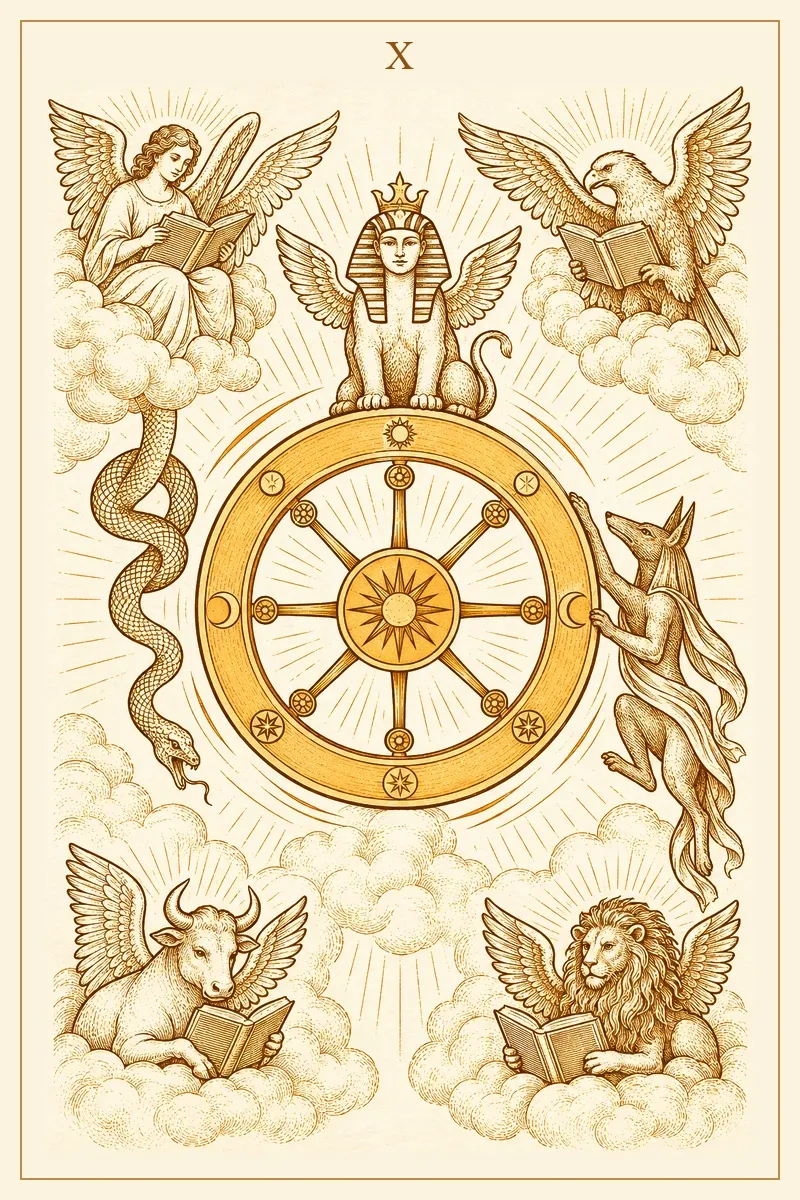
Upright, Wheel of Fortune is the Major Arcana's clearest picture of cycles: a great wheel turning, figures rising and sinking around its rim. In a seasonal reading it says that a phase is changing whether or not you feel ready. A hard season does not last forever, and a good one is there to be enjoyed while it lasts. The full Wheel of Fortune tarot meaning covers its other contexts.
Reversed, the Wheel can point to resisting a change already underway, like wearing sandals into the first frost. Ask what you are holding onto past its season.
Ace of Wands: the first green shoot
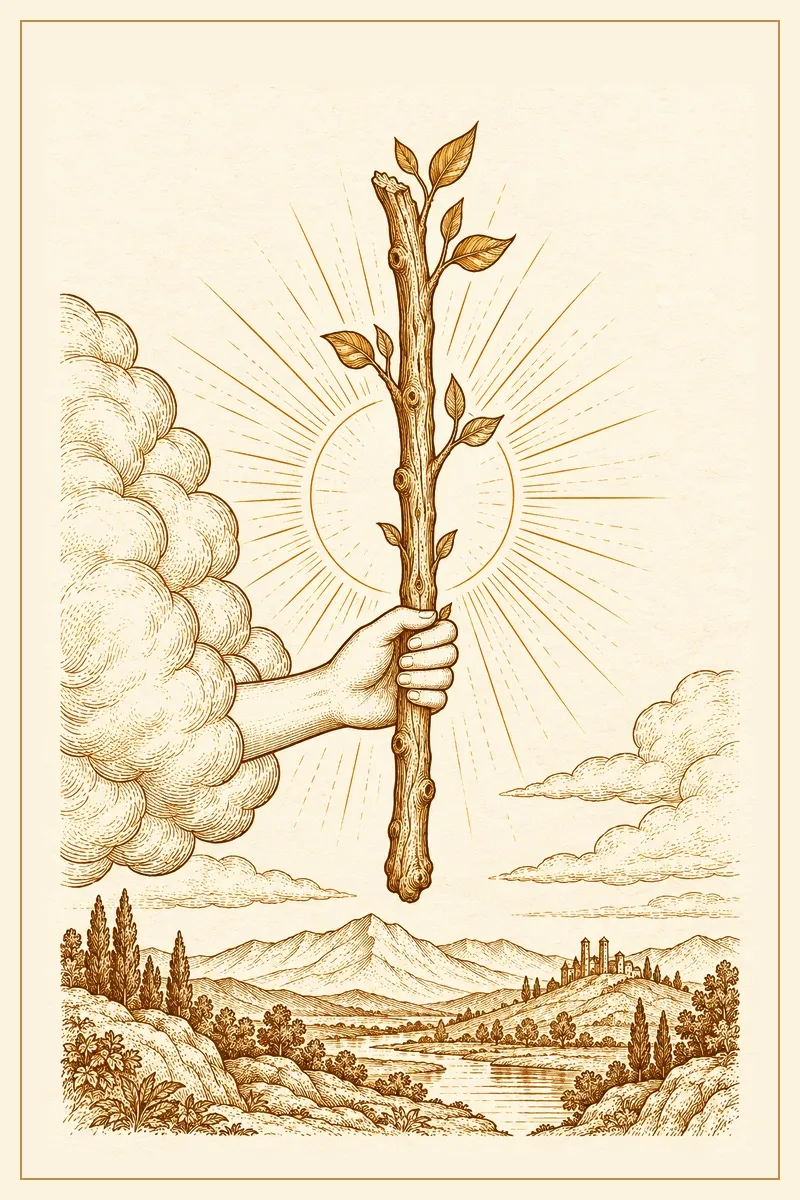
Upright, Ace of Wands shows a hand offering a living rod with fresh leaves sprouting from it: raw energy for a new start. In the seed position it points to a project you feel almost physically eager to begin, such as a class, a garden bed or a piece of writing. Give it a concrete first step within a week of the equinox so the spark has somewhere to land. The Ace of Wands tarot meaning explores the card in other areas of life.
Reversed, the spark is present but stalled: plans that keep waiting for better weather, or enthusiasm split across too many beginnings. Choose one shoot to water this spring and let the others wait.
The Sun: summer at full strength
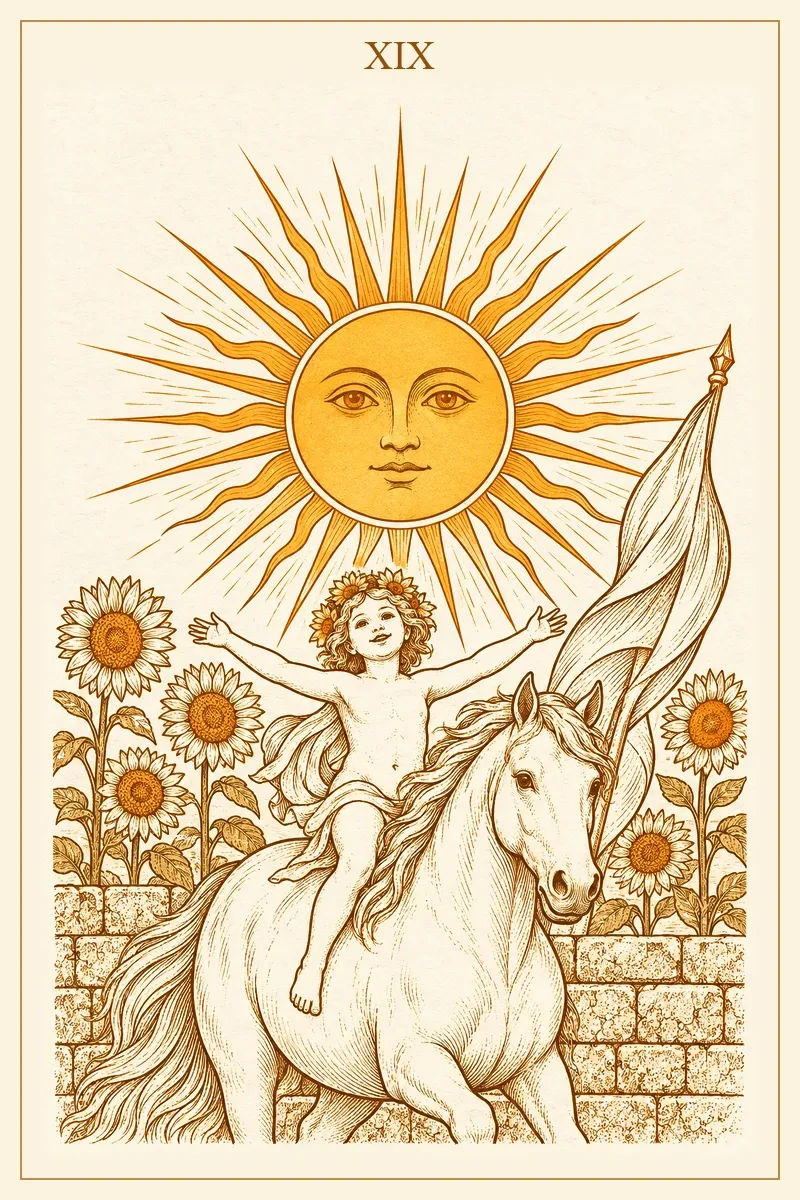
Upright, The Sun stands for warmth, vitality, visible success and uncomplicated joy. In the Radiance spread it confirms that something is truly thriving. Enjoy it, share it with the people involved and note what made it possible, so you can return to those conditions later in the year. For its meaning in love, work and other spreads, see The Sun tarot meaning.
Reversed, the light is dimmer or partly blocked: tiredness behind a cheerful face, or a success you cannot quite feel. In a summer reading it asks whether you are performing happiness rather than having it, and what would let you sit in the shade for a while.
Nine of Pentacles: enjoying the harvest
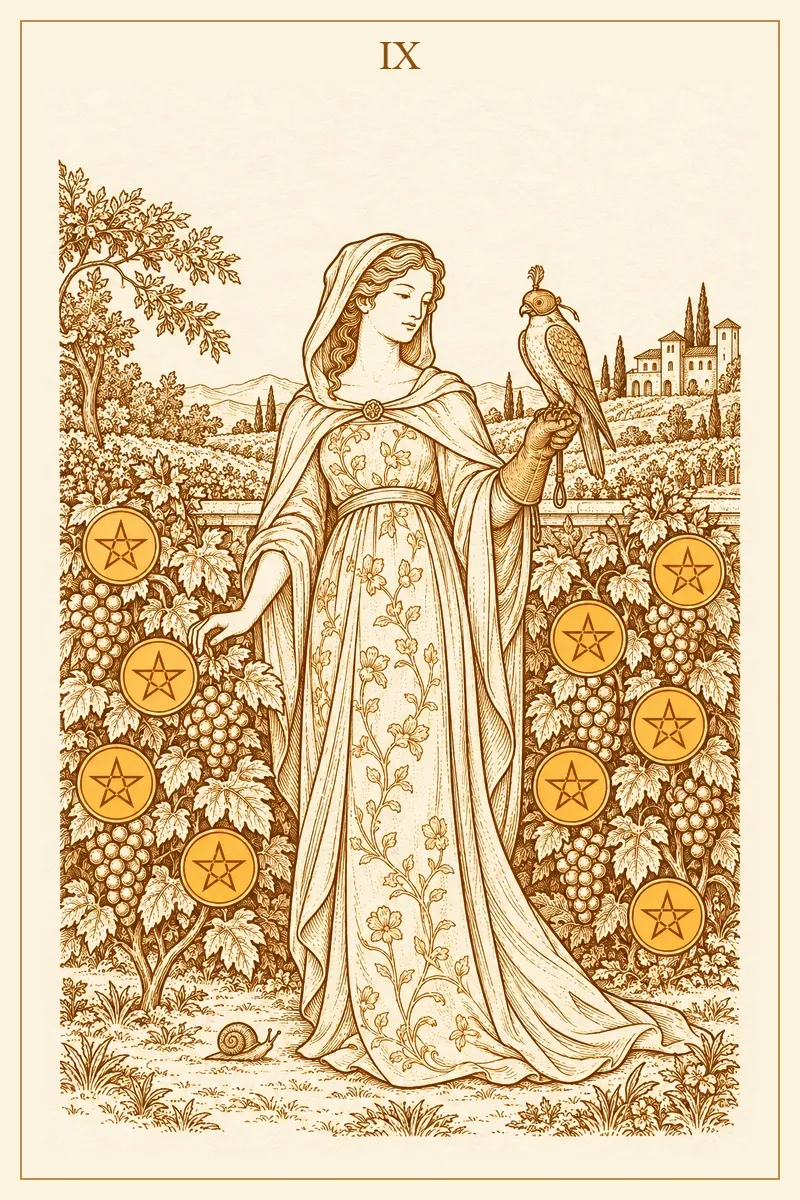
Upright, Nine of Pentacles shows a figure at ease in a ripe vineyard, surrounded by the fruits of her own work. In the Harvest spread it asks you to acknowledge what you built through steady effort: savings, a skill, a home that feels like yours. This harvest is self-made, and you are allowed to feel proud of it. The Nine of Pentacles tarot meaning goes further into its money and work angles.
Reversed, the harvest may be real while you cannot enjoy it, because you keep measuring it against someone else's or you are too busy to stop and look. It can also point to resources stretched thin before the cold months.
The Hermit: a lantern on the longest night
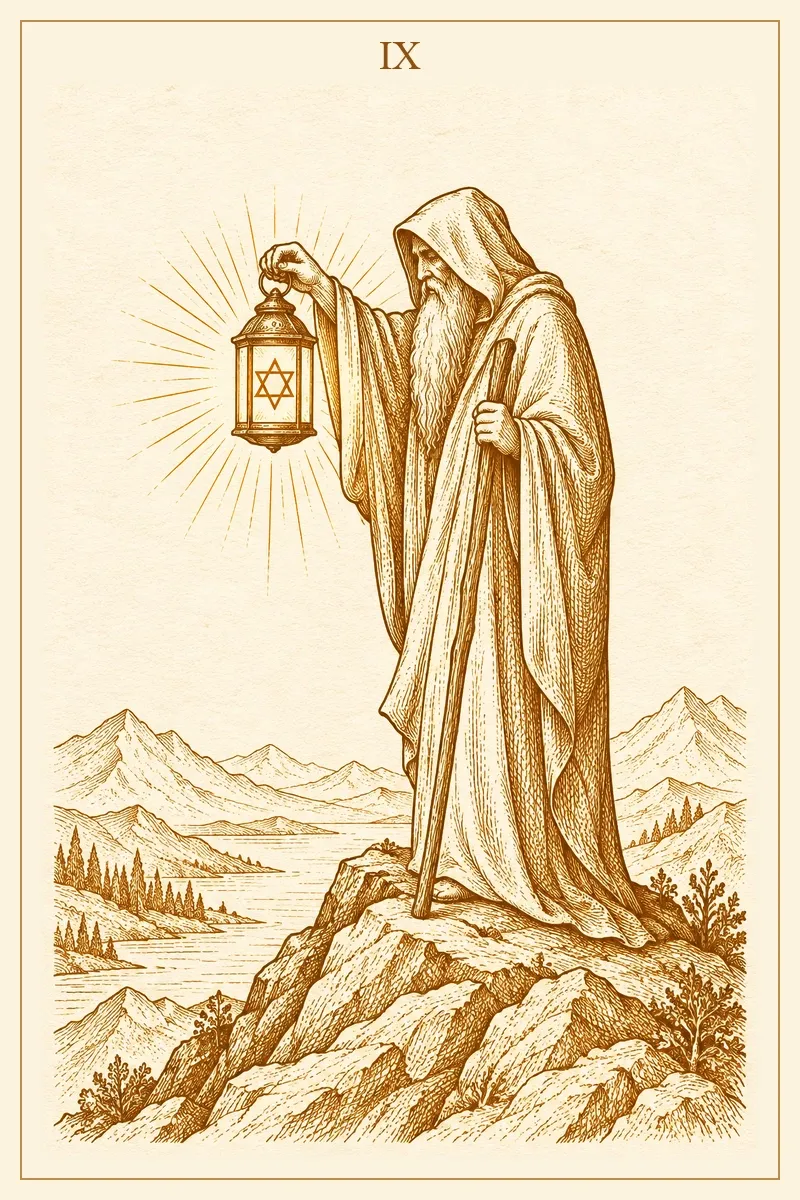
Upright, The Hermit stands alone on a rocky height, holding up a lantern with a star inside it. He is the natural image of winter: chosen withdrawal and the light you find in yourself when the world goes quiet. In the Deep Rest spread he invites you to step back from noise, whether that means walking alone or keeping a few evenings free. More on the card is in The Hermit tarot meaning.
Reversed, The Hermit can describe solitude that has turned into isolation, or a schedule so packed that a quiet hour never comes. If winter feels lonely rather than restful, reach out to one person you trust.
Four of Swords: rest as preparation
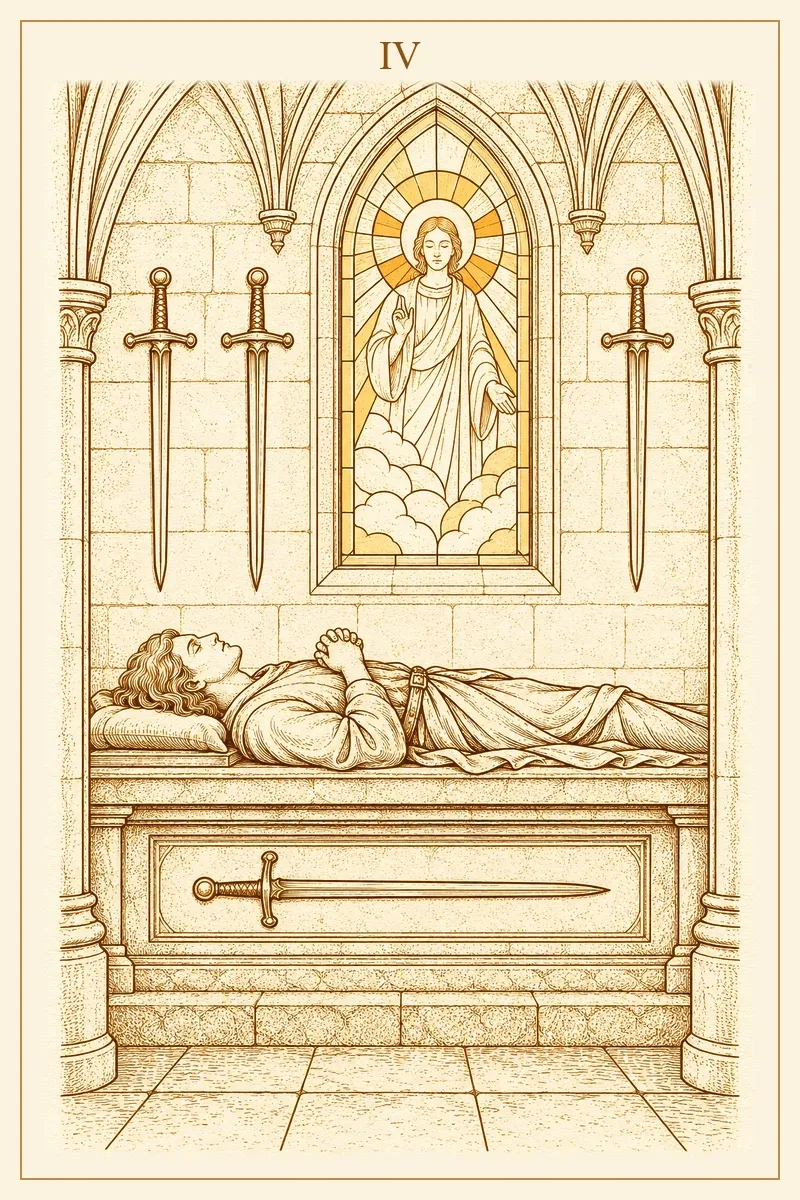
Upright, Four of Swords shows a figure lying still in a quiet chapel. It is the card that says rest is not laziness but the work of recovery, and in a winter reading it gives you permission to slow down without needing a reason. In the "Where do I need rest?" position, the answer could hardly be more direct. The Four of Swords tarot meaning explores its full range.
Reversed, it may describe rest you keep putting off, or a break that ended before you had recovered. Put the pause in your calendar with a start and an end, and protect it like an appointment someone else made.
A worked example: a harvest reading after a move
Imagine someone who moved to a new city in the spring for a job. At the autumn equinox they lay out the Harvest spread and ask: "What has this first season in a new place given me, and what do I carry into winter?" The cards:
- What have I grown: Three of Pentacles
- What am I grateful for: Six of Pentacles
- What is ready to fall away: Five of Wands
- What to store for winter: Nine of Pentacles, reversed
- Autumn's lesson: Temperance
The Three of Pentacles names the real harvest: this person has become part of a team and is trusted with skilled work. Gratitude goes to the Six of Pentacles, a card of giving and receiving help, perhaps the colleague who showed them around or the neighbor who lent a drill on moving day. A short thank-you message answers the card.
The Five of Wands in the release position describes the low-level contest of proving yourself in a new place: speaking first in every meeting, saying yes to every request. By autumn that effort has done its job, and some of the scramble can go.
The reversed Nine of Pentacles in the storage position suggests that life outside work has not yet taken root, or that the move used up most of the cushion they had. What to store for winter is not more output but a small reserve: one evening a week that belongs only to them, a budget they can check in a few minutes, and one place in the city that already feels like home.
Temperance as autumn's lesson asks for balance and a pace that can be kept up. The reader writes three lines: send the thank-you this week, stop volunteering for every extra task, and keep Thursday evenings for something unrelated to work. At the winter solstice the Deep Rest spread will show whether that evening has become real rest.
Small rituals for each change of season
None of these is required; they simply help the four readings feel like occasions rather than chores.
- A reading on the day itself, or close to it. Clear a table, set up your reading space with one thing brought in from outside, such as a bare twig in winter or a fallen leaf in autumn, and keep every seasonal reading in one tarot journal so the four pages of each year sit together.
- A fresh start for the deck. At each change of season you can reset your cards with one of the cleansing rituals for tarot, such as sorting the deck back into its original order, Major Arcana first, while you name the season ahead.
- A card drawn outdoors. Take the deck on a walk at the height of each season, draw one card and compare it with what you see: buds, heat haze, falling leaves or bare branches. The landscape gives the card a context a desk cannot.
- A small seasonal shelf. Near where you read, keep a few things that change with the year, such as spring blossom in a jar, a shell from a summer trip or a pinecone, and stand the key card from your latest seasonal reading beside them.
- Layered with the moon. If you follow the lunar cycle, the new moon rituals nearest an equinox or solstice suit the start of a season, and full moon readings make a natural check-in a couple of weeks later.
Seasonal readings for love, work and money
Love and relationships. In spring, ask what you want to bring into your connections; in summer, what is warm and alive between you and the people you love; in autumn, which pattern you are ready to drop; in winter, how much closeness and how much solitude you need. Keep the questions about your own part: rather than asking whether someone will come back by spring, ask what you want from the season either way.
Work and study. Spring suits new projects and courses, summer suits visible effort and collaboration, autumn suits reviews and finishing what you started, and winter suits planning and recovery. If the Seed spread fills with heavy Swords cards, consider starting the new project a few weeks later rather than forcing it through a tired stretch.
Money and home. The Harvest spread doubles as a gentle money review: what came in, what can fall away and what to set aside for the colder months. Treat it as a prompt for your own planning, and check major decisions with a qualified professional.
When your inner season does not match the calendar
A seasonal practice can be quietly freeing in a culture that expects the same output all year. Rest in the dark months is not a failure; it is how the next growth gets prepared. If you are in a personal winter, grieving or recovering, there is no need to rush into action because the calendar says spring. Use the Deep Rest spread in April if that is what fits, and save the Seed spread until something in you actually stirs.
For the wider picture, combine the four seasonal readings with a year-ahead tarot spread drawn around New Year or your birthday. The year-ahead layout sketches twelve months at once; the seasonal spreads check in along the way and show how that sketch is unfolding.
One practical note: if your mood drops with the light each winter and it affects your sleep, work or relationships for weeks at a time, talk to a doctor or a mental health professional. Seasonal low mood can be treated, and a tarot practice can sit alongside that care but should not replace it.
Journal prompts for the turning year
- Which season does my life feel like right now, regardless of the date?
- Which season do I find hardest, and what does that say about my relationship with rest, growth, abundance or letting go?
- What would it look like to trust my own timing the way a tree trusts its leaves to return?
- What did last year's reading at this same turning point ask of me, and did I give it?
Frequently asked questions
Do I have to read on the exact day of the equinox or solstice?
No. Anywhere within a few days of the date works. What matters is that the reading belongs to the turning of the season and that you give it unhurried time.
Can a seasonal spread tell me what the coming season will bring?
No. Four or five cards cannot map out the next three months, fix when something will happen or speak for anyone else's decisions. The final position in each spread points to a possibility you can work with, not a forecast.
What if I live where there are no four clear seasons?
Use the cycle that shapes your life. In tropical or monsoon climates, match the spreads to the wet and dry seasons, or to the rhythm of your work or school year. Planting, growth, harvest and rest happen in every life, whatever the thermometer says.
What if I miss a season?
Do the next one and begin by rereading your notes from the last reading you did. You can also draw a single card for the season you skipped so the record stays complete.
Can children take part in a seasonal practice?
Yes, in a simple form. A child can draw one card at each change of season, talk about the picture and then go outside to look for the same colors in nature. Keep it playful and avoid questions about fears or future events.
Letting the year turn
Four readings, four questions: what to plant, what is blooming, what to gather and where to rest. Kept up for a few years, they show which months you push too hard, which ones restore you and how each cycle prepares the next.
When the next equinox or solstice comes around, start a seasonal reading with the spread for that turning point, and keep the page where you will find it again when the season changes.