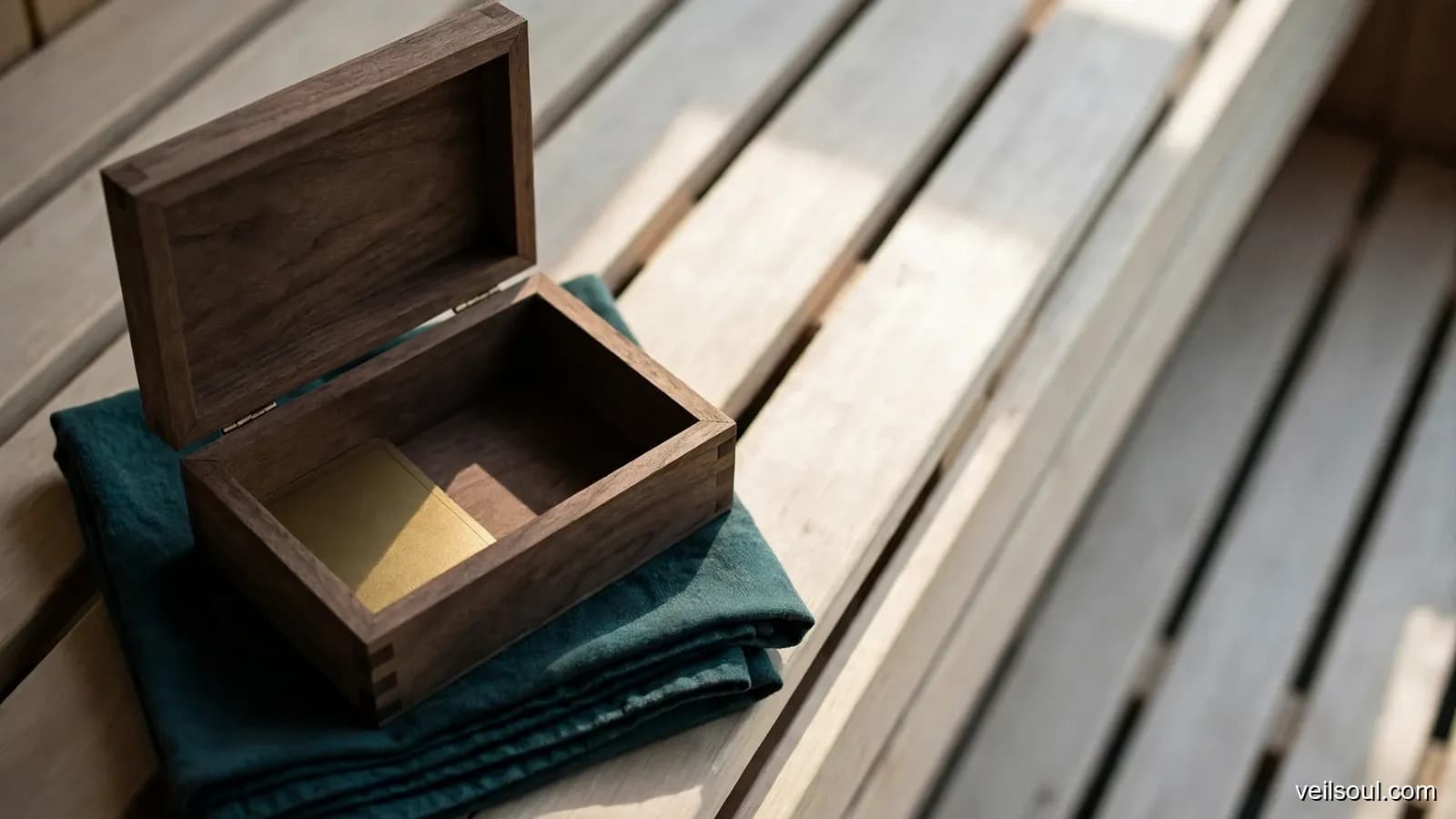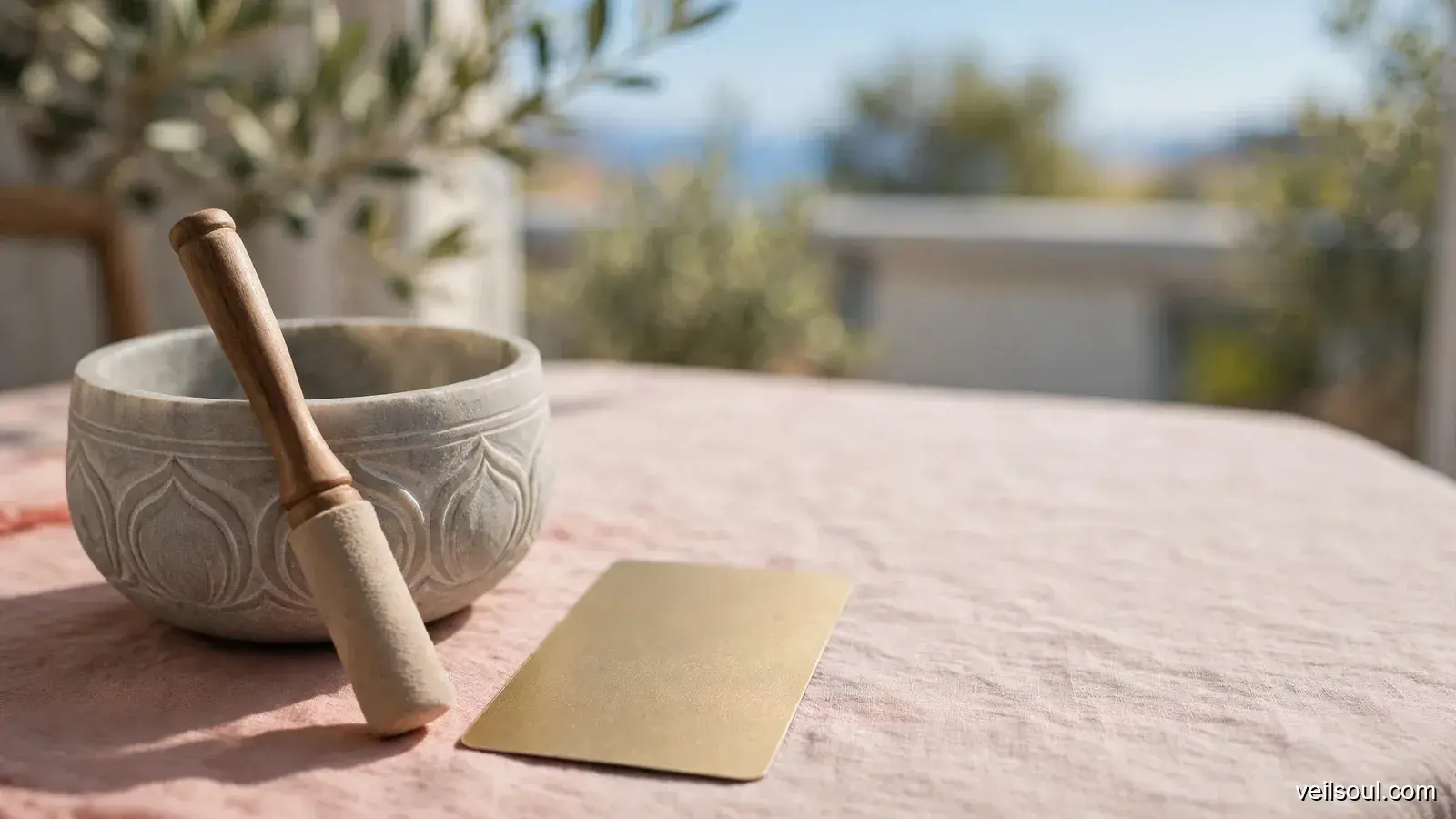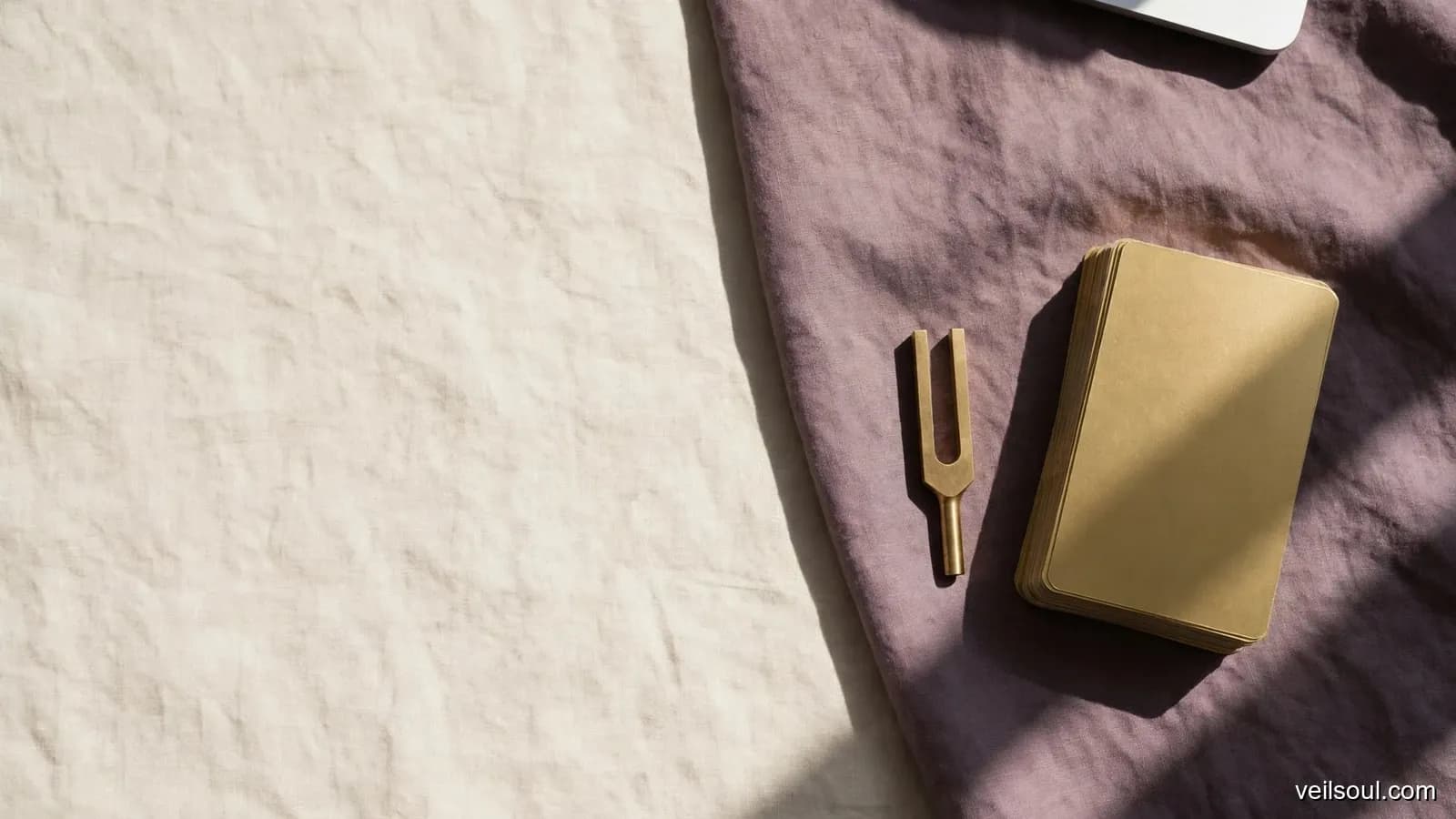
To cleanse tarot cards, choose one simple ritual and give it your full attention: knock on the deck, sort it back into order, breathe across it, ring a bell over it, leave it in moonlight, pass it through smoke at a safe distance, or rest it beside a stone. Then close with one sentence that says the last reading is finished. The method matters less than that deliberate pause, which separates one question from the next.
Readers explain the pause in different ways. Some feel that a deck picks up the mood of heavy sessions and needs clearing; others see the ritual as a reset for their own attention. Either way, a cleanse cannot change what a card means, and tarot itself has firm limits: it cannot confirm what another person thinks, give you a date, or guarantee an outcome. A cleanse prepares you to read honestly. It does not promise a gentler answer.
At a glance, here are the seven tarot cleansing rituals this guide walks through:
- Knock and cut: thirty seconds between readings, no tools.
- Sorting into order: a slow, complete reset when the deck feels scattered.
- Breath: one minute, anywhere, with only your hands and lungs.
- Sound: a bell, bowl or chime for a smoke-free home.
- Moonlight: an overnight rest tied to the lunar month.
- Smoke: herbs or incense, kept at a distance, for a deeper close after a hard session.
- A stone beside the deck: quiet upkeep while the cards are stored.
What a cleansing ritual resets
A tarot deck is paper and ink, so whatever a cleanse clears, it is not dust. (For dust and smudges, a dry cloth does the job.) What builds up is association. After you have asked the same worried question five times in a week, or read late at night about grief and loss, the deck can start to feel heavy in your hands. You shuffle and half expect the hard cards before they arrive, and that expectation colors how you read whatever turns up.
A cleansing ritual breaks that chain. It gives the previous session an ending you can see and feel, so you can approach the next question with fresh eyes. Whether you call that clearing residue or closing a tab left open in your head, the result is the same: a reader who is present for the reading in front of them.
Moving straight from one emotional question into the next tends to blur the two answers together. A thirty-second knock or a minute of breath creates a gap, and in that gap you can notice whether you are ready to read again or need a walk first. If the readings that weighed on you were about a breakup, the guide to tarot for heartbreak offers spreads for the weeks that follow.
For the practical side of deck care, from the basic steps of each method to the signs that a deck needs refreshing, see the step-by-step guide to cleansing a tarot deck. This piece focuses on the ritual itself: how to give each method a beginning, a middle and an end, so it feels like a real transition rather than a chore.
Seven ways to cleanse a tarot deck
Each ritual below comes in three parts: when it suits, how to do it, and a line you can say, aloud or silently, to close it. Change the words freely; a sentence that sounds like you carries more weight than a borrowed one.
Knock and cut
Suits: the gap between two readings, especially when you read for several people in one sitting. Time: about thirty seconds.
Hold the deck squarely in one palm. Knock on the top card three times with the knuckles of your other hand, firmly enough to hear it. Then cut the deck into three piles on the table and stack them back in a new order. The knock works like knocking on a door before you walk into a room: it announces that something new is about to begin.
To close: "That reading is done. This deck is ready for the next question."
Sorting the deck back into order
Suits: a deck that feels scattered, a return after a long break, or the end of a demanding month. Time: fifteen to twenty minutes.
Spread the cards out and rebuild the deck in sequence: the Major Arcana from 0 to 21, then each suit from Ace to King. As each card passes through your hands, look at it for a moment and greet it by name. The slowness is the point. By the time you reach the last King, you have looked at all seventy-eight images again and checked that none are missing or bent.
A sorted deck has no randomness left in it, so shuffle the cards thoroughly before your next reading.
To close: "Every card is back in its place. We start again from the beginning."
Breath
Suits: anywhere you cannot ring a bell or light anything, such as a café table, a friend's sofa or a train seat. Time: about one minute.
Hold the deck between both palms. Breathe in slowly through your nose, then breathe out in a long, steady stream across the top edge of the cards. Some readers picture the breath as clear light moving through the deck; others simply count to five. Repeat three times, then fan the cards briefly face-down on the table.
To close: "I let go of the last question and arrive at this one."
Sound
Suits: smoke-free homes, shared spaces, and anyone who settles through sound more than scent. Time: one to two minutes.
Set the deck in the middle of your table. Strike a singing bowl, ring a small bell, touch a chime or tap a tuning fork, and hold it near the cards while the tone fades. With no instrument at hand, three sharp claps above the deck serve just as well. Close your eyes and listen until the sound is completely gone.
To close: say nothing. Let the silence after the last note be the clean slate.
Moonlight
Suits: a monthly reset, or pairing with a full moon practice. Time: overnight, with no attention needed once the deck is in place.
Lay a cloth on a windowsill where moonlight reaches and set the deck on it. The full moon is the traditional choice, though any clear night works. Keep the cards indoors or under cover, since dew and rain warp card stock, and bring them in before strong morning sun arrives, because sunlight fades printed colors. If you already lay a full moon tarot spread, move the deck to the sill right after that reading so the release and the cleanse happen together.
To close: before you set the deck down, hold it for one breath and say, "I release what this month asked of us."
Smoke
Suits: a deeper close after an emotionally heavy session, or a deck that has passed through many hands. Time: three to five minutes.
Light a small bundle of dried rosemary, lavender or cedar, or a stick of incense, and rest it in a fireproof dish. Fan the deck slightly and pass it through the smoke in sections, holding the cards a hand's width above the source so they never meet heat or ash. Afterward, open a window and let the air clear.
Safety: stay with anything that is burning, keep it away from fabric and paper, and skip this method if anyone in your home has asthma or a sensitivity to smoke.
To close: as the window air moves through the room, say, "What was heavy can leave with the smoke."
A stone beside the deck
Suits: quiet upkeep between uses. Time: none once it is set up.
Rest a stone on the wrapped deck or next to the place where you keep your cards. Clear quartz, selenite and black tourmaline are traditional choices, but a smooth pebble from a place you love carries just as much meaning in this ritual. Put a heavy or rough stone beside the deck rather than on top, so it cannot press or scratch the top card. When you take the cards out again, lifting the stone away becomes your signal to begin.
To close: as you set the stone down, say, "Keep this deck steady until I return."
Matching the ritual to the moment
There is no required schedule. These pairings are starting points, not rules:
- Between two readings: knock and cut. It is quick enough that you will actually do it.
- After a heavy or tearful session: smoke or sound, followed by a short break away from the table.
- After reading for someone else: breath or sound before you shuffle for the next person. The guide to reading tarot for others covers how to open and close those sessions with care.
- When your draws feel scattered or confusing: sorting the deck back into order.
- Before a morning draw: three breaths over the deck, which folds the cleanse into a daily tarot ritual instead of adding a task.
- Once a month: moonlight, or sorting at the new moon, which pairs naturally with new moon intention setting.
- A new deck, a secondhand deck, or one returning from a long rest: sorting first, then any ritual you enjoy, so you meet each card before you read with it.
- While the deck is stored: a stone beside it.
If two rituals appeal to you, combine them. A knock between readings and a longer cleanse once a month asks very little and still gives your practice clear edges. And if you forget to cleanse before a reading, nothing is ruined: hold the deck, take one breath, and begin.
Designing a cleansing ritual of your own
The rituals above are templates. The version you keep doing will be the one that fits your senses, your space and your week. Three questions help you find it:
- Which sense steadies you? If scent calms you, start with smoke. If sound does, use a bell. If you think with your hands, sorting or knocking will feel natural.
- How much time do you really have? A parent reading at the kitchen table after bedtime may have thirty seconds. Someone with a free Sunday morning may enjoy the full sort. Both count as ritual.
- What feels meaningful to you? For one reader that is a candle and a written intention; for another it is three slow breaths. Neither is more spiritual than the other.
Whatever you choose, give it a clear shape. This structure fits almost any method:
- Open. Sit down, turn your phone face-down, and hold the deck for a moment.
- Act. Do the method itself: the knock, the breath, the bell or the sort.
- Name it. Say your closing line, so the cleanse has a definite ending.
- Check in. Notice whether you feel settled enough to read.
Keep the ritual short enough that you will repeat it. An elaborate ceremony performed twice a year does less for your readings than a small gesture you make every time you sit down.
Cards of ending and rest
Several cards in both the Major and Minor Arcana trace the same movement a cleanse makes: something ends, there is a pause, balance returns, and hope comes back. Knowing these four helps you recognize the message when they appear in a reading about starting over. The first two are about ending and resting.
Death: letting a chapter close

Death is about endings that make room, not about physical death. On this card, a skeleton in armor rides a white horse beneath a black banner marked with a white rose. A crown lies fallen among the flowers, a child holds out a bouquet, a bishop raises his hand, a young woman kneels, and the sun rises behind a distant town. Each figure meets the change in a different way, and the sun keeps rising regardless.
Upright in a reset question, Death says the old cycle really is finished and you can stop reopening it. Reversed, it points to resisting an ending: rereading old spreads, asking the same question again, keeping a chapter half open. The Death tarot card meaning goes further into its themes of transformation and rebirth.
Four of Swords: rest before the next question

The Four of Swords shows a figure lying on a stone tomb with hands joined, three swords hanging on the wall and a fourth carved along the side of the tomb, beneath a stained-glass window. It is the card of deliberate rest and recovery.
Upright, it suggests that the best cleanse right now may simply be a break: put the deck away for a few days and let your mind settle. Reversed, it can describe restlessness, reading again before you have absorbed the last spread, or a rest that has gone on so long it has turned into avoidance. The Four of Swords meaning covers its quieter themes of recovery and contemplation.
Cards of balance and renewal
The other two cards describe what comes back after the rest: a steady pace, and the wish to ask again.
Temperance: finding the balance again

Temperance shows a winged angel pouring water from one golden cup into another, one foot in a stream and the other on the bank, with irises growing at the water's edge and the sun low over the mountains. It stands for patience, moderation and the slow blending of opposites.
Upright after a cleanse, Temperance asks you to come back to reading at a steady pace: one question, fully considered, and then a pause. Reversed, it warns of excess: too many readings, too little rest, or swinging between hope and dread from one spread to the next. Its healing side is explored in the Temperance tarot meaning.
The Star: renewal after a hard season
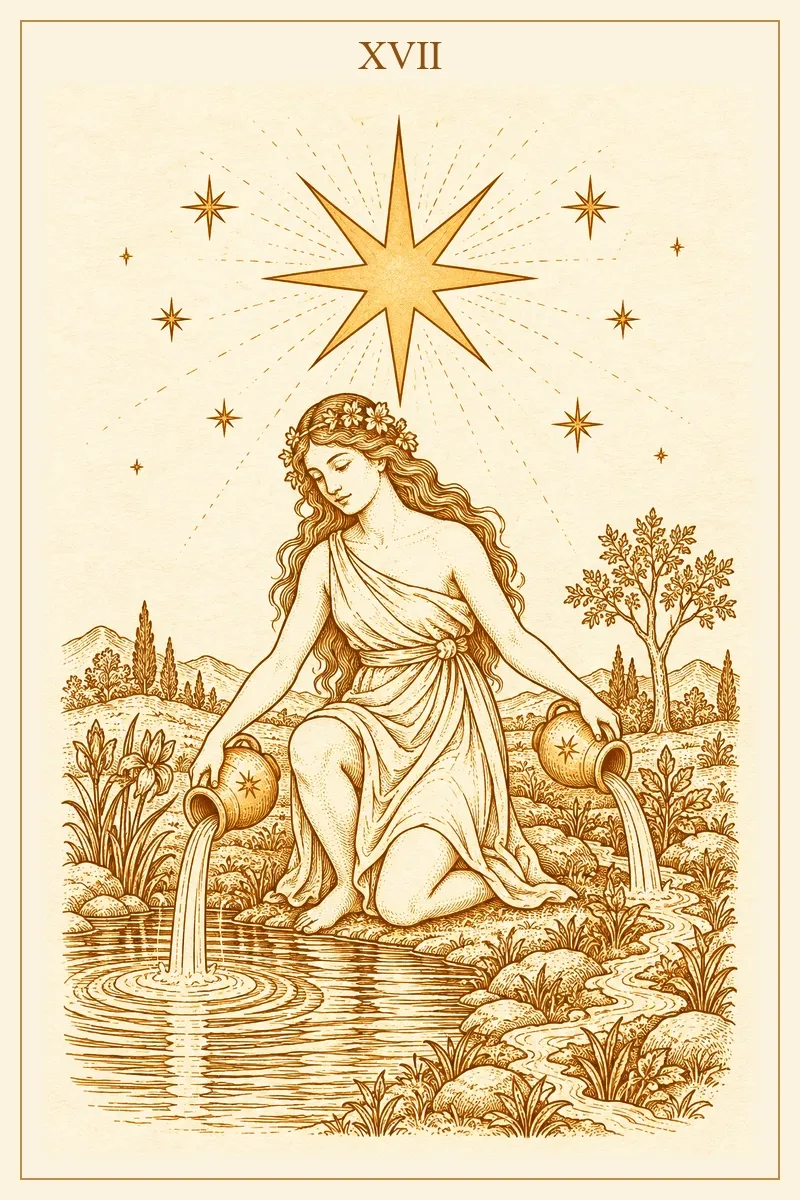
The Star shows a woman kneeling at the edge of a pool, pouring water from two jugs, one into the pool and one onto the land, beneath a large eight-pointed star with smaller stars scattered around it. After the upheaval of the cards before it in the Major Arcana, it brings calm hope and replenishment.
Upright, The Star is the feeling a good cleanse aims for: lighter, more open, willing to ask again. Reversed, it describes discouragement or a loss of faith in your own reading, which is a sign to start small with one gentle question rather than a large spread. The Star card meaning looks closely at its link with hope and inspiration.
A closing-and-opening spread for after a cleanse
A cleanse can end with a short reading that looks back once and then forward. This four-card spread suits the end of a heavy week or the start of a new month. Shuffle after your ritual, then lay the cards in a row from left to right:
- What the last readings left with me: the mood or worry you have been carrying from recent sessions.
- What I can set down now: the habit, fear or question that is ready to be released.
- What I want to keep: the insight worth carrying into the next chapter.
- How to begin the next reading: the attitude or kind of question that will serve you best.
Read positions one and two together as the ending, and positions three and four as the opening. If a card you dread lands in position two, such as one of the harder Swords, read it as the thing you are putting down, not as something about to happen. Note the four cards in your journal with one line about each; writing it down makes the close feel finished.
Worked example: resetting after a week of heavy readings
Here is how the spread might play out, using an invented example. Imagine a reader who has asked about a job search almost every evening for a week. Each spread blurs into the last, and the deck has started to feel like a source of worry rather than reflection. On Sunday morning she sorts the deck back into order, greets each card, shuffles, and lays out the four positions.
- What the last readings left with me: Ten of Wands. A man bent forward, hugging ten leafy staffs as he trudges toward a town. The week's readings have turned into one more load to carry instead of support.
- What I can set down now: Eight of Cups. A cloaked traveler with a walking staff leaves eight cups behind and heads for the mountains under a crescent moon. She can stop asking the same question every night; the answers were not changing, only her worry was.
- What I want to keep: Page of Pentacles. A young man in a feathered cap holds up a single coin and studies it. This is the practical step that did come out of the week: updating her portfolio and learning one new skill.
- How to begin the next reading: Ace of Swords. A hand reaches from a cloud holding an upright sword through a laurel wreath. Next time, one sharp question asked once: "What would help me prepare for interviews this month?" rather than "Will I get the job?"
The spread does not say whether she will be hired. What it gives her is permission to stop over-reading, something concrete to keep working on, and a better question for the next time she sits down with the cards. She wraps the deck, sets a stone beside it, and leaves it alone until Wednesday.
Frequently asked questions
How often should I cleanse my tarot cards?
There is no set interval. A quick knock between readings and a longer ritual once a month is an easy rhythm to keep. Add an extra cleanse after a heavy reading, after someone else has handled the deck, or when your draws start to feel flat.
Do I need sage, crystals or other special tools?
No. Knocking, sorting and breath need nothing but the deck and your hands. Tools can make a ritual feel richer, but the intention behind them is what turns a gesture into a ritual.
Should I cleanse a new or secondhand deck?
It is a pleasant way to make a deck your own. Sorting makes a good first ritual, because you see every card once and confirm that all seventy-eight are there. With a secondhand deck, wipe the cards with a dry cloth first, then use a longer method such as smoke or moonlight to mark the start of its new chapter with you.
Is it bad luck if someone else touches my cards?
No. Some readers invite the person they are reading for to shuffle or cut the deck. If it bothers you, cleanse afterward with breath or a knock; that is a matter of comfort, not danger.
Can a cleanse change a reading I didn't like?
No, and it helps to be clear about why. A cleanse resets your attention and the deck's associations, but it does not rewrite a card that has already appeared. Tarot cannot confirm what someone else feels, set a date or guarantee an outcome; it is a way to reflect on your situation. If a reading upset you, take a break, then return with a different question about what you can do next.
Can I use salt, water or sunlight?
Keep salt and water away from the cards, since both warp and stain card stock. If salt matters to you as a symbol, set a small dish of it beside the wrapped deck. Brief sunlight does no harm, but long exposure fades the colors.
A clean slate for the next question
Cleansing tarot cards is a small act of care with a clear purpose: it lets one reading end so the next can begin. Pick the ritual that suits your senses and your day, keep it short, and say the closing line as if you mean it.
When your deck feels ready, start a reading with Veil Soul and bring one clear question to it.