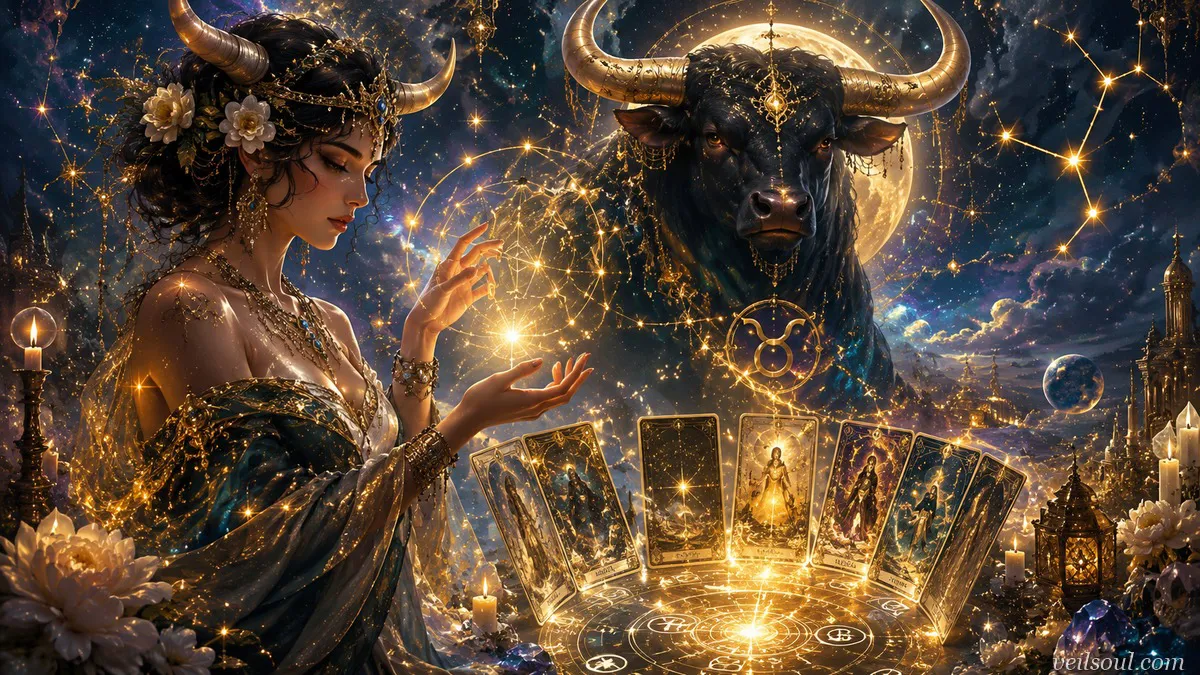
In tarot, the earth element belongs to the suit of Pentacles, which older decks call Disks or Coins. Under the Golden Dawn system that most modern readers follow, the earth signs also have their own Major Arcana cards: Taurus is The Hierophant, Virgo is The Hermit and Capricorn is The Devil, while The World carries Saturn and the element of earth together.
Earth is the element of things you can touch and keep: the body, money, work, food, a home. When it shows up in a spread, the reading usually turns from what you feel or think toward what you actually have and what you can build with it. That makes earth cards some of the most practical in the deck, and also easy to over-read. A Pentacles card can describe your relationship with savings or health, but it cannot predict a figure in your bank account, diagnose your body or set the date a project pays off. Read it as a picture of your situation that you can test against real numbers and real conversations.
The earth element at a glance:
- Suit: Pentacles, also called Disks or Coins; fourteen cards about the body, resources, work and home.
- The Hierophant: Taurus, fixed earth; values that last, tradition, learning that is handed down.
- The Hermit: Virgo, mutable earth; careful attention and skill refined in quiet.
- The Devil: Capricorn, cardinal earth; ambition and structure, and the ties that come with them.
- The World: the Hebrew letter Tav, carrying Saturn and the element of earth; completion made solid.
- Ace of Pentacles: the root of earth; a first tangible chance.
- Page of Pentacles: earth of earth; the patient beginner.
Why Pentacles are the earth suit
Each of the four Minor Arcana suits is paired with one classical element. In the Golden Dawn order, Wands carry fire, Cups carry water, Swords carry air and Pentacles carry earth. The pairing follows the objects themselves. A wand is a living branch that can catch fire; a cup holds water; a sword cuts the way a clear thought does. A pentacle is a disk you can hold in your palm, and it stands for anything solid enough to hold: coin, land, a crafted object, the body that does the work.
Golden Dawn papers call the suit Disks, many historical decks use Coins, and readers who work with playing cards match it with Diamonds; the meaning stays close across all of them. The five-pointed star on each disk is often read as a human figure with arms and legs outstretched, a reminder that the suit concerns life in a body as much as money. In classical thought earth is cold, dry and the most stable of the elements. Readers translate that into three qualities: earth receives and shapes what the other elements bring, it is patient and rarely speaks of overnight change, and it is concrete, so its questions tend to have answers you can check, like a budget or a schedule.
The earth signs and their Major Arcana cards
The Golden Dawn gave each zodiac sign one Major Arcana card through the Hebrew letters on the Tree of Life. The three earth signs differ by modality: Capricorn is cardinal earth that opens a season, Taurus is fixed earth that holds it, and Virgo is mutable earth that prepares the ground for change. Their cards show three ways of living with matter: keeping it, refining it and being ruled by it. A fourth card, The World, belongs to earth for a different reason.
The Hierophant: Taurus and what deserves to last
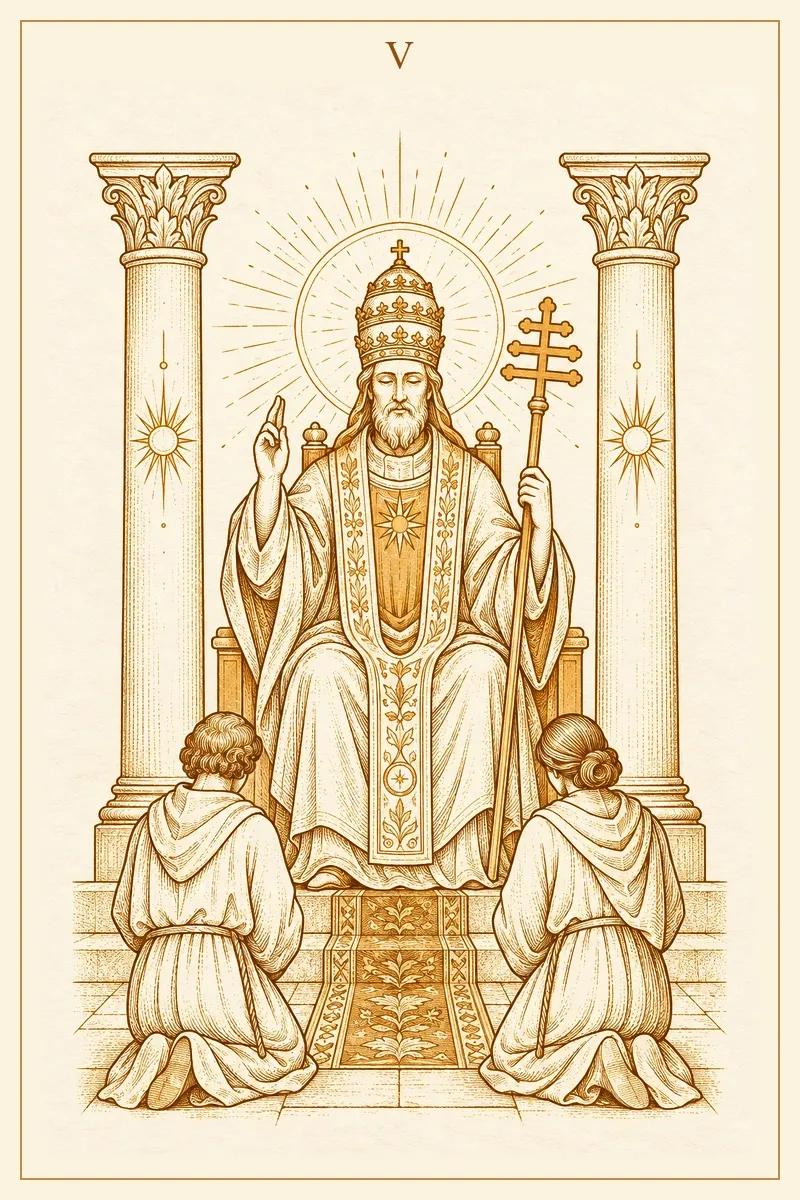
The Hierophant is the card of Taurus, the fixed earth sign that loves what is steady, proven and worth keeping. The figure sits between two pillars wearing a triple crown, raising one hand in blessing and holding a triple-barred cross staff in the other, while two kneeling figures wait on the steps below. Earth here is inherited structure: a method that works, a teacher, an institution, the habits a family passes on. The full Hierophant tarot meaning covers the card in every kind of question.
Upright in an earth-themed reading, The Hierophant favors the tested route: learn the established way to save, train or study before you improvise. Reversed, it questions a rule that no longer fits, such as a family script about money or a career chosen because it seemed respectable; it asks which traditions still feed you. Beside the Five, Six and Seven of Pentacles, which share its sign, it often frames a question about what you value enough to keep tending. The Taurus tarot guide follows that sign through the whole deck.
The Hermit: Virgo and the craft of attention
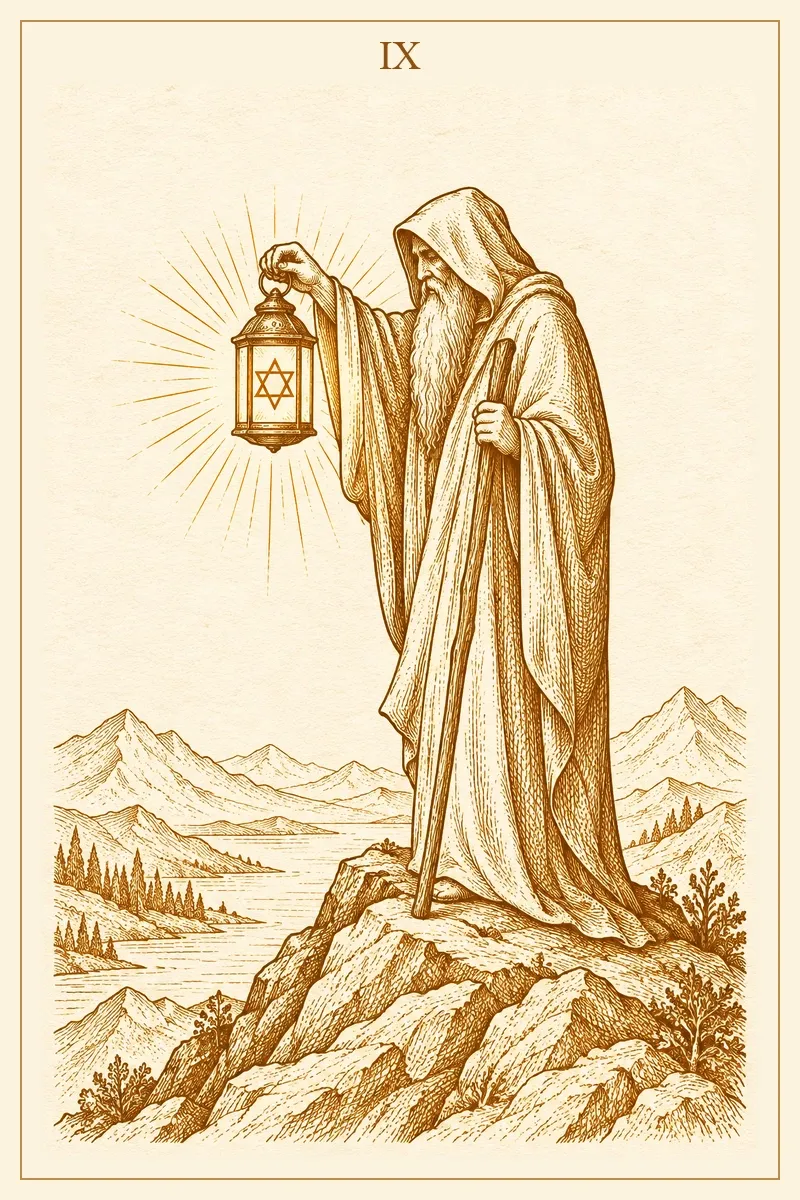
The Hermit belongs to Virgo, the mutable earth sign of sorting, improving and serving. A hooded elder stands on a rocky height above a lake and distant mountains, a staff in one hand and a lantern holding a six-pointed star in the other. Earth in this card is not wealth but skill: knowledge gathered slowly through practice and then carried, quietly, for others. For the card in love and other areas, read the Hermit tarot meaning.
Upright, The Hermit points to focused work done away from noise, such as reviewing accounts line by line or studying a skill. Reversed, the same withdrawal can tip into isolation, or into perfectionism that never lets a project leave the workshop. Virgo's three Pentacles, the Eight, Nine and Ten, describe the same refinement in material form, and the Virgo tarot guide explores the sign's other cards.
The Devil: Capricorn and the weight of matter
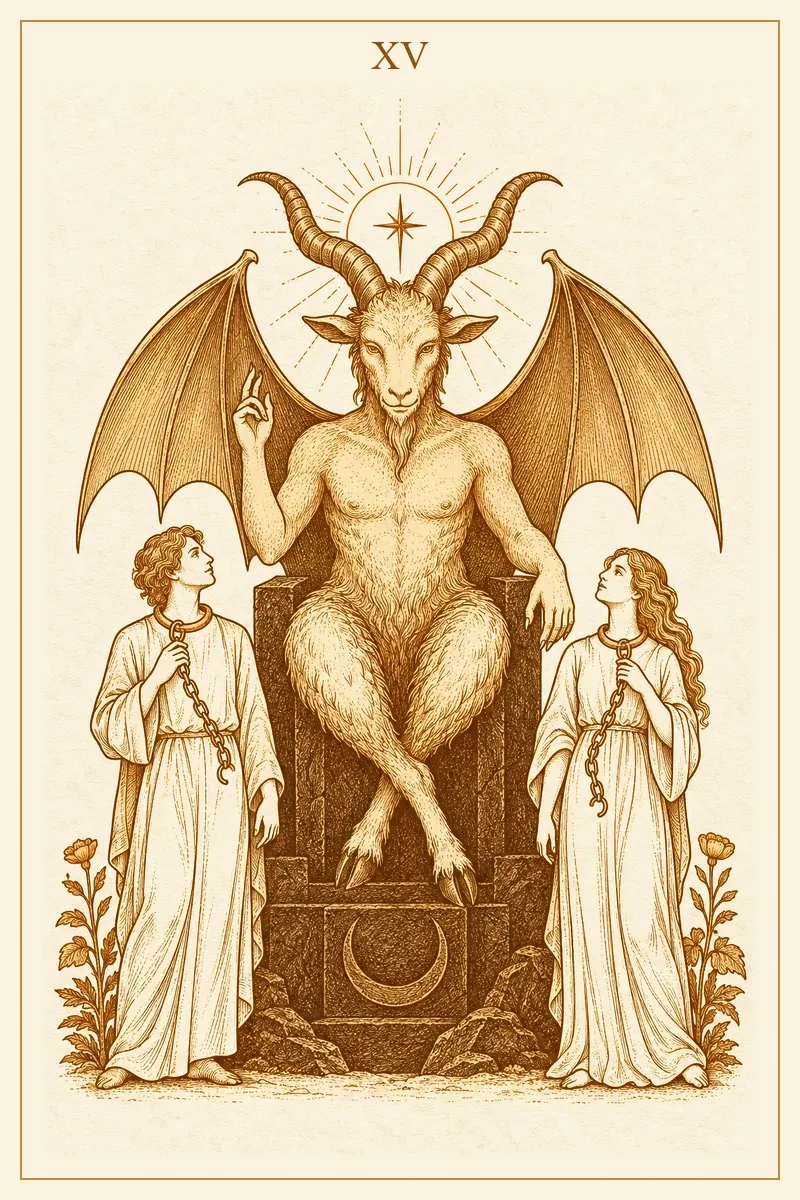
The Devil carries Capricorn, the cardinal earth sign of ambition, structure and the long climb. Here a goat-headed figure with bat wings sits on a heavy stone block, one hand raised, while two robed people stand at either side, each holding a loose chain in their own hands. That detail is the heart of the card in an earth reading: the bonds are real, but nothing is locked. The Devil tarot meaning goes deeper into its shadow and its release.
Upright, The Devil shows earth's shadow, the point where security, status or comfort starts to own you: debt you avoid looking at, a job kept for its title, a habit that soothes and costs. Reversed, it often marks the moment you notice the chain and begin to lift it. The card describes attachment, not evil. Next to Capricorn's Pentacles, the Two, Three and Four, it can ask whether a drive to build has turned into a need to control, and the Capricorn tarot guide follows that sign further.
The World: Saturn, Tav and the element of earth
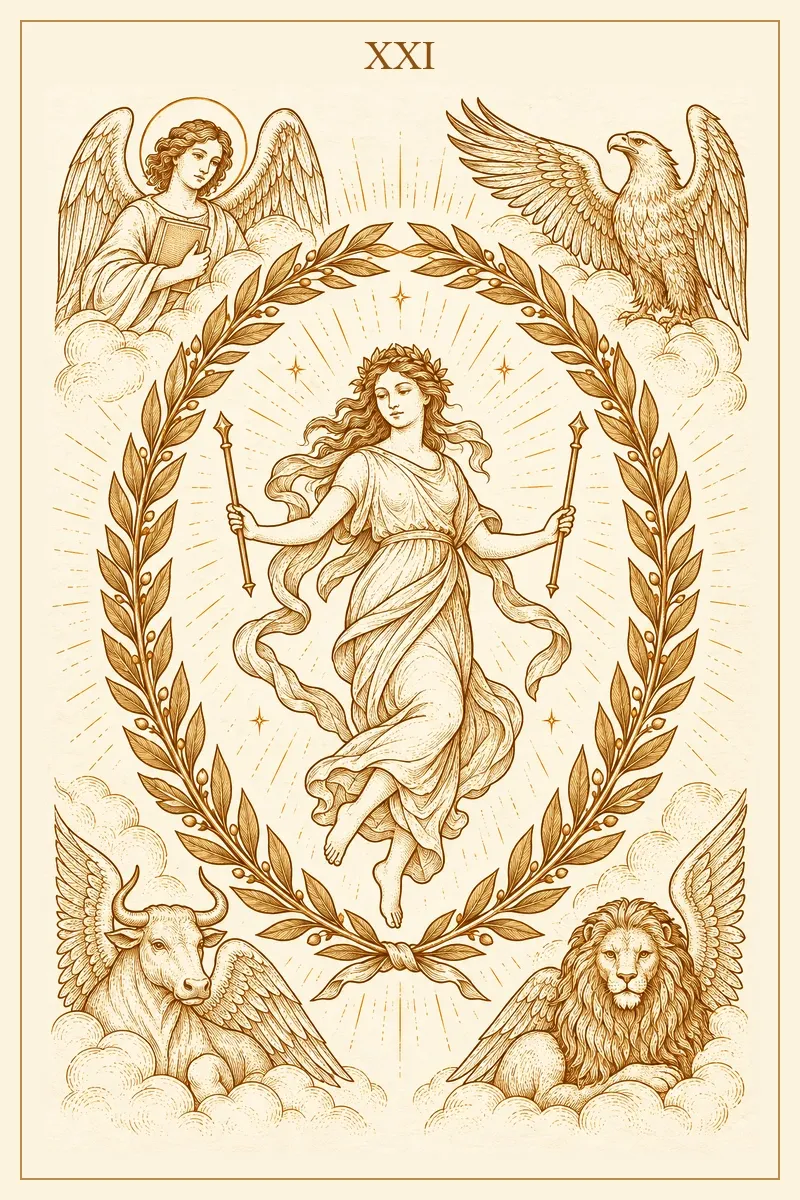
The World is the one Major Arcana card with a double attribution. In the Golden Dawn it takes Tav, the last Hebrew letter, which stands for the planet Saturn and also for the element of earth, which is why many tables list it as the earth card of the Major Arcana even though no earth sign rules it. The figure dances inside an oval wreath with a wand in each hand, and four winged creatures watch from the corners. One of them is a bull, the old emblem of Taurus, so earth sits in the frame as one of four elements held in balance. See the World tarot meaning for its full range.
Upright in an earth reading, The World describes something completed and real: a project delivered, a home settled, a body adjusted to a new normal. Reversed, the last step is often still undone. Saturn adds patience and limits; earth adds a result with enough weight to be lived in.
The Pentacles sign by sign, Ace to Ten
The Golden Dawn also places the numbered Minor Arcana on the zodiac. Each sign takes three cards, one for each ten-degree decan, so the Pentacles from Two to Ten fall under the three earth signs in the order cardinal, fixed, mutable. Read this way, the suit shows earth as a cycle rather than a ladder of wealth.
The Ace: the root of earth
The Ace of Pentacles has no sign; the Golden Dawn calls it the root of the powers of earth. A hand from a cloud offers one bright disk above a walled garden with a flowered arch. Upright, it is a first tangible chance, such as an offer or the seed of a savings habit; reversed, the chance slips away because no one plants it.
Two to Four: Capricorn's decans
The Two of Pentacles shows a young juggler dancing on one foot with two disks linked by an endless ribbon: the daily juggling of bills and errands, and, reversed, dropped balls. The Three of Pentacles puts a mason on scaffolding in a cathedral while a monk and a patron study the plans, skilled work that others can use; reversed, the team is out of step. The Four of Pentacles holds tight, a crowned man hugging one disk to his chest, another balanced on his crown and two more under his feet. Upright, that is prudent saving; reversed, a fearful grip loosening or spending without a floor. Capricorn's cardinal energy runs through all three: build the structure, then decide how much of it to guard.
Five to Seven: Taurus's decans
The Five of Pentacles is the hardest card in the suit: two ragged figures, one on crutches, trudge through snow past a lit stained-glass window without looking up. Upright, it speaks of material strain or feeling shut out; reversed, of the first step back toward support. In the Six of Pentacles a merchant with scales lets coins fall toward two kneeling people, the give and take of resources; reversed, it asks whether help comes with strings. The Seven of Pentacles shows a gardener leaning on his tool beside a bush heavy with disks, the pause to assess a long investment; reversed, impatience with slow growth. Taurus keeps asking one question in these cards: what is worth holding and tending?
Eight to Ten: Virgo's decans
The Eight of Pentacles is a craftsman at his bench carving a disk, finished ones hung on a post beside him: practice and steady improvement, or, reversed, rushed work. The Nine of Pentacles places a woman in a vineyard with a falcon on her gloved hand, the self-made comfort that discipline earns; reversed, independence turned lonely or comfort bought on credit. The Ten of Pentacles gathers three generations and two dogs beneath an arch, the disks set in the pattern of the Tree of Life: family, inheritance and what outlasts one lifetime, with strain over money or duties at home when reversed. Virgo's mutable earth closes the suit by caring for the details that let wealth endure.
The court of earth and the Page of Pentacles
In the Golden Dawn each court rank also carries an element. In the most common modern mapping, Knights are fire, Queens water, Kings air, and Pages, the Princesses of the older system, earth. Each Page is therefore the earthy part of its suit, where the suit's element gets ready to take form: the Page of Wands is earth of fire, the Page of Cups earth of water, the Page of Swords earth of air.
Page of Pentacles: earth of earth
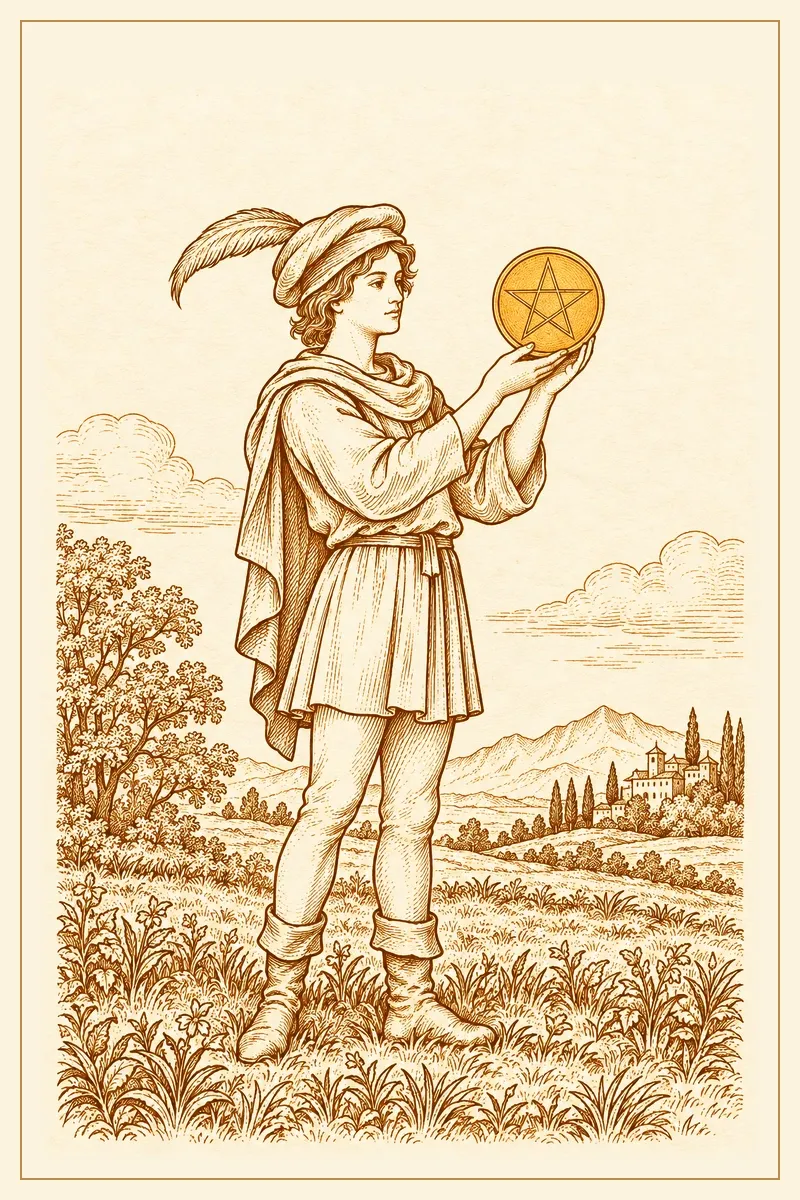
The Page of Pentacles is earth of earth, the most purely earthy card in the deck. A young man in a plumed cap stands in an open field holding a single disk up with both hands, studying it as if he has only just noticed what it might become. Read the Page of Pentacles tarot meaning for its uses in love and work.
Upright, this Page is the patient beginner starting a course, a savings habit or a vegetable bed with more curiosity than speed. In a career question it can describe an apprenticeship; in love, someone who shows care through small, steady acts. Reversed, the Page procrastinates, studies forever without starting, or chases a plan with no ground under it. Because it is earth doubled, it moves slowly even upright: think of a season of learning, not a week.
Knight, Queen and King: earth meeting the other elements
The Knight of Pentacles, fire of earth, is the steadiest knight in the deck, his dark horse standing still before a plowed field; he brings action to earth but keeps it methodical, and reversed he stalls in routine. The Queen of Pentacles, water of earth, sits on a garden throne with a rabbit near her feet, the care that turns resources into a home; reversed, she over-gives or neglects herself. The King of Pentacles, air of earth, sits on a throne carved with bulls, the clear-headed steward of what has been built; reversed, he may measure worth only in money. Some readers swap the King and Knight attributions, so treat this layer as a tool, not a fixed rule.
How earth behaves beside the other elements
Golden Dawn readers use a method called elemental dignities: neighboring cards strengthen or weaken each other depending on their elements. Earth is friendly with water, since both are receptive, so Pentacles beside Cups often read as feeling and resources supporting each other, the way care can show up as practical help. The guide to the water element in tarot explains that partner in full.
Earth is contrary to air. Pentacles next to Swords can mean that plans and worries are running ahead of what is possible on the ground, or that a hard fact cuts through a pleasant theory. The air element in tarot shows the other side of that tension. Fire sits in between: Wands and Pentacles are usually treated as neutral or mildly helpful to each other, with fire giving earth momentum and earth giving fire somewhere to land.
Reading a spread full of earth
When several Pentacles appear together, or an earth Major anchors the spread, the reading is probably asking you to deal with something concrete.
- Money: a run of Pentacles asks for a clear picture of what comes in, what goes out and what you are building. The cards show an attitude, such as gripping (the Four) or sharing (the Six); your records hold the figures, and a qualified advisor is the right source for financial decisions.
- Work: earth favors skill and work that produces something you can point to. The Three and Eight of Pentacles in a career spread more often describe learning on the job than a sudden promotion.
- Love: earth speaks of reliability, shared routines, a home and the practical side of commitment, showing how care is lived from day to day.
- Body and health: these cards can prompt you to notice sleep, food, movement and rest. They are a nudge toward attention, never a diagnosis.
- Timing: many Pentacles suggest a process measured in seasons rather than days, but no card can give you a date.
The absence of earth is information too. If you asked about money and drew mostly Cups, the useful next question may be how you feel about money rather than how much there is.
A four-stone spread for earth questions
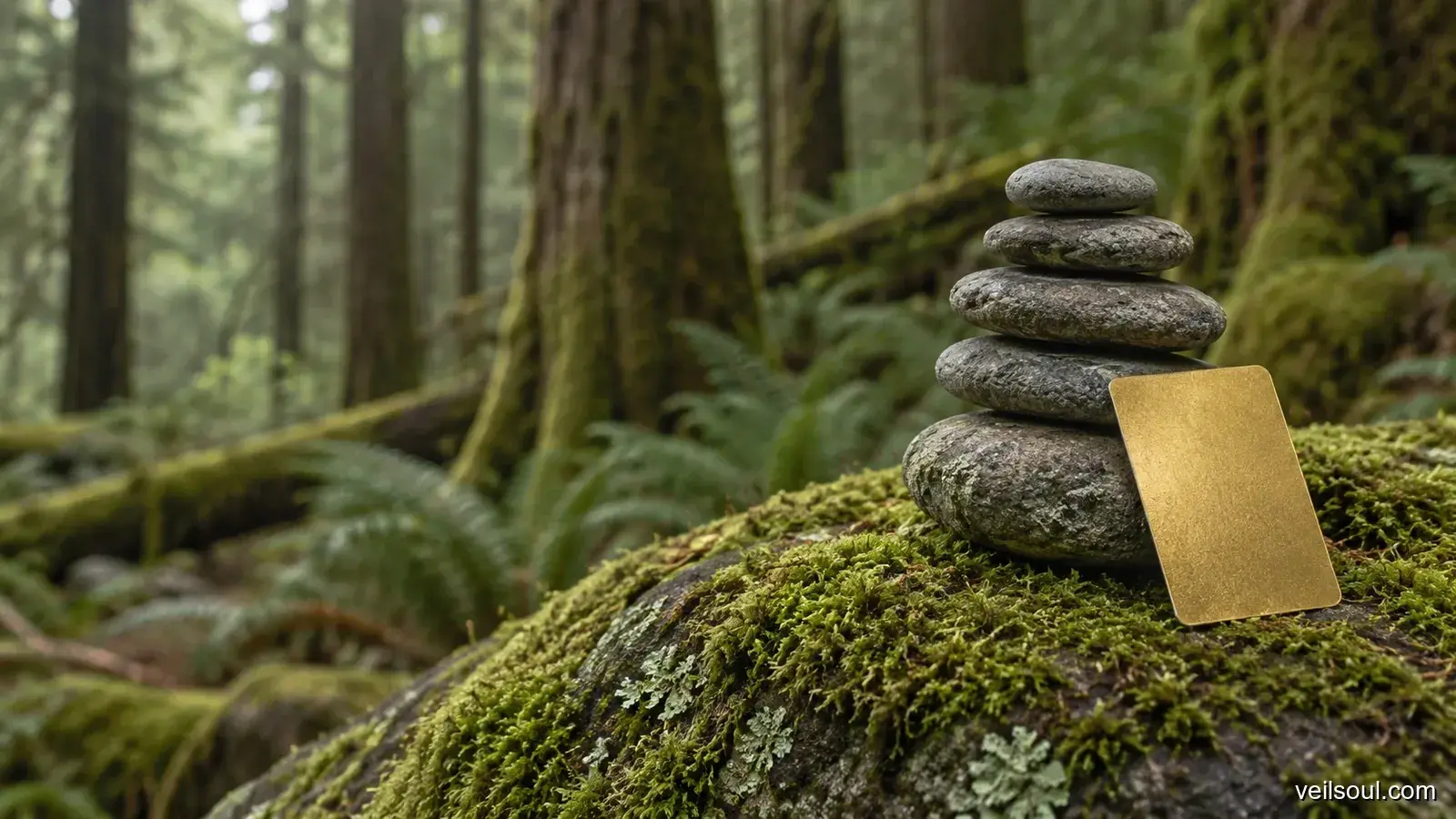
This spread stacks four positions like the flat stones of a cairn. Shuffle with a practical question in mind, such as "How can I build a steadier base this year?", and lay the cards from the bottom up.
- The soil: the foundation you are building on right now, including habits, resources and limits.
- The stone: what needs to stay steady while you build; the thing not to trade away.
- The seed: the practical opportunity or skill available to you now.
- The harvest: what tending this area with patience could grow into, if you keep choosing it.
Read the stack from the bottom. If the soil card is unstable, such as the Five of Pentacles, begin there before you plan the harvest. If the seed and the harvest share a suit, the path between them is fairly direct; if their elements clash, expect a step in between.
Worked example: a savings plan that keeps stalling
Suppose someone who has started three budgets in a year, and dropped each within weeks, asks: "Why does my savings plan keep stalling, and what would help it hold?" They lay out the four-stone spread and draw these cards.
- The soil: Four of Pentacles, reversed.
- The stone: The Hermit.
- The seed: Page of Pentacles.
- The harvest: Seven of Pentacles.
The reversed Four in the soil suggests a grip that keeps letting go: a strict plan, a burst of spending, guilt, then another strict plan. That is a pattern, not a verdict on character. The Hermit as the stone names what needs protecting: a quiet weekly hour with the numbers, free of anyone else's budgeting style. The Page of Pentacles as the seed suggests starting smaller, with one modest automatic transfer and a beginner's curiosity about where the money goes. The Seven of Pentacles as the harvest promises no sum; it describes a later moment of looking at slow growth and deciding what to keep.
The next step is concrete: set up the small transfer, book the weekly hour, and review the plan after one season instead of after every bad week. The cards give the plan a shape; the person's own numbers will show whether it works.
Grounding steps after an earth reading
Earth cards ask for action you can see.
- Write down one concrete fact about the area the cards pointed to: a balance, a number of hours, a date already on the calendar.
- Choose one small, repeatable action that fits in a week, such as a walk, a transfer or an hour of practice.
- Involve your hands: tidy one shelf, cook a meal, step outside. Earth readings land better when the body takes part.
- Set a check-in by the season rather than redrawing tomorrow; repeated draws tend to measure your worry, not your progress.
- Bring in real expertise for money, legal or health decisions; the cards can only help you shape the question.
Frequently asked questions
What tarot suit is earth?
Pentacles, also called Disks or Coins, is the earth suit. A few decks swap the elements of Wands and Swords, but the pairing of Pentacles with earth is close to universal.
Which Major Arcana cards are earth cards?
The Hierophant (Taurus), The Hermit (Virgo) and The Devil (Capricorn) carry the three earth signs, and The World joins them through its letter, Tav, which the Golden Dawn gives to both Saturn and earth.
Is The World an earth card or a Saturn card?
Both. Tav holds two attributions, and readers lean on whichever suits the question: Saturn for completion that comes through time and limits, earth for a result that has become solid. Neither reading is wrong.
What does it mean when a reading is mostly Pentacles?
It usually means the question is practical at heart, about money, work, the body or home, even if you phrased it in emotional terms. Look at which numbers appear: low cards point to beginnings, the middle of the suit to strain or adjustment, and the high cards to results.
Can earth cards predict money or health outcomes?
No. Tarot cannot tell you how much you will earn, when a payment will arrive or what is happening inside your body. Pentacles can show your relationship with these areas and suggest where to look; the facts and the decisions belong to your records and to qualified professionals.
Which card is the most earthy in the deck?
The Page of Pentacles, earth of earth. The Ace of Pentacles is the root of the element, so some readers name it instead; between them, the two cards cover earth as potential and earth as a first step.
Back to solid ground
Earth is the part of the deck that keeps a reading honest, reminding you that change becomes real through small, repeated acts in the physical world. If you would like to try the four-stone spread with a question of your own, start a reading and keep your notes beside your calendar, where earth does its work.