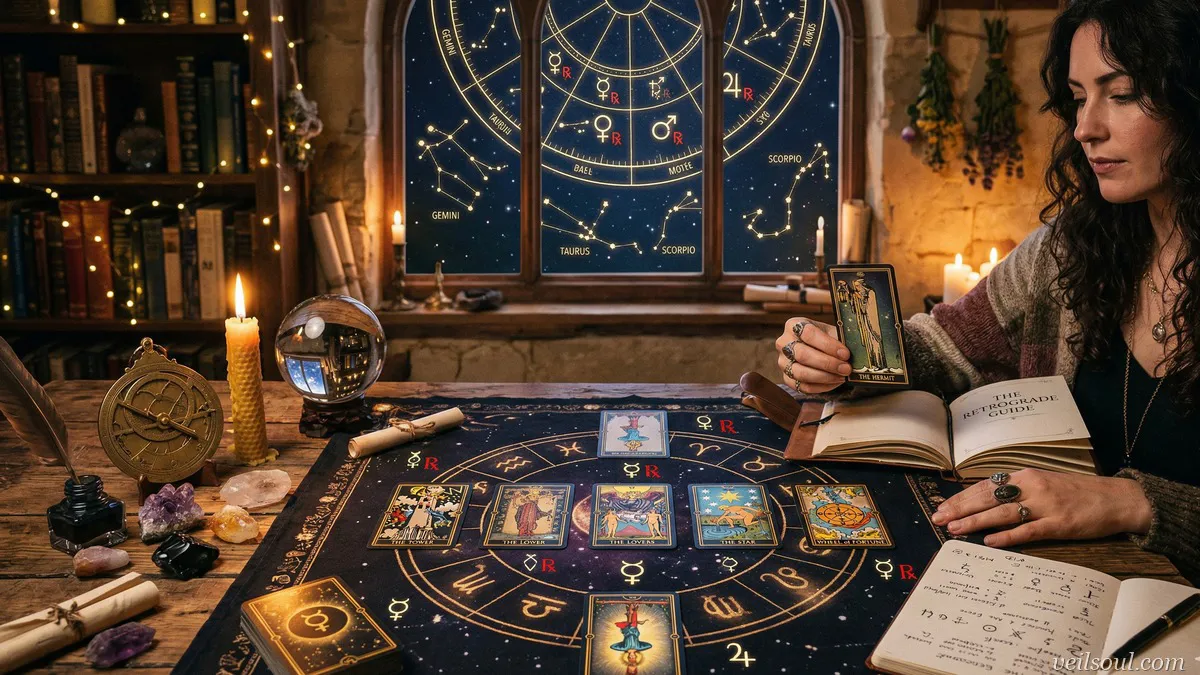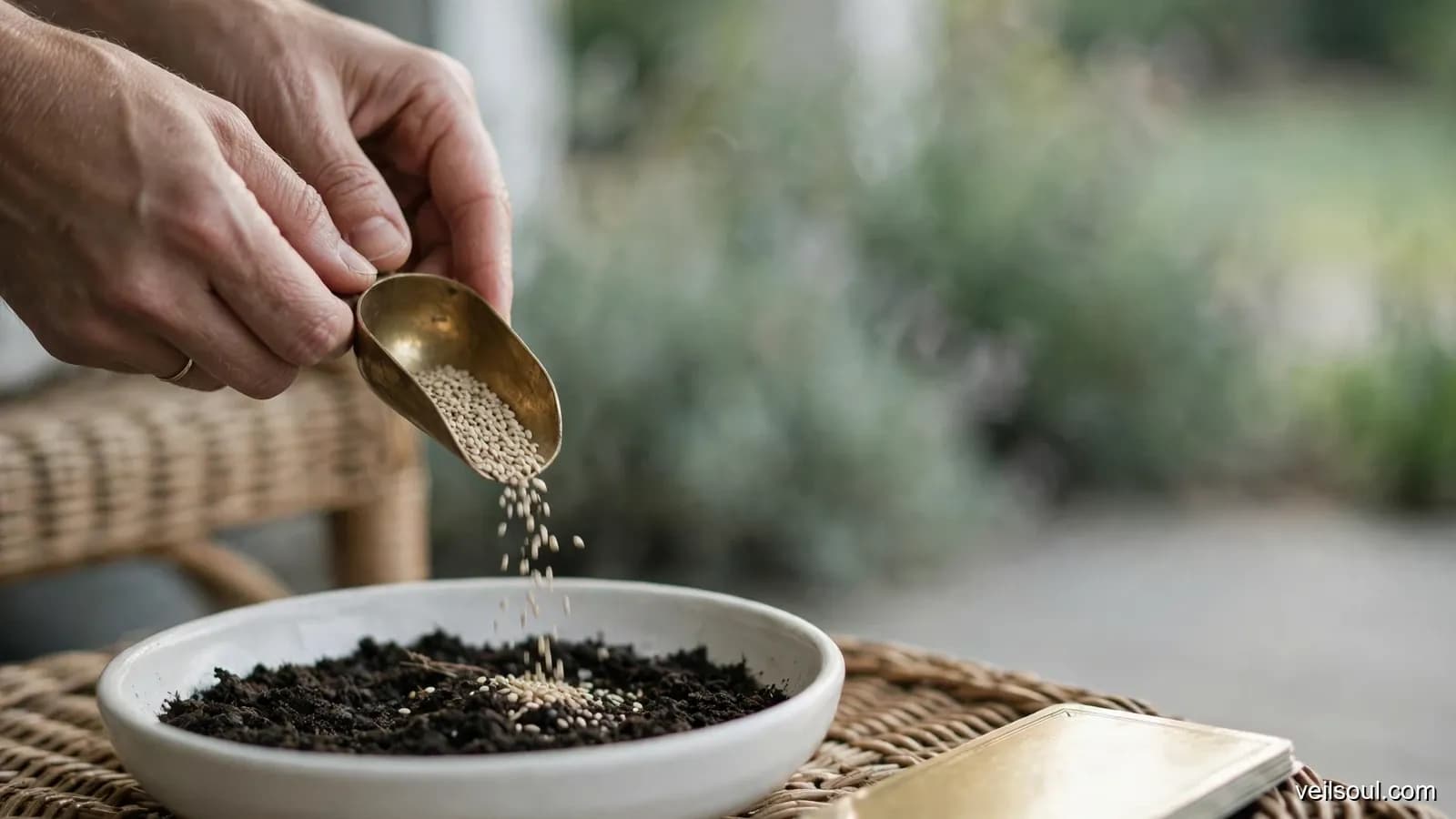
To work with the new moon in tarot, keep the ritual small and specific: on the night of the new moon, or on one of the two evenings after it, close the last cycle with a single card, lay out a short spread about what you want to begin, and write one intention with a first step for the next two weeks. The new moon tarot spread that suits this best is the five-card seed spread below, which reads your soil, your seed, what waters it, what could choke it and what it might grow into. The whole practice fits inside an unhurried hour.
Nothing here depends on believing that the moon pulls on your plans; the dark phase is simply a pause that invites you to start fresh on purpose. The cards cannot tell you that an intention will come true, when it will arrive or what another person will decide. What they can do is set a picture beside a half-formed wish so you can look at it, word it and choose what to tend.
Here is the ritual at a glance:
- Choose your evening: the new moon itself or either of the two nights after it.
- Close the last cycle: draw one card for what you are finished carrying.
- Read the seed spread: five cards, from the ground you stand on to the possible bloom.
- Write one intention: a single sentence, plus one step you can take this week.
- Seal it and come back: keep the seed card on top of the deck and revisit the page at the first quarter and the full moon.
What the dark of the moon is good for
At the new moon the Moon sits roughly between Earth and the Sun, so its lit side faces away from us and the night sky shows nothing. A thin crescent returns a day or two later. In lunar timing this is the planting phase, when something goes into the ground where no one can see it yet. If you want the astrology behind it, the guide to the Moon in tarot explains how the luminary and its cards fit together.
That image sets the tone of the reading. A new moon spread works best for questions that are still forming: what do I want to start, what would I like to be true by the full moon? It is a poor fit for questions that need a verdict, such as whether a job offer will come, because those ask the cards for a forecast this phase does not offer.
Three qualities are worth carrying into the reading:
- Quiet. The phase favors listening over pushing; let a meaning arrive before you name it.
- Beginnings. Every cycle starts here, so it is a natural home for a habit, a project or a fresh look at a goal that stalled.
- Not knowing. In tarot the dark moon is linked with The High Priestess, the keeper of what is not yet spoken. You are allowed to plant something without knowing exactly what it will look like when it comes up.
Before you shuffle: an hour set aside
You do not need special tools. A clear table, your deck, a notebook and a pen are enough. If you like low light, use a lamp or a single candle placed somewhere safe; the point is a room that moves more slowly than the rest of your day. A few minutes spent setting up your reading space keeps a cluttered table from pulling you back to your to-do list.
Silence your phone. Some readers clear the deck before a new cycle by knocking on it or holding it for a few breaths; use whatever helps you feel you are starting fresh. On a new notebook page, write the date, the moon's sign if you follow astrology, and one line about how the last month felt.
Take three slow breaths and let each exhale put down part of the previous month: an argument that went nowhere, a deadline now behind you. Then shuffle more slowly than usual. A slower shuffle is not magic; it gives your attention time to arrive.
Finally, choose the field you are planting in: health habits, a creative project, a relationship, money, study, home. "My life" is too wide for five cards. "How I want to spend my evenings this month" is the right size.
The new moon ritual in four movements
The ritual has four parts. Allow thirty to forty-five minutes in all, and do not hurry the second part; that is where the reading actually happens.
1. Close the last cycle
Sit with the deck for a moment, then draw one card with the question: "What am I finished carrying from the last cycle?" If it shows something heavy, name the situation it points to; if it shows something bright, ask whether you are holding a good thing past its season. Write one sentence that begins "I am setting down…" and leave it there. You are only clearing the table.
2. Read the seed spread
Lay out the five-card seed spread described in the next section. Before you interpret, look at the five cards together for a full minute: which suits dominate, which figures face toward the seed card and which face away. Only then read each position in turn, writing two or three lines for each one.
3. Write one intention
From the reading, write a single intention for the cycle. Keep it in your own hands and leave the ending open: "I intend to practice the piano for twenty minutes on weekday evenings" works, while "I intend to be a good pianist by the full moon" does not, because you cannot check it and you cannot fully control it. Under it, write one first step you can take within seven days; the piece on new moon intention setting helps with the wording. Read both lines aloud once, not to make them happen but to hear whether the sentence is honest.
4. Seal it and put the deck away
Place the seed card, from position two, on top of the deck. Draw one final card for the question "What will help me keep this promise to myself?" and note it under your intention. Then close the notebook, switch off the lamp, and sit for a minute without doing anything. That pause marks the difference between reading about a beginning and actually beginning.
Three new moon tarot spreads
Use one spread per new moon. The seed spread is the main one; the other two suit nights when you need something shorter or when you arrive with an intention already written.
The seed spread (five cards)
- The soil: what you are standing in now. The conditions, resources and habits already in place.
- The seed: what wants to begin this cycle. Treat this card as the heart of the reading.
- The water: what feeds it. An action, an attitude or a kind of support that helps the seed take root.
- The weeds: what could crowd it out. A pattern, a distraction or a fear to keep an eye on.
- The bloom: what the seed might grow into by the full moon if you tend it. A possibility, not a promise.
Lay the soil at the bottom, the seed above it, water and weeds to its left and right, and the bloom at the top, so the layout grows upward like a plant. Read soil and seed together first, because a seed only makes sense in the ground it falls into.
The dark mirror spread (three cards)
On a tired evening, a three-card spread keeps the ritual light:
- What stays in the dark: the part of the last cycle that does not need to come with you.
- What is germinating: something growing under the surface that you cannot quite see yet.
- What comes into the light: what may become visible as the moon waxes, if you give it attention.
The intention check (four cards)
If you arrive with an intention already on the page, use this spread to test the wording:
- The intention as written: how the sentence in your notebook reads when you look at it from outside.
- The want underneath: what you are actually hoping to feel or gain.
- The gap: where the written intention and the real want pull apart, and what adjustment would bring them closer.
- The first week: the single action that would make the intention real in the next seven days.
When the first and second cards disagree, rewrite the intention before you do anything else. A goal that does not match its own reason tends to fade before the first quarter moon.
Cards that echo the new moon
Any card can land in the seed position. The six below are worth knowing in advance because their imagery sits close to the new moon: a beginning, a pause, or a seed that needs time. Each has an upright and a reversed reading for this ritual.
The High Priestess: listening before you plant
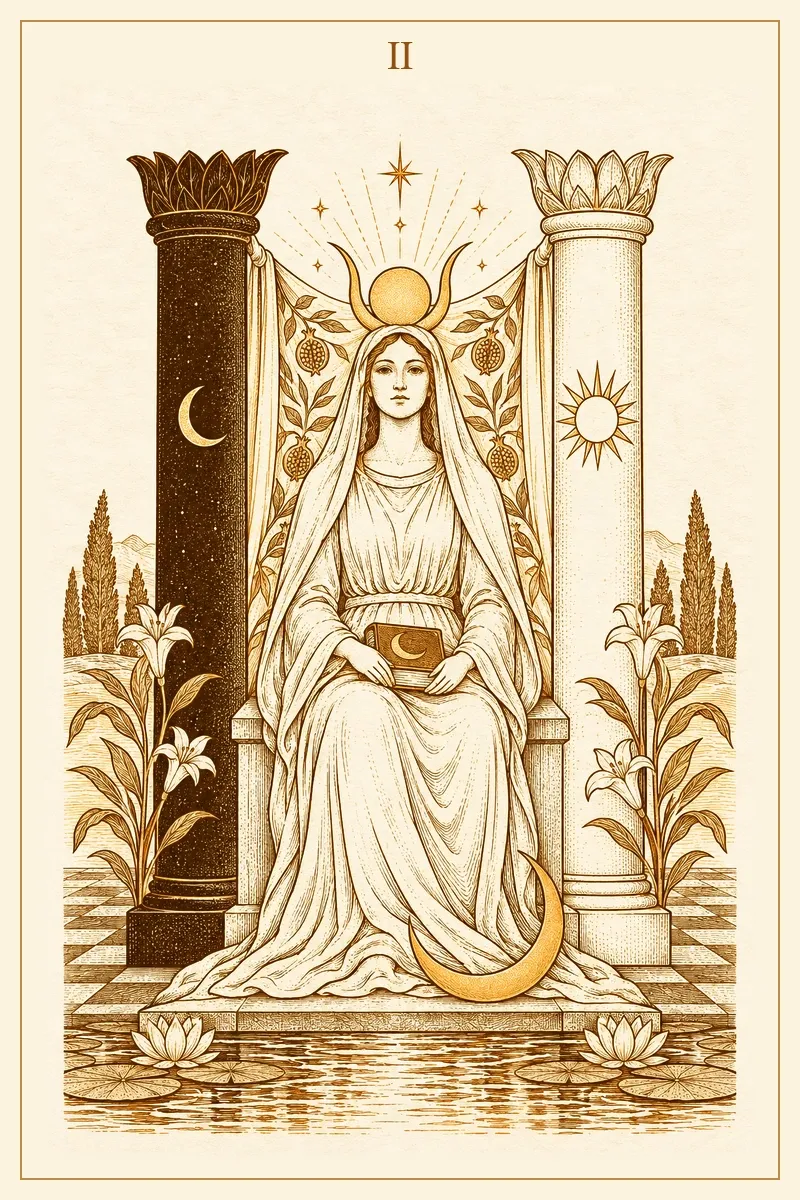
Upright, The High Priestess sits between a dark pillar and a light one with a closed book in her lap, keeping knowledge she does not hand out. In a new moon reading she asks you to listen before you act. In the seed position the intention may be a question to live with for a few weeks rather than a task: what do I actually want here? The full High Priestess tarot meaning covers her other contexts.
Reversed, she can point to an inner signal you keep drowning out with research, advice or busyness. Before you plant, spend one evening without input, writing a page of your own thoughts.
The Fool: a first step without the whole map
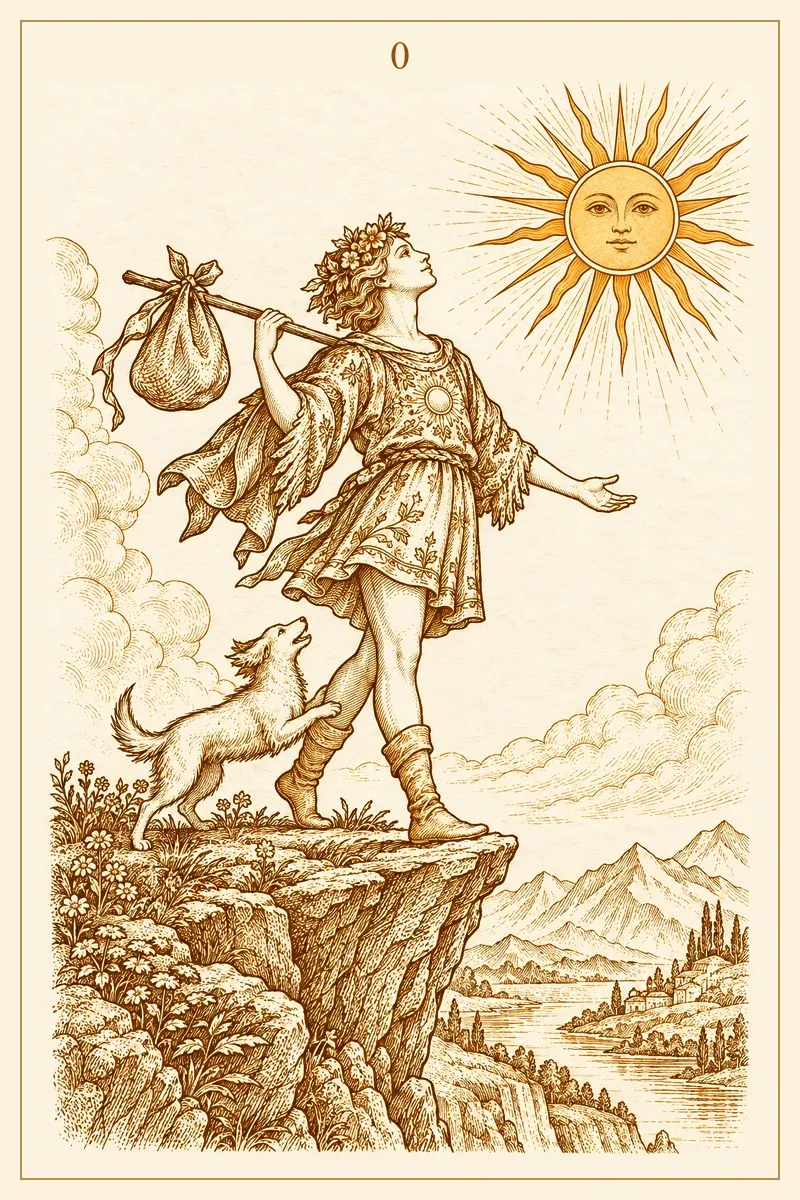
Upright, The Fool is the card of setting out. As a seed card it says that beginning matters more than planning: sign up for the class, write the first page. The Fool does not know where the road goes and does not need to. When this card appears, make the first step of your intention small enough to take tomorrow. More on the card is in the Fool tarot meaning.
Reversed, The Fool can mean a leap taken without looking or a leap avoided out of fear. If you tend to rush, add one safeguard to your first step; if you tend to wait, set a date for it and tell one person.
Ace of Wands: a spark that needs a container
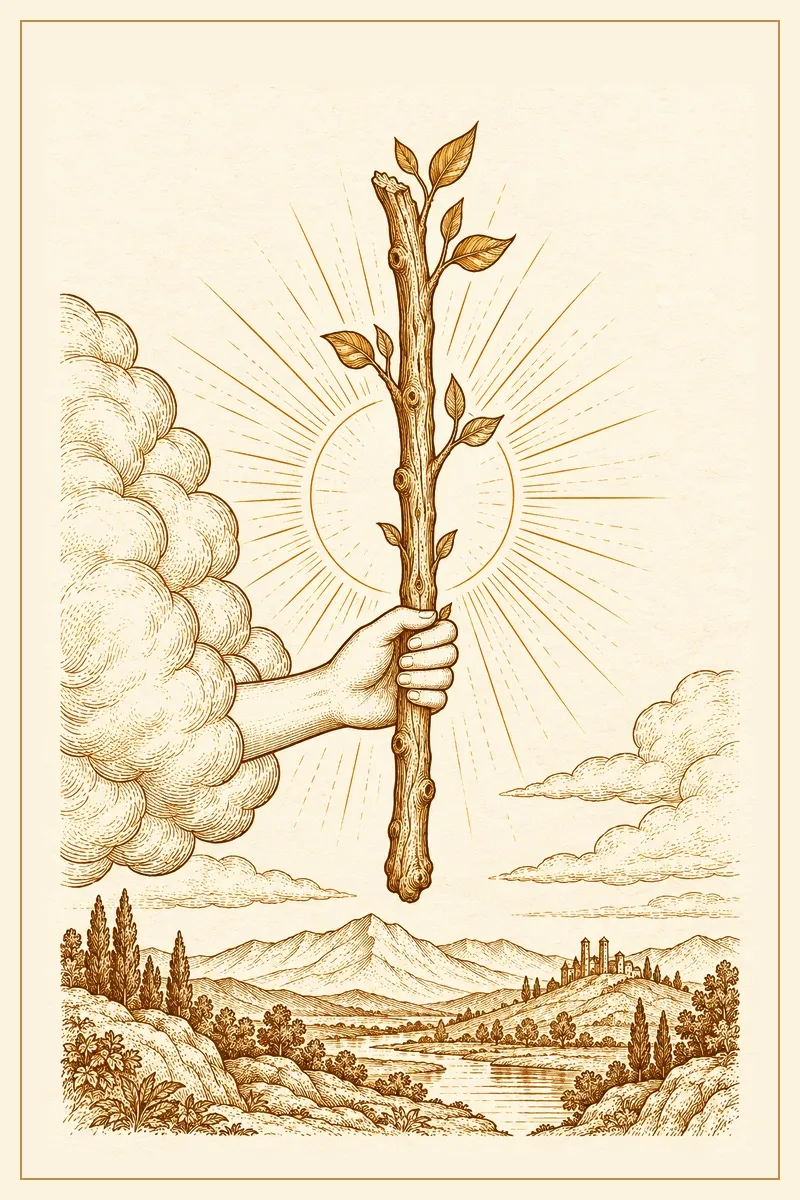
Upright, Ace of Wands is raw creative energy: a new idea, enthusiasm, the urge to make something. In the seed position it is a clear yes to beginning, but this Ace can burn hot and fast. Pair it with a container, such as a fixed time each week or one small finished piece by the full moon, so the spark has somewhere to go. The Ace of Wands tarot meaning explores its other sides.
Reversed, the spark is there but scattered: too many ideas competing, or simple tiredness. Choose one idea for this cycle and park the rest on a list. The reversed Ace is not a no; it asks you to narrow down.
Ace of Pentacles: a seed rooted in daily life
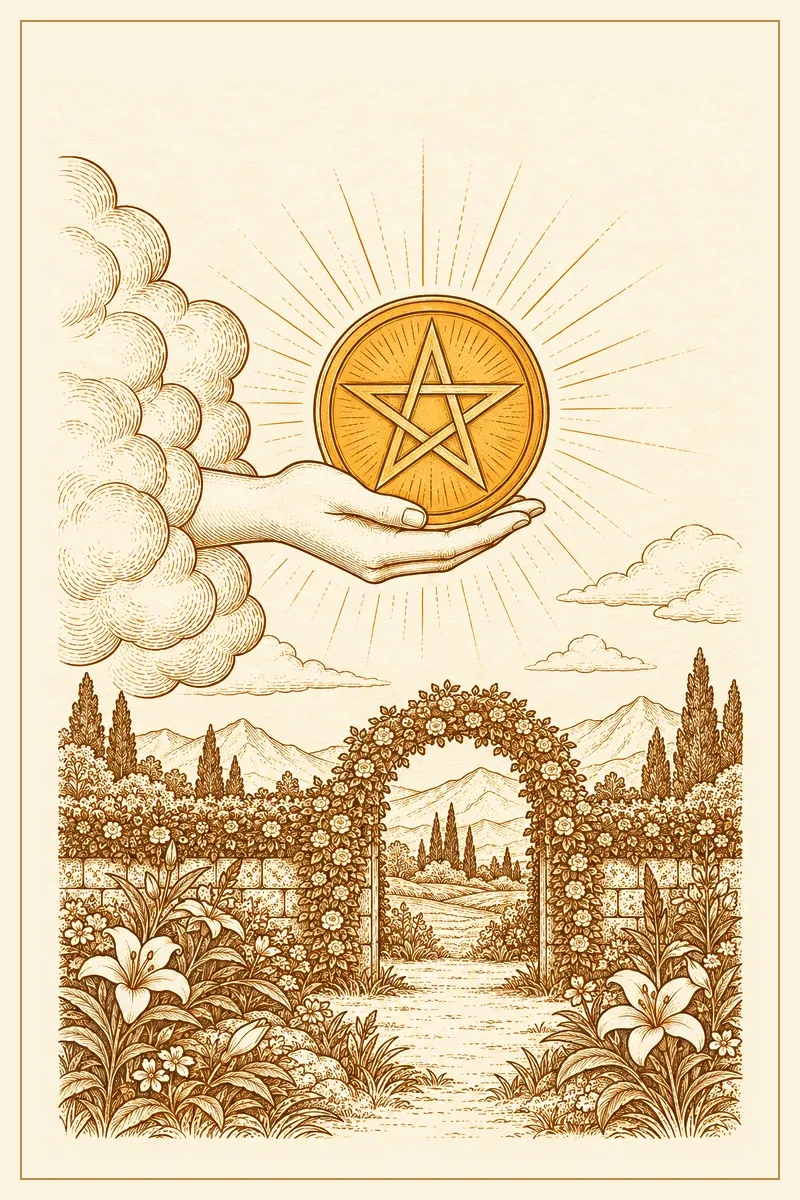
Upright, Ace of Pentacles offers a single coin, a practical opportunity you can actually hold. At the new moon it suits intentions about money, health routines, work skills or the home. It asks for an intention you can measure in ordinary terms: a savings habit, a set time for exercise, one new piece for a portfolio. Its practical side is laid out in the Ace of Pentacles tarot meaning.
Reversed, the opportunity may be real while the ground is not ready: the budget is unclear or the calendar is full. Rather than throwing the seed away, use this cycle to prepare the soil, for example by tracking your spending for a month before you set a savings goal.
Four of Swords: when the seed is rest
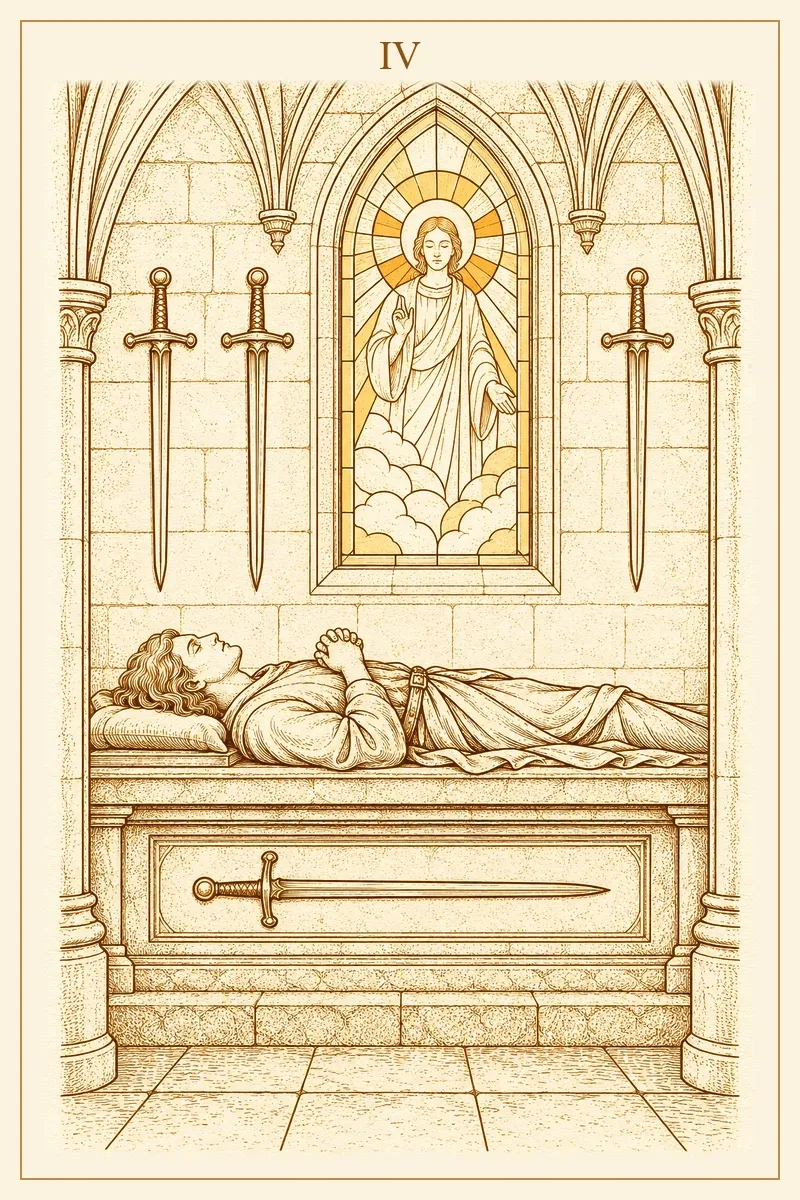
Upright, Four of Swords stands for rest, recovery and chosen stillness. Some new moons do not ask for a new project. If this card lands in the seed position, the intention may be to sleep more, to take one whole weekend off, or to stop adding commitments until the full moon. Rest is a legitimate thing to plant. The Four of Swords tarot meaning goes deeper.
Reversed, it can describe a break that keeps getting postponed. Write down when the pause will happen and what you will not do during it; a rest with no shape fills up with chores.
Seven of Pentacles: a seed that needs time
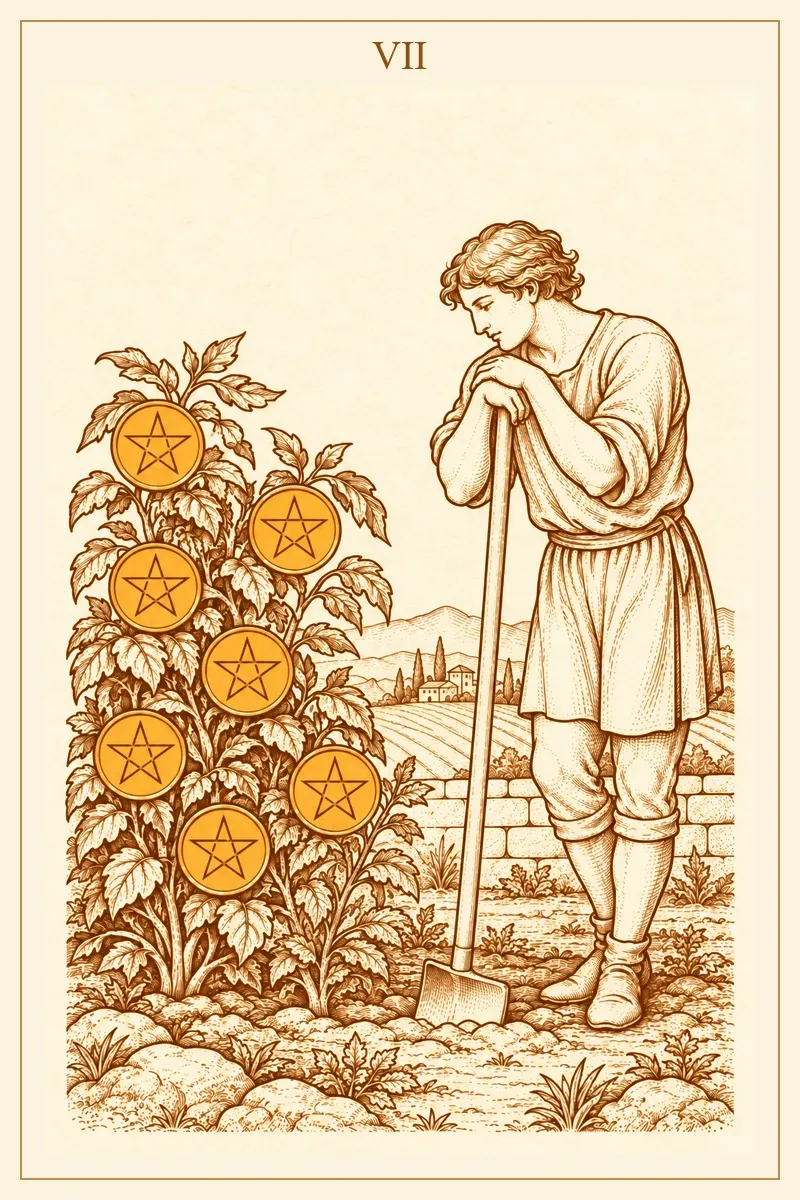
Upright, Seven of Pentacles is known for its gardener pausing over a crop that is growing but not ready. It is the honest "not yet" card of a new moon reading. In the bloom position it suggests the intention needs more than one cycle: by the full moon expect a sturdy stem, not a flower, and measure progress by consistency. The Seven of Pentacles tarot meaning has more.
Reversed, it can point to impatience, or to effort poured into ground that will not repay it. Ask whether the plan needs more time or a different place; only you can tell which is true.
A worked example: restarting a language course
Here is how the seed spread might read in practice. Imagine someone who signed up for an online Spanish course a few months ago and stopped in week three. At the new moon they ask: "What do I want to grow in my Spanish this cycle?" The cards fall like this:
- Soil: Eight of Pentacles, reversed
- Seed: The Fool
- Water: Three of Cups
- Weeds: Nine of Swords
- Bloom: Seven of Pentacles
The reversed Eight of Pentacles in the soil mirrors the situation: practice that became patchy. It does not say the person lacks ability, only that the structure that kept them practicing fell apart. With The Fool as the seed above it, the message is plain: there is no need to wait for a perfect restart plan.
The Three of Cups as water suggests the learning grows through other people rather than solo drills. The Nine of Swords in the weeds is the late-night worry: what if I sound ridiculous? Side by side, these two hint that the course stopped because of embarrassment, not a shortage of time. The Seven of Pentacles as bloom promises no fluency by the full moon, only the steady progress that comes from showing up.
The intention this reader writes is: "I intend to join a weekly conversation group and practice for ten minutes a day, including on days I feel I am bad at it." The first step: "Find one group and email the organizer by Sunday." At the full moon they will reopen this page and check whether the Nine of Swords worry has loosened.
Reading the seed for love, work and money
Love and relationships. Aim a new moon intention at your own behavior, not at another person's. "Make them text me" depends on someone else; "say what I need instead of hinting" is something you can grow yourself. If a relationship card such as Two of Cups appears as the seed, ask what openness you could offer rather than how to change someone else.
Work and study. The new moon suits a new skill, a boundary you want to hold, or a project you have been saving. Ace of Wands might become a first rough draft, Eight of Pentacles a daily practice block, Four of Swords a lighter workload. Keep the intention on the preparation you control rather than on a promotion or an offer.
Money and home. Keep money intentions small and measurable: log every purchase for a month, or review one recurring bill. Tarot is no substitute for financial advice, so check reliable sources or a qualified professional before any big decision.
New moon intentions by zodiac sign
If you follow astrology, each new moon falls in a sign, and that sign can suggest a field for your intention. In the Golden Dawn system each sign also has a Major Arcana card you can lay beside the seed spread as a theme card. Without astrology, the ritual works just as well. For more on pairing cards with the calendar, see tarot timing with astrology.
- Aries (The Emperor): starting something on your own, courage, independence.
- Taurus (The Hierophant): money goals, self-worth, simple pleasures.
- Gemini (The Lovers): conversation, learning, connection.
- Cancer (The Chariot): home, family, emotional care.
- Leo (Strength): creative work, confidence, play.
- Virgo (The Hermit): health habits, organization, being of use.
- Libra (Justice): relationships, beauty, fairness.
- Scorpio (Death): intimacy, depth, transformation.
- Sagittarius (Temperance): travel, study, a wider view.
- Capricorn (The Devil): career, discipline, long-term structure.
- Aquarius (The Star): community, fresh ideas, freedom.
- Pisces (The Moon): rest, imagination, compassion.
The Devil for Capricorn is not a warning; here it speaks of ambition and the structures we bind ourselves to, exactly what a Capricorn intention needs to examine. Death for Scorpio likewise means something ends so that space opens.
Carrying the intention through the month
The ritual is only the planting. What you do over the next four weeks decides whether the intention means anything.
- Each morning: a one-card daily draw with the question "What does my intention need today?" keeps it tied to ordinary life.
- First quarter: about a week after the new moon, reread the intention and the first step. If the step has not happened, make it smaller.
- Full moon: at the halfway point, set your new moon page beside the full moon tarot practices and look at what has grown and what needs adjusting.
- Keep the pages together: after about six cycles in a tarot journal, recurring cards and themes in your intentions become easy to see.
- Next new moon: read last month's page before you shuffle, and decide what to continue and what to replant.
Frequently asked questions
Does the ritual have to happen on the day of the new moon?
No. The new moon itself or either of the two evenings after it works well. Some readers prefer to wait until the first thin crescent is visible. A day's delay changes nothing important; the habit of keeping this hour each month matters more than the exact timing.
Can tarot tell me whether my new moon intention will come true?
No. The cards cannot confirm an outcome, a date or another person's choice, and the bloom position of the seed spread describes a possibility rather than a promise. Where tarot helps is in shaping the words of the intention and deciding where to put your effort.
What if a hard card lands in the seed position?
A card like The Tower or Ten of Swords as the seed does not mean your beginning will fail. The seed for this cycle may be an ending: closing something down or letting a shape that no longer works fall apart. Read it with the soil card and ask, "What needs clearing before anything new goes in?"
What tools does a new moon ritual really need?
A deck, a notebook and a pen. Candles or incense are welcome if they help you settle, but the ritual is complete without them.
Should I also read at the full moon?
It is optional, but pairing the two makes the month easier to follow: the new moon is for planting, the full moon for seeing what has grown and deciding what to release.
Can I set more than one intention?
One per new moon works best, since the five-card spread reads a single seed. Write other wishes in the margin and keep them for next month.
What grows from a dark night
A new moon ritual is a small act of attention: a quiet hour, five cards, one honest sentence and a step you can take this week. The growing happens afterward, in ordinary days, mostly where no one can see it.
When you are ready to plant this month's intention, begin a reading on the next dark night, and keep the page you write somewhere you will find it again at the full moon.