
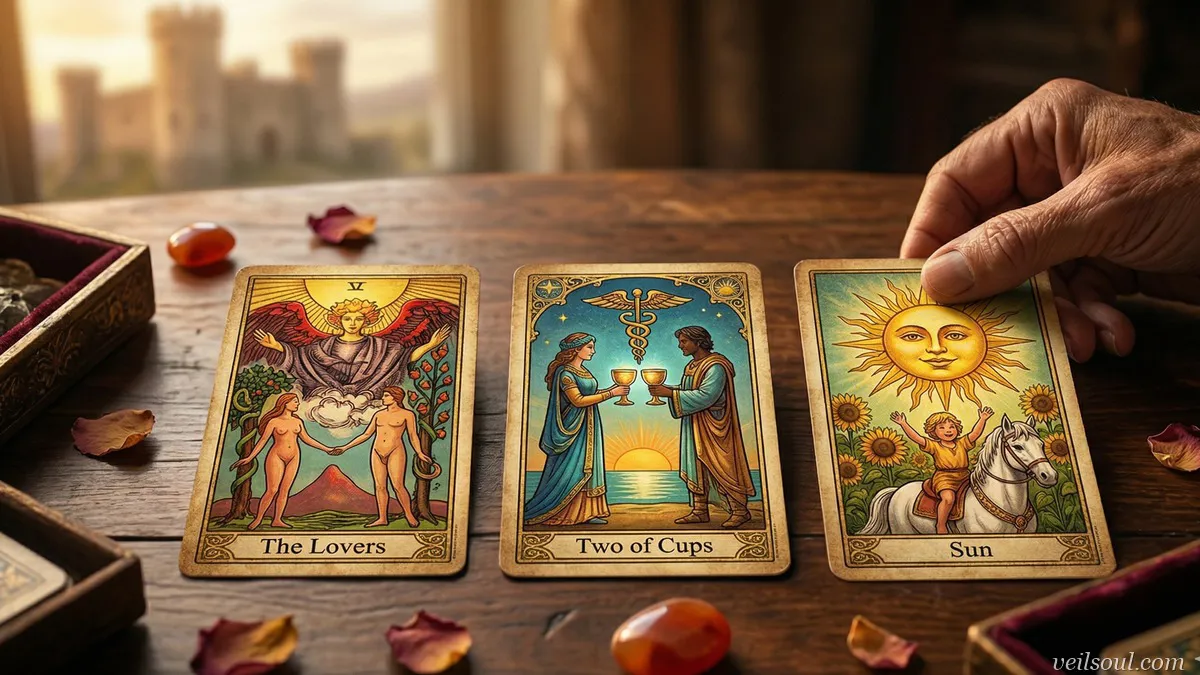
The Lovers, Two of Cups, The Star, Ace of Cups and Ten of Cups are five useful tarot cards to explore when you are asking about a soulmate connection. Each describes a different part of love: choice, reciprocity, healing, openness or shared fulfillment. None can confirm that a particular person is your soulmate, reveal their private feelings or promise when a relationship will happen. Read the card in its position, alongside the other cards and the reality of how you treat one another.
“Soulmate” can mean a romantic partner, a friend or someone who changes your understanding of yourself. If the word feels right to you, let it name the depth of a connection rather than a guarantee that it will last forever. The most helpful question is often less “Is this destiny?” and more “What is this relationship asking me to notice, choose or practice?”
At a glance:
- The Lovers: a relationship you choose with your values.
- Two of Cups: reciprocity and meeting as equals.
- The Star: hope and healing after a hard chapter.
- Ace of Cups: a new emotional opening.
- Ten of Cups: a shared picture of everyday fulfillment.
What does a soulmate card actually show?
A tarot card is a prompt for interpretation, not a certificate of fate. In a love reading, a card may describe your hopes, a pattern between two people, a possibility to explore or a choice in front of you. The position matters. A card in “what I need” speaks differently from the same card in “what I can offer,” and neither position proves what another person thinks.
Imagine drawing a warm, receptive card while the person you like rarely replies and avoids direct conversation. The image may reflect your longing for closeness, or an invitation to seek mutual care elsewhere. It does not erase what is happening between you. Conversely, a difficult card beside a kind and consistent partner need not condemn the relationship; it may point to a fear or habit worth discussing.
Look for three layers of evidence. First, name the card’s ordinary meaning without forcing a romantic answer. Second, read its position and its neighbors: are they describing your inner world, a shared dynamic or a practical next step? Third, check the reading against observable behavior. Mutual respect, honest communication and room for each person to say no matter more than an impressive spread.
Some people use “soulmate” to describe a bond that helps them grow, even when it does not become a partnership. Others reserve it for enduring romantic love. You do not need to settle that definition before reading. Write down what the word means to you, then ask whether the cards help you understand that wish more clearly. The five cards below are especially useful because they show different stages and qualities of connection rather than one all-purpose verdict.
Five tarot cards to explore in a soulmate reading
These cards are common symbols of meaningful love, but none has a fixed “soulmate” status. A reversed card is not the opposite of its upright meaning by default. It may ask where that quality is blocked, strained or being learned. Give each card a concrete question so the interpretation stays useful after you put the deck away.
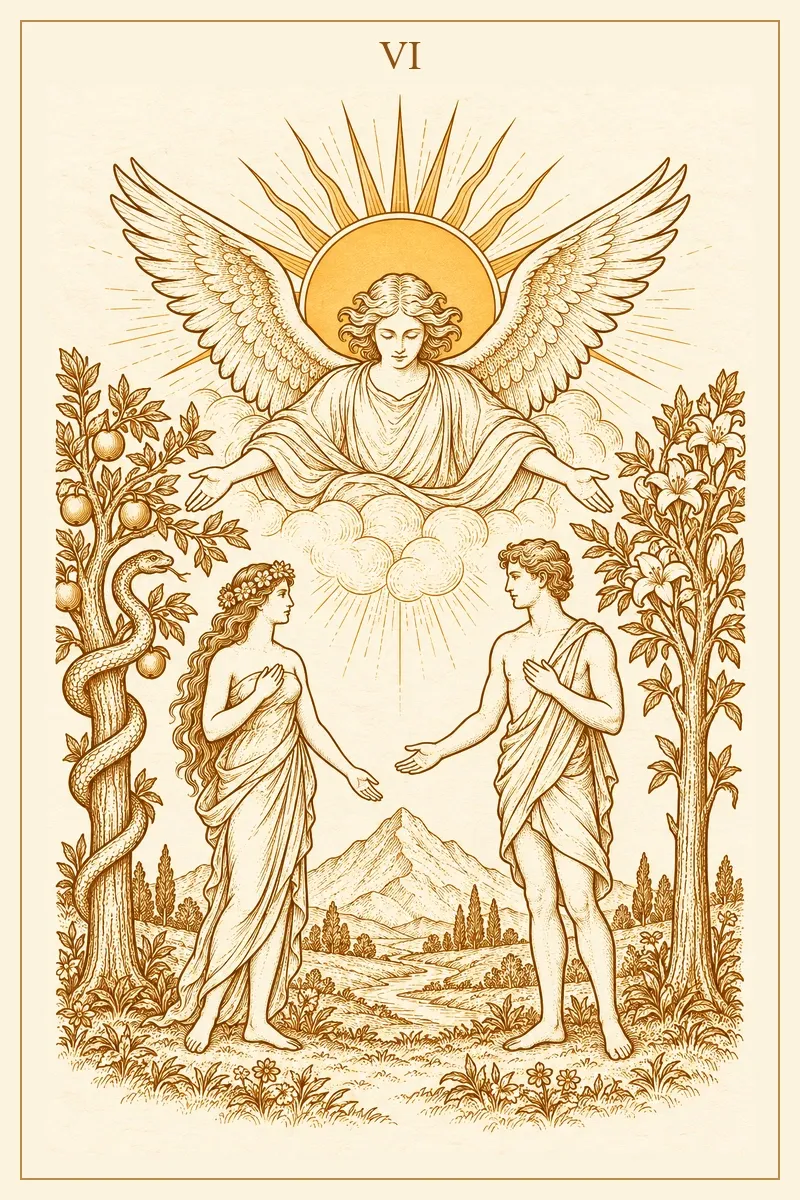
The Lovers: a relationship you choose
The Lovers is often treated as the answer everyone hopes to see. Its deeper subject is alignment: desire, values and action moving together. In a relationship reading, it can ask whether you can choose this bond freely and honestly, rather than staying because you fear being alone or because the story feels “meant to be.” Attraction may be real, but attraction alone does not make two lives compatible.
Upright, The Lovers can describe a connection that invites openness and an important decision. Ask what each person is choosing in practice. Are you able to speak about needs, boundaries and expectations without playing a role? If the card appears in a position for your own action, the task may be to make a clear choice, even if that means slowing down. For its upright and reversed meanings in more depth, see the full Lovers tarot meaning.
Reversed, it can point to mixed signals, values that are hard to reconcile or a choice being postponed. It does not declare that love is absent. For example, two people may care deeply for each other while wanting different forms of commitment. The useful move is a conversation about those differences, not another draw to make the discomfort disappear. The Lovers asks whether the relationship lets both people remain truthful.
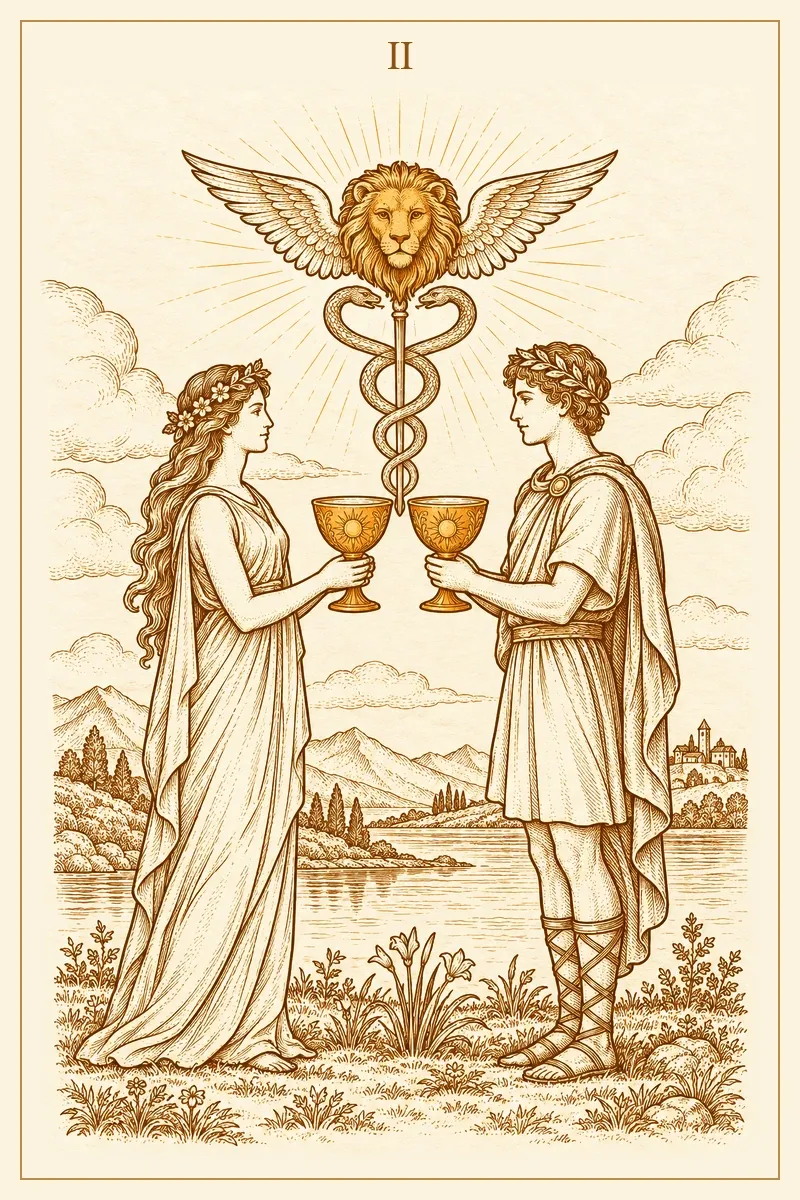
Two of Cups: meeting each other as equals
The Two of Cups centers reciprocity. One person offers attention and the other is free to respond; both are present. In an established relationship it can suggest a repair, a sincere exchange or a moment of renewed trust. In a new connection it can reflect the hope for mutual interest. Its image is a good reminder that a bond is made between people, not by one person’s wish alone.
Upright, look for a balanced exchange. Can you share enthusiasm without having to chase reassurance? Can both of you listen, apologize and make plans? Use those questions as a guide to what you can observe. A gentle invitation followed by a clear response tells you more than trying to decode every silence. The full Two of Cups meaning covers the card in love, work and reversed positions.
Reversed, the Two of Cups may ask about uneven effort, a misunderstanding or a difficulty receiving care. It can also show your fear that kindness will not be returned. Avoid deciding which person is “the problem” from the card alone. If the relationship is safe enough, name one small need plainly and see whether a real conversation becomes possible. Reciprocity is a practice, not a single dramatic sign.
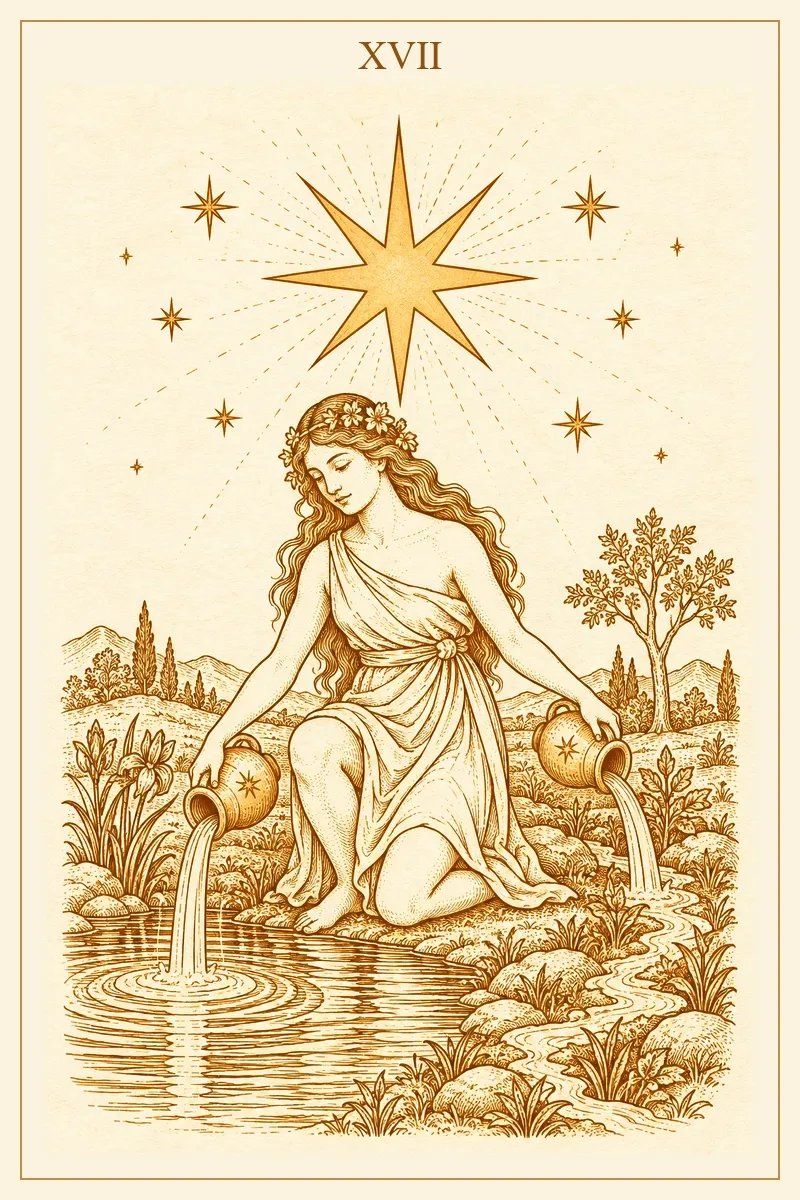
The Star: hope that leaves room to heal
The Star speaks of restoration after a hard chapter. In a soulmate reading, it may describe a growing ability to trust your own heart again, whether or not a new partner is in view. It is tempting to turn this card into “love is just around the corner.” That skips its quiet work: making space to recover, reconnect with your values and imagine a future that does not depend on one person choosing you.
Upright, The Star can suggest gentle hope and emotional clarity. Ask what helps you feel like yourself: time with friends, a boundary that brings relief, or a conversation you have been avoiding. If you are dating, notice whether hope expands your life or narrows it to waiting for a message. The card supports an open heart with its feet still on the ground. For the card beyond love questions, see the full Star tarot meaning.
Reversed, hope may feel far away, or you may be trying to rush healing because you want a relationship to fix the hurt. There is no failure in needing time. A small next step could be to stop comparing every new person with a painful past connection. If heartbreak is part of your question, the related guide to tarot for heartbreak offers another reflective starting point. The Star can make room for love without setting a deadline for it.
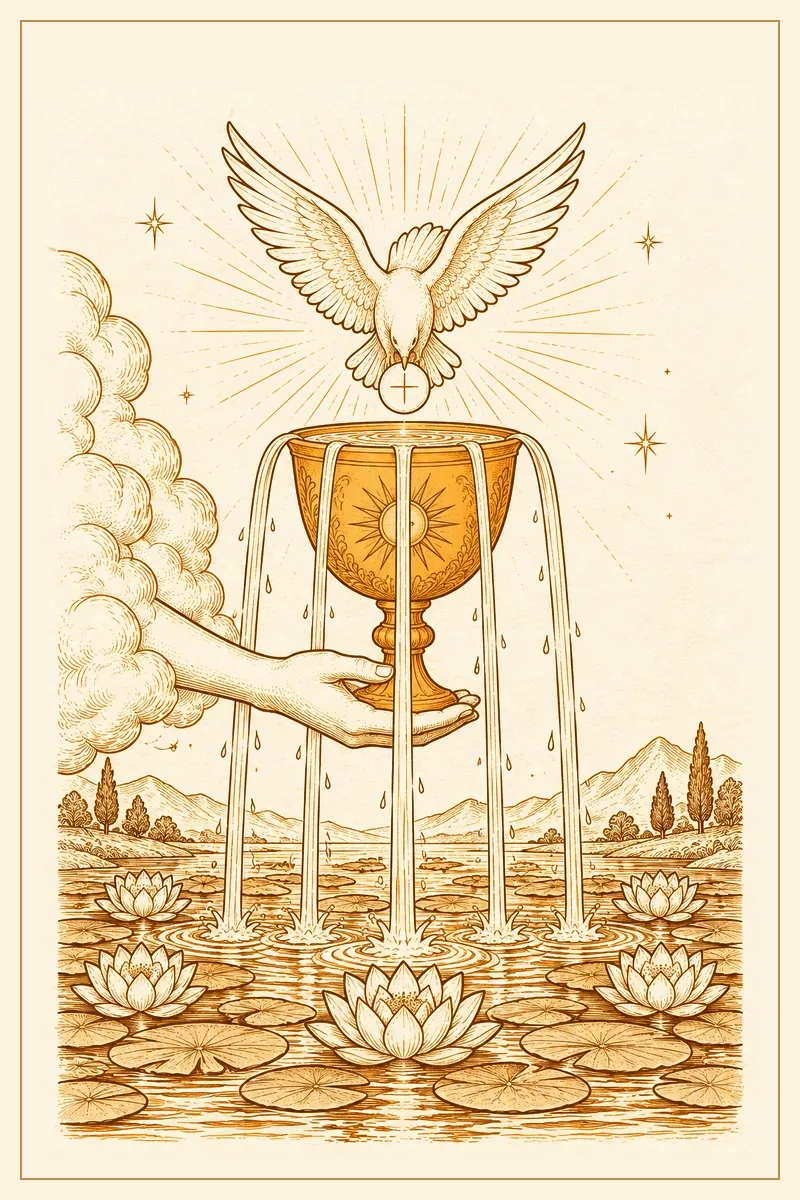
Ace of Cups: the beginning of emotional openness
The Ace of Cups is a beginning, not a finished relationship. It may reflect a new attraction, a kind gesture, renewed tenderness toward yourself or a chance to express a feeling you have kept private. Its “ace” quality is potential: something worth noticing and tending, with no guarantee of what it will become.
Upright, ask where affection can be expressed honestly. If you have met someone new, enjoy the warmth while learning who they are over time. If you are already partnered, this card may encourage a fresh conversation or an apology that makes room for closeness. Sometimes the most relevant new beginning is the decision to receive care rather than dismiss it.
Reversed, the cup may feel difficult to fill or easy to spill. You might be guarding yourself after disappointment, or giving far more than you can comfortably offer. Neither reading means you have “missed” your soulmate. Consider one manageable act of openness: saying what you feel, accepting support from a trusted person, or noticing when an old fear is speaking louder than the present situation. Let the pace match your actual sense of safety.
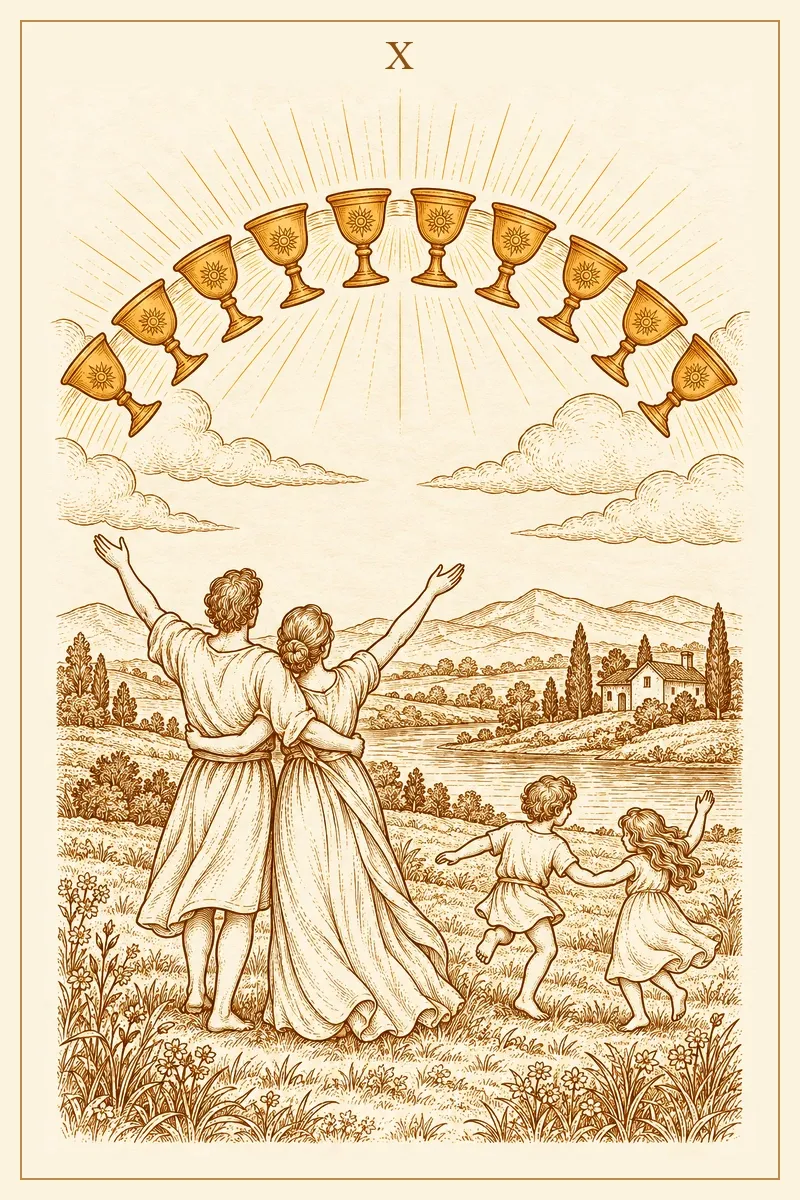
Ten of Cups: a shared picture of fulfillment
The Ten of Cups often evokes belonging, emotional contentment and a life that has room for more than a private romance. It can be meaningful in a soulmate reading because it asks what happiness together would look like on an ordinary day. The answer might involve family, chosen family, friends, home or community. The card does not prescribe marriage, children or one correct shape of relationship.
Upright, consider whether your visions of a good life can coexist. Do you support each other’s friendships and commitments? Is there room to celebrate small joys and work through disappointment? A beautiful future is built from repeated choices in the present. The Ten of Cups is most useful when it brings that future down from fantasy into habits you can discuss.
Reversed, the ideal may be hiding a mismatch or pressure to look happy. Perhaps you both want closeness but imagine very different lives, or you are measuring your bond against someone else’s picture. Try naming one expectation you have never said aloud. The card can help you revise the picture together, or recognize with kindness that it does not fit. Fulfillment needs honesty more than a perfect ending.
Other cards that often appear in soulmate readings
These cards are not soulmate cards on their own, but readers meet them often in this question, and each adds something useful:
- Six of Cups: the feeling of having known someone for a long time. Enjoy the familiarity, and check whether it belongs to the present relationship or to a memory.
- Knight of Cups: a romantic offer or invitation. Notice whether warm words are followed by steady action.
- The Sun: warmth and joy you can show in daylight. It asks whether the connection feels easy to be open about.
- Judgement: a calling, a reckoning or a return. After a breakup, it asks what you have learned before it asks whether to reconnect.
For their full meanings, see our guides to the Six of Cups, the Knight of Cups, The Sun and Judgement.
How to read combinations without turning them into proof
Two promising cards can add texture to a question, but they do not multiply into certainty. Read a pair as a sentence about the spread’s positions. If The Lovers is in “my choice” and the Two of Cups is in “what supports us,” the story may be that choosing honestly makes room for reciprocity. If the cards occupy “my hope” and “my fear,” the same pair might describe how strongly you want mutual love and how vulnerable that wish feels.
The Star beside the Ace of Cups can suggest hope meeting a new emotional opening. After a breakup, that may mean you are ready to accept a kind invitation or simply to feel curious again. The Ten of Cups beside the Two of Cups can ask whether today’s mutual care supports the longer life you imagine. If one person wants to move quickly and the other needs time, the cards offer a reason to talk, not a ruling on who is right. If you are weighing intensity against ease, our comparison of twin flame and soulmate readings looks at that question directly.
Other cards can change the reading’s tone. A card about rest beside a romantic pair might ask you to slow down. A card about boundaries may ask what each person can realistically give. Rather than ranking combinations from “weak” to “strong,” write one possible interpretation and one alternative. Then ask: what could I check through a conversation or a small action? That question keeps the reading open to information you do not yet have.
If you draw a striking pair repeatedly, record the date, question and positions before drawing again. Look back later to see whether your interpretation changed as events unfolded. Repetition may show that a theme matters to you. A pause can be more revealing than pulling until the cards say what you want.
A four-card spread for a meaningful connection
Use this spread when you want guidance you can act on, whether you are dating someone, partnered or thinking about opening to love again. Shuffle with a question such as, “What can I understand about this connection and my part in it?” If no particular person is involved, use “What helps me build the kind of connection I want?” If you would like other layouts, our guide to love tarot spreads offers more.
- 1. What I am bringing. Notice your hopes, strengths and current limits. A warm card may show readiness; a difficult one may name something that needs care.
- 2. What I can observe between us. Read this as a prompt to notice the relationship as it is. Do not use it to claim private knowledge of another person’s mind.
- 3. What needs a conversation or boundary. This is the hinge of the spread. Translate the image into one topic you can raise kindly or one limit you can keep.
- 4. My next grounded step. Choose something within your control: ask a direct question, make a plan, slow the pace, or give yourself space.
An example reading
Suppose you have feelings for someone and draw The Lovers in position one and the Two of Cups in position two. You can enjoy the possibility of mutual attraction while watching whether they also suggest plans and respect a no. If The Star appears reversed in position three, the first conversation may be with yourself: are you hoping this person will heal an older hurt? The grounded step in position four could be to share your feelings once, calmly, and respect the answer.
In an established relationship, the Ten of Cups in position two and the Two of Cups in position four might ask you not to impose a picture of home, but to ask what makes each of you feel secure. Turning that into “Can we spend thirty minutes next week talking about money and rest?” moves the reading into a real conversation. Another reader might see something different; the spread becomes useful when your interpretation leads to a respectful, testable action.
After the reading, write two short lines: “The card invited me to consider…” and “In real life, I can…” Revisit those lines after a conversation or a week of ordinary interactions. This lets experience refine the reading. It also gives you permission to change your mind if new information appears.
Reading by situation
When you have feelings for someone
Drawing the Two of Cups does not mean the other person feels the same way. Separate three things: the closeness you feel, the interest they have actually shown and what you do not know yet. Then try one short conversation or invitation. If the answer stays vague, stop chasing it and protect both their boundaries and your own dignity. If your question is whether they think about you at all, our guide to cards that suggest someone is thinking of you offers a four-card spread for exactly that.
When you are partnered and thinking about the future
The Lovers and the Ten of Cups do not promise marriage or moving in together. They can show whether you are able to discuss where to live, work, family distance and rest, one topic at a time. Even with a bright card, making plans without hearing your partner’s view erodes the equality the cards describe.
When you cannot let go of an ex
The Star is not a forecast of reunion. It may describe your own recovery as you come to understand what happened. Before reaching out, ask what caused the breakup, what has truly changed and whether contact would protect your safety and dignity. If you need support, lean on friends or a counselor.
Turn the cards into everyday questions
To test a symbol in daily life, translate it into one concrete question. If The Lovers appears, ask “What do we want to choose, based on what we value?” With the Two of Cups, ask “Are both of us suggesting the next plan?” Specific questions make it easier to hear the other person’s answer and notice your own response at the same time.
With The Star, resist turning hope into a label for the relationship and ask, “What can I rest this week so I can recover?” With the Ace of Cups, check whether there is room to receive affection as well as give it. With the Ten of Cups, talk about a security that includes weekday chores, sleep and time with friends, not only a special future.
When a card is reversed, look for where the flow is stuck rather than for a flaw. A reversed Lovers may ask whether you are hiding a value; a reversed Two of Cups, whether effort or contact is lopsided; a reversed Star, whether you are rushing to fill an old wound. Use the answer to shape what you will say, not to blame anyone.
Before a conversation, write three lines: what you want, what you have observed and what you would like to ask for. Instead of “Care about me more,” try “I’d like us to plan one evening together each week. Can we talk about it by Friday?” Leave the other person free to say no, and consider what you will choose after you hear the answer.
What if the cards and real life disagree?
Give real behavior the first say. A lovely card does not outweigh repeated disregard for your boundaries, and a challenging card does not cancel a relationship where both people communicate and repair harm. If you find yourself using a spread to explain away a pattern that hurts you, set the deck down and ask what support or conversation you need in the present.
It is also possible to want a connection so much that every card seems to describe it. Try reading for yourself without the person’s name in the question. Ask, “What am I overlooking?” or “What would make this relationship feel mutually safe?” The change of angle may reveal needs that a yes-or-no soulmate question conceals. If the answer still feels tangled, speak with someone you trust rather than repeating the same draw.
A meaningful connection does not have to be effortless. People can care for one another and still need to negotiate time, distance, family responsibilities or different ways of showing affection. Tarot can help you put language to those themes. The measure of the relationship remains what both people are willing and able to do with that understanding.
Frequently asked questions about soulmate tarot cards
Which card is the strongest sign of a soulmate?
There is no single strongest card. The Lovers highlights a meaningful choice; the Two of Cups highlights reciprocity. The Star, Ace of Cups and Ten of Cups speak to healing, beginnings and a shared vision. Which matters most depends on your question and the card’s place in the spread. Avoid treating a card as a stamp of approval for a relationship you have not yet had time to know.
Can tarot tell me whether someone is my soulmate or when I will meet them?
No card can confirm another person’s thoughts, name a future partner, provide a reliable date or guarantee an outcome. A reading can help you explore what you value, what you notice between you and what choice is available now. If you need an answer from a specific person, a direct and respectful conversation is the clearest route.
What if none of these cards appears?
That is not a verdict on your chances of love. Your spread may be focused on something else: rest, a boundary, a friendship, an old pattern or a practical choice. Read the cards you actually drew in their positions before deciding that an expected symbol is missing. Sometimes the most useful love reading is the one that points toward your own life beyond the relationship question.
Does a reversed soulmate card mean the relationship is wrong?
No. A reversal may show a quality that is hard to express, unevenly shared or ready for attention. A reversed Two of Cups could invite a conversation about reciprocity; a reversed Ten of Cups might invite you to rethink an ideal. Use the reversal to form a question you can explore, then compare the answer with the relationship you are living.
Let the cards return you to your own choices
Soulmate cards are not a promise that someone will complete you. The Lovers speaks of choice, the Two of Cups of reciprocity, The Star of recovery, the Ace of Cups of room to receive feeling and the Ten of Cups of everyday security. Whatever you draw, your worth is not decided by another person’s response or by the cards.
If you would like a quiet place to try these questions, begin an online tarot reading. Bring one honest question, note what the cards suggest and let your next conversation or choice carry the insight into real life.