Mourning what spilled while two full cups stand unnoticed: that is the Five of Cups. Upright, the card means loss, regret and disappointment, with your attention fixed on what went wrong while something of value remains behind you. Reversed, it usually means the turn: acceptance, forgiveness and the first steps away from the loss, though it can also point to grief that was pushed down instead of felt.
The 5 of Cups does not call your sadness a mistake, and it does not tell you to cheer up. Its picture holds both halves of the truth at once: three cups are gone, two are still full. Tarot works here as a mirror for that moment, not a verdict on it. It cannot tell you what another person feels, promise that something lost will come back, or name the day the hurt will ease. It can show you where your attention rests and what is still within reach.
- Upright keywords: grief, loss, regret, disappointment, dwelling on what went wrong.
- Reversed keywords: acceptance, recovery, forgiveness, moving on; or suppressed grief and an old loss resurfacing.
- Yes or no: upright, no for now; reversed, a slow and careful yes once the loss has been faced.
- Element and astrology: Water; Mars in Scorpio, the first decan of Scorpio.
- Golden Dawn title: Lord of Loss in Pleasure.
- Suit and number: Cups, five; the point where the suit's early comfort breaks.
Five goblets and a bowed head: what the card shows
The figure in the pale cloak
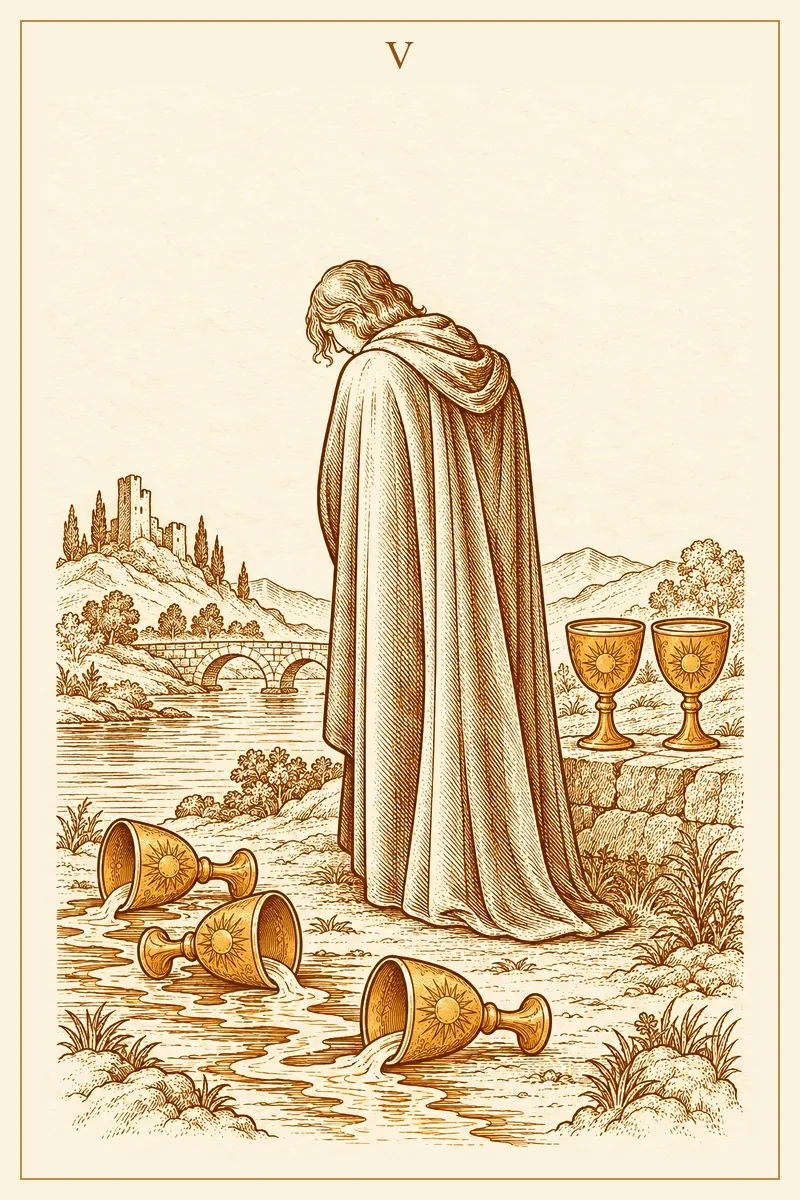
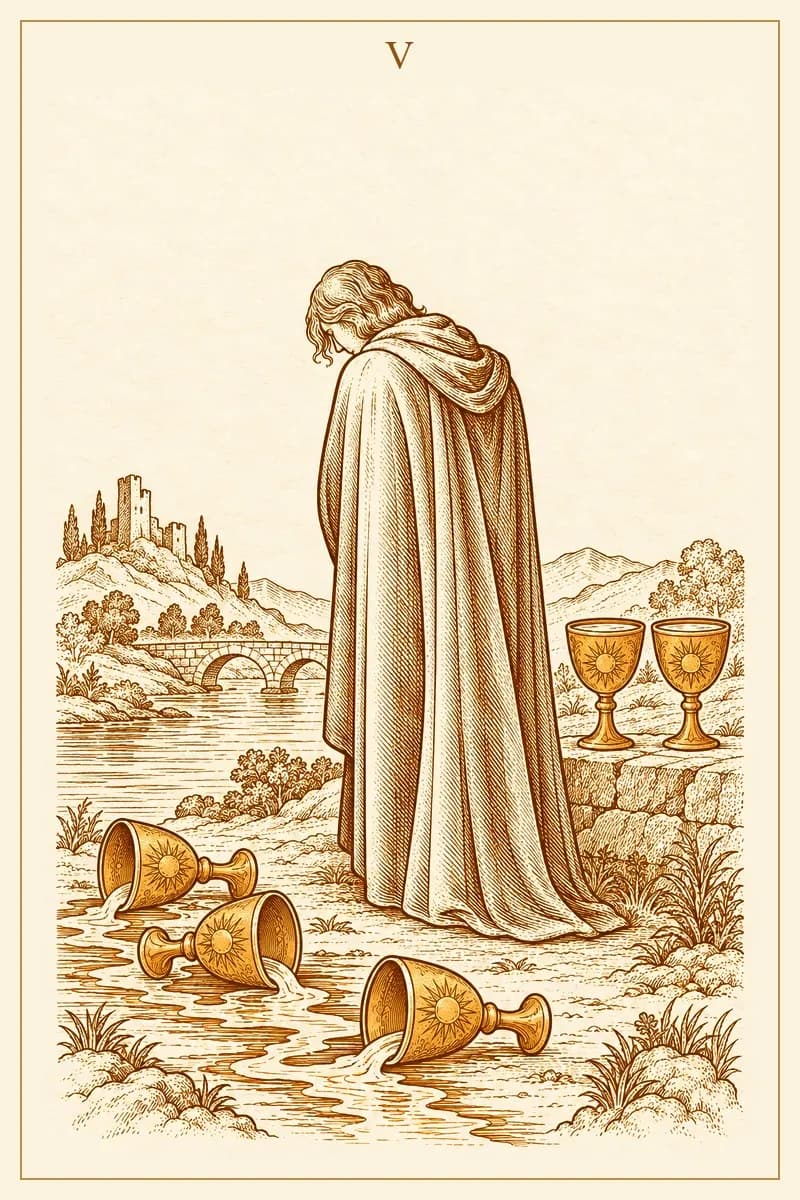
A single figure stands near the center of the card, wrapped from shoulders to ground in a long, pale hooded cloak. The hood has fallen back, and the head is bowed so low that loose, wavy hair hides the face. Half turned away from us, the figure looks down and to the left, perfectly still. The cloak is plain, closer to a traveler's wrap than to mourning dress, so the scene feels less like a funeral than the minute after bad news, when a person simply stops where they are.
Three cups spilled, two still full
In the foreground, three gold goblets lie on their sides, and what they held runs out across the ground in thin, pale streams. These are the cups the figure is staring at. To the right, behind the figure's back, two goblets stand upright on a low stone ledge, full to the brim. Every goblet carries the same engraved sun, so the spilled cups and the standing ones belong to one set: what was lost and what remains came from the same life.
So the two full cups are not a consolation prize from elsewhere. They are the parts of the same situation that survived: the friendship that outlasted the breakup, the skills that outlasted the job. The figure misses them only because of the direction of their gaze.
River, bridge and the castle on the hill
Behind the figure, on the left, a calm river runs under a stone bridge with rounded arches. Beyond it, castle towers rise on a hill ringed by tall cypress trees. The bridge is the way across; the castle is somewhere to go once you have crossed. Neither is hidden; both sit in the part of the picture that grief has turned away from. Together, the three parts give the card its whole meaning: a spill that really happened, cups that really remain, and a crossing that is open whenever the figure is ready to turn.
The Five of Cups upright: grief that looks in one direction
Upright, the Five of Cups says that something has been lost or has not turned out as you hoped, and that the loss fills most of your view. The card treats this as real and does not hurry you toward a bright side. In a spread, it often names the emotional weather around a question: part of you is still standing over the spilled cups.
What the spilled cups can stand for
- A breakup, a friendship that faded, or a family rift.
- A plan that failed: a business, an application, an exam, a move that fell through.
- A bereavement, or the end of a chapter such as leaving a home or a team.
- A version of yourself you expected to become and now will not.
Regret and the scene that replays
A Five of Cups reading can be less about the loss itself than about going over it again and again: the conversation, the decision, the message you sent or never sent. The card's old title, Lord of Loss in Pleasure, fits this. The pain comes from something that once gave real joy, which is why the mind keeps returning to it. Regret helps when it teaches you something to carry forward; it becomes a loop when it only replays the scene with an ending you can no longer choose.
Why "two cups remain" is not the same as "cheer up"
Some people read this card as a scolding: stop crying and look at what you still have. That misses the picture. The card asks for honesty in both directions: admit how much was lost, and admit that not everything was. You do not have to turn around today. Often the upright card simply names where you are, so you can stop pretending you are further along than you feel.
Five of Cups reversed: turning around, or turning away
The reversed Five of Cups has two quite different readings, and the skill with this card lies in telling them apart. In the first, the figure is turning around, and attention is shifting toward the full cups and the bridge. In the second, the figure has left without looking at the cups at all, and the grief has gone underground.
The turn toward the two full cups
This is the gentler of the two readings. Acceptance is arriving: the loss still hurts, but it no longer fills the frame. You can talk about what happened without the story taking over, you are planning something small again, and the people who stayed are coming back into focus. It is not the end of grief; it is the moment the figure lifts their head.
Forgiveness and making peace with a choice
The reversal often brings forgiveness into the reading: of someone who let you down, or of yourself for a decision that went badly. Forgiveness here does not mean saying it was fine. It means putting down the cup you have been holding up as evidence, and keeping the lesson instead of retrying the case.
Grief pushed down instead of felt
The harder reading is avoidance. Instead of standing over the cups, the figure has walked away fast, into busyness, a new relationship or a brave face. On the surface this looks like moving on; underneath, the cups are still lying in the grass. Signs include irritation when the topic comes up, numbness rather than relief, or a rush to replace what was lost. The reversal can also mark an old loss returning with an anniversary. That is not failure: loss comes back in waves, and each wave is usually easier to stand in.
How to tell which reversal you are holding
- Neighboring cards. Restoring cards such as The Star, the Six of Swords or Temperance support the turn toward recovery. Cards of worry or evasion, such as the Nine of Swords or The Moon, lean toward grief that is still buried.
- Your body's answer. Picture the loss for a moment. A sadness that rises and then settles suggests the turn; a blank, a flinch or an urge to change the subject suggests avoidance.
- Your calendar. Slowly rebuilding points to recovery. Filling every hour so you never sit still points to the other reading.
If it reads as recovery, keep it slow and practical: one plan, one call, one evening out. If it reads as avoidance, set aside a quiet half hour to name what was lost and let yourself feel whatever comes.
When the spilled cup was a relationship
In love readings the Five of Cups shows up when a relationship has ended, changed shape, or fallen short of what one person hoped. What it adds is a question about attention: are you mourning the relationship, or the future you had pictured inside it?
After a breakup
Upright after a breakup, the card confirms that this is a real loss and deserves time. It also points to the two full cups: friends who checked in, routines that are yours alone, and your own capacity to love, which did not leave with the other person. The card favors a pause before anything new.
Inside a relationship that disappointed you
For someone still in a relationship, the upright card often describes disappointment rather than an ending: a broken promise, a hard truth, or the slow realization that something you counted on is not there. Ask which cups are truly spilled and which still stand. Some relationships recover once both people name the spill.
Hoping an ex will come back
Upright, the card suggests that the relationship as it was has ended, whatever happens next. Reversed, it can show both people reflecting more honestly, which makes a calmer conversation possible, but it does not promise a reunion. Healing in this card belongs to you first; a second chance is a separate question.
Reversed in love, and for single readers
Reversed, the card most often shows the heart reopening: forgiving, remembering the good without being pulled back, feeling curious about meeting people again. For single readers it can reveal an earlier heartbreak still shaping how you approach someone new; seeing that pattern is often the first full cup you find. Read the avoidance form instead if you are rushing into something new so you do not have to feel the end of the last one.
Work and money after a setback
A job, a role or a project that ended
Upright at work, the card can point to a layoff, a rejected application, a promotion that went elsewhere, or a canceled project you cared about. Rather than replaying what you should have done, take stock of the full cups: the skills you built, the colleagues who would vouch for you, a clearer sense of what you do not want next time. Reversed, it points to learning from the failure; in its avoidance form, to applying for the same kind of role again without asking why the last one hurt.
Money that did not come back
Financially, the upright card points to a loss, a purchase you regret, or income that did not arrive as planned. Tarot is no substitute for financial advice, but the card's guidance is practical: look at what remains as calmly as at what is gone, and decide from that full picture rather than from the sting. Reversed, it shows recovery, or, if you are avoiding the numbers, a sign to open them.
Body, rest and the meaning grief leaves behind
Grief lives in sleep, appetite and energy as well as in thought. In a well-being reading, the Five of Cups is a reminder that carrying a loss takes physical effort and that rest is part of the work. If sadness has settled into your days for a long stretch, if sleep or eating have changed, or if you feel unable to cope, talking with a doctor, a counselor or a grief support group is a sound next step. The card can point you toward support; it cannot replace it.
Spiritually, the card treats loss as something that changes you rather than something you get over. It never says the loss was meant to happen; it only suggests that meaning can grow slowly where the cups fell.
Between the Four and the Six: why the fifth cup spills
The suit of Cups opens with the first spark of feeling, moves through connection and celebration, and reaches the Four of Cups, a card of apathy and turning inward. The Four of Cups meaning is about comfort turning flat. The Five is what happens next: the stable four is broken, and something is actually lost. Then comes the Six of Cups, a card of memory and kindness, and the Six of Cups as a card of memory shows what the Five can become once grief softens: the past turns from a wound you stare at into something you hold with tenderness.
In the Golden Dawn system behind most modern tarot, every Five belongs to Geburah, the sphere of severity on the Tree of Life, which is why the Fives in all four suits bring disruption. The Five of Cups is assigned to Mars in Scorpio, the first ten degrees of the sign, under the title Lord of Loss in Pleasure. Scorpio is the fixed Water sign of depth, endings and transformation, and its major arcana card is Death; Scorpio's place in tarot explores those death-and-rebirth themes. Mars brings the cut: a sudden break in the emotional comfort the suit has been building.
Yes, no, or not like this?
Upright, the Five of Cups leans toward no, or more precisely "not in the form you were hoping for." Asked whether a lost offer or a relationship will return as it was, the card suggests the original version has spilled, without ruling out a new one later. Reversed, the answer softens toward a cautious yes for questions about healing, trying again or reaching out, provided the grief has been faced; if the reversal reads as avoidance, treat it as "not yet." For timing, the card describes a phase rather than a date: a stretch of mourning with its own length, then a turn you will usually notice in small ways first.
Cards that pour into the Five of Cups
A neighboring card can deepen the Five of Cups, soften it, or show what comes after.
With the Three of Swords: the same loss, sharper
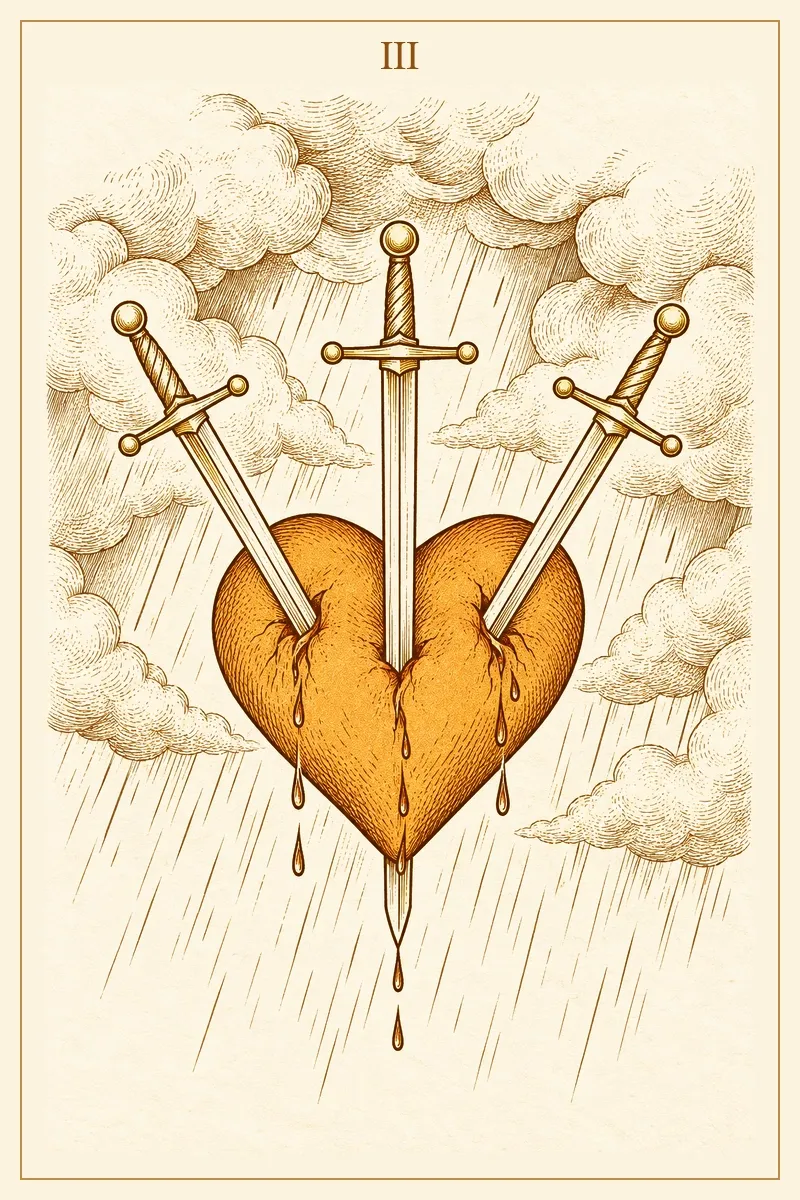
The Three of Swords names the moment of heartbreak itself. Beside the Five of Cups, it says the hurt is still fresh and the grief needs room before anything else. As the Three of Swords and its painful truths suggests, the way through is to be honest about what happened, then stop reopening the wound for more detail.
With The Star: hope after the dark stretch
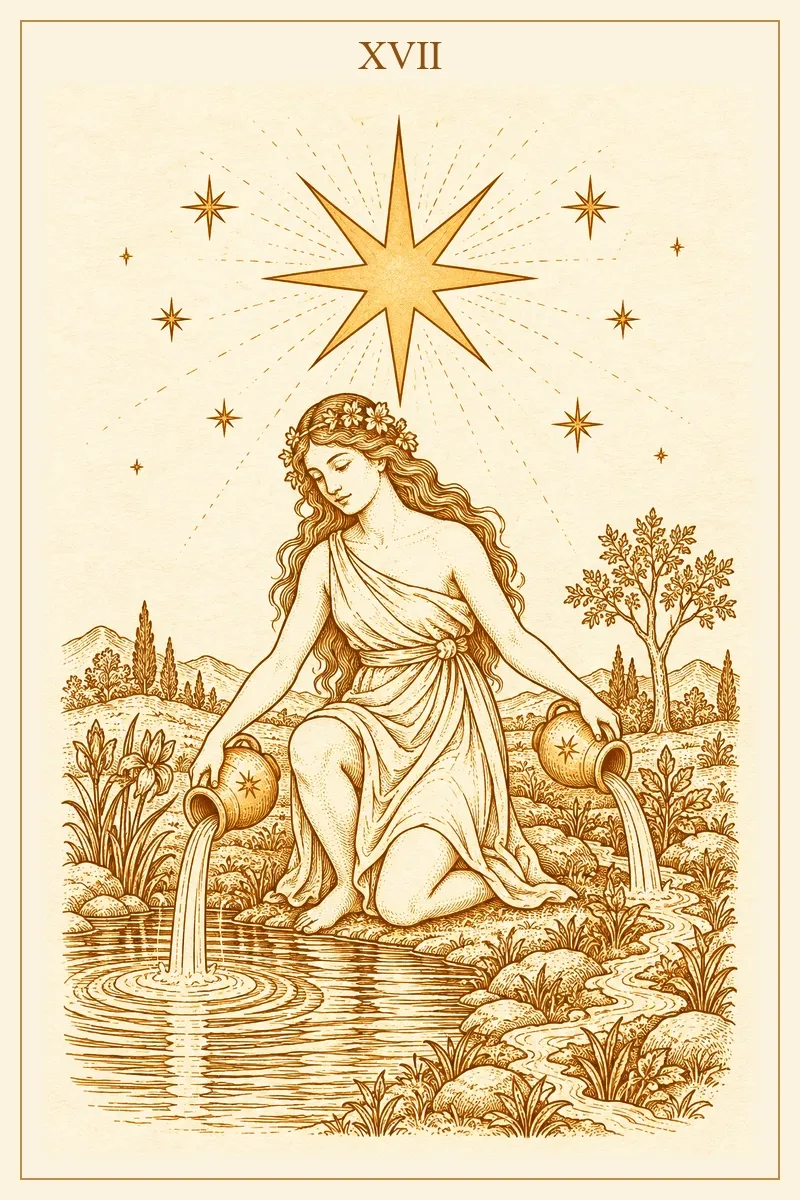
The Star is one of the most reassuring partners this card can have. Healing has begun, and you can trust the slow return of hope; the two full cups are no longer hidden, because the light falls on them. The Star's meaning of hope and renewal describes exactly the calm tone it brings to this pairing.
With Death: an ending that clears the ground
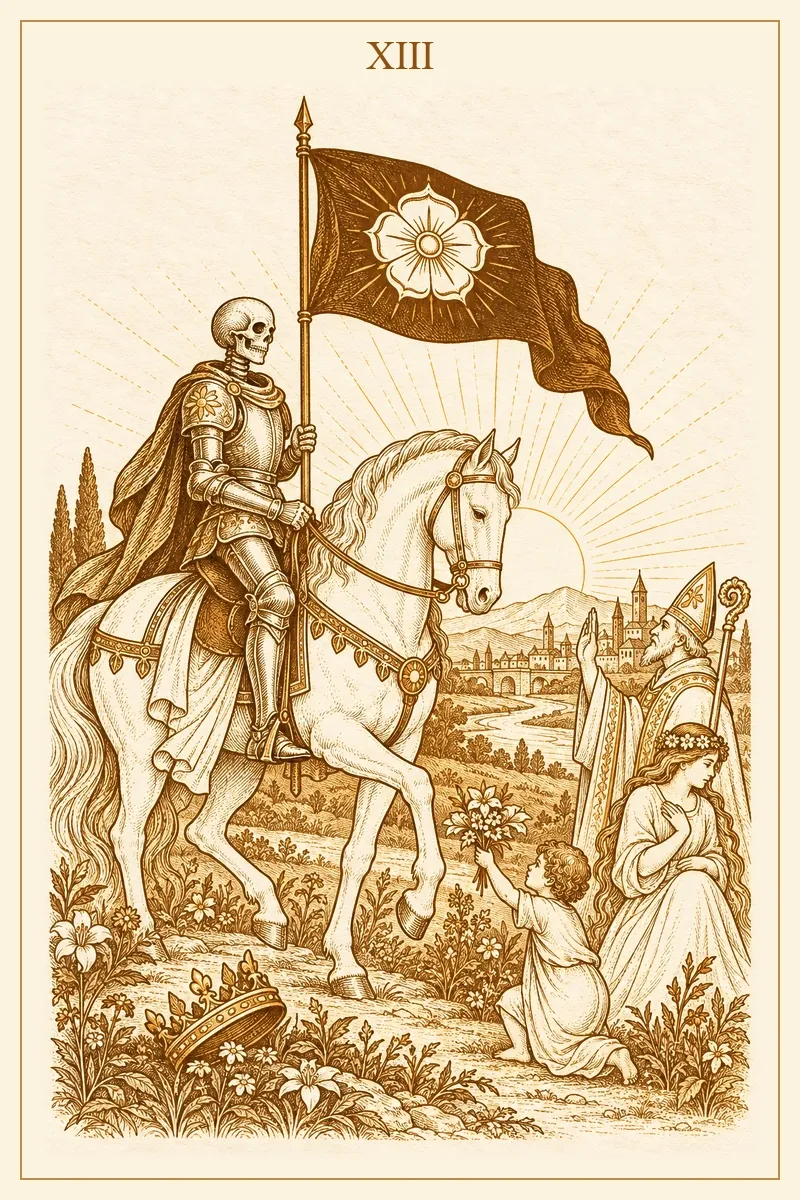
Together with Death, the Five of Cups describes an ending that is complete rather than temporary: what you grieve will not return in its old form. The pairing also points to transformation, and as the Death card's guide to endings and rebirth explains, that card clears space rather than leaving it empty.
With The Sun: joy waiting on the far bank
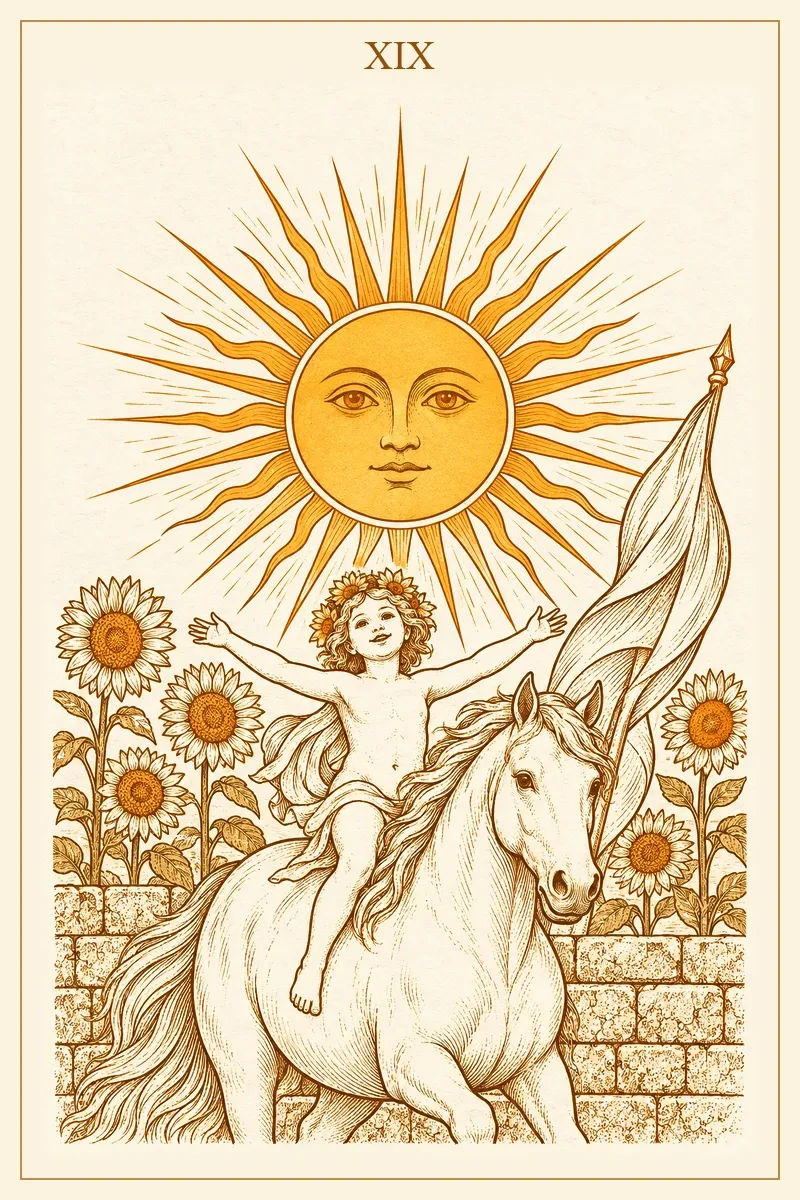
Paired with The Sun, the Five of Cups is a promise that warmth will return, even if it does not feel possible yet. The Sun's meaning of joy and vitality sits at the far end of this card's story, so the pairing usually shows the direction of travel rather than an overnight change.
With the Ace of Cups: a fresh cup after the spill
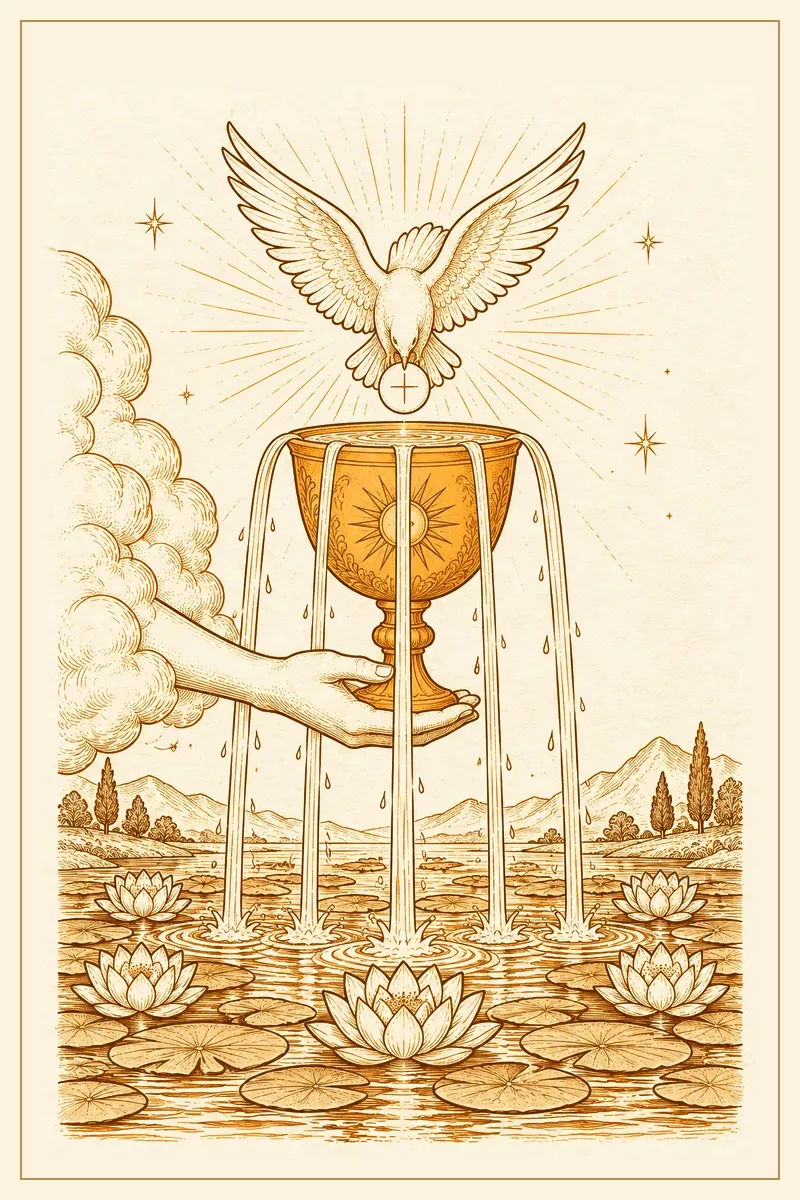
The Ace of Cups offers a new emotional beginning: a new love, a renewed friendship, or deeper kindness toward yourself. Next to the Five, it says the heart can be filled again once you are willing to hold out your hands. The Ace of Cups card meaning centers on receptiveness, the quality this pairing asks of you.
The two-cup spread: five positions for a season of loss
This spread follows the picture on the card, from the spill to the far bank. Lay five cards in a gentle arc and read them from left to right.
- The spilled cups: what was lost, or what the loss really was underneath the facts.
- The bowed head: where your attention is stuck right now.
- The two full cups: what is still standing and available to you.
- The bridge: the next crossing, from mourning toward living alongside the loss.
- The far bank: what this period can lead toward; a direction, not a promise.
A sample reading: the studio that closed
An illustrative question: "I closed my small pottery studio after three years. How do I move on from this?"
The spilled cups: Eight of Pentacles. The loss is not mainly money or status. It is the daily practice of skilled work, the hours at the wheel that gave the week its shape.
The bowed head: Five of Cups reversed. Attention has started to lift, but the person asking still checks the listing for the old premises and has not told most friends why the studio closed: some turning, some looking away.
The two full cups: Page of Pentacles. The skill is intact, and so is the willingness to learn, a student who never really left.
The bridge: Six of Swords. A quiet move to calmer water, carrying only what is needed; perhaps renting a shared kiln a few hours a week rather than reopening at once.
The far bank: Six of Cups. Generosity and simple pleasure in the craft: teaching a children's class, giving pieces to friends, making things for love again rather than to cover rent.
Reading the five cards as one story
Together, the cards say the grief is mostly about losing a daily practice, not a business. The clearest step is to tell people what happened so the loss stops being a secret; skill and curiosity make a small next step realistic. None of this says what will happen. It shows the same facts from the side of the full cups.
Small practices for the time before the bridge
- Name the three cups. Write down specifically what was lost. Grief often feels larger while it stays vague.
- Name the two cups. Then write what remains, even if the list feels thin, and let both lists sit on the page.
- Give grief a time. A set half hour or a walk gives sadness somewhere to go, so it spills less into everything else.
- Find one bridge-sized step. Not a new life; one call, one class, one honest conversation.
- Tell someone. A friend, a support group or a counselor. Saying it aloud is often when the figure starts to turn.
Frequently asked questions
Is the Five of Cups a bad card?
It is a painful card, not a bad one. It describes loss honestly, but its picture always includes two full cups and a bridge, which makes it closer to a compassionate witness than a warning.
What does the Five of Cups reversed mean?
Most often recovery: acceptance, forgiveness and the first steps after a loss. It can also mean grief that was avoided or pushed down, or an old loss coming back. Neighboring cards and your own honest reaction help you tell which.
What does the Five of Cups say about how someone feels about me?
Asked about someone's feelings, the card often describes sadness, regret or disappointment on the other person's side. Keep in mind that a reading cannot confirm another person's thoughts, predict a date or guarantee an outcome; it reflects a pattern to weigh alongside what that person actually says and does.
How is the Five of Cups different from the Three of Swords and the Eight of Cups?
The Three of Swords is the moment of hurt; the Five of Cups is the mourning that follows. The Eight of Cups is a choice to walk away from something that no longer fulfills you. The Five is about something taken; the Eight, about something left behind on purpose.
What is the astrology of the Five of Cups?
Mars in Scorpio, the first decan of Scorpio, under the Water element. The Golden Dawn named it Lord of Loss in Pleasure, and its number links it to Geburah, the sphere of severity.
When you are ready to look up
If a loss is on your mind and you would like a quiet place to look at both the spilled cups and the full ones, you can begin a tarot reading with Veil Soul and see which cards come forward.