Wishes granted, and permission to enjoy them: that is the Nine of Cups. Upright, the 9 of Cups means emotional satisfaction, a hope that has come true or is close to it, and the calm pleasure of having enough. It is one of the clearest yes cards in the deck. Reversed, the satisfaction is missing or misplaced: a wish that is late or still vague, a goal reached that feels flat, or pleasure that has slid into excess or show.
Readers nickname it the wish card, and the name fits, with one refinement: the card does not grant wishes, it describes the moment you notice one has been granted. Tarot cannot confirm what another person feels, promise a specific outcome, or name a date. What the Nine of Cups can do is ask whether you know what you wished for, and whether you will let yourself enjoy it when it comes.
At a glance:
- Upright: a wish fulfilled, contentment, gratitude, pleasure, healthy pride, emotional ease.
- Reversed: a delayed or unclear wish, hollow success, smugness, overindulgence.
- Yes or no: yes when upright; reversed, a qualified yes that asks you to check what you are really asking for.
- Suit and element: Cups and water, the suit of feeling and relationships.
- Astrology: Jupiter in Pisces, the second decan of Pisces.
- Older title: Lord of Material Happiness.
- Advice: name the wish, notice when it arrives, and enjoy it before reaching for the next one.
Nine goblets in an arch: what the card shows
The goblets on the draped table
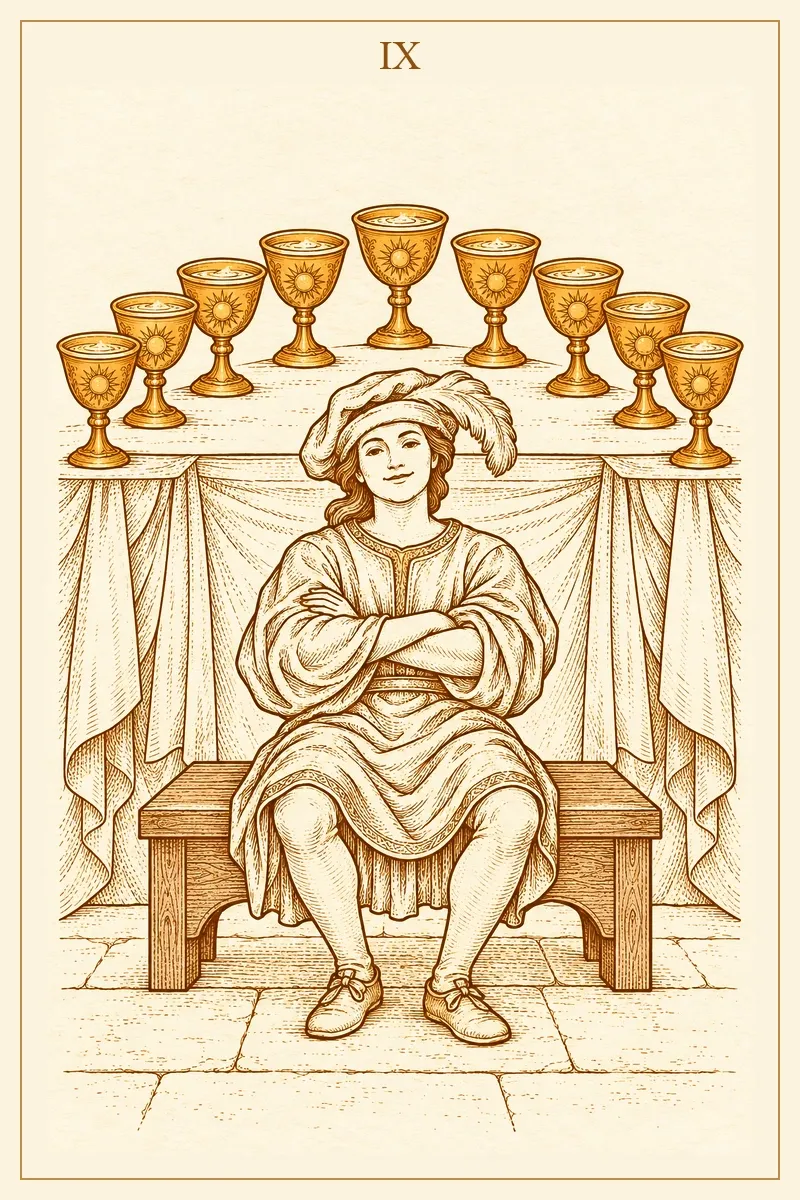
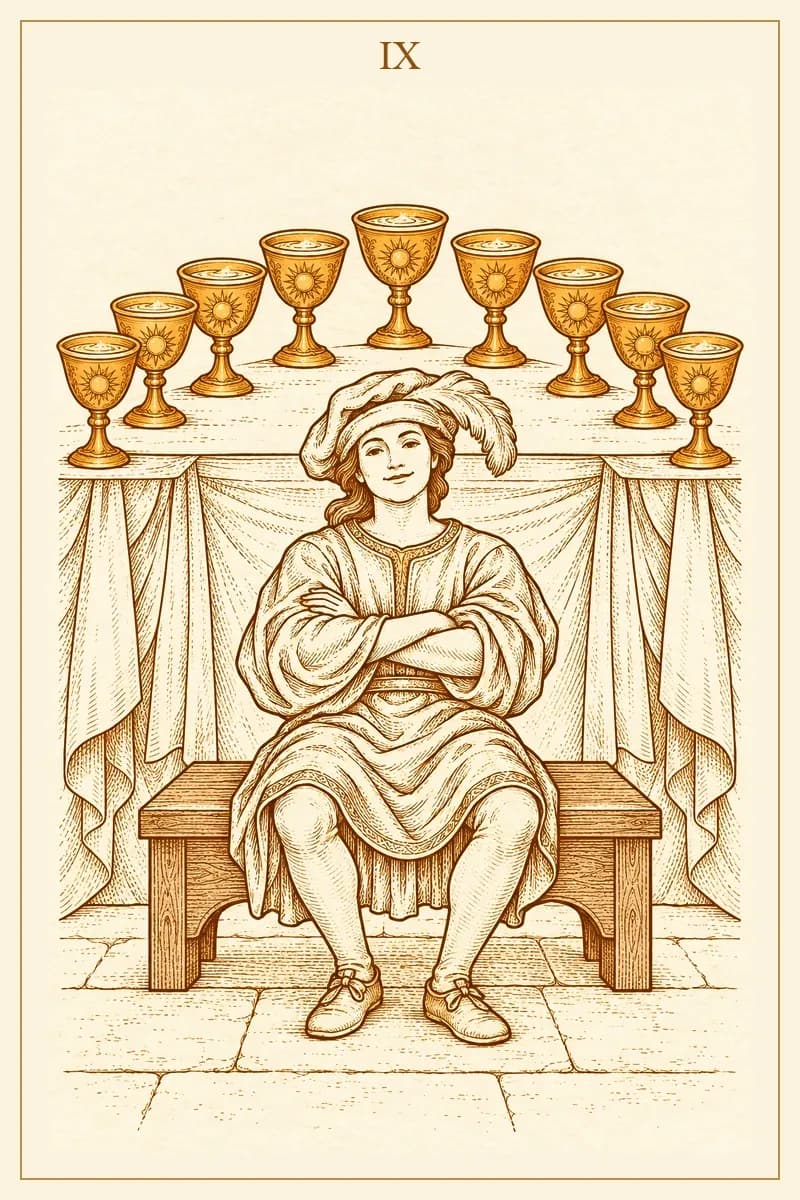
Across the top half of the Nine of Cups, nine gold goblets stand in a curved arch along a table. The center goblet sits highest and four step down on each side, so the row reads like a rainbow drawn in metal. Each bowl carries a small engraved sun, and each looks filled to the rim. Nothing is spilled, tipped over or missing from the set.
A long cloth covers the table and falls in deep folds to the floor, closing off the space behind the goblets. There is no landscape, no sky and no road leading away. This happiness was gathered and set out on purpose, not stumbled upon.
The figure on the bench
In front of the table, a single figure sits on a plain wooden bench, knees apart and both feet planted on the stone floor. The arms are folded across the chest, and the face wears a small, easy smile. A soft cap with a large feather sits on long wavy hair, and a loose tunic with wide sleeves is cinched at the waist.
The figure sits with their back to the goblets and does not turn to look at them. Someone who still doubts a success keeps checking on it; this person knows the cups are there and feels no need to count them again. Folded arms can read as satisfaction or as self-protection, and that double edge is exactly what the reversed card explores.
Lord of Material Happiness: Jupiter in Pisces and the number nine
In the Golden Dawn system that shaped most modern decks, the Nine of Cups carries the title Lord of Material Happiness and is assigned to Jupiter in Pisces, the second decan of Pisces, roughly the first ten days of March. "Material" here means happiness that has taken form in the world, not money alone: the job actually offered, the evening actually spent with people you like.
Jupiter is the planet of growth, generosity and good fortune, and Pisces is the sign of feeling and imagination. Together they describe abundance that is felt rather than counted. In traditional astrology Jupiter is also the ruler of Pisces, one reason readers treat this card as so warm. To follow the sign further, the guide to Pisces and tarot traces how the same water runs through other cards.
Nine is the last step before the suit closes at ten. In Cups, the run from ace to nine is largely personal: you fall in love, celebrate, grow bored, grieve, remember, daydream, walk away and finally arrive. The Nine is the arrival; the Ten widens the circle to family and community. That is why the Nine of Cups can feel a little private: the joy is real, but it is still mostly yours.
The Nine of Cups upright: enough, and knowing it
Upright, the card says the thing you hoped for is here or very near, and that you are allowed to feel good about it. That may be a big event, such as an acceptance letter, or something quieter, like a run of weeks in which your days feel the way you want them to.
The deeper message is about receiving. Many people are better at striving than at arriving. They hit a goal, feel a brief lift, and immediately ask what is next. The Nine of Cups asks you to stay at the table a while longer. Taste what you poured, and say thank you, to others and to yourself, for the effort that set it up.
The card also carries healthy pride. The figure is not apologizing for the goblets. If you have worked for something and it has come together, the Nine of Cups gives you room to say so plainly, without shrinking it and without needing applause. Contentment that does not need an audience is the steadiest kind.
Nine of Cups reversed: a full table that still feels empty
Reversed, the goblets are still there, but the satisfaction they promise does not reach you. This reversal takes three shapes, and the question you asked, together with the cards around it, helps you tell which one you are holding.
A wish that is late or still unclear
Sometimes the reversed card simply means the wish has not landed yet. A plan is delayed, an answer has not come, or the timing belongs to other people. Before reading this as a no, check the wish itself. A vague wish ("I want things to be better") is hard to recognize even when part of it comes true. Rewriting it as one sentence you could tick off may be the first step the card is asking for.
A wish that arrived and fell flat
The second shape is the most puzzling. You got the thing, and it feels thinner than you imagined. The promotion came with longer hours, or the relationship turned out to be lonely in a new way. This is not a punishment but information: the wish was standing in for a feeling, and the feeling is still missing. Ask what you hoped the wish would give you, and whether there is a more direct way to get that.
Pleasure that tips into excess or display
The third shape concerns how pleasure is being used. Too much food, drink, spending or scrolling can fill the evening without filling you. The reversed card can also point to smugness, or to a happiness that only counts when it is seen: the photos posted, the success mentioned a little too often. Here the folded arms turn defensive, and contentment becomes something to protect from questions rather than something to share.
A gentler reading exists too: happiness turning inward, no longer needing the display. If your question is about outgrowing the need for approval, consider it.
Contentment in love: partners, singles and the wish list
In a relationship
For a couple, the upright Nine of Cups describes a stretch of real ease. You like each other's company, the relationship meets most of what you need, and there is room for play. It is a good card for celebrating an anniversary or simply saying out loud what is going well. Nothing has to be perfect; enough is right to enjoy.
Single and hoping
If you are single, the upright card speaks first about your own life. Your days have their own pleasures, and that contentment is attractive in a quiet way. It can also suggest that a wish around meeting someone is moving closer. One caution: this card loves a wish list, and long wish lists turn people into checklists. Keep two or three qualities that truly matter, such as kindness, honesty and a shared sense of humor, and let the rest surprise you.
Reversed in love
Reversed, a relationship may look ideal from outside and feel thin from inside. One partner may be performing happiness, or the relationship may be built around a picture rather than the two people in it. For singles, the reversal can point to waiting for a perfect match no real person can meet. Either way the move is the same: talk about what each of you wants now, not what you wanted at the start, and listen to the answer.
Work, money and the habit of moving the goalposts
Career
At work, the upright Nine of Cups points to satisfaction you can feel: a project that went well, recognition from people you respect, an offer that matches what you asked for. Its particular advice is to mark the win before setting the next target. Tell your team, write down what made it work, take the afternoon off.
Reversed, the card describes success that does not feel like success. You may have climbed toward a title someone else wanted for you, or reached a goal that was meant to be a stepping stone and forgot to step off. Before throwing the job away, list what you like about your days and what you would remove; the answer may be a change of shape rather than an exit.
Money
For money, the upright card fits savings goals reached, a raise, or the relief of covering what you need with a little left over for pleasure. Reversed, it warns against buying things to fix a mood, or treating a number in an account as proof that you are happy. This is reflection, not financial advice; real decisions belong with your actual budget and, if needed, a qualified professional.
Rest, pleasure and enough
For energy and wellbeing, the upright card leans toward enjoyment in balance: good meals, rest that restores you, time with people who make you laugh. Reversed, it asks whether pleasure has turned into habit, like the second glass that no longer tastes of anything. Spiritually, the upright Nine is gratitude that comes easily; the reversed Nine is trying to feel fulfilled through what others can see rather than what you can feel.
Is the Nine of Cups a yes? A warm one, with one condition
Upright, the Nine of Cups is a yes, and a generous one. If you asked whether a hope will come together, whether a plan is worth pursuing or whether you will be glad you agreed to something, the card leans clearly toward the happy answer. It sits comfortably among the tarot cards that mean yes, alongside The Sun and The Star.
The condition is this: the card answers the wish you actually asked about. If your question was vague, the yes may come in a form that surprises you, so phrase it as precisely as you can before you draw.
Reversed, the answer is "not yet" or "yes, but." You may get it later than you hoped, or get it and realize the question needed changing. Treat the reversal as an invitation to rewrite the wish, then ask again in a few weeks.
Nine of Cups, Ten of Cups or Nine of Pentacles: three kinds of enough
Three cards talk about contentment, and they are easy to blur together. The Nine of Cups is personal emotional satisfaction: I got what I wished for and I feel good. The Ten of Cups takes that feeling and shares it. It is about belonging, family and a happiness that includes other people, which is why the Ten of Cups meaning centers on home and harmony rather than on one person's wish. If the Nine says "me," the Ten says "us."
The Nine of Pentacles is the earthy sibling. It describes security and self-made comfort built over time: independence, a well-tended life, the reward of discipline. The Nine of Cups is lighter and quicker. It is the evening out, not the years of saving that paid for it.
Five cards that color the wish
The Nine of Cups is warm on its own, so its neighbors mostly tell you what kind of wish is in play.
The Star: a wish that also heals
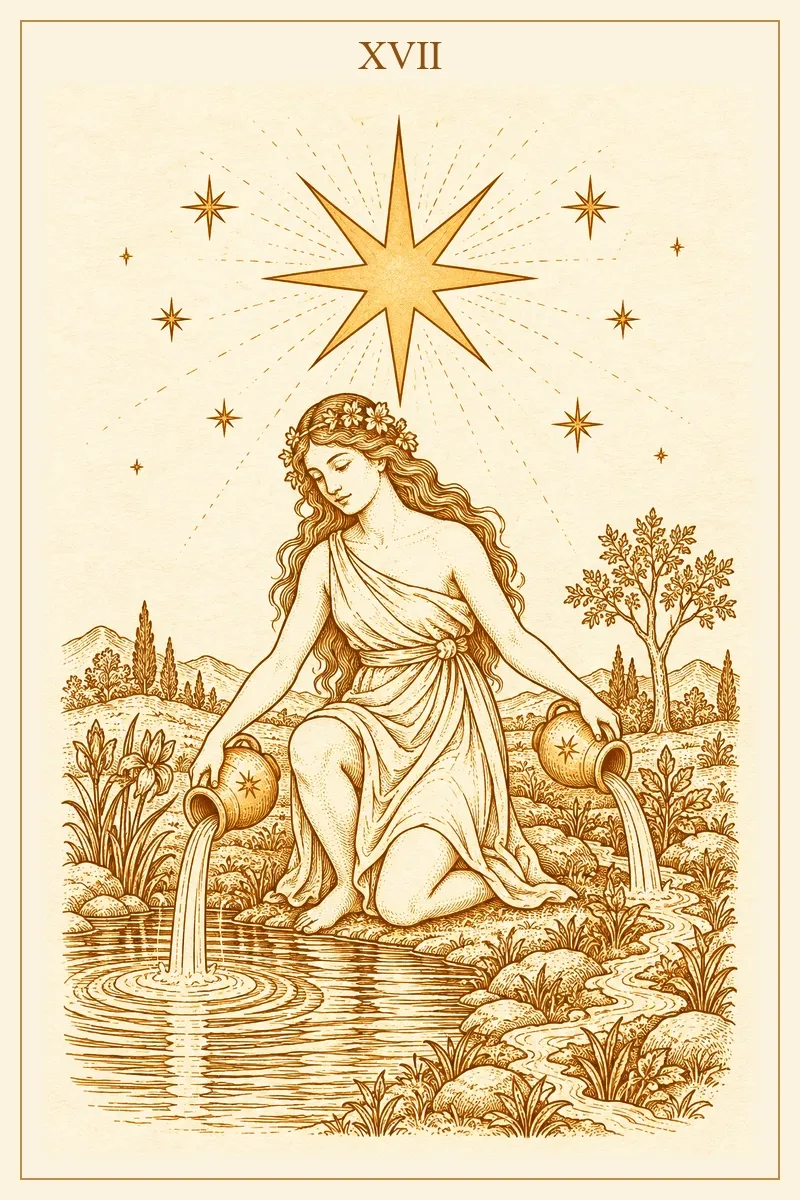
With The Star, the fulfilled wish comes after a hard stretch and restores hope as well as pleasure: the first good season after a loss, a plan revived after it seemed finished. The meaning of The Star is renewal, and here renewal and contentment meet. Trust the good news without bracing for it to vanish.
The Sun: joy with nothing hidden
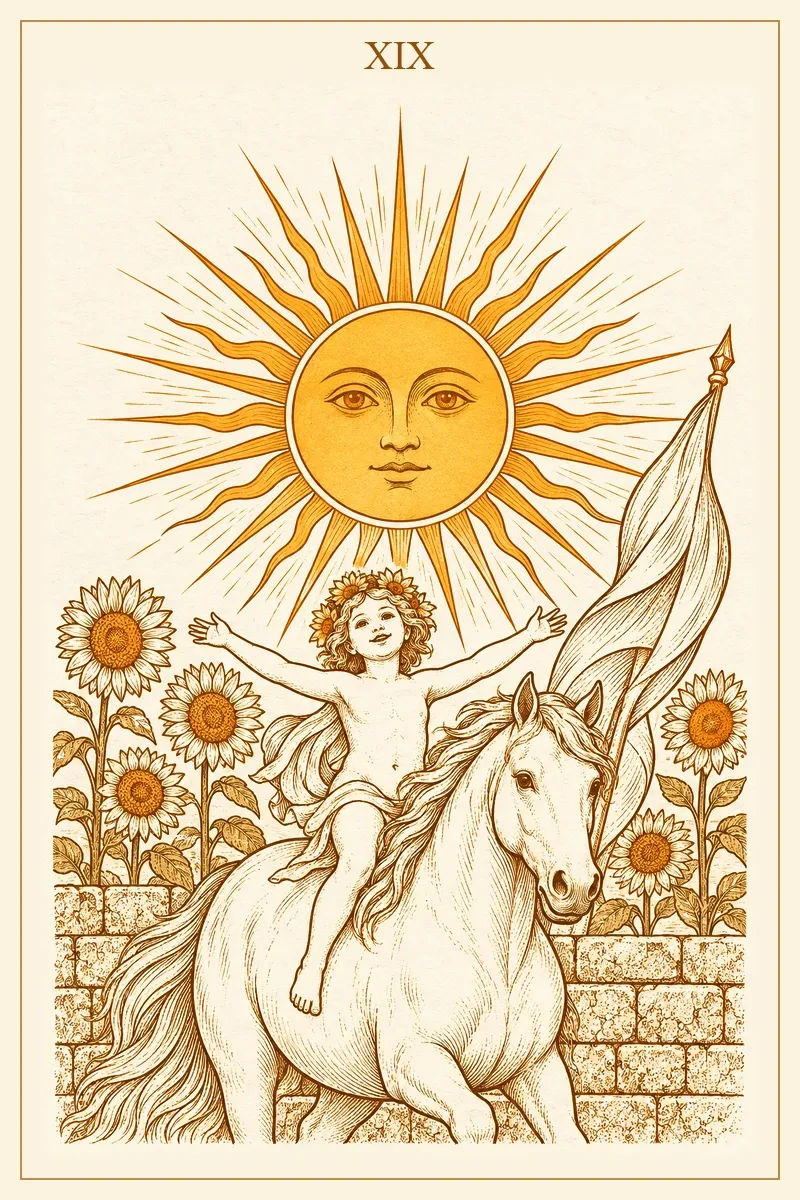
With The Sun, happiness goes public. A private satisfaction becomes something you can share openly, and the mood turns simple and generous. As the Sun card's meaning suggests, this is one of the most cheerful pairs in tarot; just avoid big promises while you are glowing.
The World: a chapter that closes well
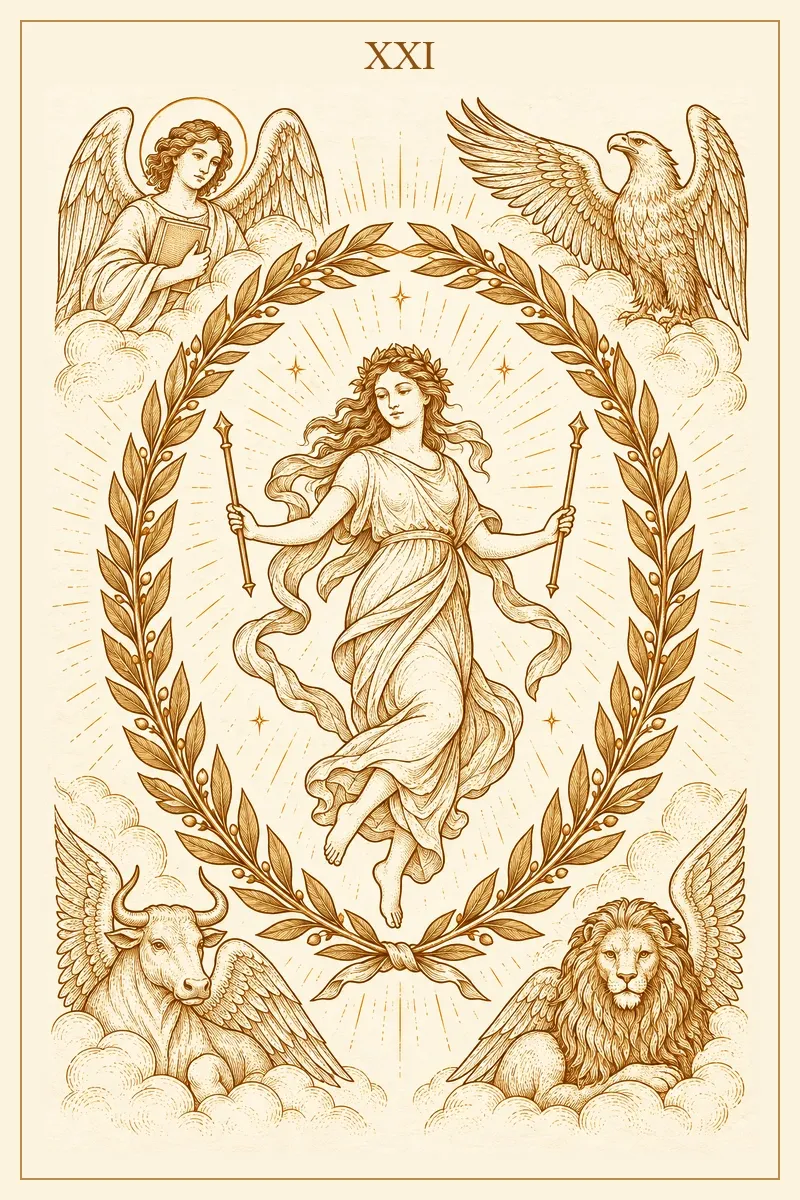
With The World, the wish belongs to a larger cycle reaching completion: a degree finished, a move settled, a long project delivered. The wholeness at the heart of the World card's meaning adds weight to the Nine's pleasure. Mark the ending properly before you start the next thing.
The Devil: when pleasure starts to hold you
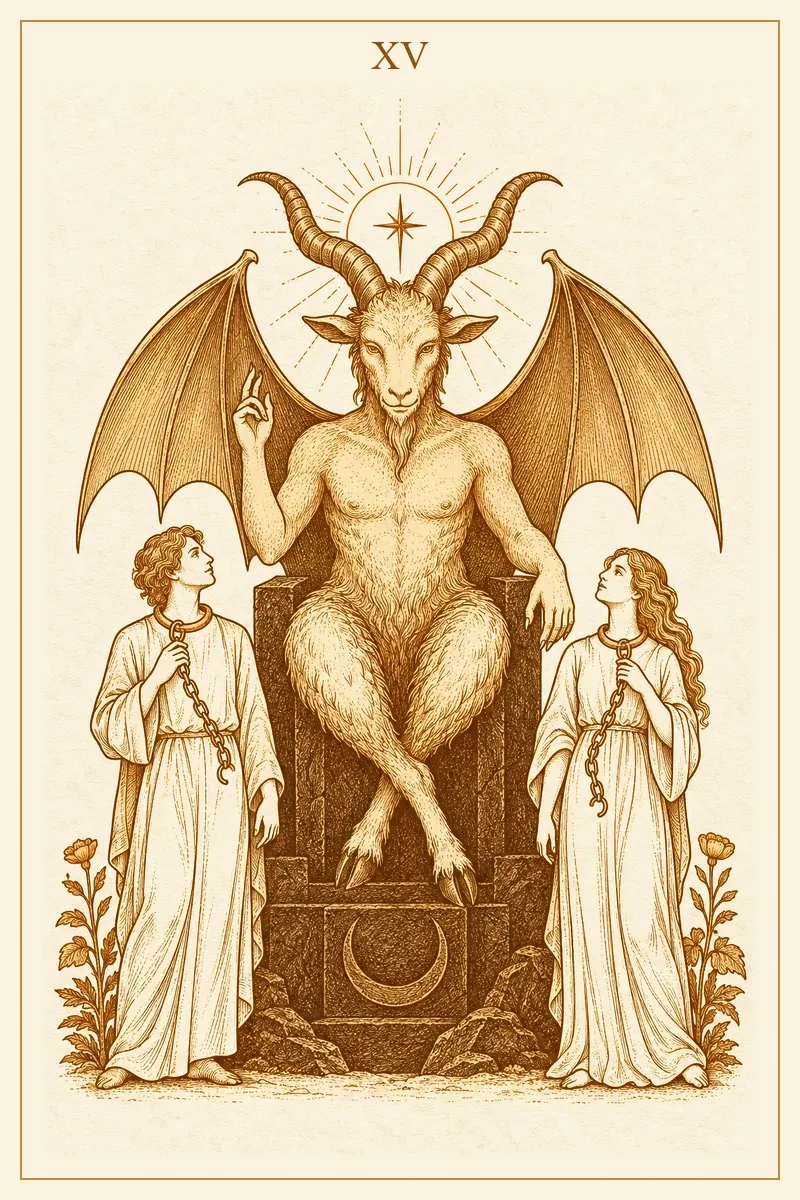
With The Devil, the Nine's enjoyment leans toward attachment. A comfort may be turning into a habit you no longer choose, or a reward may be keeping you somewhere you would otherwise leave. The Devil card's meaning concerns attachments that feel fixed but can be loosened, so the pairing is a nudge, not a verdict: notice which pleasure you would struggle to skip for a week.
The Eight of Cups: what you found after leaving
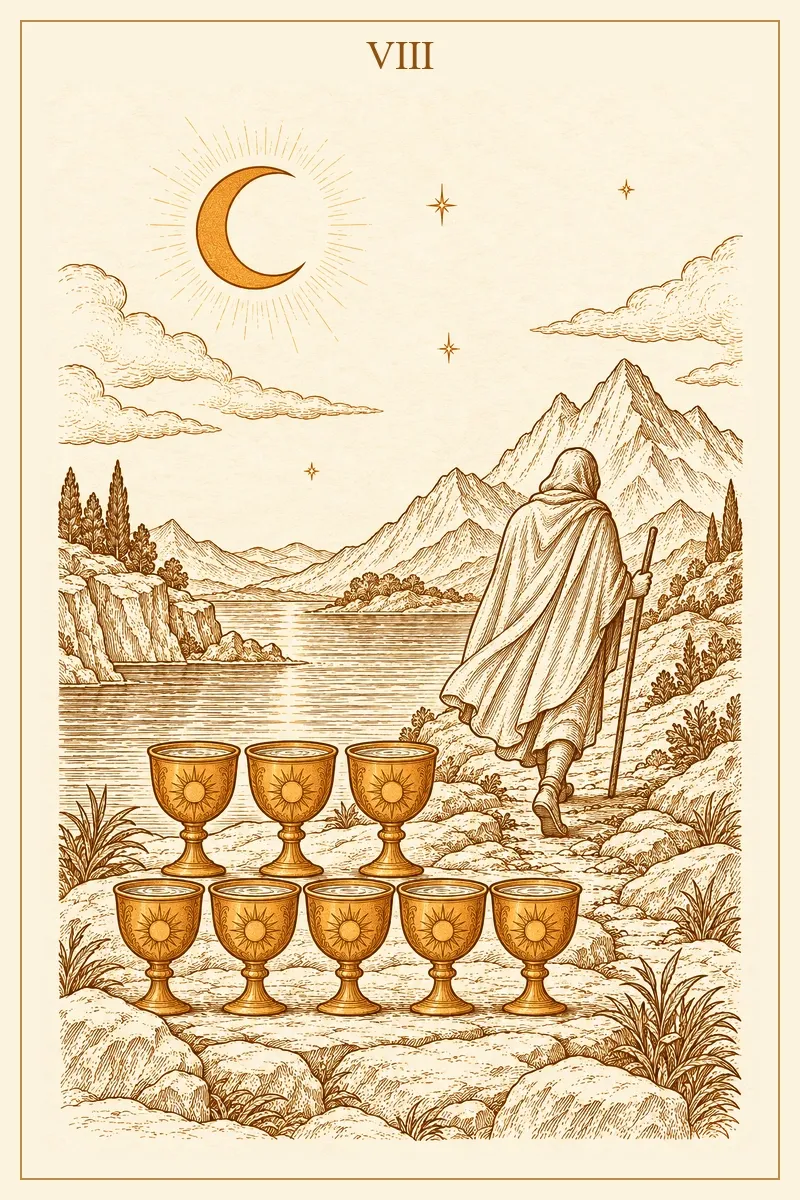
With the Eight of Cups, satisfaction follows a departure. You walked away from something that no longer fed you, and what you found afterward was worth the risk. The Eight of Cups meaning is about leaving in search of something deeper; beside the Nine, it says the search paid off.
Name the wish: a four-card spread
Use this spread when the Nine of Cups has appeared, or before you set a goal and want to be sure it is the right one. Shuffle with the wish in mind and lay four cards in a row.
- The wish in your own words: how you currently picture the thing you want.
- The feeling underneath: what you hope the wish will give you, such as safety, closeness, freedom or rest.
- Already on your table: something you have now that meets part of that need and may be going unnoticed.
- One way to savor or adjust: a small action that lets you enjoy what has come, or reshapes the wish so it fits better.
The second and third cards belong together. When they agree, the wish is well aimed. When the feeling underneath has little to do with the wish on top, the reading is pointing to a more direct route to what you want.
A worked reading: a new apartment that does not feel like home yet
Picture someone who saved for two years and has just moved into an apartment of their own. The rooms are lovely, but evenings feel oddly flat. Their question: What would make this place feel like home? They lay out the four-card spread.
The wish in your own words: Nine of Cups reversed. The wish was framed as a finished picture: the perfect apartment, every shelf arranged. All nine goblets are set out, but the pleasure is not reaching the person who set them there: the picture has become the goal.
The feeling underneath: Three of Cups. The Three of Cups is friendship and celebration. What they wanted from a home was never only the rooms; it was people laughing in them.
Already on your table: Four of Cups. The Four of Cups describes an offer that goes unnoticed. They remember two invitations from neighbors and a friend who keeps asking to visit, all postponed until the place is "ready."
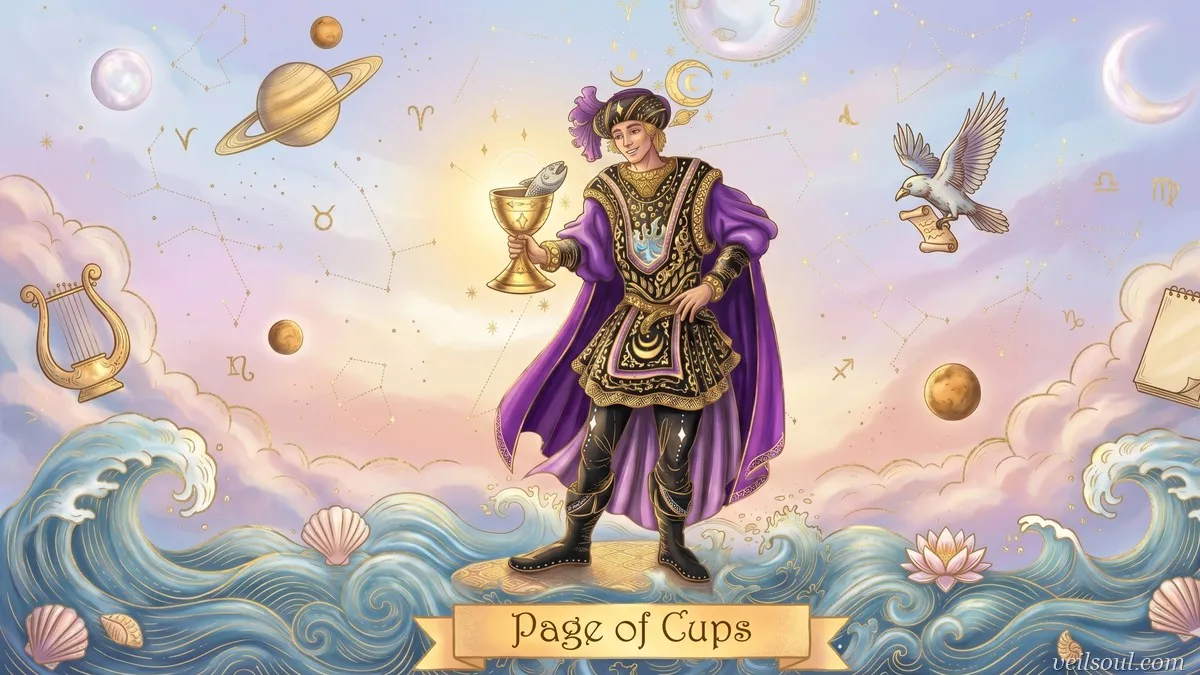
One way to savor or adjust: Page of Cups. The Page of Cups is a light, playful first step: invite one person over this week, unfinished shelves and all, and see how the rooms feel with someone else in them.
Read together, the cards do not say the move was a mistake. They say the wish was aimed at the furniture when it was really about company. Nothing here predicts how that evening will go; the reading points to one small choice that sits entirely in their hands.
Savoring a granted wish: five small practices
When the Nine of Cups turns up upright, slowing down tends to help more than planning.
- Write the wish down after it comes true. Note what you hoped for, what happened and how it feels now, so you learn to recognize arrivals instead of skipping past them.
- Delay the next goal by a week. Give yourself seven days before you set a new target, and notice how often your mind tries to start one anyway.
- Share one part of it. Choose a person who will be glad for you, not one you want to impress.
- Send one note of thanks. Few wishes come true entirely alone, and a short message to someone who made it possible keeps contentment from turning into smugness.
- Ask the reversed question too. Is there a pleasure here I am leaning on too hard? It is far easier to answer honestly while things are good.
Frequently asked questions
Why is the Nine of Cups called the wish card?
Because its picture and its meaning point the same way: a full set of goblets arranged behind a person who is plainly content. The name works best as a reminder to know what you are wishing for.
Is the Nine of Cups reversed a no?
Not exactly. It tends to mean "not yet," "not in this form" or "yes, but check whether this is what you want." Look at the cards around it, and at how precisely you phrased the question, before deciding.
What does the Nine of Cups say about how someone feels about me?
Upright, it can describe someone who is happy and at ease in your company. Reversed, it can describe someone who enjoys the surface of the relationship more than its depth. Treat either as a mood to explore together in conversation.
Does the Nine of Cups tell me when my wish will come true?
No card can give a reliable date, and tarot cannot guarantee an outcome or confirm what another person thinks. Some readers use the Pisces link, early March, as a loose seasonal hint, but the card is better at showing whether you are ready to receive something than at timing it.
Is the Nine of Cups a selfish card?
Upright, no. Enjoying what you have is not selfish, and contentment tends to make people more generous. It becomes a concern only when reversed or beside The Devil, where pleasure turns into excess or a need to be admired.
What is the Nine of Cups' advice?
Name the wish clearly, notice when it arrives, and let yourself enjoy it before reaching for the next one. If it has arrived and feels empty, look for the feeling the wish was standing in for.
Before the next wish
The Nine of Cups is a small celebration in card form: nine full goblets, a plain wooden bench, and someone who has stopped reaching for a moment. If you would like to see where your own wish stands, a quiet tarot reading with Veil Soul is a calm place to start.