Consent comes first when you read tarot for others: ask whether they want a reading, let them choose the question, and agree on what the reading will not cover. Then describe each card in plain words and ask how it fits their life before you add your own interpretation. You do not need years of study or a psychic gift. You need a small spread, honest language, and the steadiness to say no to questions tarot cannot answer.
That last part matters more when the cards are for someone else. A reading can help a friend name what they feel, sort through options, or notice something they have been avoiding. It cannot reveal what a third person is secretly thinking, set a date, or forecast a medical diagnosis, a court ruling, or an investment result. Saying so at the start protects both of you and makes everything that follows easier to hear.
Here is the whole process in six steps; each one gets its own section below.
- Ask before you read: offer, never insist, and let the other person decide whether they want a reading at all.
- Agree the boundaries: no health, legal or money outcomes, and no promises about another person's mind.
- Shape the question together: turn "Will it happen?" into "What can I understand or do?"
- Describe, then ask: say what the card shows, then invite their reaction before you interpret.
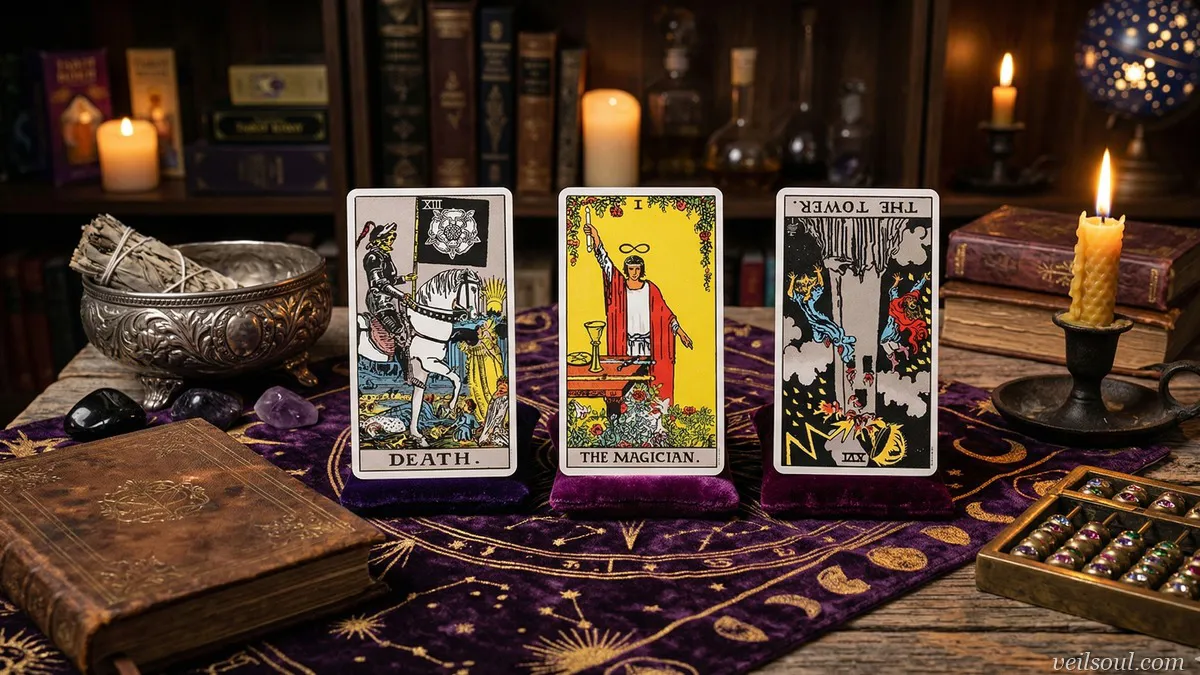
- Slow down for hard cards: The Tower or Death is a topic to explore, not a verdict to announce.
- Close with one step and keep it private: end on something they can do, and keep what they shared to yourself.
Why reading for someone else feels different
When you read for yourself, you hold every piece of context: what happened yesterday, what you are afraid of, what you hope the cards will say. When you read for another person, you hold almost none of it. The cards are the same, but your job shifts from private reflection to guided conversation. You are offering a frame, and the person across the table fills it with their own life.
This is good news for a beginner. You are not expected to know the answer. You are expected to ask useful questions, describe images clearly, and notice what the other person reacts to. If you have practiced on your own with a one-card daily draw or a short spread, those skills carry over: you already have a vocabulary, and now you are learning to share it.
Consent and boundaries come before the shuffle
Offer a reading; don't push one
Some people love tarot, some are only curious, and some find it uncomfortable for personal or religious reasons. Ask plainly: "Would you like a short reading, or would you rather just watch?" Accept a no without trying to persuade. At a party or a family dinner, check that the person wants a reading in front of others; a question about a breakup or a job loss deserves a quieter corner.
Consent also covers the topic. If a friend starts with a light question and then says, "Actually, can we look at my marriage?", check that they want to go there now, in this setting. It is fine to say, "Let's do that one another day, when we have time to talk."
Questions you can kindly decline
Decide your boundaries before anyone sits down, so you are not inventing them under pressure. A beginner-friendly list:
- Health outcomes: whether an illness is serious, whether a pregnancy will happen, how a treatment will go. Those belong with a doctor.
- Legal outcomes: who will win a custody case, whether a visa will be approved, how a court will rule. Those belong with a lawyer or another qualified professional.
- Financial outcomes: whether a stock will rise, whether to sign a loan, whether a business will make money. Those belong with a qualified advisor.
- Another person's private mind: what an ex is thinking, whether a coworker is lying, whether a partner is cheating. The person in question is not there to consent, and guessing at their thoughts puts words in their mouth.
- Death and disaster: when someone will die or whether something terrible is coming. No responsible reading answers that.
Declining does not have to end the reading. Each of these questions has a version tarot can help with, and the next section shows how to find it.
A short script to open with
The first minute is the easiest place to freeze, so have words ready. You might say: "I use tarot as a way to reflect, not to predict. I'll describe what the cards show, and you tell me what fits. I don't read on health, legal or money outcomes, or on what someone else is thinking, but we can look at how you feel and what you can do." Adjust it to your own voice and say it every time, even with close friends. Repeating it turns a boundary into a habit rather than an awkward moment. And if you are exhausted or rushing, postpone; a hurried reading is easy to regret.
Turning their question into one the cards can work with
The question shapes the whole reading, so spend a few minutes on it before anyone touches the deck. Ask what is on their mind, listen, and then offer a version that keeps the focus on the person in front of you and on what they can understand or choose. The guide on how to ask effective tarot questions goes deeper; when you read for someone else, these swaps cover a lot of ground:
- "Does he still love me?" becomes "What do I need to understand about where I stand and what I want from this relationship?"
- "Will I get the job?" becomes "What can I bring to this interview, and what should I prepare?"
- "Is my dad's illness serious?" becomes "How can I support my dad, and myself, while we wait for the doctor's answer?"
- "Should I put my savings into this?" becomes "What am I hoping this decision will give me, and what do I still need to ask a professional?"
Let them choose the final wording. A question in their own words gives them ownership of whatever comes up. If you want more examples to borrow, the question library collects reflective wordings by topic.
Who shuffles and who cuts
There is no rule here. You can hand the deck over so the other person feels involved, or shuffle yourself and ask them to cut. If you pass your cards across, show a gentle method first, since a first-timer may worry about bending them. The walkthrough on how to shuffle tarot cards covers a few methods you can offer.
Keep the spread small
Three cards are plenty for a first reading with someone else. A short spread leaves room to talk, and the talking is where the value is. If you already work with three-card spreads, pick positions that suit a conversation, such as "what you're carrying," "what you may not be seeing," and "a step within reach." Name the positions out loud before you draw.
What to say once the cards are face up
Describe the picture before the meaning
Instead of announcing a card name and a keyword, describe what you see and connect it to their question. "This is the Five of Cups; it means disappointment" closes the conversation. "There's a cloaked figure looking down at three spilled cups, and two full cups are still standing on a stone ledge beside them. Does any part of that feel familiar right now?" opens it. The image gives you something concrete to say even when you are unsure of the textbook meaning.
Ask before you interpret
After each description, pause and ask a question: "What comes to mind?" "Who in your situation might that be?" "Does that match how this week has felt?" The answers point you toward the reading that fits.
Phrases that help and phrases to drop
- Say "this card can point to..." rather than "this means you will...".
- Say "one way to read this is..." rather than "the cards say...".
- Ask "what would you like to do with that?" rather than telling them "you have to...".
- Drop "he definitely feels...", "you're going to get...", and "this is a bad card."
When you don't know what a card means here
Say so. "I'm not sure how this one fits your question. Let's look at it together" is honest, and it invites the person to help. Describe the image, offer two possible readings, and let them choose the one that rings true. Inventing an answer does more harm than admitting a gap.
Delivering the cards that sound frightening
Some cards look alarming to people who have never seen a deck, and your calm sets the tone: if you wince, the other person will assume the worst. Describe the image and connect the card to the question they asked, not to the worst thing it could mean. This section covers the Tower, Death, and the Ten of Swords.
The Tower: a sudden shift, not a catastrophe
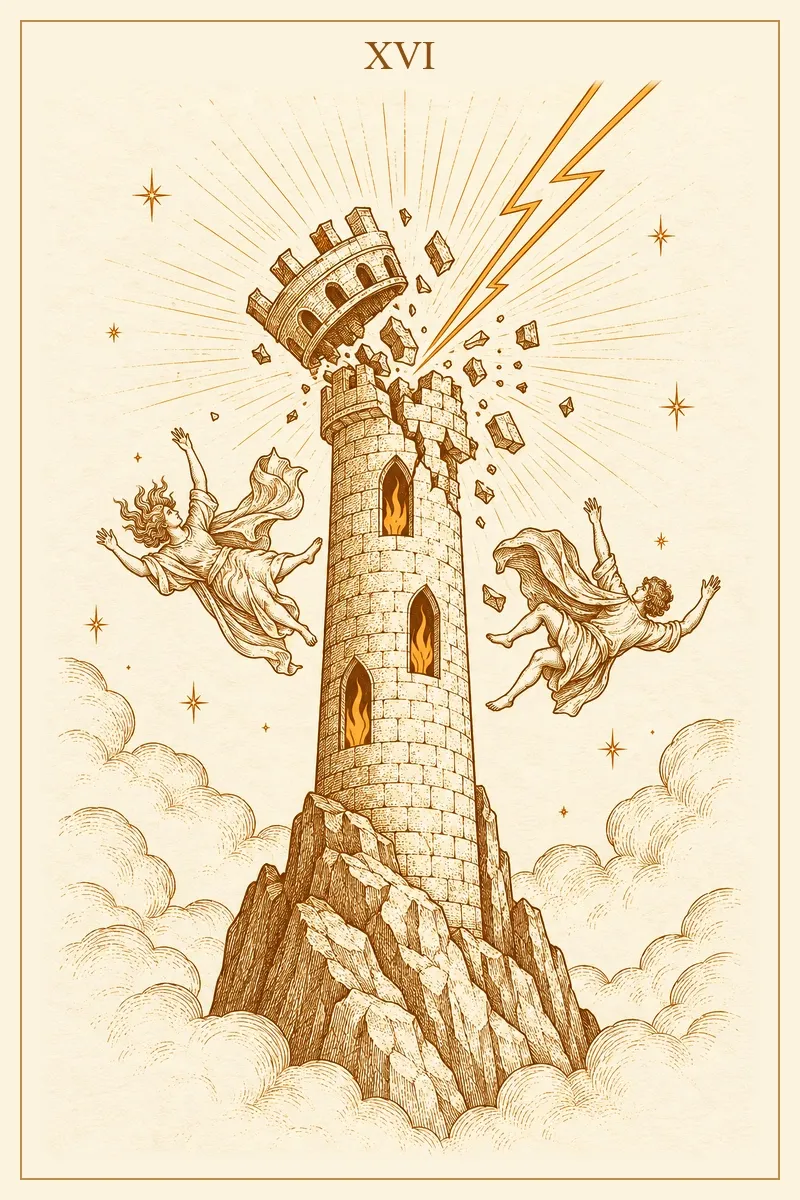
Lightning strikes a tower on a rocky peak above the clouds; its crown-shaped top breaks away, flames show in the windows, and two figures fall through the air. Out loud, try: "This card is about something that can't hold its old shape anymore. It can feel abrupt, but it also clears space for something more honest." Upright, it points to an unexpected change or a truth coming into the open. Reversed, it can describe a change that is being resisted, or one happening slowly from the inside. For its fuller symbolism, see The Tower tarot meaning. Avoid saying "everything is going to fall apart."
Death: an ending that makes room

A skeleton in armor rides a white horse and carries a dark banner marked with a white rose. A crown lies in the flowers below, a bishop raises his hand, a kneeling woman bows her head with a hand on her chest, and a small child holds out a bunch of flowers, while a low sun shines over a distant town. Say early and clearly that this card does not predict a physical death. It speaks of a chapter closing: a role, a habit, a stage of a relationship. Reversed, it can show someone holding on to something that has already ended. The post on Death tarot meaning goes further into its symbols. A useful question here: "What in your life is already finishing, and what might grow in its place?"
Ten of Swords: the lowest point, and a horizon
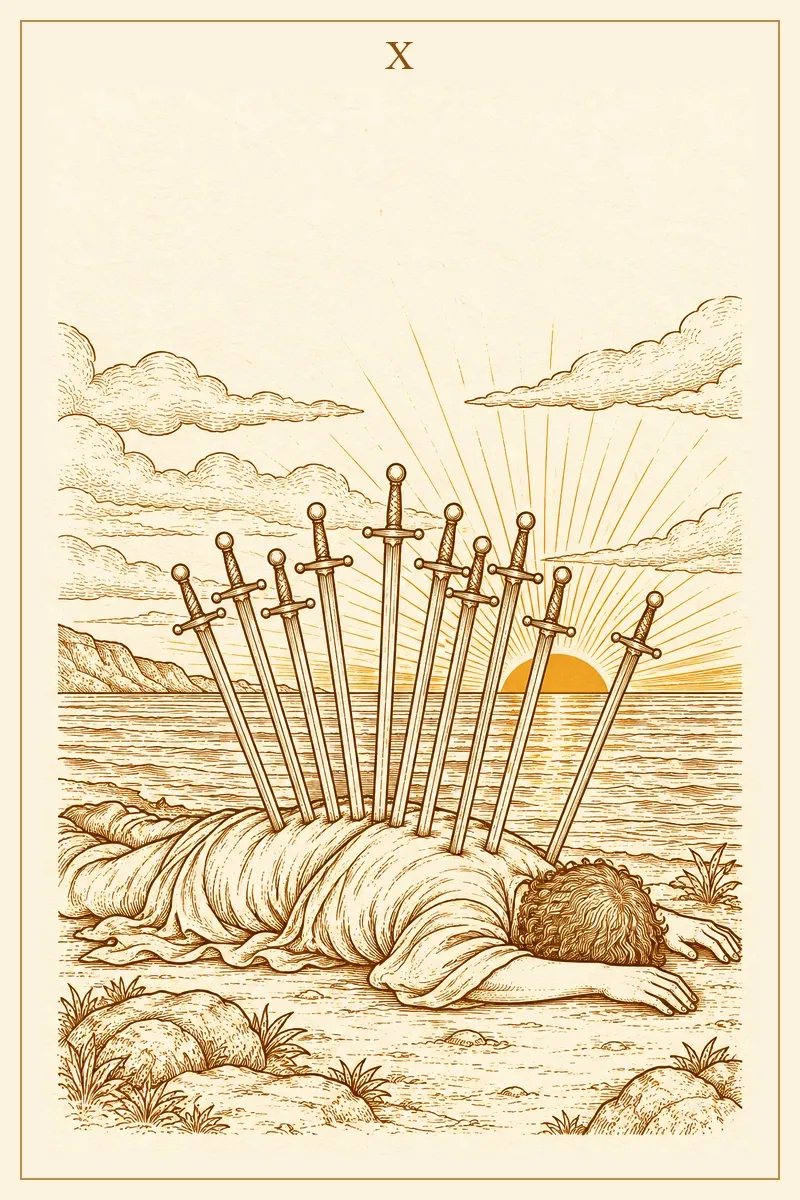
A figure lies face down on a shore with ten swords standing in their back, while the sun sits on the horizon over calm water. Describe all of it, including the light: "Something has hit bottom, and the worst of it may already be over." Upright, it can describe exhaustion, a betrayal, or the end of a draining situation. Reversed, it can point to slow recovery, or to refusing to let a painful chapter close. The Ten of Swords tarot card meaning covers it in full. Do not describe it as an attack someone is planning against them.
When the cards touch grief or heartbreak
Cards about loss can land hard when the person is already hurting. Here your job is less about explanation and more about pace: let them react, and do not rush to a silver lining they are not ready for.
Five of Cups: what spilled and what still stands
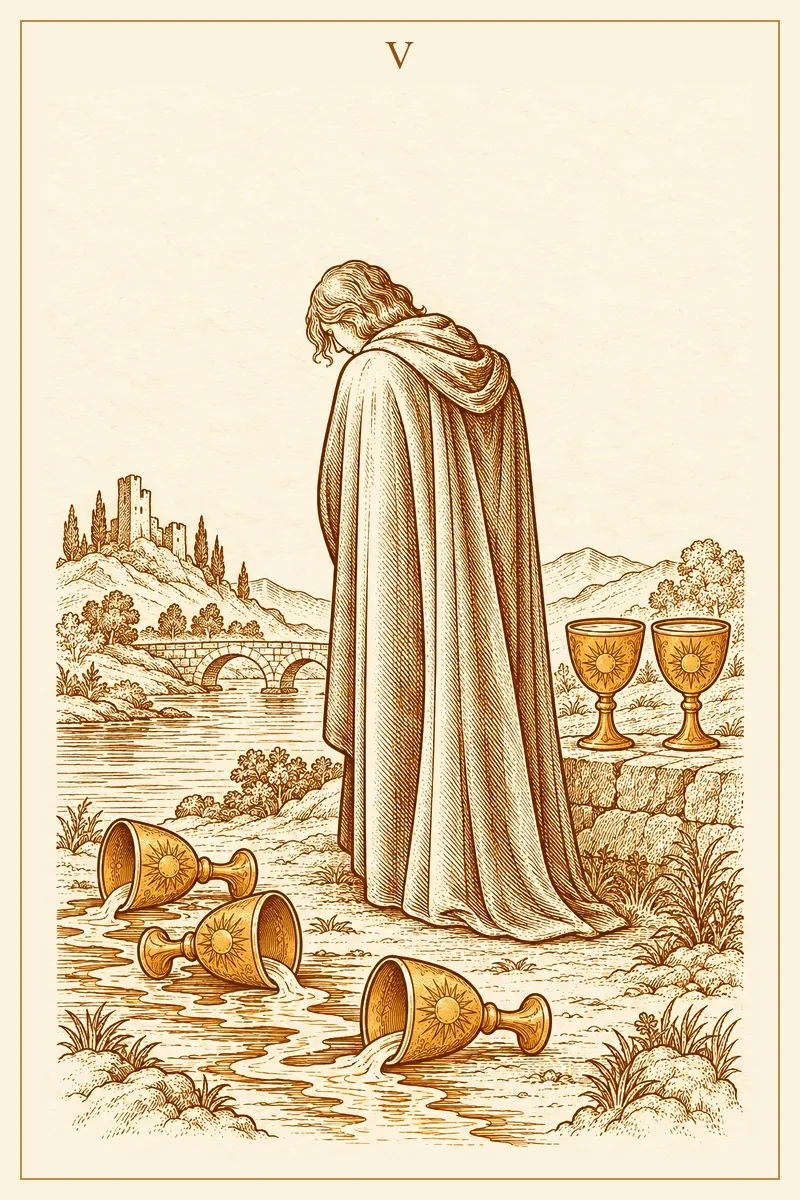
A figure in a long hooded cloak bows their head over three gold cups lying on their sides, their contents running into the earth. Two cups still stand upright on a stone ledge to one side, and beyond the river an arched bridge leads toward a castle on a hill. Name the loss first: "Something didn't go the way you hoped, and it makes sense to grieve it." Only then point to the standing cups and the bridge. Reversed, it can show someone beginning to turn around, or someone stuck in regret. You will find more detail in the Five of Cups tarot card meaning.
Three of Swords: naming the hurt
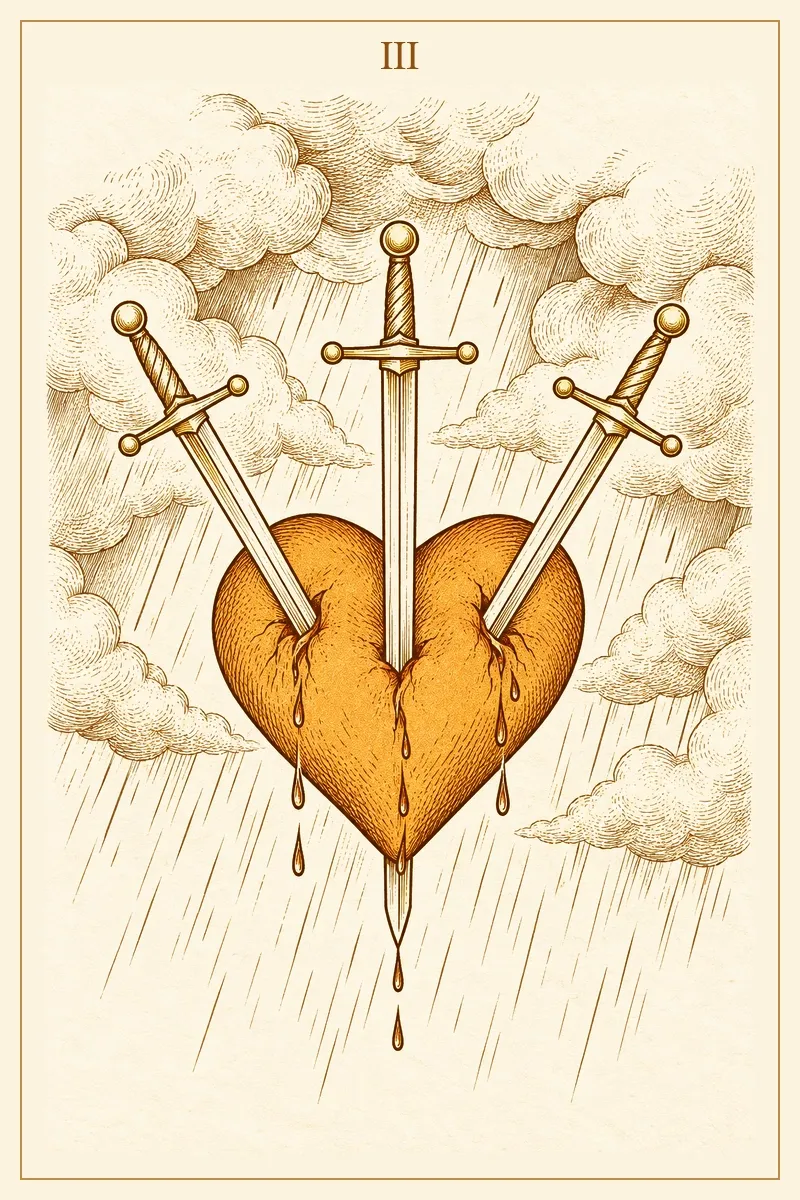
The Three of Swords shows a heart pierced by three swords, hanging in a sky of clouds and slanting rain. There is no softening the picture, and you do not need to soften it. You might say: "This looks like hurt that has already happened, or is happening now. Would you like to talk about it, or would you rather keep going?" Upright, it points to grief, disappointment, or painful words. Reversed, it can describe hurt beginning to ease, or pain kept quiet for too long. If you want to study it further, the Three of Swords tarot card meaning is the place. Never use it to confirm that a partner is unfaithful; the card describes a feeling, not evidence.
If someone becomes very distressed during a reading, stop. Put the cards aside and ask what they need. If they mention harming themselves or being in danger, encourage them to contact local emergency services or a crisis line, and stay with them while they do. A reading can wait; their safety cannot.
A practice reading for a friend, step by step
Here is an illustrative example of how the pieces fit together. It is not a real session, only a model you can rehearse.
The question. A friend asks, "Is my ex going to come back?" You explain that the reading will stay with your friend's side of the story, and together you reword it: "What do I need to understand so I can move forward from this breakup?" Your friend agrees to the new wording.
The spread. Three positions: what you're carrying, what you may not be seeing, and a step within reach.
- What you're carrying: Three of Swords. You describe the pierced heart and the rain, and ask how the past few weeks have felt. Your friend says it still hurts to see photos online.
- What you may not be seeing: Five of Cups. You point out the bowed figure, then the two upright cups on the ledge, and ask what is still steady in their life. They mention a close sibling and a running group they stopped going to.
- A step within reach: The Star. Beneath a large eight-pointed star, a kneeling woman pours water from two jugs, one into a still pool and one onto the ground. You describe it as slow refilling after a dry spell and ask what small thing would feel restoring this week. Your friend decides to go back to the running group on Saturday.
The close. You sum up in two sentences: the hurt is real, there is support they had stopped noticing, and one small step is already chosen. You do not say whether the ex will return; the reading stays with what your friend can feel and do.
Reading tarot for friends and family
Friends are the easiest people to practice with and, in some ways, the hardest to read for. You already know their history, so it is tempting to read your opinion of their situation into the cards. Before you interpret, ask yourself whether you would say the same thing to a stranger who drew these cards. If the answer is no, you may be giving advice rather than reading.
A few habits keep these readings healthy:
- Don't read about people you both know. If a friend asks what a mutual friend really thinks of them, bring the focus back to their own feelings and choices.
- Give one question one reading. If a friend wants to redraw because they dislike the answer, suggest returning to it after something has changed.
- Watch for reassurance loops. When someone asks for a reading every day about the same worry, gently say that the cards may be standing in for a conversation they need with a person: maybe a partner, maybe a counselor, maybe you over coffee.
- Read for family with extra care. Family questions can involve people who did not agree to be discussed. Keep the focus on the person asking.
- It's fine to say "not today." You are a friend first and a reader second.
Closing the reading well
End on one step
Before you gather the cards, ask: "What's one thing you want to take from this?" Let them answer first, then add your own one-line summary if it helps. A reading that ends with a single, doable action feels finished; one that ends with a list of warnings follows the person home.
Keep it private
What someone shares in a reading is theirs. Do not repeat it to others, post about it, or bring it up later in front of people, unless they raise it themselves. That trust is the reason people sit down with you. Afterward, take a minute to stretch, drink some water, and notice whether anything from the reading is still sitting with you before your next conversation.
Beginner slips worth avoiding
- Saying what they want to hear. Kindness is not the same as agreement. You can deliver a hard card gently and still deliver it.
- Sounding certain. "You will get the promotion" sets up a promise no card can keep.
- Drawing too many cards. A ten-card layout can bury a nervous beginner. Three cards you discuss fully are worth more than ten you rush through.
- Treating the reading as yours. Their life is the final reference. If your reading does not fit, their experience wins.
You are ready to read for others when you can say something meaningful about any card, stay with someone's feelings without losing your footing, and care more about being useful than impressive.
Frequently asked questions
Do I need psychic ability to read tarot for someone else?
No. Reading for others relies on knowing the cards, listening well, and asking good questions. Intuition grows with practice, but a careful, honest reading does not depend on any special gift.
Can tarot tell my friend what their partner is thinking?
No. Tarot cannot confirm another person's thoughts, intentions, or actions, and it cannot set a date or guarantee an outcome. It can help your friend look at their own feelings, what they have actually observed, and what they want to say or do next.
What if someone asks about a health, legal, or money problem?
Tell them kindly that you don't read on those outcomes and suggest they speak with a doctor, a lawyer, or a qualified financial professional. If they still want a reading, offer one on how they are coping, or on what support they need while they wait for proper advice.
What if the person cries or gets upset?
Pause and let them set the pace. You can shorten the spread, skip the remaining positions, or simply talk. There is no obligation to finish what you laid out. A short message the next day, asking how they are, closes the loop kindly.
Can I read tarot for someone who isn't in the room?
Yes, with their consent. Over a video or phone call, show each card on camera or describe it clearly, and agree on the question before you shuffle. What you should not do is read about someone who has not asked for it.
Before your first reading for someone else
Write your opening script on an index card, choose three positions you like, and practice once with a willing friend who knows you are learning. If you'd like to warm up first, draw a quiet three-card spread for yourself in a Veil Soul reading and bring what you notice to the table.