When the same tarot card keeps appearing across separate readings, days or weeks apart, it usually marks a theme that is still open in your life: a decision you keep circling, a feeling you have named but not acted on, or a season the card happens to describe well. It can also be plain chance, because a regular practice gives every card many opportunities to return. Either way, the useful response is the same: note where the card lands, ask what it describes that you already recognize, and take one small step on that theme rather than treating it as a warning.
A recurring card is a mirror held up more than once, not a verdict. It cannot confirm what another person thinks, give you a date, or guarantee how something will turn out. What it can show you is what you keep returning to.
This guide is about the long pattern: the card that turns up in Monday's daily draw, again in a career spread the following week, and once more at the end of the month. If a card came back within one sitting instead, our guide to pulling the same card twice in one session covers that situation.
These are the cards people most often notice recurring, with the question each one tends to raise:
- The Tower: what are you holding together that needs rebuilding?
- Death: which chapter has ended while you are still living inside it?
- The Moon: where are you guessing instead of checking?
- The Fool: which first step have you rehearsed long enough?
- The Hermit: what needs quiet time before you decide?
- Ace of Cups: what care or connection are you not letting in?
- The Star: where could hope come back after a hard stretch?
- Eight of Cups: what have you outgrown but not yet left?
Recurring theme or ordinary chance?
Start with the honest arithmetic, because it takes much of the fear out of the question. Draw one card a day from a well-shuffled 78-card deck, returning it each time, and the odds that some card shows up at least twice within a month are better than 99 in 100. Over those 30 draws, about four different cards typically appear twice or more, and in roughly four months out of ten one card appears three times. With a daily three-card spread, a card returning three times within four weeks is close to certain.
So a repeat on its own is expected, not eerie. What makes it feel personal is memory. The Tower or Death sticks in the mind, while the third appearance of a quiet Minor Arcana card slips past unnoticed. Count only the cards that startled you and any deck will seem to be following you.
That does not make the pattern meaningless. Tarot works as reflection, and a reflection is useful when it fits. The test is not whether the repeat was unlikely; it is whether the card describes something you can point to in your week. If it keeps naming the same unfinished conversation, it is worth listening to, however it got there. If nothing connects after an honest look, you are free to call it chance.
Four reasons a card keeps coming back
When the card does fit, the repeat usually takes one of four shapes, and naming yours changes what you do next.
The step is known but not taken. This is the most common shape. You read the card, agreed with it, and nothing changed. Eight of Cups returning for the fifth time after you have admitted you are ready to leave a role is not adding information; it is pointing at the gap between knowing and doing. It tends to fade once you take even a small step, or decide clearly that you are staying and why.
You have read one layer of a card with several. You may have taken The Empress as abundance in a money reading, then met her again in a relationship reading and a self-care reading. Together, the three appearances may be about nurture, and specifically the care you give everyone except yourself. A repeat across life areas often means the card's broader theme matters more than the meaning you first assigned it.
You are in a chapter the card describes. A year of big transitions can keep producing Death; a stretch of withdrawal and study can keep producing The Hermit. Here the card is less an answer to each question than a description of the ground they all stand on. You do not need to solve it. Let it name the season and read the other cards against it.
You are asking one question in many forms. "Should I leave this job?" on Monday, "What does my career need?" on Wednesday, "Is something better out there?" on Friday. If the same card answers all three, the deck is not stuck; the worry may already have an answer you have not yet accepted.
Read where it lands, not just how often
Frequency tells you a card is around. Placement tells you what it is doing. Across three or four appearances, look at three things.
- The kind of position. A card that keeps arriving as the obstacle is naming what is in the way; as advice, it is offering a method. One that keeps landing in future positions describes a direction already in motion, not a fixed event.
- The life area. A card that recurs only in love readings is speaking to that relationship. One that crosses love, work and money is usually about you rather than the situation.
- The orientation. If you read reversals, track them separately. Weeks of reversed appearances followed by upright ones can suggest a theme moving from blocked to workable; a card that keeps flipping may describe an inner argument that has not settled.
A simple tally makes this visible: after each reading, one line with the date, question, position, orientation, and one word for how the card felt. Our guide to keeping a tarot journal for tracking readings shows a fuller format. After a month, the lines usually show either a clear lean, such as "always the obstacle, always about work," or a scatter. Log the readings where the card did not appear too; without the misses, almost any card looks like a pattern.
Cards that often recur and what they tend to ask
Any card can recur, but these six are the ones readers most often describe as following them. The notes cover how each tends to read when it keeps returning, not its full meaning.
The Tower: a structure under strain
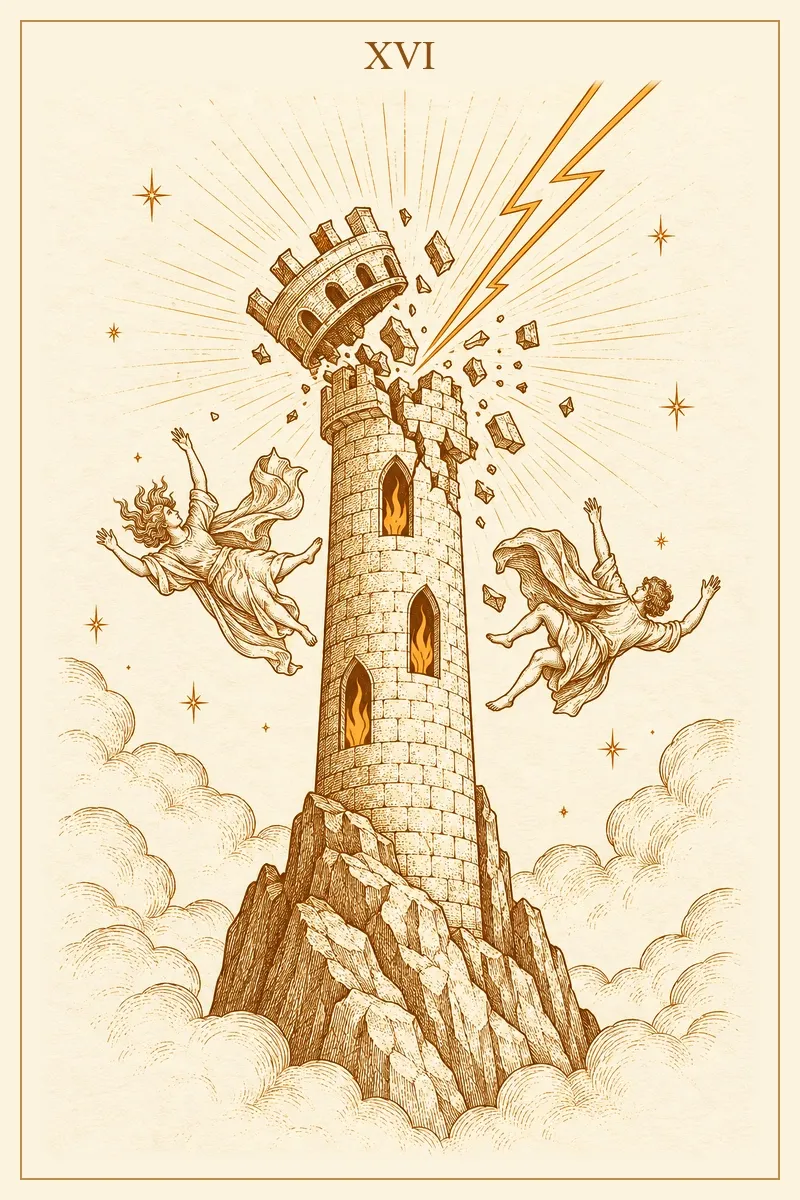
Upright and recurring, The Tower often points to something you are maintaining by effort rather than by soundness: a plan with a flaw you keep patching, a role that no longer fits, an agreement that only works while nobody mentions the problem. It asks whether you would rather take the structure apart on your own terms than wait for it to give way.
Reversed, it can describe a change you are holding off, or one happening quietly inside you before it shows. It does not mean disaster has been postponed. In love it asks which unspoken issue the relationship rests on; at work, which process is cracking. The full Tower tarot meaning covers its other contexts. A small step: write down the one thing you keep fixing and sketch what a rebuild would look like.
Death: a chapter that has already closed
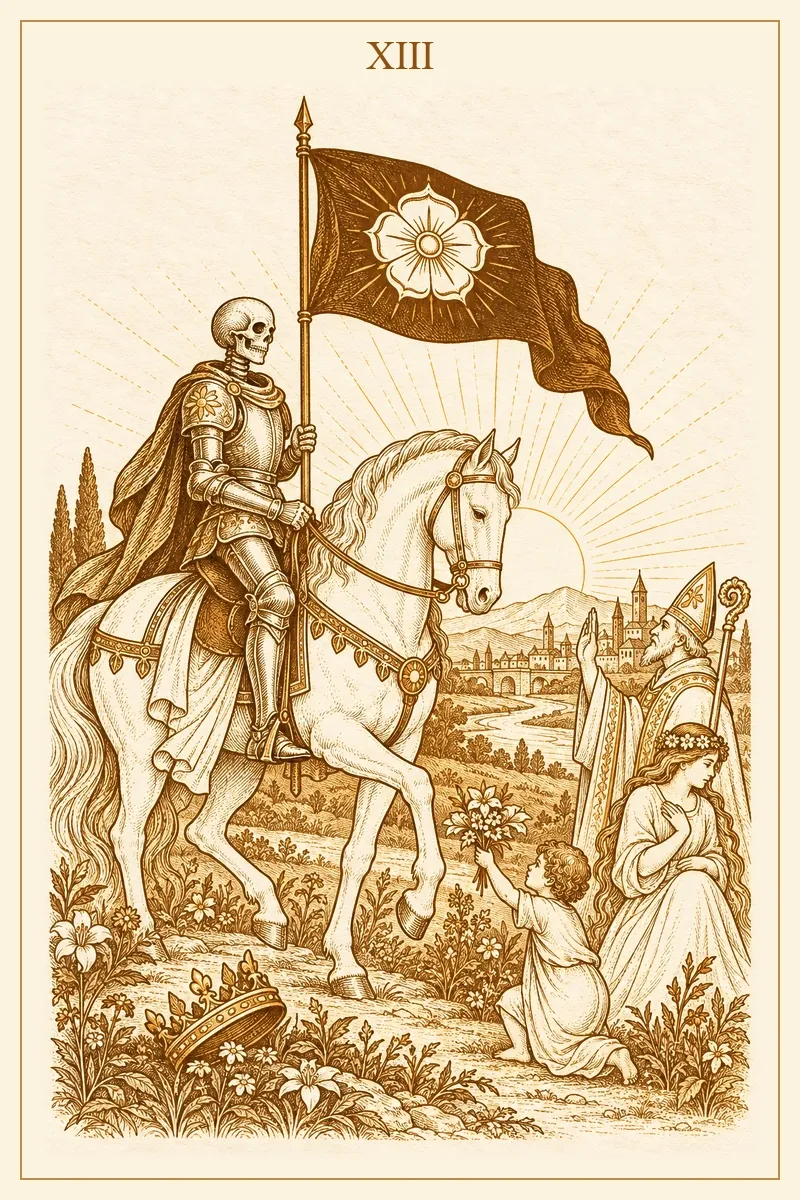
A recurring Death almost never concerns physical death. Upright, it describes an ending: a phase, a habit, an identity or a way of relating that has run its course. When it keeps returning, the ending has often already happened and you are still arranging your life around what used to be. The card asks you to acknowledge that, so something new has room.
Reversed, it tends to describe resistance to a change already under way, which is human, and the card does not scold you for it. At work it can describe a job you have mentally left; in love, the end of one way of relating, not always of the relationship itself. You can read more in our Death tarot card meaning guide. A small step: finish one leftover task from the old chapter, such as returning something you borrowed or canceling a membership you no longer use.
The Moon: guessing in low light
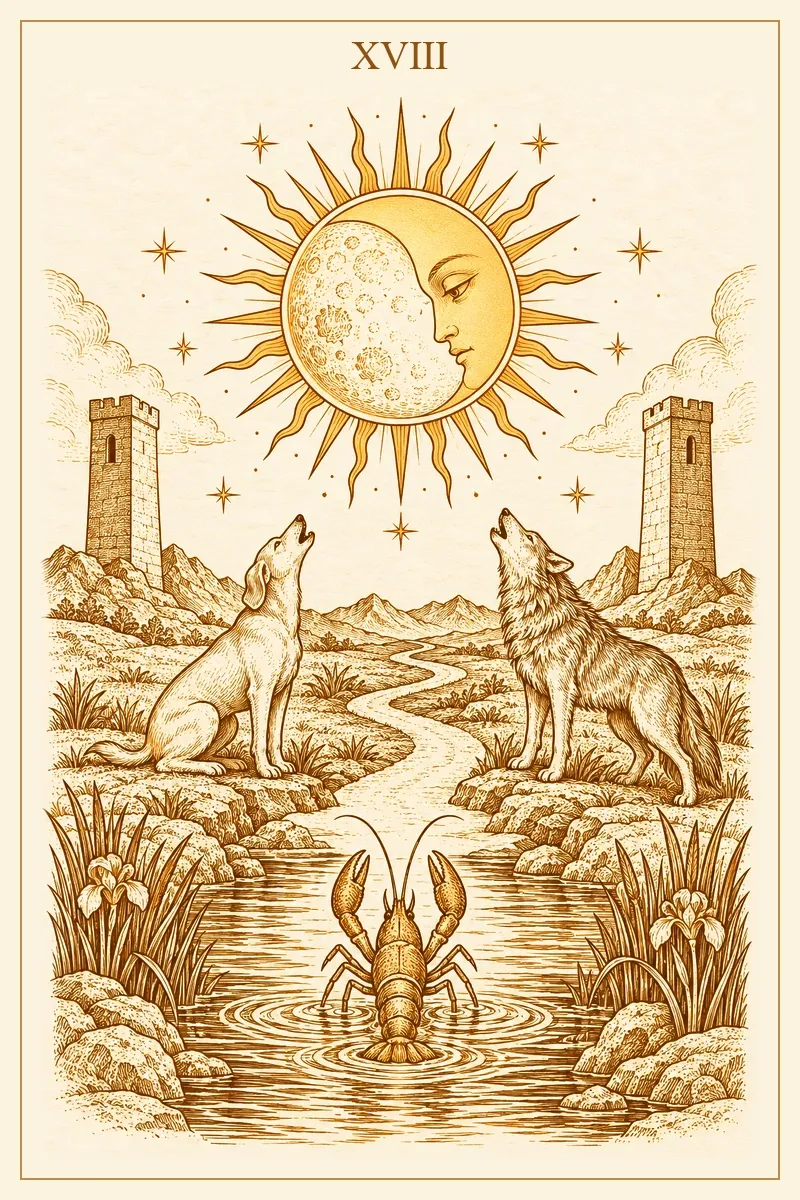
The Moon describes uncertainty, imagination, and the way fear fills gaps in what we know. Recurring upright, it often points to a story you are acting on without having checked it: an assumption about what someone meant, a worry that has grown in the dark, a hope you have not tested. It is less about another person deceiving you than about the guesswork you are running on.
Reversed, it can suggest the fog beginning to lift, or anxiety that has become a habit and needs calmer handling rather than more analysis. In love, the practical move is usually to ask rather than interpret; at work, to get the missing fact or written confirmation. The Moon tarot meaning post goes deeper into its symbolism. A small step: list what you actually know about the situation and, in a separate column, what you are assuming.
The Fool: the leap you keep rehearsing
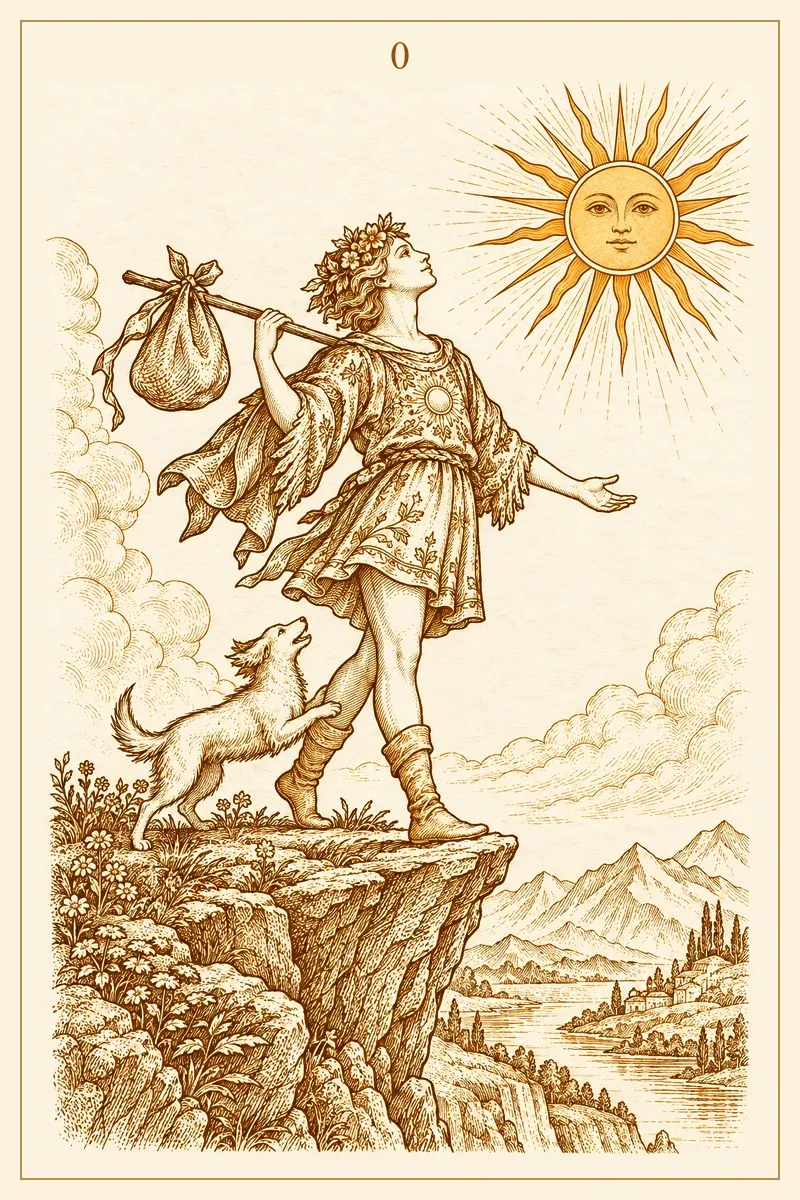
The Fool is the card of beginnings taken without full certainty. Recurring upright, it often describes a first step planned in detail but not yet taken: a class you keep looking at, a move you keep researching, a creative project still living in a notebook. It is not asking you to be reckless, only whether more planning is still adding anything.
Reversed, it can point to hesitation that has become a holding pattern or, sometimes, a leap made without enough looking. At work it often shows up around a change of field; in love, around a new connection or the courage to open up more. For its wider meanings, see our Fool tarot meaning guide. A small step: do the first ten minutes of the thing, not the whole thing.
The Hermit: a decision that wants quiet
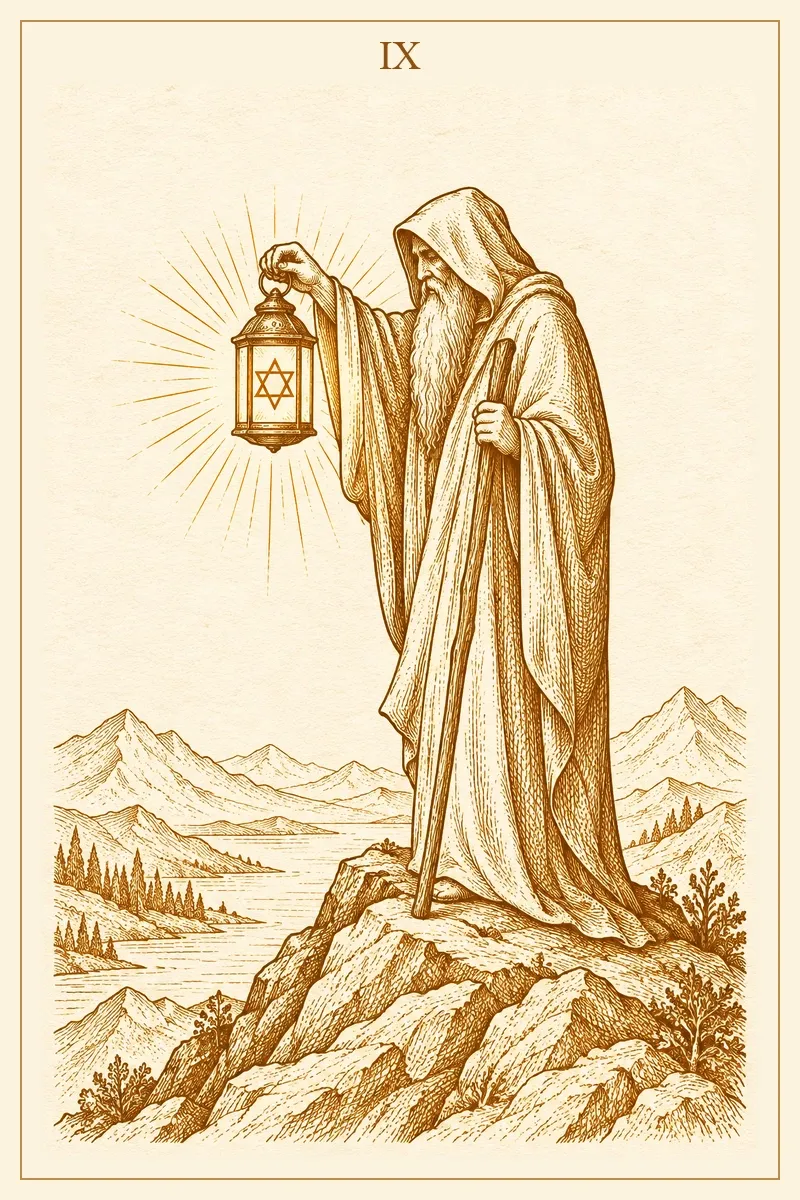
Upright and recurring, The Hermit tends to say that the answer will not come from more input: more advice, more scrolling, more readings. The lantern in the image lights only the next few steps, and only when the figure stops to look.
Reversed, it can describe the opposite problem: withdrawal that has turned into isolation, which may call for bringing the question to one trusted person. At work it can favor study or a solo project; in love, a need for space that is healthy when named and painful when not. Our Hermit tarot card meaning post covers the card in full. A small step: set aside one evening this week with no screens and the question written at the top of a page.
Ace of Cups: care you keep at arm's length
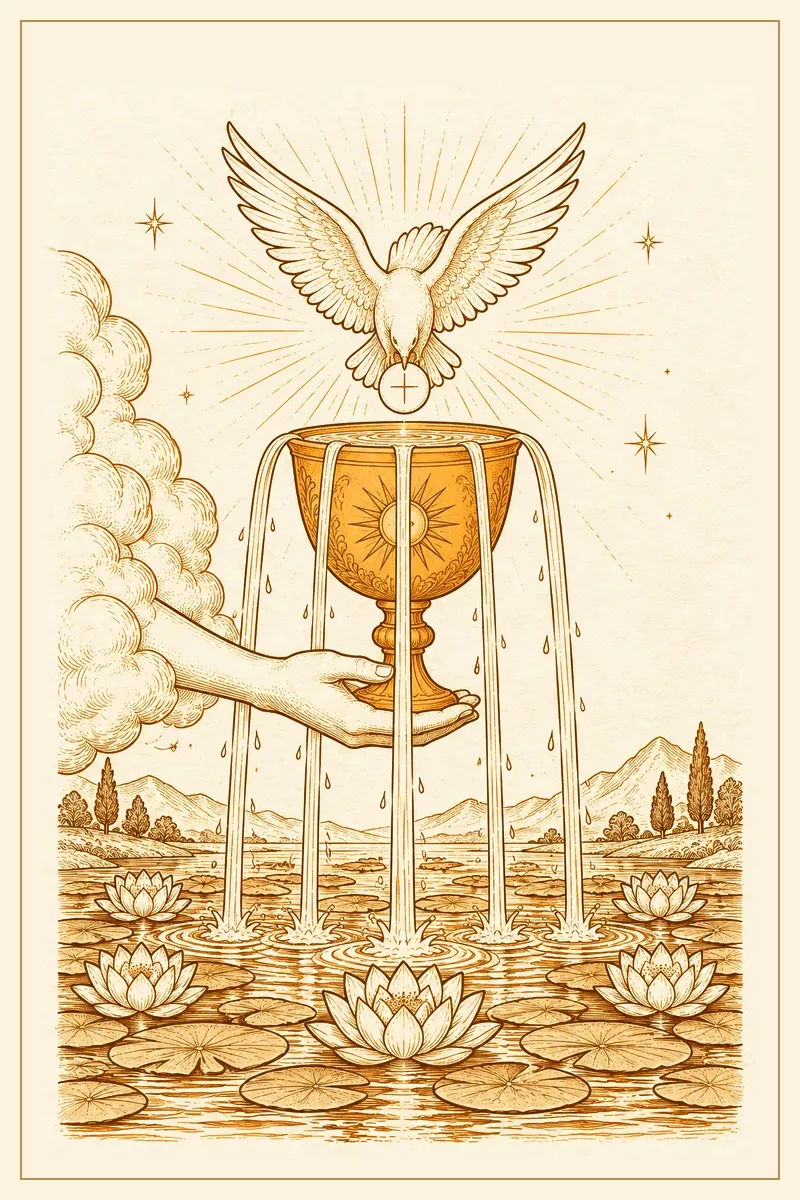
The Ace of Cups offers emotional renewal: affection, comfort, creative feeling, a fresh start with someone else or with yourself. Recurring upright, it often describes care already within reach and not being received, such as an invitation you keep declining or kindness you wave away. The cup overflows whether or not anyone drinks from it.
Reversed, it can point to feelings held back or a heart guarded after an old hurt; the guard made sense once, and the card asks whether it still needs to be this high. In love it can describe new tenderness; at work, a pull toward something meaningful rather than merely useful. The full Ace of Cups meaning explores both orientations. A small step: say yes to one offer of help or company you would normally turn down.
Other cards readers notice coming back
- The Star: hope and healing after a difficult period. Recurring, it often asks you to let yourself be seen and supported again, even before you feel ready.
- Strength: patience and gentle courage. Recurring, it often turns out to be about how you treat yourself, not only other people.
- Five of Cups: disappointment and grief. Recurring, it asks you to notice the two cups still standing behind the figure, the support that remains while you mourn.
- Two of Cups: mutual connection. Recurring, it can point to a relationship that wants a conversation, a repair or simply more attention.
How much weight to give it: Major, Minor or court
A rough guide helps you match your attention to the card without turning any of them into an alarm.
Court cards and low-numbered Minors usually work as gentle reminders about a quality or a person. A recurring Page of Cups may simply keep inviting curiosity and play into your emotional life. Notice it and enjoy it.
Middle-numbered Minors, roughly the fives through eights, tend to describe live situations that would benefit from attention soon. A recurring Seven of Swords can point to something avoided or kept quiet, by you or someone near you. It does not prove anyone is lying; it suggests a conversation where more candor would help.
Major Arcana cards tend to describe larger life themes and deserve a slower look. A recurring Devil card may describe a habit or arrangement you feel tied to, and the loose chains in the image are a reminder that some ties can be lifted. Weight here means attention, not danger: no card, however often it appears, means something bad is about to happen.
A four-week way to work with a recurring card
If a card has appeared three or more times in unrelated readings and seems to fit, give it a month of deliberate attention, one task per week.
- Week one: record without interpreting. Log every reading, not just the ones with the card: date, question, position, orientation. Hold off on deciding what it means.
- Week two: study the image. Keep the card face-up where you will see it and spend ten quiet minutes with it. Write down three details you had never noticed. In The Tower, a crown is knocked from the top; at The Fool's heels, a small dog keeps pace. Details like these often hold the part of the meaning you have been missing.
- Week three: ask a better question. Instead of "Why do you keep appearing?", try "What part of this theme have I not yet acted on?" Draw one clarifier and read the pair together.
- Week four: act and review. Take one small, concrete step that fits the theme. At the end of the week, reread your notes. Has the card shifted position, changed orientation, appeared less, or stopped? Any of those is information.
The aim is not to make the card go away, though it often stops recurring once the theme is addressed. What matters is that you are now reading it on purpose.
A five-card spread for a card that keeps returning
Take the recurring card out of the deck and place it face-up in the center. Shuffle the rest and draw four cards around it. Fixed positions let you repeat the spread a month later and compare.
- The recurring card (center): placed by choice, not drawn. It names the theme.
- What it is pointing at now: the situation where the theme is most active this week.
- What I have already done with it: effort or change you have made, so the reading credits real progress.
- What I keep stepping around: the part of the theme you have not yet touched.
- One step for the next two weeks: a small action within your control.
Read position four gently. It is not an accusation; it is often where the repeat makes the most sense, because it names the piece that is still open.
Worked example: The Hermit across three weeks
Imagine someone who drew The Hermit in a daily pull, again a week later as the advice card in a career spread, and once more in a love reading at the end of the month. Their life feels busy, so the card seems out of place. They set The Hermit in the center and ask, "What is this card asking me to notice right now?"
- What it is pointing at now: Three of Cups reversed
- What I have already done: Four of Swords
- What I keep stepping around: Two of Swords
- One step for the next two weeks: Page of Pentacles
Three of Cups reversed suggests a full social calendar that has started to feel thin. Four of Swords credits a quiet weekend they did take recently, but rest is not reflection, and that weekend restored their energy without touching the question.
Two of Swords names the question: whether to accept a team-lead role that would leave less time for the hobby group they love. Being busy has made it easy not to decide. The Hermit's repeated appearance fits, because the decision needs undistracted time and every evening has been full.
Page of Pentacles keeps the next step small and practical. They could set aside two evenings to write out what an ordinary week would look like under each option, and ask one person who has held a team-lead role what it actually involved. The reading did not say which choice is right or how the role would go. It explained why a quiet card kept showing up in a loud month and turned that into two evenings and one conversation.
When a recurring card stops being useful
Following a card can turn into a loop. If you are drawing again just to see whether it is still there, or each appearance leaves you more anxious, put the deck away for a while; the theme will wait, and you will read it with a calmer mind. A card that moves from the obstacle position to a resource, or stops showing up after you acted, is usually telling you the chapter has moved on. And if it touches a health, legal or financial matter, use it only to clarify your questions, then take those questions to a qualified professional.
Frequently asked questions
How many times does a card need to appear before it means something?
A useful working threshold is three appearances in unrelated readings, with different questions or spreads. The more often you read, the more often repeats happen by chance, so three times in a week of daily pulls carries more weight than three times across a year. Whatever the count, the card matters when it describes something you recognize.
Can the way I shuffle make a card repeat?
Yes. Sticky cards, a habitual cut or a bent card can skew what you draw. Shuffle thoroughly with a mix of methods for a week; if the card still recurs and still fits, it is worth reflecting on.
Should I take the card out of my deck?
There is no need. Removing a card changes the deck without changing the situation it was describing, and you lose a way of noticing that situation. If the card has become upsetting, a short break from reading is a gentler option.
What if the recurring card is one I find frightening?
The most dramatic images, like The Tower and Death, are also the easiest to remember, so they can feel as if they recur more often. Neither predicts harm. Read them for what they ask, as in the sections above.
Does a recurring card mean something is about to happen?
Not on its own. Tarot cannot confirm a future event, give a date, or reveal another person's intentions, and repetition does not change that. A card that keeps landing in future positions may describe a direction things are already moving in, but your choices remain part of how it unfolds.
Does it count if the card keeps showing up in online readings?
Yes, and you can read it the same way. A digital draw is a random selection, so the same arithmetic applies, and so does the same test: does the card describe something real in your week? Log online and physical readings in one place to see the whole pattern.
Letting the card have its say
A recurring card is an invitation to look at one part of your life more carefully, not an instruction you must obey. Track it honestly, read where it lands, take one small step, and notice what changes. When you want to give that theme a full spread, a calm free reading on Veil Soul is a good place to begin.