Getting all Major Arcana in a tarot spread usually means your question sits inside a larger chapter of your life: something is beginning, being tested or coming to a close, and the forces involved feel bigger than any single decision you make this week. A spread made entirely of trumps does not predict disaster or a miracle. It tells you that the subject underneath your question is direction, identity or a turning point, even if you asked about something small.
The Major Arcana are the twenty-two numbered cards from The Fool (0) to The World (XXI). When they fill a spread with no Minor Arcana beside them, the reading speaks in themes rather than tasks. Treat that as material for reflection, not a verdict: tarot cannot confirm what another person intends, name the date something will happen, or guarantee an outcome. It can show you which part of your life is asking for your full attention.
Here is the short version of what an all-Major draw can signal:
- A chapter, not an errand: the real subject is a stage of life, even if the question was practical.
- Momentum of its own: some of what is moving will not wait for your permission, so the task is to respond well.
- Low numbers (0 to VII): something is starting, and you are still finding your footing.
- Middle numbers (VIII to XIV): a test, a pause or a reckoning halfway along the road.
- High numbers (XV to XXI): a culmination, a release or a long story reaching its end.
- One reversal among the trumps: the place where the change is stuck, delayed or happening privately.
- No Minors at all: practical details are not shown yet, so you handle them yourself.
Trumps and pips: why twenty-two cards change the scale
The fifty-six Minor Arcana describe the texture of ordinary life through four suits: feelings in Cups, thoughts and words in Swords, drive in Wands, and money, work and the body in Pentacles. The twenty-two Major Arcana, often called trumps, describe the large movements that shape a stretch of years: leaving home, losing a role, finishing something you started long ago. The guide to the difference between Major and Minor Arcana covers this split in more detail.
Compare two joyful cards. The Three of Cups is a good evening with friends, a celebration you could put on a calendar. The Sun is the season when life feels warm again and confidence returns across many areas at once. One describes an event; the other describes a climate.
Minor cards usually add a concrete handle, such as someone to call or a bill to pay; with trumps alone, the reading stays at the level of the chapter. Many readers frame the twenty-two cards as one story, usually called the Fool's journey, in which the traveler of card 0 meets each of the other trumps on the way to wholeness. An all-Major spread shows you which stretch of that road you are walking.
What the pattern says before you read any single card
The question has a deeper root. A practical question answered entirely in Majors often stands in for a larger one. "Should I take the transfer?" may really be about who you are when your old team no longer needs you. Name that larger question, because the trumps tend to answer it.
Some of this has its own timing. Minor cards often describe things you can steer. Majors more often describe currents you can only meet. Wheel of Fortune turns whether or not you are ready, and The Tower falls when a weakness can no longer be hidden, not when it is convenient. Your agency moves from controlling events to choosing how you meet them.
This stretch of time is likely to matter later. People remember the seasons that changed them, and an all-Major spread suggests you may be in one now. It invites you to live it awake rather than wait for it to pass.
Placing your cards on the Fool's journey
A traditional layout sets The Fool apart at 0 and arranges the other twenty-one trumps in three rows of seven. Noticing which row your cards come from often explains a reading faster than any single meaning.
Find the row each card belongs to
The first row, from The Magician (I) to The Chariot (VII), is about building a self in the world: skill, intuition, nurture, authority and drive. The High Priestess, The Empress and The Emperor belong here. Cards from this row suggest you are early in a chapter, still learning the rules of new territory.
The second row, from Strength (VIII) to Temperance (XIV), turns inward. It holds The Hermit, Wheel of Fortune, Justice, The Hanged Man and Death: the middle of the road, where you are tested, paused or asked to let go.
The third row, from The Devil (XV) to The World (XXI), deals with what remains once old structures are gone: attachment, upheaval, hope, uncertainty, renewal, a calling and completion. The Tower, The Star, The Moon, The Sun and Judgement live here. These cards suggest a long story is reaching its turning point or its end.
Read the direction of the numbers
Read the numbers in spread order. Rising numbers, such as VI, XI, XVIII, suggest a story moving forward, even if it is uncomfortable. Falling numbers, such as XX, XIII, III, can suggest returning to an earlier lesson, often starting over on new ground after an ending. A tight cluster points to one concentrated stage; a range across all three rows, to a chapter that touches past, present and future. The Fool, as 0, usually marks where you must begin again with less certainty than you would like.
Name the anchor and the sharpest contrast
Most all-Major spreads have one card that lands harder than the others, the one that makes your stomach drop or your shoulders relax. Call it the anchor: the force most active in your life now, with the other cards as commentary around it. If Death is the anchor, the chapter is about ending something cleanly; if The Empress is, it is about creating and letting something grow at its own pace.
Then find the two cards that pull hardest against each other. The Devil beside The Star sets attachment against hope; The Fool beside The World sets a fresh start against a finished cycle. Once you can say that tension in one sentence, the rest of the spread falls into place around it.
The six trumps that weigh the most
Any Major can lead an all-Major spread, but these six change the feel of the whole layout more than most.
The Fool: a threshold you cannot see past
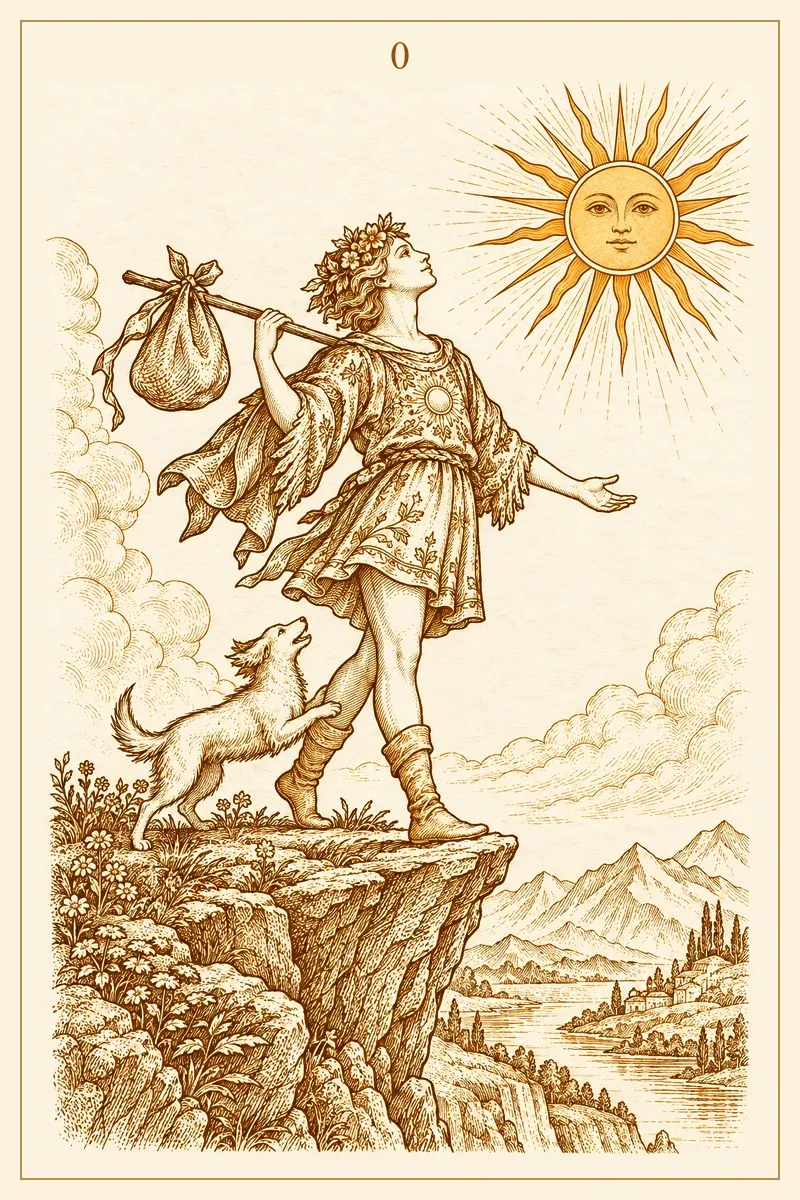
Upright, The Fool is a beginning taken on trust: a move, a new role, a different way of living. On the card shown here the traveler walks at the edge of a cliff with eyes on the sky, a small bundle over one shoulder and a dog leaping at his side. The step is real; the ground beyond it is not yet visible. Among other trumps, The Fool often marks the doorway into the chapter they describe. The full Fool tarot meaning covers the card in love and work.
Reversed, it suggests a leap delayed by fear, or one made without counting the cost. If the spread points to a big transition, the reversal often says you already know you are leaving and are only deciding how carefully.
Wheel of Fortune: a turn that is not yours to stop
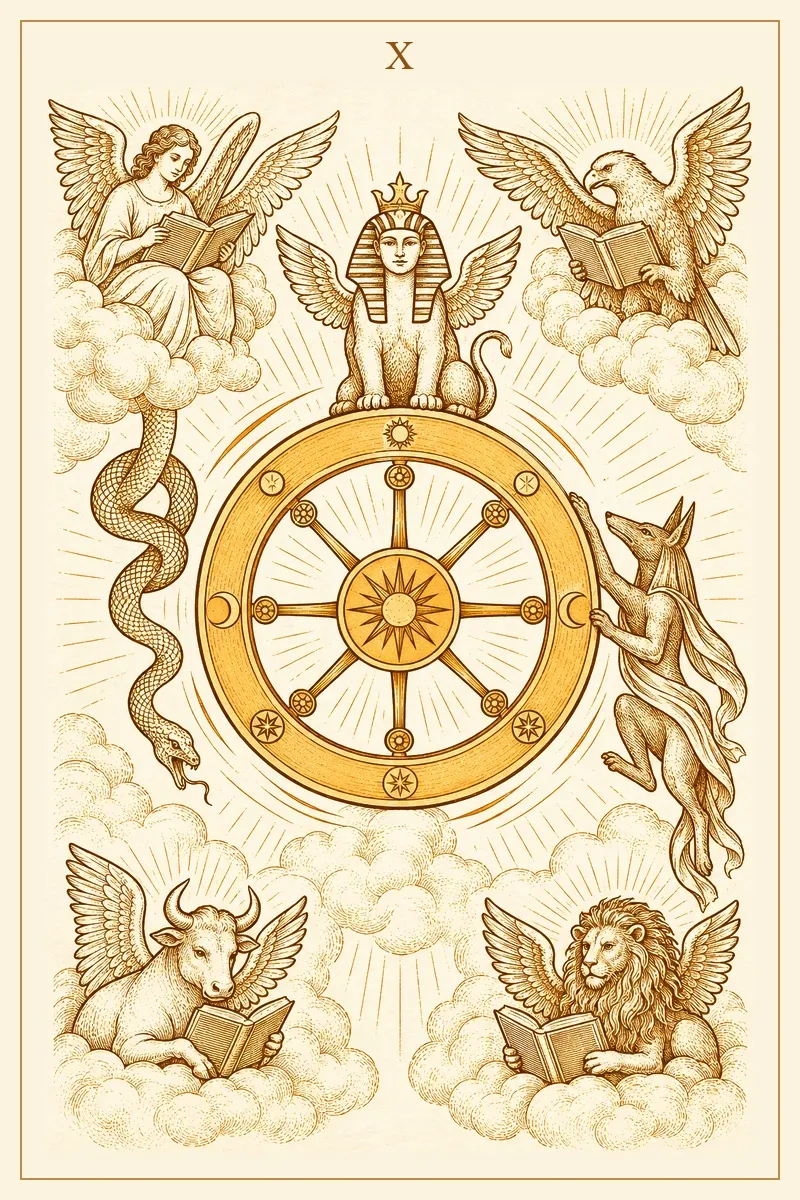
Upright, Wheel of Fortune is a change of season: circumstances moving, a cycle running its course. Among other trumps it highlights timing outside your hands; stay alert and flexible rather than gripping. Read more in the full Wheel of Fortune tarot meaning.
Reversed, the Wheel can show resistance to a turn already underway, or a pattern you keep meeting in new forms. Ask what keeps coming back, and what would have to change for it to stop.
Death: an ending that clears space
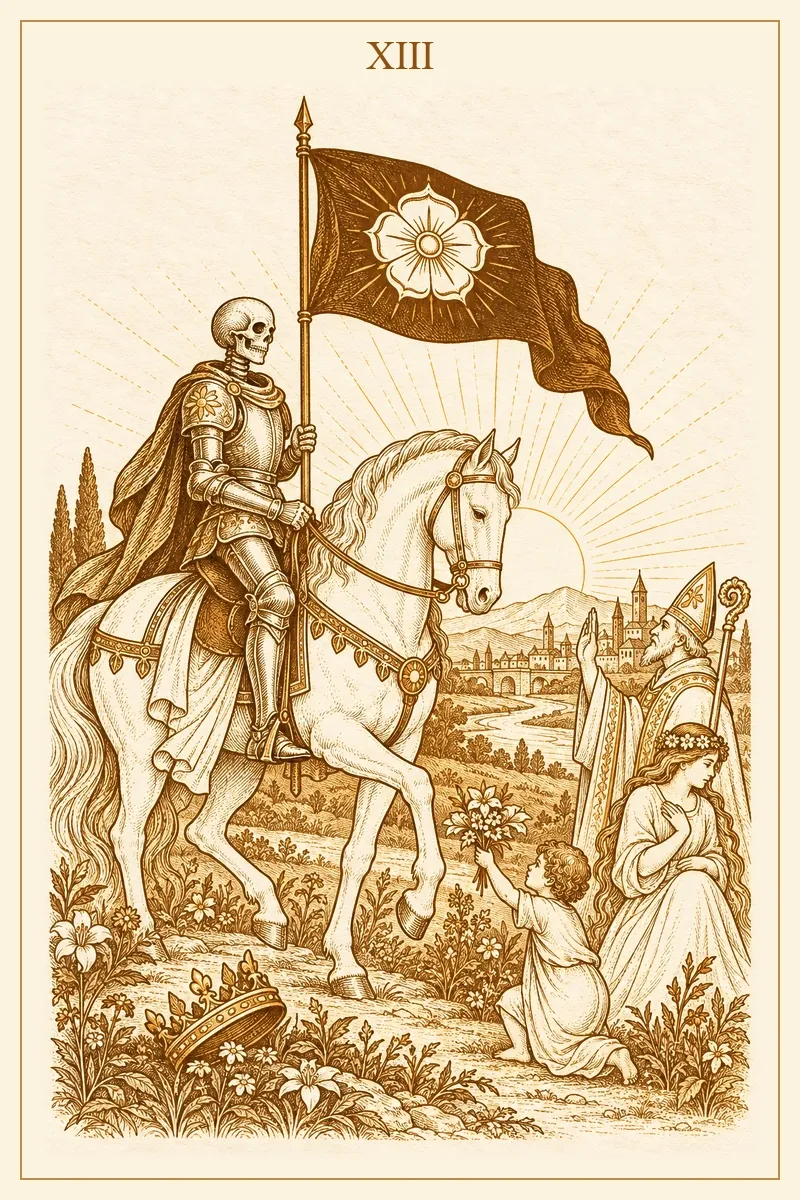
Death is the trump people fear most and the least literal one. Upright, it marks a real ending: a role, a relationship pattern or a way of living that has run its course. The image keeps hope inside it, with a sun low on the horizon behind the armored rider and a child holding out flowers toward the white horse. Among other Majors, Death says the chapter turns on letting something finish properly. The full Death tarot meaning explains why it speaks of transformation, not physical death.
Reversed, Death is an ending postponed: holding on to a job, a home or a version of yourself after it has stopped fitting. Ask what you are protecting by not letting go.
The Tower: the structure that was already cracked
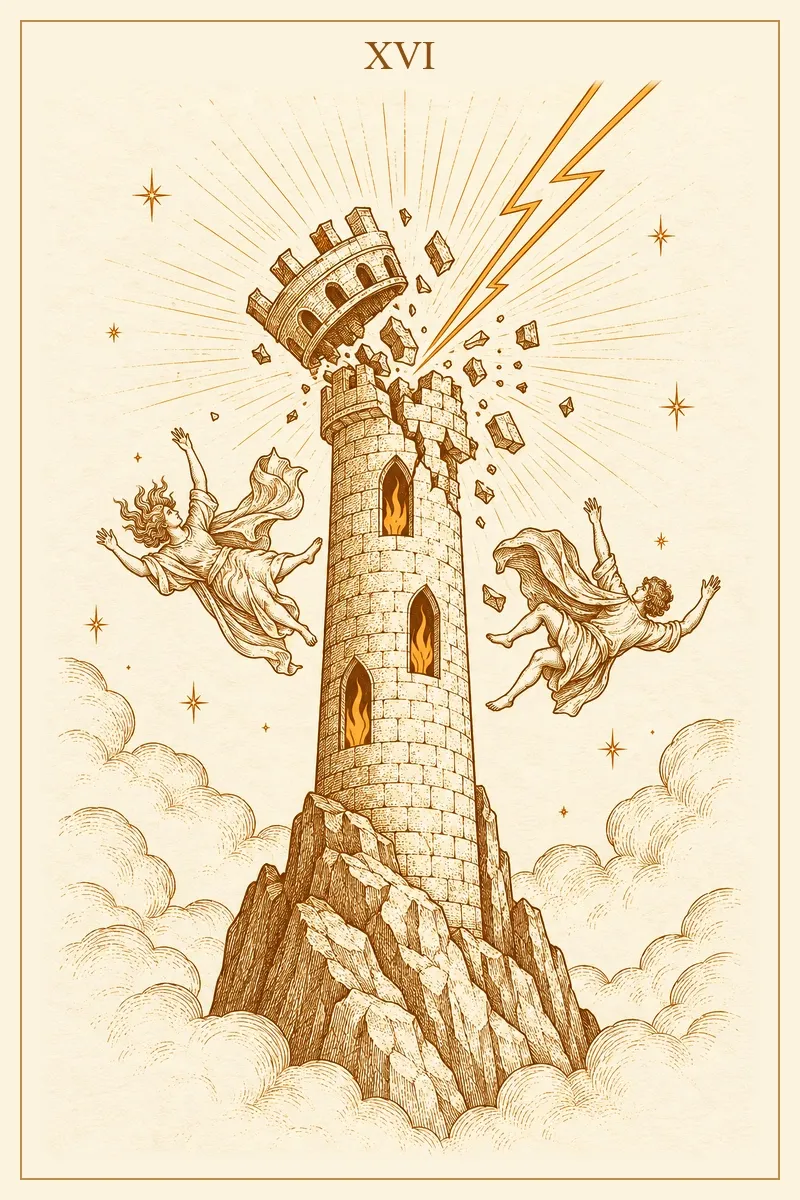
Upright, The Tower is sudden change or a revelation that knocks down a belief or plan you assumed was solid. Lightning splits the top of a tower on a rocky peak and two figures fall through the air; the shock is plain, yet the card is not a punishment. It tends to fall on what was already unsound, and in an all-Major spread it often marks the hinge between the old chapter and the new. See the full Tower tarot meaning for love and career readings.
Reversed, it can mean a crisis narrowly avoided, a change arriving slowly, or a truth you feel but have not admitted. A useful question: which wall would I take down myself, before it falls?
The Star: hope after the hard part
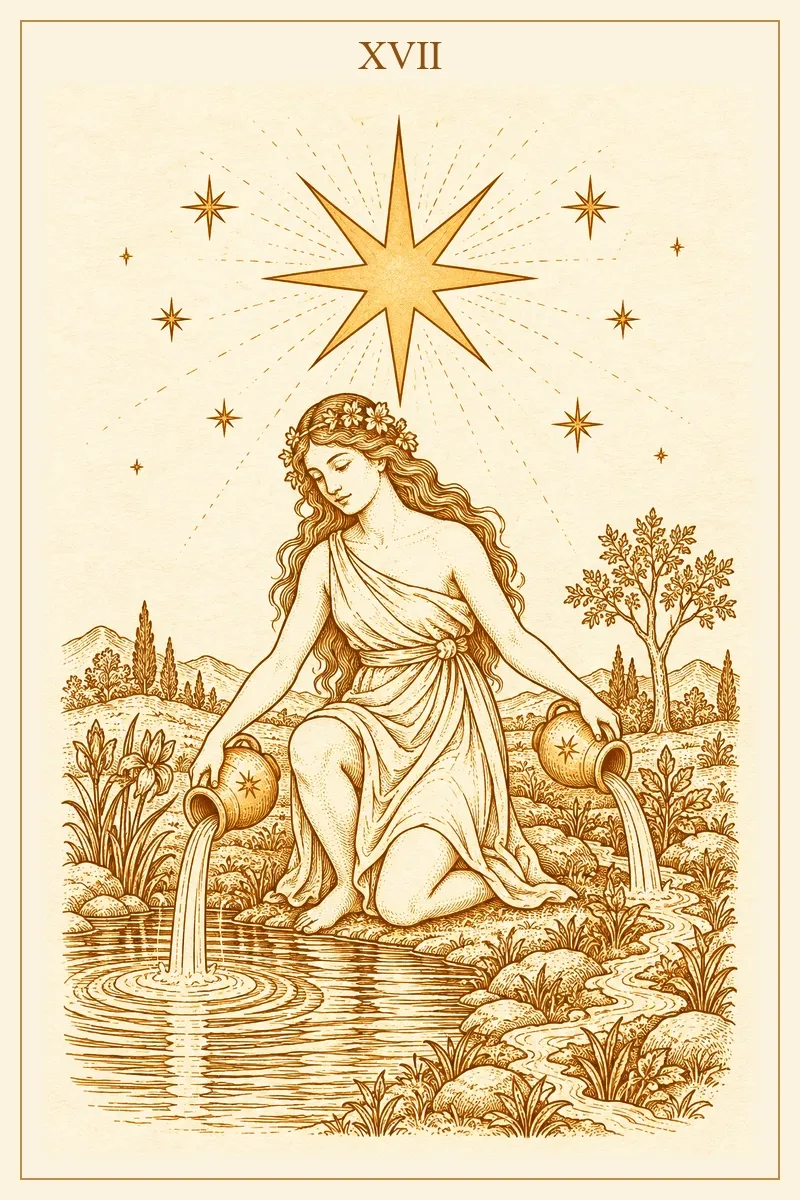
Upright, The Star is renewal and quiet hope after a storm. A kneeling figure pours water from two jugs, one into a pool and one onto the land, beneath one large star and several smaller ones. In an all-Major spread it often shows where the chapter is heading, especially after The Tower or Death, and its healing is steady rather than dramatic. The full Star tarot meaning covers its love and wellbeing readings.
Reversed, The Star suggests hope worn thin, or self-belief that needs rebuilding in small ways: rest, routine, one person who believes in you. It asks you to refill the hope, not to give it up.
The World: a cycle completing
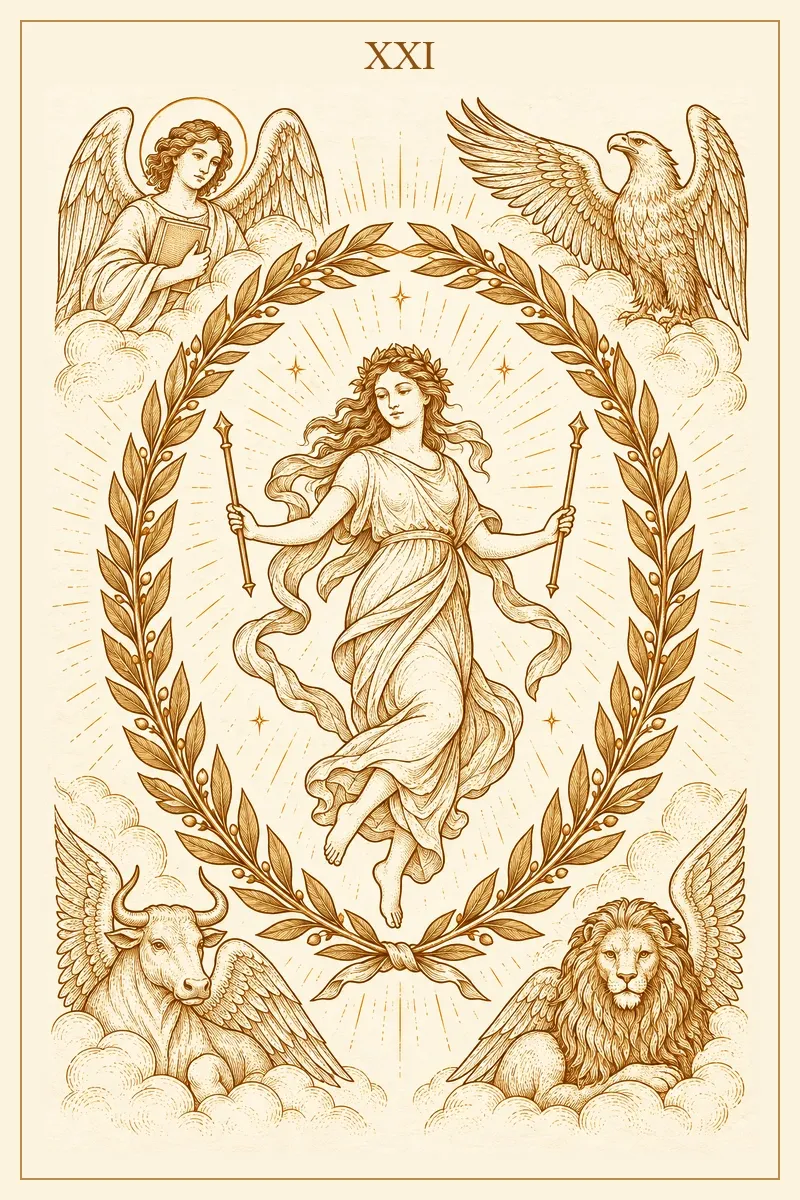
Upright, The World is completion and integration: something you have worked through for a long time is finishing, and you are larger for it. A figure floats inside an oval wreath holding a wand in each hand, with four winged creatures in the corners. In an all-Major spread The World often stands at the far end of the sequence, the reason the harder cards are worth facing. The full World tarot meaning goes deeper.
Reversed, it suggests a cycle not quite closed: a loose end, an unsaid goodbye, success that does not feel finished. Ask what last step would let you call this chapter complete.
Trump pairs that tell a story together
Read each pair as a sentence: where you stand, then what it opens into.
- The Tower and The Star: collapse followed by repair; falling apart clears ground for something more honest.
- Death and The Fool: one door closes as another opens, often in the gap between chapters.
- The Devil and The Sun: a habit or fear that holds you, beside the warmth waiting once you step out. The chain is looser than it feels.
- The Hermit and The World: time alone that leads to completion; what you learn in reflection lets the cycle close.
- The High Priestess and The Emperor: quiet knowing set against outside authority. Weigh both honestly before you give way.
- The Hanged Man and Judgement: a pause that ends in a clear call you could not hear before.
Mixed signals: a reversal, a stray Minor, a suit beside the trumps
Many trumps and one reversal. Read the reversed card as the knot in the story, where the big change is delayed, resisted or happening privately. The Hanged Man reversed among upright trumps may mean a pause has gone on too long; Judgement reversed, a calling heard but not yet answered. Start your reflection there.
Mostly reversed trumps. The larger forces are active but turned inward: you may be processing a change privately or resisting one you already sense. The guide to readings where most cards are reversed helps you tell an inward phase from a stuck one.
All trumps but one Minor. The lone Minor is often the most practical card on the table, showing where the chapter touches this week: a Pentacle points to money, work or the body, a Cup to a feeling or relationship, a Sword to a conversation or decision, a Wand to an action. Start there when you want something concrete to do.
Trumps beside one dominant suit. Read the Majors as the chapter and the suit as the way you are living it. Majors with many Cups describe a turning point felt mainly through emotion, which the guide to an all-Cups reading covers; Majors with many Swords describe one you are thinking or deciding your way through, as explored in the guide to a spread full of Swords.
Relationships, vocation and money under a run of trumps
When you asked about a relationship
A spread of all Majors rarely answers "will they or won't they." It describes what the relationship means in your own story. The Lovers or The Empress points toward growth and a values-based choice; The Tower or Death toward a form that cannot continue as it is. The other person's choices remain theirs, and the clearest next step is usually an honest conversation.
When you asked about work or study
A career question answered in trumps is usually about vocation more than one job. First-row cards such as The Magician or The Chariot suggest building skill and momentum; middle-row cards such as The Hermit or The Hanged Man suggest reassessment or a pause; third-row cards such as Judgement or The World suggest finishing a long phase and stepping into what you prepared for. Check offers, contracts and deadlines in the ordinary way.
When you asked about money or a move
Money and housing usually belong to the Minor suits, so all Majors here suggest the practical decision carries a bigger meaning: independence, security, or leaving an old identity behind. The Emperor suggests building structure; The Tower, a plan to rebuild on firmer ground. Get the financial facts and advice from the right sources.
Example reading: three trumps about leaving home
The question: "I have been offered a place on a two-year course in a city far from where I grew up. What do I need to understand before I decide?" The spread has three named positions: 1. What is closing. 2. What this chapter asks of me. 3. What is opening.
- What is closing: The Hermit (IX), upright.
- What this chapter asks of me: Death (XIII), reversed.
- What is opening: The Star (XVII), upright.
Three Majors, with numbers rising from the middle row into the third: a story moving forward. With no Pentacles or Wands for money and effort, the reader is weighing who they will be, not logistics.
The Hermit describes a long, quiet stretch of working things out alone, a phase that has done its job. Death reversed is the knot: the reader senses the old life ending but is holding on, perhaps from guilt about leaving family. The reversal does not say "don't go." It says the hard part is the goodbye, not the course.
The Star suggests renewal and steadier hope beyond that goodbye. It does not promise the course will go well; fees, housing and where the qualification leads still need checking. What the spread offers is a next step: talk with the people they worry about leaving, say plainly what they fear, and decide after that conversation. The trumps describe the chapter; the reader chooses how to enter it.
What to do after an all-Major draw
- Write it down with the date. Note the question, each card, its number and position, so you can compare it later with what unfolded.
- Name the larger question underneath the one you asked, in one sentence.
- Choose one action within your control. The forces may be large, but the next step can be small: a conversation, a form sent, an hour set aside to think.
- Lean on people in heavy seasons. If the chapter involves grief, illness, a breakup or a crisis, reach out to people you trust, and to a counselor, doctor or other professional where that fits.
Keeping a big spread in proportion
Majors are not omens. Death, The Tower and The Devil describe inner and outer change, not physical danger, and plenty of all-Major spreads are full of hopeful cards that simply describe a meaningful season.
The size of the spread matters. A three-card pull lands on all Majors far more often than a ten-card layout, so a small all-Major draw is a nudge to look at the bigger picture, not a once-in-a-lifetime event. In a full Celtic Cross the same result is very unusual and deserves slower attention.
Your question shapes the answer, too. "What should I focus on this year?" invites trumps by its nature. And if you shuffle a Majors-only deck, as some readers do for life-direction questions, every spread is all-Major by design and the pattern carries no extra meaning.
Frequently asked questions
How rare is it to draw only Major Arcana?
With twenty-two Majors in seventy-eight cards, the chance that a three-card draw is all Majors is 22/78 × 21/77 × 20/76, about 2.0 percent, or roughly 1 in 49. For five cards it is 22/78 × 21/77 × 20/76 × 19/75 × 18/74, about 0.12 percent, roughly 1 in 800. For ten cards, as in a Celtic Cross, it drops to about 1 in 2 million.
Does it matter if some of the Major Arcana cards are reversed?
Yes. A reversed Major usually shows where a large change is delayed, resisted or happening out of sight; Death reversed, for example, is a transformation trying to happen while you hold on. Read the reversed card first, then the upright cards around it.
Should I do a follow-up reading after an all-Major spread?
Give it a month or so. A reading like this describes a process that unfolds over weeks or months. Meanwhile, journal about the cards and notice how their themes show up in daily life.
Can I get all Majors when nothing big is happening?
Yes. The reading may point to something only beginning, to an inner shift you have not put into words, or simply to a broad question. Treat it as an invitation to notice what is changing, not as a sign that something must go wrong.
Can an all-Major reading tell me exactly what will happen?
No. Tarot cannot confirm another person's thoughts or choices, give you a date, or guarantee an outcome, and a spread of trumps is no exception. It can help you see the theme of a period and decide how to meet it.
Is an all-Major Arcana reading good or bad?
Neither; it is significant rather than positive or negative. The cards and their positions tell you whether the chapter feels like a beginning, a test or a completion, and even the hardest trumps usually point somewhere you can grow.
Living the chapter, not just getting through it
When every card on the table is a trump, the reading asks you to take this season seriously without being frightened of it. Something in your life is larger than a to-do list right now, and it deserves your attention, your patience and your honesty.
Whenever you want to look at your own question with the same care, begin a reading with Veil Soul and see which part of the story is asking for you now.