This love tarot spread for singles asks about you, not about a stranger who has not arrived yet. The Table for One spread uses six named positions: your heart right now, what single life is giving you, what you want in love, what you are guarding, how you meet new people, and one step for this month. Lay the six cards in two rows, read them in pairs, and you get a clear picture of where you stand and what you might try next.
Being single is not a problem this spread tries to fix. People draw it while content on their own, after a breakup, before trying dating apps again, or because a friend's wedding stirred up questions. The reading works with what you can see and choose. It cannot name the person you will meet, give you a date, or read anyone else's mind, so it will never promise that someone is waiting around the corner.
The spread at a glance:
- 1. My heart right now: how being single actually feels this season.
- 2. What single life is giving me: the parts of your life worth keeping, whatever comes.
- 3. What I want in love: the qualities of connection you hope for, not a portrait of a person.
- 4. What I am guarding: a protection that once helped and may now keep people at a distance.
- 5. How I meet new people: your style in first conversations and dates.
- 6. One step for this month: a small action that is fully in your hands.
Single is a whole chapter, not a waiting room
The question most singles bring to tarot is some version of "When will I find love?" It sounds hopeful, yet it quietly turns the present into a lobby where nothing counts until another person walks in, and every card gets judged on one point: does it mean soon?
The Table for One spread starts from the opposite assumption: your current life is real and worth reading on its own terms. The top row looks inward (how you feel, what you have, what you wish for) and the bottom row looks outward (what you protect, how you show up, what you will do). That balance keeps the reading from becoming either a pep talk or a list of your faults.
Position 3 deliberately asks what you want in love rather than who. An imagined partner is a wishful portrait no real person can match. The qualities of a connection, such as pace, honesty, shared humor or how conflict is handled, are things you can actually recognize when you meet someone, and practice with friends right now.
The Table for One spread, position by position
Read each card against its position's question before you think about what it "usually" means in love. The same card can say very different things in position 2 and position 4.
Position 1: My heart right now
This card shows the emotional weather under the polite answer you give at family dinners: contentment, restlessness, tiredness or quiet hope. The Nine of Pentacles here often reflects someone who has built a life they like. The Five of Cups suggests grief for a past relationship that still needs room. Neither is a worse starting point; they call for different next steps.
Position 2: What single life is giving me
Singles readings often skip this question, and it is one of the most useful. The card names something good about this season: friendships, freedom, time for a project, a clearer sense of your own taste. The Three of Cups points to friends and shared celebrations; The Hermit points to time for reflection. Whatever lands here is worth protecting if a relationship does begin.
Position 3: What I want in love
Here the card describes a quality of connection. The Two of Cups speaks of reciprocity, someone who reaches back as much as you reach out. The Queen of Cups speaks of emotional depth and being understood. The Sun speaks of ease, laughter and being seen as you are. Court cards here describe a way of relating, not a hair color or a job title.
Position 4: What I am guarding
Most people who have loved and lost carry some protection, and it usually made sense when it formed. This card shows what you protect now and whether that still fits. The Four of Cups may show emotional withdrawal, The Devil the pull of a familiar type, and the Four of Pentacles a tight grip on time or routine. A gentle card such as Strength can mean the guard is already softening.
Position 5: How I meet new people
This card reflects your style with someone new, online or in person: how open you are, how quickly you decide, what impression you leave. The Page of Swords can describe a curious mind that turns first dates into interviews; the Knight of Cups, someone who leads with feeling. A reversed card here often shows a gap between how warm you feel and how guarded you look.
Position 6: One step for this month
The last card becomes an action that needs no one else's permission. The Three of Cups might become "say yes to one group plan." The Star might become "rest and rebuild a hopeful routine first." The Ace of Cups might become "let yourself feel something and say it out loud." A step never sounds like "meet someone by Friday," because that is not yours to control.
Laying out the cards and reading them in pairs
Write your question in one sentence. A good default is: "What do I want from love in this season, and how can I care for my heart while I stay open?" Shuffle until you feel settled and draw six cards. Place 1, 2 and 3 in a top row and 4, 5 and 6 below them, so each top card sits directly above its partner.
Read each card in its position first, one sentence per card. Then read the columns as pairs:
- Cards 1 and 4, feeling and protection: does the guard match what your heart feels now, or is it left over from an older season?
- Cards 2 and 5, your life and how you show it: do new people get to see the side of you your friends already know?
- Cards 3 and 6, wish and step: does this month's step move you toward the connection you named?
If you use reversals, read a reversed card as its theme turned inward, slowed down or not yet expressed, rather than as a bad omen. A reversed Star in position 1, for example, can describe hope that is present but tired. Several Cups put feelings in the foreground; several Major Arcana suggest the question sits inside a larger life chapter. Note the date and all six cards so you can compare next time.
Questions that keep you at the center
Questions driven by worry tend to produce worried readings, because every card gets read through the fear behind them. A few swaps help:
- Instead of "When will I find love?" try "What is my heart ready for right now?"
- Instead of "Will I meet someone this year?" try "What would help me feel more open when I meet new people?"
- Instead of "Why am I still single?" try "What is this season of my life teaching me about love?"
- Instead of "Am I too picky?" try "Which of my standards protect me, and which keep people out?"
Each version keeps you in the main role instead of casting you as someone waiting for a supporting character. Our guide to asking effective tarot questions goes deeper into open wording and focus.
Cards that open the heart
These cards often appear when a single person is becoming more emotionally available, toward a future partner, friends or themselves. They describe an inner state, not a guaranteed meeting.
Ace of Cups: willing to feel again
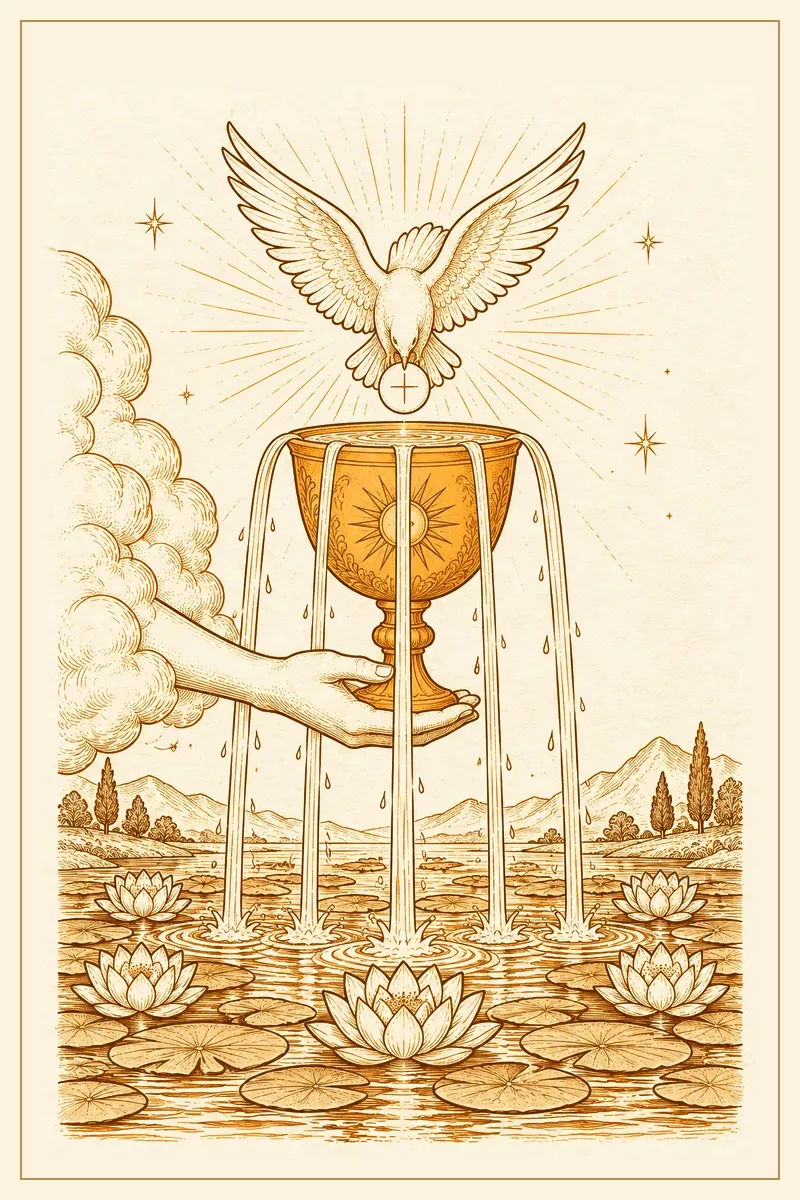
A hand reaches out of a cloud holding a gold cup so full that it spills in several streams into a pond of water lilies, while a dove descends above. Upright, the Ace of Cups opens a new emotional chapter: tenderness and the willingness to feel again after a numb or careful stretch. That opening may first show up as warmth toward friends or kindness toward yourself, and that still counts.
In position 1, the Ace says your heart is softening; in position 6, the step is to enjoy a feeling or tell someone you care. Reversed, the overflow turns inward: feelings are there but held back, perhaps because sharing them once went badly. Start with private expression, like a journal or a long talk with a trusted friend. You can explore the card further in the Ace of Cups tarot meaning, which looks at work and friendship readings as well.
The Star: hope after a hard stretch
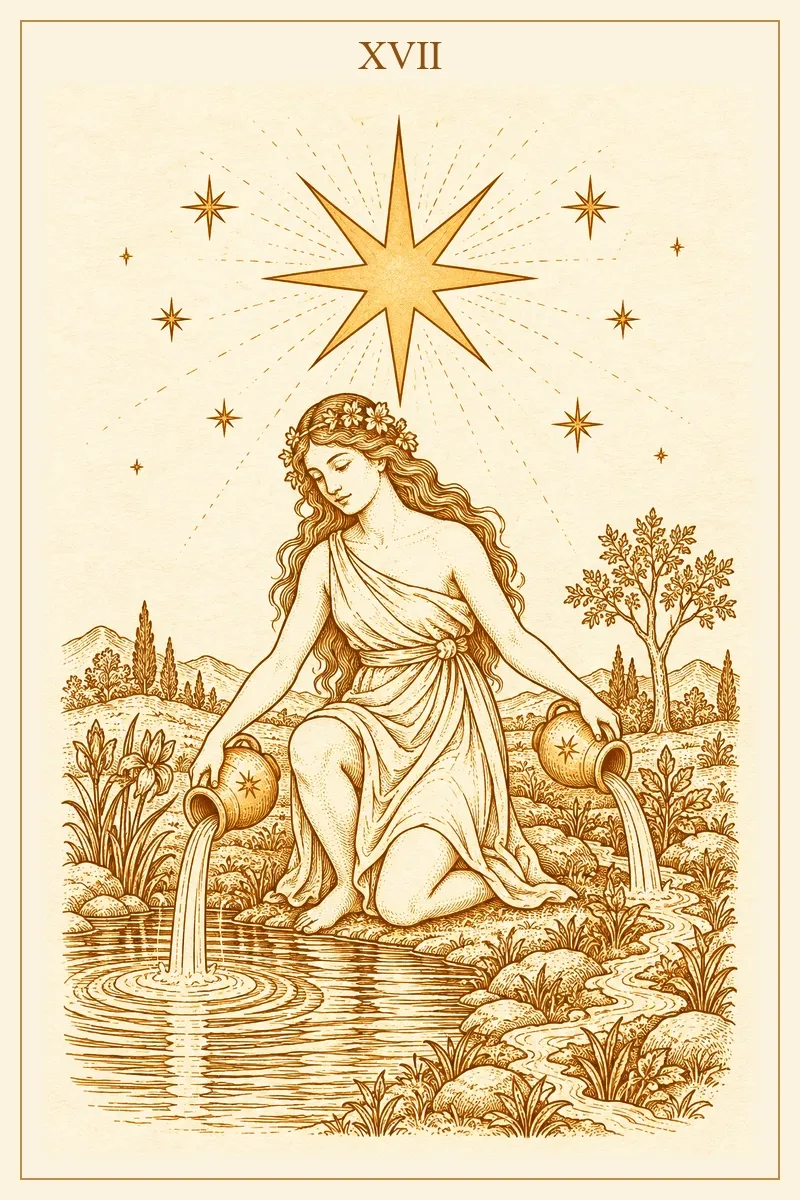
A young woman kneels at the edge of a pool and pours water from two jugs, one into the pool and one onto the land, under a large eight-pointed star. Upright, The Star is renewal: hope returning after loss, trust slowly rebuilding. For singles, it often appears once the rawest part of a breakup has passed, and it attaches no timetable to that hope.
In position 3, it can describe wanting a gentle, healing kind of love; in position 6, the step is restoration, such as sleep, routines and small pleasures. Reversed, The Star can show discouragement, especially after comparing your timeline with other people's. That is a cue to rest, not to push. More in the Star tarot meaning.
The Empress: enjoying the life you already have
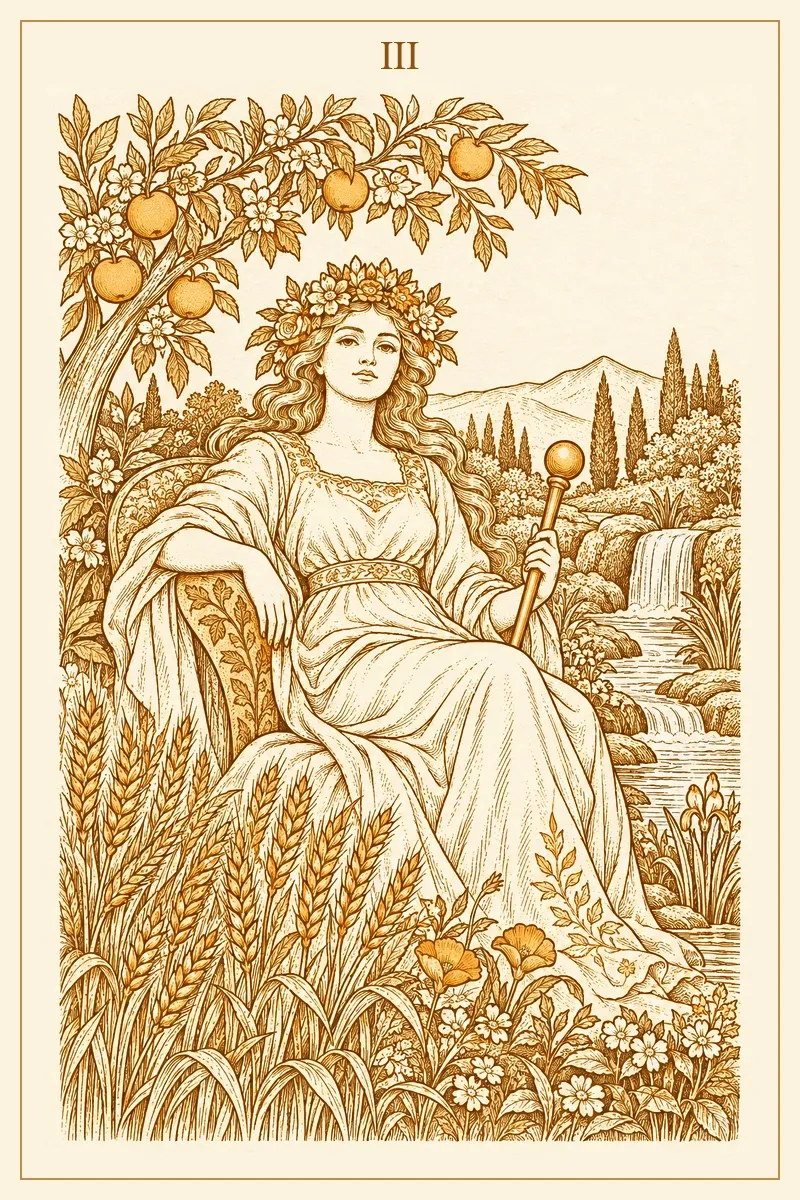
The Empress sits at ease among ripe wheat and flowers, a crown of blossoms in her hair and a scepter in hand, with a waterfall and a fruit tree behind her. Upright, she stands for pleasure, comfort, creativity and care for your body and home. In a singles reading, she says your life already holds good things, and enjoying them is worthwhile for its own sake, not as bait for a partner.
Reversed, The Empress can show over-giving to others, neglecting your own needs, or postponing pleasure until you are "with someone." The Empress tarot meaning explores her themes of growth and nurture further.
A few other cards often join these. The Knight of Cups can show someone sincere in your circle, or your own romantic impulse waking up. The Two of Cups shows mutual recognition. The Sun brings joy and visibility. The World marks a chapter completing, often a period of healing that now feels finished. Read them as possibilities you can respond to, not promises.
Solitude and self-reliance cards
Some cards in a singles reading are about being alone well. They are easy to misread as "you will stay single," and they rarely mean that.
The Hermit: time alone that has a purpose
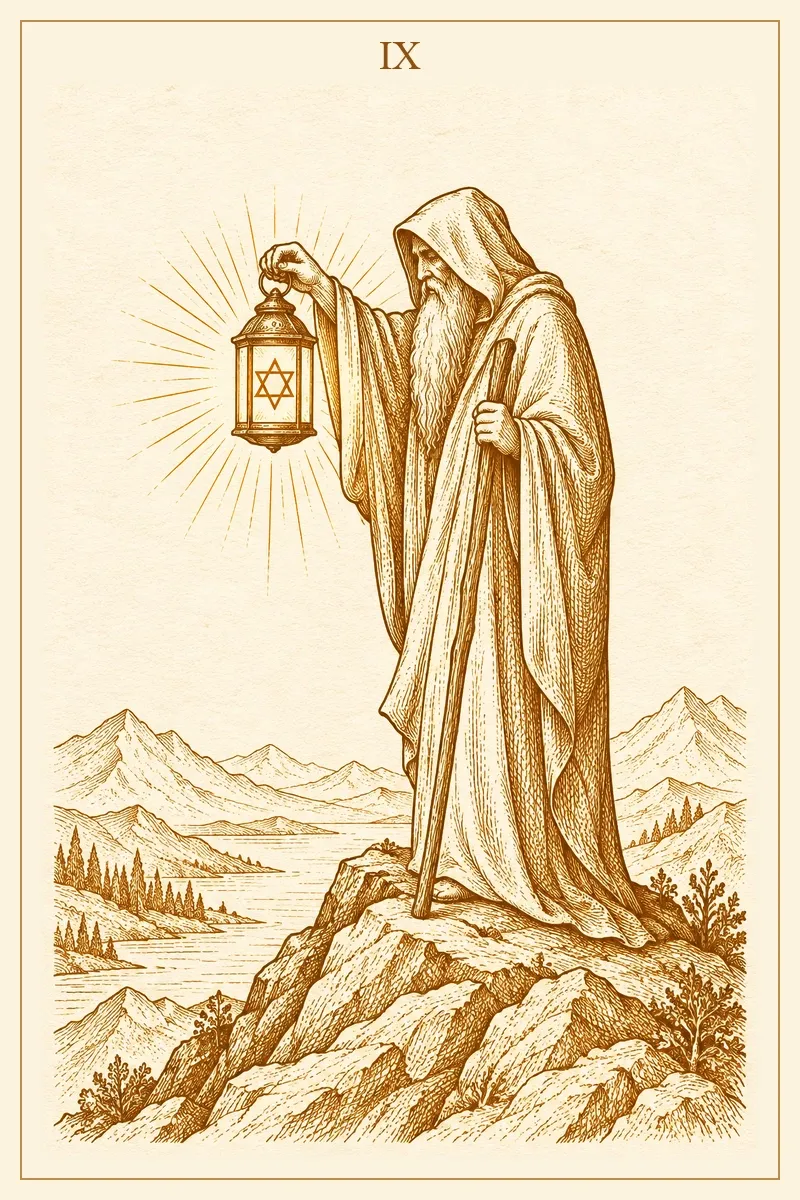
A hooded figure stands on a rocky peak, leaning on a staff and holding up a lantern with a six-pointed star glowing inside, mountains and a lake below. Upright, The Hermit is chosen solitude: reflection and listening to your own thoughts. For singles, it often marks a season of working out what you value before inviting someone in. The lantern lights only the next few steps, not the whole road.
Reversed, The Hermit can show solitude that has turned into isolation, or staying home to avoid disappointment. If time alone has started to feel like loneliness, our piece on tarot for loneliness offers gentle ways to reconnect. The Hermit tarot meaning covers the card in other readings too.
The Nine of Pentacles belongs here as well: a self-made life you enjoy, with your own home and routines. Reversed, that independence can harden into armor, a way of proving you need no one. Which one fits is worth asking honestly.
Cards that show what you are guarding
These cards are not verdicts. They point to a protection you may not have noticed, and noticing it is usually the first step to loosening it.
Four of Cups: missing what is being offered
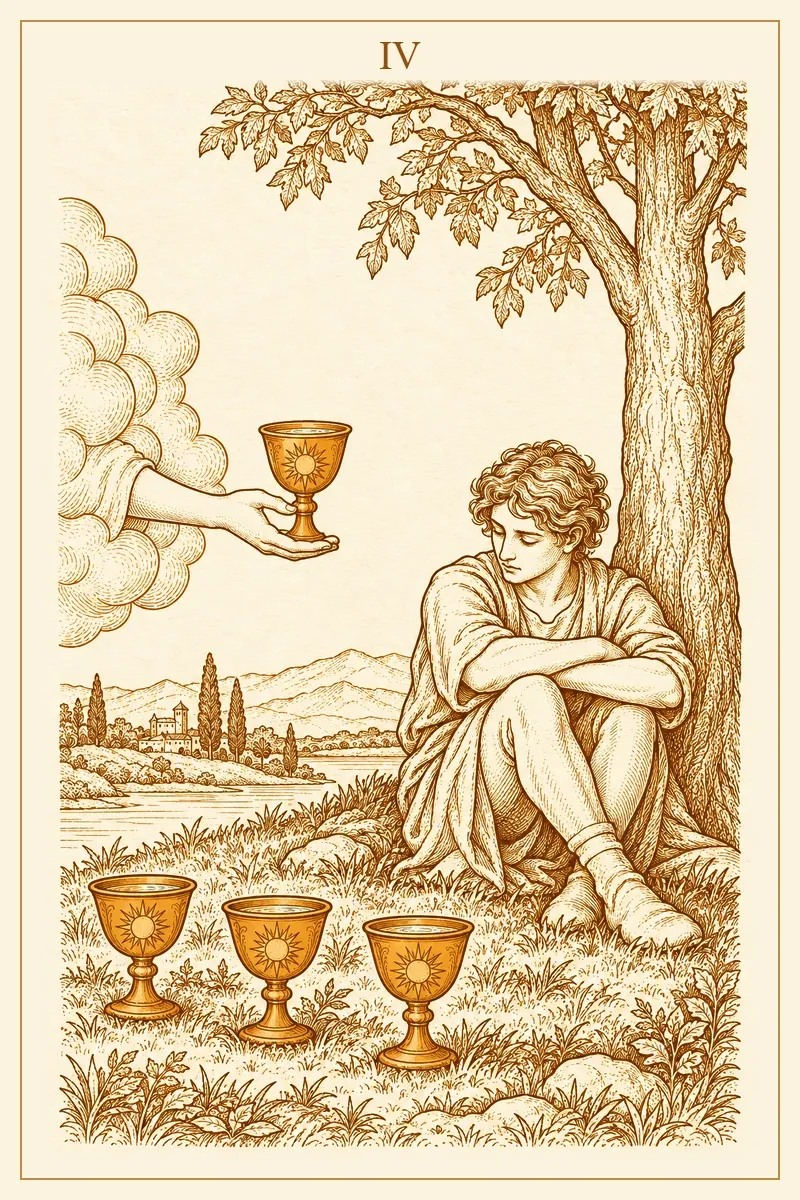
A young man sits under a tree with his arms folded, looking down at three cups on the grass, while a hand from a cloud offers a fourth he does not seem to see. Upright, the Four of Cups is withdrawal and fatigue: dating that feels like a chore, swiping without interest, declining invitations by habit. What is offered may not even be romantic; it could be a friendship, a class or a new way to spend a weekend.
Reversed, the head lifts. Interest returns, or you finally say a clear no to something that never suited you. The Four of Cups tarot meaning looks at its links to boredom and missed chances.
Eight of Swords: beliefs that feel like walls
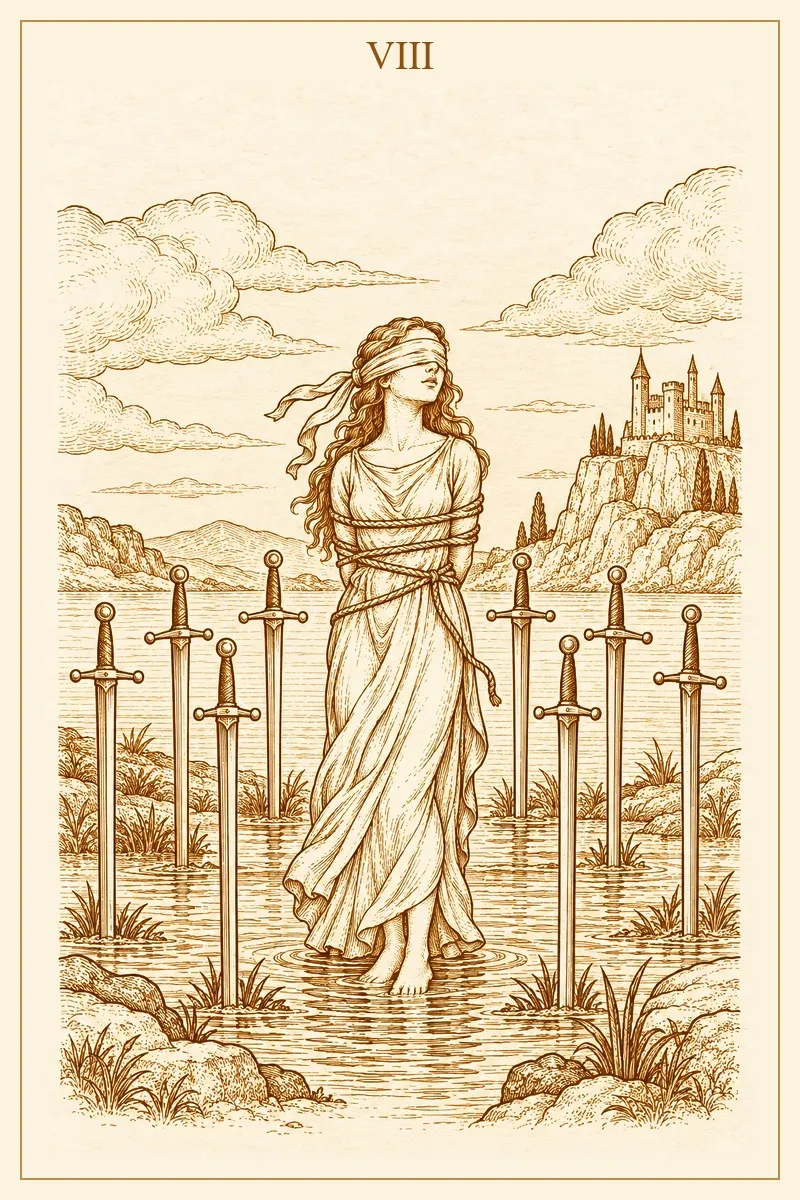
A blindfolded woman stands in shallow water, arms loosely bound, with eight swords planted around her and clear gaps between them; a castle sits on a distant cliff. Upright, the Eight of Swords shows restriction that lives mostly in thinking: "I am too old," "everyone good is taken," "I always choose wrong." The ropes are loose and the way out is open, but the blindfold hides it.
Write the belief down and test it against your experience: is it true every time, or did it start with one painful relationship? Reversed, the blindfold slips and you begin to see options you had ruled out. Read the full Eight of Swords tarot meaning for other angles.
Three more cards belong here. The Moon points to fears about love that feel true in the dark but have not been checked. The Five of Cups points to grief that still needs attention; if a breakup is recent, our guide to tarot for heartbreak may suit you better than a dating question. The Devil points to a familiar pull, such as returning to the same type or mistaking intensity for closeness.
Example: a Table for One reading on a spring Sunday
This is an illustration, not a real client. Imagine a reader in her mid-thirties, single for two years after a long relationship. Her life is good, her friends keep nudging her toward dating apps, and she is not sure what she wants. Her question: "What do I want from love now, and how do I want to meet people this spring?" She draws:
- 1. My heart right now: Nine of Pentacles
- 2. What single life is giving me: Three of Cups
- 3. What I want in love: Two of Cups
- 4. What I am guarding: Four of Pentacles
- 5. How I meet new people: Page of Swords, reversed
- 6. One step for this month: Knight of Cups
Reading each card. The Nine of Pentacles says her heart is genuinely content; she built a home and routine she likes and feels curious rather than lonely. The Three of Cups shows what this season gives her: close friends and shared dinners. The Two of Cups names what she wants in love, which is reciprocity more than fireworks. The Four of Pentacles shows she guards her time closely; her calendar is so tidy that a new person would have no obvious slot. The reversed Page of Swords describes her first dates: sharp questions, quick checks for red flags, little shared about herself. The Knight of Cups, as a step, suggests leading with warmth once.
Reading the pairs. Cards 1 and 4 show contentment and control sitting close together: the comfortable life she built is also a quiet wall. Cards 2 and 5 show a gap between the generous, funny person her friends know and the guarded interviewer strangers meet. Cards 3 and 6 connect neatly: if she wants reciprocity, she can make the first warm move and see who meets it.
What she decided. No card told her when or who, and she did not ask. She kept her Thursday dinners with friends, cleared one evening a week for something new, said yes when a friend offered an introduction, and swapped the coffee-shop interview for a walk. She plans to repeat the spread in six weeks and compare position 5.
Timing, work and family pressure in a singles reading
For a timing angle, ask "What should I pay attention to over the next six weeks?" instead of asking for a date, and set a check-in day. Fast cards such as Wands then describe momentum in your own choices, not the week a stranger appears.
Work shows up in singles readings more than people expect. If a Pentacles card lands in position 4, ask whether your schedule is a priority you chose freely or a comfortable place to hide. Either answer is allowed; knowing which is true is the useful part.
Family and social pressure can weigh on position 1 too. After a relative's comment or a run of wedding invitations, write two short lists: what you want for yourself, and what others seem to want for you. The spread is about the first list.
Turning the reading into this month's plans
- Write it down: one sentence per position and one per pair, dated, in the same notebook each time.
- Make the step concrete: turn position 6 into something with a day and a place, such as "Saturday, the pottery class."
- Protect what position 2 named: keep those friendships or projects on the calendar, whatever else changes.
- Test the guard gently: try one small experiment against position 4, like answering a message you would normally leave.
- Repeat in four to six weeks: positions 4 and 5 tend to shift first.
When someone new does come into your life, the questions change, and a new relationship tarot reading fits those early weeks better. For other layouts, our collection of love tarot spreads covers many situations, and if the reading raised bigger questions about who you are becoming, tarot for self-discovery is a good next read.
Frequently asked questions
Can tarot tell me when I will meet someone?
No. Tarot cannot give a date, describe the person you will meet, or confirm that a meeting will happen. It can reflect how open you feel, what you are protecting and which steps are within reach. If timing matters, set a check-in date and repeat the spread then.
Is The Hermit a bad sign in a singles reading?
Not at all. The Hermit is purposeful solitude: time to reflect and hear your own voice. If it keeps appearing, this season of being single may be doing useful work. Only when it is reversed, or when time alone feels isolating, is it worth asking whether you have withdrawn more than you want to.
What if my singles reading is mostly Swords or Pentacles?
Many Swords suggest your love life is living in your head: overthinking, worry or analyzing past relationships. Many Pentacles suggest work, money, health or home are taking most of your attention. Neither is a bad result; both show where your energy is flowing so you can decide whether to shift it.
Can I read about a specific person I like?
Yes, but use a separate question and spread, because the Table for One spread is about you. Ask about the connection and your own choices, such as "What should I understand about how I feel around this person?", rather than trying to see their private thoughts. Their words and actions over time say more than any card.
How often should I repeat the singles love spread?
Every four to six weeks, or after a meaningful change such as a breakup, a move or a decision to start dating. Daily draws tend to produce noise. In between, a single card for position 6 keeps your step in view.
Is it okay to do a love spread if I am happy being single?
Yes. The spread does not assume you want a partner soon. You can read position 3 as "what love means in my life," including friendship, family and self-respect. Content singles often find positions 2 and 4 the most useful.
Your own company counts
A singles reading at its best is not a countdown to a meeting. It shows the life you have, the love you hope for and small ways to stay open without giving up what you value. Whether a partner arrives next month, in five years or not at all, your relationship with yourself deserves good attention too.
When you are ready, you can lay out your own six cards in a calm Veil Soul reading and keep your notes for next time.