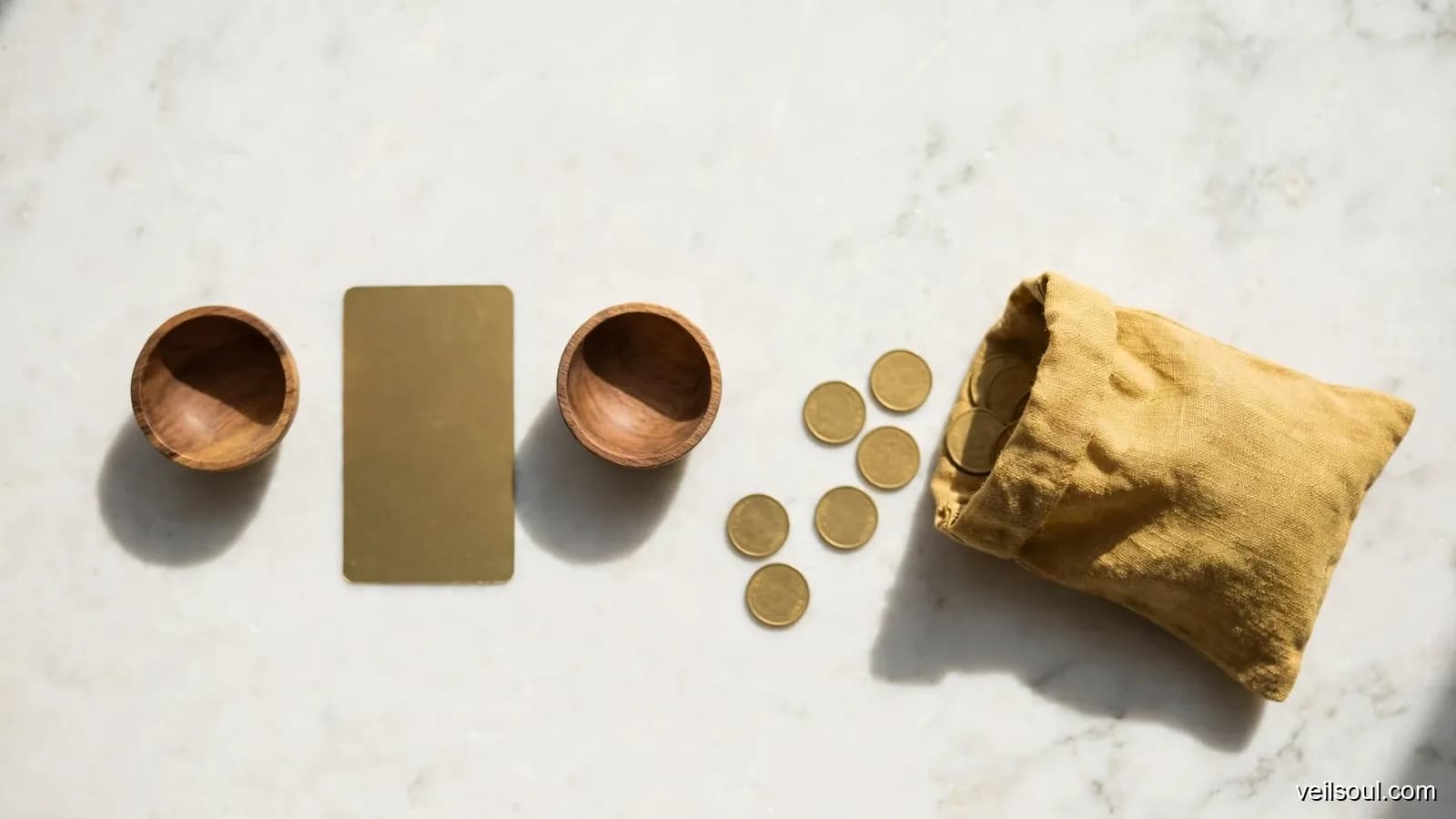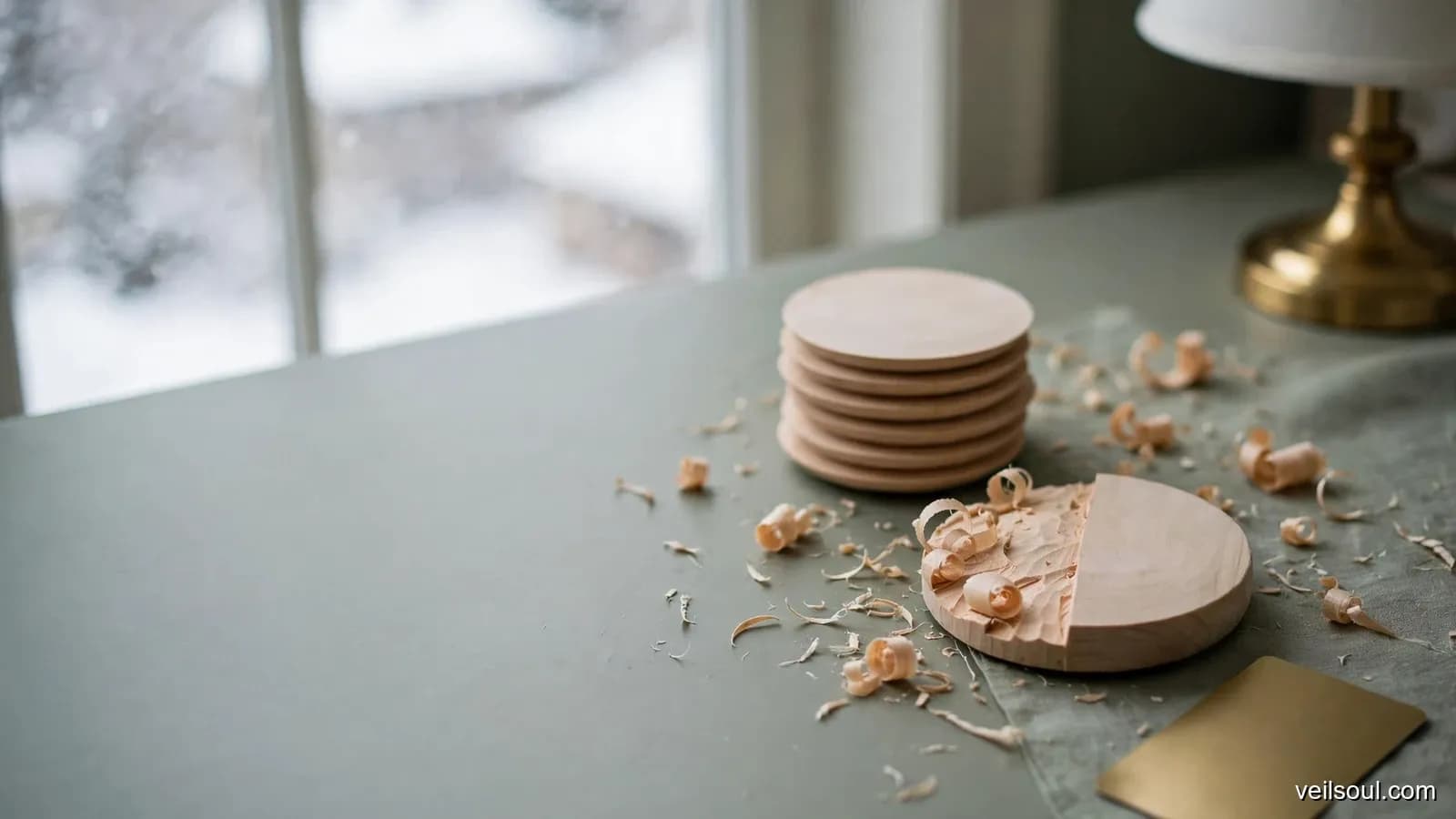
Drawn upright in a love reading, the Eight of Pentacles says that love is being learned the way a trade is learned: through small, attentive acts repeated until they turn into trust. It points to steady, unglamorous effort spent on knowing one particular person well, and it favors depth over fireworks. Reversed, the practice has gone wrong: endless correcting, a routine that has lost its warmth, or a job, course or project quietly taking the hours the relationship needs.
Everything below concerns romance and partnership. The card's general meaning, astrology and career readings are covered in the complete Eight of Pentacles meaning; here the question is what the carver at his bench says about two people. One honest limit before we start: the card cannot tell you what someone else feels, guarantee that your effort will be returned, or name a date. It shows the kind of effort a situation is asking for, and what you do with that is yours to decide.
- Upright: care practiced daily, learning a partner's needs, trust rebuilt act by act, love that deepens slowly.
- Reversed: perfectionism, going through the motions, effort aimed at the wrong thing, work or study crowding out the relationship.
- Feelings: serious, invested interest that shows in reliability more than in words.
- Yes or no: a patient yes, as long as the effort continues.
- Timing: slow; think months of practice, not a sudden turn.
- Advice: choose one small act and do it with full attention, then do it again tomorrow.
What the carver on his stool shows a couple
Eight of Pentacles: one coin under the chisel
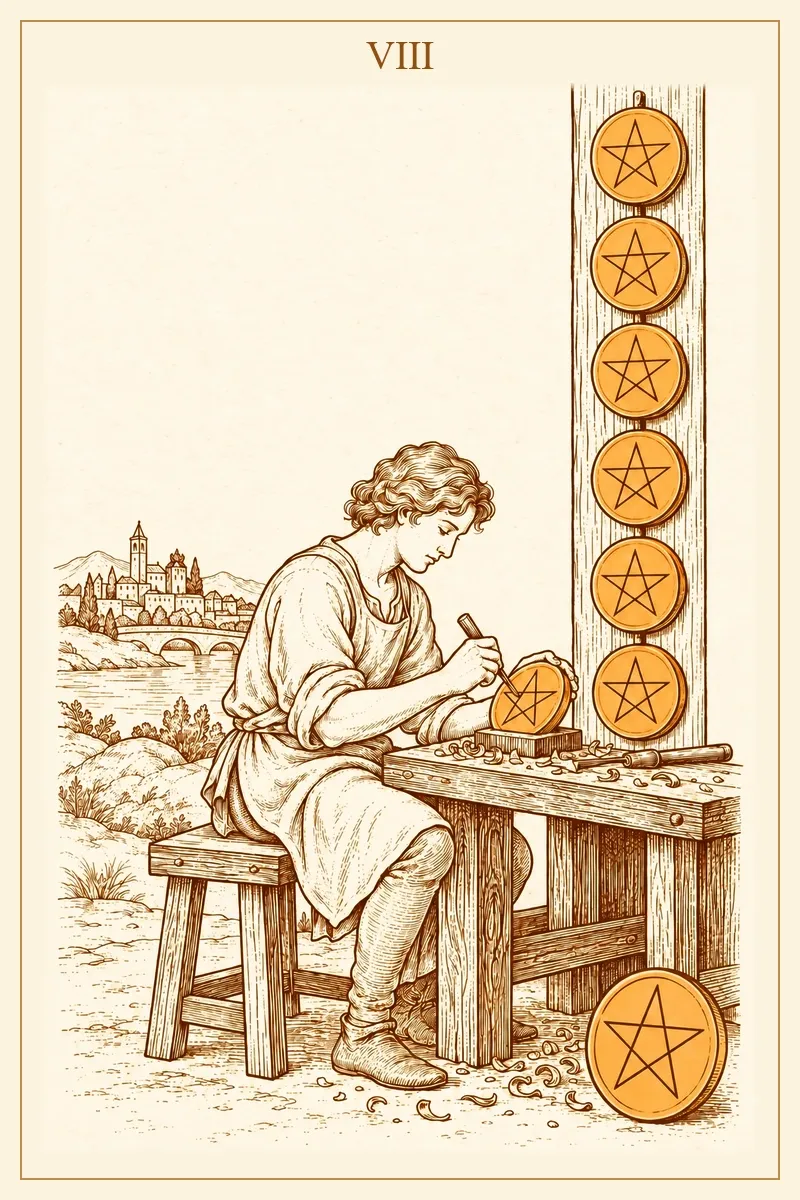
The card shows a young man with curly hair, an apron and rolled sleeves, sitting on a plain wooden stool at a heavy outdoor workbench. He holds a chisel to a single coin propped on a small wooden block and cuts its star with his head bowed close. Six finished coins hang one above the other on a tall wooden post beside him. A seventh, also finished, leans against the leg of the bench on the ground. Curled wood shavings lie across the bench and the earth around his feet, and a second chisel rests on the boards. Behind him, across a river, a town with a church tower and an arched stone bridge sits in the distance. He has his back to it.
Read as a love card, each detail has a job. The single coin is the person in front of you: not love in general, not an ideal partner, but this one, with their particular moods and habits. The bowed head is attention, the thing most relationships run short of. The column of finished coins is the record that builds up when care is repeated: birthdays remembered, apologies followed by changed behavior, evenings when someone came home at the hour they promised. The coin resting at the bench leg says finished work does not need an audience; it can simply be part of the ground the two of you stand on. The shavings are the mess of learning, the clumsy first attempts at saying a hard thing kindly. And the town across the river, with its bridge and its noise, is everything that competes for your time. The carver has chosen the bench. The card asks whether you have.
Upright: the shapes patient love takes
Learning how this particular person feels cared for
Many people arrive in a relationship with a fixed idea of what love looks like, usually borrowed from their family or their last partner. The upright Eight describes setting that template down and studying the actual person. One partner feels loved when the dishes are done without being asked; another needs to hear it said out loud; a third mostly wants an hour alone after work without it meaning anything. The card favors the partner who notices these things, adjusts, and keeps noticing as the other person changes over the years.
Small daily care that adds up
The Eight rarely points to a grand gesture. It points to the message sent at lunch, the standing Sunday walk, the question about how the difficult meeting went. None of these is impressive on its own. Together they are the column of coins on the post. If you drew this card while worrying that your relationship lacks romance, consider that it may be strong in exactly the way that does not photograph well.
Rebuilding trust one kept promise at a time
After a betrayal, a long period of distance or a serious fight, the upright Eight is one of the more hopeful cards to see, with an honest condition attached. Trust comes back the way the carver's coins accumulate: one kept promise, then another, over a stretch of time that cannot be hurried. The partner who broke the trust does most of the carving; the hurt partner's part is to notice the coins as they appear rather than wait for a single act that erases the past. If no repair work is happening on one side, the card describes what is needed, not what is underway.
Getting better at disagreeing
Couples are not born knowing how to argue fairly. Some learn, over years, to raise a complaint without contempt, take a break before words turn cruel, and come back to finish the conversation. The Eight can name exactly this skill while it is still under construction. Upright, it says the practice is working, even if the latest argument felt clumsy.
A new relationship that asks for a different way of loving
Early on, the Eight suggests interest that is serious and willing to study, not just enjoy. Perhaps the new person communicates differently from anyone you have dated, comes from another culture or family style, or needs more space or more reassurance than you are used to. The card favors curiosity over insisting on your old habits. For how the first months tend to show up in a spread, see what tarot says about new relationship energy.
Single: practicing before the person arrives
For someone not in a relationship, the upright Eight often describes inner preparation: therapy, honest reflection on old patterns, keeping the plans you make with yourself, shaping a daily life that has room for another person. It is not a card of a sudden meeting. It says the work you are doing now is real and will carry into whatever comes next. When it appears in a "will I meet someone" question, it tends to answer with a question of its own: what are you practicing while you wait?
Reversed: when the practice loses its point
Recarving the same coin
In love, the first reversed meaning to consider is perfectionism. The carver cannot let the coin leave the block; every cut needs correcting. In a relationship this looks like a partner who keeps finding the flaw in an otherwise good evening, or who will not commit because the relationship is not yet ideal. It can also be turned inward, as a fear that one mistake will cost you the person. The reversed card asks you to hang a coin on the post even though it is imperfect.
Going through the motions
Sometimes the visible routine continues while the attention has left. The date night still happens and the goodnight message still arrives, but both have become a script. The other person usually feels this before they can name it. Neighboring cards help here: the Wheel of Fortune nearby suggests a turn that could refresh the practice, while The Tower suggests the drift has gone far enough to shake something loose.
Working hard on the wrong thing
A couple can pour enormous effort into a renovation, a wedding budget or a busy social calendar while the conversation they actually need goes unspoken. The reversed Eight sometimes names diligence pointed in the wrong direction. The useful question is not "are we trying?" but "is what we are trying at the thing that matters?"
Wanting the finished post without the hours
Here the reversal shows a wish for the depth of a long relationship without the practice that produces it: expecting a new partner to understand you instantly, or hoping one vacation will repair years of neglect. The card does not scold. It simply points back to the bench.
When the bench takes every evening
The Eight, reversed or sometimes upright, can also describe a partner who pours themselves into a career, a degree, athletic training or a creative project, leaving little for the relationship. The devotion is real; it is just facing the wall. If you are the one at the bench, the card asks whether the person across the river has been waiting on the bridge. If you are the one waiting, it suggests naming what you miss in concrete terms rather than resenting the work itself.
Eight of Pentacles as feelings, a yes or no, and how long it takes
When you ask how someone feels. The Eight suggests steady, practical interest. This person may not say much, but they show up, remember details and follow through. Reversed, it can mean they are absorbed in work or in their own self-improvement and have less attention left over than you would like, which is not the same as not caring. Watch what they do; with this card, that is where the feeling shows.
When you need a yes or no. Upright, a patient yes: what you hope for is possible if the effort continues on both sides. Reversed, "not yet, or not like this": the effort needs to change shape before the answer can improve.
When you ask about timing. The Eight is a slow card. It describes progress measured over seasons, the time it takes to form a habit or rebuild trust. If you hoped for a quick change, take that as an invitation to judge the relationship over months rather than days.
Reading the Eight by its place in a love spread
In a past position, the card shows a season of effort that built what the relationship now rests on: the year you learned to live together, or the slow patience after a rough patch. In the present, the work is happening now, and the honest question is whether both of you are at the bench or only one. As advice, it recommends returning to one small, repeated act rather than planning something big. In an obstacle position, it usually names one of the reversed patterns: perfectionism, routine without presence, or work taking the evenings. In a position for the other person, it describes someone who shows love through reliability and effort, and who may need you to notice that effort out loud. As an outcome, it describes a relationship defined by its daily craft: not dramatic, but trustworthy, the kind people later describe as something they built.
Cards that change what the work is for
Three of Pentacles: building side by side
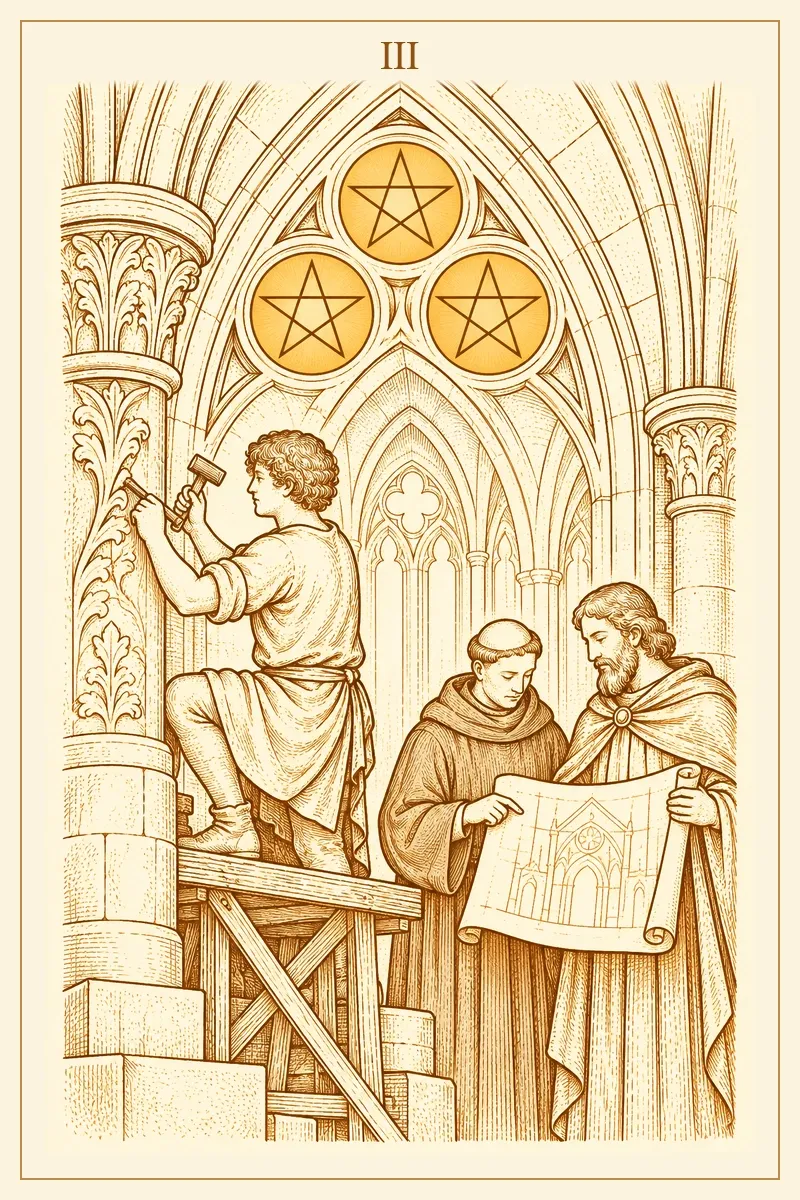
The Three of Pentacles shows a young craftsman up on a wooden scaffold inside a vaulted church, cutting leaves into a stone pillar with mallet and chisel, while a monk and a bearded man in a cloak study an unrolled plan of the building below him. Beside the Eight, private practice becomes a shared project: a home, a business, a plan for a family, with both people contributing their skill and checking the drawing together. It is one of the healthiest pairings the Eight can have. If only the Eight appears, ask whether the work is shared or whether one person is carving alone. The Three of Pentacles meaning explains its teamwork theme in full.
The Empress: practice that becomes nourishment
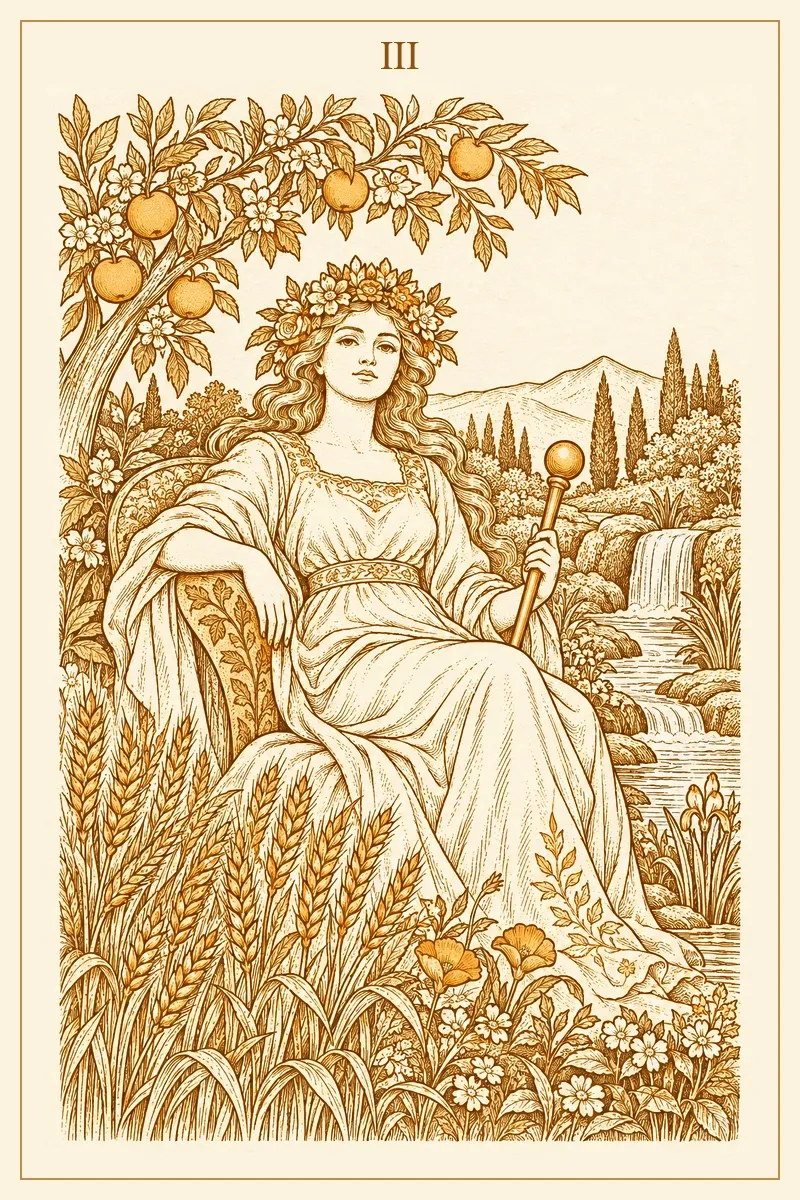
The Empress reclines in a flower crown with a golden scepter, under a fruit tree, with ripe wheat at her feet and a waterfall behind her. Next to the Eight, the long practice is producing something warm and plentiful: a home that feels good to come back to, sometimes a growing household, sometimes simply ease between two people. The pairing reminds the carver that the point of the work is comfort and pleasure, not just competence. Read more in The Empress meaning.
The Devil: effort that has turned compulsive
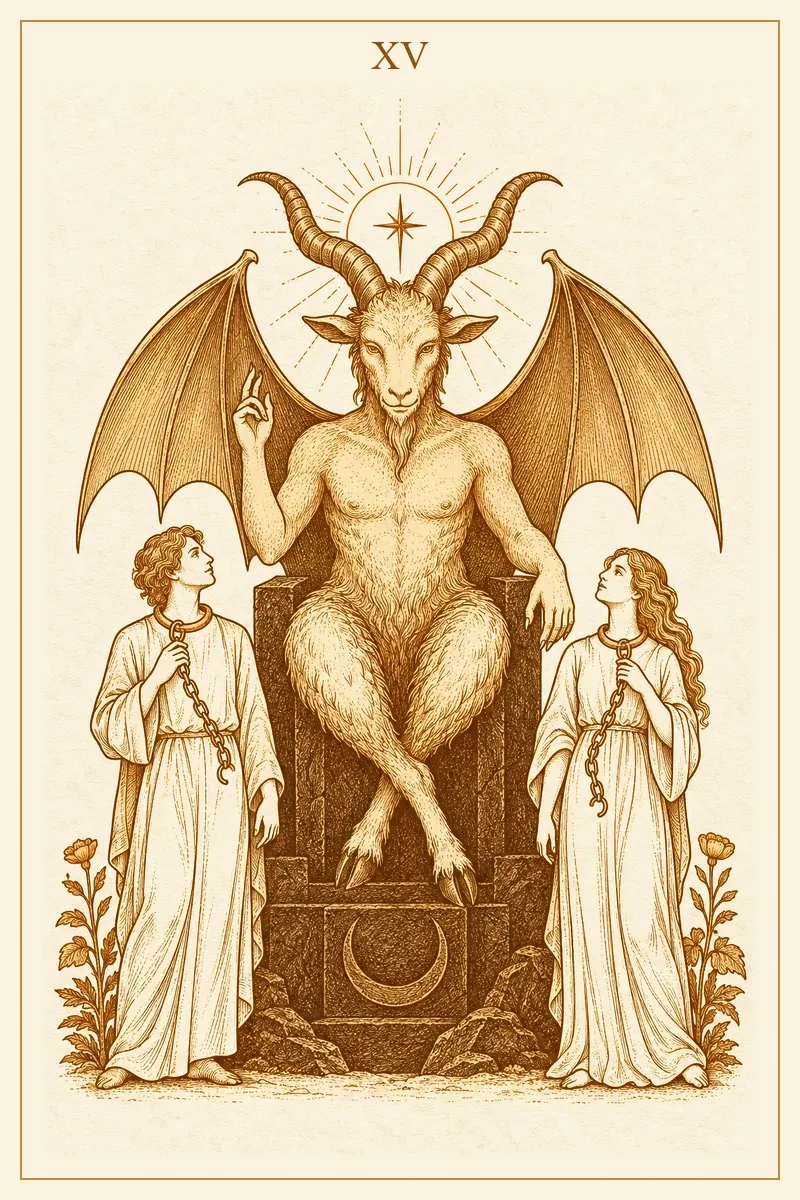
The Devil sits on a dark stone throne, horned and bat-winged, while a young man and a young woman stand on either side with chains around their necks. Look closely and each of them holds the chain loosely in their own hand. With the Eight, dedication has hardened into compulsion: working late every night to avoid closeness at home, a partner who cannot stop trying to fix or improve the other, or a cycle of effort that serves a fear rather than the relationship. The loosely held chain matters, because the pattern can be put down. The Devil meaning goes further into that release.
The Star: patience that keeps hope alive
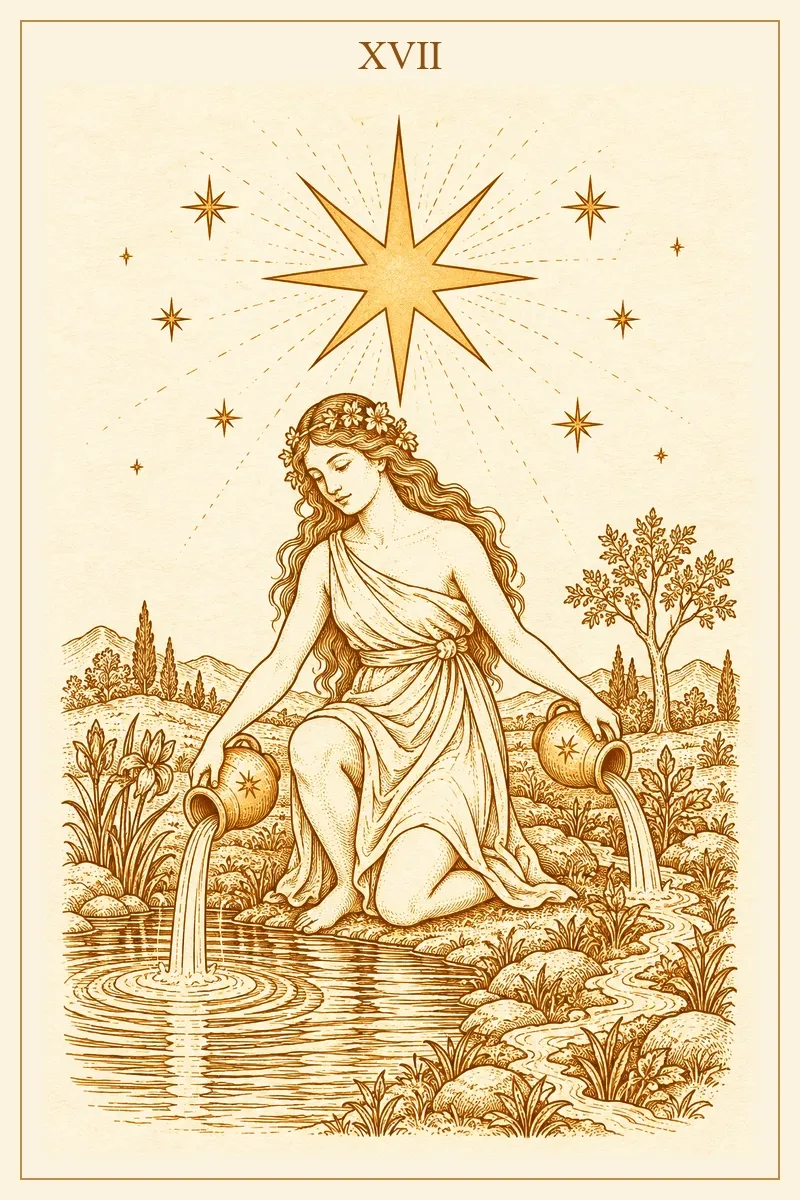
The Star shows a woman kneeling at the edge of a pool under one large star and several small ones, pouring water from two jugs, one into the pool and one onto the land, where it runs off in a little stream. Beside the Eight, it describes small acts of care that keep hope going through a hard stretch: recovering after a breakup, a relationship healing after a crisis, or two people steadily building toward something they believe in. The Star refills what the Eight spends. Its own reading is in The Star meaning.
Other neighbors, read briefly
- Nine of Pentacles: the step from practice to ease; years of steady effort now give the relationship security and self-respect.
- The Hierophant: practice shaped by tradition, family or faith; keep the ritual, but make sure it still carries real attention.
- The Hermit: inner work each partner does alone that quietly supports the shared life.
- Seven of Pentacles: an honest look at what the effort has grown so far, then a return to the bench.
Chore, coldness, one-sided labor: readings to avoid
Reading it as a chore. The carver's bent posture is concentration, not misery. The upright card describes work that absorbs you, not work that drains you. If your relationship truly feels like exhausting labor, the reversed meanings, or a neighbor such as the Ten of Wands, describe that better.
Reading it as unromantic. The Eight lacks the instant glow of the Two of Cups, but long-term tenderness is often made of exactly this: attention repeated until it becomes a way of being with someone.
Forgetting to ask who is at the bench. One person practicing love while the other coasts is not the Eight's ideal; it is a warning. Check whether the effort is mutual, taken in turns, or carried by one side.
The Seventh Coin spread: five cards for a relationship you are building
This spread borrows its positions from the card's own picture. Shuffle with the relationship in mind, draw five cards and lay them left to right. If you want other layouts for a couple, browse these love tarot spreads.
- The coin on the block: what the two of you are learning right now.
- The post: what your shared practice has already built.
- The shavings: what the learning costs, or the mess it leaves behind.
- The town across the river: what pulls attention away from the relationship.
- The next cut: one small act to repeat this week.
A sample reading: the argument that keeps coming back
This example is invented to show the method. Maya and Jun have been together three years, and they keep having the same argument about Jun's late shifts and the plans that get canceled because of them. Maya asks, "What would help us stop having this fight?" and lays out the Seventh Coin spread.
The coin on the block: Eight of Pentacles upright. The card itself lands in the first position, which underlines the theme: they are learning a skill, and the skill is fighting differently, not avoiding the topic.
The post: Six of Cups. Shared memories and plain kindness have built a lot. There is real affection to draw on.
The shavings: Five of Wands. The cost of learning right now is scrappy, repetitive conflict. It is noisy, but it is the sound of practice, not proof of failure.
The town across the river: Knight of Swords. Speed and sharp words are the distraction. Both of them rush to win the point instead of finishing the conversation.
The next cut: Temperance. Slow down and blend. Agree on a pause signal, and return to the topic when both are calm.
Maya's takeaway is one concrete practice: when the shift schedule comes up, either of them can call a ten-minute break, and they finish the talk over breakfast the next day. Kept up for a month, that habit is one more coin on the post, and she can judge it by whether the arguments get shorter and kinder.
Putting the card to work this week
- Choose one small act you already do for your partner and do the next instance with your full attention.
- Write a list of the coins on your post: the ordinary acts of care each of you has kept up. Share it if that feels right.
- Name one thing that keeps pulling your evenings across the river and set a limit on it for the week.
- If you lean toward perfectionism, finish one imperfect thing, such as an apology, a plan or a message, instead of revising it again.
- Pick a regular moment to ask how the relationship feels to both of you; the relationship check-in spread gives that talk a simple structure.
Frequently asked questions
Does the Eight of Pentacles mean my relationship is hard work?
It means the relationship involves practice, which is different from strain. Upright, the effort is usually absorbing and worthwhile. If the work feels punishing, look at the reversed meanings and the cards around it.
What does the Eight of Pentacles reversed mean in love?
Usually perfectionism, routine without real attention, effort aimed at the wrong problem, or work and study taking the time the relationship needs. Less often, it points to wanting depth without the practice that creates it.
How can I tell if our effort is building closeness or just routine?
Ask whether the practice still requires attention. Real practice keeps teaching you something about your partner; routine runs on autopilot. If you could do the act while thinking about something else entirely, it probably needs fresh attention.
Is this card only about long-term relationships?
No. It can describe a new relationship where both people are willing to learn, a single person doing inner work, or a couple at any stage who have committed to steady effort. The common thread is dedication, not duration.
Can the Eight of Pentacles tell me whether my partner will commit?
No card can confirm another person's choices or future. The Eight can show that steady effort is present or needed, and it can prompt you to look at the evidence in their behavior. The decision, and the conversation about it, stay with the two of you.
How is the Eight different from the Three of Pentacles in love?
The Three shows people building together from a shared plan; the Eight shows one person refining their own part. A healthy relationship usually needs both: each partner doing their own inner work, and both working on what they share.
Back to the bench, together
The Eight of Pentacles does not promise a dramatic turn in love. It offers something steadier: care repeated with attention becomes trust. When you want to look at your own situation, start a reading and see which small act your cards point to next.