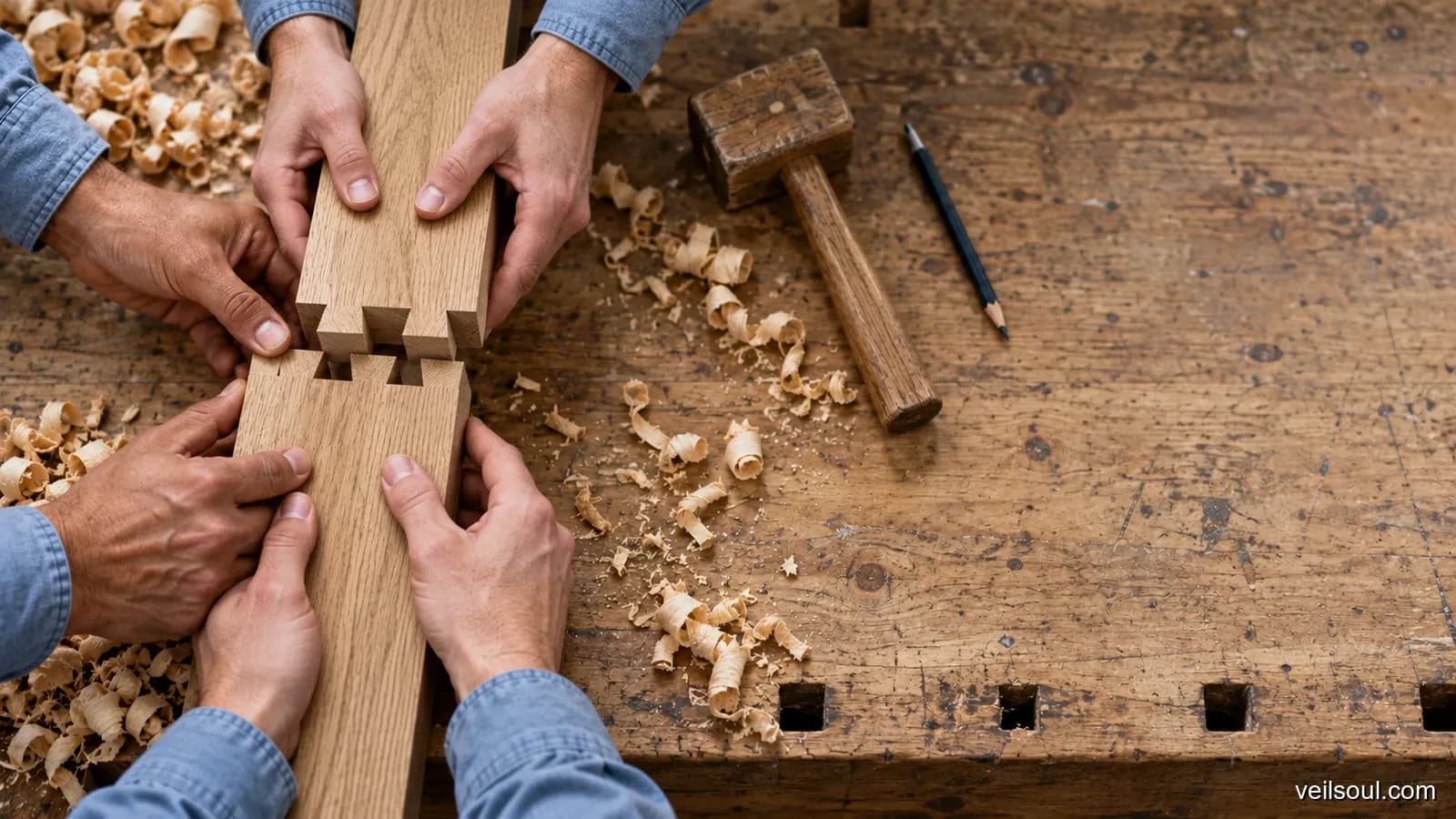
Skilled people building something together: that is the Three of Pentacles in one line. Upright, it means teamwork that works, competence that others notice, and steady learning through real practice. Reversed, it points to a project where the plan, the people and the effort have stopped lining up: poor communication, skill that goes unseen, rushed or careless work, or someone carrying everything alone.
Like every card, it describes a pattern you can recognize and act on rather than a fixed outcome. It cannot tell you what a coworker privately thinks of you, guarantee a promotion, or name the date a project will finish. What it can do is show where cooperation, craft and feedback are helping you, and where they have quietly broken down.
- Upright keywords: teamwork, collaboration, skill, apprenticeship, quality work, recognition, planning together.
- Reversed keywords: misalignment, poor communication, unrecognized effort, sloppy or rushed work, perfectionism, working in isolation, a stalled learning curve.
- Yes or no: yes upright, especially for work and learning questions; reversed, "not as things stand," until the cooperation or the quality improves.
- Element and astrology: Earth; Mars in Capricorn, the second decan of Capricorn.
- Golden Dawn title: Lord of Material Works.
- Suit and number: Pentacles, three; the first time the suit produces something visible to others.
Carver, monk and plan-holder: the picture on the card
The scene
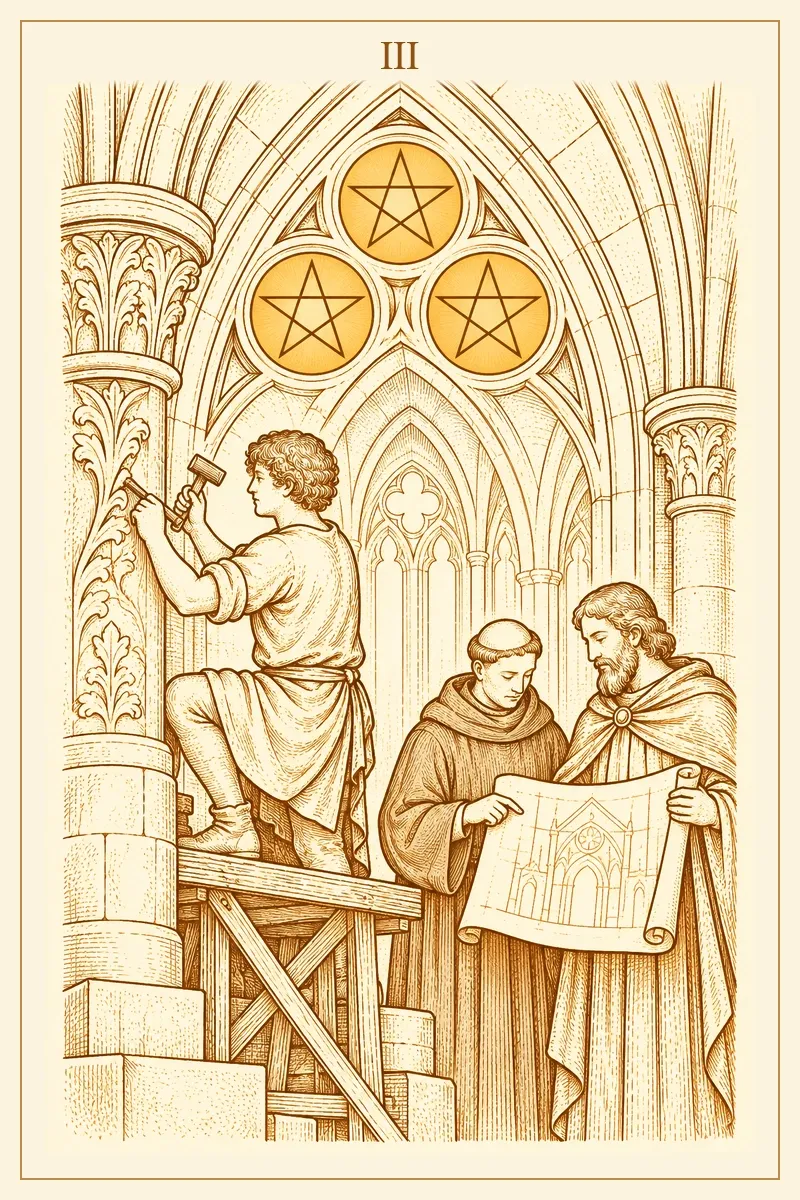
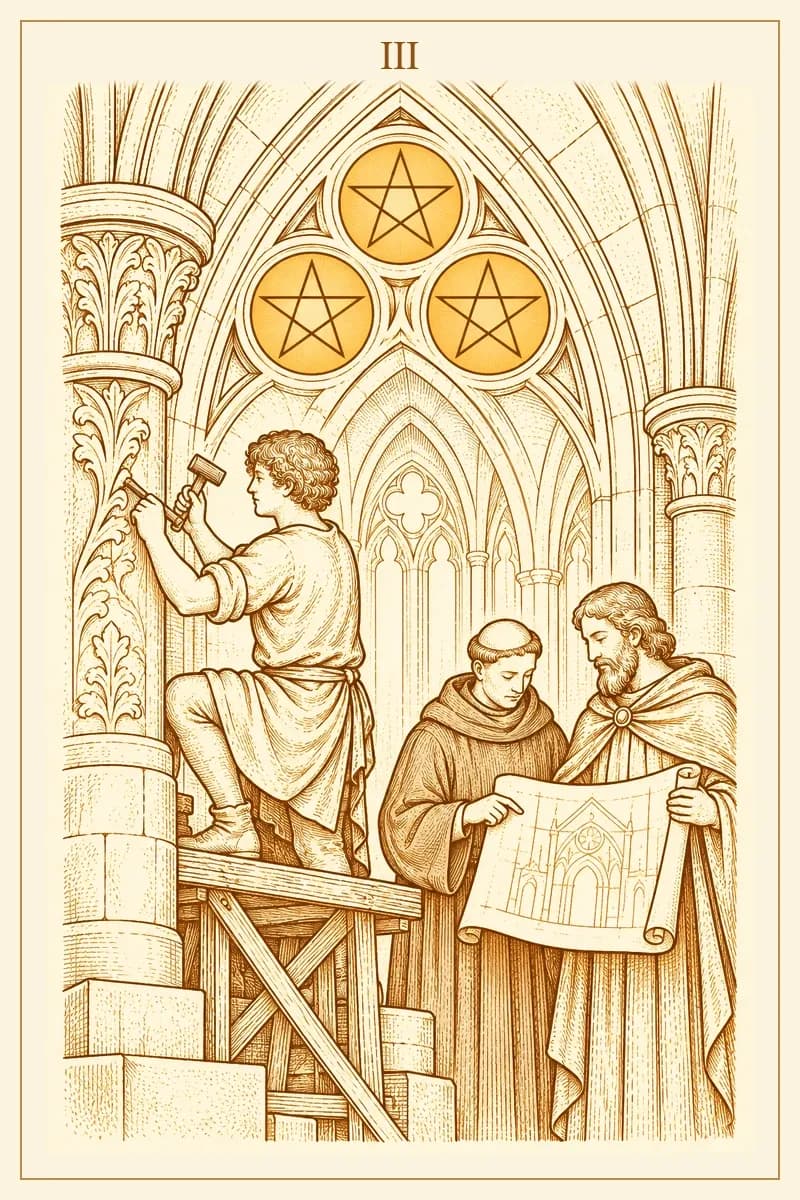
The card is set inside a stone church that is still being worked on. On the left, a young carver with curly hair stands on a wooden scaffold, one knee raised, a mallet in one hand and a chisel in the other. He is cutting leaf scrolls into a tall column, fully absorbed in the stone in front of him. To the right, at ground level, a hooded monk and a bearded man in a cloak fastened with a round clasp hold an unrolled drawing between them. The drawing shows the front of a church with a pointed doorway and a round window, and the monk is pointing at a detail on it.
Above them, in the tracery of a tall pointed arch, three gold pentacles sit in a triangle, two below and one on top. Behind the figures the arches repeat into narrow windows, and the roman numeral III sits at the top of the card. Nothing in the scene is finished: the scaffold is still standing, the plan is still being discussed, and the carving is half done.
Three roles, one building
Read the figures as three kinds of contribution. The carver brings the hands: practice, technique and patience with material. The bearded man holding the plan brings the design, the overall shape the work should take. The monk brings the purpose: why the building exists and who it is for. None of them could raise the church alone, and none of the three roles outranks the others.
Notice too that the carver is not looking at the plan. He is trusted to do his part well while the other two check that the whole still fits together. That balance between trust and checking is the heart of the upright card. When it tips, with nobody checking or nobody trusted, you have the reversed card.
Mars in Capricorn and the Lord of Material Works
In the Golden Dawn system, which most modern decks follow, each numbered minor card from two to ten covers a ten-degree slice of the zodiac. The Three of Pentacles is the second decan of Capricorn, ruled by Mars, and its title is "Lord of Material Works." Mars is drive and effort; Capricorn is structure, patience and long-term ambition. Together they describe energy that is directed into a plan and kept up until something solid exists. If you want to go further into the sign, the Capricorn tarot guide follows the same discipline through The Devil and the other Capricorn cards.
The card's place in its suit tells the same story. The Ace of Pentacles is the seed of something material, and the Two of Pentacles juggles resources and keeps several things in motion. The Three is the first card where effort turns into a shared, visible result, and where other people start to recognize it. The Four of Pentacles then asks how tightly you will hold on to what you have built. If you are reading the suit in order, the full meanings of the Two of Pentacles before this card and the Four of Pentacles after it show how the story turns.
Threes in tarot usually describe growth through combination, and in Pentacles the third thing is a piece of work. Spiritually, the card invites you to treat any practice, from meditation to a daily tarot draw, as a craft that improves with guidance and honest feedback.
Three of Pentacles upright: skill that grows when it is shared
Upright, this card says your effort is going into something that is taking real shape, and that you are not building it alone. It often appears when a project is past the idea stage and into construction: the drafts are being written, the prototype is being tested, the garden beds are being dug. It favors careful work over quick work and real collaboration over a group that only looks busy.
Competence that others can see
One of the most welcome messages here is recognition. Your skill is visible, and someone with a different role, such as a manager, a client or a teacher, is paying attention to it. If you have been doubting whether your contribution matters, the Three of Pentacles upright suggests it does, and that it is worth stating plainly what you have done.
Plans meeting hands
The card also values the moment when vision and execution talk to each other. Good teams check the plan against what is happening on the ground, adjust, and keep going. Upright, the card encourages you to ask for feedback early, to share drafts before they are perfect, and to respect expertise that is not your own.
The Three of Pentacles reversed: when the team stops listening
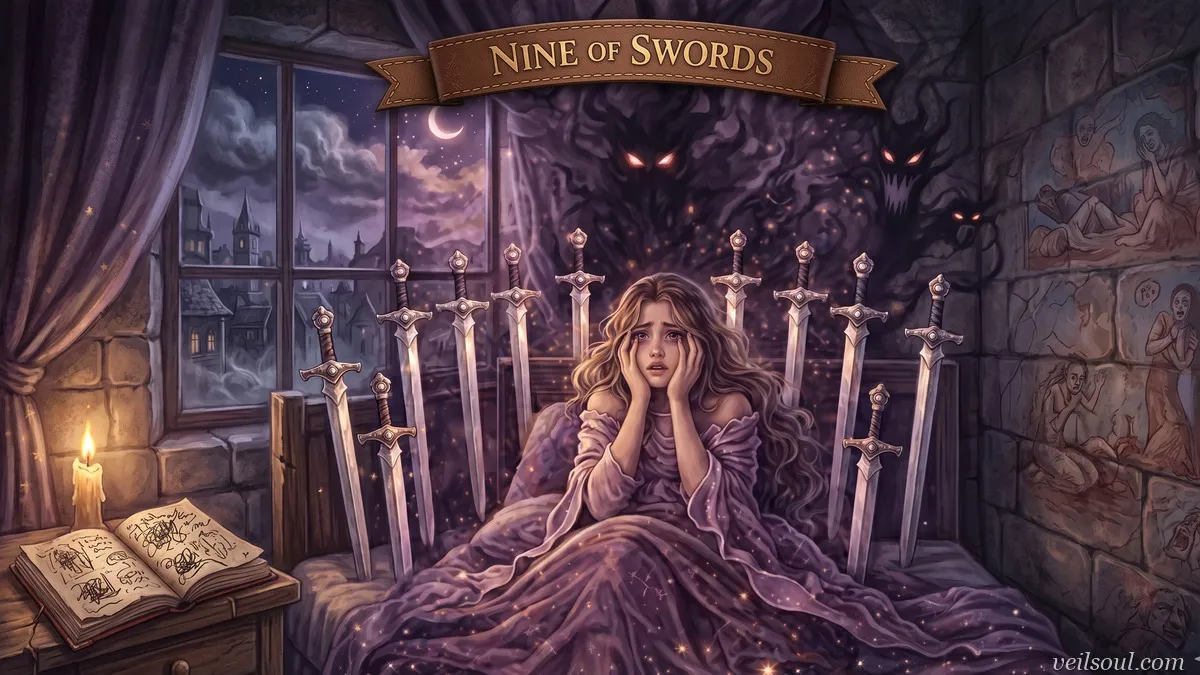
Reversed, the scaffold is still up but the work has stopped fitting together. It rarely means the project is doomed; something in the cooperation, the standards or the learning has slipped. The useful question is which of the three roles has gone quiet: the hands, the plan or the purpose.
Misaligned plans and crossed wires
The most common reading is miscommunication. People are working hard in different directions, decisions get remade in every meeting, or nobody is sure who is responsible for what. Each person may be doing good work that does not connect to anyone else's. In the picture's terms, the carver is cutting a column the planners have already redrawn. The fix is rarely more effort; it is a shared plan written down where everyone can see it.
Skill that goes unseen
Reversed, the card can describe being overlooked: your contribution is absorbed into the group, someone else presents the result, or the people who decide never see the work up close. In each case, the card asks for visibility, not resentment. Name what you did, ask for the conversation you need, and notice whether this setting can value skill at all.
Cutting corners, or polishing forever
Quality problems run in two directions. Sometimes the reversed Three of Pentacles shows rushed, careless work: deadlines winning over standards, or a team that has stopped caring how the thing turns out. Sometimes it shows the opposite, a perfectionism that keeps the work on the bench and never lets anyone else see it. Both break the cycle of making, showing and improving that the upright card depends on.
Going it alone
This card reversed often appears when someone insists on doing everything themselves. The cost is real: no second pair of eyes, slower progress and a heavier load than necessary. The reversal can also describe being left out of a group you want to join. In both cases the next step is a small, specific request for help or inclusion.
A learning curve that has stalled
For students and career changers, the reversed card can mean the learning has plateaued. Maybe the course no longer stretches you, the mentor has little time, or you are collecting information without practicing. Going back to one fundamental and practicing it with feedback is often the way forward.
What to do when it shows up reversed
- Write one sentence describing what the shared result should be. If the people involved would write different sentences, start there.
- List who does what and who decides. Gaps and overlaps usually become obvious at once.
- Show a piece of unfinished work to one person whose judgment you trust, and ask what they would change.
- If your work is invisible, keep a simple record of what you delivered and bring it to the next review or check-in.
- Ask yourself honestly whether you are refusing help, and choose one task to hand over this week.
In love: building a partnership board by board
Upright for couples
In a relationship reading, the Three of Pentacles upright describes a partnership that is being built on purpose. Both people are putting in effort, talking about practical plans and using their different strengths. It is a good sign for shared projects such as moving in together, renovating a home, planning finances or raising a family, because it shows two people who can work side by side without competing.
Upright for singles
For someone single, the card often points to meeting people through work, a class, a volunteer project or any setting where you are doing something together. Attraction may grow from watching someone be good at something.
Reversed in a relationship
Reversed, the effort may feel one-sided, or the two of you may have different blueprints for the future that have never been compared. One partner may be making decisions alone, or practical tasks may have become a quiet source of resentment. The card asks for a direct, unhurried conversation about what you are each building and who is carrying which part. For singles, it can describe dating with little intention, or holding back from letting anyone help you.
Career readings: teams, mentors and being noticed
Upright at work
This is one of the most encouraging cards in a career spread. It points to a team that functions, work that meets a real standard, and recognition from people who matter to your progress. Collaborative projects, cross-team assignments, client work that requires listening and any role where you combine expertise with others are well supported. In a job search, it favors applications that show concrete work, such as samples, a portfolio or references from people who have worked with you.
Reversed at work
Reversed, the reading usually turns to team dynamics: unclear roles, meetings that produce no decisions, credit going to the wrong place, or a colleague who will not cooperate. Before deciding the job is the problem, check whether a clearer agreement about roles and standards would change things. If it would not, the card may be helping you see that your craft needs a different workshop.
Money, apprenticeship and learning a skill
Earning through craft
With money questions, the Three of Pentacles upright links income to skill. It suggests steady earning from work done well, pay that rises as your expertise grows, and joint ventures in which each person contributes something real. It is not a windfall card; the money it describes is earned. Reversed, it can point to a partnership where contributions are unequal, a pricing problem where your work is undervalued, or returns that disappoint because the work behind them was rushed. These are prompts to review your situation, not financial advice, and big decisions still deserve a qualified professional.
Learning a trade or a new skill
If your question is about studying, training or changing field, this card is a strong ally. It favors hands-on learning, mentoring and courses with feedback over learning alone from a distance. Its neighbor in the suit, the Eight of Pentacles, shows the solitary repetition that builds mastery; the Three adds the teacher, the classmates and the moment when someone else checks your work. The Eight of Pentacles meaning is worth reading alongside this one if you are deep in practice. Reversed, the card suggests choosing a better learning setting, finding a mentor or slowing down to master one step properly.
Is the Three of Pentacles a yes?
Upright, the Three of Pentacles counts as a yes, and it is strongest when the question involves work, study, a shared project or a skill you are developing. "Will this collaboration go well?" "Should I take this course?" "Is it worth applying for the role on the new team?" The card leans toward yes, with the condition built in: the result depends on people doing their parts with care.
Reversed, read it as "not as things stand." The goal may still be reachable, but something in the current setup, usually communication, quality or a refusal to ask for help, needs to change first. If you draw it reversed in a yes-or-no question, it can help to draw one more card and ask what would need to change.
A worked example: an onboarding guide that keeps stalling
The question, the spread and the first card
Here is a sample reading to show how the card works in context. Imagine three coworkers rewriting their team's onboarding guide. Weeks in, the meetings go in circles and the document has not moved. One of them asks: "What would help this project move forward, and what is my part in it?" They use a three-card spread with these positions: what the work needs now, what I can bring, and how to move it forward.
The first card is the Three of Pentacles reversed. In this position it names the problem precisely: three capable people, no shared blueprint. Each person has a different idea of what the guide is for, so every draft gets reopened. The work needs an agreed purpose and agreed roles more than it needs more hours.
Page of Pentacles: what I can bring
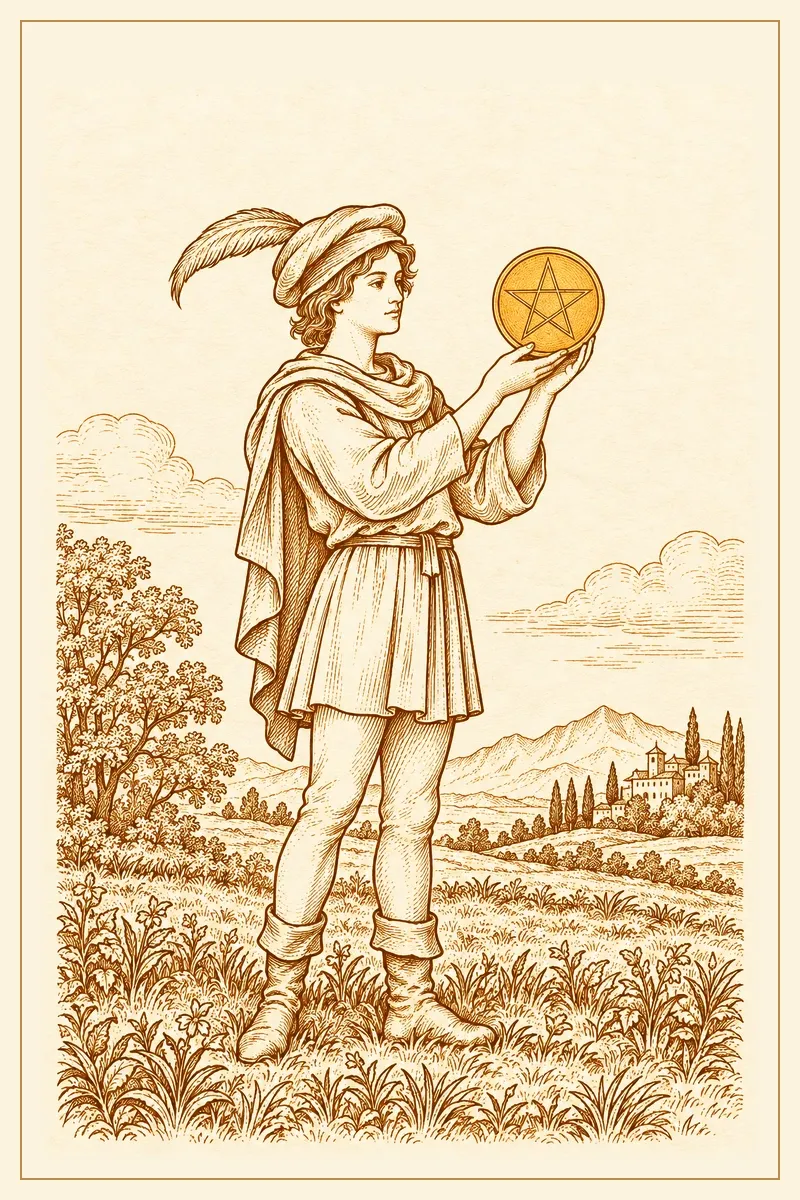
The second card is the Page of Pentacles upright. On the card, a young man in a feathered cap stands in a flowering field and holds a single gold pentacle at eye level in both hands, studying it closely, with a small town and hills in the distance. Here it suggests the reader's best contribution is a careful, modest start: one finished section, written as a sample, that the others can react to. The Page is a student and a beginner, so the card also suggests asking new hires what confused them, rather than guessing. The full Page of Pentacles tarot meaning covers the card's other sides.
The Emperor: how to move it forward
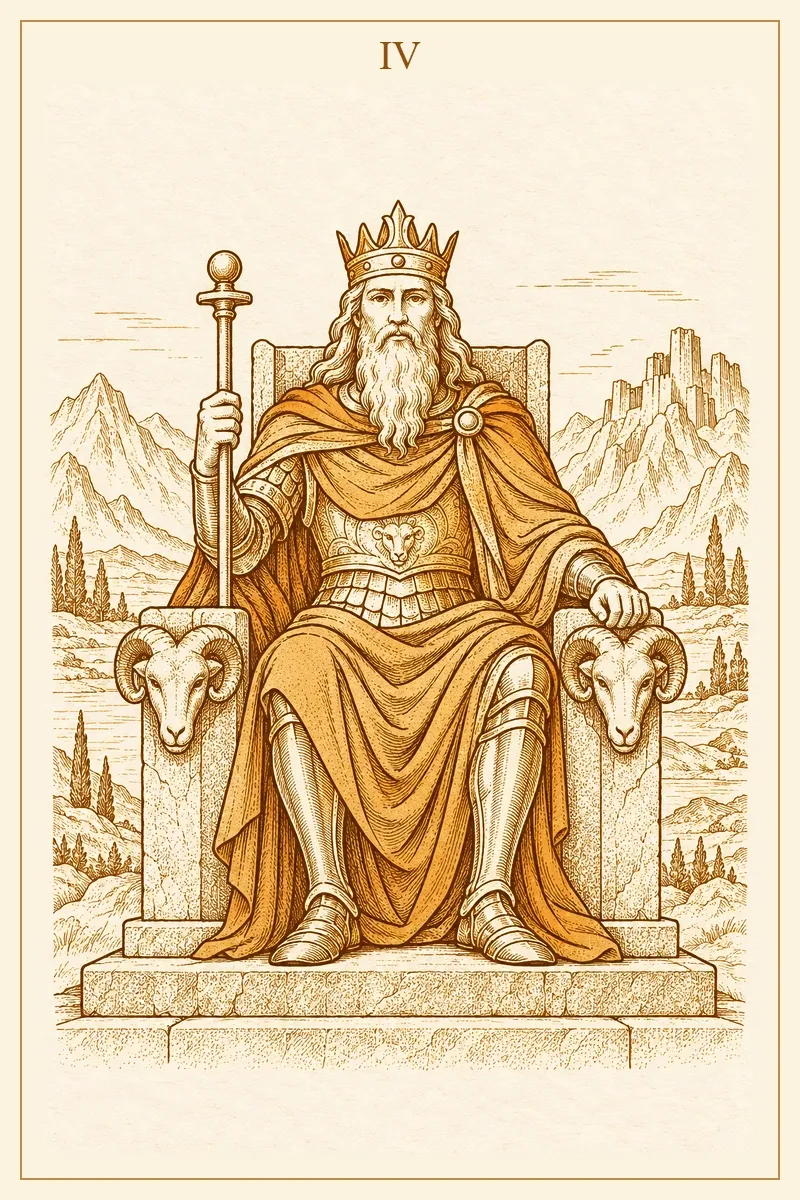
The third card is The Emperor upright: a crowned, bearded ruler on a square stone throne carved with ram heads, a scepter topped with an orb in his hand and mountains behind him. As advice, it asks for structure. Agree on who makes the final call on content, set a simple timeline and write the outline down before anyone writes more prose. The Emperor does not mean one person takes over; it means the group accepts a framework so the craft can happen inside it. The Emperor tarot meaning explores this card's leadership side in more depth.
Reading the three together
Taken together, the cards turn a vague frustration into a plan: agree on the blueprint, offer a small finished sample, and give the project a clear decision-maker and timeline. Every step is something the three coworkers control.
Pairings that shift the Three of Pentacles
Neighboring cards change the tone of this one. A few common pairings:
- With The Hierophant: formal training, a traditional apprenticeship, or learning a craft inside an institution with clear standards. The Hierophant tarot meaning explains why this pairing often points to mentorship.
- With The Emperor: a well-run project with clear leadership and defined roles; structure that supports skilled people.
- With The Star: collaboration with a hopeful vision behind it, work that feels meaningful as well as competent.
- With The Sun: visible success and shared satisfaction; the team enjoys the work and the result shows it. See the Sun tarot meaning for how much this card brightens a spread.
- With the Seven of Pentacles: the work is growing but needs patience; review progress without pulling it up by the roots.
- With the Eight of Pentacles: a strong double emphasis on skill, practice and craft; a period of serious learning.
- With the Five of Wands: creative friction in the team; competing ideas that can sharpen the result if someone channels them.
Questions to carry from this card
When the Three of Pentacles appears, these questions can turn the reading into something you can use this week:
- What am I building right now, and who else is building it with me?
- Which of the three roles do I usually play: the hands, the plan or the purpose? Which one is missing?
- Where would one honest round of feedback improve my work more than another hour alone?
- Is my contribution visible to the people who need to see it? If not, what could I show them?
- Who could I learn from, and who could I teach?
Frequently asked questions
Is the Three of Pentacles a yes or no card?
Upright, it is generally a yes, especially for work, study and joint projects. Reversed, it is closer to "not yet" or "not like this": the outcome depends on fixing communication, quality or the way the work is shared.
What does the Three of Pentacles reversed mean?
It usually means teamwork has broken down in some specific way: unclear roles, ignored expertise, careless or perfectionist work, someone working alone when they should not be, or learning that has stalled. It rarely means failure is certain. It shows which part of the collaboration needs attention.
Does the Three of Pentacles mean a new job or promotion?
It can support either, because it highlights recognized skill and good teamwork, but it does not announce a specific offer or date. Tarot cannot confirm future events or what a hiring manager will decide; it can help you see what you bring and how to make it visible.
What does the Three of Pentacles mean in a love reading?
Upright, it describes a relationship both people are actively building, with shared plans and mutual effort, or meeting someone through work, study or a shared activity. Reversed, it points to one-sided effort or different visions of the future that need to be talked through.
What is the astrology of the Three of Pentacles?
It is assigned to Mars in Capricorn, the second decan of Capricorn, under the element of Earth. The Golden Dawn titled it "Lord of Material Works," which matches its theme of effort directed into lasting, practical results.
How is the Three of Pentacles different from the Eight of Pentacles?
Both are about skill. The Eight shows one person practicing the same task again and again until it is mastered. The Three shows skill inside a group: being taught, checked and recognized by people with other roles. Seeing both in one spread puts strong emphasis on learning a craft.
Bring your own project to the table
If something you are building with other people feels stuck, or you want to know where your skill fits best right now, you can ask about it in a calm tarot reading on Veil Soul and see which roles the cards bring forward.