There is no card called Venus in the standard 78-card tarot deck. Venus's card is The Empress (III): in the Golden Dawn system she is assigned to the planet, and in the traditional design her heart-shaped shield carries the Venus glyph ♀. The same tradition also links Venus to The Hierophant through Taurus and to Justice through Libra, the two signs Venus rules, and to five minor cards through the decans.
These pairings come from one tradition, the Hermetic Order of the Golden Dawn, whose late nineteenth-century correspondences most English-language decks still follow. They are a useful lens rather than a law: other systems match cards and planets differently, and plenty of readers use no astrology at all. Tarot also cannot tell you what another person feels, when love will arrive or how a choice will turn out. What it can do is help you look at what you value, what you desire and how you treat yourself and others, which is exactly the territory Venus covers.
At a glance, these are the cards connected with Venus in the Golden Dawn system:
- The Empress (III): Venus itself; abundance, nurture, pleasure and creative growth.
- The Hierophant (V): Taurus, a Venus-ruled sign; lasting values and the commitments you hold sacred.
- Justice (XI, or VIII in older decks): Libra, a Venus-ruled sign; fairness, balance and honest agreements.
- Four of Wands: Venus in Aries; celebration, welcome and a joyful milestone.
- Two of Cups: Venus in Cancer; mutual attraction and a heartfelt bond.
- Nine of Pentacles: Venus in Virgo; earned comfort, refinement and self-sufficiency.
- Seven of Cups: Venus in Scorpio; longing, fantasy and too many tempting choices.
- Five of Swords: Venus in Aquarius; conflict, and the cost of winning at the expense of connection.
Why there is no Venus card in tarot
Searching for a Venus tarot card makes sense: astrology names the planets, so it is natural to expect a card for each one. The 78-card deck is built differently. It has 22 Major Arcana cards with their own names, such as The Empress or The Star, and 56 Minor Arcana cards in four suits. Apart from The Sun and The Moon, which are also astrological bodies, none of them is named after a planet.
The planetary layer was added later. In the Golden Dawn scheme, the seven classical planets, the twelve zodiac signs and three elements are matched to the 22 Major Arcana, and each numbered minor card from two to ten is matched to a ten-degree slice of the zodiac called a decan, with a planet ruling each slice. Venus therefore appears in three ways: as a planet (The Empress), as the ruler of two signs (The Hierophant and Justice) and as the ruler of five decans.
Some oracle decks and astrology-themed decks do include a separate card named Venus. If yours does, read it with that deck's guidebook; it sits outside the 78-card structure described here. Some older French occult writers also assigned the planets to different cards, so if a book you trust pairs Venus with another card, it is not necessarily wrong, only working from a different map.
What Venus means in astrology
Venus is the planet of attraction, affection, pleasure, beauty and value. It describes what draws us toward people and things, how we enjoy life and what we consider worth having. In traditional astrology Venus rules two signs that show its two faces, and it is said to be exalted, or especially at ease, in Pisces.
The Taurus face is earthy and sensory: food, touch, comfort, money, possessions and the slow loyalty that builds over time. The Libra face is social and aesthetic: partnership, courtesy, fairness, harmony and the art of meeting another person halfway. Both faces matter in a reading. A Venus question can be about romance, but it can just as easily be about a budget, a friendship, a creative project or the quiet question of whether you believe you deserve good things.
The three Major Arcana cards of Venus
The Empress carries Venus directly, while The Hierophant and Justice carry it through the signs Venus rules. Read them as three expressions of one principle: love that nurtures, values that endure and relationships that stay fair.
The Empress (III): Venus herself
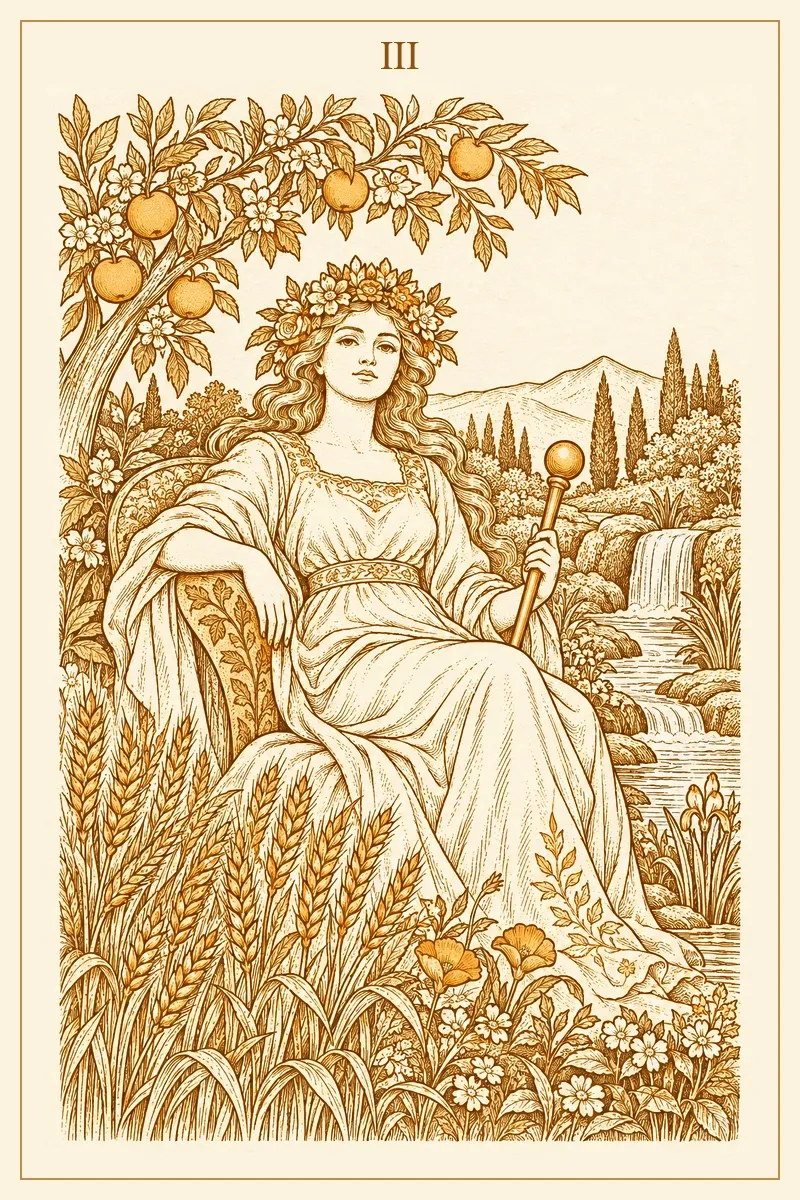
The Empress sits in a ripening field with a stream nearby, crowned with twelve stars and robed in pomegranates, and the shield beside her bears the Venus symbol. She is Venus at its most generous: fertility in every sense, sensual enjoyment, care for the body and the patience that lets things grow at their own pace. She does not chase what she wants; she tends the conditions until good things can reach her. For a full card profile, the Empress tarot meaning covers her in every position.
Upright in love, The Empress describes warmth, affection and a relationship that feels nourishing rather than draining. In money and work she points to growth that comes from steady tending: a project maturing, income built on something you enjoy, a home made comfortable. For self-worth, she asks whether you give yourself the same care you give others.
Reversed, the same energy is blocked or misdirected. You may be over-giving until you feel empty, smothering a partner or a project, neglecting rest or feeling creatively dry. The reversal is not a punishment; it is a prompt to receive as well as give, and to treat pleasure and rest as part of life rather than a reward you have to earn.
The Hierophant (V): Venus through Taurus
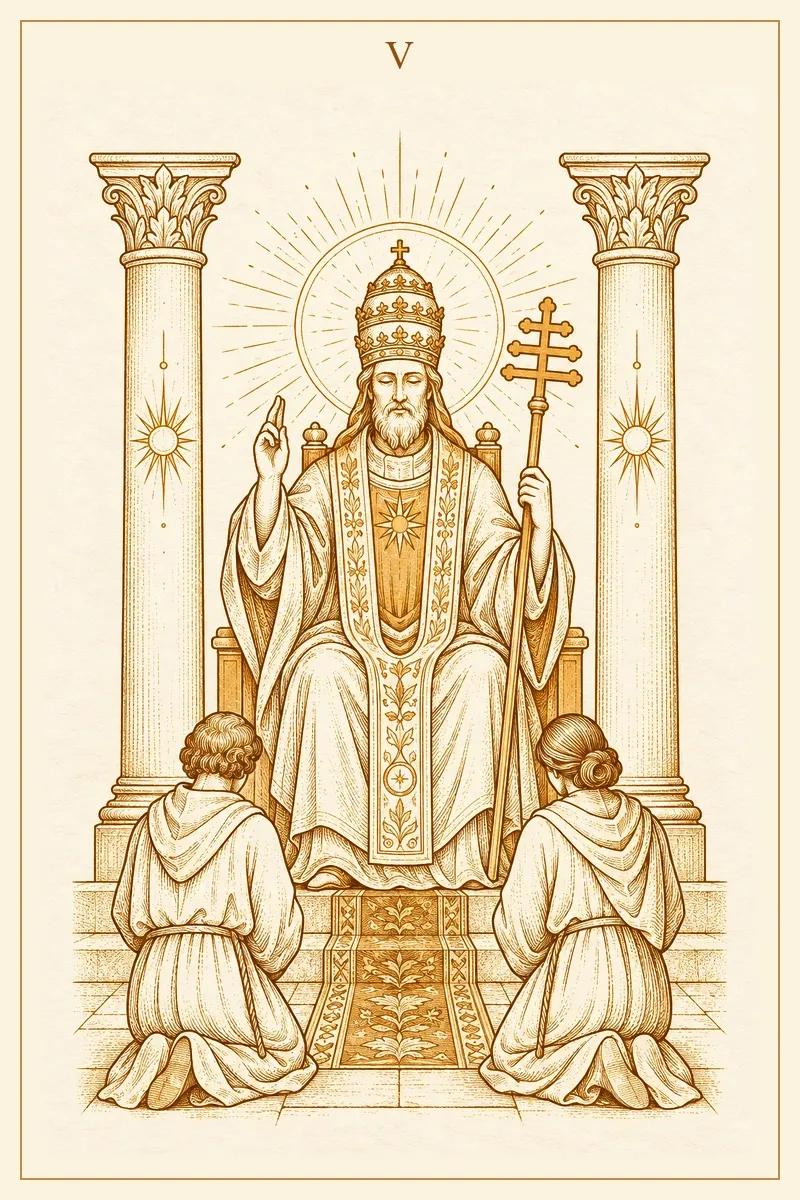
In the Golden Dawn system The Hierophant belongs to Taurus, the earthy sign Venus rules. That pairing surprises people, because the card shows a figure of religious authority rather than romance. The link lies in what Taurus Venus loves: stability, tradition and things that last. The Hierophant shows the values you hold sacred and the commitments you make in front of others. The Hierophant tarot meaning explores its wider themes of teaching and tradition, while the Taurus tarot guide shows the rest of the sign's cards.
Upright in a Venus question, The Hierophant can point to a committed, conventional relationship, shared beliefs, a family custom, or money handled with care and long-term thinking. It asks which values are truly yours and which you have inherited without checking.
Reversed, it can show a relationship that does not fit the expected script, a need to question inherited rules about love or money, or rigidity that leaves no room for pleasure. Reversed does not mean wrong. Sometimes the most Venusian choice is to build a commitment that matches your own values instead of someone else's template.
Justice (XI): Venus through Libra
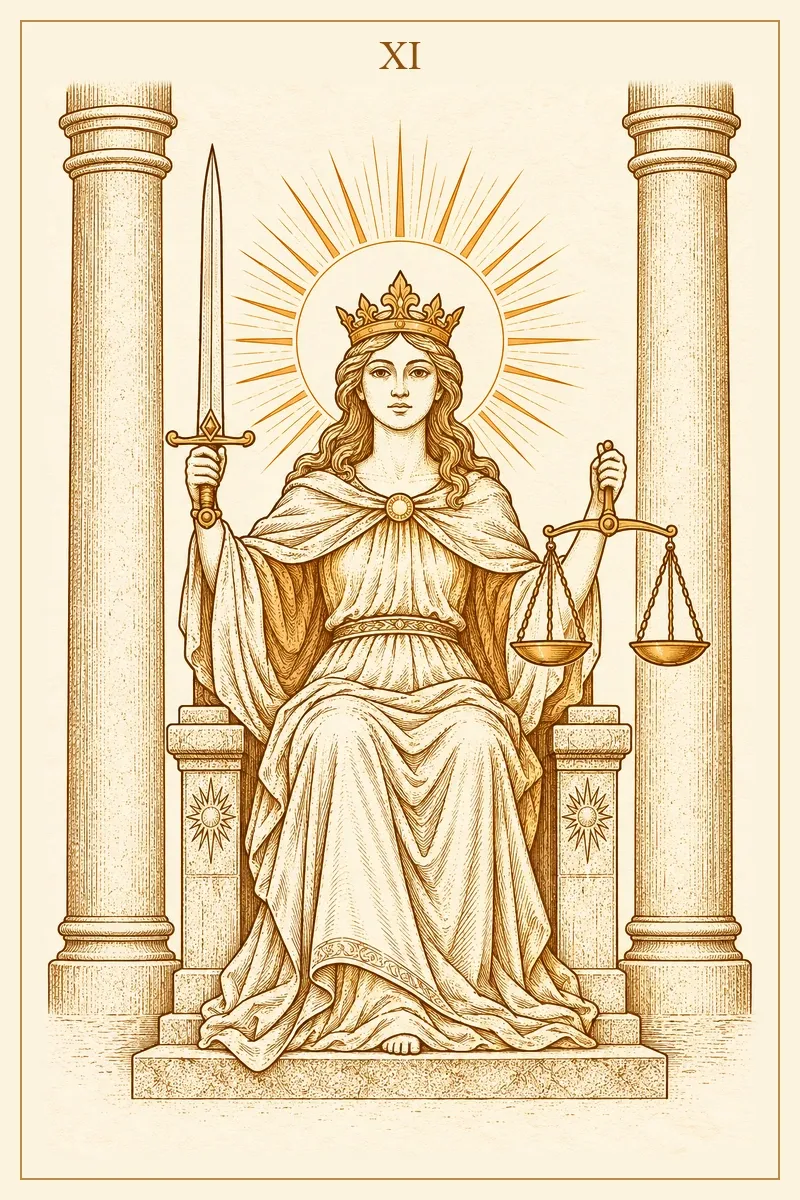
Justice belongs to Libra, Venus's air sign, which is why its scales echo the balance Libra is known for. Here Venus shows up as fairness: the give-and-take that keeps affection healthy, honest agreements and the beauty of a decision that is right as well as pleasant. Most modern decks number Justice XI, while older decks place it at VIII. For the card's legal and practical meanings, see the Justice tarot meaning, and for Libra's other cards, the Libra tarot guide.
Upright in love, Justice asks whether the relationship is balanced: who does the emotional work, who apologizes, who adapts. In money it points to fair exchange, clear contracts and paying or receiving what is owed. In self-worth it asks you to weigh yourself honestly, neither inflating your faults nor ignoring your needs.
Reversed, Justice can describe an imbalance that has gone on too long, avoidance of an uncomfortable truth, or a sense of being treated unfairly. Read it as an invitation to name the imbalance clearly and calmly, not as a verdict on the other person. Where a real legal or financial dispute is involved, tarot can help you sort your thoughts, but qualified advice should guide the decision.
The five Venus cards in the Minor Arcana
In the Golden Dawn decan system, the planets take turns ruling ten-degree slices of the zodiac in a fixed sequence called the Chaldean order. That sequence gives Venus exactly five minor cards. Each shows Venus's love of connection and pleasure meeting a very different sign, which is why two of them are joyful, one is refined and two are uncomfortable.
Four of Wands: Venus in Aries
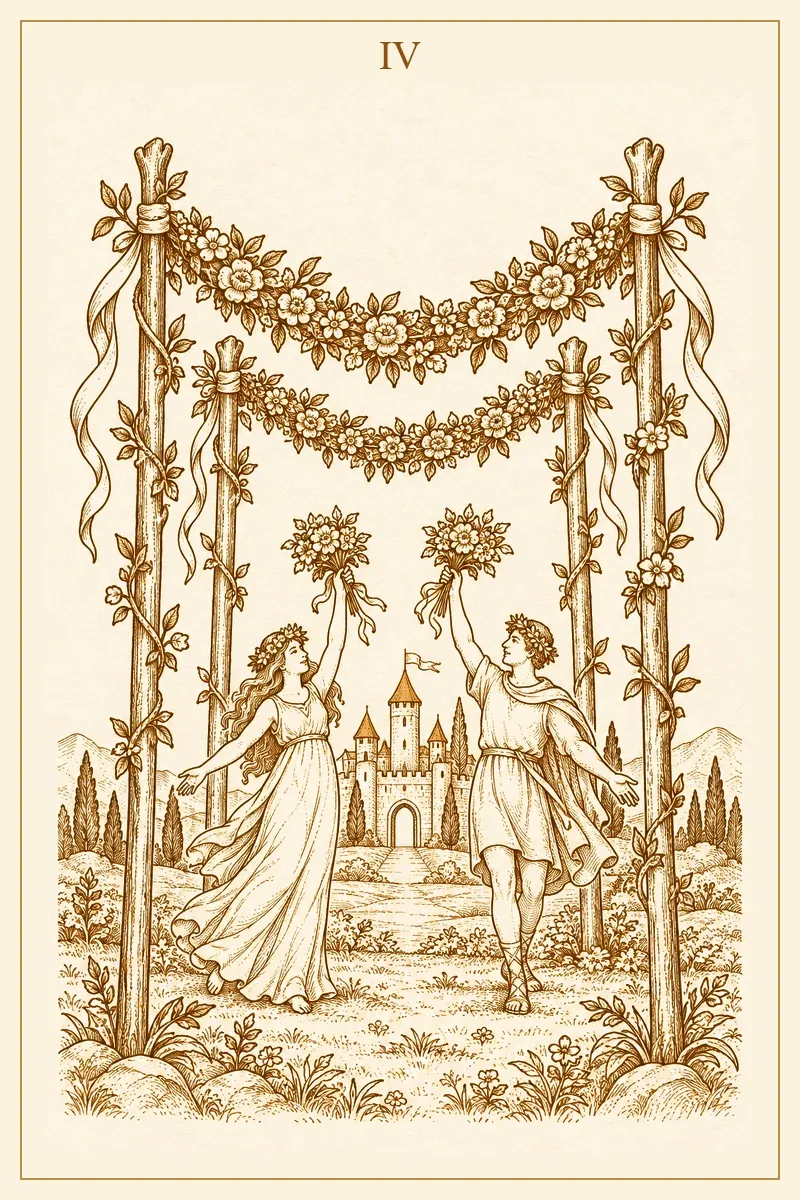
The Four of Wands covers the last ten degrees of Aries, roughly mid-April. Fiery Aries gives Venus a festive, outgoing tone: a garland, a gathering, a threshold crossed together. The Golden Dawn titled this card the Lord of Perfected Work, and it often marks a milestone worth celebrating, such as moving in together, an engagement, a reunion or a project finished with friends. The Four of Wands tarot meaning has more on its home and community themes.
Reversed, the celebration may be delayed, tense or incomplete: friction at home, a gathering that feels unwelcoming, or joy you hesitate to share. Ask what would make the milestone feel safe to celebrate.
Two of Cups: Venus in Cancer
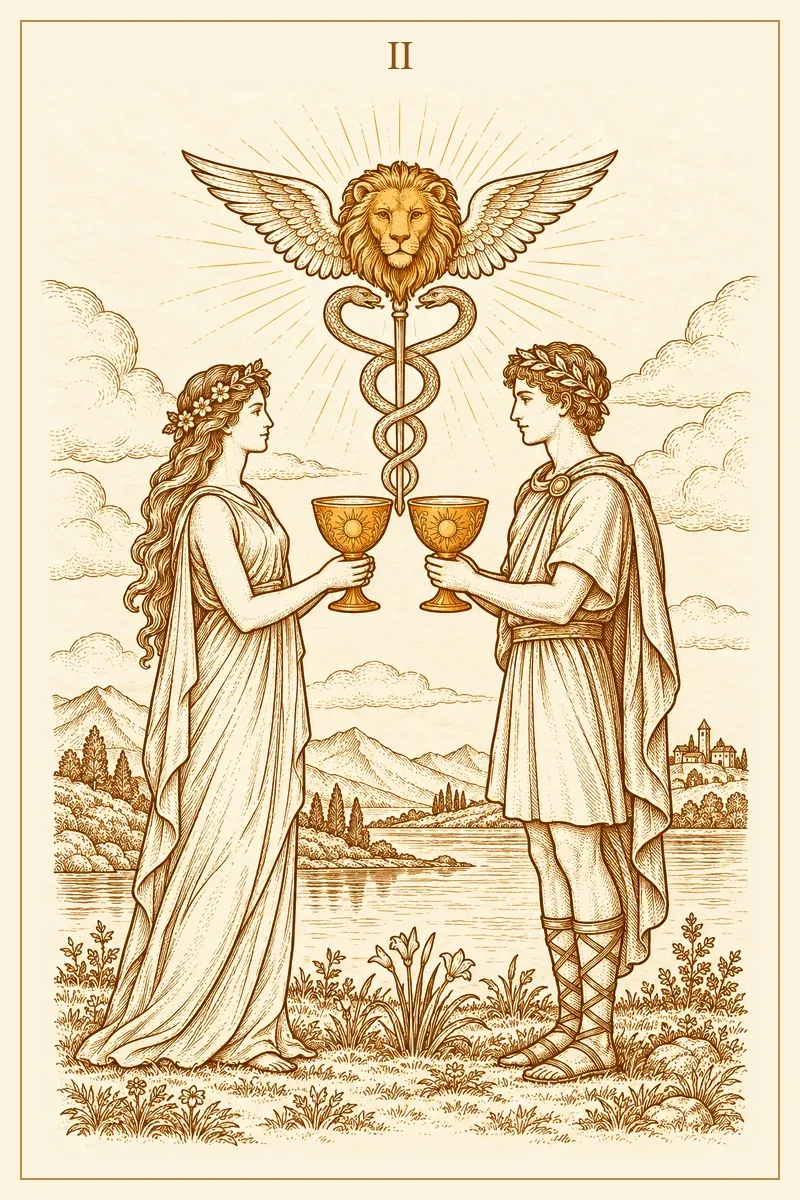
The Two of Cups covers the first ten degrees of Cancer, around late June. Venus in a caring water sign is the most openly romantic of the five: two people raising cups to each other, an exchange freely given and freely received. The Golden Dawn called it the Lord of Love. It can describe new attraction, a renewed bond, a close friendship or a fair business partnership. Read the Two of Cups tarot meaning for its full range of readings.
Reversed, the exchange is out of balance: one person giving more, a misunderstanding, or distance after a disagreement. It is not proof that a relationship is over. It asks where reciprocity has slipped and what an honest conversation could restore.
Nine of Pentacles: Venus in Virgo
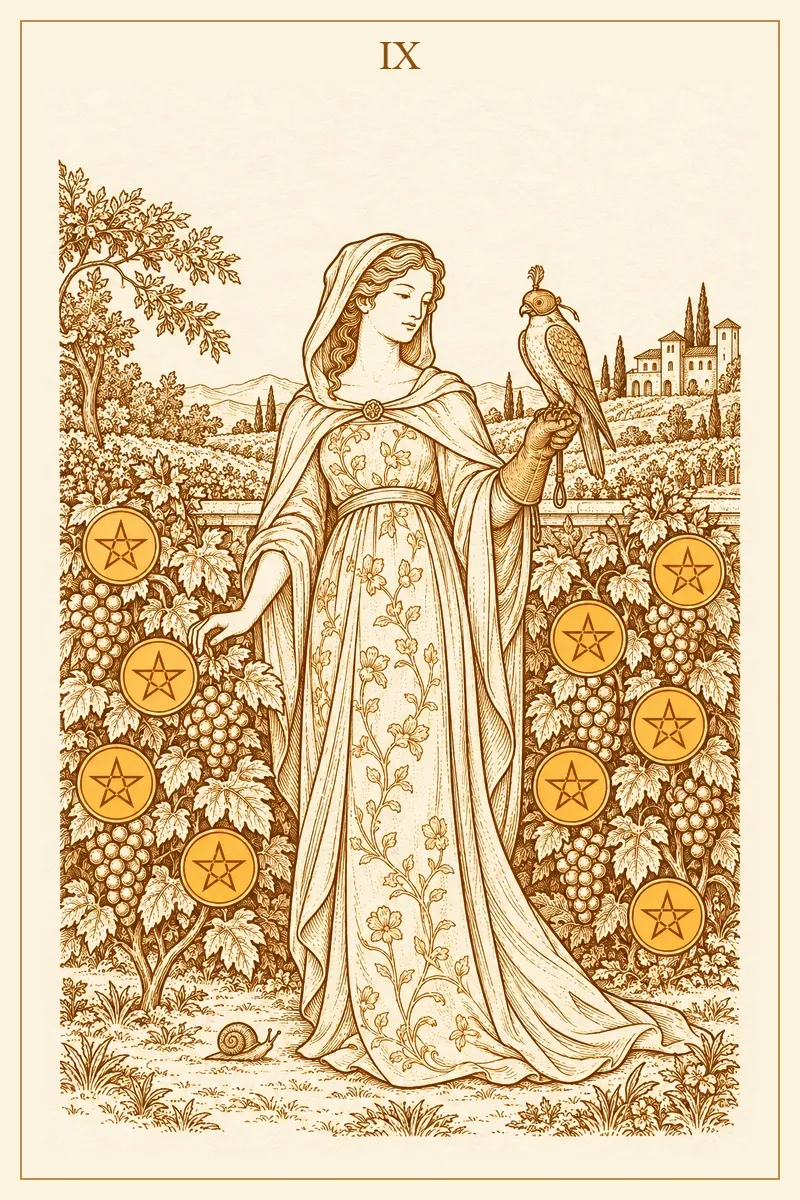
The Nine of Pentacles covers the middle decan of Virgo, roughly early September. Venus in a careful, practical sign becomes taste and self-reliance: a person at ease in a garden they cultivated, enjoying comfort they earned. Its Golden Dawn title is the Lord of Material Gain. This is Venus as self-worth: you need no one's permission to enjoy what you have built. The Nine of Pentacles tarot meaning explores its money and independence themes in more depth.
Reversed, the card may point to spending to soothe a feeling, tying your worth to possessions, overworking with no time to enjoy the results, or leaning on others in a way that feels uneasy. The fix is rarely dramatic: a small, sustainable pleasure you can afford often restores the balance.
Seven of Cups: Venus in Scorpio
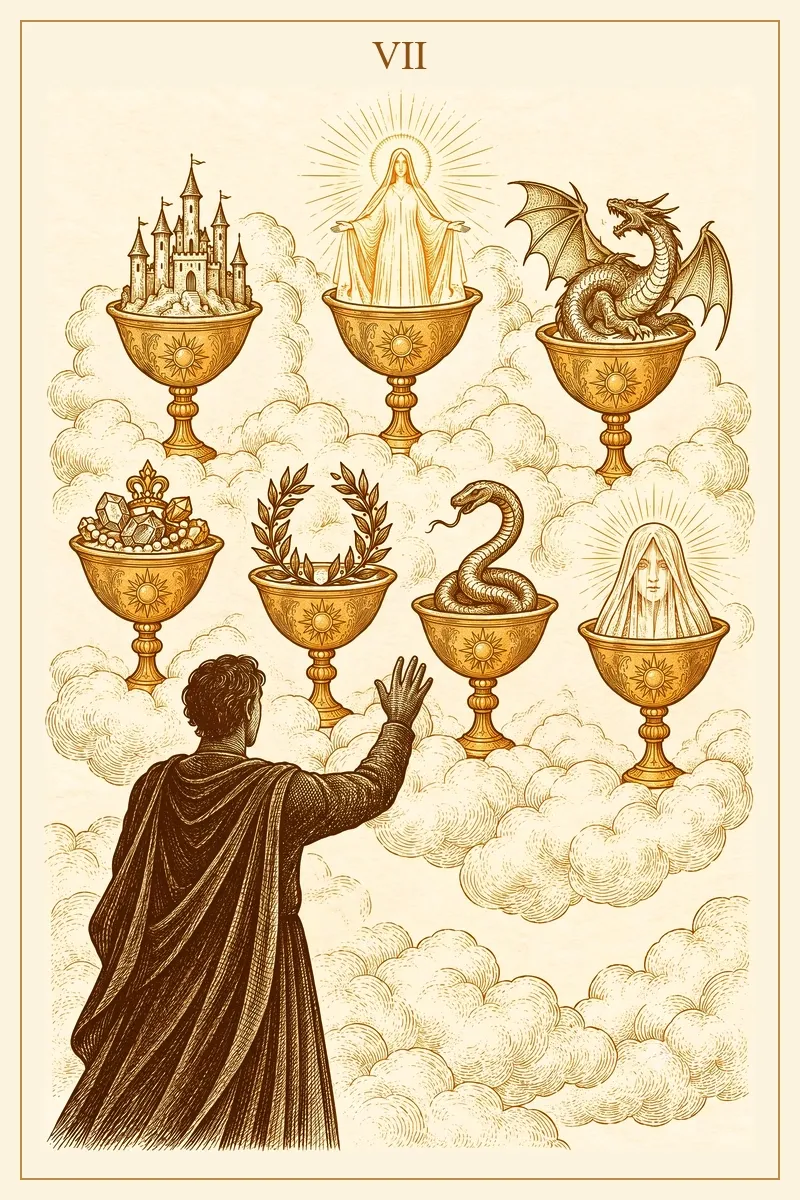
The Seven of Cups covers the last decan of Scorpio, around mid-November. Venus's desire meets Scorpio's intensity, and wanting becomes overwhelming: seven cups floating in a cloud, each holding a different dream. The Golden Dawn named it the Lord of Illusionary Success. In love it can describe idealizing someone, fantasizing about a person you barely know, or having so many options that none feels real. The Seven of Cups tarot meaning shows how it reads in other contexts.
Reversed, the fog often begins to clear. You may be ready to choose one path, to see a fantasy for what it is, or to return to what you actually want. Venus's lesson here is that desire is information, not instruction.
Five of Swords: Venus in Aquarius
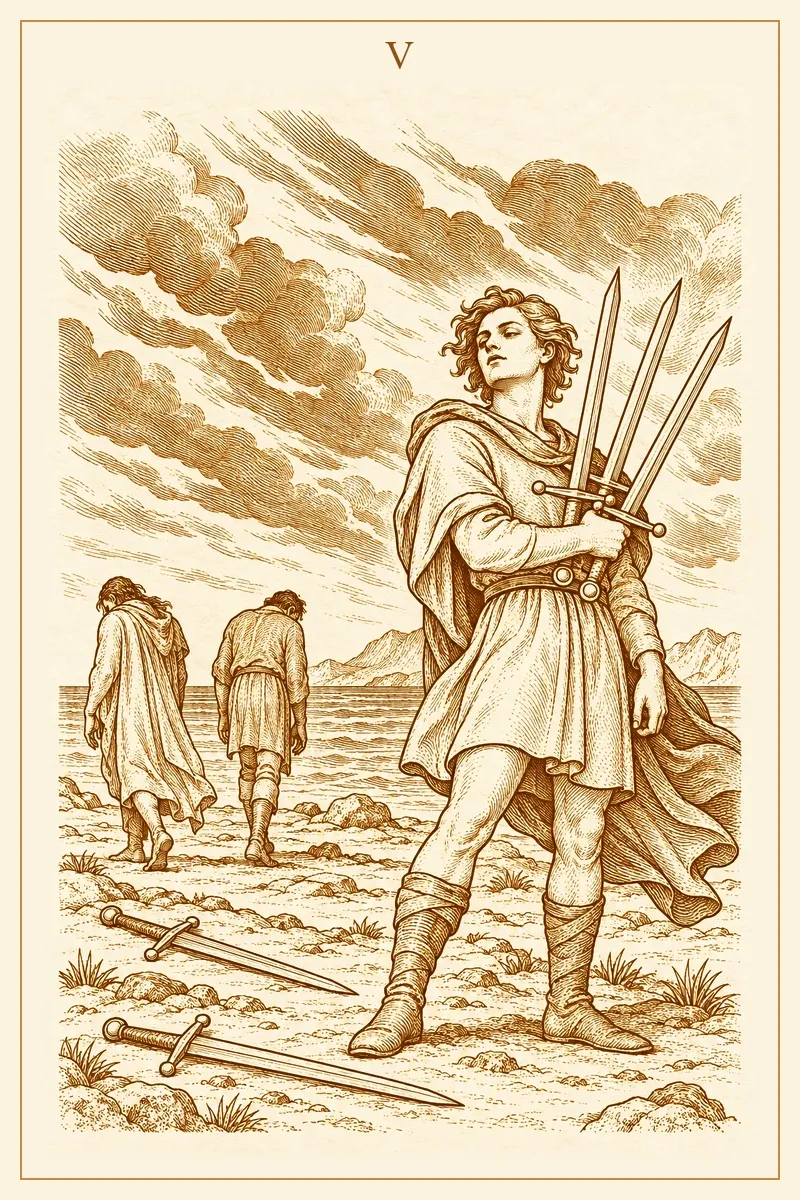
The Five of Swords covers the first decan of Aquarius, roughly late January. Venus seeks harmony, but here it sits among swords in a cool, detached air sign, and the result is conflict: one figure gathers the weapons while the others walk away. The Golden Dawn called it the Lord of Defeat. In a Venus reading, it often asks whether being right is worth what it costs the relationship. The Five of Swords tarot meaning looks at its conflict themes more closely.
Reversed, the card can point toward making amends, letting go of a grudge or walking away from a fight that cannot be won fairly. It can also show resentment that lingers after an argument. Either way, it reminds you that harmony sometimes means stepping back rather than scoring a point.
How to read Venus energy in a reading
When several Venus cards appear together, the reading is usually about value: what you love, what you allow yourself to enjoy and how fairly affection flows. These angles help you narrow it down.
In love and relationships
Venus cards in a love reading describe the quality of a connection rather than a forecast. The Two of Cups and The Empress point to warmth and reciprocity; Justice and the Five of Swords ask whether the relationship is fair; the Seven of Cups checks for idealization. A helpful question is how the connection actually feels in an ordinary week, rather than whether it will work out. Your partner's words and actions remain the best evidence of how they feel.
In money and values
Venus rules Taurus, so it has a lot to say about money as a reflection of values. The Nine of Pentacles and The Empress show resources that support a good life; The Hierophant asks about long-term habits; the Seven of Cups can show impulse spending or too many plans at once. Use these cards to compare where your money goes with what you say matters most. For actual financial decisions, treat the reading as reflection and check the numbers with appropriate help.
In self-worth
Venus is also about how much good you believe you deserve. If Venus cards keep appearing reversed, ask whether you find it easier to give than to receive, whether you postpone rest until everything is perfect, or whether you measure your worth by what others think. A Venus practice can be simple: one daily pleasure you notice fully, one compliment you accept without deflecting, one boundary that protects your energy.
When Venus is out of balance
Every Venus card has a shadow: indulgence instead of enjoyment, people-pleasing instead of harmony, possessiveness instead of loyalty, fantasy instead of desire. Seeing these in a reading is not a warning of disaster. It shows where pleasure, love or value has tipped too far one way, and where a small correction would help.
A five-card Venus values spread
Use this spread when you want to understand what you value in love, money or daily life. Some readers like to use it during Taurus season (about April 20 to May 20) or Libra season (about September 23 to October 22), but any quiet moment works.
- What I truly value: the heart of the matter right now.
- How I give love and care: the way your energy flows outward.
- What I allow myself to receive: where you accept or block support and pleasure.
- Where I am out of alignment: where desire, money or time drifts away from your values.
- What to cultivate: one quality or small act that brings your life closer to what you love.
Lay the cards in a row and read positions one and four together first, since the gap between them is usually the main message. Then read two and three as a pair to see whether giving and receiving are in balance.
Worked example: where are my time and money going?
Imagine someone asking, "My time and money keep disappearing and I'm not enjoying life. What do I actually value?" They draw five cards:
- What I truly value: Nine of Pentacles, upright.
- How I give love and care: Eight of Pentacles, upright.
- What I allow myself to receive: Two of Cups, reversed.
- Where I am out of alignment: Seven of Cups, upright.
- What to cultivate: The Empress, upright.
The Nine of Pentacles says that what they value is a calm, comfortable life of their own making, not more achievement. The Eight of Pentacles shows how they currently express care: through work, extra hours and being the reliable one. The Two of Cups reversed suggests that receiving is harder; perhaps they turn down help or invitations because they feel they have not earned them yet. The Seven of Cups in the alignment position points to scattered spending and plans, a little money on many small wishes that never add up to the comfort they want.
The Empress as the quality to cultivate is gentle advice: slow down and tend one thing well. A practical response might be protecting one weekly pleasure, such as a long meal with a friend, saying yes to one offer of help, and pausing small impulse purchases for a month to see which ones they miss. The reading does not predict whether their finances will improve. It gives them a clearer picture of what to try, and a way to check in a few weeks whether life feels closer to the Nine of Pentacles.
Venus and Mars: reading them together
In astrology Venus and Mars are a classic pair: Venus draws things closer and enjoys them, while Mars goes after what it wants. In the Golden Dawn system, the card of Mars is The Tower, and Mars rules Aries and Scorpio, the very signs where two Venus decans fall (the Four of Wands and the Seven of Cups). If a reading mixes Empress-like cards with Tower-like ones, ask whether this moment calls for more receptivity or more action. Our guide to Mars in tarot covers the other half of the pair.
Frequently asked questions
Which tarot card represents Venus?
The Empress. In the Golden Dawn correspondences she stands for the planet Venus, and many decks show the Venus glyph on her shield. The Hierophant and Justice are connected more indirectly, through Taurus and Libra.
Is The Lovers a Venus card?
Not in the Golden Dawn system, where The Lovers belongs to Gemini, a sign ruled by Mercury. Its themes of choice and union overlap with Venus, so it often appears beside Venus cards in love readings, but the astrological link belongs to The Empress.
Is Venus in tarot only about romance?
No. Venus covers friendship, beauty, creativity, comfort, money and self-worth as well as romantic love. A Venus card in a career reading might point to work you enjoy or a fair negotiation rather than a relationship.
Can Venus cards tell me when I will meet someone?
Not reliably. Some readers use decan dates, such as mid-April for the Four of Wands, as loose timing hints, but tarot cannot confirm a date, another person's feelings or an outcome. Use the cards to prepare and reflect, and let real events answer the timing question.
What does a reversed Venus card mean?
Usually that the Venus theme is blocked, overdone or turned inward: over-giving, overspending, idealizing someone or avoiding an uneven exchange. Read it as a place to rebalance, not as a bad omen.
Do I need to know astrology to use these correspondences?
No. The Venus links are an optional layer from the Golden Dawn tradition. You can read every card here by its imagery and traditional meaning alone, then add astrology later if it helps.
Bringing Venus into your practice
Venus asks one simple question in many forms: what do you love, and does your life make room for it? Take The Empress out of the deck and keep her nearby for a week, notice which Venus cards turn up in your daily draws, and write one line each evening about something you enjoyed. When you are ready to explore a question of your own, you can start a calm reading with Veil Soul.