Clear, fair judgment is what the King of Swords means: a mind that has gathered the facts, weighed them without favoritism, and is ready to make a call and explain it. Upright, he points to honest advice, sound expertise and the nerve to say what is true in plain words. Reversed, the same sharp mind turns cold or controlling, wins arguments at the expense of people, or hides behind analysis so that a decision never arrives.
He is the most settled figure of the Swords court. The ruling he calls for may be yours to make, or it may come from someone whose word carries weight, such as a manager, an advisor or a professional you consult.
A reading can show you how a decision looks from his seat. It cannot tell you what another person has already decided, guarantee an outcome, or stand in for legal, financial or medical advice. Use the card to think more clearly, then check what you find against real conversations and real facts.
Here is the card in brief:
- Upright: clear thinking, fair judgment, honest words, expertise, ethical authority.
- Reversed: cold logic, control, manipulation through argument, misused power, a decision stalled by overthinking.
- As a person: an advisor, critic or decision-maker of any gender who leads with reason.
- Love: respect and straight talk; reversed, a partner who argues to win.
- Work and money: standards, contracts, informed choices; reversed, rigid or self-serving leadership.
- Health: calm, informed questions; reversed, logic overriding what your body is telling you.
- Yes or no: yes, when your reasoning holds up; reversed, no or not yet.
- Element: Air of Air, the thinking suit at its most mature.
What the King of Swords card shows: a stone seat above the clouds
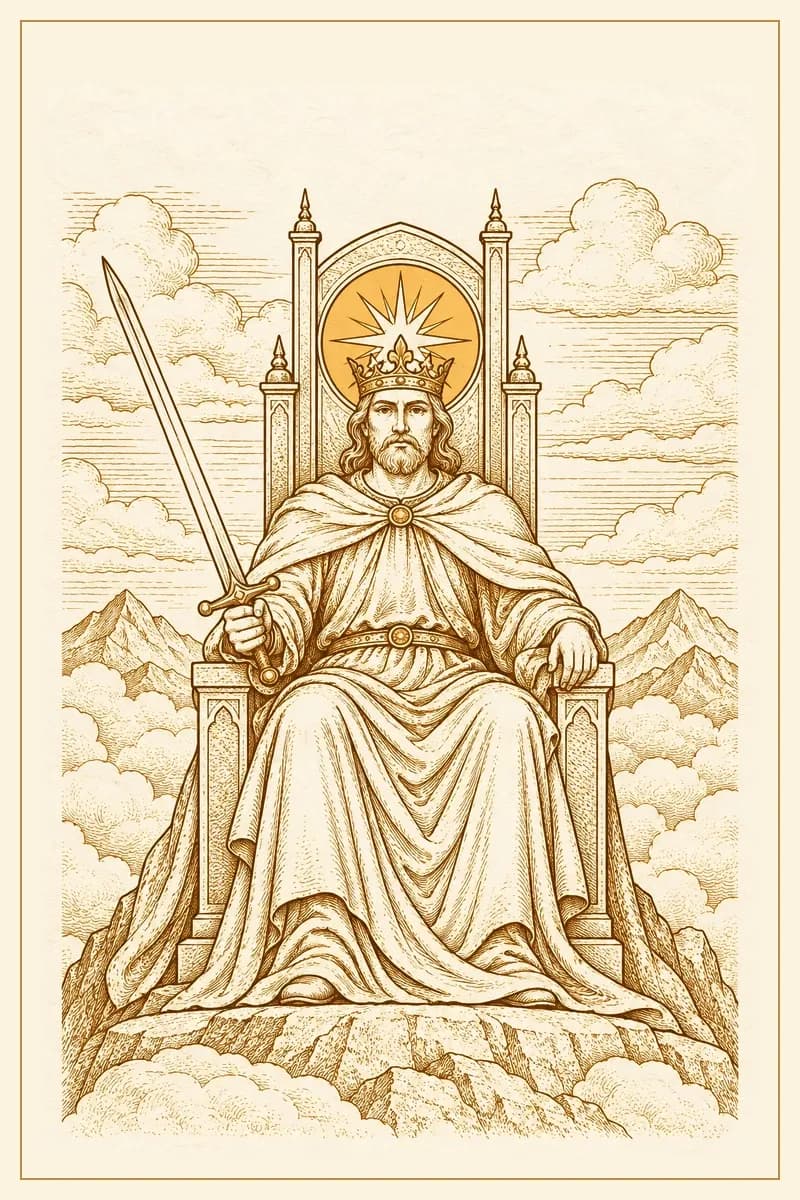
Most of this card's meaning comes from three choices in the drawing: how he holds the sword, what surrounds his head, and where his throne stands.
The sword held out at a slant
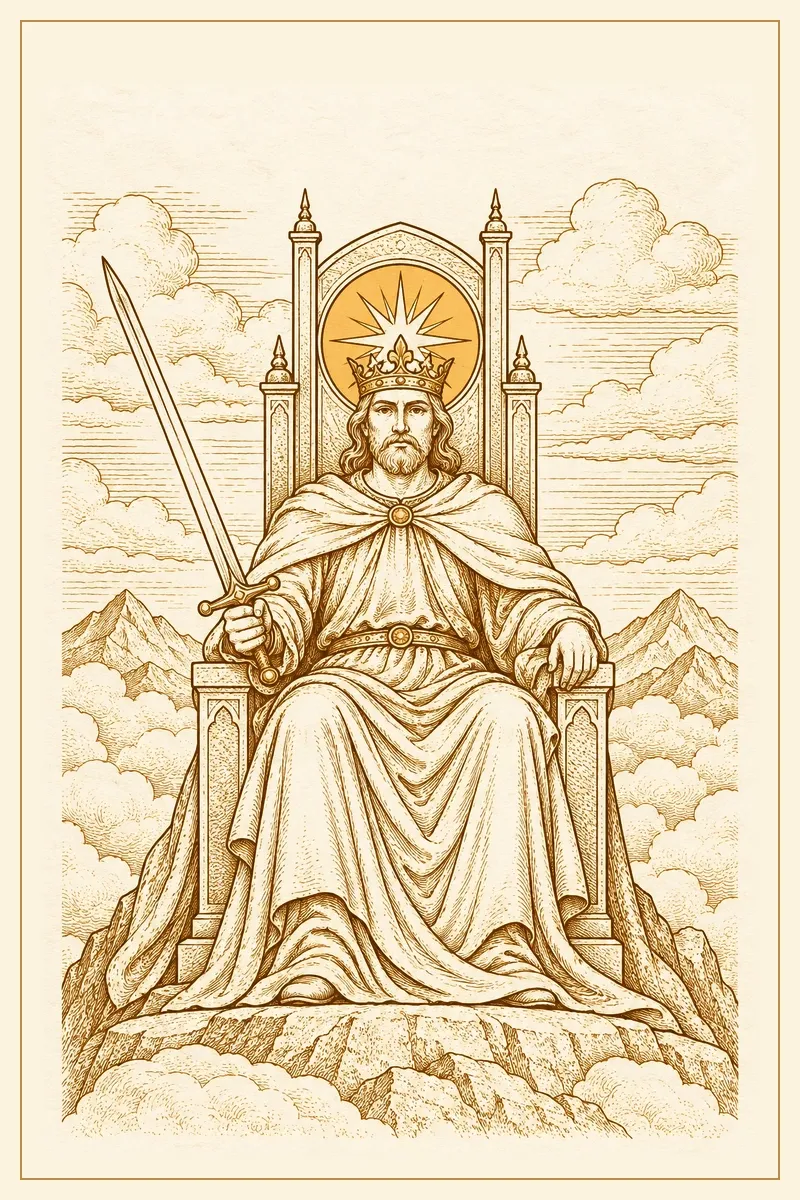
The King sits facing you squarely, eyes level, with a long sword in his right hand. He does not hold it straight up like a banner, and he does not lift it to strike. The blade angles outward and upward, away from his body, while his left hand rests quietly on the end of the armrest. One hand is ready; the other is still.
That pairing is the card in miniature. The sword is the power to decide, to cut through confusion, to say "this, not that." The resting hand says he is not acting from agitation. Upright, the card asks you to hold both at once: readiness to decide, and enough calm that fear or anger does not decide for you.
A star behind the crown
Behind his head is a round gold disc with a many-pointed white star at its center, and on his head sits a crown topped with a fleur-de-lis. His long hair and beard and the cloak gathered by a round brooch at his throat give him the look of someone mature and settled, not a young challenger.
A star is a fixed point you can steer by. Here it suggests that his judgment answers to something steadier than mood: a principle he accepts being measured against himself. Reversed, that reference point goes missing and the crown is left doing the work alone.
Rock, cloud and distant peaks
The throne is tall and made of stone, with pointed spires on its pillars and narrow arched panels on its arms. It stands on a bare rocky summit, with clouds drifting around and below it and mountain peaks rising in the distance on both sides. The sky is drawn with long, level lines rather than swirling wind.
This is the view from above the weather. Swords cards are often stormy, yet here the air has gone still. The clouds are still there; he has simply climbed high enough to see their shape. In a reading, that height is distance: the ability to step back from a heated situation long enough to see what is actually happening.
Air of Air: his place in the Swords court
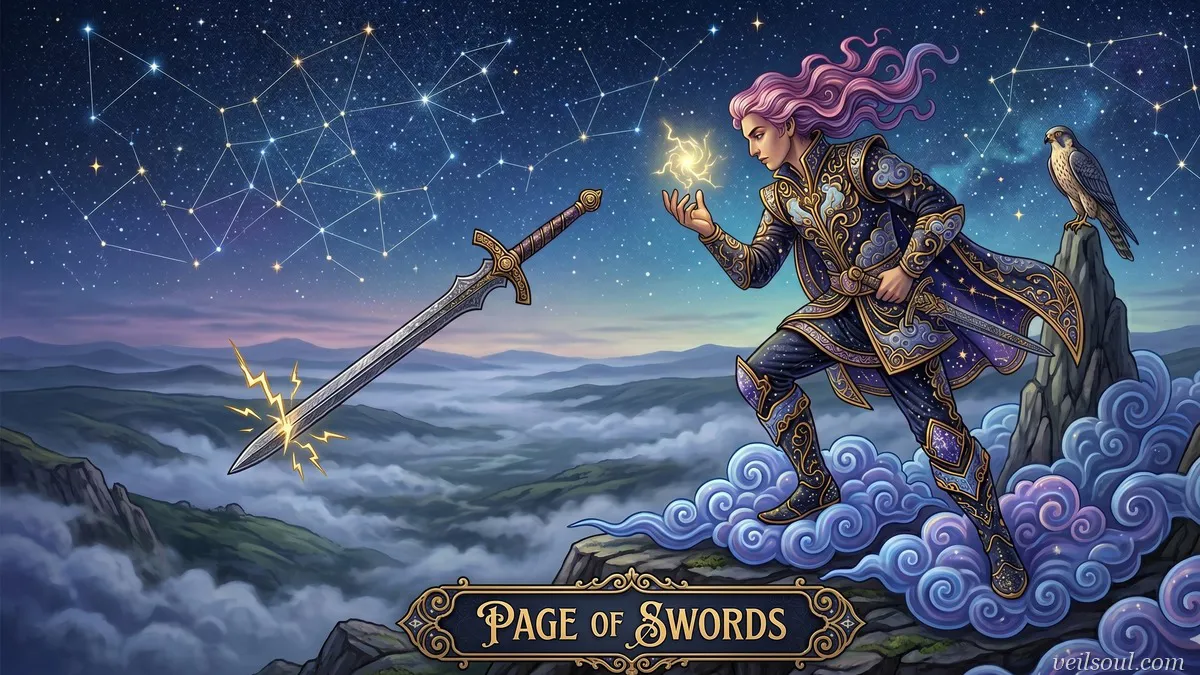
In Swords, the four court cards trace a mind growing up. The Page of Swords is curious and watchful. The Knight of Swords charges after an idea at full speed, and the Knight of Swords meaning shows how quickly that speed can tip into recklessness. The Queen of Swords sees clearly and speaks honestly in personal matters, as her own Queen of Swords guide describes. The King carries that clarity into public life: rules, contracts, standards, the final word in a group.
The older Golden Dawn system arranged the court titles differently. Its King is a mounted figure who matches the modern Knight, while its Prince matches the modern King. So the modern King of Swords is the Golden Dawn Prince of the Chariots of the Winds, the Air of Air card, assigned to the zodiac from 20 degrees Capricorn to 20 degrees Aquarius. Most of that span lies in Aquarius, the air sign associated with independent, principled thought. Air of Air is thought about thought: at its best, perspective and even-handedness; at its worst, the head cut off from the heart, which is where the reversed card goes.
Upright King of Swords: a call you can explain
Upright, the King of Swords says the situation is ready for clear thinking. Gather what you know, separate it from what you fear or hope, and make a decision you could explain to someone who disagrees with you. He is not the card of instant certainty; he is the card of reasoning you are willing to show.
Facts first, and feelings counted too
The King does not ignore emotions; he declines to let them decide on their own. That might mean writing down what actually happened before you settle on what it meant, or waiting a night before replying to a message that stung. Feelings stay in the picture as information. They simply do not get the only vote.
Plain, honest words
His sword is also his voice. The upright King speaks directly: clear expectations, honest feedback, a no that is said kindly but not blurred into a maybe. If you have been softening a message until it no longer says anything, find the one sentence that is true and say it with care.
One rule for everyone, yourself included
Fairness is the heart of this card. The King applies the same rule to friends, strangers and himself. Upright, he can point to someone whose judgment does not bend to flattery or pressure, or to your own ability to hold that line when making an exception would be easier.
King of Swords reversed: when cleverness stops being fair
Reversed, the King keeps his intelligence but loses his balance. The sword swings toward control, or it stays down while the decision is postponed again. Ask which of these shapes fits your situation, because each leads to different advice.
Cold logic that leaves people out
A decision can be correct on paper and still careless toward the people it affects. The reversed King may describe a policy applied without listening, or your own habit of dismissing feelings as "irrational." The remedy is not to abandon reason but to count the human cost as part of the facts.
Winning the argument, losing the point
Here the mind becomes a weapon. Someone uses a bigger vocabulary, selective facts or sheer stamina to win every disagreement, until the other person stops speaking. If that someone is you, ask whether being right is worth what it is costing. If it is someone else, name the pattern rather than trying to out-argue it.
Power that serves itself
The reversed King can also point to authority misused: a manager who bends rules for favorites, an expert who hides behind jargon, a choice made for status. Here the card is less a forecast than a prompt to notice where power and fairness have come apart, and what is within your reach to change.
Analysis that never becomes a decision
Not every reversal is harsh. Sometimes it is a mind that keeps researching and comparing, because deciding would mean owning the result. If you have read everything and still not chosen, set a date, pick the best option you can defend, and accept that no choice arrives with perfect information.
When the King of Swords is a person in your reading
As a person, the King of Swords is someone who leads with reason: an advisor, lawyer, editor, teacher, manager, doctor, or simply the friend who tells you the truth when others will not. The card is not tied to gender or age; it describes a way of thinking.
Upright, this is someone whose fairness you can rely on, even when their view is hard to hear. Reversed, it may be someone whose sharpness has turned critical or controlling, or who holds authority without using it well. Sometimes the King is you: the part of you that already knows the fair answer. In spiritual questions, he is the voice that tests a belief against experience and checks whether a teacher's ethics show in how they treat people.
The King of Swords in love: respect spoken plainly
Upright in love
In a love reading, the upright King of Swords describes a bond built on honesty and respect more than on grand gestures. For a couple, it can mean a frank conversation that clears the air, or a partner who shows care through reliability and straight talk. For someone single, it can describe attraction to a person whose mind you admire, or your wish for a relationship in which you never have to guess what is meant.
Reversed in love
Reversed, his clarity can turn into distance or control. Arguments become debates to be won, one person's logic becomes the house rule, or feelings are waved away as overreaction. Ask whether both people feel heard, not only whether the reasoning is sound.
What he suggests about how someone feels
In a position about another person's feelings, the King tends to describe respect and careful thought rather than open emotion. Upright, they may be taking you seriously and prefer to act once they are sure. Reversed, they may be guarded, critical or slow to show warmth. Either way, the clearest next step is a direct and kind question.
Work and money: the standard-setter's card
Upright at work
At work, the King of Swords favors careful analysis, clear policy and fair leadership. He may point to a role in which judgment is the job: law, research, editing, auditing, medicine, engineering, management. He asks you to make your reasoning visible: write the decision down, give the reasons, apply one standard to everyone. Before an interview or a negotiation, prepare your facts and state them plainly.
Reversed at work
Reversed, leadership turns rigid, cold or self-serving: rules enforced to win a point, feedback used to belittle, decisions made behind closed doors. If you are in charge, invite disagreement before it hardens into silence. If you answer to such a person, keep records, stay factual, and use the formal channels that exist for this kind of situation.
Money and contracts
Financially, the upright King favors informed, unemotional choices: reading a contract in full, comparing real numbers, consulting a qualified advisor when the stakes are high. Reversed, watch for decisions made from pride or persuasive pitches that skip the details.
King of Swords health meaning: clear questions, steady habits
In a health question, the King describes how you are approaching your care, not what is happening in your body. Anything about symptoms, tests or treatment belongs with a doctor or another qualified professional; the card is a prompt for reflection alongside that care.
Upright, he favors calm and informed attention. That might look like writing your questions down before an appointment, keeping a simple note of sleep or symptoms so you can describe them accurately, choosing reliable sources over alarming ones, and agreeing to a plan you understand well enough to explain. He can also point to a clear-headed professional, or to your own ability to keep asking until an answer makes sense to you.
Reversed, the card often shows the mind overruling the body. You may be explaining away signals that deserve attention, holding to a rigid rule about food, exercise or work hours even though it is wearing you down, or reading so much that you never book the appointment. It can also describe stress carried in the head: long nights of thinking, little rest. The kind advice matches the rest of the card. Gather what you know, bring it to someone qualified, and let your feelings count as information too.
Yes, no, or show me the evidence
For a yes-or-no question, the upright King of Swords leans toward yes, with a condition: the answer is yes when your reasoning is sound, the facts support it and you could explain the choice to someone you respect. If you are hoping he will approve a plan you have not really thought through, he is more likely to send you back to check your work.
Reversed, he leans toward no, or not yet. Something about the situation is unfair, unclear or resting on a weak argument, or you are deciding from pride, pressure or fear. Once that part is addressed, ask again with a sharper question.
Five cards that change the King's ruling
Neighboring cards show what his judgment is being applied to, from a formal verdict to a clever excuse.
Justice: the formal verdict
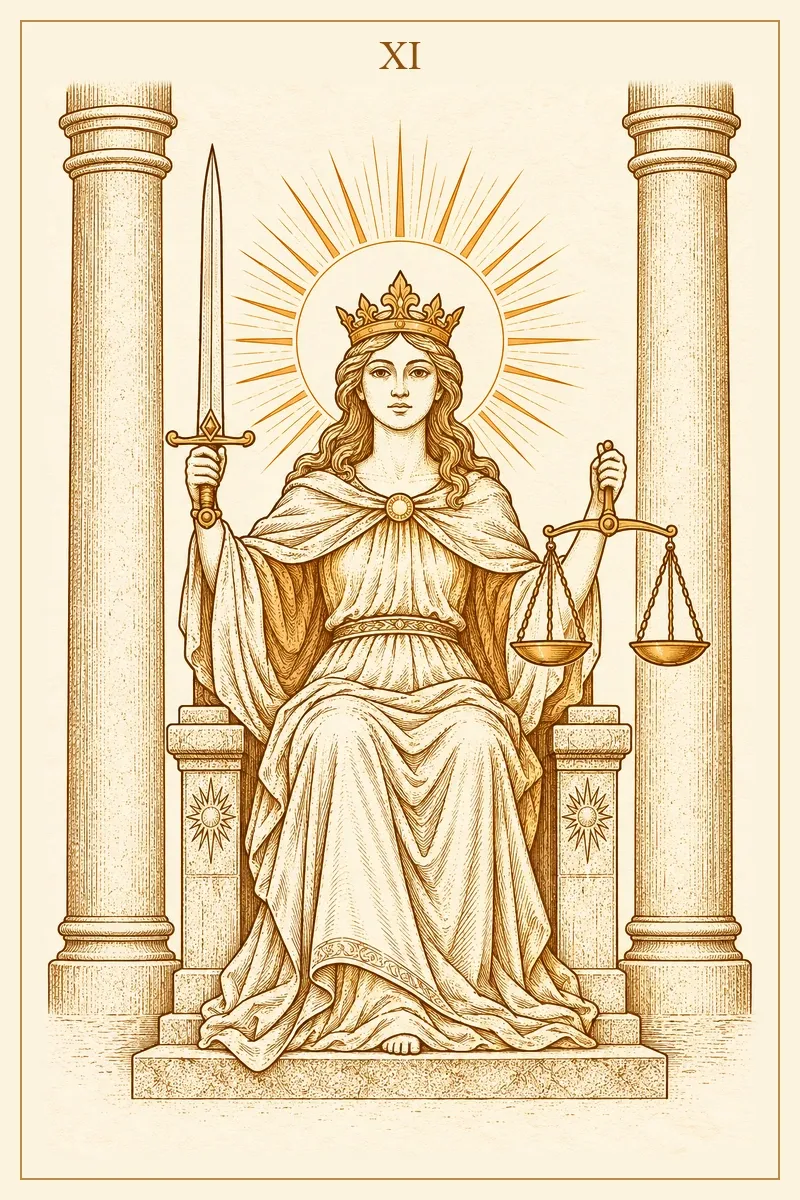
With Justice, fairness is doubled. The pair can describe a formal process, such as a contract, a review or an appeal, where evidence and accountability matter most. As advice, it asks you to decide by the facts and accept the consequences honestly. The Justice tarot meaning looks more closely at how that card weighs cause and effect.
The Emperor: rules and reasons
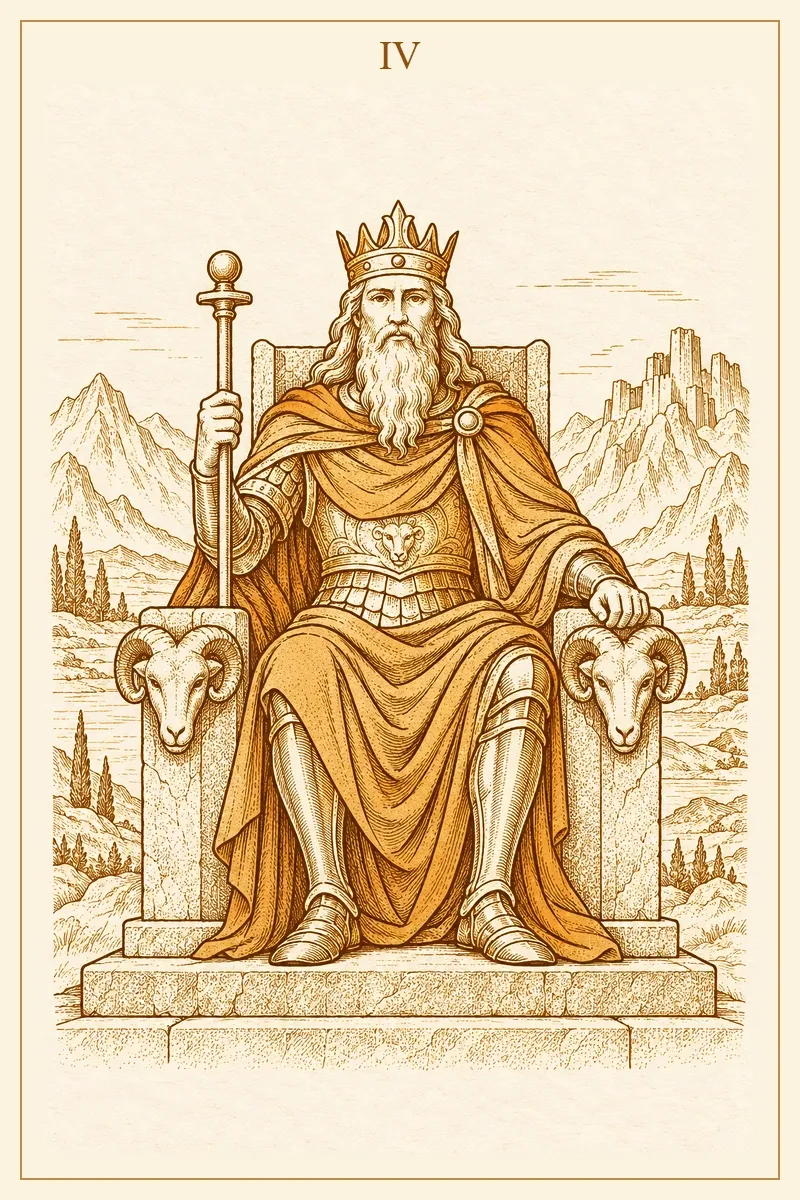
Beside The Emperor, authority becomes structural: the one who sets the rules meets the one who can explain them. Upright, that is strong, well-organized leadership. If either card is reversed, though, the pair can tip into rigidity, where rules are followed simply because they are rules. For the structure side of the pairing, see The Emperor's meaning.
The Hierophant: tradition put to the test
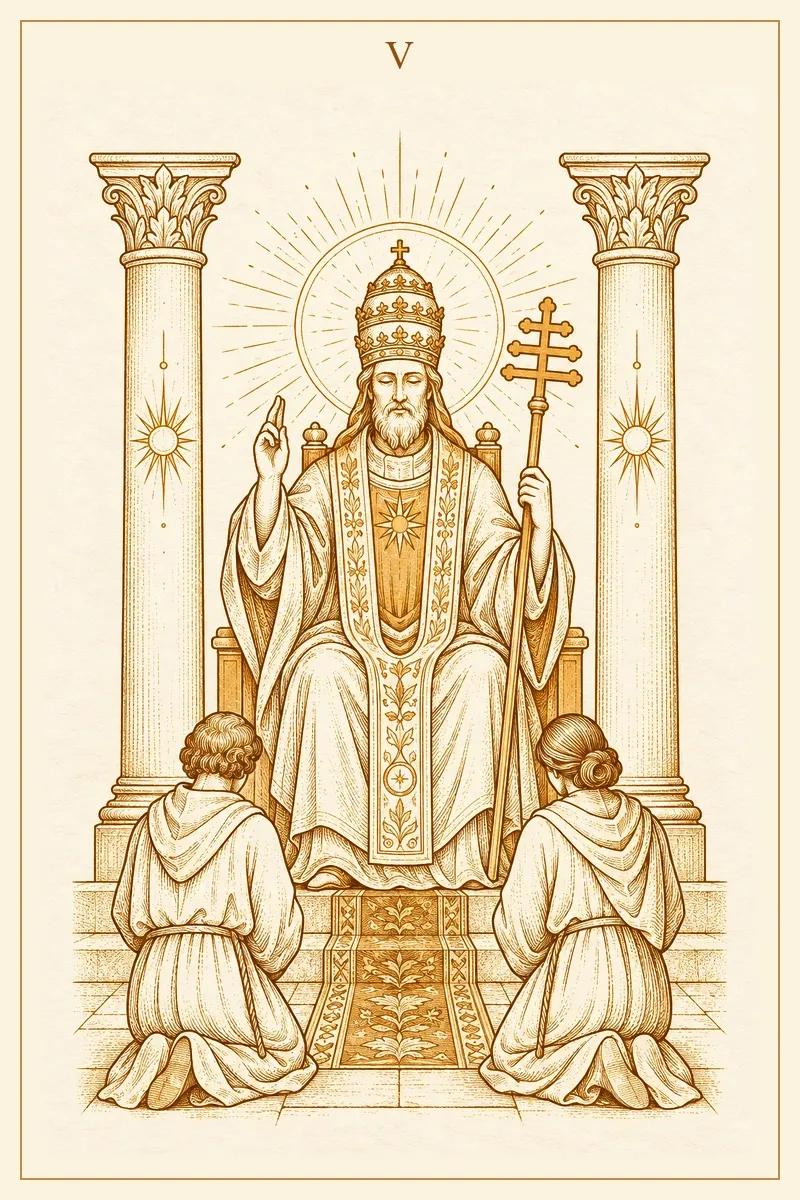
The Hierophant brings institutions, credentials and inherited teaching. Next to the King, it can describe learning from an established expert or seeking a qualified second opinion. It also raises a useful question: does the tradition still hold up when you think it through? The Hierophant tarot meaning explains what that card asks of belonging and belief.
The Devil: a clever case for a trap
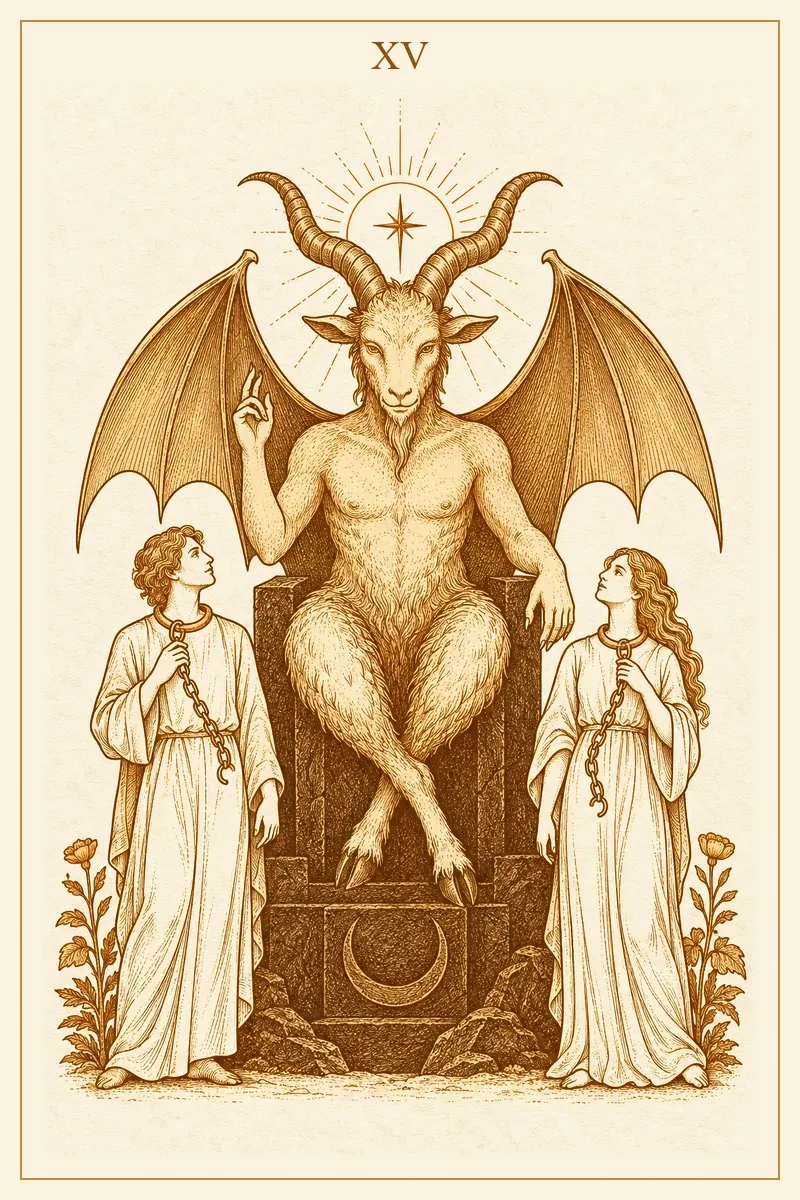
With The Devil, the King's reasoning can end up serving a habit, a craving or a relationship that binds you. This is the pairing of smart justifications: arguments that make an unhealthy pattern sound sensible. An upright King here is the clear mind that can name the trap; a reversed King is the one building the excuse. The Devil card's meaning shows how those chains often rest in the hands of the very people they bind.
Ace of Swords: from first insight to final word
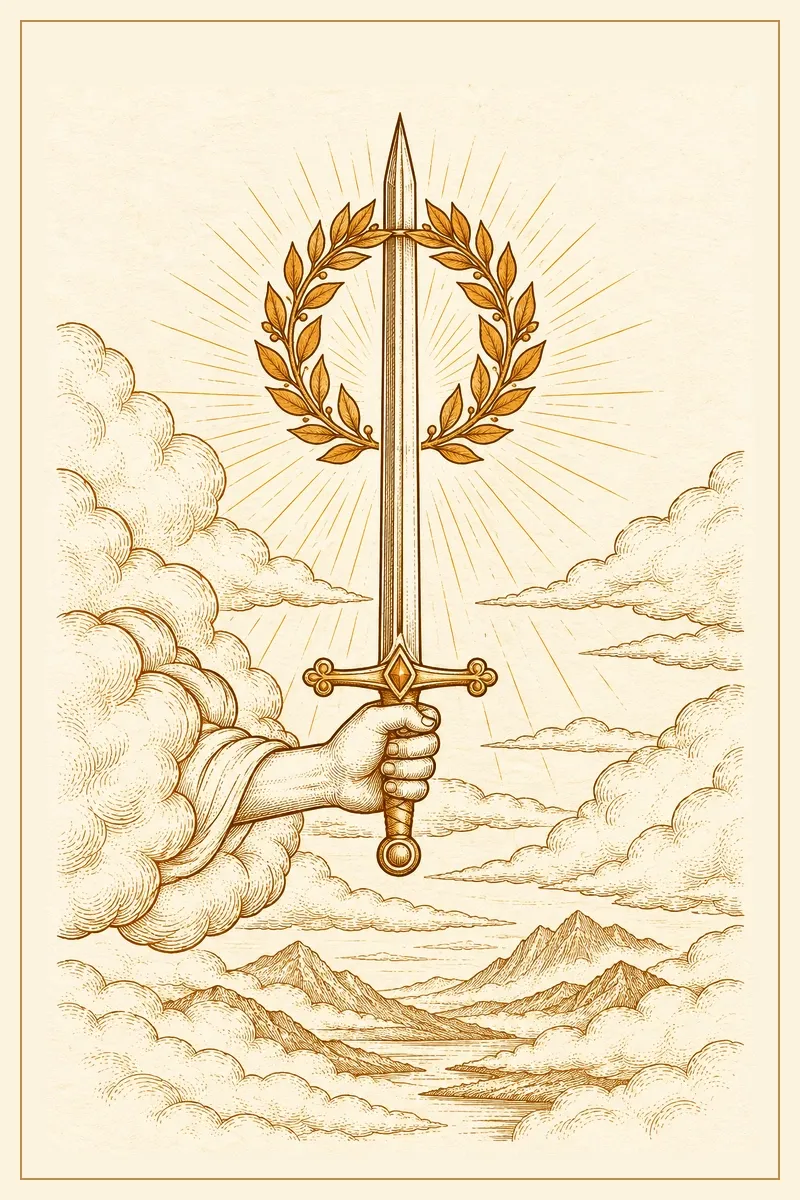
The Ace of Swords is where the suit begins: a flash of clarity, a new idea, a truth that finally lands. Paired with the King, the start of the suit meets its mastery. An insight is ready to be stated with confidence and acted on. To trace that first spark, read the Ace of Swords meaning.
The Summit spread: four cards for a decision you must stand behind
This spread borrows the King's high seat. Shuffle while holding one decision in mind, then lay four cards in a row. If spreads are new to you, the beginner's introduction to tarot explains how positions work.
- The ground I stand on: the facts I actually have.
- The clouds: what I am assuming, fearing or hoping.
- The sword: the fair decision, as best I can see it now.
- The resting hand: how to carry it out calmly and kindly.
Read the first two cards together before moving on, since the gap between them is often the heart of the reading. If the third card feels severe, look at the fourth before reacting: it shows how to soften the delivery without blurring the decision.
A sample reading: the reference letter
This is an illustrative reading, not a real person's. Someone has been asked to write a reference for a former teammate whose work was uneven at first and much stronger over the last year. Their question: "How do I write a reference that is honest and fair?"
The ground I stand on: Eight of Pentacles. The facts show steady, improving work: practice, feedback taken, skill gained. That can be described with examples.
The clouds: Seven of Cups. The hesitation is built from imagined scenarios, such as looking foolish if the teammate stumbles in the new job. Those are possibilities, not facts.
The sword: King of Swords. The King appears in his own position. The fair choice is to write only what can be verified, including the improvement over time, and to leave out guesses in either direction.
The resting hand: Page of Cups. The tone can be warm. A sincere, generous sentence about the person's growth belongs in the letter beside the facts.
Taken together, the reading helps the writer separate what they know from what they fear, and produce a letter they would be comfortable showing the teammate.
Sitting in his seat: questions for this week
- What do I actually know about this situation, and what am I guessing?
- Whose judgment am I trusting here, and has it earned that trust?
- Is there a true sentence I have been softening until it says nothing?
- Where am I using logic to avoid a feeling, or a feeling to avoid the facts?
- Would I apply the same rule if a friend were in my position?
Frequently asked questions
Is the King of Swords a good card?
Upright, it is one of the most constructive cards in the deck: fair judgment, honest words, sound advice. Reversed, it is a caution about coldness, control or a decision that has stalled, not a sign of doom. Its tone depends on whether the sword is used to clarify or to dominate.
What does the King of Swords mean in a health reading?
It reflects how you are thinking about your care. Upright, it suggests calm, informed questions and a plan you understand; reversed, it suggests logic or stress overriding what your body is telling you. It does not predict a diagnosis, a recovery or a test result.
How is the King of Swords different from the Queen of Swords?
Both see clearly and speak honestly. The Queen tends to apply that clarity in personal life and close relationships, often with the wisdom of hard experience. The King applies it where decisions affect groups: rules, contracts, leadership and public standards.
What element and zodiac signs go with the King of Swords?
He is Air of Air. In Golden Dawn terms he is the Prince of the Chariots of the Winds, covering 20 degrees Capricorn to 20 degrees Aquarius. Some modern readers instead connect him loosely with all three air signs: Gemini, Libra and Aquarius.
Can the King of Swords tell me what someone has decided about me?
No. Tarot cannot read another person's mind, confirm a decision someone has made or promise an outcome. The King can help you look at the situation fairly and choose what you want to ask or do next. When you need to know, a direct question is still the clearest path.
From the summit back to level ground
The King of Swords asks for a demanding kind of clarity, one that is fair to everyone, including you. When you are ready to look at a decision of your own from his seat, begin a reading with Veil Soul and bring one clear question.