
Card Combination
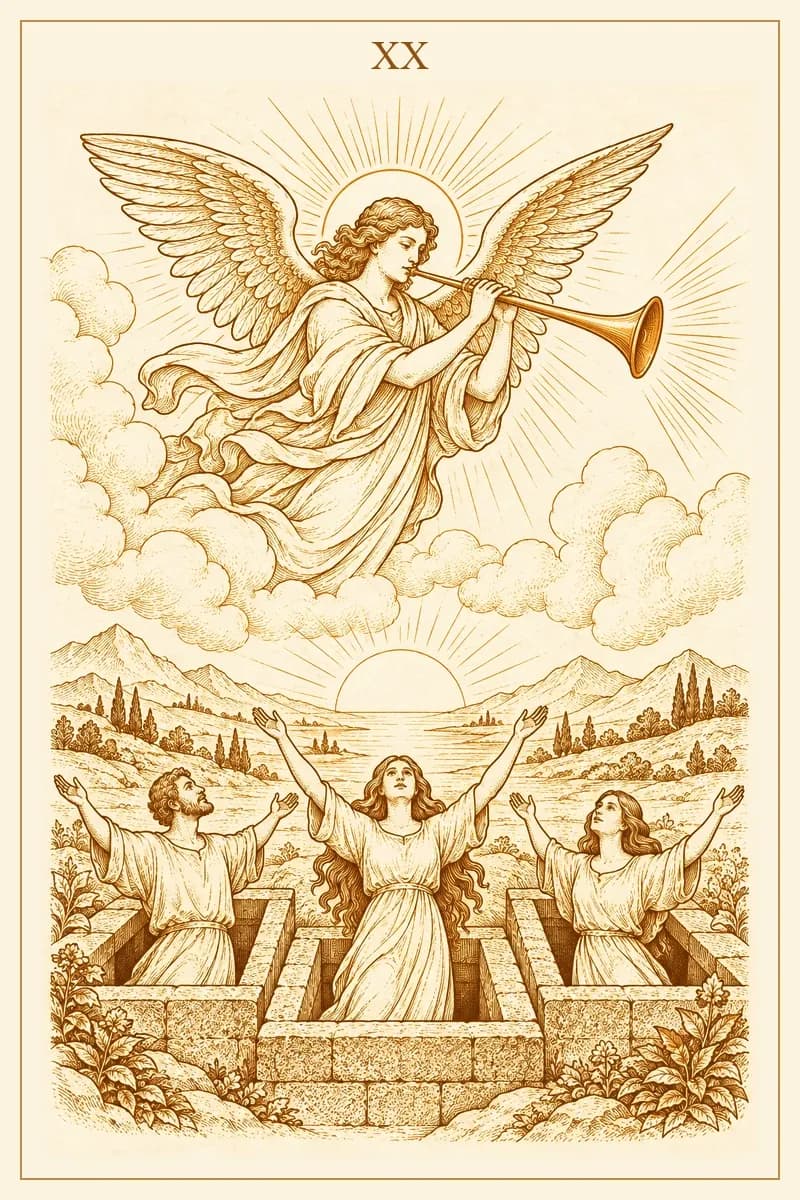
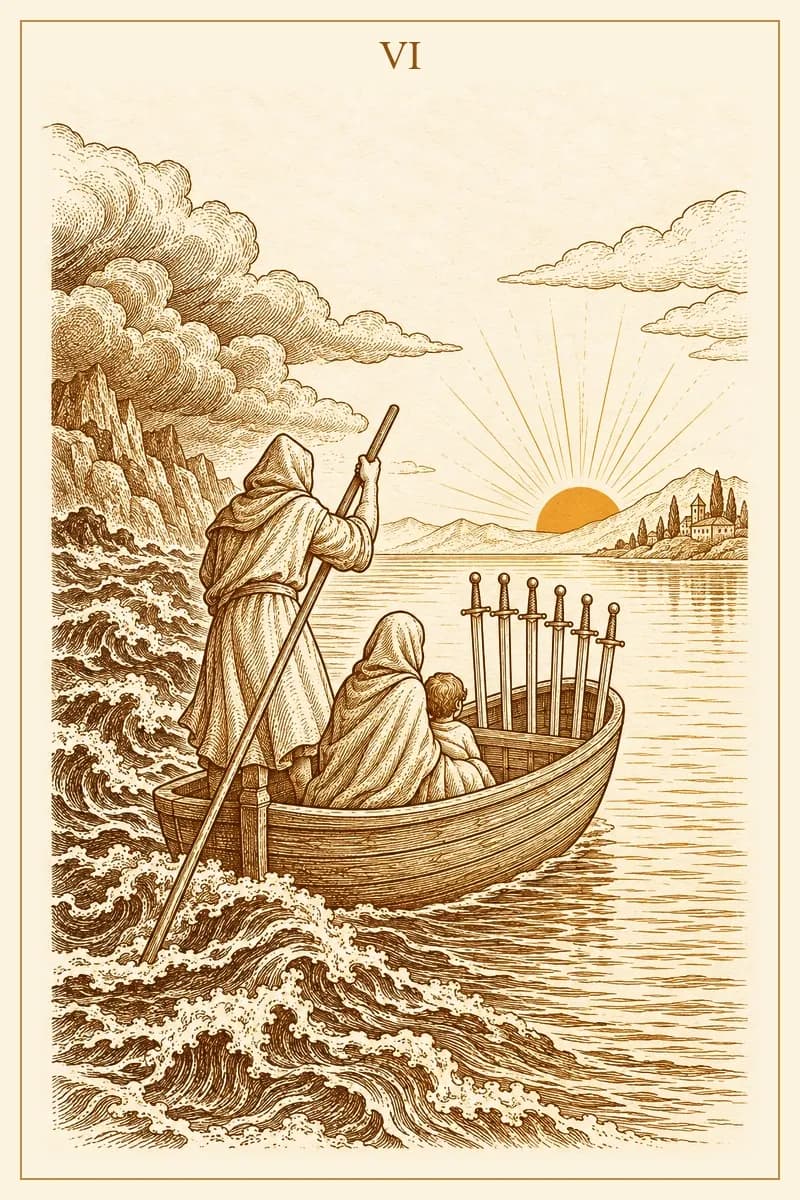
Meaning of Judgement and Six of Swords Combination: Conscious Departure
Awakened departure
Some people leave a place because they are running. Others leave because they finally opened their eyes and saw, with unbearable clarity, that staying would cost them everything they have left. The difference between flight and departure lives in that single moment of recognition — the instant the fog lifts and the road ahead becomes the only honest option.
Judgement and the Six of Swords meet at precisely this threshold. One card strips away every comfortable lie, every half-truth you have been telling yourself for months. The other hands you an oar and points toward calmer water. Together, they describe a crossing that is not impulsive but inevitable — the kind of movement that happens after you have already done the hard internal work of seeing things as they are.
The Core Tension
Judgement demands a full accounting. It is the late-autumn frost that kills what was already dying, exposing bare branches so you can finally see the shape of the tree. The Six of Swords, by contrast, is the quiet river that carries you from one season into the next. The tension here is between reckoning and release. Judgement insists you face the truth without flinching. The Six of Swords insists you then do something about it — not with drama, but with steady, purposeful motion across difficult water.
The friction arises when the reckoning is complete but the letting go has not yet happened. You may know exactly what needs to change and still find your feet rooted to the dock. These two cards together say the verdict has been delivered. The boat is waiting. Hesitation at this point is not caution; it is refusal.
Love & Relationships
In relationships, this pairing often surfaces when someone has reached a conclusion they cannot un-reach. Perhaps a long period of doubt has crystallized into certainty — not anger, not blame, just a clear-eyed understanding that the relationship in its current form cannot sustain either person. The Six of Swords softens Judgement's severity; the departure here is sorrowful rather than vengeful. Think of autumn leaves releasing from the branch not because they are torn away, but because the connection has naturally dissolved.
For couples who choose to stay, this combination can describe a mutual decision to leave behind a destructive pattern. The crossing is internal — moving from denial into honest conversation, from resentment into structured repair. Either way, something is being left on the far shore, and both people know it.
Career & Purpose
Professionally, Judgement and the Six of Swords often appear when a career evaluation has reached its conclusion. You have weighed the evidence — the late nights that produce nothing meaningful, the role that looked promising two winters ago but has since gone barren. The Six of Swords says the transition is already underway, whether or not you have formally acknowledged it. Your mind left this position weeks ago; your body simply has not followed.
This pairing can also indicate a project post-mortem that leads to genuine strategic change. A team reviews what failed, accepts accountability without deflection, and then migrates toward a better methodology. The key word is "migrate" — not pivot, not scramble, but a measured crossing informed by everything that went wrong before.
Shadow Side
The shadow of this combination is using clarity as a weapon. Judgement can become self-righteous, and the Six of Swords can become cold. Together, they risk producing someone who delivers a devastating assessment and then walks away before the other person can respond — leaving destruction in the wake of the boat without looking back. The departure feels surgical, but surgery without aftercare is just a wound.
Another shadow: perpetual crossing. Some people become addicted to the clarity of Judgement but never actually reach the other shore. They keep evaluating, keep packing, keep standing at the water's edge with their diagnosis perfectly articulated — and never step into the boat. The reckoning becomes a ritual that substitutes for action.
Action Steps
- 1Write down the one situation where you already know the verdict but have not acted on it, then identify the smallest concrete step that moves you toward the far shore
- 2Notice where you are using honest assessment as a delay tactic — if you have been analyzing the same problem for more than two weeks, the analysis phase is over and the crossing phase has begun
- 3Release one commitment, habit, or obligation that survived past its natural season, and do so cleanly, with a brief honest explanation rather than a slow fade
Related Pairings
Continue through published pairings that share Judgement or Six of Swords.

Beginningless self meets ultimate accountability
Meaning of The Fool and Judgement Combination: The Call Before the Story
Undirected leap meeting deliberate passage to calmer waters
Meaning of The Fool and Six of Swords Combination: The Leap and the Crossing
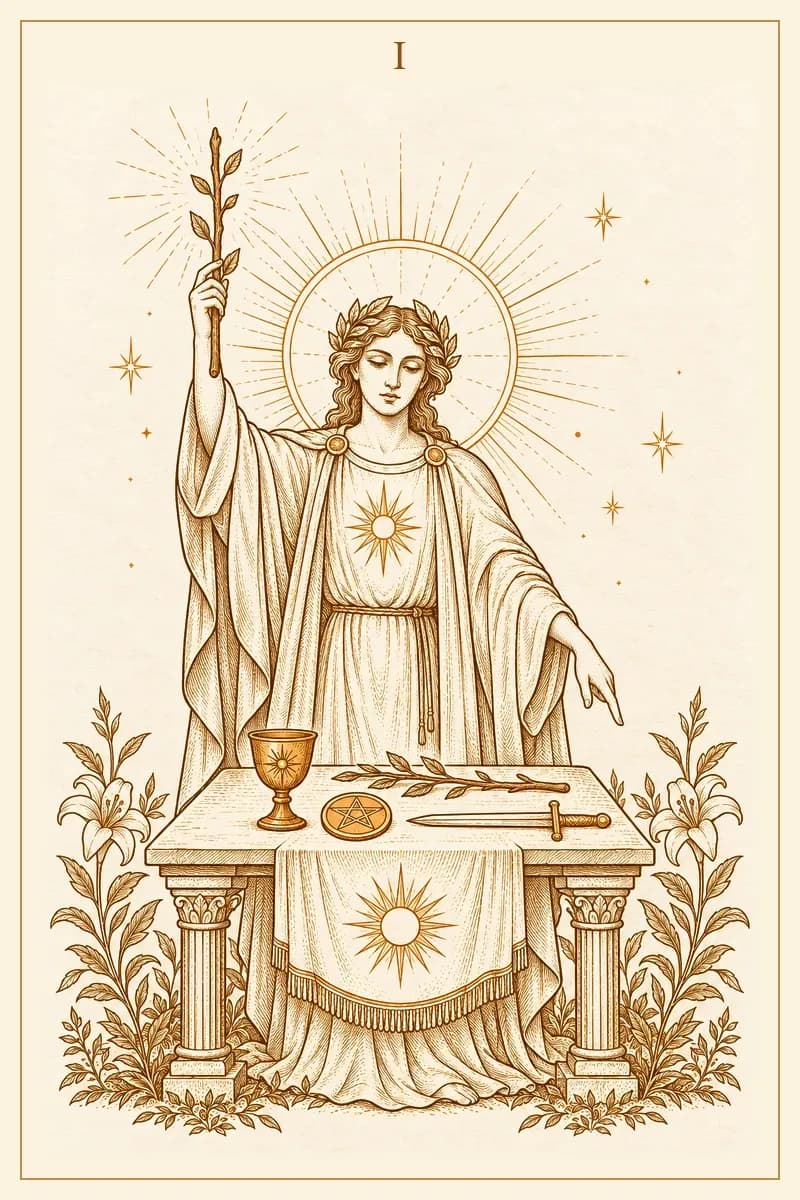
Mastery summoned to transformation
Meaning of The Magician and Judgement Combination: When Mastery Meets Its Calling
Directed transition — using skill and will to navigate away from turbulence
Meaning of The Magician and Six of Swords Combination: Skill Meets Passage

Reckoning within
Meaning of The High Priestess and Judgement Combination: The Reckoning Within
Intuition as navigator
Meaning of The High Priestess and Six of Swords Combination: The Inner Navigator
✦ Bring it to the cards ✦
Bring Judgement and Six of Swords into your own reading
Use this pairing as a starting point, then let a spread listen to the situation that is actually yours.
Begin a contextual reading