Loading your view
The page is gathering the latest information.
The page is gathering the latest information.
mastery summoned to transformation
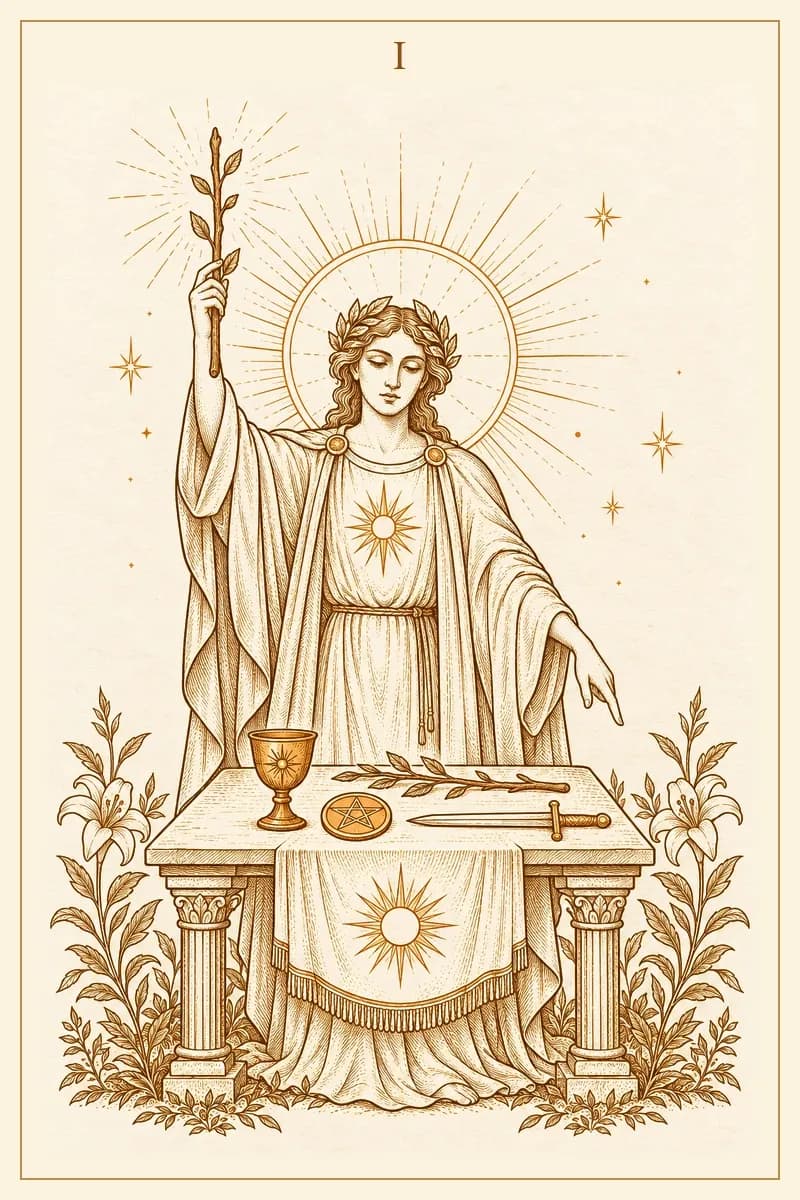
Picture the most technically accomplished actor in the company. He knows every light cue, every sight line, every trick of projection that fills a hall without a microphone. He has spent years making the craft invisible — the audience sees only the character, never the machinery behind it. His table holds every tool he needs, arranged with the precision of someone who has rehearsed every contingency. He is, by any professional measure, ready for anything.
Then the trumpet sounds.
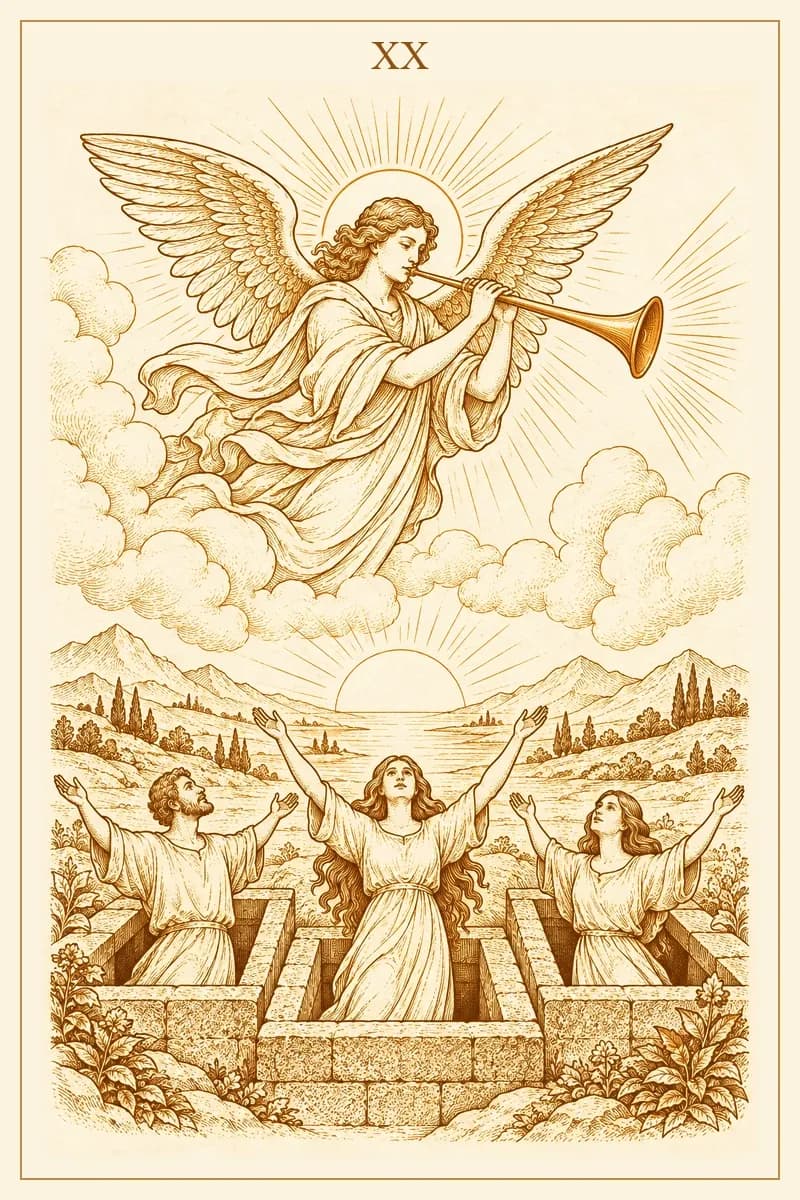
Not to signal another performance. Not to call him to his mark. The trumpet of Judgement does not care about technical readiness. It calls from somewhere beneath the stage — from the part of the theater that exists before the first seat was installed, before the first script was written. It calls not the performer but the person who chose to become a performer, and it asks a question that no amount of craft can answer in advance: was all of this — every rehearsal, every role, every perfected gesture — in service of the right thing?
The Magician's power is instrumental. He uses wand, cup, sword, and pentacle not as ends in themselves but as means toward an outcome he has already decided upon. He is the figure who looks at circumstances and says: I can shape this. The tools respond to his will because his will is genuinely extraordinary.
Judgement operates on a different axis entirely. It does not evaluate technique. It evaluates meaning. The trumpet that wakes the dead from their coffins is not conducting a skills assessment — it is conducting a life review. It asks whether the considerable power you have been exercising was pointed in the direction your soul actually came here to face.
Together, these cards produce one of the more demanding combinations in the deck: the moment when competence is not the question, and the person who has built an identity on competence must reckon with something that expertise cannot resolve.
In relationships, The Magician expresses love through orchestration. He creates the right atmosphere, says the right things, reads his partner well enough to know when to push and when to step back. He is gifted at the performance of love, and for a long time this is genuinely useful — someone who understands how to tend a relationship is not a small thing.
Judgement arrives when the partner needs something the orchestration cannot provide. Not a better performance, but a surrender of the director's position entirely. The trumpet calls the Magician out of the wings and onto the stage not as a technician managing an experience but as someone actually having one. The combination asks whether you can love with your tools put down — without the safety of being the one who controls how the scene unfolds.
Professionally, this pairing arrives at career crossroads that look inexplicable from the outside. The expert who walks away from mastery. The executive who abandons a role she has perfected. The craftsman who realizes that the object he has spent a decade learning to make is not the object he was meant to make.
Judgement does not arrive to condemn the work. It arrives to complete it. Every role the Magician has played has been preparation — the skills are real, the expertise is genuine, the command of tools is not wasted. But the trumpet is now revealing what all of that preparation was actually preparing for. The work ahead will use everything he has learned and require something he has never done: acting not from mastery but from call.
The dangerous version of this combination is the Magician who interprets Judgement's trumpet as an invitation to perform awakening. He has trained so thoroughly in the art of transformation that when the real summons arrives, he stages a convincing version of responding to it. He reads the books, adopts the vocabulary, rearranges his life in ways that look like resurrection from the outside, while never actually submitting to the thing that is asking to change.
The opposite shadow is paralysis. The trumpet sounds, the Magician hears it, and rather than responding he sits down at his table and begins auditing whether his tools are adequate to whatever the calling requires. He rehearses the response endlessly without delivering it. The curtain never rises because he is still perfecting his preparation for a performance that has already been called.
Keep or share this combination reference
Continue through published pairings that share The Magician or Judgement.
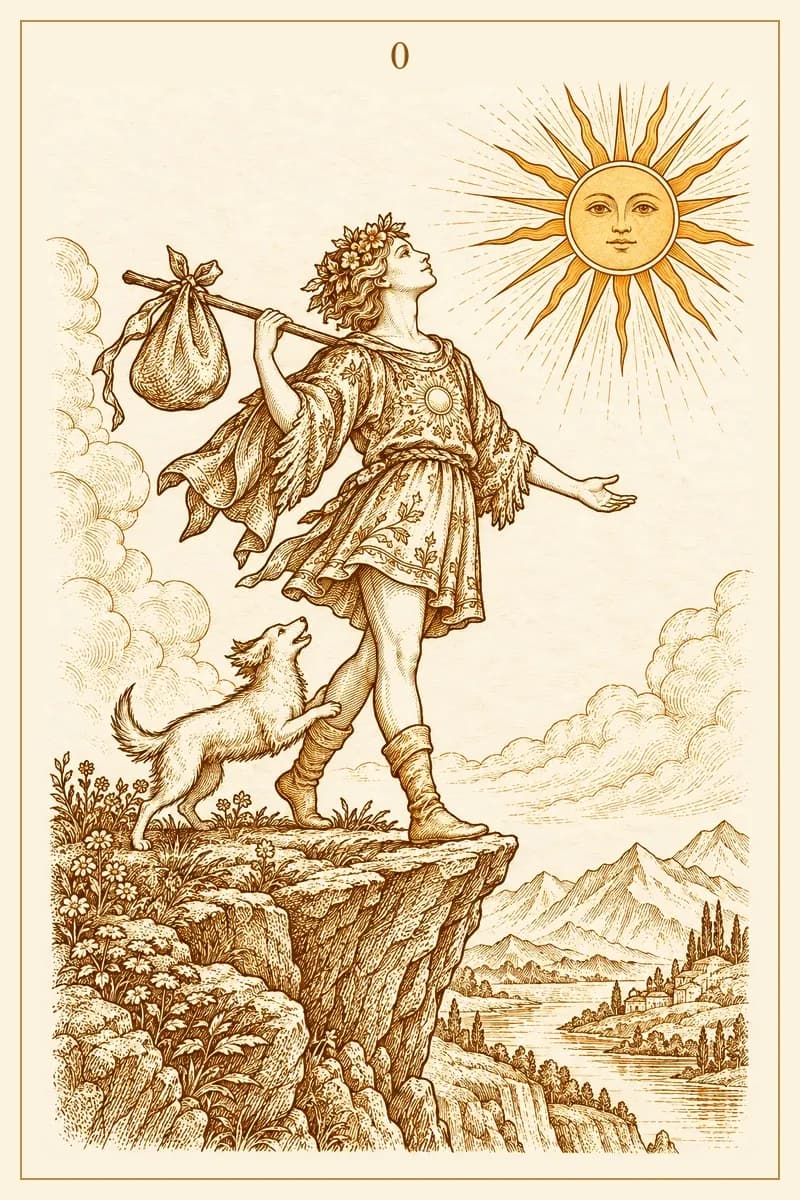
Spontaneous Manifestation

driven reckoning
controlled momentum
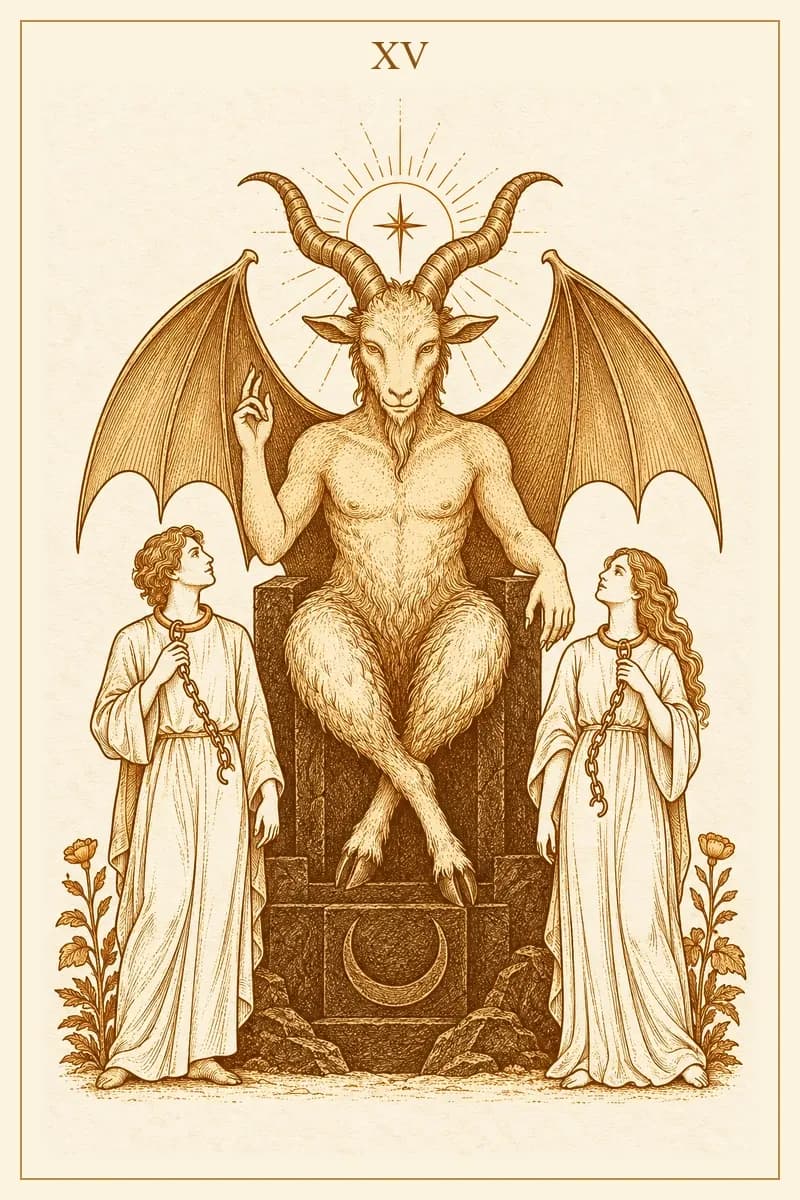
bondage meets awakening
will versus compulsion

earthly authority transcended
✦ Bring it to the cards ✦
Use this pairing as a starting point, then let a spread listen to the situation that is actually yours.
Begin a contextual reading