Loading your view
The page is gathering the latest information.
The page is gathering the latest information.
reckoning within
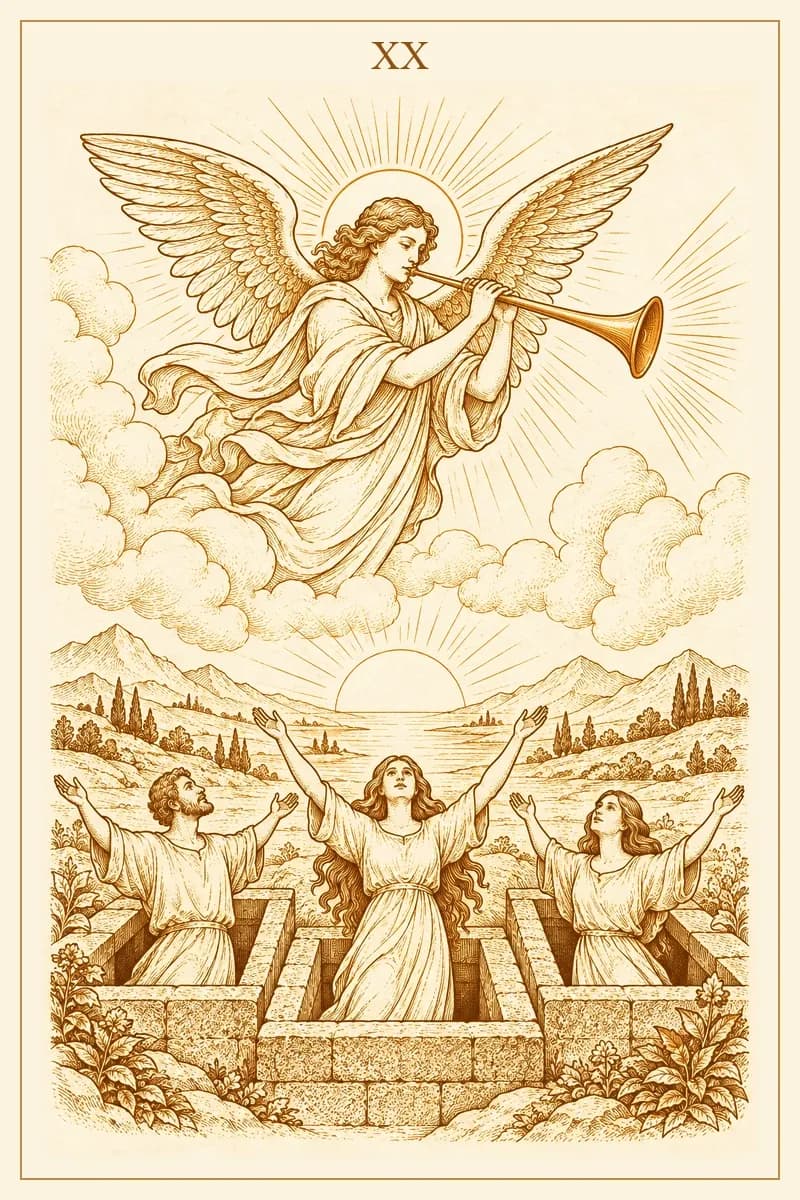
The case was decided before the hearing started. Not by bias — by evidence that had been accumulating for years in places no formal process thought to look. The High Priestess has been keeping records. Judgement has now called the session to order.
When these two cards appear together, the reading points toward a reckoning that is fundamentally internal before it is external. The trumpet has sounded — not from outside, but from the part of you that has finally run out of reasons to postpone the honest accounting. What you know about yourself, about your choices, about what has been left unfinished — it is time to stop managing the knowledge and begin moving through it.
This is not punishment. Judgement in the tarot is not condemnation — it is the moment of clear assessment that makes movement possible. The Priestess provides the material for that assessment: what was observed, what was known, what was quietly filed away.
The High Priestess is patient with unresolved things. Judgement is not. Judgement signals that the window for quiet contemplation is closing and the window for response is opening.
The tension: the Priestess has been comfortable holding things in a liminal state. Judgement is insisting that the liminal state has served its purpose and the next phase requires a decision. Not a decision made in haste — but a decision made from genuine knowledge rather than continued deferral.
The risk of this combination is using the Priestess's preference for depth as a justification for avoiding the accountability that Judgement is calling for.
In romantic context, this pairing marks a moment of honest reckoning with what a relationship has actually been — not what it was hoped to be, not what it once was, but what it is now and has been for some time.
The High Priestess has been tracking this. She has noticed the gaps, the patterns, the things said and unsaid. Judgement is asking: given all of that, what is the verdict?
This is not necessarily an ending. A clear-eyed assessment of a relationship's actual state can lead to renewed commitment as easily as it leads to release. The requirement is honesty. The Priestess cannot bring her knowledge to the Judgement process if she has been softening it to avoid the conclusion it points toward.
At work, this combination often surfaces around career evaluations — not the annual performance review, but the deeper internal accounting. Have you been doing work that reflects your actual capacity? Have you been choosing safety over growth for so long that you have lost track of what growth would even look like for you?
The High Priestess holds the honest version of this accounting. Judgement is asking you to file it officially — not with a manager, but with yourself. What needs to change? Not what would be nice to change — what actually needs to change for the work to align with what you know yourself to be capable of?
The shadow of this pairing is the endless internal tribunal — a person who spends so much time examining past decisions that they never generate new ones.
The Priestess can become a court reporter who never stops transcribing. Judgement can become a proceeding that never reaches a verdict. Together they can create a loop of highly sophisticated self-examination that is functionally identical to avoidance.
The signal that you have entered the shadow: the analysis is producing insight but no action. The accountability feels complete inside the mind but has generated no external evidence of change.
Keep or share this combination reference
Continue through published pairings that share The High Priestess or Judgement.

Innocent Knowing

driven reckoning
Directed Intuition

bondage meets awakening
shadow knowledge

earthly authority transcended
✦ Bring it to the cards ✦
Use this pairing as a starting point, then let a spread listen to the situation that is actually yours.
Begin a contextual reading