
Card Combination
Meaning of The Tower and Nine of Swords Combination: Collapse Into Dread
Crisis meets catastrophizing
The smell hits first — that acrid scent of something burning that woke you at 3 a.m. even though the smoke detector stayed silent. You lie there cataloguing everything that could go wrong, every worst-case scenario stacking up in the dark, until the ceiling feels like it's pressing down. Outside, something actually fell. Inside, your mind has already built an entire disaster that hasn't happened yet.
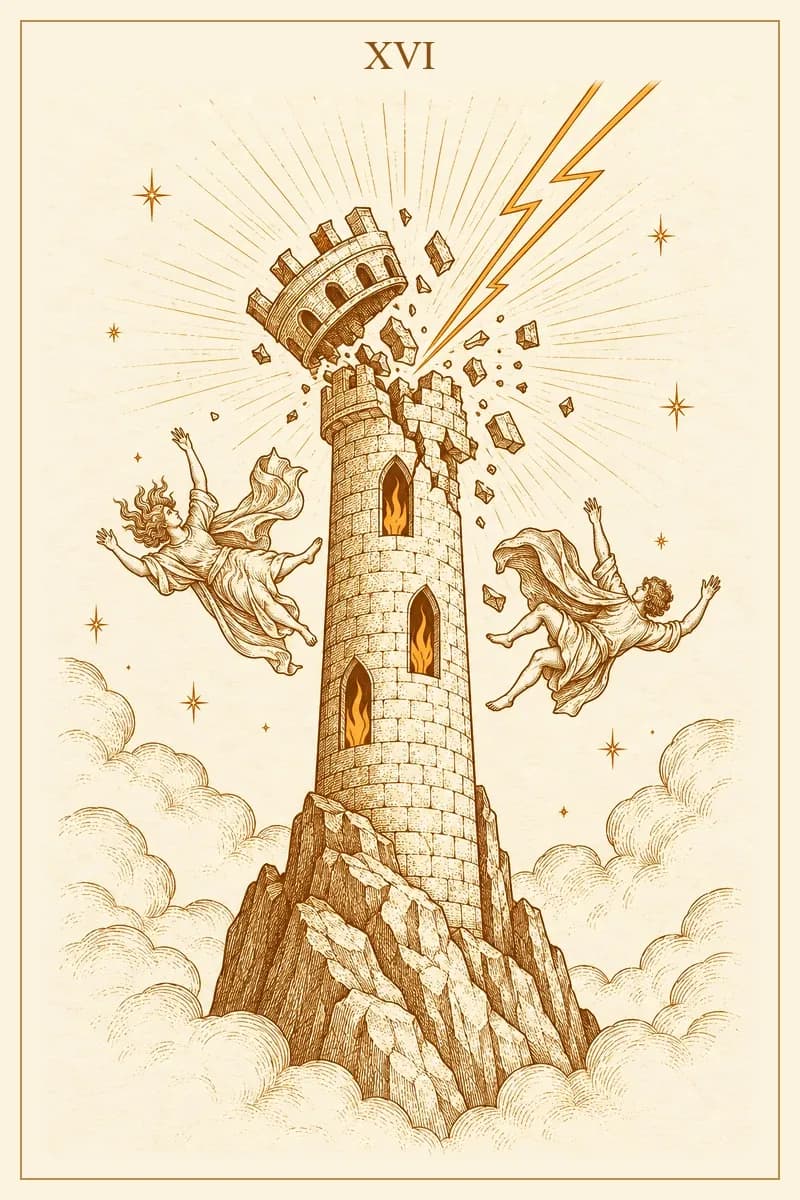
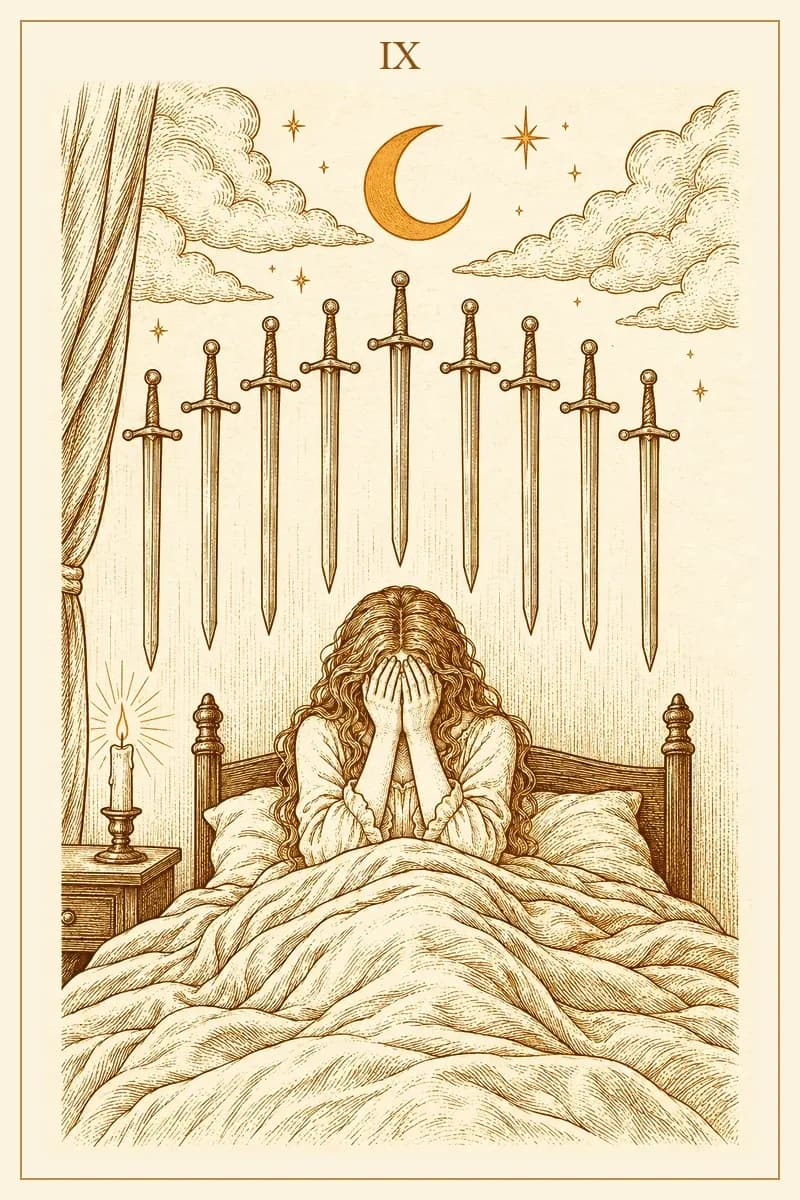
That gap — between the real collapse and the imagined one — is exactly where The Tower and Nine of Swords meet. One card carries the lightning bolt that shatters what seemed permanent. The other card carries the figure bolt-upright in bed, hands to face, surrounded by hanging blades that haven't fallen. Together they form a clinical picture that a diagnostician would recognize immediately: acute stress compounded by anticipatory anxiety. The body processes both as equally real threats.
This pairing doesn't let you choose which one is worse. It insists both are happening at once.
The Core Tension
A medical diagnosis distinguishes between the disease and the patient's response to the diagnosis. Sometimes the response — the cortisol flooding, the sleep disruption, the compulsive research into outcomes — does more systemic damage than the condition itself. The Tower and Nine of Swords present the same diagnostic puzzle. Something has genuinely collapsed or is collapsing. A job, a relationship, a belief system, a financial structure. The rubble is real. But the Nine of Swords signals that the nervous system has escalated far beyond what the actual event requires.
The Tower destroys illusions. The Nine of Swords insists on constructing new ones — catastrophic ones. Where The Tower's damage is external and visible, the Nine's damage is internal and self-sustaining. The terror loops. You lie awake rehearsing conversations that haven't happened, writing endings to stories still mid-sentence. The tension in this pairing is not dramatic. It is exhausting.
Love & Relationships
In a relationship context, this combination often marks the moment after a significant rupture — a confession, a betrayal discovered, an argument that crossed into territory that can't be unseen. The Tower has already struck. The Nine of Swords represents the sleepless aftermath: replaying every exchange for hidden signs, constructing elaborate theories about what the other person really meant, imagining futures that collapse before they begin.
For someone single, this pairing may surface around a pattern of self-sabotage rooted in previous loss. The Tower in the past position tells you something broke you open. The Nine of Swords in the present tells you the wound is still running the risk-assessment on every new connection — and failing it in advance. The heart is doing triage on a patient that isn't even admitted yet.
Career & Purpose
Professionally, The Tower and Nine of Swords together often appear around sudden organizational upheaval: a restructure announced without warning, a project cancelled, a mentor who leaves and takes their protection with them. The real event triggers a cascade of professional anxiety — sleepless nights spent auditing one's own competence, imagining performance reviews that haven't been scheduled, preemptively grieving positions not yet lost.
The diagnostic concern here is decision paralysis. When the nervous system is running catastrophe simulations at full capacity, the prefrontal cortex — the part responsible for strategic thinking — goes offline. This pairing can indicate a period where someone is technically present at work but cognitively unavailable, spending most mental energy on threat detection rather than problem-solving. The pile of blades overhead makes concentration nearly impossible.
Shadow Side
The shadow dimension of this combination is the way crisis can become identity. After The Tower strikes enough times, the Nine of Swords stops being a temporary response and starts becoming a baseline orientation toward the world. Hypervigilance begins to feel like wisdom. Expecting catastrophe begins to feel like realism. The person stops distinguishing between the actual disasters that have happened and the imagined ones they've been preparing for — because the emotional register has equalized them.
There is also a subtler shadow: using the real damage of The Tower as justification for the Nine's distortions. Yes, something fell. That gives the catastrophizing a foothold it wouldn't otherwise have. The real collapse becomes evidence for every imagined collapse, and the mind builds its case.
Action Steps
- 1Identify which specific fear is most active right now and write it down in one concrete sentence — not a spiral, not a scenario, one sentence — then examine honestly whether it describes the current situation or a past one wearing this situation's clothes.
- 2Establish one physical boundary with the catastrophizing: a consistent bedtime, a device-free hour, a single room in your living space where the mental rehearsal is not permitted to enter.
- 3Find one structural thing that did not collapse — one relationship still intact, one competency still reliable, one resource still available — and use it as the diagnostic baseline against which the worst-case scenarios can be measured.
Related Pairings
Continue through published pairings that share The Tower or Nine of Swords.

controlled force shattered
Meaning of The Chariot and The Tower: Momentum Meets Collapse
Relentless drive, mental collapse
Meaning of The Chariot and Nine of Swords Combination: Driven Into the Dark
forced liberation
Meaning of The Devil and The Tower Combination: Chains Shattered by Fire
Addictive anxiety
Meaning of The Devil and Nine of Swords Combination: Compulsive Dread

authority meets collapse
Meaning of The Emperor and The Tower: When the Fortress Falls
Power feeding fear
Meaning of The Emperor and Nine of Swords Combination: Authority and Dread
✦ Bring it to the cards ✦
Bring The Tower and Nine of Swords into your own reading
Use this pairing as a starting point, then let a spread listen to the situation that is actually yours.
Begin a contextual reading