Loading your view
The page is gathering the latest information.
The page is gathering the latest information.
forced liberation
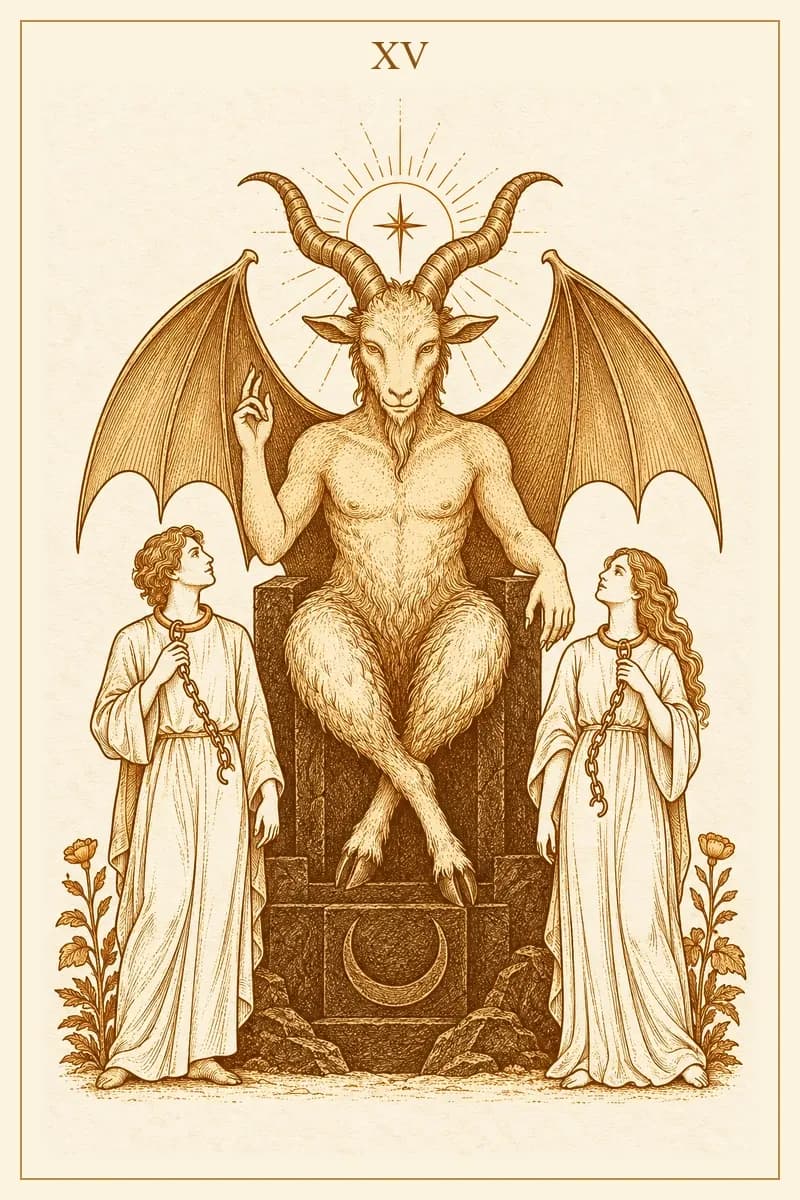
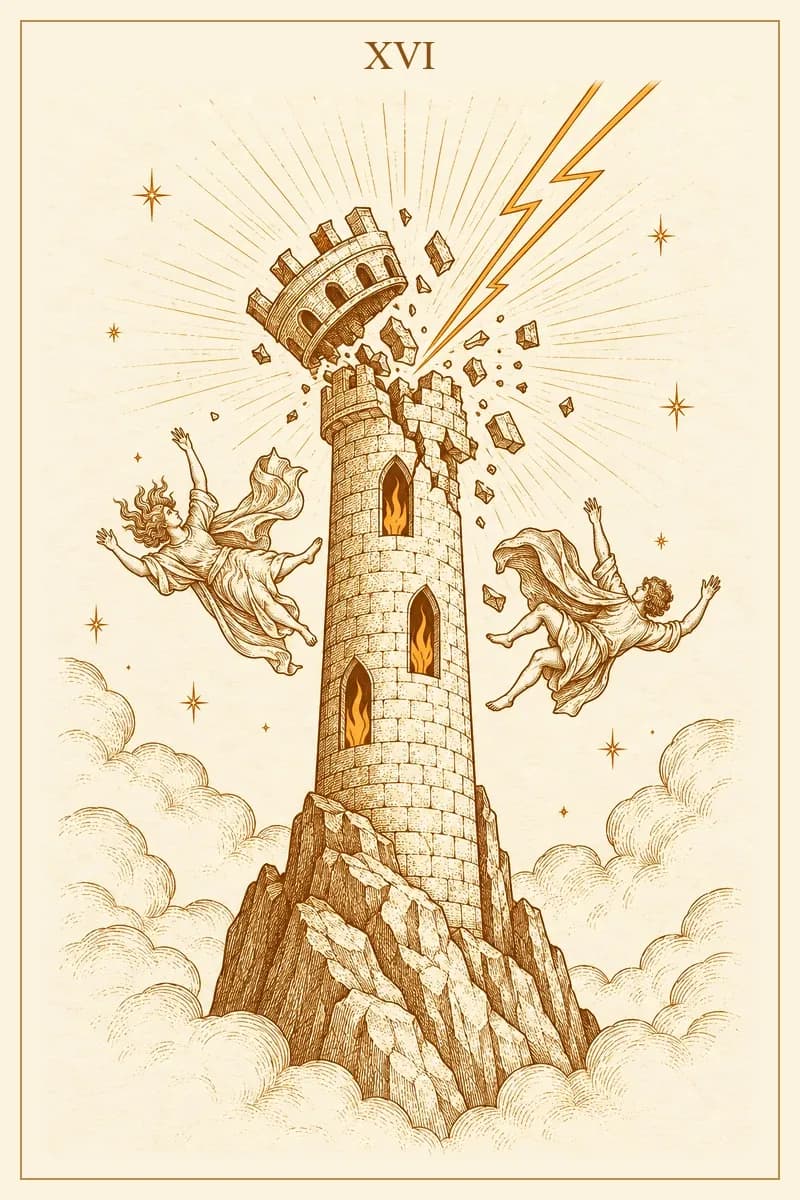
Some hands in life look like you're holding all the cards — power, control, the intoxicating certainty that you've got the game figured out. Then lightning strikes the table and the whole deck scatters. That's what happens when these two archetypes collide: one card represents bondage dressed as desire, the other represents the violent unmasking of everything built on a lie.
You didn't get here by accident. The Devil energy is slow — it accumulates through habits, dependencies, and seductive comfort. It whispers that the cage you're in was your own choice, that leaving would be worse. The Tower doesn't negotiate. It arrives as a bolt from outside the system entirely, and it does not care what you were holding onto.
Together, they describe a moment that feels catastrophic but carries a strange logic underneath: what falls apart was always hollow. The real question isn't whether the structure collapses — it already has. The question is who you are when you're finally standing in the rubble without your usual armor.
The Devil holds. The Tower breaks. That opposition is the engine of this combination's meaning.
Where The Devil deals in slow accumulation — addiction, obsession, codependency, willful blindness — The Tower is the sudden audit. It exposes what The Devil spent months concealing. The tension here isn't between good and evil. It's between the comfort of a known prison and the terror of open ground.
Think of it like folding a losing hand versus watching the dealer flip the table entirely. One is a choice you keep delaying. The other removes the choice from you. This pairing often appears when delay has run out.
In romantic readings, this combination rarely describes a peaceful transition. It points to a relationship where at least one person has been holding something down — a truth, a resentment, a need to leave — and the pressure has finally exceeded the container.
The Devil's presence in a love context often signals a bond kept alive by fear, obligation, or a compulsion that masquerades as passion. When The Tower arrives alongside it, the collapse of that dynamic becomes unavoidable. Infidelity exposed. A confession finally spoken. A pattern broken not by grace but by crisis.
What comes after, though, is genuinely open. The Tower doesn't dictate what you rebuild — only that the old structure is gone.
Professionally, this pairing often marks a forced reckoning with a career situation that was never sustainable. A job held out of golden-handcuff logic. A business built on a flawed foundation everyone agreed to ignore. An organization whose internal contradictions finally surface in a very public way.
The Devil at work looks like staying in something toxic because leaving feels impossible. The Tower is the moment that decision is made for you — a layoff, a scandal, a project's spectacular failure. The discomfort is real, but so is the relief once the dust settles.
If this combination appears before a professional crisis rather than after, it's a rare window: get ahead of the collapse before it gets ahead of you.
The darker edge of this pairing is the person who survives the Tower moment but immediately rebuilds the same cage. The structure falls, the chains loosen — and then, in the silence and uncertainty that follow, the old familiar patterns feel like safety again.
The Devil's influence doesn't vanish just because The Tower struck. It reasserts itself in the aftermath, offering the comfort of known bondage over the discomfort of genuine freedom. This is the combination's real test: not surviving the collapse, but refusing to reconstruct what collapsed.
Watch for the urge to return to exactly what broke. The rubble is informative. It shows you what was never solid to begin with.
Keep or share this combination reference
Continue through published pairings that share The Devil or The Tower.

ambition vs obsession
controlled force shattered

hidden compulsion

bondage versus healing

authority meets collapse

liberation through exposure
✦ Bring it to the cards ✦
Use this pairing as a starting point, then let a spread listen to the situation that is actually yours.
Begin a contextual reading