Loading your view
The page is gathering the latest information.
The page is gathering the latest information.
controlled force shattered
Summer storms arrive without warning. The sky turns from hard blue to bruised green in minutes, and whatever you built in the calm — the tidy garden rows, the carefully staked tomatoes — gets flattened by hail before you can cover it. There is no negotiating with that kind of weather. You can only watch, and then begin again with whatever is left standing.
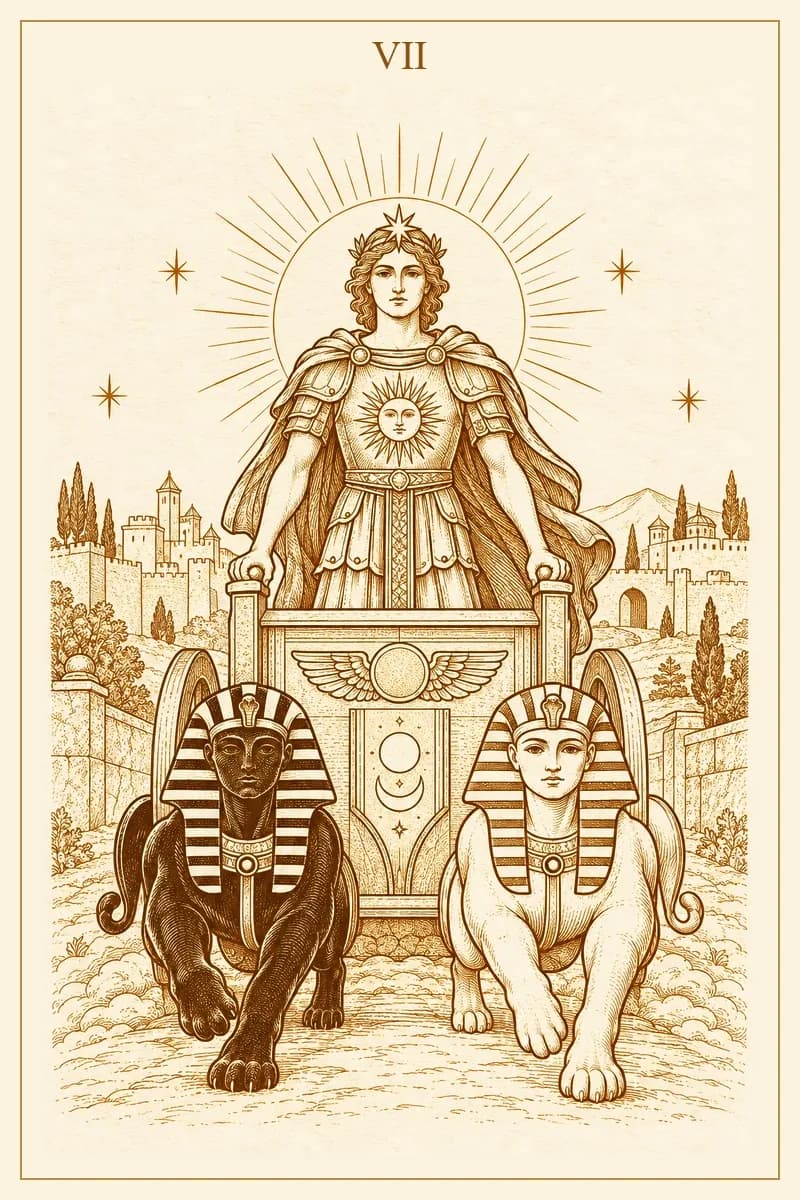
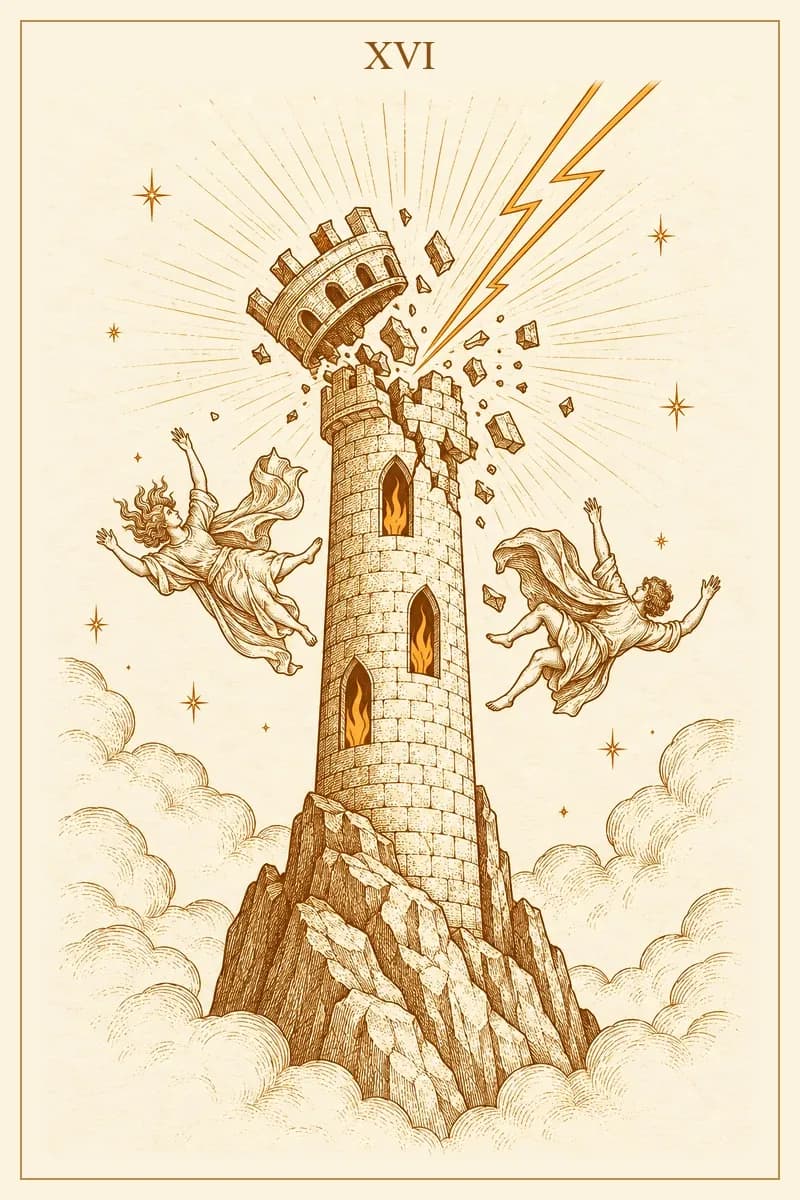
That tension between preparation and sudden ruin sits at the heart of this pairing. One card is all forward motion: the locked jaw, the reined horses, the banner held high. The other is a burning tower at midnight, struck by lightning, its inhabitants tumbling through smoke-lit air. Together they raise a single, urgent question — what happens when a life built entirely around momentum collides with a force that momentum cannot outrun?
Before you assume the worst, notice that not every falling tower is a catastrophe. Farmers know that a late frost that kills the early blossoms often produces a hardier second bloom. The ground cleared by fire grows back greener. The wreckage left behind when these two cards appear in the same reading is rarely permanent — but it is undeniably real, and pretending otherwise would cost you the lesson entirely.
The Chariot is built on control. It represents the version of willpower that knows where it is going, subdues competing impulses, and keeps moving despite distraction. Progress under the Chariot is earned through discipline: morning routines, long training sessions, strategic planning, the refusal to be knocked off course.
The Tower does not care about any of that.
Where the Chariot insists that determination is enough, the Tower insists that some structures were never sound to begin with — and that no amount of drive will hold up a wall built on a false foundation. Lightning does not strike the strongest tower; it strikes the tallest one. The very ambition that propels the Chariot forward can be exactly what draws the Tower's disruption down.
Read together, these cards describe a moment of reckoning: the point at which someone who has been driving hard in a specific direction discovers that the road no longer exists. The engine is still running. The wheels are still turning. But the bridge is out, and the fall is steep.
In relationships, this combination surfaces when one partner has been maintaining control at the cost of honesty. The Chariot in love is capable and devoted, but it can also mean someone who manages a relationship like a project — setting expectations, steering outcomes, refusing to yield. The Tower arrives as the conversation that could not be postponed any longer, the confession that shatters a carefully maintained image, or the moment when a partner simply stops pretending.
The disruption here is not necessarily the end of love. More often it marks the end of a version of love that could not have survived much longer anyway. What survives the Tower in a relationship tends to be more durable than what was there before — stripped of the convenient fictions, closer to something real.
Professionally, this pairing often appears when someone has staked their identity entirely on a role, a career path, or a professional achievement — and then that thing is suddenly taken away. The promotion falls through. The company restructures. The project they poured two years into gets cancelled the week before launch.
The Chariot's instinct in these moments is to push harder, to work longer hours, to force through the obstacle by sheer will. The Tower's message is different: sometimes the obstacle is not in the way of the path. Sometimes the obstacle is showing you that the path was wrong. The faster you can distinguish between those two scenarios, the less energy you waste driving toward a bridge that no longer exists.
The shadow side of this pairing belongs to a specific kind of stubbornness — the refusal to read warning signs because acknowledging them would mean admitting you have been heading in the wrong direction. The Chariot's greatest flaw is that it can mistake rigidity for discipline. When the Tower appears alongside it, that rigidity becomes the very thing that makes the eventual fall worse. The person who would have acknowledged a crack in the foundation six months ago might have reinforced it in time. The one who kept driving harder had no idea the structure was hollow until the night it came down.
Keep or share this combination reference
Continue through published pairings that share The Chariot or The Tower.
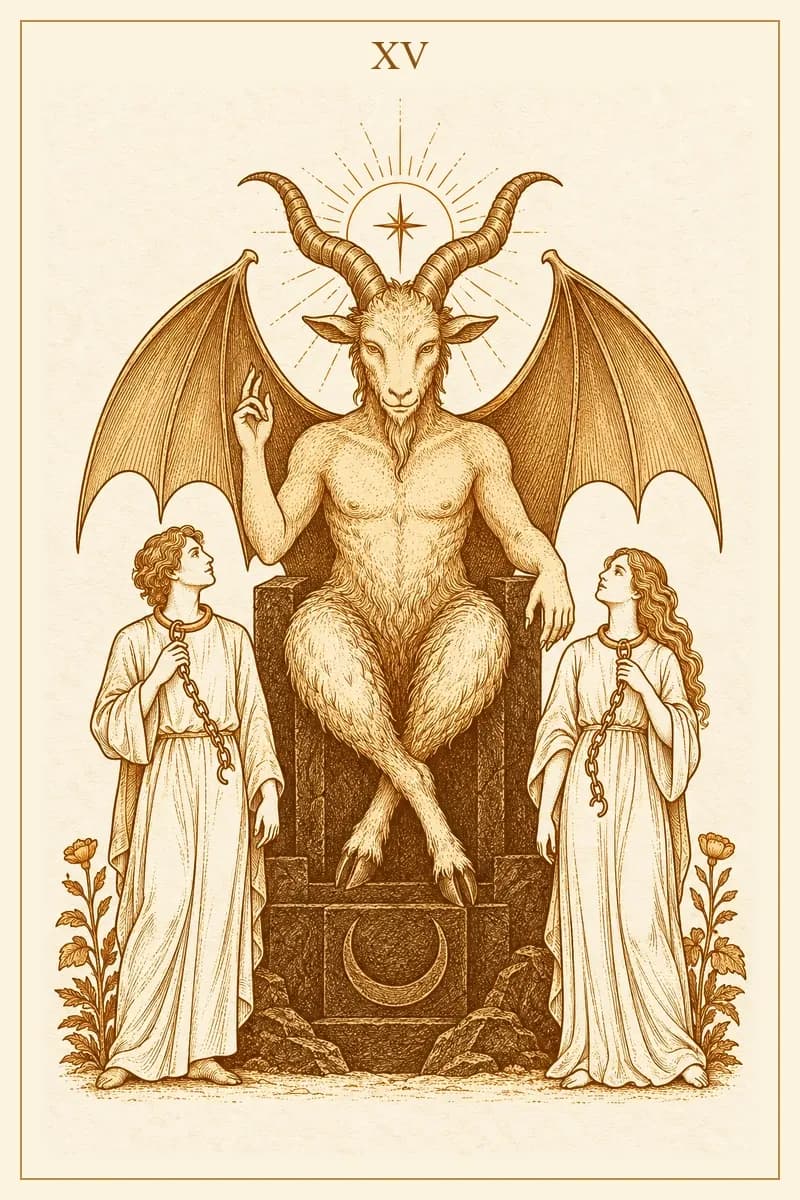
ambition vs obsession
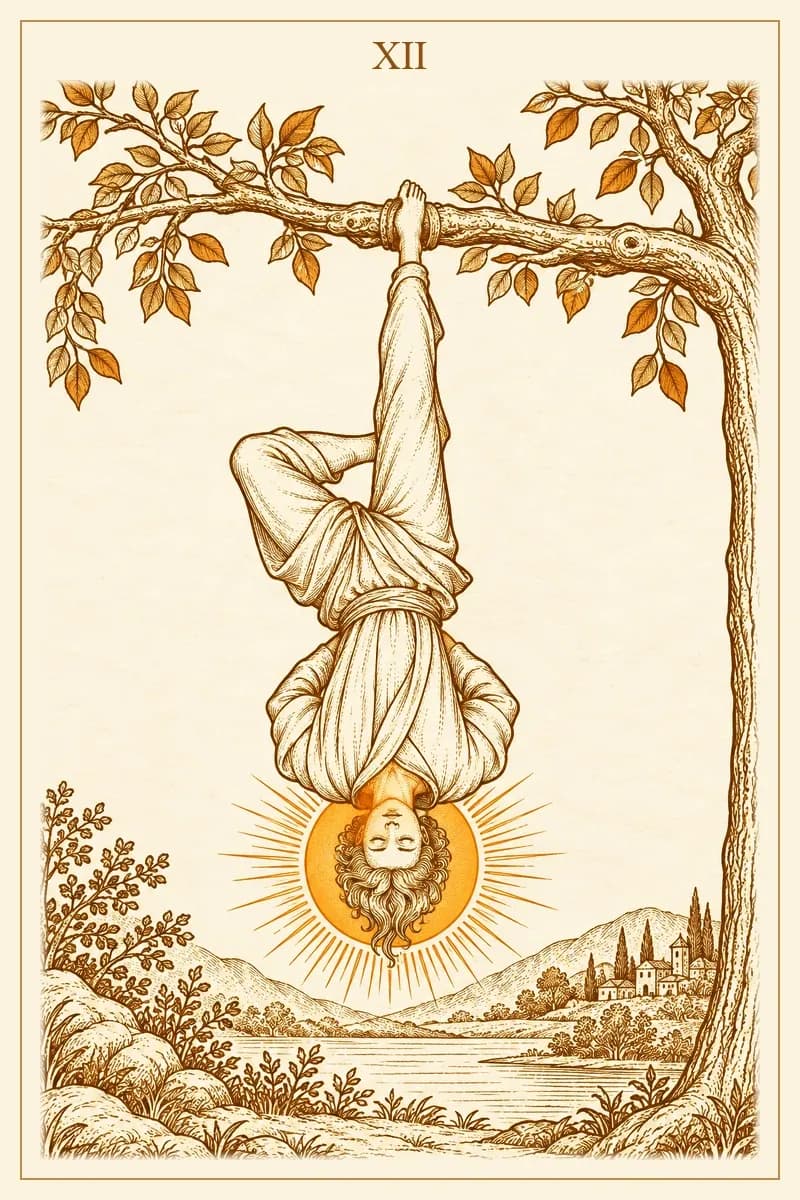
momentum versus surrender
forced liberation
driven introspection
authority meets collapse
willpower versus illusion
✦ Bring it to the cards ✦
Use this pairing as a starting point, then let a spread listen to the situation that is actually yours.
Begin a contextual reading