Loading your view
The page is gathering the latest information.
The page is gathering the latest information.
authority meets collapse
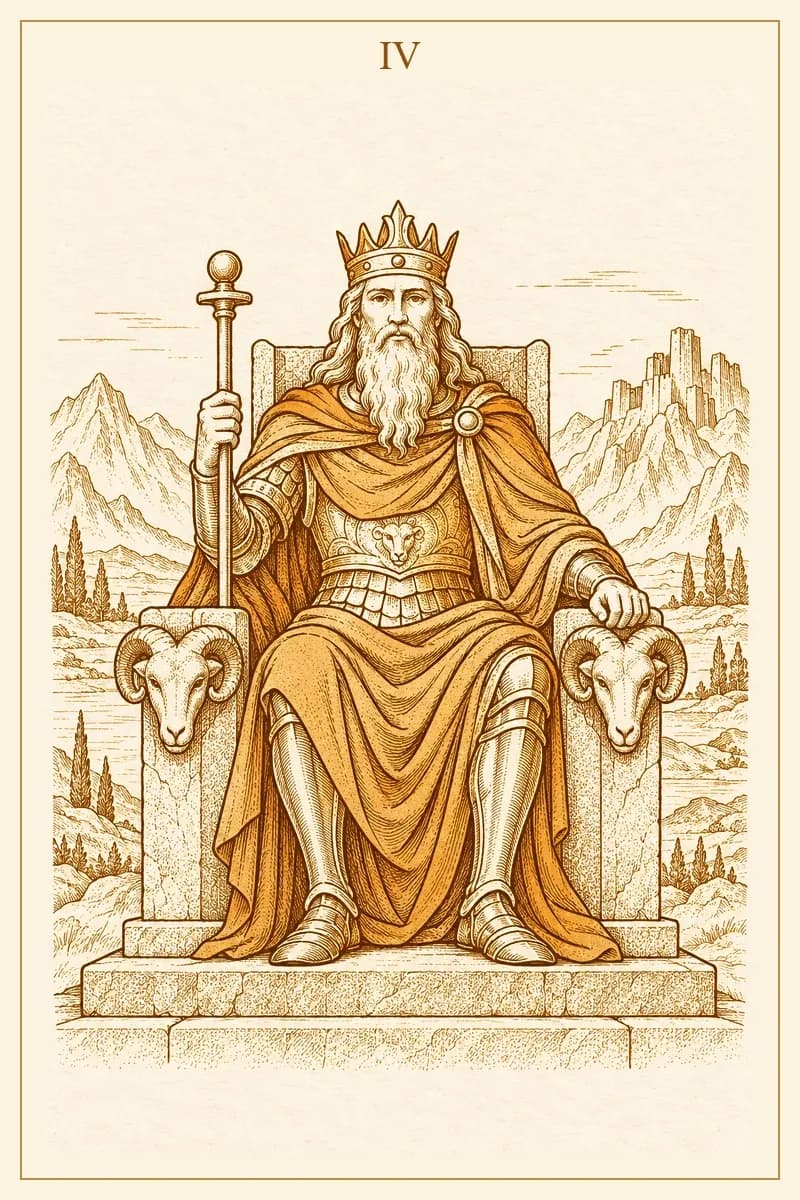
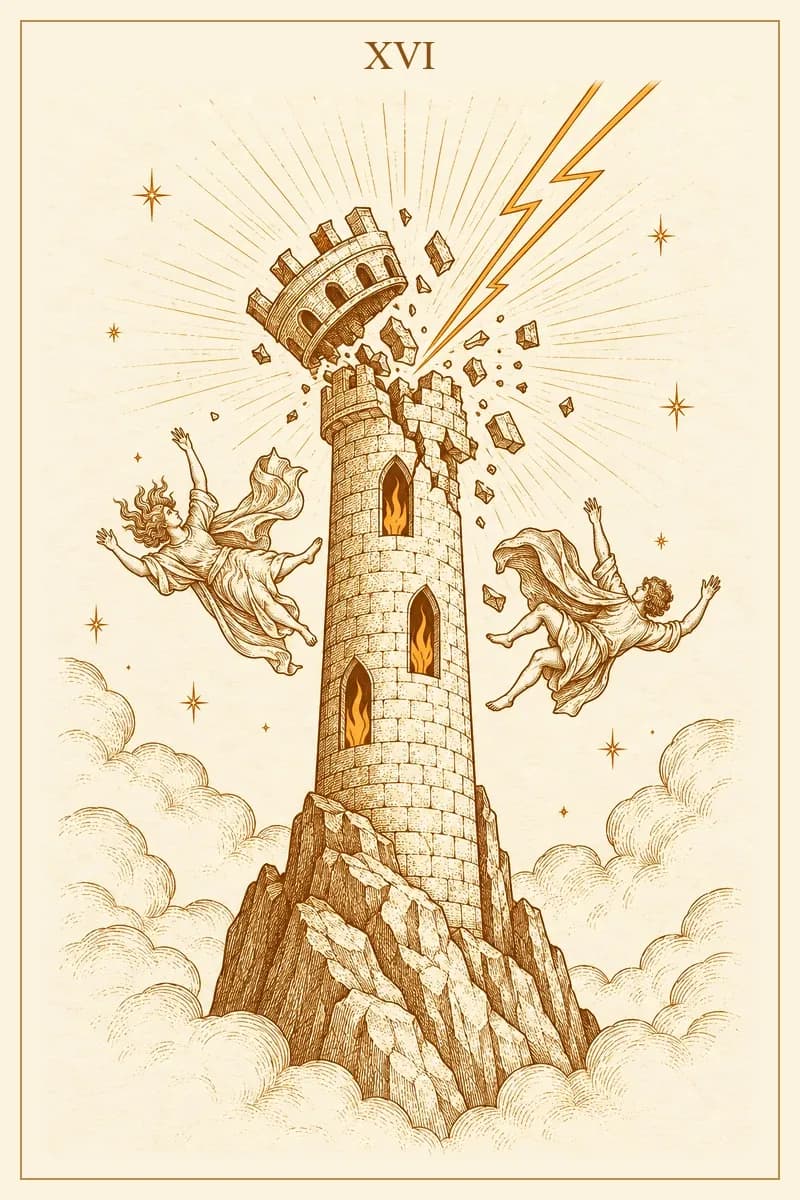
The walls held for years — reinforced, expanded, defended at every gate. Then the lightning hit, and what looked like a fortress turned out to be a prison. That is the scene The Emperor and The Tower set together: the moment a commander realizes the citadel he built was never as solid as the orders he gave inside it.
The Emperor is a card of constructed order. He is the general who draws the battle lines, the ruler who codifies law, the architect who believes that enough structure can hold anything in place. His power is real. His methods work — right up until they don't.
The Tower is not chaos for its own sake. It is the lightning bolt that strikes what was built on a cracked foundation. Every wall that falls under The Tower's blow was already failing from within. The collapse looks sudden from the outside; from the inside, the fissures had been spreading for a long time.
Together, these two cards describe a specific kind of reckoning: the fall of order that was maintained by force rather than by truth. The Emperor's mistake is not that he built — it is that he stopped inspecting the walls. He trusted his own blueprints more than the ground beneath them. When The Tower arrives, it does not destroy a healthy fortress. It reveals that the fortress was never as strong as the orders being given inside it.
This pairing asks a hard question: what are you defending that has already been compromised from within?
In a relationship reading, The Emperor and The Tower together often mark the end of a long-maintained dynamic — usually one where control was mistaken for stability. One partner may have set the terms, the rules, the pace. It looked like leadership. Over time it calcified into something neither person could breathe inside.
The Tower's arrival here is not cruel. It is clarifying. The structure was not love — it was management. What shatters is the arrangement, not necessarily the connection underneath it. If something real existed beneath the rules, this is the moment to find out. If the rules were all there was, then the rubble tells you something important.
This combination can also appear when an affair or hidden truth comes to light, dismantling the official version of a relationship. The Emperor built the story; The Tower sets the record straight.
In professional matters, this pairing signals a structural failure in something that was treated as unassailable. A long-standing hierarchy disrupted. A policy that worked for a decade suddenly costing the organization everything. A manager whose authority is abruptly revoked.
The war-strategy frame is useful here: the general who has not updated his maps is the most dangerous figure on the battlefield. He is still deploying troops according to terrain that no longer exists. The Tower is the enemy who has already moved. The Emperor is the commander reading yesterday's intelligence.
If you are in a position of authority, this reading is a warning to audit your assumptions before circumstances audit them for you. If you are lower in the chain, it may signal that the structure above you is about to shift dramatically — and your task is to be ready to operate without the old chain of command.
The deepest trap in this pairing is the impulse to rebuild immediately. When the Emperor energy is strong, the first response to collapse is reconstruction: get the walls back up, restore the order, re-establish authority. This impulse, acted on too quickly, guarantees the next Tower strike.
What the rubble actually requires is inspection. What failed? Why? The shadow of The Emperor is that he would rather command the cleanup than sit with the question of how it happened. The shadow of The Tower is that destruction without reflection is just debris.
Rigidity dressed as strength is this pairing's central warning.
Keep or share this combination reference
Continue through published pairings that share The Emperor or The Tower.

structured forward momentum
controlled force shattered
authority versus control
forced liberation

control vs release

outer vs inner authority
✦ Bring it to the cards ✦
Use this pairing as a starting point, then let a spread listen to the situation that is actually yours.
Begin a contextual reading