
Card Combination
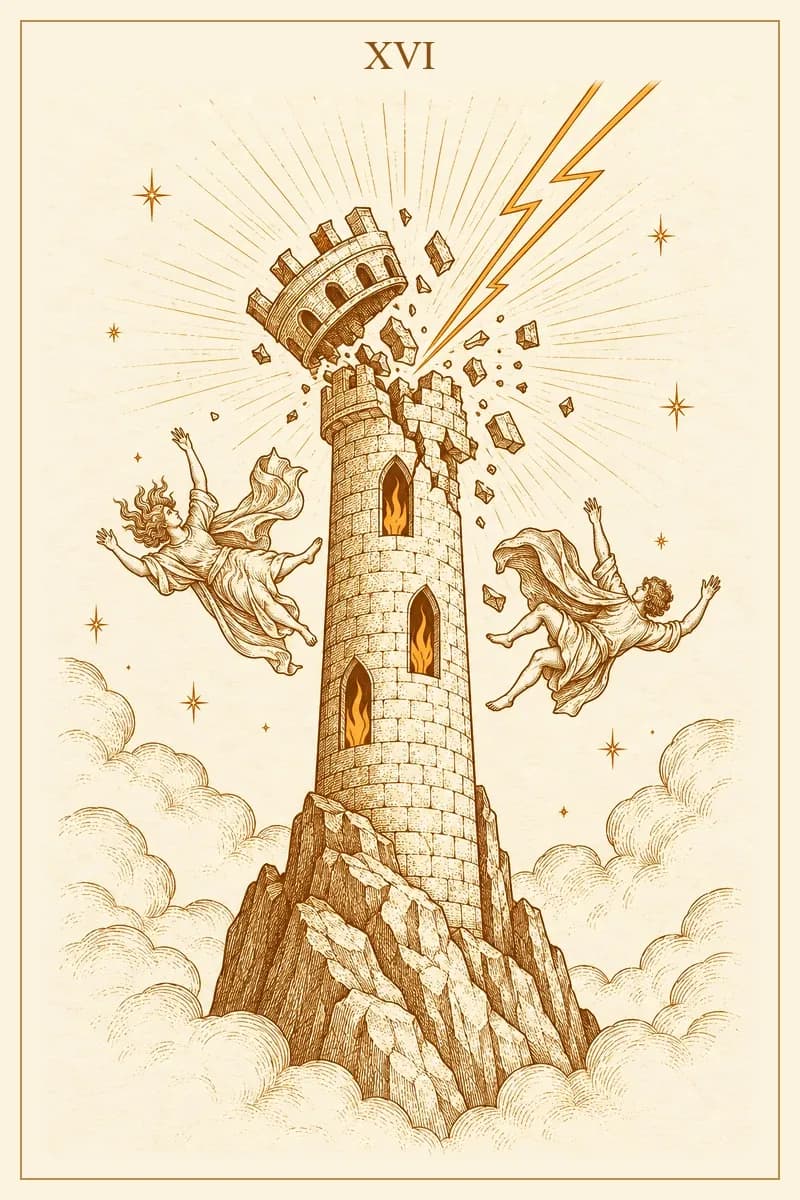
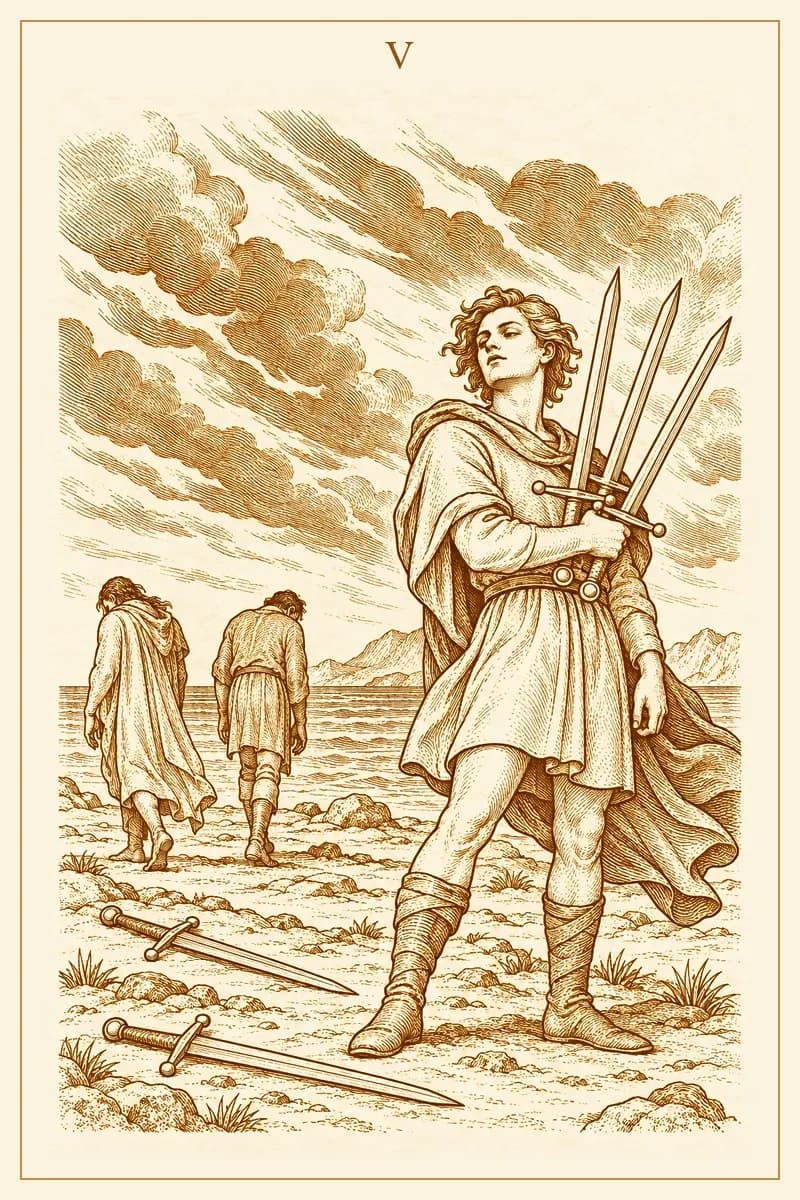
Meaning of The Tower and Five of Swords Combination: Collapse and Conquest
collapse through conflict
Some battles are won at too high a cost. The walls come down — whether by lightning or by the slow corrosion of a thousand small betrayals — and when the dust clears, someone is left standing over the wreckage claiming victory with a hollow look in their eyes. That is the territory this pairing maps. Not chaos alone, not conflict alone, but the specific devastation of a fight that destroys the very thing it was fought over.
Lightning strikes the fortress. Swords are gathered from the fallen. These are two cards that refuse comfort, and placed together they demand a harder kind of honesty: Was the structure worth defending? Was the conquest worth the ruin? Most people arriving at this combination already sense the answer but are still looking for permission to sit with how bad it feels.
What makes this pairing so difficult is that neither card offers a clean villain. Towers fall because they were built on unstable ground — pride, illusion, overclaimed certainty. The Five of Swords wins because someone chose to win at any cost. Lay the two beside each other and you get a full picture of how institutions, relationships, and inner lives unravel: not just from outside shocks, but from the inside, where the real weapons were always kept.
The Core Tension
This is a combination about pyrrhic outcomes. The Tower tears down the existing structure without apology; the Five of Swords picks through the ruins and declares itself the winner. Together they describe a situation where someone has technically prevailed — secured the argument, held the position, refused to yield — but the ground they are standing on is scorched and the people who once stood with them have walked away.
The strategic analogy is apt: an army that destroys the bridge to stop the enemy cannot then use the bridge themselves. Whatever was won here, the infrastructure of what made it worth winning is gone. This is not always visible immediately. The victory can look clean for days, even weeks, before the full cost of the Tower's collapse becomes undeniable.
Love & Relationships
In a relationship reading, this combination surfaces when a partnership has been detonated — either through a sudden rupture or through the accumulated damage of too many arguments where someone had to win. One person may have said the irreversible thing. One person may have fought so hard to be right that they forgot they were supposed to be together.
If you are in the middle of this: the fighting is not saving the relationship, it is the evidence that something fundamental cracked long before this moment. If you are on the other side of it: the "win" you may be clutching — the last word, the moral high ground, the proof you were correct — is cold company. Neither path here leads back to what existed before. The Tower does not rebuild; it clears.
Career & Purpose
Professionally, this pairing points to a collapse in a team, company, or project structure accompanied by toxic competition. Layoffs handled through internal politics. A restructuring where people sharpened their elbows and called it strategy. A leader who consolidated power by eliminating allies.
If you are navigating this environment: identify what is structurally sound and what is theater. The person celebrating loudest after a corporate Tower moment is often the most exposed — they won a position atop rubble, and rubble shifts. Protect your work, document everything, and do not mistake survival for safety.
Shadow Side
Both cards carry a shadow around aggression. The Tower's shadow is the part of us that secretly wanted the structure to fall — that was too proud or too afraid to dismantle it consciously, so something had to force the issue. The Five of Swords' shadow is the part that mistakes domination for strength, that collects wounds as trophies rather than wisdom.
Together, their shadow asks a blunt question: Are you perpetuating this collapse, or are you trying to understand it? There is a version of this combination where the person drawing it is the lightning, not the struck tower — the one whose need to win at all costs created the conditions for destruction. That is uncomfortable. It is also useful.
Action Steps
- 1Before re-engaging in any active conflict, inventory what you are actually trying to protect. If the answer is pride or the desire to be proven right, that is the Tower's unstable foundation — and you already know how that ends.
- 2Separate genuine threats from grievances. The Five of Swords amplifies grievance into warfare. Some things that feel like attacks are just chaos, not aimed at you.
- 3Resist the urge to claim or assign blame for the collapse before the full picture is visible. Whoever is holding the swords at the end of a Tower moment does not necessarily understand how the fight started.
Related Pairings
Continue through published pairings that share The Tower or Five of Swords.

controlled force shattered
Meaning of The Chariot and The Tower: Momentum Meets Collapse
costly victory
Meaning of The Chariot and Five of Swords Combination: Winning at a Cost

forced liberation
Meaning of The Devil and The Tower Combination: Chains Shattered by Fire
Toxic Power Games
Meaning of The Devil and Five of Swords Combination: Toxic Power Games

authority meets collapse
Meaning of The Emperor and The Tower: When the Fortress Falls
pyrrhic authority
Meaning of The Emperor and Five of Swords: Winning at What Cost
✦ Bring it to the cards ✦
Bring The Tower and Five of Swords into your own reading
Use this pairing as a starting point, then let a spread listen to the situation that is actually yours.
Begin a contextual reading