
Card Combination
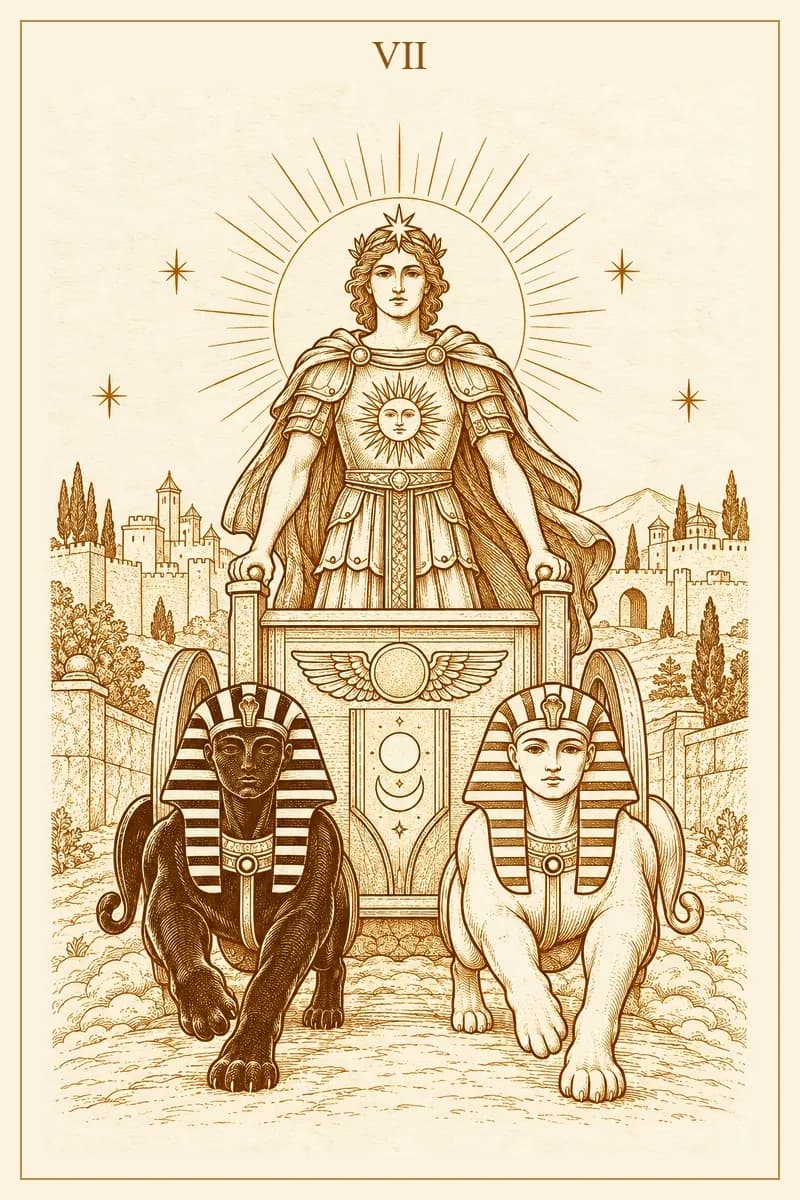
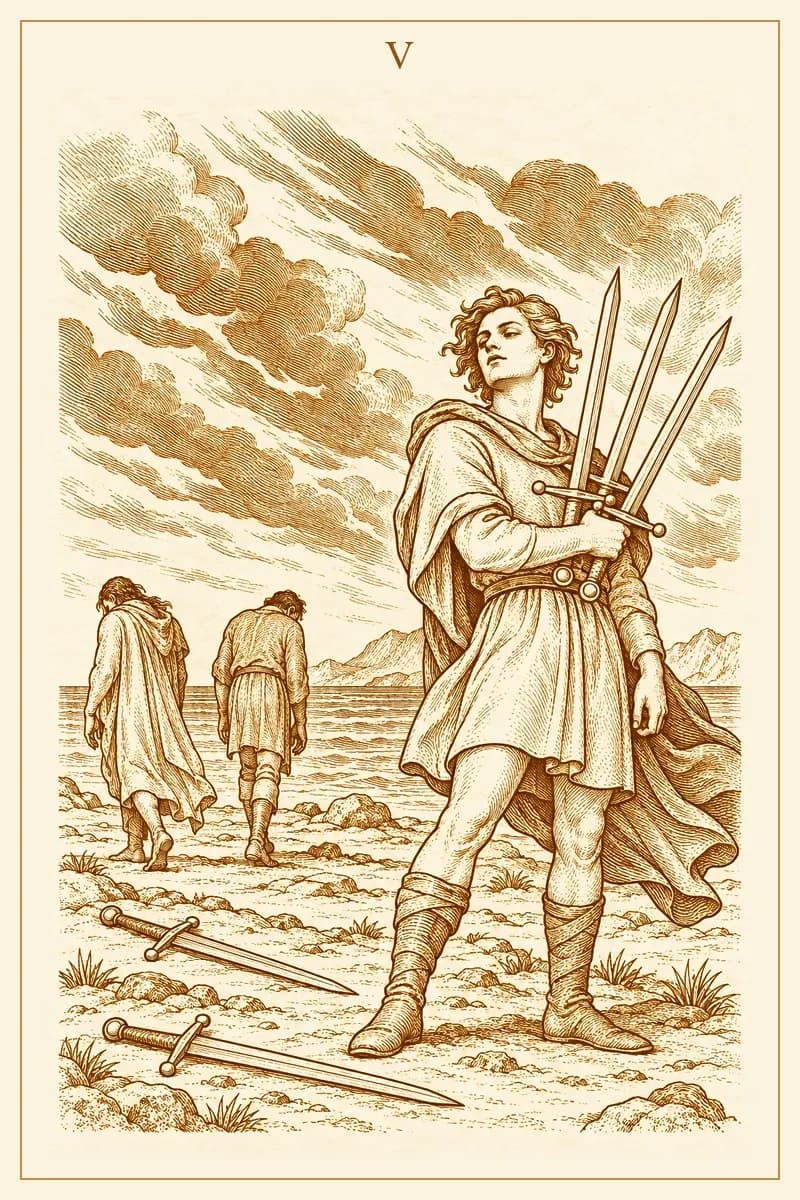
Meaning of The Chariot and Five of Swords Combination: Winning at a Cost
costly victory
The engine is still running. You crossed the finish line, but when you step out of the vehicle and look back at the track, there are marks — skid marks, maybe tire shreds, maybe something worse. You won. Nobody can take that from you. But the cost of the race is sitting in the silence after the crowd goes quiet.
That is the mechanical truth this pairing delivers. The Chariot is a finely tuned machine: disciplined, directional, built for momentum. It does not veer. It does not hesitate. The Five of Swords, meanwhile, is what happens when that same force meets a field of human resistance — and runs through it without stopping to check what it destroyed. Three swords left scattered on the ground. Two figures walking away with their heads down. One figure standing, holding the extra blades, watching them go.
The tension here is not between winning and losing. It is between victory and integrity. These two cards form a circuit that can either generate tremendous forward progress or burn out the wiring entirely — depending on how consciously the machine is operated.
The Core Tension
Control is the Chariot's gift. It keeps opposing forces — symbolized by the two sphinxes or horses pulling in different directions — moving as one through sheer will. The Five of Swords introduces a scenario where that control was applied to people rather than forces. Someone was outmaneuvered. Arguments were won through persistence, volume, or positioning rather than genuine merit. The gears worked. The outcome was technically achieved. But the system is now running hotter than it should.
This combination points to situations where the drive to succeed has outpaced the consideration of method. The Chariot does not naturally ask whether the path was fair — only whether the destination was reached. The Five of Swords answers that question with an uncomfortable ledger: here is what it cost, and here is who paid it.
Love & Relationships
In relationships, this pairing often surfaces after a conflict that felt like a win but landed like a loss. One person "won" the argument — had the last word, made the stronger case, or simply outlasted the other's emotional reserves. The Chariot energy made sure the point was driven home. The Five of Swords energy recorded what it felt like to be on the receiving end.
If you are in a new connection, this combination can indicate a dynamic where one person is steering too hard. Momentum is good; steamrolling is not. There is a difference between leading and not allowing space for the other person to exist within the relationship. The machine metaphor applies: a vehicle with only one functioning wheel turns in circles.
For longer partnerships, the question this pairing raises is whether old victories are still being counted. Winning past arguments does not strengthen a relationship over time — it accumulates as debt.
Career & Purpose
Professionally, this combination is a sharp marker of competitive environments and the ethics they generate. The Chariot here suggests someone moving fast, meeting targets, showing results. The Five of Swords suggests the competitive field they are navigating — or the methods they are using to stay ahead.
There is legitimate strategy here. Not every professional situation calls for warmth; some call for precision, speed, and the willingness to hold your position against pushback. The Chariot's energy is appropriate in those contexts. But the Five of Swords flags when competition has tipped into something corrosive — credit taken, alliances strained, colleagues left behind not because of merit but because of positioning.
This pairing can also mark the aftermath of a workplace conflict that has officially resolved but has not actually healed.
Shadow Side
The shadow territory of this combination is the person who is so committed to forward motion that they have stopped noticing the debris in the wake. The Chariot's determination becomes rigidity. The Five of Swords' willingness to take the blades becomes a habit of extraction — always taking, rarely returning, justifying it all as necessary. Speed is the cover story. Progress is the alibi.
The deeper shadow is the isolation this creates. The figures walking away in the Five of Swords are not just defeated — they are done. Repeatedly winning this way eventually leaves the victor alone on a track no one else wants to be on.
Action Steps
- 1Audit one recent "win" and name specifically what it cost — not abstractly, but concretely: who was affected, what was said, what is now unresolved.
- 2Slow the engine deliberately in one conversation this week; let the other person finish their thought before you formulate your response.
- 3Distinguish between a boundary worth holding firmly and a position worth revisiting — not every hill needs defending at full speed.
Related Pairings
Continue through published pairings that share The Chariot or Five of Swords.
ambition vs obsession
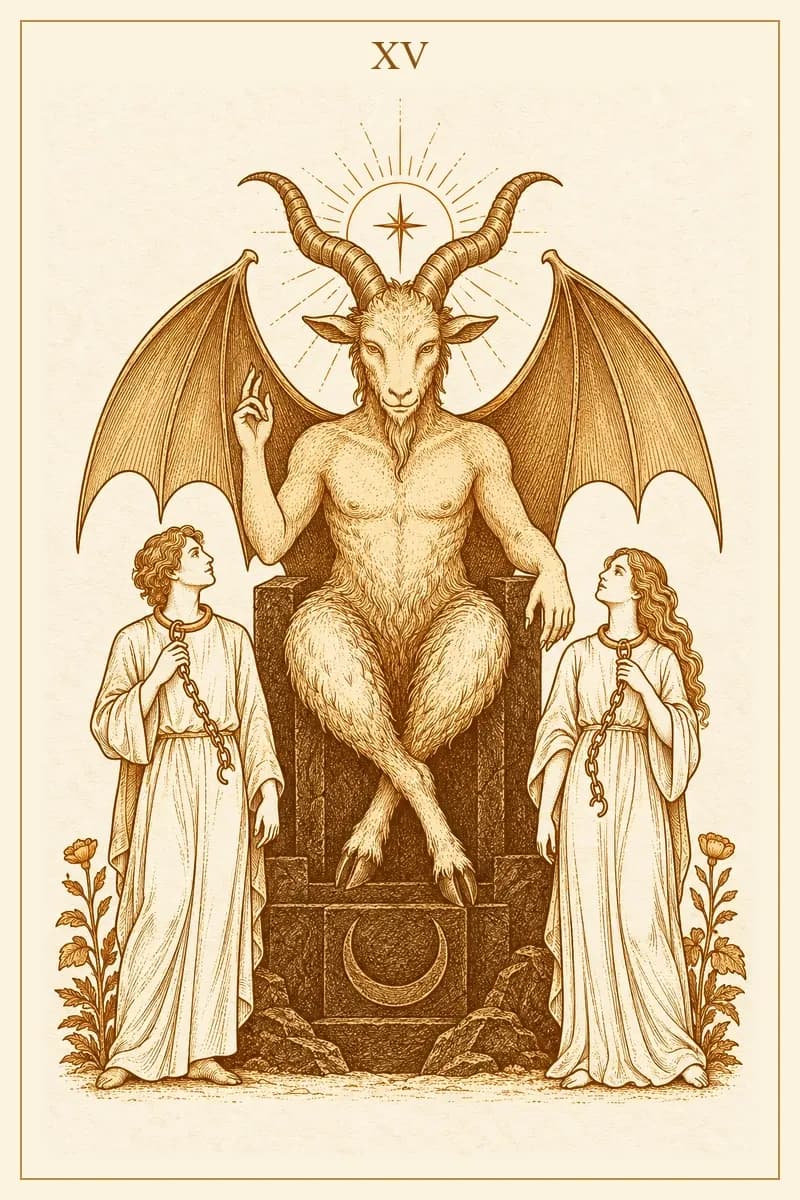
Meaning of The Chariot and The Devil: Ambition in Chains
momentum versus surrender
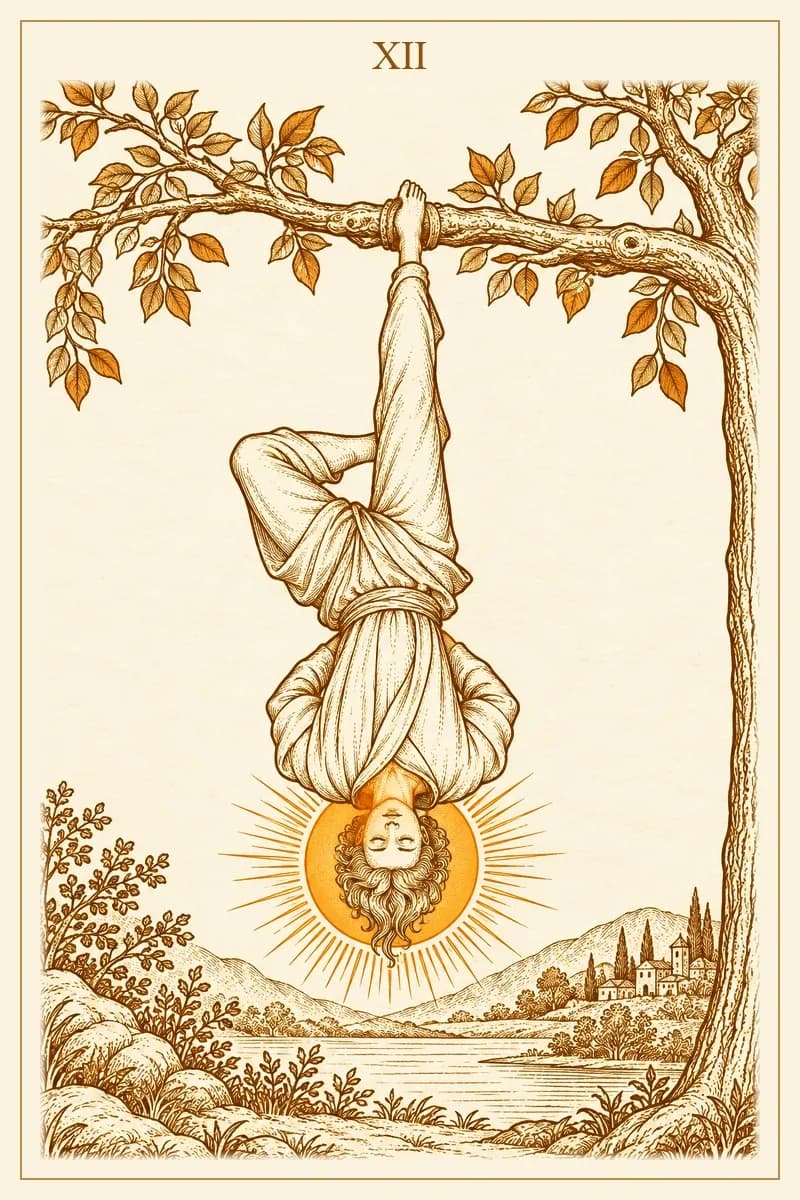
Meaning of The Chariot and The Hanged Man: Momentum Meets Stillness
Toxic Power Games
Meaning of The Devil and Five of Swords Combination: Toxic Power Games
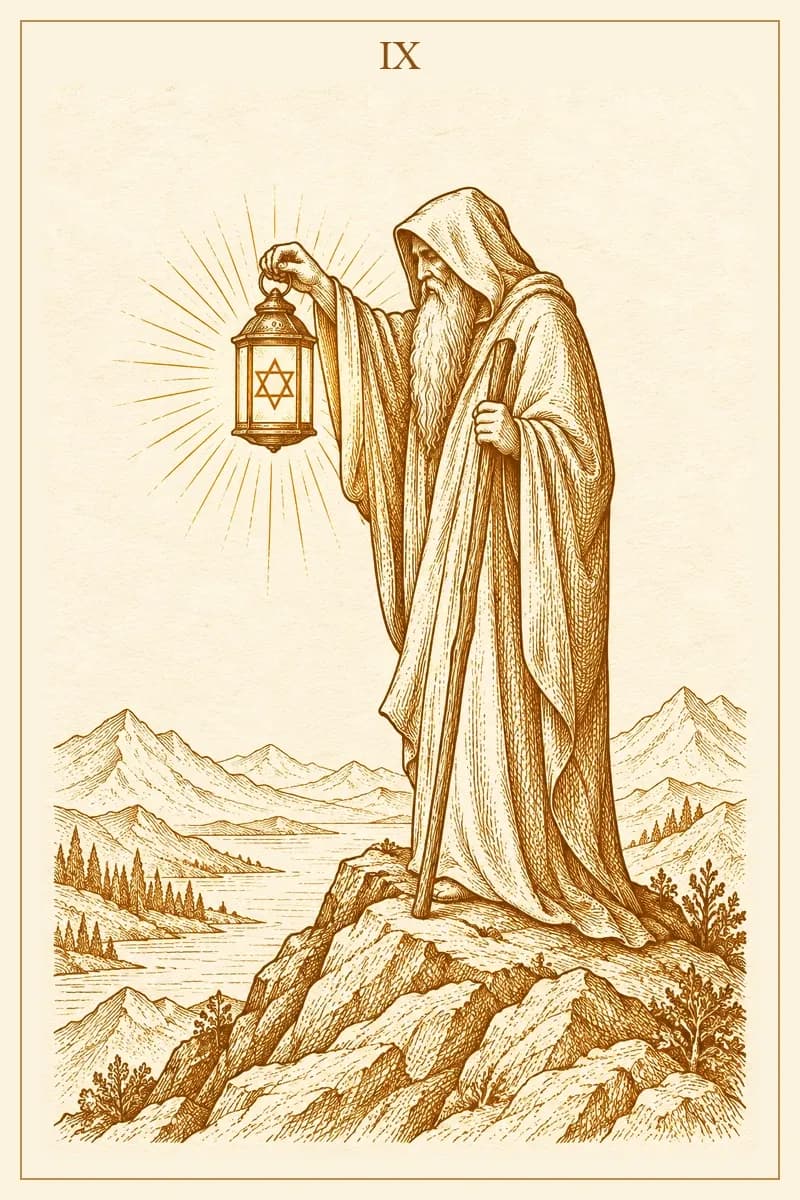
driven introspection
Meaning of The Chariot and The Hermit: Driven Inward

pyrrhic authority
Meaning of The Emperor and Five of Swords: Winning at What Cost

willpower versus illusion
Meaning of The Chariot and The Moon Combination: Battle in the Fog
✦ Bring it to the cards ✦
Bring The Chariot and Five of Swords into your own reading
Use this pairing as a starting point, then let a spread listen to the situation that is actually yours.
Begin a contextual reading