
Card Combination
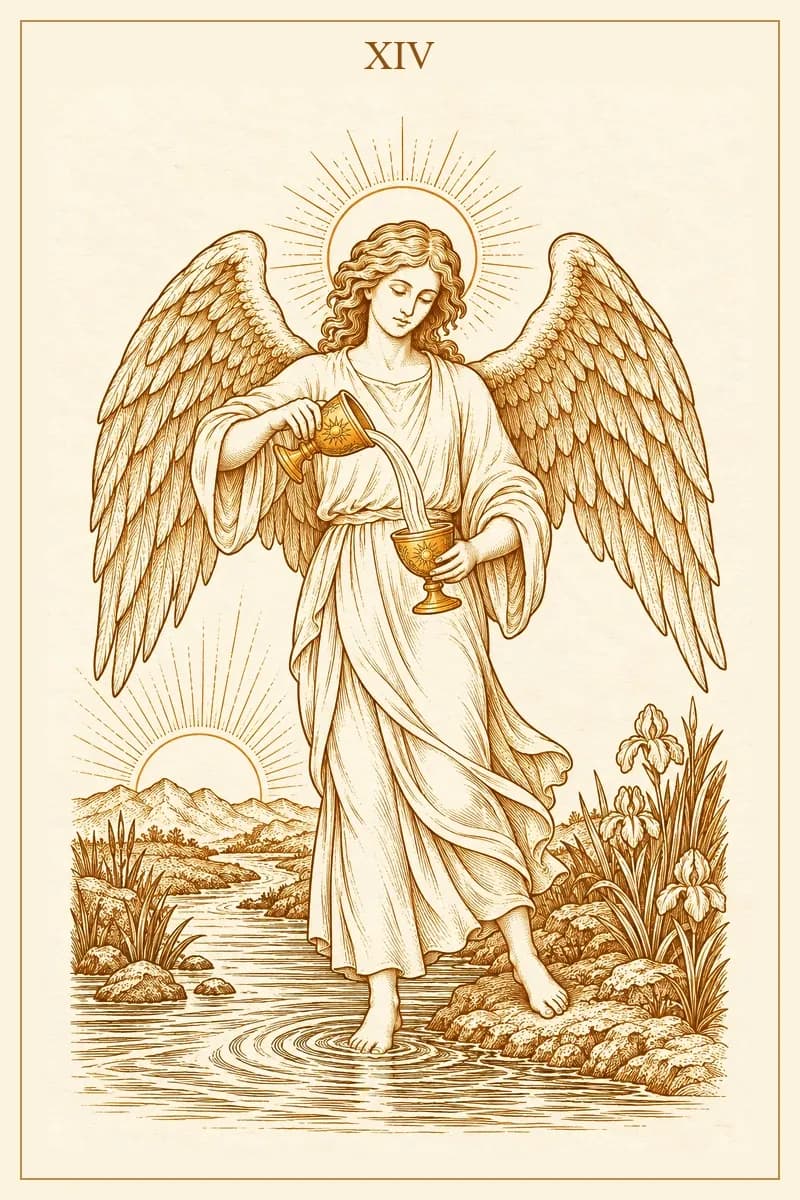
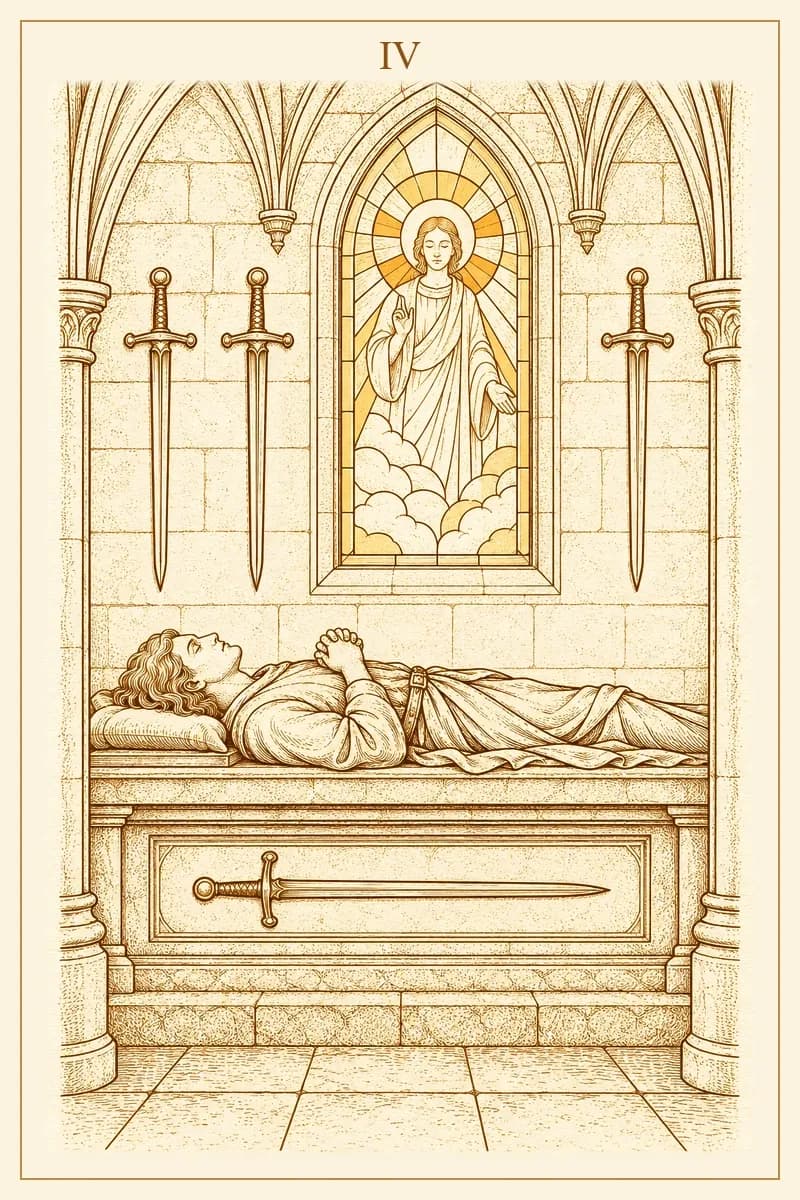
Meaning of Temperance and Four of Swords Combination: Sacred Rest
Strategic recovery
The athletes who win championships are not the ones who train the hardest. They are the ones who recover the best. Every elite performance coach knows this, and yet we continue to celebrate exhaustion as proof of commitment — grinding through fatigue, playing through injury, mistaking collapse for dedication. Temperance paired with the Four of Swords arrives in your reading like a sports physiologist slamming a clipboard on the table: you are overtrained, and if you do not periodize your rest immediately, you will lose far more than a single game.
This is not a soft invitation to light some candles and take a bath. This is a clinical intervention. The Four of Swords shows an athlete lying flat on a recovery table, heart rate monitored, muscles deliberately immobilized. Temperance stands beside them calibrating the exact recovery protocol — how much sleep, how much gentle movement, how much complete stillness. Nothing about this process is passive. Strategic rest is perhaps the most disciplined act an athlete can perform because it requires suppressing every instinct that says more effort equals more results.
The scoreboard of your life is showing diminishing returns. These two cards have gathered to tell you precisely why.
The Core Tension
The central conflict here is between the cultural worship of constant output and the biological necessity of cyclical restoration. Temperance understands periodization — the principle that peak performance requires alternating between stress and recovery in carefully measured intervals. The Four of Swords represents the recovery phase itself, the off-season that most people try to skip because it looks like falling behind.
You are caught between the pressure to stay on the field and the knowledge that your performance has been declining for weeks. Every rep is sloppier than the last. Your reaction time has slowed. The plays you once executed instinctively now require conscious effort that drains you further. The tension is not whether you need rest — the data is unambiguous. The tension is whether you will grant yourself permission to take it before your body forces the decision through injury or breakdown.
Love & Relationships
In relationships, the Temperance and Four of Swords combination often appears when both partners are running on fumes. The emotional equivalent of two marathon runners trying to have a meaningful conversation at mile twenty-three — technically possible, but everything comes out garbled and reactive. Arguments escalate not because the issues are unsolvable but because neither person has the reserves to respond with nuance.
If you are navigating a difficult period with a partner, this pair prescribes a deliberate timeout — not the passive-aggressive silent treatment, but a structured recovery interval where both parties agree to rest from the conflict. Like halftime in a close match, the break is not surrender. It is strategy. Use the interval to hydrate emotionally, review your approach, and return to the conversation with better form.
For those who are single, these cards indicate that you have been forcing yourself through the dating circuit like an athlete grinding through a preseason they never wanted. Pull back. The right match will require your best performance, and right now you are nowhere close to delivering it.
Career & Purpose
Professionally, this pairing is an unmistakable signal that your productivity is in a state of overtraining syndrome. You have pushed past the point where additional hours produce additional value. Every email you send after a certain hour contains mistakes you would never make at full capacity. Your creative output has become repetitive because your brain has not been given the downtime required to synthesize information into original ideas.
Temperance combined with the Four of Swords prescribes active recovery for your career. This means taking your remaining vacation days without checking messages. It means blocking two hours each morning for deep work and defending those hours the way a coach defends a star player's rest schedule. It means recognizing that your most productive colleagues are not working more than you — they are recovering more intelligently.
Shadow Side
The shadow of this combination is using rest as a permanent retreat from competition. There is a version of this pairing where the recovery period extends indefinitely because returning to the field means risking failure, pain, or the discovery that your best days are behind you. Temperance's moderation becomes an excuse to never fully commit, and the Four of Swords' stillness becomes a coffin rather than a recovery table.
Watch also for the shadow of performative rest — posting about your self-care routine while internally remaining as wired and anxious as ever. True recovery is not aesthetic. It is boring, unglamorous, and often indistinguishable from doing nothing at all. If your rest looks good on camera, question whether it is actually restoring anything.
Action Steps
- 1Block three consecutive evenings with zero obligations and spend them doing only activities that require no performance or output from you
- 2Identify the single responsibility you can temporarily delegate or postpone, and communicate that handoff to the relevant person by Wednesday
- 3Track your energy levels three times daily for the full week and note which activities drain you fastest so you can restructure next week accordingly
Related Pairings
Continue through published pairings that share Temperance or Four of Swords.
Controlled momentum
Meaning of The Chariot and Temperance Combination: Controlled Drive Meets Measured Pace
Disciplined stillness
Meaning of The Chariot and Four of Swords Combination: Strategic Rest
Controlled patience
Meaning of The Emperor and Temperance Combination: When Command Meets the Slow Cure
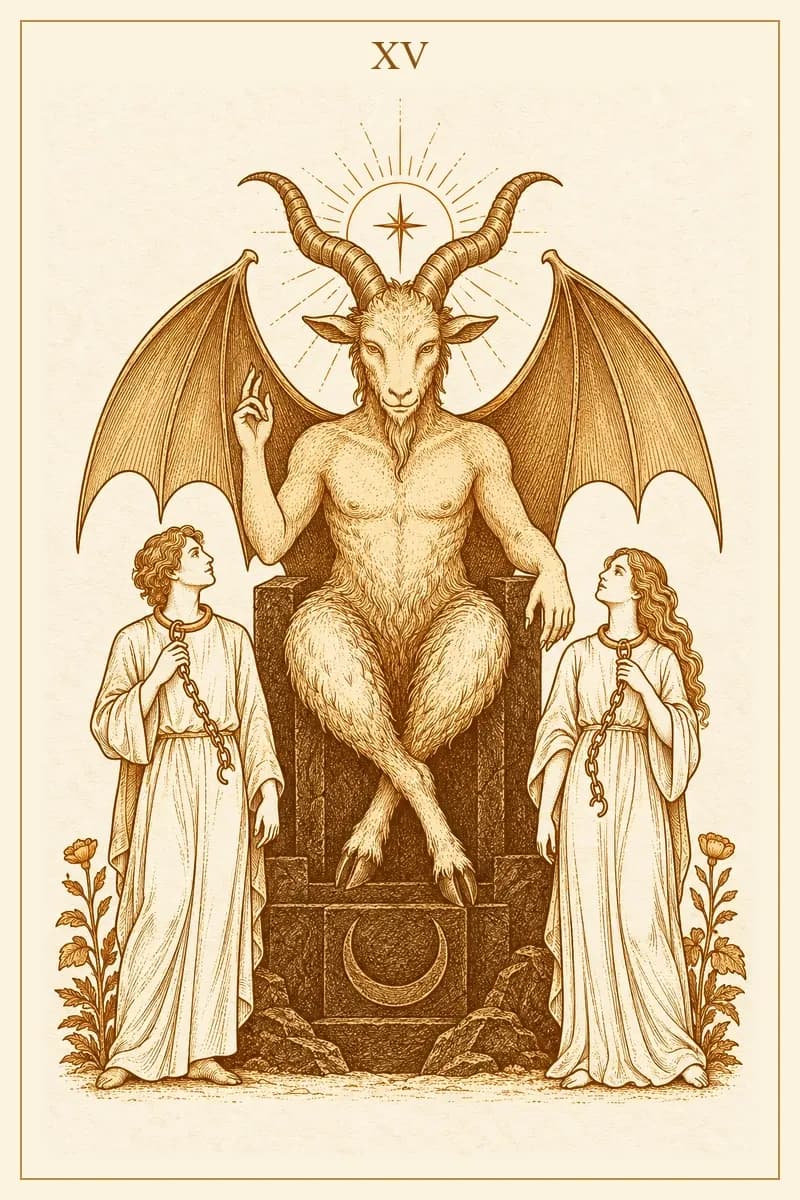
Conscious confinement
Meaning of The Devil and Four of Swords Combination: Captivity Needs Rest
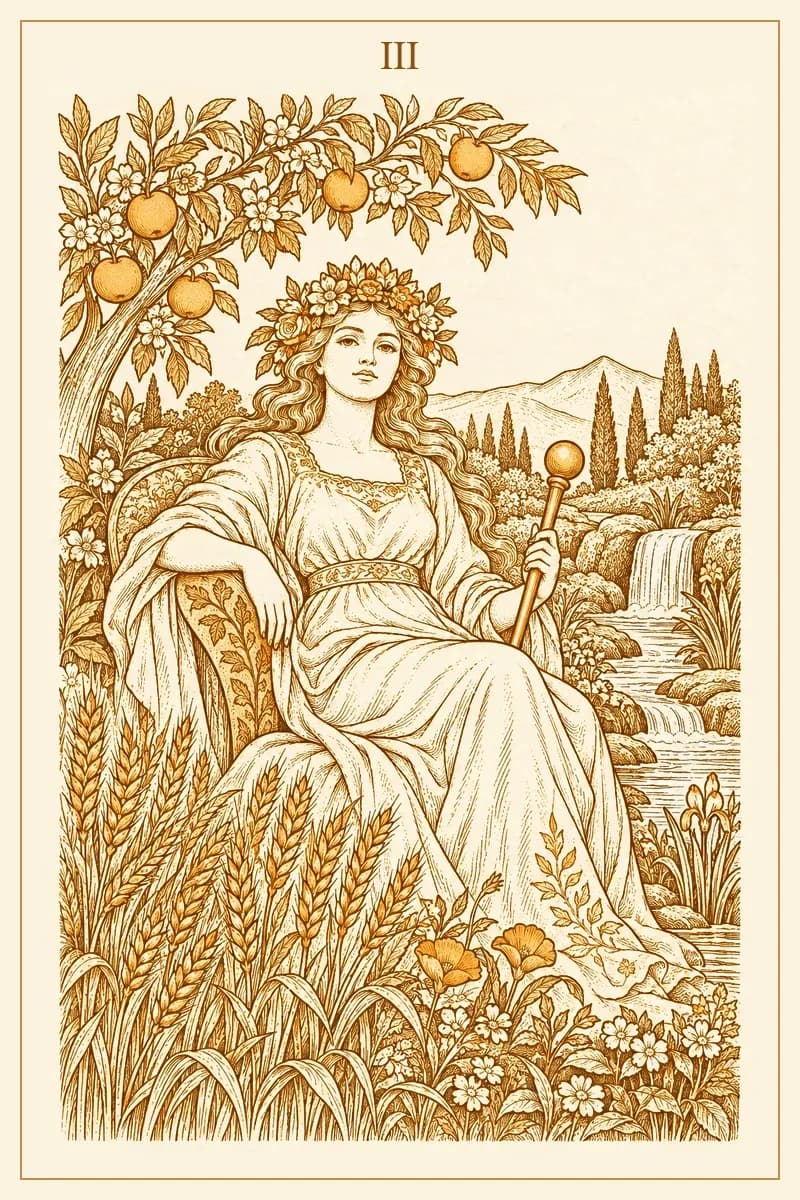
Fertile balance
Meaning of The Empress and Temperance Combination: When Abundance Learns to Flow
Strategic retreat
Meaning of The Emperor and Four of Swords Combination: Strength in Stillness
✦ Bring it to the cards ✦
Bring Temperance and Four of Swords into your own reading
Use this pairing as a starting point, then let a spread listen to the situation that is actually yours.
Begin a contextual reading