
Card Combination

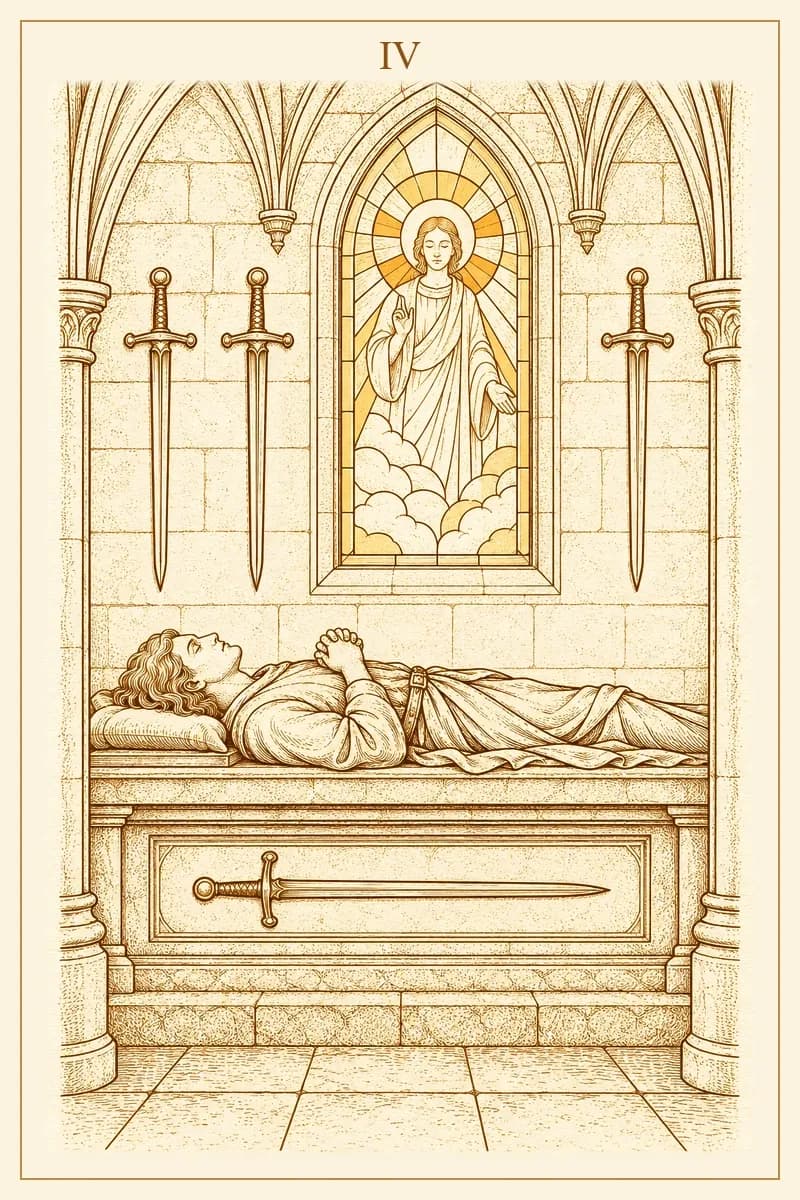
Meaning of The Emperor and Four of Swords Combination: Strength in Stillness
Strategic retreat
The most formidable generals in history were not those who never stopped fighting — they were those who knew precisely when to stop. The Emperor holds every reins of authority, every system of control, every demand that structure be maintained. The Four of Swords asks him to put it all down and lie still on a stone slab. The paradox is not that these two cards conflict. The paradox is that one cannot function without the other.
Here is a ruler who has built an empire on willpower. He does not rest; he delegates, strategizes, commands. And now the Four of Swords arrives like a battle-seasoned advisor who has seen enough campaigns to know: the army that never sleeps does not win wars — it collapses from within. The stone chamber of the Four of Swords is not a prison. It is the war room cleared of noise, the moment before the next campaign begins.
Together, these two cards create a specific kind of pressure. The Emperor's energy wants to act. The Four of Swords enforces a halt. What emerges from this tension is not weakness — it is the deliberate accumulation of force that makes the next move decisive rather than desperate.
The Core Tension
The Emperor governs through active presence: visible, structured, in command. His identity is bound to doing. The Four of Swords exists in suspension — a knight at rest, swords mounted on the wall, not in hand. These two energies sit on opposite ends of the same spectrum, and when they appear together, you are being asked to hold both simultaneously.
This is the tension between authority and recovery. Between the fear that pausing means losing ground and the knowledge that pushing forward depleted is how empires actually fall. The Four of Swords does not ask the Emperor to abdicate. It asks him to understand that even the most fortified stronghold requires maintenance, and that maintenance sometimes looks like silence.
Love & Relationships
In relationships, this combination points to a dynamic where one person — or both — has been running on pure determination. Love as a managed enterprise. Emotional needs handled like a project. The Emperor's approach to partnership is loyal and stable but can lack the softness that genuine intimacy requires.
The Four of Swords intervenes and says: before you make any more moves, before you issue any more decisions about this relationship, stop. Have a quiet conversation instead of a structured one. Sit with your partner without an agenda. What has been suppressed under the noise of daily management may surface only in stillness — and it may be exactly the information this relationship needs.
For those in conflict, this pairing suggests a ceasefire rather than a resolution. Not everything must be settled immediately. Some wounds need rest before they can be addressed without causing more damage.
Career & Purpose
Professionally, this is the signal of a leader who has pushed hard for a sustained period and is approaching the edge of effective function. The Emperor at work is relentless — he builds systems, holds teams accountable, drives results. But even the best-designed machine requires downtime for calibration.
The Four of Swords in a work context points to strategic withdrawal: stepping back from a project to gain perspective, declining additional responsibilities while current ones consolidate, or simply taking the time off that has been earned but postponed indefinitely. The work will not unravel. In fact, the decisions made after this rest period will be sharper and more durable than anything produced in the current state of exhaustion.
Shadow Side
The danger in this pairing is avoidance dressed as discipline. The Emperor's shadow is rigidity — the refusal to acknowledge vulnerability. If he uses the Four of Swords not as genuine recovery but as a controlled retreat that avoids all uncomfortable truths, nothing is healed. The rest becomes another form of control: structured, scheduled, performing recovery without actually experiencing it.
Watch for the temptation to plan the rest period rather than inhabit it. The Emperor wants to optimize even his downtime. That impulse, if unchecked, defeats the entire purpose of what the Four of Swords offers.
Action Steps
- 1Identify the one task or obligation that has been running on fumes and deliberately pause it for 48 hours before touching it again.
- 2Schedule at least one unstructured block of time — no agenda, no productivity goal — and protect it from cancellation the same way you protect a critical meeting.
- 3Before making any major decision this week, sleep on it for a full night regardless of how certain you feel.
- 4The Emperor and Four of Swords do not ask you to choose between strength and rest. They reveal that in this moment, rest is the strongest move available. The campaign is not over — it is being prepared for. Step back with intention, recover with discipline, and return with everything the Emperor is capable of: clarity, authority, and the calm certainty of someone who chose this moment rather than being forced into it.
Related Pairings
Continue through published pairings that share The Emperor or Four of Swords.

Structured forward momentum
Meaning of The Emperor and The Chariot Combination: Authority in Motion
Disciplined stillness
Meaning of The Chariot and Four of Swords Combination: Strategic Rest

Authority versus control
Meaning of The Emperor and The Devil Combination: When Authority Becomes a Cage
Conscious confinement
Meaning of The Devil and Four of Swords Combination: Captivity Needs Rest
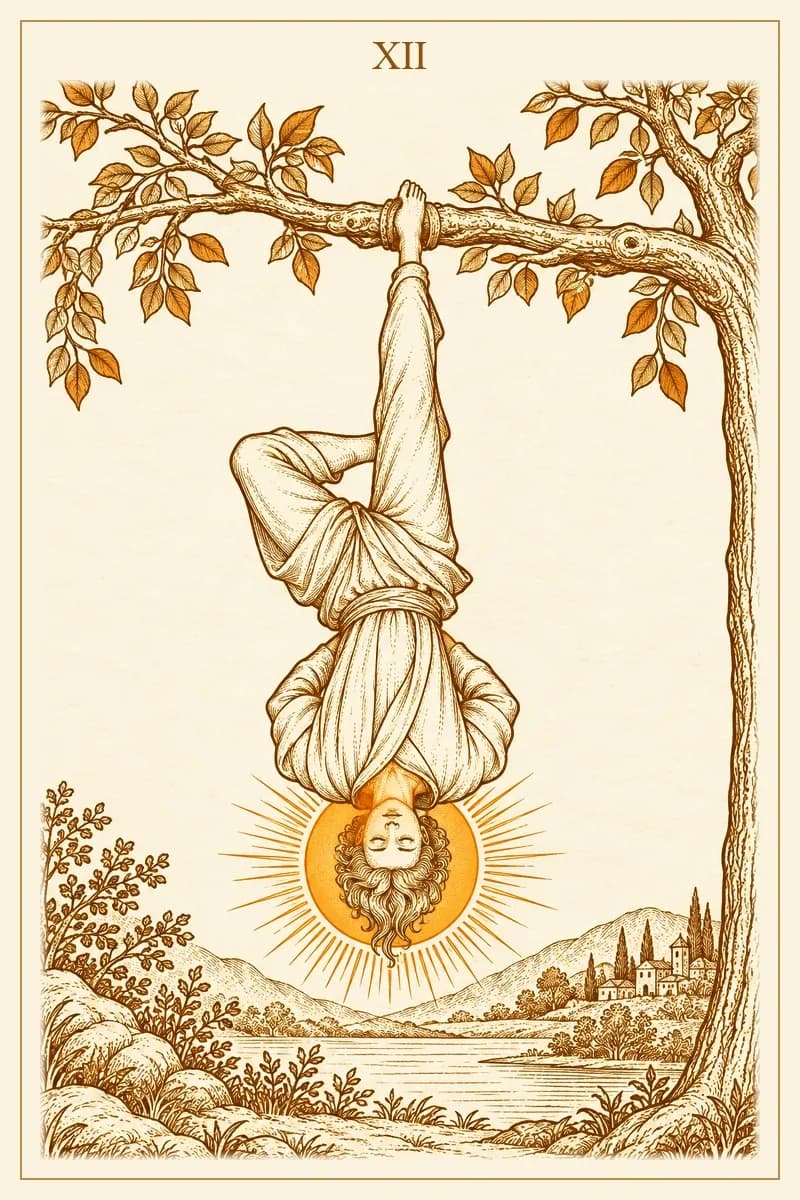
Control vs release
Meaning of The Emperor and The Hanged Man Combination: When Control Meets Surrender
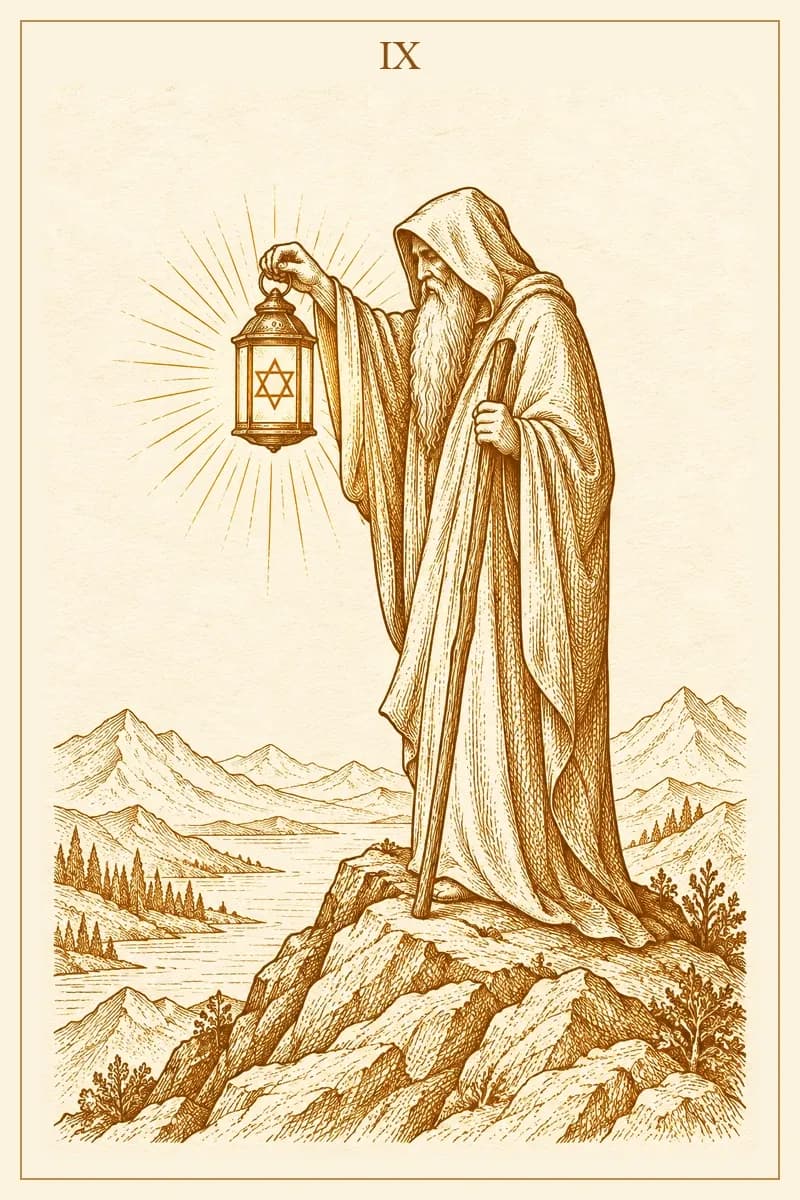
Outer vs inner authority
Meaning of The Emperor and The Hermit Combination: Command Meets Solitude
✦ Bring it to the cards ✦
Bring The Emperor and Four of Swords into your own reading
Use this pairing as a starting point, then let a spread listen to the situation that is actually yours.
Begin a contextual reading