
Card Combination
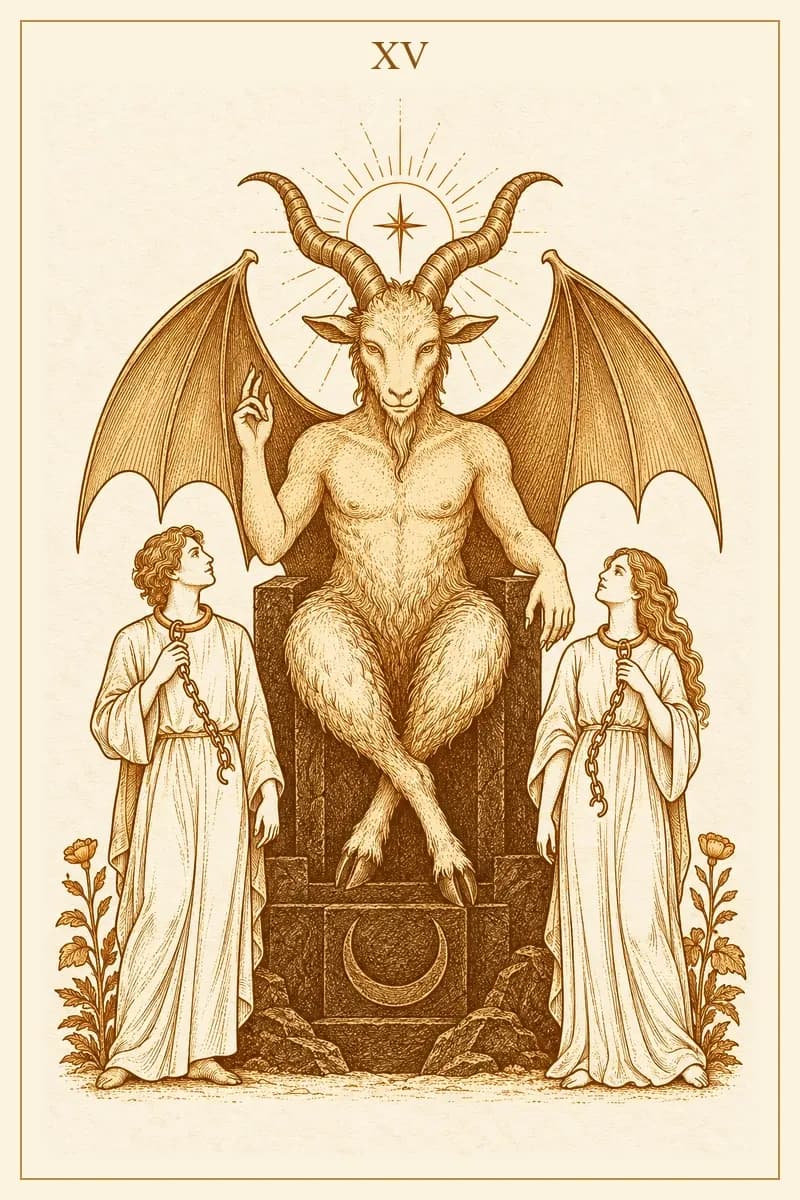
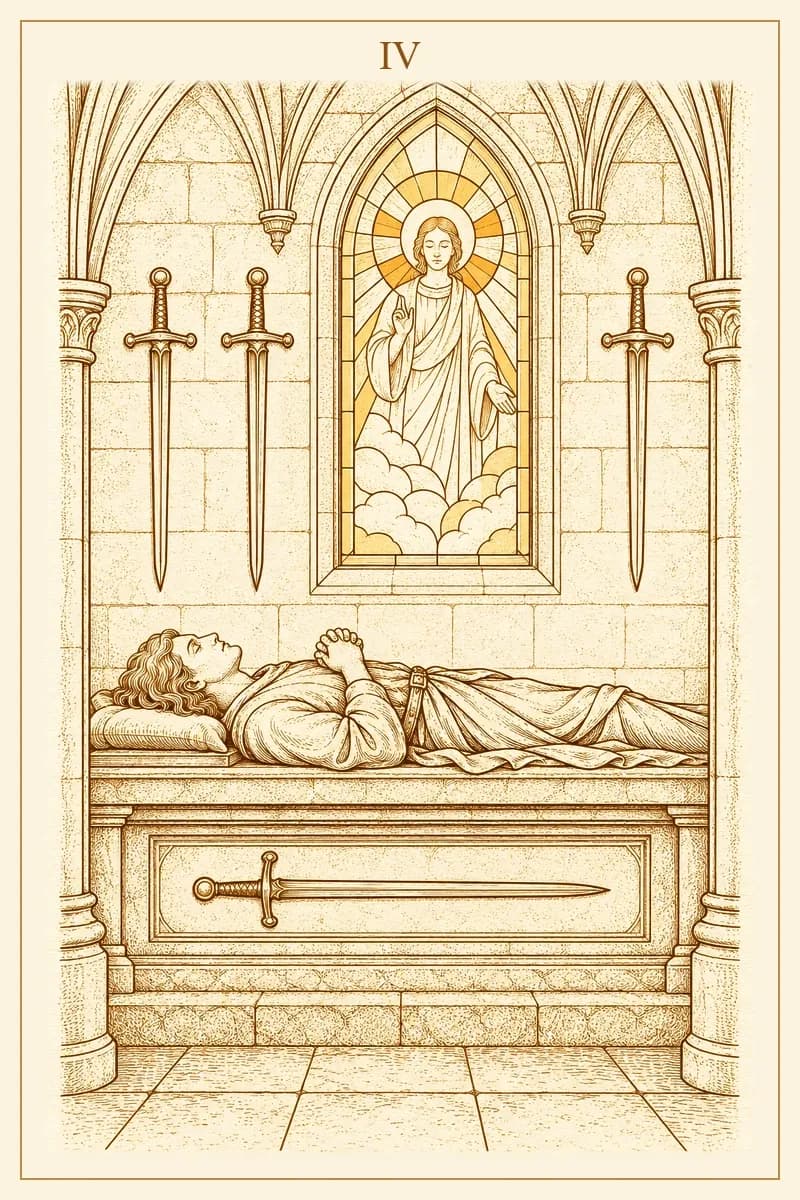
Meaning of The Devil and Four of Swords Combination: Captivity Needs Rest
Conscious confinement
The attending physician pauses at the foot of the bed. The patient insists they're fine—but the chart shows three weeks of the same deteriorating markers, and the room smells like something that hasn't moved in too long. That pause, that clinical stillness before the next question, is exactly where you are now.
The Devil has already named what holds you. Compulsion, dependency, the pleasurable lie you've agreed to repeat—it doesn't need a dramatic entrance. It shows up as the habit you defend, the relationship dynamic you rationalize, the pattern you recognize at 2 a.m. and forget by morning. The Four of Swords enters not as rescue but as triage protocol: before treatment, you must stop long enough to read the actual symptoms.
This combination doesn't offer comfort. It offers diagnostic clarity. The stillness the Four of Swords demands is not rest for its own sake—it is the controlled environment required to see what The Devil has been obscuring through constant motion, noise, and craving.
The Core Tension
Rest, in this pairing, is almost dangerous—because when the noise stops, the chains become audible. The Four of Swords creates the silence; The Devil fills it with everything you've been avoiding. A competent diagnostician doesn't flinch at the uncomfortable finding. The tension here is between the body's urge to keep moving (because movement feels like agency) and the clinical necessity of lying still long enough for the scan to complete.
You are both the patient and the physician. The Devil is the presenting complaint. The Four of Swords is the instruction: stop, breathe, let the imaging do its work.
Love & Relationships
In a relationship reading, this pairing describes a dynamic where one or both partners know something is structurally wrong but have been sustaining it through distraction—busyness, arguments that reset the tension without resolving it, physical intimacy that papers over emotional debt.
The Four of Swords doesn't prescribe separation or surrender. It prescribes stillness long enough to take an honest inventory. Examine honestly whether what you're protecting in this relationship is genuine connection or the familiarity of a system you've learned to navigate. Those are different diagnoses with different treatment plans.
If single, The Devil here points to a pattern—a type you keep selecting, a wound you keep reopening. The Four of Swords says: before the next attempt, run the full panel. Identify what the pattern is actually medicating.
Career & Purpose
Professionally, this combination surfaces when someone is locked into a work identity that has become its own trap—the overachiever who can't stop, the creative who uses output to avoid introspection, the professional who conflates exhaustion with worth.
The Devil in work contexts rarely looks villainous. It looks like dedication. It looks like "I just need to push through this quarter." The Four of Swords is the clinician who orders the patient off their feet despite protests. Productivity achieved from a depleted system compounds the underlying dysfunction—it does not resolve it.
This week, notice where you are performing wellness rather than cultivating it. The distinction matters.
Shadow Side
The shadow of this combination is using rest as another form of avoidance. The Four of Swords can become the patient who agrees to bed rest but spends it catastrophizing, scrolling, or mentally rehearsing the same arguments without resolution. Stillness without honest inquiry is just postponement in a horizontal position.
The Devil's secondary trap is spiritual bypassing: reframing the chains as "lessons" or "growth edges" without actually doing the structural work of examining them. The Four of Swords won't allow either escape. Real diagnostic rest means sitting with the uncomfortable data until the pattern becomes legible.
Action Steps
- 1Schedule one unscheduled hour—no input, no task—and use it to identify one recurring pattern you have been calling "just how things are."
- 2Map the last time you felt genuinely free in one domain (love, work, body). Note what changed between then and now; that delta is your chart.
- 3Locate the one thing you are most reluctant to stop doing, and examine honestly what it is substituting for.
Related Pairings
Continue through published pairings that share The Devil or Four of Swords.

Ambition vs obsession
Meaning of The Chariot and The Devil Combination: Ambition in Chains
Disciplined stillness
Meaning of The Chariot and Four of Swords Combination: Strategic Rest

Hidden compulsion
Meaning of The Devil and The Moon Combination: Shadows That Bind
Bondage versus healing
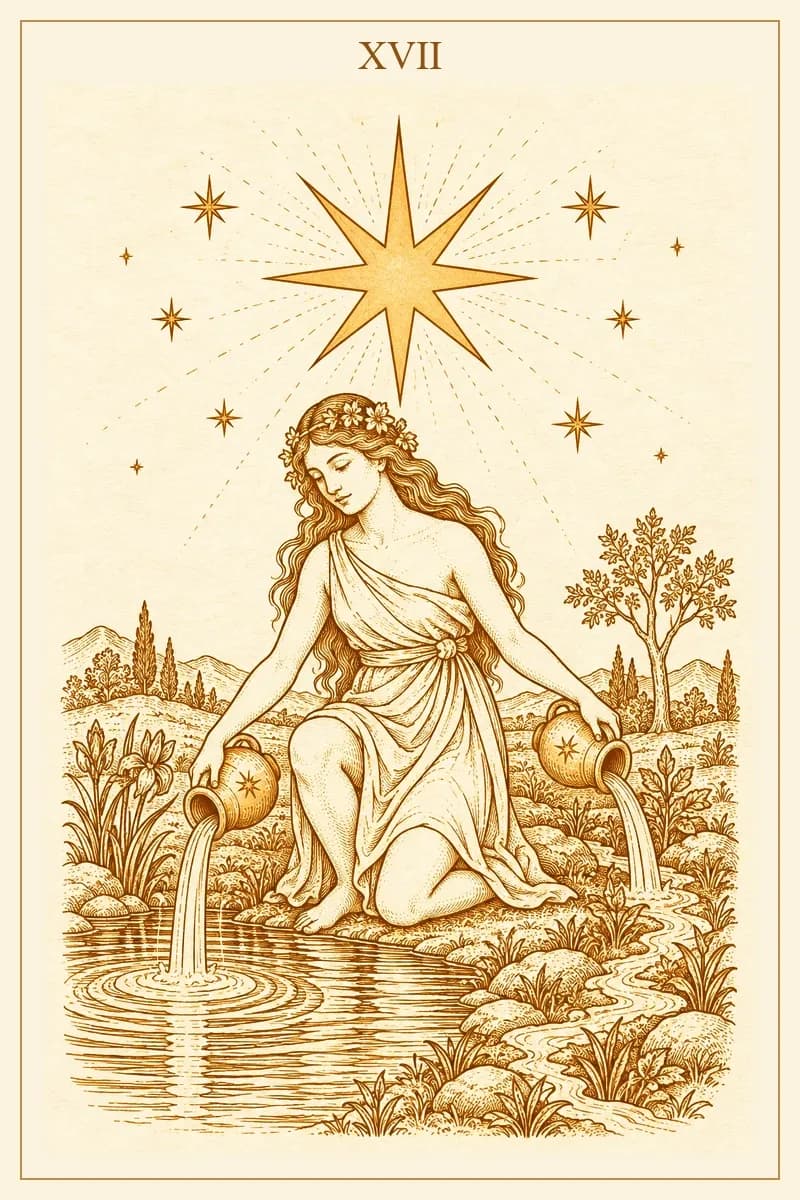
Meaning of The Devil and The Star Combination: Addiction vs. Recovery

Strategic retreat
Meaning of The Emperor and Four of Swords Combination: Strength in Stillness

Liberation through exposure
Meaning of The Devil and The Sun Combination: Chains in the Light
✦ Bring it to the cards ✦
Bring The Devil and Four of Swords into your own reading
Use this pairing as a starting point, then let a spread listen to the situation that is actually yours.
Begin a contextual reading