
Card Combination
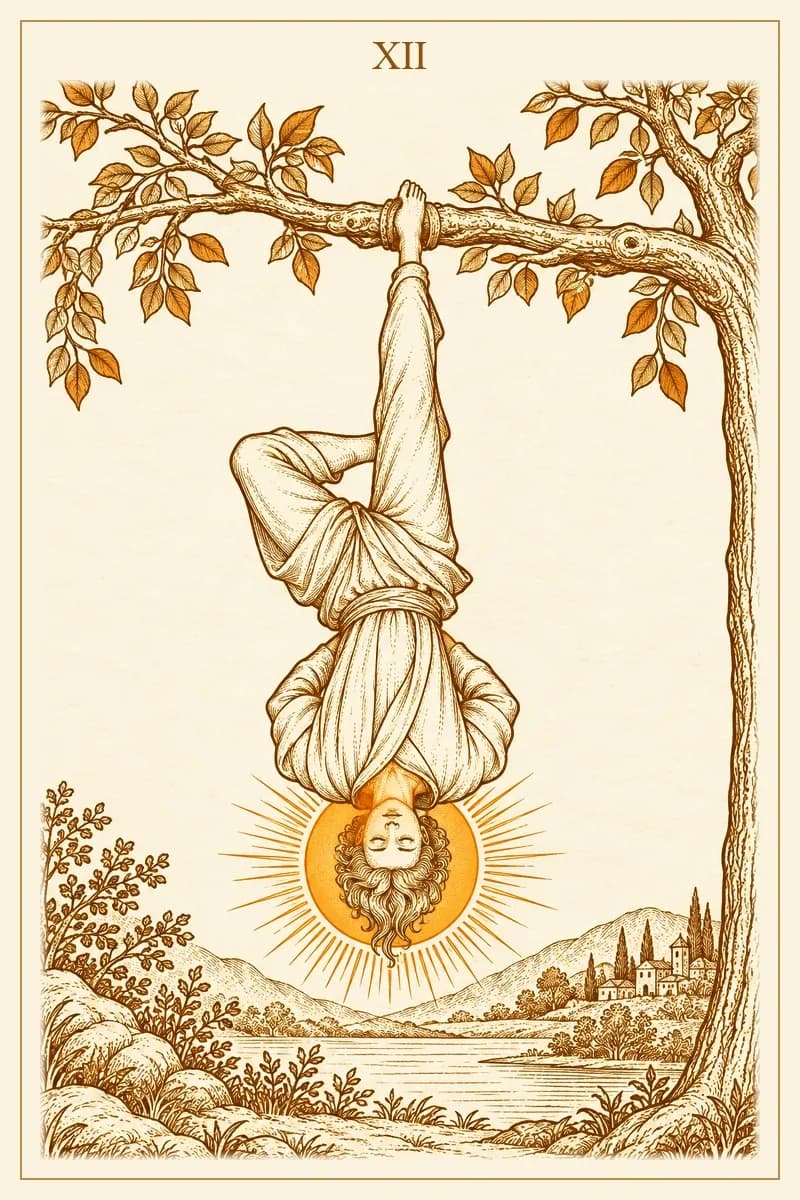
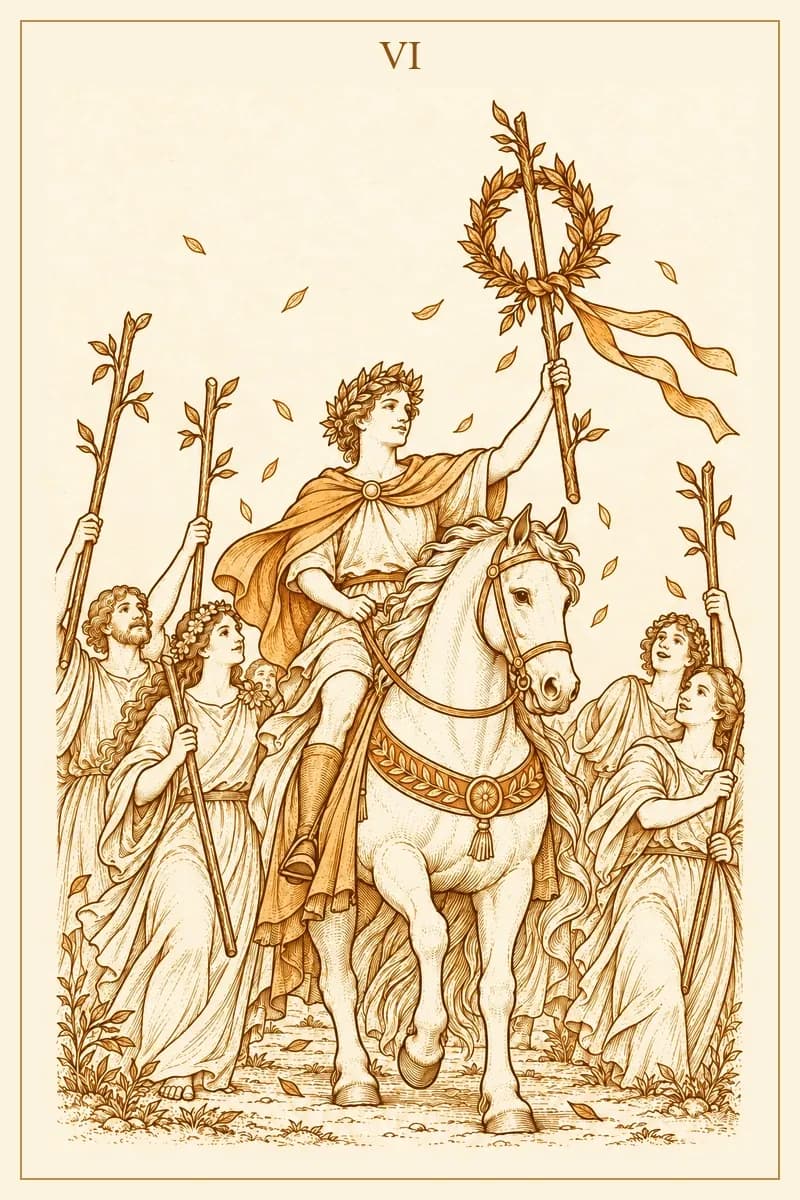
Meaning of The Hanged Man and Six of Wands Combination: Winning by Waiting
Delayed triumph
The crowd is cheering, the spotlight is hot, and you are hanging upside down backstage — missing the entire show. That is exactly what this combination feels like at first glance. One card promises public recognition, applause, a wreath of laurels. The other demands stillness, suspension, and the complete surrender of forward momentum. Together, they do not cancel each other out. They stage something far more uncomfortable: a performance where the star is deliberately, purposefully late.
There is a particular kind of courage required to stay offstage when the audience is already seated. The Hanged Man does not represent failure or weakness. It represents an actor who refuses to walk out until the lines are truly known — not memorized from anxiety, but absorbed through genuine understanding. The Six of Wands is that curtain call. It is real. It is coming. But the timing is dictated by readiness, not ambition.
The Core Tension
The friction here is between external validation and internal preparation. Six of Wands runs on recognition — it needs an audience to witness the achievement, a crowd to confirm that the effort mattered. The Hanged Man, by contrast, dissolves the need for external confirmation entirely. It turns the seeker inward, suspends action, and insists on a different kind of knowing.
When these two energies meet in a reading, the core question is not whether the victory will come. That is not in dispute. The question is whether you can tolerate the gap between where you are and where you want to be — without sabotaging the outcome by forcing a premature curtain call.
The tension is productive. Suspension is not the enemy of success here; it is the rehearsal period that makes success sustainable rather than fleeting.
Love & Relationships
In romantic contexts, this combination often appears when someone is returning to the dating world after a period of deliberate solitude — or trying to. The Six of Wands craves admiration, reciprocity, and the high of being chosen. The Hanged Man complicates this by surfacing unresolved beliefs about worthiness, control, and what it actually means to be seen by another person.
The danger is performing readiness rather than embodying it. Showing up as the victorious, confident version of yourself because that is who you believe you should be by now — while privately still mid-suspension, still processing. A relationship built on that performance can hold for a while. It rarely holds long.
What the pairing asks for instead is the willingness to let the right connection find you while you are still doing the internal work, not after you have declared yourself done with it.
Career & Purpose
Professionally, this combination tends to surface around recognition that is stalled — a promotion that has not come through, a project that has not been greenlit, a creative effort waiting for an audience. The Six of Wands suggests the win is genuinely within reach. The Hanged Man suggests that something in your current approach, your framing, or your understanding of the situation needs to shift before it can land.
This is not the time to push harder or campaign more loudly. It is the time to step back from the stage entirely and look at what the production actually needs. Often the missing element is not more effort but a different angle — a reframing of the pitch, a willingness to admit what you do not yet know, a strategic pause that allows decision-makers to feel the absence of your usual pressure.
The actor who stops auditioning and starts understanding the director's vision is the one who gets cast.
Shadow Side
The shadow side of this combination is martyrdom dressed as strategy. The Hanged Man can become an excuse to avoid the vulnerability of actually trying — of putting work into the world and risking a real response. Waiting can feel noble. It can feel principled. It can also be a way of never having to find out what the audience actually thinks.
Meanwhile, Six of Wands carried without the Hanged Man's corrective becomes hollow performance: winning for the sake of winning, collecting applause as emotional currency, building an identity out of external milestones while the interior work goes undone.
The shadow asks: are you suspended because something genuinely needs to integrate, or because visibility feels dangerous?
Action Steps
- 1Identify one area where you have been waiting passively and determine whether that waiting is generative (you are learning, shifting, integrating) or avoidant (you are hiding).
- 2Revisit a stalled project or relationship with a genuinely different question — not "why hasn't this worked?" but "what have I not yet understood about what this actually needs?"
- 3Let one small piece of your work be seen before you feel ready. Not the whole production — just a rehearsal. Notice what happens.
Related Pairings
Continue through published pairings that share The Hanged Man or Six of Wands.
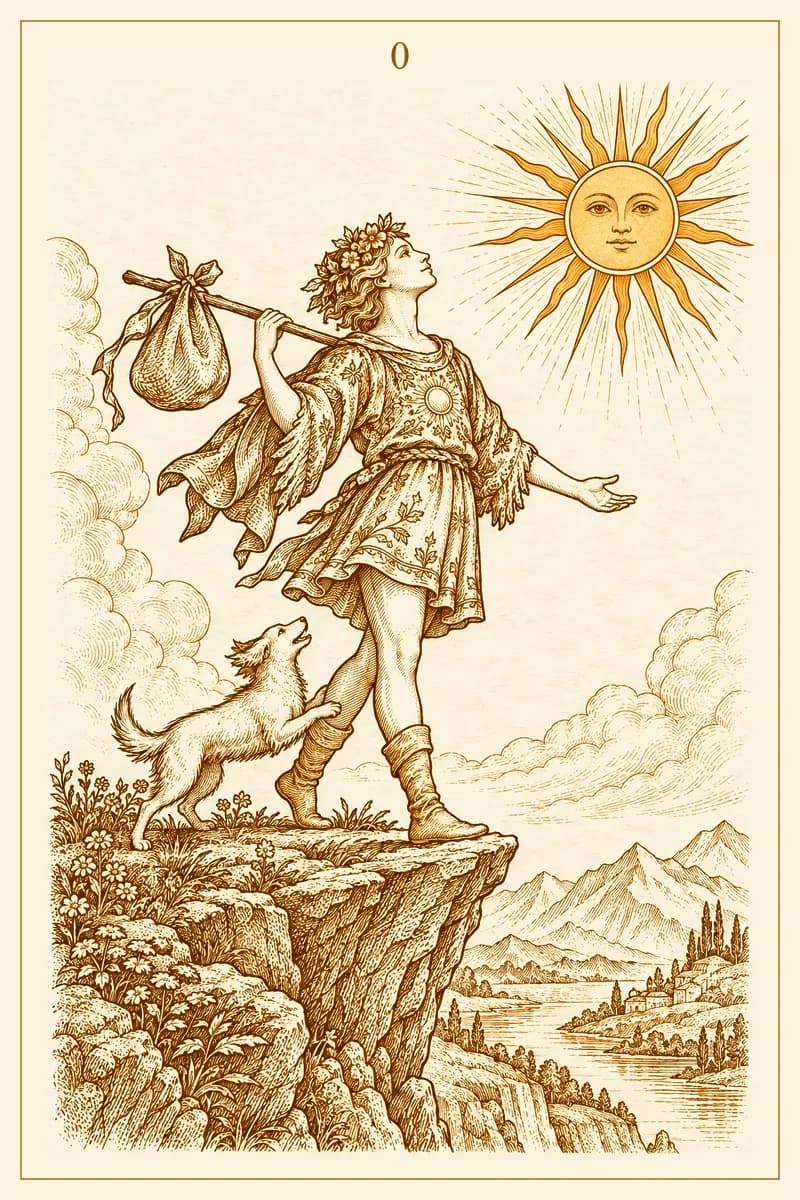
Stillness ambushes motion
Meaning of The Fool and The Hanged Man Combination: Stillness Ambushes Motion
Unearned applause
Meaning of The Fool and Six of Wands Combination: Accidental Triumph
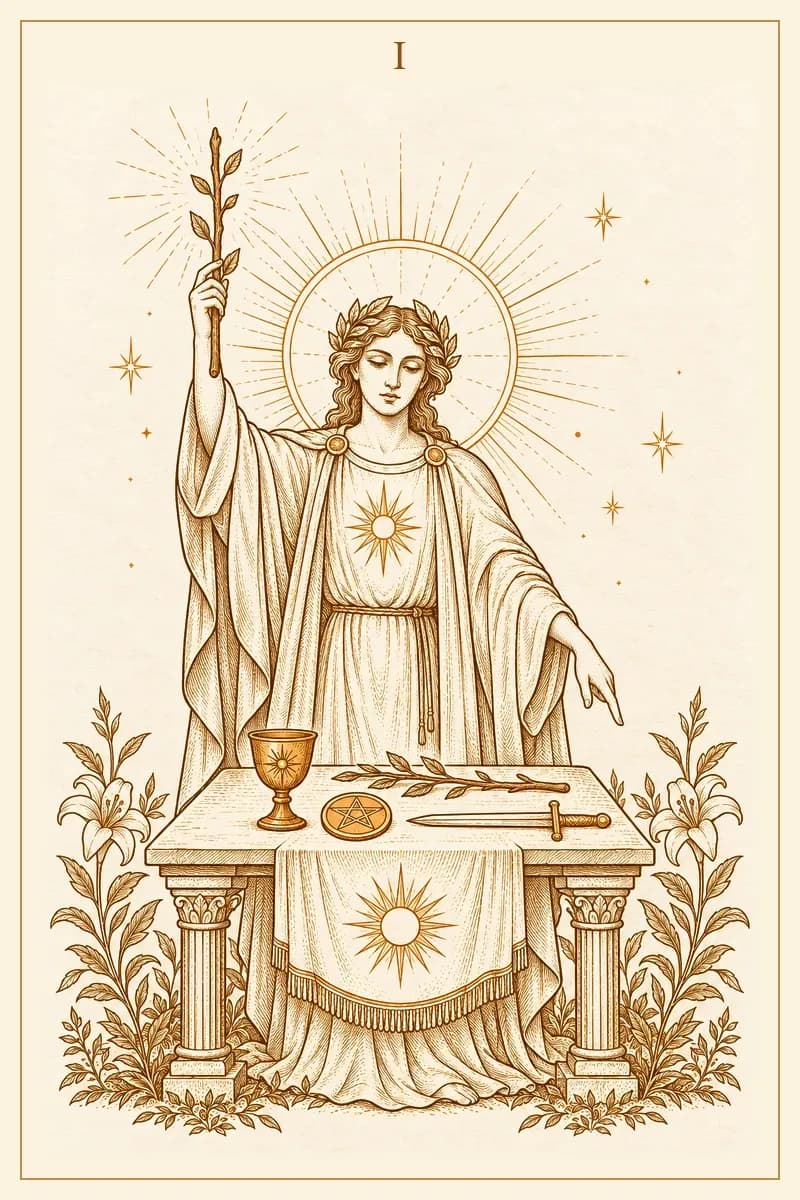
Control versus release
Meaning of The Magician and The Hanged Man Combination: When Control Meets Surrender
Quiet skill, public acclaim
Meaning of The Magician and Six of Wands Combination: The Craft Behind the Crown
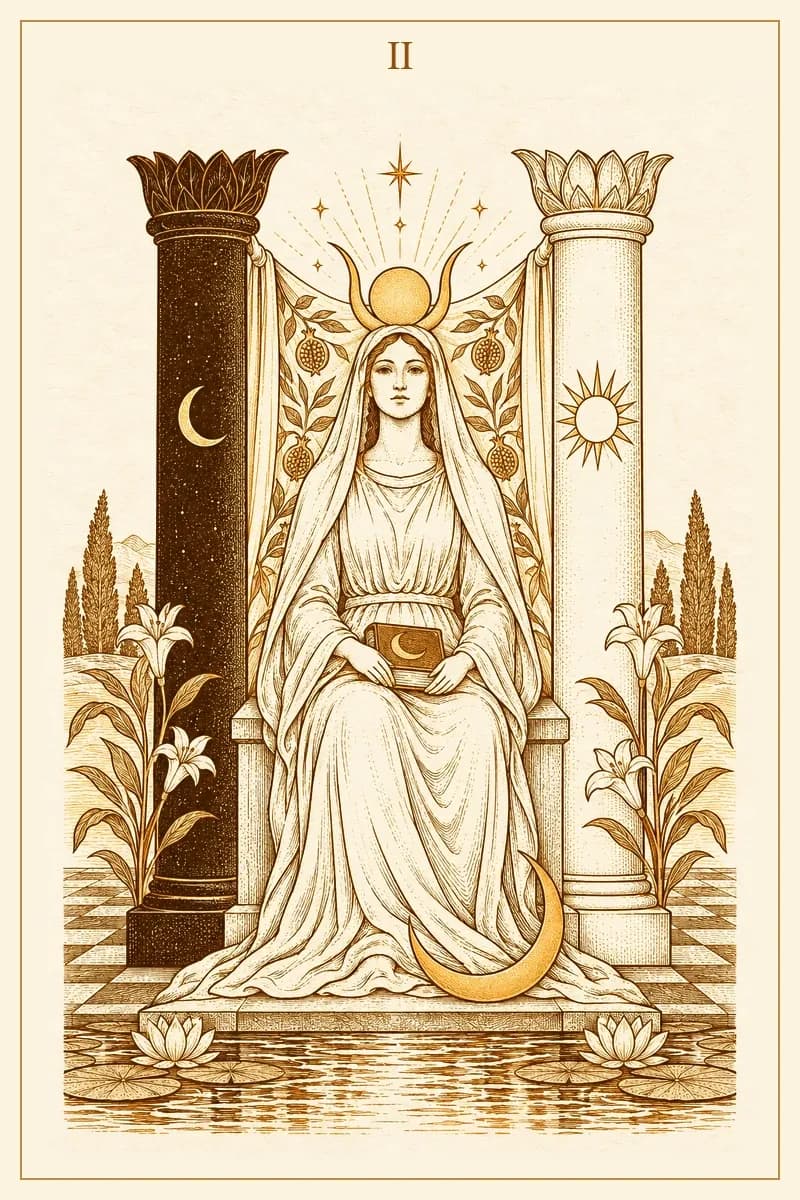
Sacred surrender
Meaning of The High Priestess and The Hanged Man Combination: Sacred Surrender
Earned recognition
Meaning of The High Priestess and Six of Wands Combination: The Victory That Begins in Silence
✦ Bring it to the cards ✦
Bring The Hanged Man and Six of Wands into your own reading
Use this pairing as a starting point, then let a spread listen to the situation that is actually yours.
Begin a contextual reading