
Card Combination
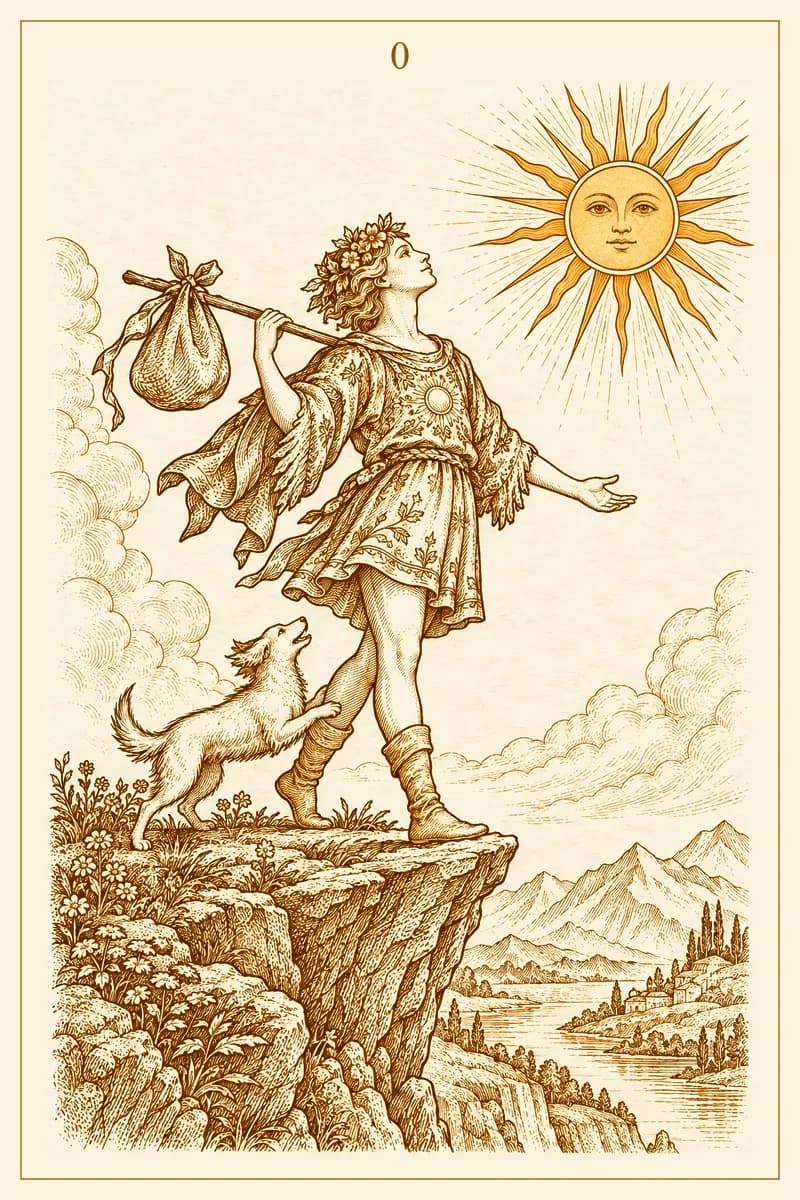
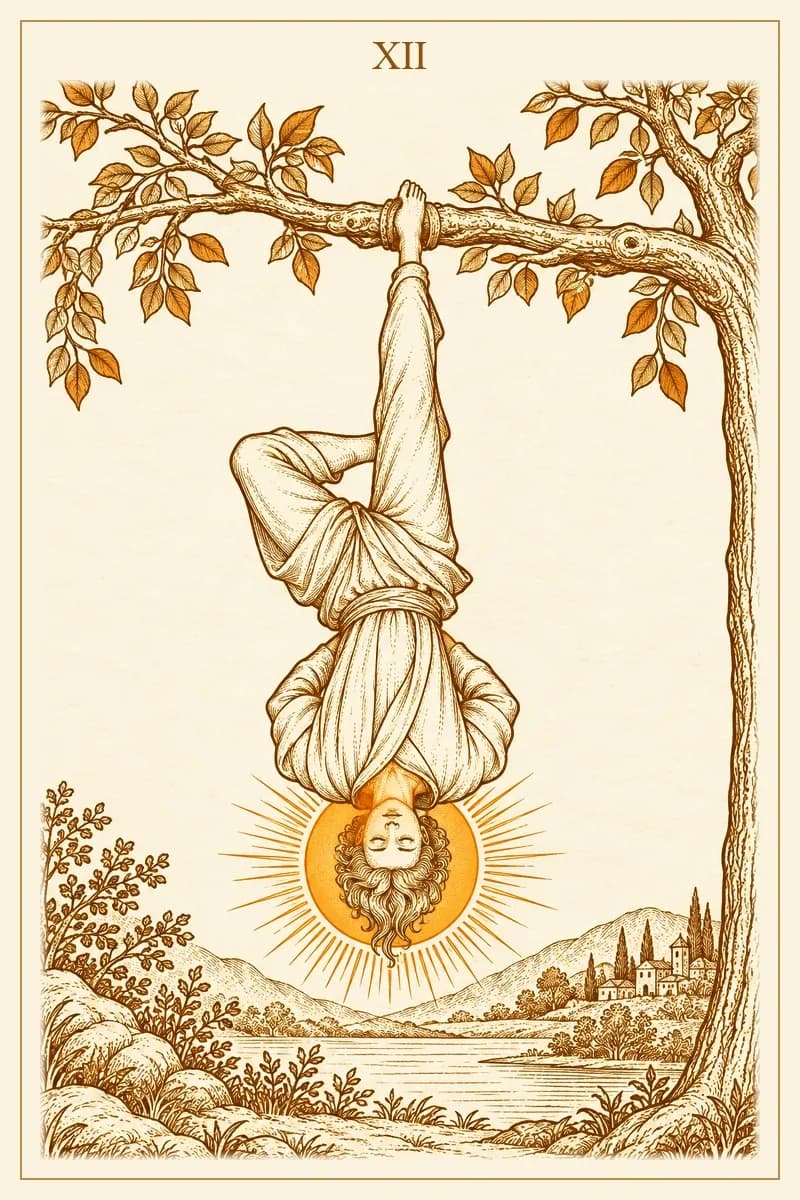
Meaning of The Fool and The Hanged Man Combination: Stillness Ambushes Motion
Stillness ambushes motion
Most people think The Hanged Man is stuck. Most people think The Fool is free. Both assessments are missing something important.
The Hanged Man chose his tree. He chose the rope, the angle, the suspension. What looks like paralysis from the ground is—from his inverted vantage point—the clearest view of the landscape he's ever had. The Fool, meanwhile, is moving. Definitely moving. Seeing approximately nothing, because everything is passing too fast to resolve into information.
When they meet in a reading, you're being handed something unexpected: the suggestion that the most productive thing your momentum can do right now is stop. Not permanently. Just long enough to see what you're heading toward.
The Core Tension
Think of it in architectural terms. The Fool is in motion, having leapt from solid ground into open air. The Hanged Man is the scaffold—deliberately erected, load-bearing, unmoved. Together they describe a structure that can't be completed until construction pauses.
The friction is between forward motion and necessary suspension. The Fool experiences stopping as defeat; the Hanged Man has learned that some angles on a problem only open when you're looking at it upside-down. The question this combination poses isn't stop or go—it's whether you've been moving fast enough to lose the direction you started with, and whether three days of stillness might return it.
The Hanged Man doesn't slow The Fool. He redirects him. The gap between acting and acting well is often a pause.
Love & Relationships
In relationships, this combination often describes someone who leapt into an emotional situation—a connection, a feeling, a commitment—and now needs to actually understand what they landed in.
The Fool fell in love with the falling. The Hanged Man is asking: now that you've arrived, what do you actually see? The shift from falling to seeing isn't romantic in the cinematic sense. It requires staying still long enough that another person becomes real rather than a projection of what you needed them to be.
The shadow: The Fool can use the Hanged Man's energy as a license for indefinite suspension—"I'm still processing, still figuring it out"—without doing the actual internal work that suspension is supposed to produce. Waiting is only useful when something is genuinely developing while you wait. If nothing is growing, it's stalling dressed as wisdom.
Career & Purpose
Professionally, this combination asks you to distinguish between productive momentum and motion that substitutes for thinking. The Fool has been running hard. The Hanged Man wants to know: toward what, exactly?
The sabotage lives in the inability to pause voluntarily. In project work, this looks like someone who keeps adding features, keeps pivoting, keeps generating activity—because stopping to evaluate what's actually working would require admitting uncertainty. The Hanged Man's gift is precisely that: uncertainty examined openly is more useful than uncertainty ignored efficiently.
The combination can also signal that a strategic delay—counterintuitive, uncomfortable—is the correct move. The project that seems urgent may need the pause more than it needs the next push.
Shadow Side
The lie this combination enables: movement is progress. The Fool is perpetually in motion; the world keeps changing around him, which creates the sensation of development without its substance. The Hanged Man knows that the most disorienting thing you can do to someone addicted to forward motion is to make them be still long enough to see clearly.
The deeper shadow: the Fool's energy makes any direction feel correct in the moment of choosing it. The Hanged Man's lesson is that feeling like the right decision and being the right decision are two entirely separate events. One happens quickly; the other takes time to verify.
Action Steps
- 1Identify the project, conversation, or decision you've been keeping in motion specifically to avoid evaluating it. Stop working on it for three days. Notice what you think about in the silence.
- 2Sit with one unresolved question—about a direction, a relationship, a commitment—for fifteen minutes without trying to resolve it. Just observe what's actually there.
- 3Ask someone who knows you well: "What do you think I'm moving too fast on?" Do not defend yourself. Write down what they say.
- 4Cancel or defer one commitment you made from momentum rather than genuine intention.
- 5Spend one morning this week producing no output. No tasks completed, no messages sent. Observe what surfaces when motion stops.
Related Pairings
Continue through published pairings that share The Fool or The Hanged Man.
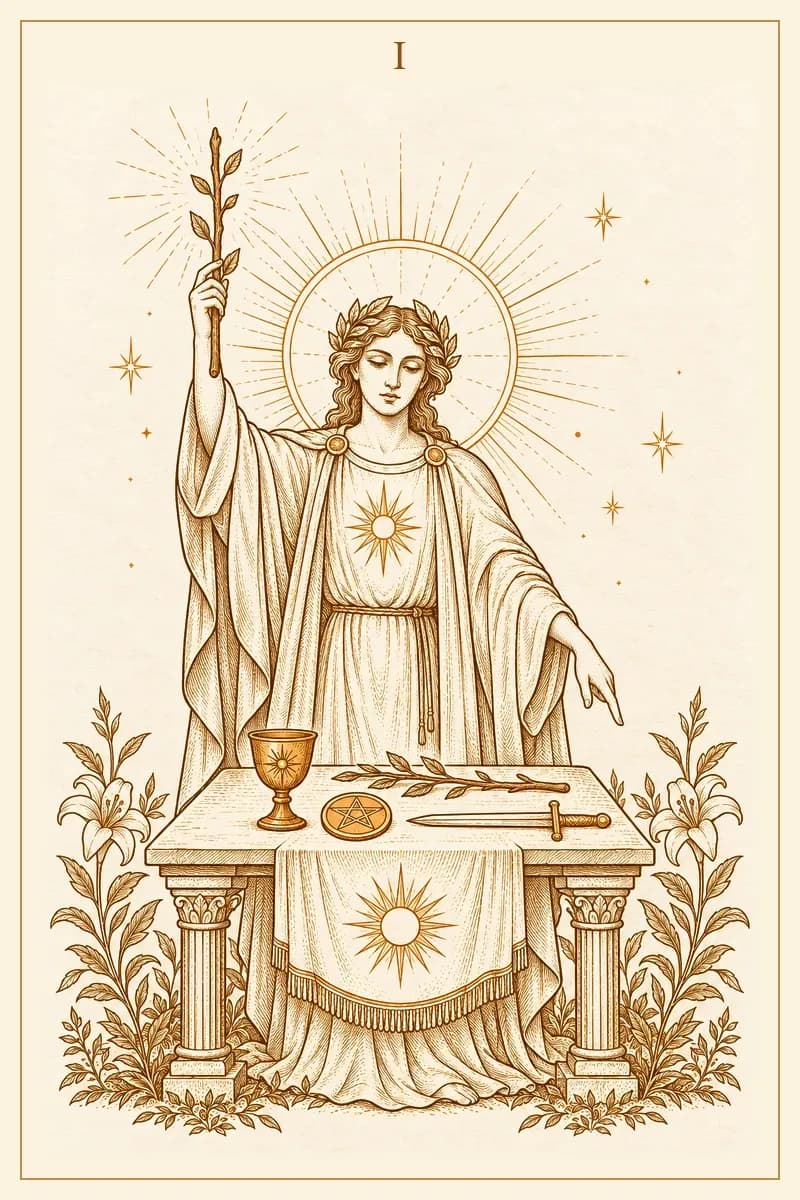
Spontaneous manifestation
Meaning of The Fool and The Magician Combination: Spontaneous Manifestation
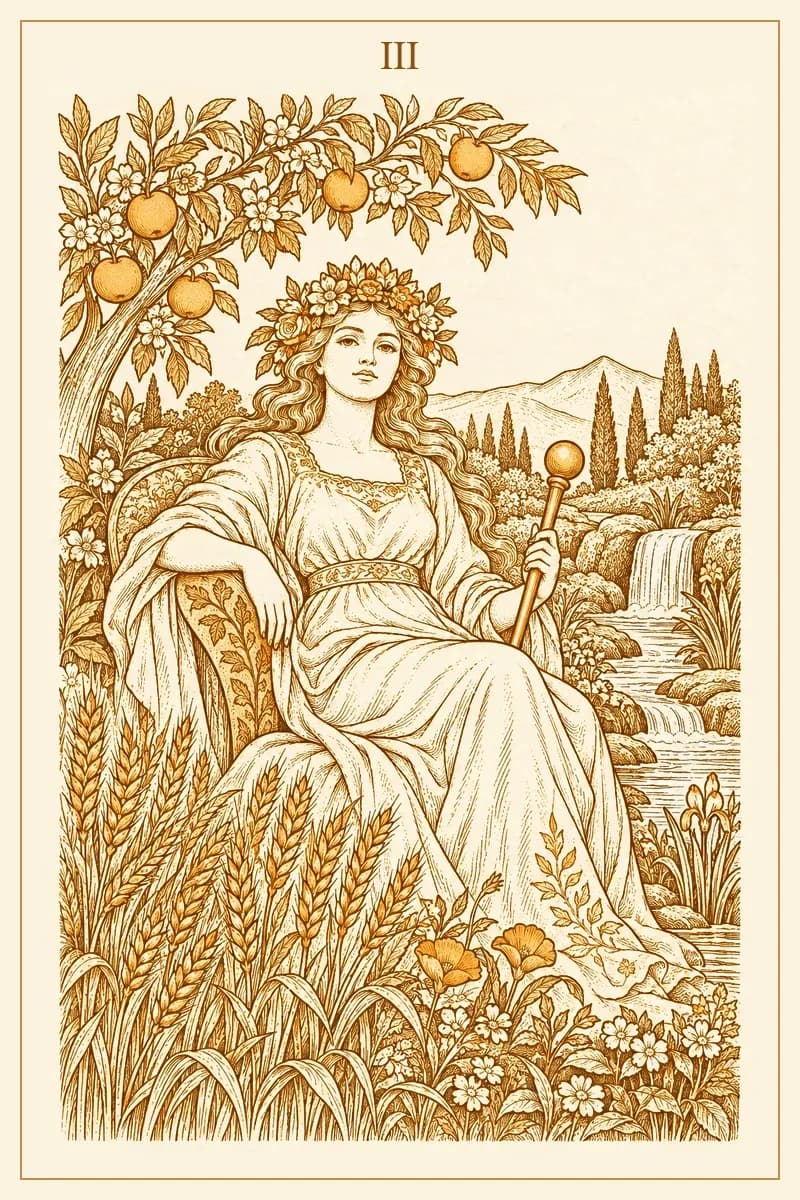
Fertile leaps
Meaning of The Fool and The Empress Combination: Fertile Leaps
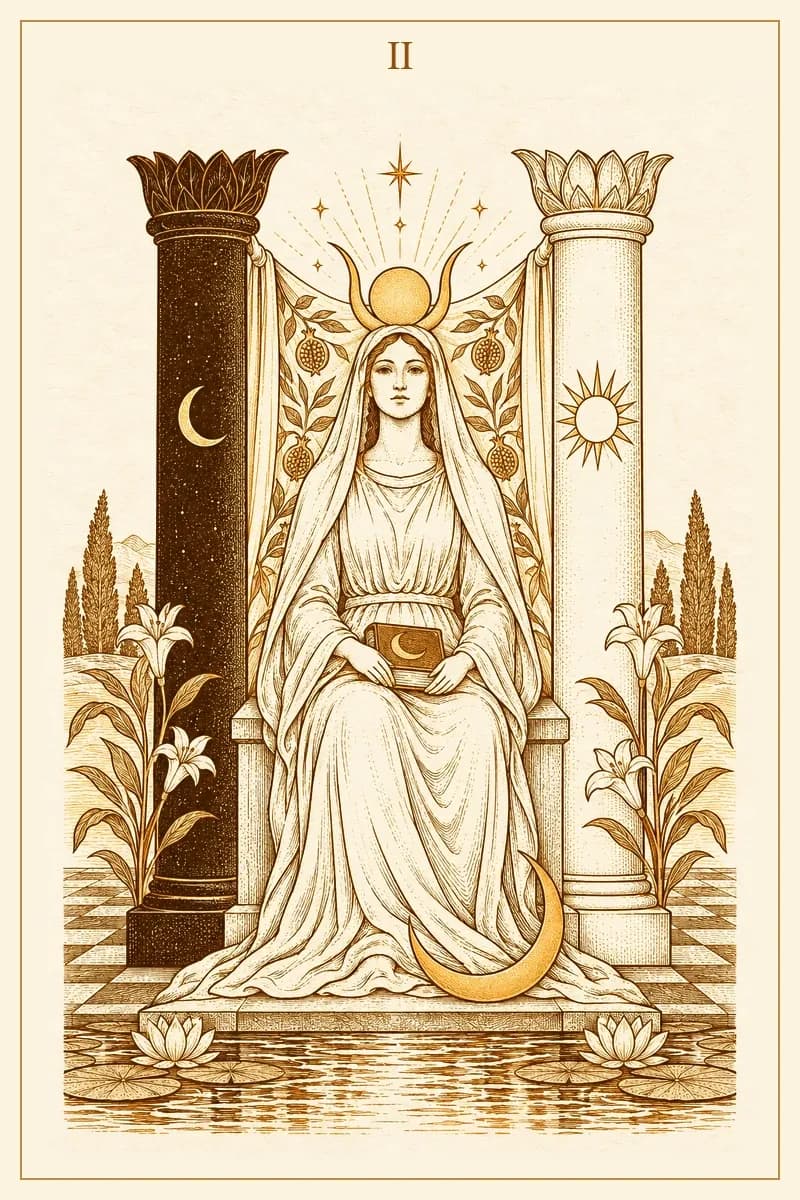
Sacred surrender
Meaning of The High Priestess and The Hanged Man Combination: Sacred Surrender

Structured freedom
Meaning of The Fool and The Emperor Combination: Structured Freedom
Fertile suspension
Meaning of The Empress and The Hanged Man Combination: Fertile Pause
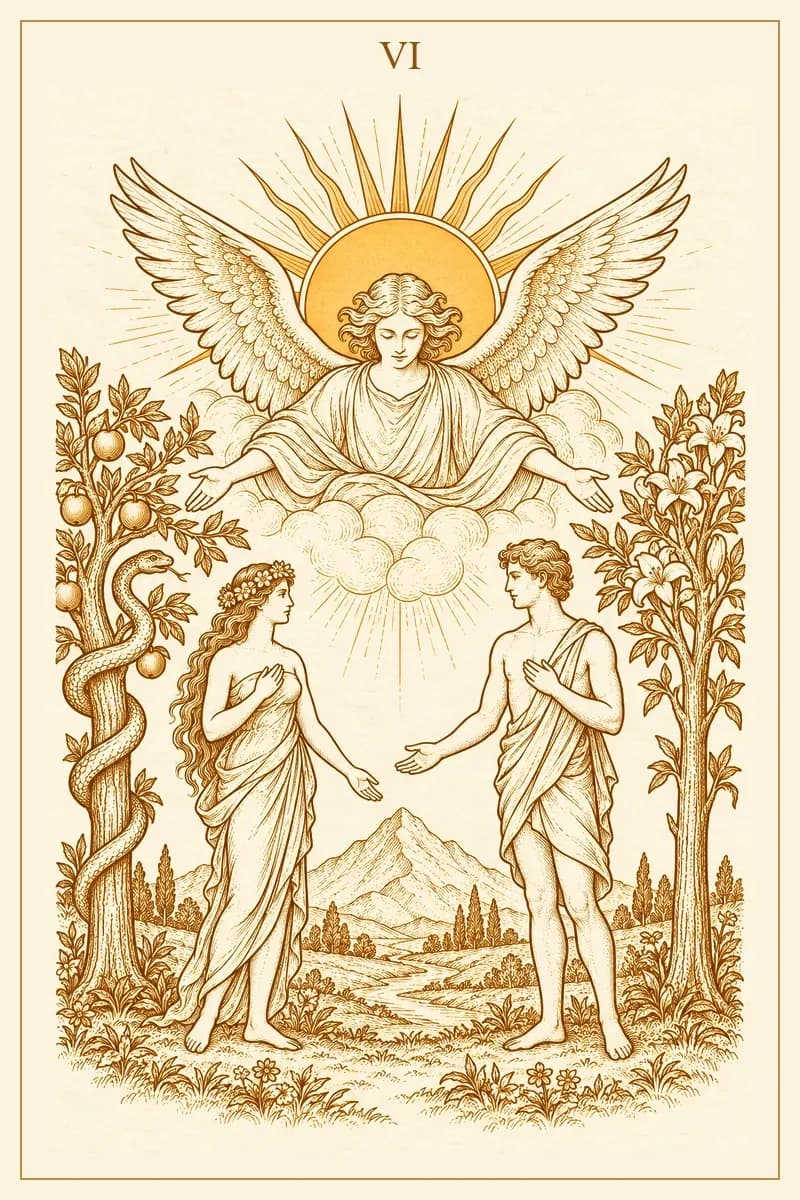
Innocent desire
Meaning of The Fool and The Lovers Combination: Innocent Desire
✦ Bring it to the cards ✦
Bring The Fool and The Hanged Man into your own reading
Use this pairing as a starting point, then let a spread listen to the situation that is actually yours.
Begin a contextual reading