
Card Combination
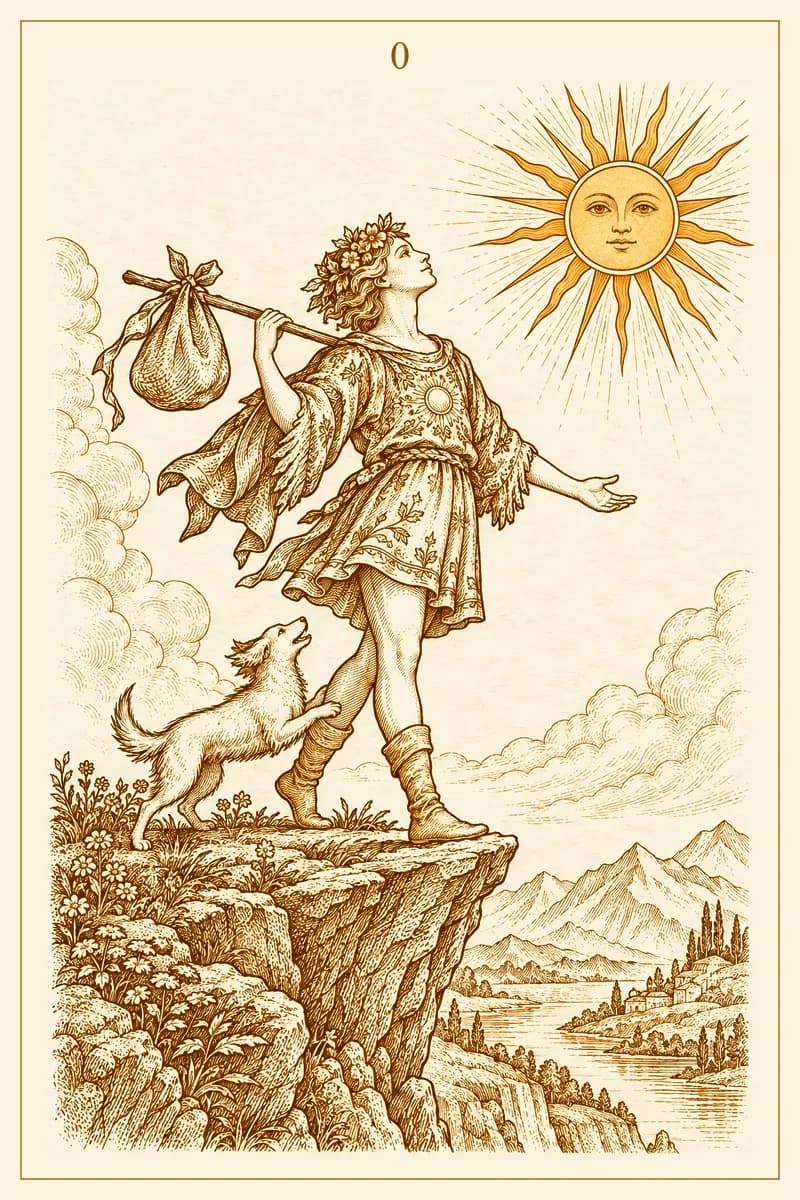
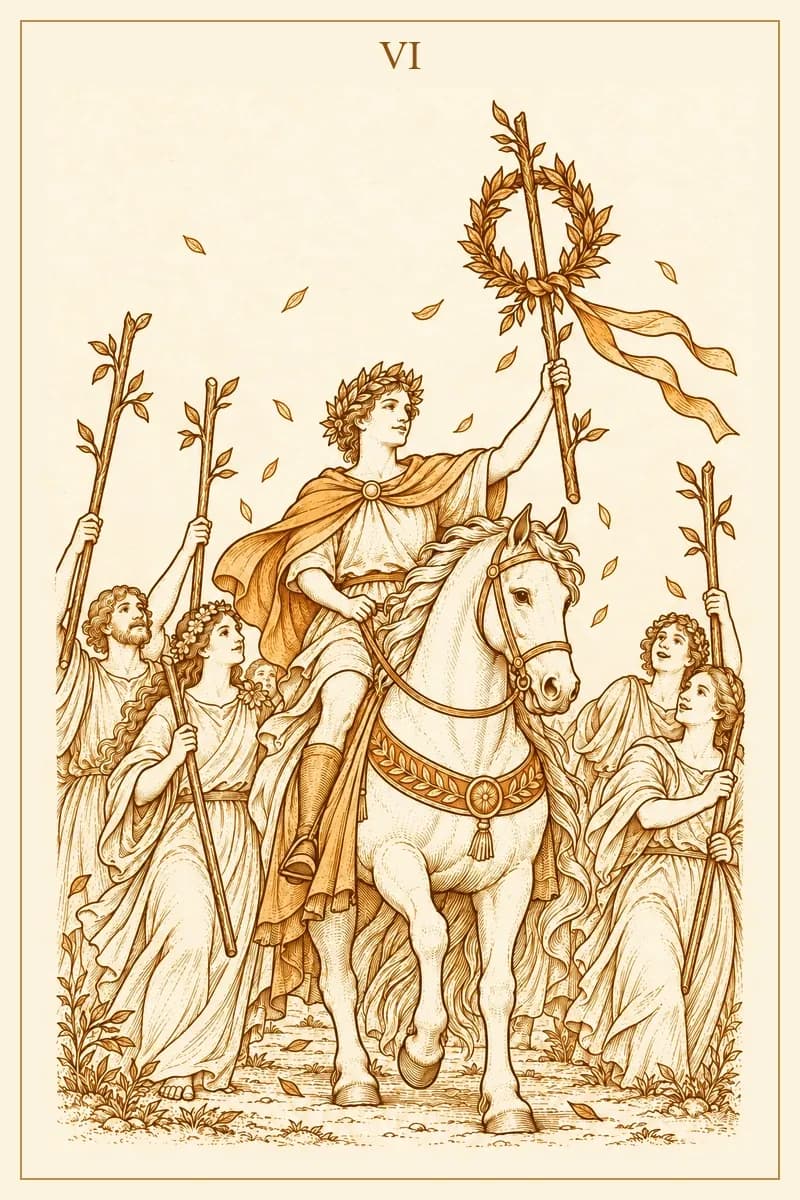
Meaning of The Fool and Six of Wands Combination: Accidental Triumph
Unearned applause
There is a particular note in live music — the accidental harmony. A singer drifts slightly off the written melody, and the resulting interval against the band creates something no arranger would have scored. The audience erupts. The singer doesn't know what happened. The band does, and they are furious, and also moved, because the moment was better than anything rehearsal produced. The standing ovation goes to the person who wasn't trying to earn it.
The Fool and the Six of Wands together produce this exact dissonance between intention and reception. The Fool walks forward with no strategy, no campaign, no awareness that anyone is watching. The Six of Wands is the parade that forms behind someone who has already won. The collision between these two energies asks an uncomfortable question: what does victory mean when the victor didn't compete?
This is not a story about luck, though luck is part of it. It is a story about what audiences recognize in someone who has not yet learned to perform — the raw, unguarded quality that all performance tries to recover and never quite does.
The Core Tension
The Six of Wands demands a winner. Someone must ride the horse. Someone must hold the wand above their head while the crowd validates what has been accomplished. It is a card of social proof, of achievement confirmed by witnesses. The Fool offers none of the prerequisites. No training montage. No qualifier rounds. No evidence of effort.
The tension lives in the gap between the crowd's story and the individual's experience. The crowd sees a hero. The Fool sees the next step on an unplanned walk. Both are telling the truth, and neither is hearing the other. The music swells in the arena while the performer on stage is humming a different song entirely — and the audience somehow prefers it.
When this pair appears, something you did without calculation is receiving recognition you did not seek. The reading hinges on whether you can hold both truths simultaneously: the applause is real, and it is not about what you think it is about.
Love & Relationships
Someone is captivated by you, and the quality they admire most is the one you didn't curate. Your unfiltered honesty, your refusal to play the usual games, your willingness to say the slightly wrong thing at dinner — these are landing as charm, not as flaws. You are the off-key note that makes the whole chord richer.
The risk is twofold. First, the moment you notice you are being admired for your spontaneity, the spontaneity calcifies into a persona. The Fool who knows he is charming is no longer The Fool; he is a performer in a costume. Second, the admirer may be projecting onto your blankness. The Six of Wands crowd cheers for what they need to see, not necessarily for what is there. Check whether the person celebrating you has met you, or has met their idea of you.
Career & Purpose
A project you approached without overthinking is generating disproportionate praise. The presentation you threw together in an hour outperforms the one your colleague spent three weeks refining. The offhand suggestion in a meeting becomes the strategy. You are receiving the professional equivalent of a laurel wreath for something that cost you very little visible effort.
Accept the recognition without apologizing for the ease. The instinct to confess that it wasn't hard — that you didn't suffer enough for it to count — is a form of self-sabotage dressed as humility. The work resonated because it carried no desperation. The audience heard confidence in what was actually indifference, and the result functioned better than intention would have produced. Use the momentum. Redirect the attention toward what you want to build next, before the crowd decides what your encore should be.
Shadow Side
The shadow of this pair is the grifter's melody — charm without substance, applause without craft, a parade that circles the same block because there is nowhere to march toward. The Fool in shadow never develops skill because admiration arrives before discipline does. The Six of Wands in shadow becomes addicted to the crowd's energy, needing louder cheers for the same trick.
There is also the shadow of resentment from those who did prepare, who did practice their scales and learn the theory and show up to every rehearsal. Their anger is not irrational. The system should reward effort. But the audience is not a system — it is a living thing that responds to frequencies the rulebook cannot notate. The shadow work here is neither dismissing the trained musician's frustration nor letting it dictate whether the accidental harmony was real.
Action Steps
- 1Identify one area where you are receiving praise and examine it honestly — separate what you actually did from the story others are building around it
- 2Resist the urge to retroactively construct a strategy for something that succeeded without one; let the accident stay an accident
- 3Notice where the applause is steering your next move, and choose one direction that the crowd did not suggest
Related Pairings
Continue through published pairings that share The Fool or Six of Wands.
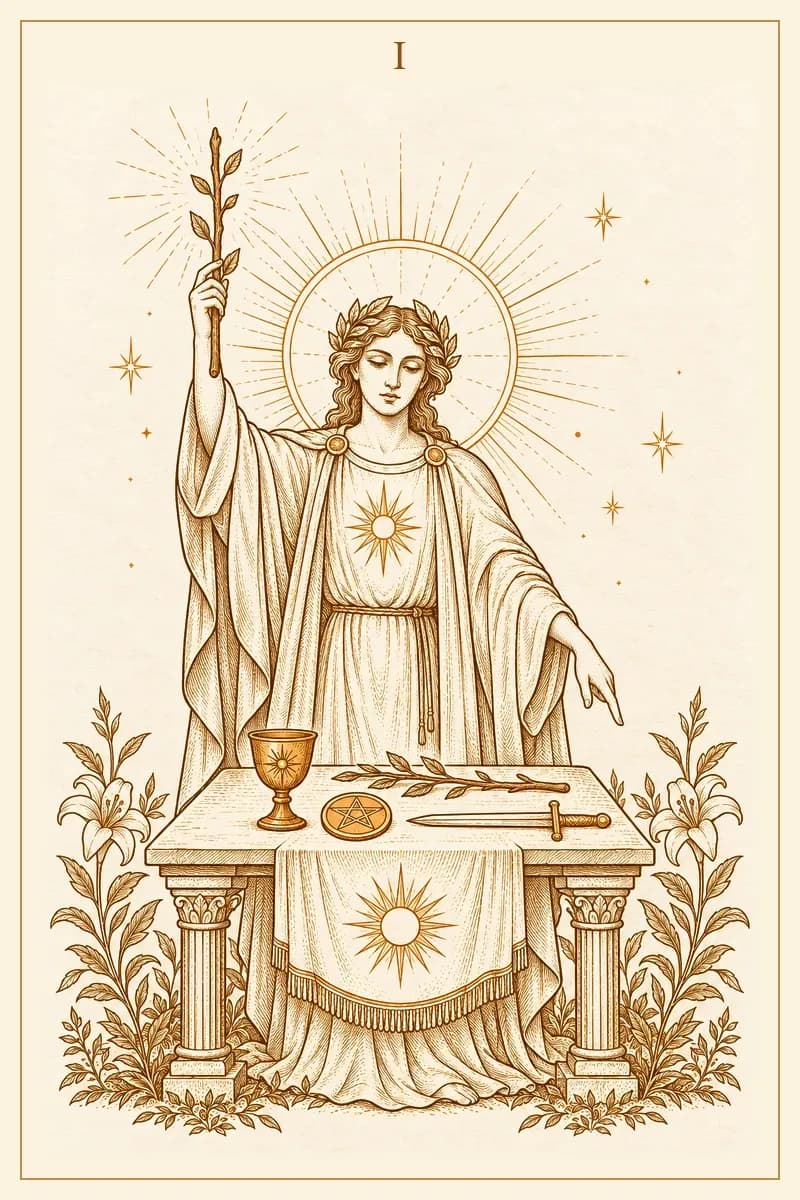
Spontaneous manifestation
Meaning of The Fool and The Magician Combination: Spontaneous Manifestation
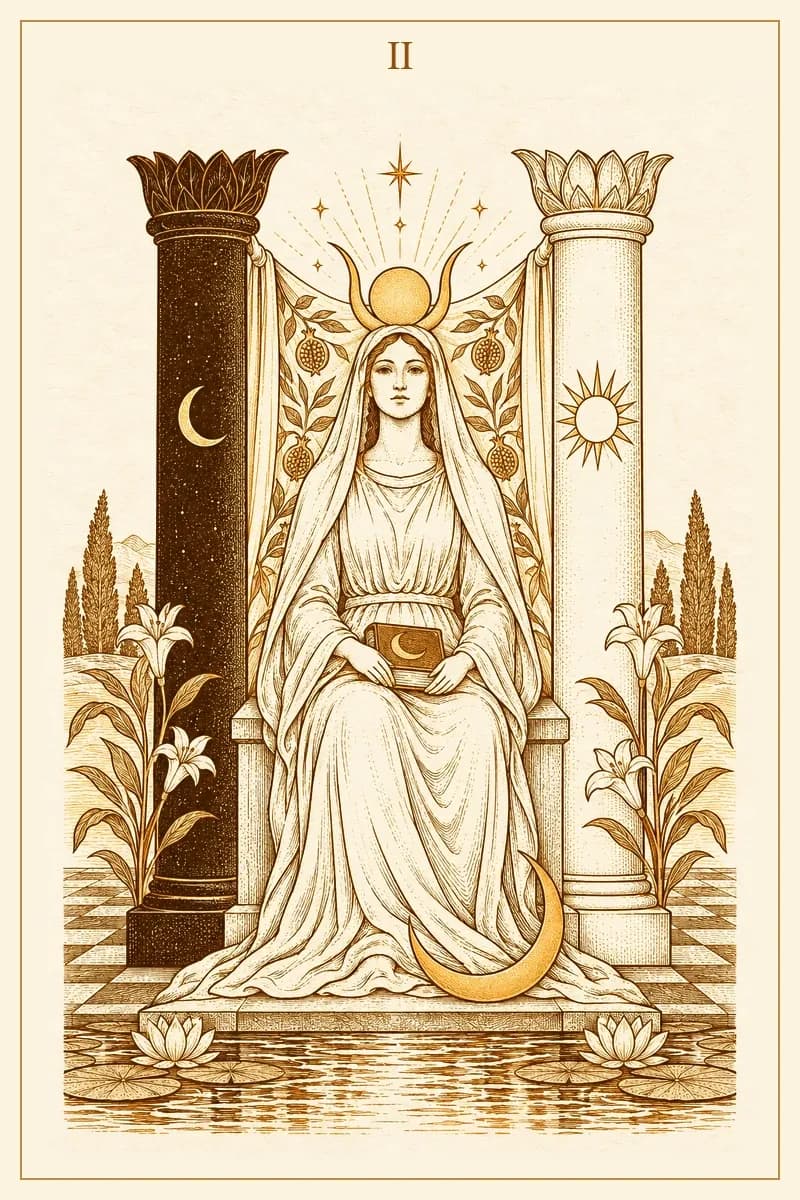
Innocent knowing
Meaning of The Fool and The High Priestess Combination: Innocent Knowing
Quiet skill, public acclaim
Meaning of The Magician and Six of Wands Combination: The Craft Behind the Crown
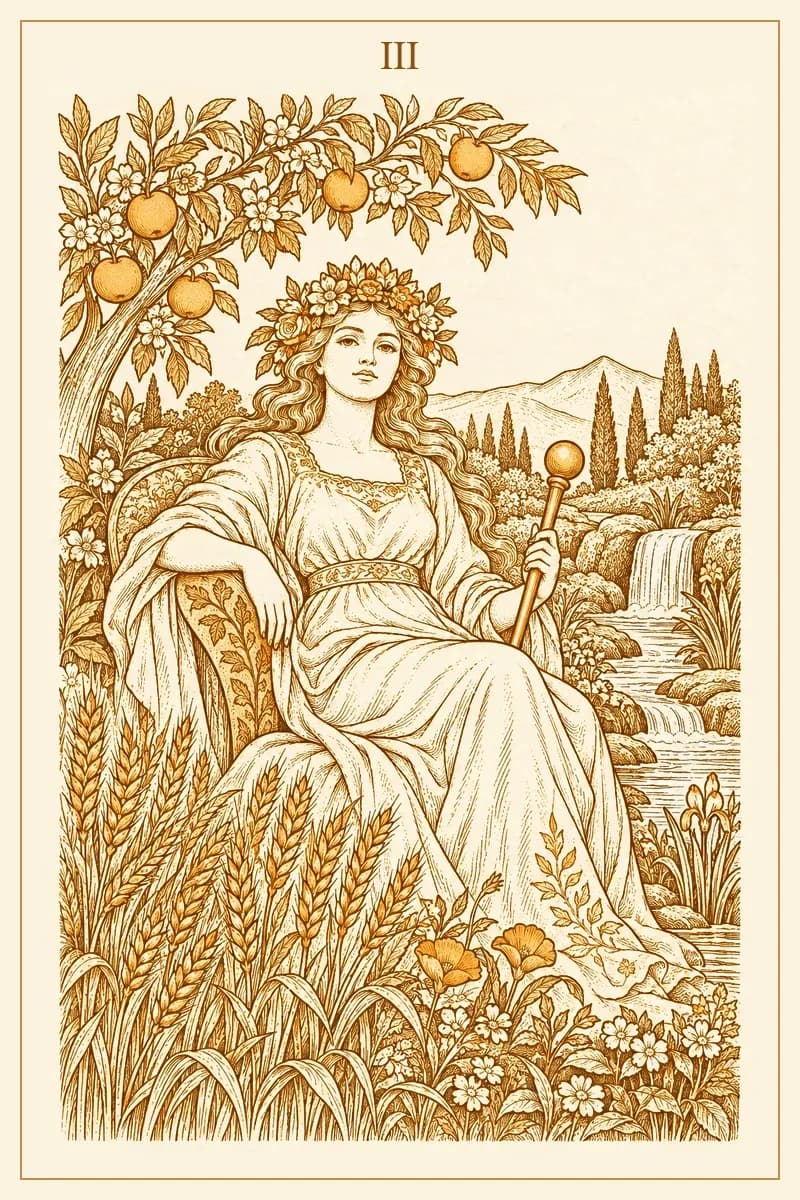
Fertile leaps
Meaning of The Fool and The Empress Combination: Fertile Leaps
Earned recognition
Meaning of The High Priestess and Six of Wands Combination: The Victory That Begins in Silence

Structured freedom
Meaning of The Fool and The Emperor Combination: Structured Freedom
✦ Bring it to the cards ✦
Bring The Fool and Six of Wands into your own reading
Use this pairing as a starting point, then let a spread listen to the situation that is actually yours.
Begin a contextual reading