
Card Combination
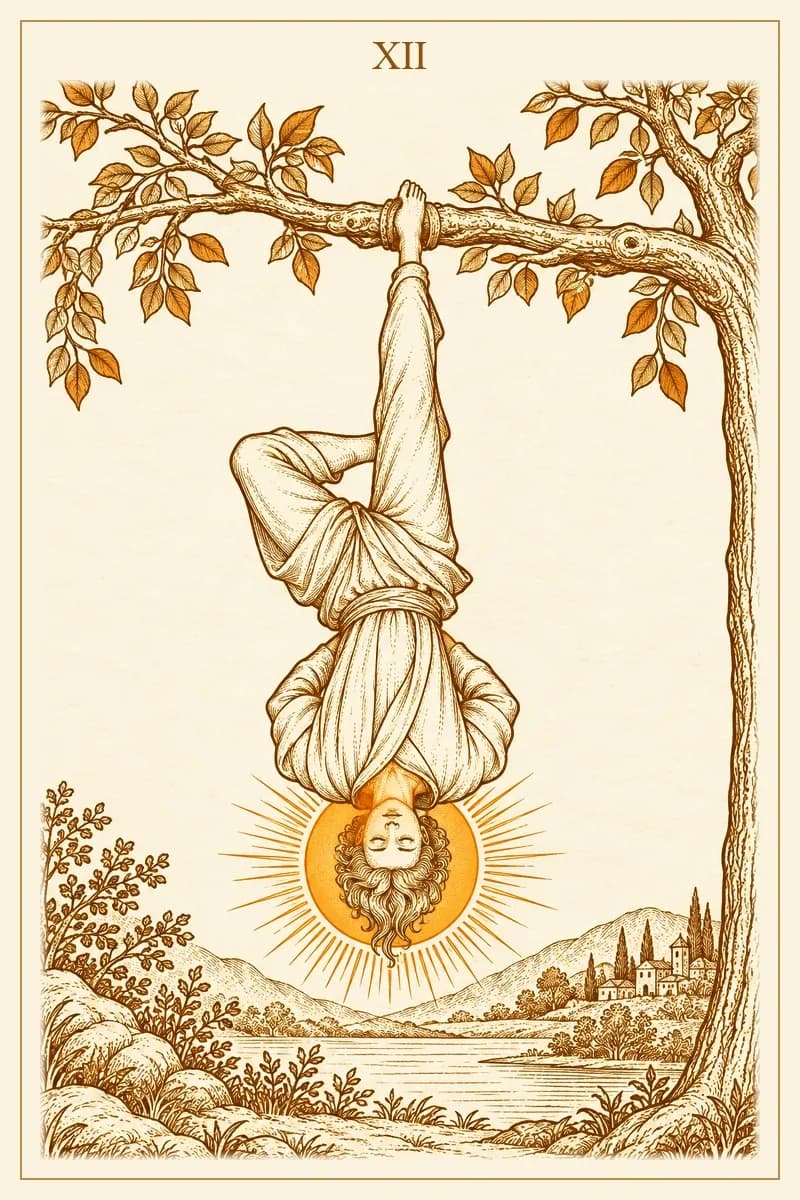
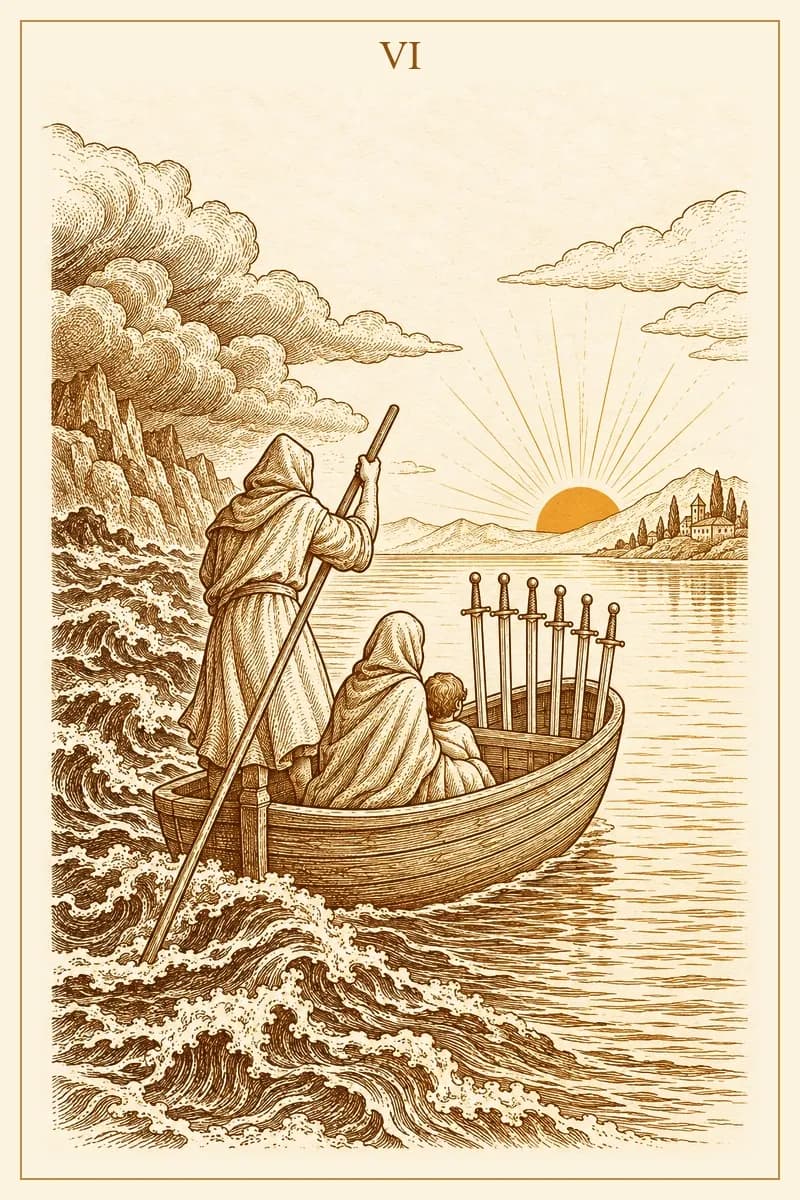
Meaning of The Hanged Man and Six of Swords Combination: Stillness Before Crossing
Inverted view before passage
The stage manager calls for a hold. One actor dangles upside-down from the fly system, reading the scene from a perspective no one else has — every prop, every sight line, every exit suddenly legible in a way they never were from the wings. The other actor is already at the stage door, coat in hand, ready to walk out into a different theater entirely. These two are not in the same moment. And yet the production cannot proceed without both of them finding a shared cue.
That tension is the heart of The Hanged Man paired with the Six of Swords. One card demands you stop — not from defeat but from deliberate suspension. The other insists you go — not from running away but from earned readiness to leave what no longer holds you. The difficulty is that neither card is wrong.
What creates friction here is timing. The Hanged Man's suspension is not laziness; it is an act of radical attention. The figure hangs willingly, and the halo around the head tells you something is being received, not avoided. But the Six of Swords does not wait for perfect wisdom. Its boatman rows through gray water, passengers facing away from what they left. The crossing has already begun. These two energies — one saying wait until you truly see, the other saying move before waiting becomes a habit — define the specific challenge this combination presents.
The Core Tension
The Hanged Man belongs to a tradition of deliberate inversion: the mystic who fasts, the yogi who holds a posture until the body stops arguing, the playwright who rewrites the third act after staring at the ceiling for a week. Stillness here is productive. The Six of Swords, by contrast, is movement that has already made its peace with incompleteness. You leave before the argument is fully resolved. You board the boat because the shore behind you has become untenable, not because the far shore is guaranteed.
Together these cards describe a person who has done the inner work — or is still doing it — but faces a situation that will not wait indefinitely for conclusions. The crossing the Six of Swords depicts is not glamorous. The water is choppy, the swords are still in the boat, the wounds have not healed. The Hanged Man's contribution to this crossing is the capacity to observe clearly even from an uncomfortable position. What you learned while suspended may be exactly what keeps you from repeating the same patterns at your destination.
Love & Relationships
In relationships, this combination tends to appear when someone has been suspended in a dynamic — emotionally held, waiting for clarity, unwilling to force resolution — and a transition is becoming unavoidable. The Hanged Man's wisdom here is not passivity but perception: something has been seen, perhaps uncomfortably, about the relationship's structure. The Six of Swords says the crossing is warranted. Not every departure is an ending; sometimes it is a lateral move, a shift in how two people relate rather than a severance.
If you have been the one hanging, the question this pair raises is whether your stillness has produced insight or simply become comfortable avoidance. The Six of Swords does not indulge that ambiguity. It rows.
Career & Purpose
Professionally, this combination often arrives when someone has outgrown a role but has not yet given themselves permission to leave it. The Hanged Man may indicate a period of being "on hold" — a project stalled, a promotion delayed, a strategy under review. The Six of Swords suggests the transition is already forming at the edges of awareness, even if no formal announcement has been made.
The theater metaphor is useful here: between scenes, the stage is dark, but the crew is moving furniture. The audience cannot see it. Neither can the character still exiting stage left. That invisible work — the reconfiguration happening while everything appears paused — is exactly what this combination is pointing toward. Prepare for the scene change even when the lights are still down.
Shadow Side
The danger with this pairing is a specific kind of stalling. The Hanged Man's wisdom can be used as justification for staying suspended beyond the point of usefulness. "I haven't seen clearly enough yet" becomes a way to avoid the discomfort of the crossing the Six of Swords demands. The swords in that boat are real weight. The transition costs something. Waiting for costless movement is waiting for a boat that does not come.
Conversely, the Six of Swords can rush the Hanged Man out of suspension too early — pulling someone from their productive pause before the insight has fully formed. The shadow here is movement that carries all the old patterns across unchanged because there was no time to actually see them.
Action Steps
- 1Identify one thing you have been "waiting to understand" and notice whether that waiting is still productive or has calcified into a reason not to move.
- 2Make a list of what you would need to have in place to begin the crossing — not to complete it, just to start the row toward the other shore.
- 3Spend fifteen minutes sitting with an uncomfortable position — physical or metaphorical — and observe what you notice from that vantage point that you cannot see from upright.
Related Pairings
Continue through published pairings that share The Hanged Man or Six of Swords.
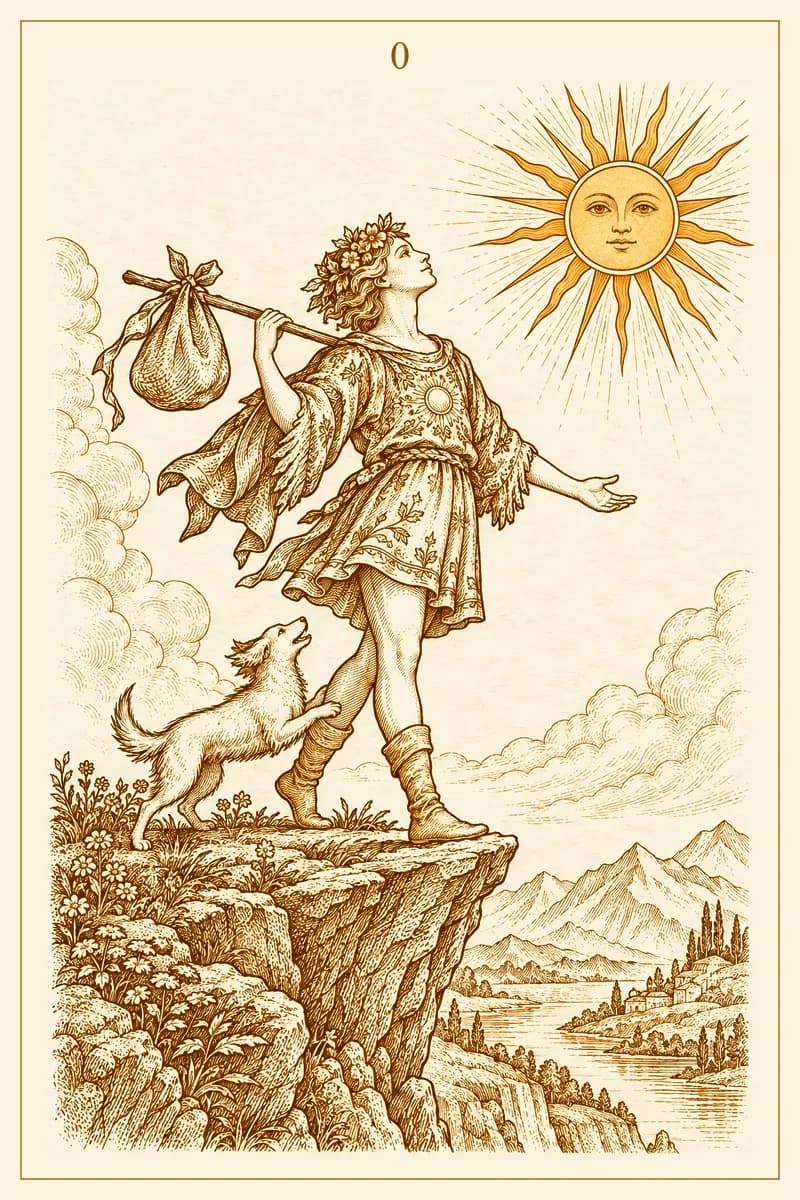
Stillness ambushes motion
Meaning of The Fool and The Hanged Man Combination: Stillness Ambushes Motion
Undirected leap meeting deliberate passage to calmer waters
Meaning of The Fool and Six of Swords Combination: The Leap and the Crossing
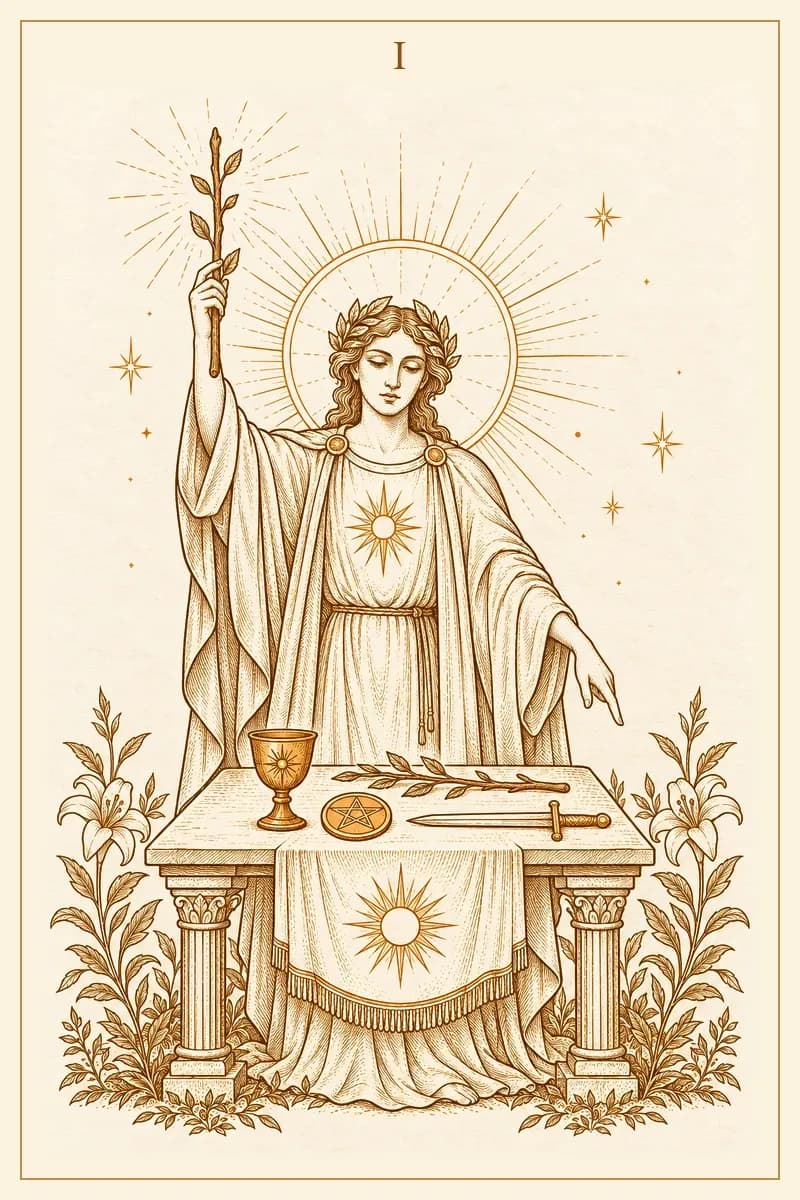
Control versus release
Meaning of The Magician and The Hanged Man Combination: When Control Meets Surrender
Directed transition — using skill and will to navigate away from turbulence
Meaning of The Magician and Six of Swords Combination: Skill Meets Passage
Sacred surrender
Meaning of The High Priestess and The Hanged Man Combination: Sacred Surrender
Intuition as navigator
Meaning of The High Priestess and Six of Swords Combination: The Inner Navigator
✦ Bring it to the cards ✦
Bring The Hanged Man and Six of Swords into your own reading
Use this pairing as a starting point, then let a spread listen to the situation that is actually yours.
Begin a contextual reading